USAF F-16s Back On Alert Duty In Aleutian Islands For First Time In Decades美国空军F-16战斗机数十年来首次重返阿留申群岛执行警戒任务
NORAD’s return to fighter alert ops on remote Shemya Island is yet another reminder of the eroding security environment in the Pacific and the Arctic. NORAD’s return to fighter alert operations at a remote Aleutian outpost highlights the growing importance of forward basing.
Published Oct 30, 2026 1:50 PM EDT
U.S. Air Force photo by Airman 1st Class Frank Houseton
In a sign of the times, for the first time in many years, U.S. Air Force fighters have returned to an air defense alert posture at Eareckson Air Station in Alaska’s remote Aleutian Islands . This represents a notable development in efforts to strengthen NORAD’s ability to defend North America’s northern and Pacific approaches from a key strategic stronghold on Russia’s back doorstep. The deployment culminated in a multinational air defense mission involving U.S. and Canadian fighters operating across thousands of miles, reflecting a growing focus on the increasingly strategic Arctic and North Pacific regions.
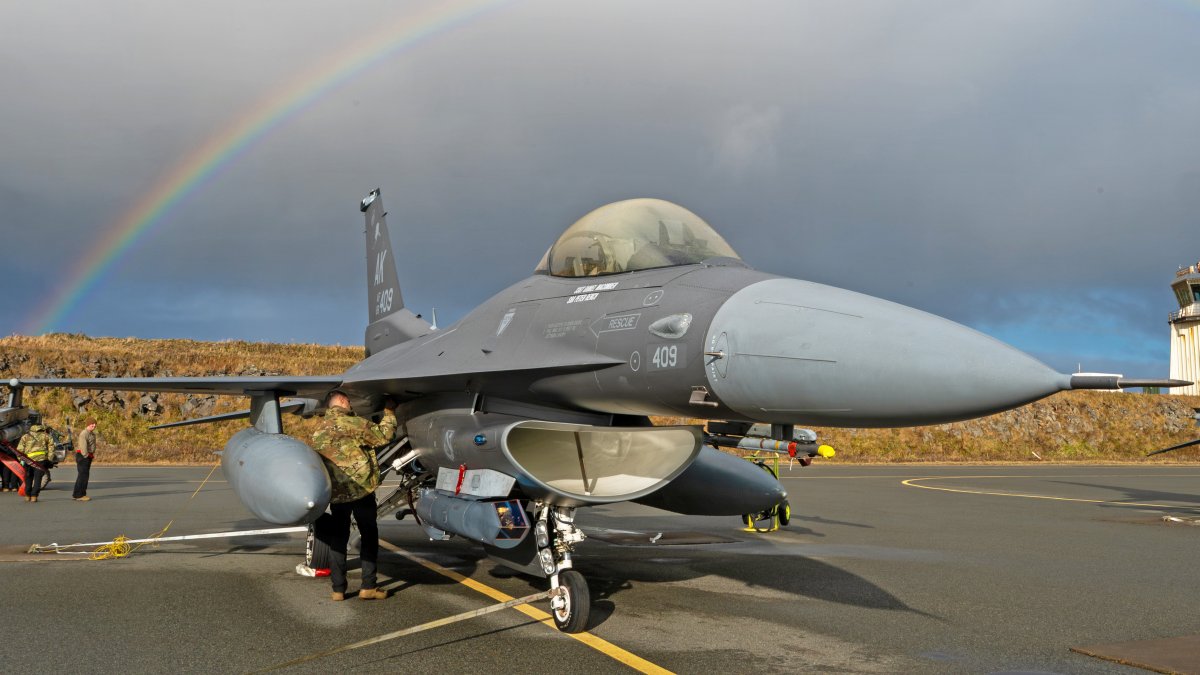
A fully armed U.S. Air Force F-16 taxis at Eareckson Air Station, Alaska, during Operation Noble Defender, Oct. 18, 2026. Noble Defender is a recurring NORAD air defense operation that demonstrates the command’s ability to defend the United States and Canada against threats from every approach. U.S. Air Force photo by Airman 1st Class Frank Houseton
Fighter operations at Eareckson date back to the Cold War, when F-4s and F-15s deployed to the island to support air defense missions against Soviet aircraft. The base’s routine fighter mission ended in the early 1990s, making the October 2026 deployment a notable return to an alert posture at one of America’s westernmost military outposts. In the interim, we have seen fighters, including F-16s , return to Eareckson, but not in the context of air defense alert missions .
Packing live air-to-air missiles, the F-16s were deployed to Eareckson, on Shemya Island , from October 18 through 26, maintaining an alert posture before launching on October 25 as part of a homeland defense mission.
A satellite image of Shemya Island. Eareckson Air Station, with its lengthy runway, is seen along the southern edge. Google Earth
The latest mission began under Operation Noble Defender before transitioning into Operation Noble Eagle in support of northern sovereignty operations. It brought together F-16s operating from Eareckson, F-35As and additional F-16s from Eielson Air Force Base , and Royal Canadian Air Force CF-18 Hornets deployed from Cold Lake, Alberta.
The F-16s operating from Eielson were assigned to the 18th Fighter Interceptor Squadron (FIS), a particularly unusual unit with roots as the 18th Aggressor Squadron. The unit was redesignated in 2024, shifting its primary combat focus from adversary training toward aerospace control and homeland defense in Alaska. Its Block 30 F-16s bring a combination of air defense capabilities and experience in replicating adversary tactics, making them a very specialized outfit, as you can read about here .
From their distributed locations, the Eareckson-based F-16s provided coverage in the southern portion of the theater, while fighters from Eielson operated in the northwest. Canadian CF-18s covered the northern approaches.
U.S. Air Force F-16s assigned to Eielson Air Force Base sit parked on the flight line at Eareckson Air Station, Alaska, on Oct. 19, 2026. U.S. Air Force photo by Airman 1st Class Frank Houseton
An E-3 Sentry Airborne Warning and Control System (AWACS) aircraft from Joint Base Elmendorf-Richardson provided airborne command and control, supported by multiple U.S. KC-135 tankers and a Canadian CC-150 Polaris . An HC-130 Combat King II also participated, providing contingency search and rescue and personnel recovery coverage.
HC-130J Combat King II pilots assigned to the 211th Rescue Squadron pilot an aircraft en route from Joint Base Elmendorf-Richardson to Eareckson Air Station, Alaska, on Oct. 19, 2026. U.S. Air Force photo by Airman 1st Class Frank Houseton
A U.S. Air Force KC-135 lands at Eareckson Air Station, Alaska, on Oct. 18, 2026. U.S. Air Force Photo by Maj. David Brown
The distances involved illustrate the scale of the operation. Eareckson is approximately 1,600 miles from Eielson and 2,600 miles from Cold Lake, requiring substantial coordination and aerial refueling support to bring the different elements together.
A map showing just how remote Shemya Island is, as well as its relative position to mainland Alaska to the east and Russia’s Kamchatka Peninsula to the west. Google Earth
Strategic Significance
Located at the western end of the Aleutian chain, Shemya occupies a strategically important position in the North Pacific, facing the approaches from Russia’s Far East and the wider Pacific region and acting as a gateway to the Arctic. While fighters operating from Joint Base Elmendorf-Richardson , with additional support from Eielson when needed, normally provide coverage across this vast area, Eareckson puts combat aircraft dramatically farther west. Its reactivation as a fighter operating location gives NORAD another forward option, extending the reach of its air defense network well beyond Alaska’s principal airbases.
The island’s military significance was especially pronounced during the Cold War, when it supported detachments of RC-135 surveillance aircraft, including hosting Cobra Ball missile-tracking aircraft, as you can read about here .
An RC-135S Cobra Ball outside a hangar at Shemya. Robert S. Hopkins III
Shemya’s potential role in a future conflict has attracted increasing attention from U.S. military planners in recent years. The island hosts the AN/FPS-108 Cobra Dane radar, a massive phased-array installation that provides critical ballistic missile warning and tracking capabilities. Its position in the western Aleutians, roughly 500 miles from Russia’s Kamchatka Peninsula and approximately 1,000 miles from mainland Alaska, gives it considerable strategic importance but also leaves it isolated and potentially vulnerable.
The growing threat posed by one-way attack drones and cruise missiles also makes protecting Cobra Dane a significant force-protection challenge. Forward-deployed fighters provide a highly adaptable, wide-area defensive layer, intercepting aerial threats before they reach the island, much like the fighter deployments to Diego Garcia in the Indian Ocean.
The vulnerability of Shemya and Cobra Dane has been the focus of several military exercises. In 2021, Green Berets assigned to Special Operations Command North participated in a NORAD exercise that involved deploying to Shemya and preparing to defend the Cobra Dane installation against potential attack. The troops arrived by sea and brought Stinger man-portable air defense systems, highlighting concerns about protecting the island against both conventional and unconventional threats.
Special operators assigned to Special Operations Command North (SOCNORTH), including Army Green Berets from the 10th Special Forces Group, practice the defense of the AN/FPS-108 Cobra Dane early warning and tracking radar at Shemya. U.S. Air Force
In August 2023, elements of the Army’s 160th Special Operations Aviation Regiment, better known as the Night Stalkers, returned to the island as part of Operation Polar Dagger, as TWZ reported at the time . At least two MH-60M Black Hawk helicopters and associated personnel and equipment deployed to Eareckson, with a C-17 transporting personnel and materiel. The exercise explored the ability to rapidly project special operations capabilities into the remote region, protect critical infrastructure, and improve operational awareness in the Arctic and sub-Arctic.
The Cobra Dane radar installation is seen in the background of this picture of an MH-60M helicopter from the 160th SOAR on Shemya Island during the Polar Dagger exercise in 2023. U.S. Army
Taken together, these developments point to growing interest in Shemya as a potential forward operating location in a wider North Pacific defense network. Its radar, long runway, and remote position offer considerable advantages, but its isolation also presents significant logistical and force-protection challenges.
The return of F-16s to an air defense alert posture at Eareckson adds another dimension to the installation. With its ability to host forward-deployed fighters, the base can maintain an alert posture and generate homeland defense sorties. Its location would be particularly useful for responding to activity approaching Alaska from the western Pacific and the Bering Sea. At the same time, having fighters at Eareckson provides an organic means of defending Shemya’s critical surveillance assets.
A U.S. Air Force F-16 taxis at Eareckson Air Station, Alaska, on Oct. 18, 2026. U.S. Air Force Photo by Maj. David Brown
There are other potential benefits in dispersing fighter operations away from Alaska’s principal airbases. In a major conflict, those installations could be subject to missile strikes and other attacks, making alternative operating locations valuable. Eareckson’s long runway, ramp space, and arresting equipment provide a foundation for such operations, although sustaining fighters there over an extended period would require significant fuel, munitions, maintenance, and force-protection support.
Outside of Eareckson, Alaska has a network of remote airfields that can support dispersed fighter operations during contingencies. These include King Salmon Airport on the Alaska Peninsula, which hosted four 18th FIS F-16s during an Agile Combat Employment deployment in September last year.
All this comes as concerns grow about the level of protection afforded to Air Force airbases. There are growing calls for the U.S. military to invest in new hardened shelters, and the lack of physical hardening of bases has been hammered home by the experiences from the war with Iran, which have underscored the huge risks posed to aircraft sat out in the open on flightlines .
The October deployment does not mean Eareckson is being transformed into a permanently staffed fighter base. It does, however, demonstrate that NORAD can use this isolated installation as another node in its air defense network, extending the geographic reach and flexibility of its operations across the North Pacific.
A U.S. Air Force maintainer performs preflight inspections on an F-16 at Eareckson Air Station, Alaska, on Oct. 18, 2026. U.S. Air Force Photo by Maj. David Brown
For NORAD, having additional locations from which it can generate air defense sorties is a major plus. The combination of forward-based fighters, airborne command and control, aerial refueling, and Canadian participation demonstrates another way of distributing combat power across a broad geographic area rather than depending exclusively on a handful of major bases.
More broadly, the Aleutians are assuming renewed strategic importance as the westernmost part of U.S. territory, positioned at the intersection of the North Pacific and Arctic theaters. As military competition with both Russia and China intensifies, the island chain offers a valuable forward position for surveillance, air defense, and power projection, as well as a means of gaining time and distance against potential threats approaching North America or operating across the Pacific. The return of F-16 alert operations to Eareckson adds another piece to that defensive architecture, underscoring the continued military relevance of this remote island chain.
Contact the author: thomas@thewarzone.com
Comments couldn’t be loaded. Please refresh the page.
发布于美国东部时间2026年10月30日下午1:50
美国空军一等兵弗兰克·豪斯顿拍摄的照片
作为时代变迁的标志,多年来首次,美国空军战斗机重返位于阿拉斯加偏远阿留申群岛的埃里克森空军基地,进入防空警戒状态。这标志着北美防空司令部(NORAD)在加强其防御能力方面取得了显著进展,该防空基地位于俄罗斯的后门,是北美北部和太平洋沿岸的重要战略要地。此次部署最终促成了一项多国联合防空任务,美加两国战斗机在数千英里的范围内展开行动,反映出美国日益重视战略地位日益重要的北极和北太平洋地区。
2026年10月18日,一架全副武装的美国空军F-16战斗机在阿拉斯加埃里克森空军基地滑行,当时正值“高贵卫士行动”期间。“高贵卫士行动”是北美防空司令部(NORAD)的一项例行防空行动,旨在展示该司令部抵御来自各个方向威胁、保卫美国和加拿大的能力。美国空军一等兵弗兰克·豪斯顿摄。
埃里克森岛的战斗机行动可以追溯到冷战时期,当时F-4和F-15战斗机部署到该岛,支援对苏联飞机的防空任务。该基地的例行战斗机任务在20世纪90年代初结束,因此2026年10月的部署标志着美国最西端的军事前哨之一重新恢复了警戒状态。在此期间,我们看到包括F-16在内的战斗机重返埃里克森岛,但并非执行防空警戒任务。
10 月 18 日至 26 日,携带实弹空空导弹的 F-16 战机部署在谢米亚岛的埃里克森空军基地,并保持警戒状态,于 10 月 25 日作为国土防御任务的一部分发射升空。
谢米亚岛的卫星图像。埃里克森空军基地及其长长的跑道位于岛屿南缘。谷歌地球
最新任务始于“高贵捍卫者行动”,之后转为“高贵雄鹰行动”,以支持北方主权行动。该行动汇集了从艾尔森空军基地起飞的F-16战斗机、从艾尔森空军基地起飞的F-35A战斗机和额外的F-16战斗机,以及从阿尔伯塔省冷湖空军基地部署的加拿大皇家空军CF-18“大黄蜂”战斗机。
从艾尔森空军基地起飞的F-16战机隶属于第18战斗机拦截中队(FIS),这是一支非常特殊的部队,其前身是第18假想敌中队。该部队于2024年更名,其主要作战任务从假想敌训练转向阿拉斯加的空域控制和国土防御。其Block 30型F-16战机兼具防空能力和模拟假想敌战术的经验,使其成为一支非常专业的部队,详情请点击此处阅读。
从分散部署的埃里克森空军基地出发,F-16战斗机负责战区南部区域的空中掩护,而艾尔森空军基地的战斗机则负责西北部区域的作战。加拿大空军的CF-18战斗机则负责北部区域的空中掩护。
2026年10月19日,隶属于艾尔森空军基地的美国空军F-16战斗机停放在阿拉斯加州艾尔森空军基地的飞行跑道上。美国空军一等兵弗兰克·豪斯顿摄
来自埃尔门多夫-理查森联合基地的E-3“哨兵”空中预警与控制系统(AWACS)飞机提供空中指挥与控制,多架美国KC-135加油机和一架加拿大CC-150“北极星”运输机提供支援。一架HC-130“战斗之王II”运输机也参与其中,提供应急搜救和人员救援保障。
2026年10月19日,隶属于第211救援中队的HC-130J“战斗之王II”运输机飞行员驾驶飞机从埃尔门多夫-理查森联合基地飞往阿拉斯加州埃里克森空军基地。美国空军一等兵弗兰克·豪斯顿摄。
2026年10月18日,一架美国空军KC-135加油机降落在阿拉斯加州埃里克森空军基地。美国空军少校大卫·布朗摄。
所涉距离体现了此次行动的规模。埃里克森空军基地距离艾尔森空军基地约1600英里,距离冷湖空军基地约2600英里,需要大量的协调和空中加油支持才能将各个作战单元对接起来。
这张地图显示了谢米亚岛的偏远程度,以及它与东部的阿拉斯加大陆和西部的俄罗斯堪察加半岛的相对位置。谷歌地球
战略意义
谢米亚岛位于阿留申群岛西端,占据着北太平洋重要的战略位置,面向俄罗斯远东地区和更广阔的太平洋区域,是通往北极的门户。通常情况下,埃尔门多夫-理查森联合基地的战斗机(必要时由艾尔森空军基地提供支援)负责覆盖这片广袤的区域,而艾尔森空军基地则将作战飞机部署在更西边的区域。重新启用艾尔森空军基地作为战斗机作战基地,为北美防空司令部(NORAD)提供了又一个前沿部署选择,使其防空网络的覆盖范围远远超出阿拉斯加的主要空军基地。
该岛的军事意义在冷战时期尤为突出,当时它为 RC-135 侦察机分遣队提供了支持,包括驻扎眼镜蛇球导弹跟踪飞机,您可以在这里阅读相关内容。
一架RC-135S“眼镜蛇球”侦察机停在谢米亚空军基地的机库外。罗伯特·S·霍普金斯三世
近年来,谢米亚岛在未来冲突中的潜在作用日益受到美国军事策划者的关注。该岛部署了AN/FPS-108“眼镜蛇丹”雷达,这是一套大型相控阵雷达系统,具备关键的弹道导弹预警和跟踪能力。谢米亚岛位于阿留申群岛西部,距俄罗斯堪察加半岛约500英里,距阿拉斯加大陆约1000英里,地理位置使其具有重要的战略意义,但也使其处于孤立状态,容易受到攻击。
单向攻击无人机和巡航导弹日益增长的威胁,也使得保护“眼镜蛇丹”号成为一项重大的部队防护挑战。前沿部署的战斗机能够提供高度灵活、覆盖范围广的防御层,在空中威胁到达岛屿之前将其拦截,这与部署在印度洋迪戈加西亚岛的战斗机类似。
谢米亚岛和科布拉丹基地的脆弱性一直是多次军事演习的重点。2021年,隶属于北方特种作战司令部的绿色贝雷帽特种部队参与了北美防空司令部(NORAD)的一次演习,演习内容包括部署到谢米亚岛,并准备防御科布拉丹基地免受潜在攻击。部队乘船抵达,并携带了“毒刺”便携式防空系统,这凸显了保护该岛免受常规和非常规威胁的担忧。
隶属于北方特种作战司令部(SOCNORTH)的特种作战人员,包括来自第10特种部队群的陆军绿色贝雷帽特种部队,在谢米亚空军基地进行AN/FPS-108“眼镜蛇”预警和跟踪雷达的防御演练。美国空军
2023年8月,美国陆军第160特种作战航空团(绰号“夜行者”)的部分兵力重返埃里克森岛,参与“极地匕首行动”(Operation Polar Dagger),正如TWZ当时报道的那样。至少两架MH-60M“黑鹰”直升机及其相关人员和装备部署至埃里克森岛,另有一架C-17运输机负责人员和物资运输。此次演习旨在检验快速向偏远地区投送特种作战能力、保护关键基础设施以及提升北极和亚北极地区的作战态势感知能力。
这张照片拍摄于2023年,地点是谢米亚岛,照片背景中可以看到美国陆军第160特种作战航空团的一架MH-60M直升机,当时正值“极地匕首”联合军事演习期间。
综上所述,这些进展表明,谢米亚作为北太平洋防御网络中潜在的前沿作战地点,正受到越来越多的关注。其雷达、长跑道和偏远位置提供了显著优势,但其孤立性也带来了巨大的后勤和部队防护挑战。
F-16战机重返埃里克森空军基地,恢复防空警戒状态,为该基地增添了新的功能。凭借其前沿部署战斗机的能力,该基地能够保持警戒状态并执行国土防御任务。其地理位置对于应对来自西太平洋和白令海的、逼近阿拉斯加的威胁活动尤为重要。同时,在埃里克森空军基地部署战斗机也为保护谢米亚空军基地的关键监视资产提供了一种切实可行的手段。
2026年10月18日,一架美国空军F-16战斗机在阿拉斯加州埃里克森空军基地滑行。美国空军少校大卫·布朗摄
将战斗机行动分散到阿拉斯加主要空军基地之外还有其他潜在好处。在重大冲突中,这些基地可能遭受导弹袭击和其他攻击,因此备选作战地点就显得尤为重要。埃里克森空军基地拥有长跑道、停机坪和阻拦设备,为这类行动提供了基础,但长期维持战斗机在该基地的驻扎需要大量的燃料、弹药、维护和部队防护保障。
除了埃里克森空军基地外,阿拉斯加还拥有一个远程机场网络,可在突发事件期间支持分散的战斗机作战行动。其中包括位于阿拉斯加半岛的金鲑机场,去年9月,该机场曾接待过第18战斗机拦截中队的四架F-16战斗机,执行敏捷作战部署任务。
这一切都发生在人们日益担忧空军基地安全防护水平之际。各界呼吁美军投资建设新型加固掩体的呼声越来越高,而两伊战争的经验更是凸显了基地缺乏物理加固的严重性,这场战争凸显了停放在跑道露天的飞机所面临的巨大风险。
10月份的部署并不意味着埃里克森空军基地将被改造成一个常驻战斗机基地。但这确实表明,北美防空司令部可以将这个孤立的基地作为其防空网络中的另一个节点,从而扩展其在北太平洋地区的地理覆盖范围和作战灵活性。
2026年10月18日,在阿拉斯加州埃里克森空军基地,一名美国空军维护人员正在对一架F-16战斗机进行飞行前检查。美国空军少校大卫·布朗摄
对于北美防空司令部(NORAD)而言,拥有更多可用于执行防空任务的基地是一项重大优势。前沿部署战斗机、空中指挥控制、空中加油以及加拿大参与的结合,展现了一种在广阔地理区域内分散作战力量的新方式,而非仅仅依赖少数几个主要基地。
更广泛地说,阿留申群岛作为美国领土最西端,地处北太平洋和北极战区的交汇点,其战略重要性日益凸显。随着与俄罗斯和中国的军事竞争加剧,该岛链为监视、防空和力量投射提供了宝贵的前沿阵地,同时也为应对可能逼近北美或在太平洋上活动的潜在威胁提供了争取时间和距离的手段。F-16战机重返埃里克森空军基地执行警戒任务,进一步完善了这一防御体系,凸显了这条偏远岛链持续的军事价值。
联系作者:thomas@thewarzone.com
评论加载失败,请刷新页面。