Fixing the ‘bottom rung’: S’pore fresh grads urged to use, critique AI to get a leg-up in employment改善就业“底层”:新加坡应届毕业生被鼓励使用和批判人工智能,以在就业中脱颖而出
Singapore fresh graduates urged to use and critique AI as employers raise the bar for entry-level jobs. Read more at straitstimes.com.
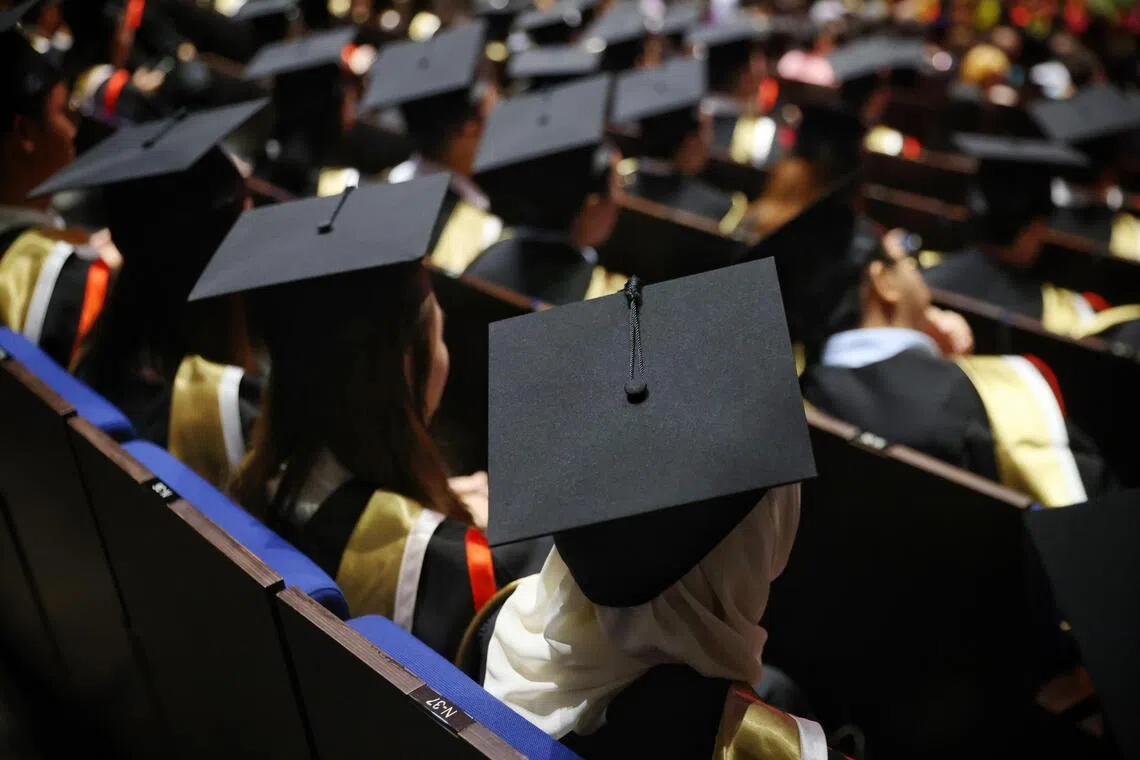
To help students build more sustained and in-depth work experience, placements for longer internships and workplace attachments have also gained traction.
ST PHOTO: JASON QUAH
Published Nov 01, 2026, 05:00 AM
Updated Nov 01, 2026, 05:00 AM
SINGAPORE - Where junior software developers were once hired to hammer out routine code, they are now expected to act as critical gatekeepers by auditing AI-generated drafts for security, logic and business fit.
With the growing capabilities of artificial intelligence that can take over routine tasks, employers across sectors are no longer content with entry-level workers who can produce a first draft of software code or marketing scripts , business associations, schools and manpower groups told The Straits Times.
Instead, being able to put AI tools to work while applying sound judgment skills is now the new basic expectation.
This shift comes amid concerns from the government about the “bottom rung” of the career ladder being broken by AI, said Prime Minister Lawrence Wong earlier in October.
He had also urged employers to be more deliberate in training and mentoring junior hires.
Business associations and manpower groups said that employers are still keen to hire fresh graduates, but those with prior industry experience and knowledge of AI tools will have a leg-up.
“Graduates will be expected to spend less time producing a first draft and more time applying judgement, engaging clients, solving cross-functional problems and checking the quality of AI-generated work,” said Kok Ping Soon, chief executive of the Singapore Business Federation.
“AI may produce the first draft, but people must still provide the judgment, context, and accountability.”
For instance, consolidating spreadsheet data and checking transactions for inconsistencies used to be the bread and butter for junior finance executives, but AI tools can now assist with such tasks, said Linda Teo, country manager of recruitment firm ManpowerGroup Singapore.
“But someone still needs to verify the accuracy of the output, investigate discrepancies, understand the underlying business context, and determine what actions should be taken,” said Teo.
Similarly, junior marketing executives who had sunk much time drafting social copies and writing reports in the past can now use AI tools to speed up the work .
These junior marketers are now expected to review AI-generated copies, use AI to analyse audience data and develop campaign concepts, and show how they assess the results and refine the final recommendations, said Teo.
Apart from knowledge of working with AI tools, human capabilities such as communication, creativity, empathy, and accountability will also become more valuable as AI improves, said Kok.
He urged youth to to gain practical experience early through internships, apprenticeships, and part-time work.
“These experiences help young people apply knowledge, navigate ambiguity and develop sound workplace judgment,” said Kok.
Lengthy internships in vogue
To help students build more sustained and in-depth work experience, placements for longer internships and workplace attachments have gained traction.
Over the next three years, 3,000 tertiary students are expected to take on year-long internships that would give them time to contribute to substantial projects and learn from experienced colleagues, under a programme led by the Infocomm Media Development Authority.
In a similar vein, the Singapore Institute of Technology (SIT) in September began piloting a new “2+2” learning model, which would see select students spend nearly half of their four-year degree programme attached to a workplace.
“Rather than experiencing the workplace through a shorter internship, students have more time to integrate into workplace teams, tackle authentic problems, receive sustained feedback and mentorship, and take on progressively more complex responsibilities,” said Susanna Leong, SIT’s deputy president (academic) and provost.
“It also reinforces the important role of employers in providing purposeful assignments, supervision, feedback, and mentorship as the nature of work evolves.”
Ultimately, the quality of internship experiences should still matter more than the length of an internship, said NTUC Youth’s executive secretary Natasha Choy, who emphasised the importance of meaningful responsibilities and strong mentorship.
“(Internships) should not simply be extended without meaningful learning experiences, and risk replacing entry-level roles,” said Choy.
Learning re-designed in schools
In preparing graduates for a changing workforce, polytechnics and universities have also redesigned their curriculum to ensure that students have a solid grasp of applying AI know-how to domain knowledge.
Since August, it became mandatory for National University of Singapore (NUS) students across all disciplines to undergo foundational modules in AI.
“For example, law students first learn how to draft contractual clauses independently, before evaluating AI-generated critiques,” said Bernard Tan, senior vice-provost for undergraduate education at NUS.
“Business students use AI-powered simulations to practice negotiations, evaluate recommendations and sharpen their decision-making skills. Such approaches ensure that students develop core competencies while learning to harness AI thoughtfully and effectively.”
Over at Singapore Management University, assessments are redesigned to go beyond conventional take-home assignments, towards oral presentations, live demonstrations, and staged submissions. But graduates still face increasing challenges in securing their first job.
“Based on our conversations with employers, more cautious hiring outlook reflects a combination of factors such as geopolitical uncertainties, broader economic conditions, and adjustments to post-pandemic hiring levels, and the growing adoption of AI,” said Prasanthi Guda, director of SMU’s Dato’ Kho Hui Meng Career Centre.
“AI is reshaping certain job functions and skills employers seek, but it is not the sole driver of the more challenging graduate market.”
According to a 2026 survey done by the ManpowerGroup which involved 651 firms in Singapore, the information and utilities sectors were among the hardest hit by early-career hiring declines.
Employers in both sectors said AI-driven automation and cost pressures favour experienced candidates who can contribute immediately, but it is also hard to find these experienced candidates , said Teo.
Chee Yeow Meng, provost and chief academic and innovation officer at the Singapore University of Technology and Design, urged job candidates to hone their communication skills, such as persuasion and dispute management, as these are evergreen.
“Seek out work that stretches you, especially those that involve other people, volunteer to lead a project, and try building something that someone else will actually use,” said Chee.
“Some of the most valuable learning comes from struggling with difficult problems and working through them with others. We should not lose sight of that as AI becomes more capable.”
AI/artificial intelligence
Universities - Singapore
为了帮助学生积累更持久、更深入的工作经验,更长时间的实习和工作场所实习也越来越受欢迎。
《海峡时报》摄影:JASON QUAH
发布于 2026 年 11 月 1 日上午 5:00
更新于2026年11月1日上午5:00
新加坡——过去,初级软件开发人员的工作是编写例行代码,而现在,他们被期望扮演关键的把关人角色,审核人工智能生成的草稿,确保其安全性、逻辑性和业务契合度。
据《海峡时报》报道,商业协会、学校和人力资源团体表示,随着人工智能能力的不断增强,它可以接管日常任务,各行各业的雇主不再满足于只能编写软件代码或营销脚本初稿的入门级员工。
如今,能够运用人工智能工具并结合良好的判断能力已成为新的基本要求。
总理黄循财在 10 月初曾表示,政府担心人工智能会打破职业阶梯的“底层”,而这一转变正是在此背景下发生的。
他还敦促雇主们更加重视对新员工的培训和指导。
商业协会和人力资源团体表示,雇主仍然热衷于招聘应届毕业生,但那些拥有行业经验和人工智能工具知识的人将更有优势。
新加坡商业联合会首席执行官郭炳顺表示:“毕业生将被要求减少撰写初稿的时间,而将更多的时间用于运用判断力、与客户沟通、解决跨职能问题以及检查人工智能生成作品的质量。”
“人工智能或许可以生成初稿,但最终的判断、背景和责任仍然需要由人来承担。”
例如,人力资源公司 ManpowerGroup Singapore 的国家经理 Linda Teo 表示,过去,整合电子表格数据和检查交易是否存在不一致是初级财务主管的日常工作,但现在人工智能工具可以帮助完成这些任务。
“但仍然需要有人来验证输出结果的准确性,调查差异,了解潜在的业务背景,并确定应该采取哪些行动,” Teo 说。
同样,过去花费大量时间撰写社交媒体文案和报告的初级营销主管现在可以使用人工智能工具来加快工作速度。
Teo表示,现在这些初级营销人员需要审核人工智能生成的文案,利用人工智能分析受众数据并制定营销活动方案,还要展示他们如何评估结果并完善最终建议。
Kok表示,除了掌握使用人工智能工具的知识外,随着人工智能的进步,沟通、创造力、同理心和责任感等人类能力也将变得更加有价值。
他敦促青年人尽早通过实习、学徒和兼职工作获得实践经验。
Kok表示:“这些经历有助于年轻人运用知识、应对模糊情况并培养良好的职场判断力。”
长期实习风靡一时
为了帮助学生积累更持久、更深入的工作经验,更长时间的实习和工作场所实习机会越来越受欢迎。
在接下来的三年里,预计将有 3000 名高等院校学生参加为期一年的实习,让他们有时间参与实质性项目并向经验丰富的同事学习。该计划由新加坡资讯通信媒体发展局牵头。
类似地,新加坡理工大学(SIT)于9月开始试行新的“2+2”学习模式,该模式将让部分学生在四年学位课程中近一半的时间在工作场所进行实习。
“学生们没有通过较短的实习来体验职场,而是有更多的时间融入职场团队,解决实际问题,获得持续的反馈和指导,并承担越来越复杂的责任,”新加坡理工大学副校长(学术)兼教务长梁淑娜 (Susanna Leong) 说。
“这也强调了随着工作性质的演变,雇主在提供有意义的任务、监督、反馈和指导方面的重要作用。”
全国职工总会青年团执行秘书娜塔莎·乔伊表示,归根结底,实习经历的质量仍然比实习时长更重要,她强调了有意义的责任和强有力的导师的重要性。
Choy表示:“(实习)不应该只是简单地延长,而应该提供有意义的学习体验,否则可能会取代入门级职位。”
学校学习模式的重新设计
为了让毕业生适应不断变化的工作环境,理工学院和大学也重新设计了课程,以确保学生能够扎实掌握将人工智能知识应用于领域知识的能力。
自八月起,新加坡国立大学(NUS)所有专业的学生都必须修读人工智能基础模块。
“例如,法学院学生首先要学习如何独立起草合同条款,然后再评估人工智能生成的评论,”新加坡国立大学本科教育高级副教务长陈伯纳德说。
“商科学生利用人工智能模拟进行谈判练习、评估建议并提高决策能力。这种方法确保学生在学习如何深思熟虑、有效运用人工智能的同时,培养核心竞争力。”
新加坡管理大学的考核方式已经过重新设计,不再局限于传统的居家作业,而是扩展到口头报告、现场演示和分阶段提交等形式。但毕业生在寻找第一份工作时仍然面临着越来越大的挑战。
“根据我们与雇主的交流,更加谨慎的招聘前景反映了多种因素的综合影响,例如地缘政治的不确定性、更广泛的经济状况、疫情后招聘水平的调整以及人工智能的日益普及,”新加坡管理大学拿督许慧明职业中心主任普拉桑蒂·古达表示。
“人工智能正在重塑某些工作职能和雇主所需的技能,但它并不是导致毕业生就业市场竞争日益激烈的唯一驱动因素。”
根据万宝盛华集团 (ManpowerGroup) 2026 年对新加坡 651 家公司进行的调查,信息和公用事业行业是受早期职业招聘下降影响最严重的行业之一。
Teo表示,这两个行业的雇主都表示,人工智能驱动的自动化和成本压力有利于能够立即做出贡献的经验丰富的候选人,但找到这些经验丰富的候选人也很难。
新加坡科技设计大学教务长兼首席学术与创新官谢耀明敦促求职者磨练沟通技巧,例如说服力和纠纷管理能力,因为这些技能永不过时。
Chee说:“寻找能让你挑战自我的工作,尤其是那些需要与他人合作的工作,自愿领导一个项目,并尝试创造一些其他人真正会使用的东西。”
“一些最有价值的学习来自于与他人一起努力解决难题。随着人工智能能力的不断增强,我们不应忽视这一点。”
人工智能
新加坡大学