Australia preps Bluebottle USV for submarine-hunting role澳大利亚为“蓝瓶”无人水面艇执行反潜任务做准备
"I want potential adversaries to understand that, when they see an Ocius Bluebottle USV, it’s a signal to get out of our ocean,” Minister for Defence Industry Pat Conroy said.
Share on Facebook (Opens in new window) Facebook
Share on X (Opens in new window) X
Share on Bluesky (Opens in new window) Bluesky
Share on Reddit (Opens in new window) Reddit
Share on LinkedIn (Opens in new window) LinkedIn
Share using Native tools Share Copied to clipboard
Share on Mail (Opens in new window) Mail
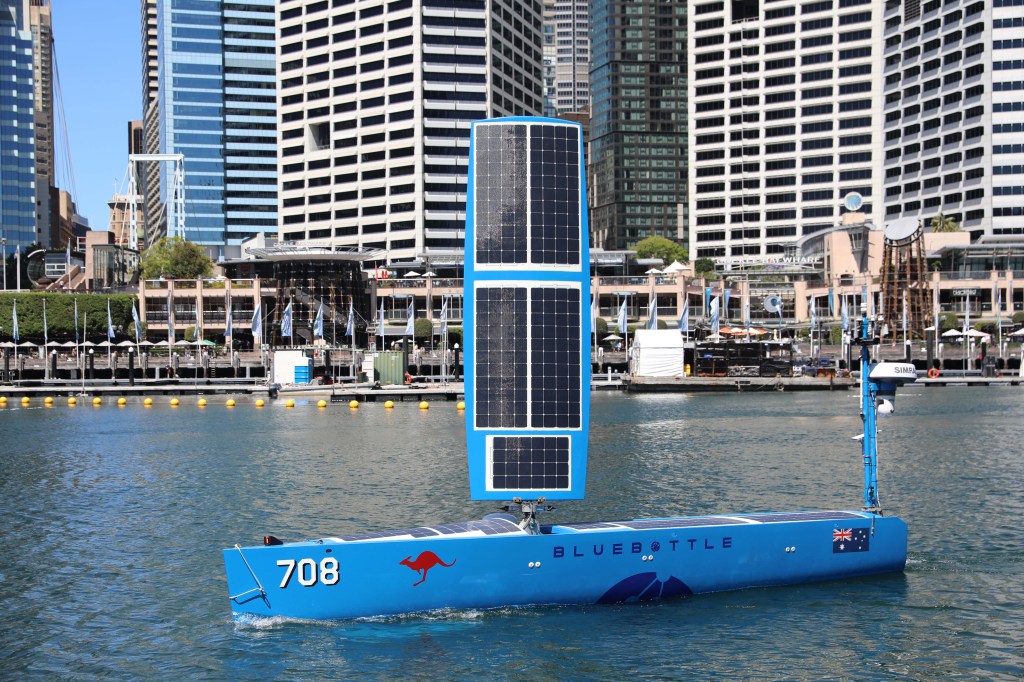
Australia’s Border Force operates 15 Bluebottle USVs, with an additional 40 vessels on order for the Royal Australian Navy. (Gordon Arthur/staff)
CHRISTCHURCH, New Zealand — Australia’s Navy is doubling down on unmanned systems as it adopts platforms like the Bluebottle unmanned surface vessel and Ghost Shark and Speartooth extra-large autonomous underwater vehicles.
The Bluebottle unmanned surface vessel – or USV for short – produced by Ocius Technology, is powered primarily by wind, wave and sun to give persistent, at-sea surveillance for weeks at a time.
“I’ve said before that I want potential adversaries to understand that, when they see an Ocius Bluebottle USV, it’s a signal to get out of our ocean,” Minister for Defence Industry Pat Conroy has said.
Australia possesses the world’s third-largest exclusive economic zone, behind only those of France and the United States.
As well as conducting surveillance, the autonomous Bluebottle has been given a new tool to help it hunt enemy submarines on Australia’s periphery: the BlueSentry thin-line, fiber-optic sonar towed behind the Bluebottle.
In fact, Thales Australia opened an assembly line for the BlueSentry sonar in late October 2026. This multimillion-dollar facility – jointly funded by the company and the Australian government – is located in western Sydney.
As well as the BlueSentry, the complex will design, make, integrate and sustain towed-array sonars for submarines and warships. Thales will produce towed-array sonars for Australia’s six incoming Hunter-class frigates being constructed by BAE Systems Australia.
Furthermore, the plant will sustain existing Thales sonars on Australia’s six Collins-class diesel-electric submarines.
“The new facility boosts this Australian-made deterrence by ensuring end-to-end sovereign manufacturing capability and capacity for next-generation, towed-array sonar systems that support submarines and surface combatants, and thin-line towed arrays for uncrewed maritime systems serving both Australian and export markets,” Thales Australia said in a statement.
Under Project Sea 1200, the Royal Australian Navy ordered 40 Bluebottle USVs for A$176 million (US$124 million) in March this year, while the country’s Border Command already operates 15 other Bluebottles to monitor waters north of Australia.
With demand for Bluebottles expanding, Ocius opened a new engineering, production and maintenance hub for the USVs in Sydney on Oct. 16, 2026. It incorporates a 24/7 global operations center to monitor Bluebottles crisscrossing the world’s oceans.
A week earlier, Ocius Technology opened its first maintenance base outside Australia. That facility is located in Auckland, New Zealand, and it will service two Bluebottles acquired by New Zealand’s navy in April 2025.
Last month, Australia also announced it was donating Bluebottles to Fiji. The first units should arrive there in early 2027, and they will help combat drug smuggling, illegal fishing and organized crime.
Australian Navy Chief Vice Adm. Matt Buckley said: “In terms of our platforms themselves, of course they must continue to evolve, and the evolution of modular payloads that we can fit to uncrewed vessels like the Ghost Shark, like the Speartooth, like the Bluebottle creates enormous flexibility for us and allows us to adapt these systems to future missions and future requirements.”
Gordon Arthur is an Asia correspondent for Defense News. After a 20-year stint working in Hong Kong, he now resides in New Zealand. He has attended military exercises and defense exhibitions in about 20 countries around the Asia-Pacific region.
分享至 Facebook(在新窗口中打开) Facebook
分享至 X(在新窗口中打开)X
在 Bluesky 上分享(在新窗口中打开)Bluesky
分享到 Reddit(在新窗口中打开)
在领英上分享(在新窗口中打开)领英
使用原生工具分享 已复制到剪贴板
分享至邮件(在新窗口中打开)邮件
澳大利亚边防部队目前装备有15艘“蓝瓶”无人水面艇,皇家澳大利亚海军还订购了另外40艘。(戈登·阿瑟/工作人员)
新西兰基督城——澳大利亚海军正在加倍投入无人系统,采用了诸如“蓝瓶号”无人水面舰艇以及“幽灵鲨”和“矛牙”超大型自主水下航行器等平台。
由 Ocius Technology 生产的 Bluebottle 无人水面艇(简称 USV)主要依靠风能、波浪能和太阳能驱动,可连续数周进行海上监视。
“我之前说过,我希望潜在的对手明白,当他们看到 Ocius Bluebottle 无人水面艇时,这是让他们离开我们海洋的信号,”国防工业部长帕特·康罗伊说道。
澳大利亚拥有世界第三大专属经济区,仅次于法国和美国。
除了进行监视外,自主式“蓝瓶”潜艇还配备了一种新工具,可以帮助它在澳大利亚周边地区搜寻敌方潜艇:即拖在“蓝瓶”潜艇后面的“蓝哨兵”细线光纤声呐。
事实上,泰雷兹澳大利亚公司于 2026 年 10 月下旬开设了一条 BlueSentry 声呐装配线。这座耗资数百万美元的工厂由该公司和澳大利亚政府共同出资,位于悉尼西部。
除了BlueSentry声呐系统外,该综合设施还将设计、制造、集成和维护用于潜艇和军舰的拖曳阵列声呐。泰雷兹公司将为澳大利亚即将下水的六艘由BAE系统澳大利亚公司建造的“猎人”级护卫舰生产拖曳阵列声呐。
此外,该工厂还将为澳大利亚六艘柯林斯级柴电潜艇上现有的泰雷兹声呐提供支持。
泰雷兹澳大利亚公司在一份声明中表示:“新设施通过确保下一代拖曳阵列声呐系统的端到端自主制造能力和产能,增强了澳大利亚制造的威慑力。这些系统支持潜艇和水面作战舰艇,以及用于无人海上系统的细线拖曳阵列,服务于澳大利亚和出口市场。”
今年 3 月,澳大利亚皇家海军根据“海洋 1200 项目”订购了 40 艘“蓝瓶”无人水面艇,价值 1.76 亿澳元(1.24 亿美元)。与此同时,该国边境司令部已经运营了 15 艘“蓝瓶”无人水面艇,用于监测澳大利亚北部水域。
随着对蓝瓶无人水面艇的需求不断增长,Ocius 于 2026 年 10 月 16 日在悉尼开设了一个新的工程、生产和维护中心,用于无人水面艇。该中心配备了一个 24/7 全球运营中心,用于监控蓝瓶无人水面艇在世界各大洋上的航行情况。
一周前,Ocius Technology 在澳大利亚以外开设了其首个维修基地。该基地位于新西兰奥克兰,将为新西兰海军于 2025 年 4 月采购的两架“蓝瓶”无人机提供维修服务。
上个月,澳大利亚也宣布将向斐济捐赠蓝瓶水母。首批水母预计将于2027年初抵达斐济,它们将有助于打击毒品走私、非法捕鱼和有组织犯罪。
澳大利亚海军司令马特·巴克利中将表示:“就我们自身的平台而言,它们当然必须不断发展,而我们可以安装在像‘幽灵鲨’、‘矛牙’、‘蓝瓶’这样的无人舰艇上的模块化有效载荷的不断发展,为我们创造了巨大的灵活性,使我们能够调整这些系统以适应未来的任务和需求。”
戈登·阿瑟是《防务新闻》的亚洲特派记者。在香港工作20年后,他现居新西兰。他曾到访亚太地区约20个国家,参加过军事演习和防务展览。