US Navy turns to AI firm Domino for options to counter Iranian mines美国海军向人工智能公司Domino寻求应对伊朗水雷的方案。
The core of Domino’s pitch - and the Navy’s wager - is speed.
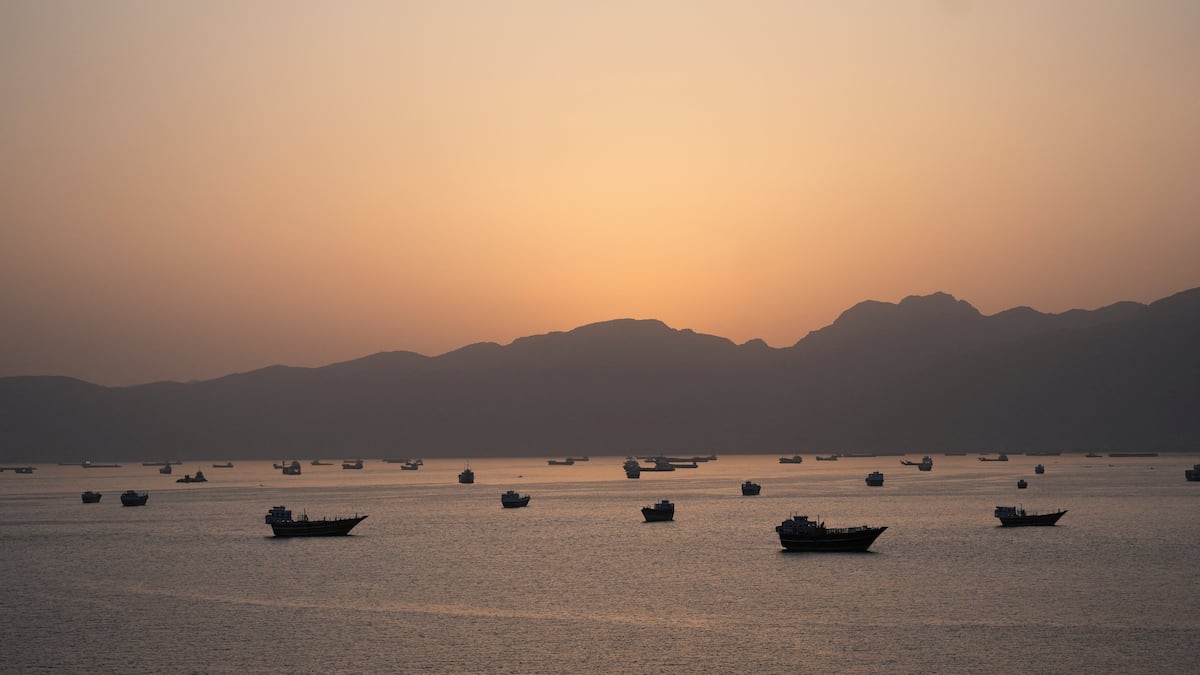
WASHINGTON — The U.S. Navy is ramping up its AI capabilities to hunt for Iranian mines in the Strait of Hormuz, one of the world’s most critical shipping lanes, a recently awarded contract shows.
President Donald Trump has said the U.S. Navy is clearing Iranian mines from the strait, a vital sea route for oil shipments, whose disruption is increasingly threatening the global economy. Sweeping for underwater explosives could take months despite a tenuous ceasefire between the U.S. and Iran in their weeks-long war.
The up to $100 million contract for the San Francisco artificial intelligence company Domino Data Lab could quicken this process with software that can teach underwater drones to identify new types of mines in a matter of days.
“Mine-hunting used to be a job for ships,” Thomas Robinson, Domino’s chief operating officer, said in an interview with Reuters. “It’s becoming a job for AI. The Navy is paying for the platform that lets it train, govern, and field that AI at a speed required for contested waters that block global trade and imperil sailors.”
Last week, the U.S. Navy awarded the up to $99.7 million contract to expand Domino’s role as the AI backbone of the Navy’s Project AMMO - Accelerated Machine Learning for Maritime Operations - a program to make underwater mine detection faster, more accurate, and less dependent on human sailors.
The software integrates data from multiple sensor types, including side-scan sonar and visual imaging systems, and allows the Navy to monitor how well various AI detection models are performing in the field, identify failures, and push corrections to improve performance.
The core of Domino’s pitch - and the Navy’s wager - is speed. Before the company’s involvement, updating the AI models that power the Navy’s unmanned underwater vehicles (UUVs) to recognize new or previously unseen mines could take up to six months. Domino says it has cut that cycle to days.
Robinson illustrated the relevance to the Middle East crisis: “If there were UUVs in the Baltic Sea trained on Russian mines, and then they needed to be deployed to the Strait of Hormuz to detect Iranian mines, with Domino’s technology, the Navy could be ready in a week rather than a year.”
A Navy spokesman was not immediately able to provide comment.
华盛顿——最近授予的一份合同显示,美国海军正在提升其人工智能能力,以在霍尔木兹海峡(世界上最重要的航道之一)搜寻伊朗水雷。
美国总统唐纳德·特朗普表示,美国海军正在清除霍尔木兹海峡的伊朗水雷。霍尔木兹海峡是石油运输的重要海上通道,其中断正日益威胁着全球经济。尽管美伊两国在持续数周的战争中达成了脆弱的停火协议,但清除水下爆炸物的工作可能仍需数月时间。
旧金山人工智能公司 Domino Data Lab 获得了一份价值高达 1 亿美元的合同,其开发的软件可以在几天内教会水下无人机识别新型水雷,从而加快这一进程。
“过去扫雷是舰船的工作,”多米诺首席运营官托马斯·罗宾逊在接受路透社采访时表示,“现在它正逐渐成为人工智能的工作。海军正在为这个平台付费,该平台能够以所需的速度训练、管理和部署人工智能,以应对阻碍全球贸易并危及水兵安全的争议水域。”
上周,美国海军授予了一份价值高达 9970 万美元的合同,以扩大 Domino 作为海军“AMMO 项目”(海上作战加速机器学习)人工智能支柱的作用。该项目旨在使水下水雷探测速度更快、更准确,并减少对水兵的依赖。
该软件整合了来自多种传感器类型的数据,包括侧扫声呐和视觉成像系统,使海军能够监控各种人工智能检测模型在现场的性能,识别故障,并推送纠正措施以提高性能。
Domino公司的核心优势——也是海军的赌注——在于速度。在Domino公司介入之前,更新海军无人水下航行器(UUV)的人工智能模型,使其能够识别新型或此前未曾发现的水雷,可能需要长达六个月的时间。Domino公司表示,他们已将这一周期缩短至几天。
罗宾逊举例说明了这项技术与中东危机的关联性:“如果波罗的海有针对俄罗斯水雷的无人水下航行器,然后需要将它们部署到霍尔木兹海峡探测伊朗水雷,那么有了多米诺的技术,海军可以在一周内而不是一年内做好准备。”
海军发言人暂未能对此事发表评论。