At French Army FPV competition, NATO soldiers race drones and swap tips在法国陆军FPV比赛中,北约士兵操控无人机进行比赛并交流经验技巧。
“When I put on the mask, I no longer exist in this reality,” Chief Cpl. Clément said after completing the course.
CHAUMONT, France — The French Army’s first international drone competition felt a little like a tribute to the drone-racing scene that started it all, said a British pilot who competed in the event on a former United States airbase in eastern France last week.
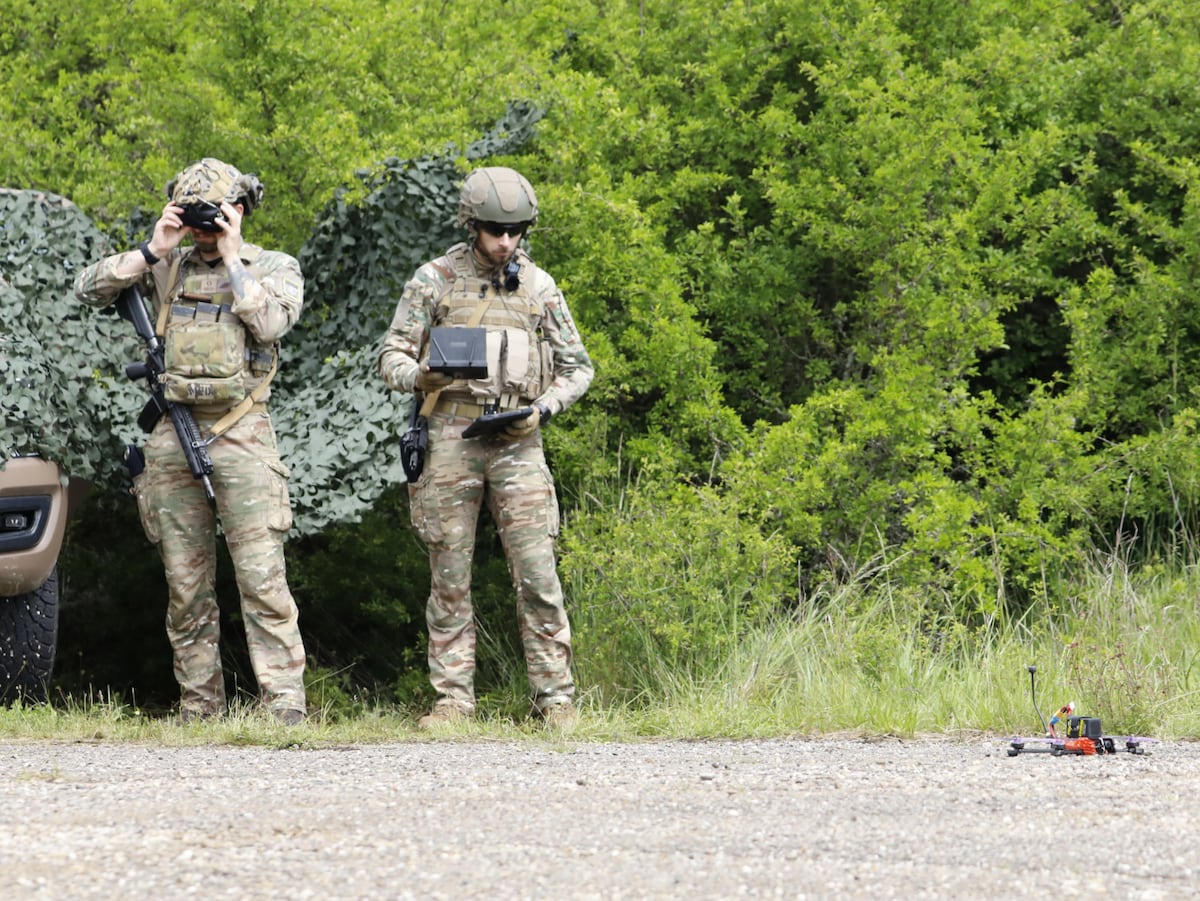
Apart from their combat fatigues, the drone pilots with first-person view goggles and joystick controllers could have been hobbyist racers, maneuvering quadcopter drones through bright yellow gates and an abandoned building. But simulated strike missions added a distinctly military edge to the two-day competition, with bonus points for hitting targets including a moving Ford pickup truck.
“Even with the British Army we do racing events, because obviously that’s where FPV has always been,” Guardsman Mark, a drone pilot in the 1st Battalion Scots Guards, told Defense News. “It’s good to see that the events here are like almost a homage to FPV racing. It’s kind of, thank you, we will take over from here into the tactical side.”
As FPV drones have become an inescapable part of infantry operations on the frontline in Ukraine, NATO countries have started to apply the lessons, at their own pace. Some teams in the two-day competition, including from the United Kingdom and Denmark, had been using FPV drones in their units for only several months, while some from France had been flying them for more than a year.
For drone pilots from eight NATO members, the competition at the Chaumont-Semoutiers airbase was a chance to see allies at work, share tactics and technical tips, and study each other’s equipment. For instructors, the event provided ideas on how they might improve training to use FPV drones in combat.
“We saw some really interesting things because, and I won’t go into details, but each team had its own small innovations in how they managed their equipment,” said Sgt. Edgar, an FPV drone pilot in the French Army’s 61st Artillery Regiment, which hosted the event at its base on the former airfield near Chaumont.
French Army Chief of Staff Gen. Pierre Schill speaks to media during the International Drone Challenge at Chaumont-Semoutiers Airbase in France on May 20, 2026. (Rudy Ruitenberg/staff)
Cheap consumer racing drones flown via FPV goggles and low-latency video links were turned into weapons of war by soldiers in Ukraine, who combined them with explosive charges such as rocket-propelled grenade warheads. FPV drones now inflict 60% of the losses on the Russian army, the National Security and Defense Council for Ukraine said in January.
For Gen. Pierre Schill, the commander of the French Army, the challenge was an occasion to take stock of where his forces stand compared to allies. He said drones have become an “unavoidable reality,” and also a way to push the land forces towards innovating in the lowest ranks.
“You can build, for not much money, your own drone,” Schill said. “It’s a way to unleash innovation.”
Nearly 50 teams, each comprising a pilot and a spotter, took part in the International Drone Challenge on May 19 and 20, scoring points over four courses testing speed, drone control and successful strikes. Teams brought their own drones, some custom-made, others issued by their units, with the rules limiting entries to FPV drones in the 5-inch rotor class.
While many teams used similar systems and components, some pilots on allied teams used “quite different” ways to approach targets, “so it’s really interesting to be able to talk with them,” said Chief Cpl. Jean-Baptiste of the French 82nd Infantry Regiment.
Allied teams came from Belgium, Denmark, Spain, the U.S., Italy, the U.K. and Poland, with Luxembourg joining as an observer.
Chief Sgt. Aymeric of the 7th Battalion of Chasseurs Alpins — “Alpine Hunters” — kept a hand on the shoulder of pilot Chief Cpl. Clément during one of the exercises, pointing his masked teammate in the direction of the drone for the best signal.
“When I put on the mask, I no longer exist in this reality,” Chief Cpl. Clément said after completing the course. “That’s actually why it’s important to have a partner. They’re not only there to help me with my mission, but also to keep me grounded in reality.”
Buddy interaction was an area where teams used different methods, with some spotters guiding their pilots with verbal instructions rather than remaining in physical contact.
“We see different things again from Ukraine, we still learn from how they do it,” said Lance Cpl. Martin, a drone pilot from the Danish Royal Life Guards. “But definitely I’m not a one-man operation when flying. Especially if I have goggles on, I’m going to need a guy or two to keep me covered.”
Ukraine will have the capacity to produce more than 8 million FPV drones in 2026, with more than 160 companies producing the systems in Ukraine, the NDSC said in January.
Skill levels ranged widely, with French sergeant Edgar noting strong teams from the U.K. and Belgium. “This raises everyone’s game, because at the end of a lap where someone posts an exceptional time, we saw several teams approach them to ask for advice or to take a look at the equipment they had.”
A Danish soldier participating in the International Drone Challenge receives instructions from a French arbiter at Chaumont-Semoutiers Airbase in France on May 20, 2026. (Rudy Ruitenberg/staff)
Two French teams took the top spots, with the 13th Parachute Dragoon Regiment of the French special forces the winner and the 61st Artillery Regiment that hosted the competition finishing second. One of the British teams took third place.
Sgt. Luke Crossley of the U.K.’s 3 Royal School of Military Engineering Regiment, reportedly the country’s fastest military drone pilot , said that what he found most impressive was how well some of the French teams were doing with only two to five months of flying FPV systems, compared to the Belgium team and U.K. teams with up to two years of experience.
“Clearly other armies, other nations, France, Belgium, they’re getting after all this FPV drone stuff,” Crossley said. “As united nations, we are going be stronger on that battle front. Which is reassuring.”
The 1st Battalion Scots Guards has two qualified pilots with FPV drone experience who are still exploring how to use their gear, according to Guardsman Mark. He said the competition allowed him to tap into experience and knowledge from allies, including on setting up drones and programming the Betaflight control software.
NATO militaries are still figuring out procurement for FPV drones, a newer category than larger intelligence and targeting drone systems with established suppliers and procurement processes. Guardsman Mark said that while his unit receives fully assembled bigger drones, he built the smaller model used in the competition from parts.
Seeing how other forces deal with procurement was instructive, according to Staff Sgt. Shay Burnett of the U.S. Marine Corps, who teaches an attack-drone operator course at the service’s School of Infantry.
The Marines are tied to a contract for a single model of FPV drone, the Neros Archer , according to Burnett. With FPV drones so interchangeable “we shouldn’t have to be stuck to one system,” and being able to build them in-house and branch out to other models would reduce costs and make the force more effective overall, he said.
The biggest takeaway was learning where allies stand on FPV drones “and seeing how we can make ourselves better overall,” according to Burnett, who said the Marines started using the systems about 15 months ago. “It’s so new across the board. Everyone’s relatively in the same boat.”
Burnett also took home lessons from how organizers set up the trials. “We’re never going to try to get to the racing side, but we do think that the way that they had some of the things, with obstacles to get to the main target, is something we can bring back and actually start implementing.”
An officer of the Danish armed forces was keen to observe how the French organized the competition. While Denmark has previously held military competitions for snipers, infantry-fighting vehicles and battle tanks, the country wouldn’t be able to set up an event like the one near Chaumont just yet, said Lt. Col. Nicolai, head of the training department for the Danish forces.
Drone pilots also discussed training, with most agreeing that pilots need to fly regularly to keep their skills sharp. The French require potential drone pilots to train at least 20 hours in a simulator before they start flying small drones and then work their way up, said Sgt. Edgar.
Younger pilots, especially those with experience flying model aircraft or in video games, tend to take more naturally to FPV drones, though some personnel in their forties are “very quick” learners, according to the French sergeant. But the main variable remains training time, he said.
Training time for the competing teams varied greatly, said Danish Lance Cpl. Martin, who said he is one of the first in his unit to train with FPV drones, and had been flying them for only about one-and-a-half months. He said after discussing training regimes, one lesson he’s bringing home is to train intensely at the start, then allow pilots to build flying experience at a more casual pace.
“It’s been fun talking to the others to see how they’ve been doing,” Lance Cpl. Martin said. “Most of them have had FPVs for a longer time, so they had more training compared to myself. I’m bringing home how we can train, all the success and all the failures. No need to reinvent the wheel.”
Rudy Ruitenberg is a Europe correspondent for Defense News. He started his career at Bloomberg News and has experience reporting on technology, commodity markets and politics.
法国肖蒙——一位上周在法国东部一个前美国空军基地参加比赛的英国飞行员表示,法国陆军的首届国际无人机比赛感觉有点像是对无人机竞速运动的致敬,正是这项运动开启了无人机运动。
除了作战服,这些戴着第一人称视角眼镜、手持操纵杆的无人机飞行员看起来就像是业余竞速爱好者,操控着四轴飞行器穿过亮黄色的大门和废弃的建筑物。但模拟打击任务为这场为期两天的比赛增添了浓厚的军事色彩,击中目标(例如行驶中的福特皮卡)还能获得额外加分。
“即使在英国陆军内部,我们也举办竞速比赛,因为很明显,FPV(第一人称视角)技术一直以来都与此相关,”苏格兰卫队第一营的无人机飞行员马克卫兵告诉《防务新闻》。“很高兴看到这里的活动几乎是对FPV竞速的致敬。这就像是在说,谢谢,我们将从这里开始,把这项技术应用到战术领域。”
随着FPV无人机成为乌克兰前线步兵作战中不可或缺的一部分,北约国家也开始根据自身情况吸取经验教训。在为期两天的比赛中,一些参赛队伍,包括来自英国和丹麦的队伍,在其部队中使用FPV无人机仅有几个月的时间,而一些来自法国的队伍则已经使用超过一年。
对于来自八个北约成员国的无人机飞行员来说,在肖蒙-塞穆捷空军基地举行的这次比赛是一次难得的机会,他们可以亲眼目睹盟友的作战行动,分享战术和技术技巧,并互相学习彼此的装备。对于教官们来说,这次活动也为他们改进FPV无人机作战训练提供了思路。
“我们看到了一些非常有趣的事情,因为,我不会详细说明,但每个团队在设备管理方面都有自己的一些小创新,”法国陆军第 61 炮兵团的 FPV 无人机飞行员埃德加中士说道。该团在其位于肖蒙附近前机场的基地举办了此次活动。
2026年5月20日,法国陆军总参谋长皮埃尔·席尔将军在法国肖蒙塞穆捷空军基地举行的国际无人机挑战赛期间接受媒体采访。(鲁迪·鲁伊滕贝格/摄)
乌克兰士兵将价格低廉的消费级竞速无人机(可通过FPV眼镜和低延迟视频链路操控)改装成战争武器,并将其与火箭弹弹头等爆炸物结合使用。乌克兰国家安全与国防委员会1月份表示,FPV无人机目前给俄罗斯军队造成的损失占60%。
对于法国陆军司令皮埃尔·席尔将军而言,此次挑战是一次评估其部队与盟友相比实力差距的机会。他表示,无人机已成为“不可避免的现实”,同时也推动了陆军在基层进行创新。
“你花不了多少钱就能造出自己的无人机,”希尔说。“这是释放创新潜能的一种方式。”
5月19日至20日,近50支队伍参加了国际无人机挑战赛,每队由一名飞行员和一名观察员组成。比赛共设四个赛道,考验选手的速度、无人机操控性和攻击成功率。参赛队伍自带无人机,部分为定制无人机,部分由部队配发。比赛规则规定参赛无人机必须为5英寸旋翼的FPV无人机。
法国第 82 步兵团的下士让-巴蒂斯特说:“虽然许多飞行队使用了类似的系统和组件,但盟军飞行队的一些飞行员使用了‘截然不同’的方式来接近目标,所以能够与他们交谈真的很有意思。”
盟军队伍来自比利时、丹麦、西班牙、美国、意大利、英国和波兰,卢森堡作为观察员参加。
在一次演习中,第 7 阿尔卑斯山猎兵营的首席军士长艾默里克一直把手放在飞行员首席下士克莱门特的肩膀上,指引戴着面罩的队友朝着无人机的方向前进,以获得最佳信号。
“戴上面具后,我就仿佛脱离了现实世界,”克莱门特下士完成课程后说道。“所以,有个搭档很重要。他们不仅能协助我完成任务,还能让我保持清醒,不被现实所束缚。”
在伙伴互动方面,各队采用了不同的方法,有些观察员通过口头指示引导飞行员,而不是保持身体接触。
“我们从乌克兰那里看到了不同的情况,我们仍在学习他们的做法,”丹麦皇家卫队无人机飞行员马丁下士说道。“但飞行时我绝对不是单枪匹马。尤其是我戴着护目镜的时候,我需要一两个人掩护我。”
乌克兰国家国防安全委员会 (NDSC) 在 1 月份表示,到 2026 年,乌克兰将有能力生产超过 800 万架 FPV 无人机,届时将有超过 160 家公司在乌克兰生产该系统。
参赛选手的技术水平参差不齐,法国中士埃德加注意到英国和比利时的队伍实力强劲。“这促使每个人都提高了水平,因为在有人跑出优异成绩后,我们看到好几支队伍上前向他们请教,或者想看看他们用的装备。”
2026年5月20日,在法国肖蒙塞穆捷空军基地,一名参加国际无人机挑战赛的丹麦士兵正在接受法国裁判的指示。(Rudy Ruitenberg/工作人员摄)
两支法国队伍包揽前两名,法国特种部队第13伞兵龙骑兵团夺得冠军,东道主第61炮兵团获得亚军。一支英国队伍获得季军。
据报道,英国皇家军事工程兵团第3学校的卢克·克罗斯利中士是英国速度最快的军用无人机飞行员。他表示,最令他印象深刻的是,一些法国团队仅用了两到五个月的时间就掌握了FPV系统,而比利时团队和英国团队却拥有长达两年的经验。
克罗斯利说:“很显然,其他国家,比如法国、比利时,也在积极研发FPV无人机。作为联合国,我们将在这一战场上更加强大。这令人感到欣慰。”
据卫兵马克称,苏格兰卫队第一营有两名具备FPV无人机操作经验的合格飞行员,他们仍在摸索如何使用这些设备。他表示,这次比赛让他有机会向盟友学习经验和知识,包括如何设置无人机和编写Betaflight控制软件的程序。
北约各国军队仍在摸索FPV无人机的采购方式。FPV无人机属于较新型的情报和目标定位无人机系统,后者拥有成熟的供应商和采购流程。国民警卫队士兵马克表示,虽然他所在的部队会收到组装好的大型无人机,但他自己却用零件组装了用于竞标的小型无人机。
美国海军陆战队参谋军士谢伊·伯内特表示,了解其他部队如何处理采购问题很有启发意义。他在该部队步兵学校教授攻击无人机操作员课程。
据伯内特称,海军陆战队目前仅与一家公司签订了合同,采购单一型号的第一人称视角(FPV)无人机——尼禄射手(Neros Archer)。他表示,鉴于FPV无人机的互换性如此之高,“我们不应该被单一系统所束缚”,能够自主研发并拓展到其他型号,将降低成本,并提升部队的整体作战效能。
伯内特表示,此次行动最大的收获是了解盟友对FPV无人机的立场,“以及我们如何才能全面提升自身实力”。他指出,海军陆战队大约在15个月前开始使用这套系统。“这套系统对所有人来说都非常新。大家的情况都差不多。”
伯内特还从组织者设置试炼的方式中汲取了经验。“我们永远不会尝试进行竞速比赛,但我们认为他们设置的一些障碍,比如在到达主要目标之前设置障碍,是我们可以借鉴并实际应用的。”
一位丹麦军官非常关注法国是如何组织这场比赛的。丹麦军队训练部门负责人尼古拉中校表示,虽然丹麦此前也举办过狙击手、步兵战车和坦克等军事比赛,但该国目前还无法举办类似在肖蒙附近举行的那种赛事。
无人机飞行员们还讨论了训练问题,大多数人认为飞行员需要定期飞行以保持技能熟练。埃德加中士说,法国要求有志成为无人机飞行员的人在开始驾驶小型无人机之前,至少要在模拟器上训练20个小时,然后逐步提升飞行能力。
据这位法国中士称,年轻的飞行员,尤其是那些有模型飞机飞行经验或玩过电子游戏的飞行员,往往更容易上手FPV无人机,不过一些四十多岁的飞行员学习能力也“非常强”。但他表示,最重要的因素仍然是训练时间。
丹麦下士马丁表示,各参赛队伍的训练时间差异很大。他自称是所在部队首批接受FPV无人机训练的人员之一,飞行时间仅有一个半月左右。他说,在讨论过训练方案后,他总结出的一个经验是:初期要进行高强度训练,之后再让飞行员以更轻松的节奏积累飞行经验。
“和其他人聊聊近况很有意思,”下士马丁说。“他们大多数人拥有FPV的时间都比我长,所以训练量也比我多。我把我们训练的方法、所有的成功经验和失败教训都带了回来。没必要重新发明轮子。”
鲁迪·鲁伊滕贝格是《防务新闻》的欧洲记者。他的职业生涯始于彭博新闻社,拥有报道科技、大宗商品市场和政治方面的经验。