China’s Base in the Horn of African Has a Huge Underground Bunker中国在非洲之角的基地拥有一个巨大的地下掩体
New satellite images show subterranean construction that could provide added protection and more storage space.
新闻视频
By Joseph Trevithick
Updated Jul 5, 2020 7:16 PM EDT
Fresh satellite imagery of China’s new military base in Djibouti shows it is significantly more complex, with a large underground component, and an expansive defensive perimeter, than originally thought. The new details only underscore the importance of the facilities and the likelihood that they will serve as more than just a logistics hub for future Chinese operations.
Geopolitical analysis firm Stratfor published the images , which it obtained though another partner, AllSource Analysis, which showed the site in the Horn of Africa as it existed on April 2 and July 4, 2017. The annotated images specifically highlighted new 25 foot wide walls, as well as guard posts and fences. For what is ostensibly a naval facility, there’s a notable lack of docks directly adjacent to any of the facilities. But the most impressive feature by far is a massive underground complex covering an estimated area of nearly 250,000 square feet.
“The underground entrance connects to other underground facilities at the base as well,” according to Stratfor’s own analysis. “Besides the large underground structure, several smaller tunnels and bunkers were built throughout the base. This type of construction is in line with known Chinese practices in hardening military bases.”
China’s People’s Liberation Army (PLA) is definitely no stranger to large subterranean construction. The PLA’s Second Artillery Corps, the name of the country’s land-based nuclear forces, operates a single network of more than 3,000 miles of tunnels, which state media has dubbed the “ Underground Great Wall .” There’s also the People’s Liberation Army Navy (PLAN) extensive network of underground facilities, including a submarine pen , on Hainan Island.
The underground projects make sense. They afford added protection against attacks and destructive environmental hazards, like sand and severe weather. As Stratfor noted, Chinese personnel could use the space to conduct a variety of activities discreetly, too.
If nothing else, it adds significantly more storage room to what might otherwise be a cramped enclave. A portion of the underground part of the base likely includes hardened bunker areas for a command post and other sensitive operations spaces. With entrances that look large enough to drive vehicles in and out of, the PLA might be able to keep a portion of the base’s motor pool or other equipment safely stored away from the elements. It would be an ideal way of finding room for reserves of fuel, lubricants, and water, too.
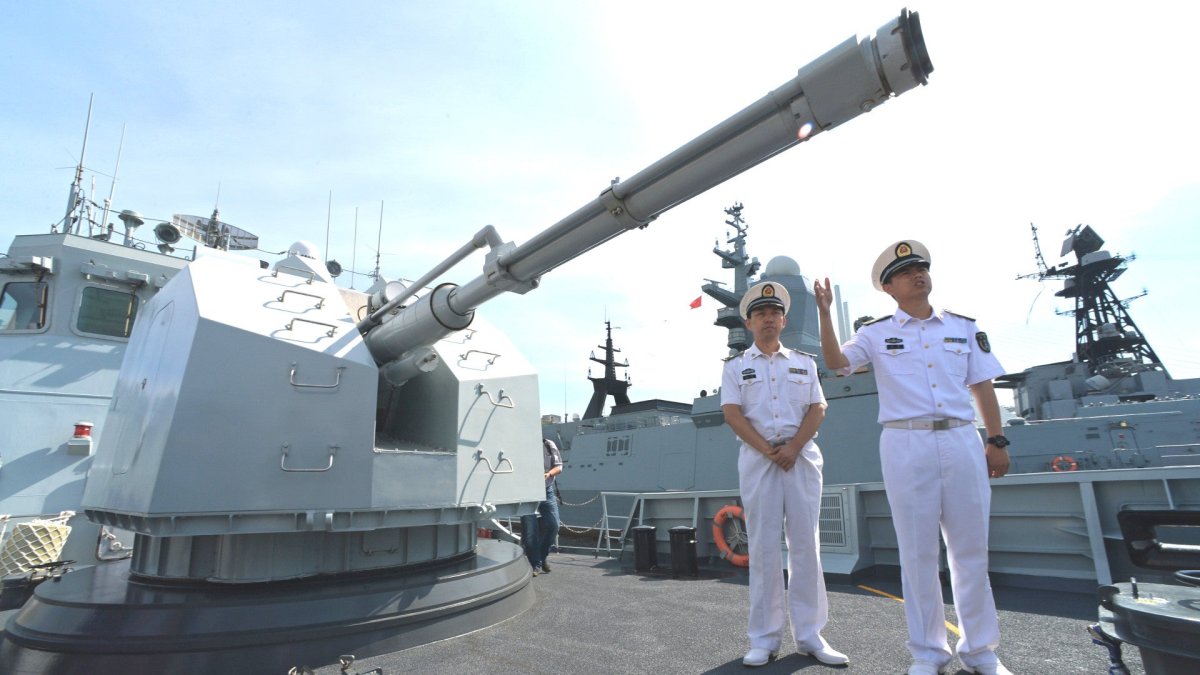
The landing platform dock Jingangshan and semi-submersible logistics ship Donghaidao set sail for Djibouti earlier in July 2017., Xinhua
The base needs these and other resources to both to perform its day to day functions, whatever they may be, and support PLAN task forces as they move in and out the area. If China hopes to make the base a regular port of call for larger groups of ships, including future carrier battle groups , it will need to have significant reserves of a number of items on hand.
It’s also worth noting that the largest area of underground construction at China’s Djibouti base sits under what otherwise appears to be a series of hangars and an attached aircraft apron that does not appear big enough at present to handle fixed wing aircraft, like fighter jets, surveillance planes, cargo aircraft, or even larger drones, but could support either helicopters or smaller drones. It is possible that fuel storage underneath could feed into pump stations or hydrants above ground.
Having all this on hand would give the base the ability to operate independently from local suppliers for at least a short period of time if necessary, too. Maybe part of the underground complex will contain a generating station to provide a separate and secure power supply, as well.
Whatever the purpose of this underground complex is, it’s definitely an important development and one that highlights many of the points we at The War Zone made earlier in July 2017 when we took an in depth look at China’s plans:
But these official missions are just one piece of the larger picture. Beyond regional security concerns, the facility in Djibouti can only help China obvious desire to expand its military presence well beyond its borders. The African country is strategically located near the Suez Canal, providing a stable, Chinese-controlled stop-over point for military fleets heading to Europe and beyond. Its especially well positioned to both protect the transport of Middle Eastern and African energy and mineral resources critical to China’s overall economic development, as well as provide storage space for the fuel and other supplies the PLA needs to conduct operations in Africa and Europe. Having these port facilities will be essential if the country wants to conduct far-flung carrier battle group operations. It seems almost guaranteed that once the base in fully operational the country’s first operational carrier, the Liaoning , and its escorts will make it a regular port of call.
A J-15 fighter jet lands on board the PLAN carrier Liaoning during a training exercise., AP
There’s likely to be more construction to come, as well. As Stratfor’s analysis pointed out, without its own docks in Djibouti, the PLAN will have to continue using the country’s commercial port facilities. Helicopters could ferry small loads back and forth from ships off shore, but it would be much less efficient than loading and unloading pier side.
When and if the Chinese decide to build these dock works, the final configuration of the base could be considerably larger. To accommodate the carrier Liaoning at its naval complex on Hainan Island, the PLAN built a new pier nearly 2,300 feet long , which made it the largest in the world. The Djibouti facility would need something similar if the flattop ever intended to tie up at the base proper.
But it’s already clear that the Chinese are definitely serious about their new base. The new construction shows they are looking to get as much out of it as they can.
Contact the author: joe@thedrive.com
Comments couldn’t be loaded. Please refresh the page.
作者:约瑟夫·特雷维西克
更新于美国东部时间2020年7月5日晚上7:16
最新的卫星图像显示,中国在吉布提新建的军事基地比最初预想的要复杂得多,不仅拥有庞大的地下设施,还设有广阔的防御圈。这些新发现的细节进一步凸显了该基地的重要性,并表明它很可能不仅仅是未来中国军事行动的后勤枢纽。
地缘政治分析公司Stratfor公布了这些图片,这些图片是通过其合作伙伴AllSource Analysis获得的。图片展示了位于非洲之角的一处设施在2017年4月2日和7月4日的景象。标注的图片特别突出了新建的25英尺宽的围墙,以及哨所和栅栏。虽然表面上看像是海军设施,但值得注意的是,该设施附近没有任何码头。不过,最令人印象深刻的莫过于一个占地约25万平方英尺的庞大地下建筑群。
根据斯特拉福公司的分析,“地下入口还与基地内的其他地下设施相连。除了大型地下建筑外,基地内还建造了多个小型隧道和掩体。这种建造方式符合中国加固军事基地的惯例。”
中国人民解放军对大型地下工程绝非陌生。解放军第二炮兵军(即中国陆基核力量的名称)运营着一个总长超过3000英里的隧道网络,官方媒体称之为“地下长城”。此外,中国人民解放军海军在海南岛也拥有庞大的地下设施网络,其中包括一个潜艇基地。
这些地下设施建设项目意义重大。它们能有效抵御袭击和破坏性环境灾害,例如沙尘暴和恶劣天气。正如斯特拉福公司指出的那样,中国人员还可以利用这些空间秘密开展各种活动。
即便没有其他用途,它也能显著增加原本可能略显拥挤的基地的存储空间。基地地下部分很可能包括用于指挥所和其他敏感作战区域的加固掩体。入口看起来足够车辆进出,解放军或许能够将基地的部分车辆或其他设备安全地存放起来,免受风吹雨淋。这对于存放燃料、润滑油和水等储备物资来说也是理想的选择。
2017年7月初,金刚山登陆船坞和东海岛半潜式后勤船启程前往吉布提。(新华社)
该基地需要这些以及其他资源,既要履行其日常职能(无论这些职能是什么),也要支持中国海军特遣部队进出该区域。如果中国希望将该基地打造成为包括未来航母战斗群在内的大型舰艇编队的常规停靠港,就需要储备大量各类物资。
值得注意的是,中国吉布提基地最大的地下建筑区域位于一系列机库和一个附属停机坪下方。该停机坪目前看来规模较小,不足以容纳战斗机、侦察机、运输机甚至大型无人机等固定翼飞机,但可以支持直升机或小型无人机。地下的燃料储存设施可能为地面上的泵站或消防栓供油。
有了这些储备,即使必要时,基地也能在短时间内独立于当地供应商运作。或许地下设施的一部分还会包含一座发电站,以提供独立且安全的电力供应。
无论这个地下建筑群的用途是什么,这无疑是一项重要的进展,也凸显了我们在2017年7月早些时候深入研究中国计划时提出的许多观点:
但这些官方任务只是更大图景的一部分。除了地区安全考量之外,吉布提的设施无疑有助于中国将其军事存在扩展到国界之外。这个非洲国家战略位置优越,靠近苏伊士运河,为前往欧洲及其他地区的军事舰队提供了一个稳定且由中国控制的中转站。它尤其有利于保护对中国整体经济发展至关重要的中东和非洲能源及矿产资源的运输,同时也能为解放军在非洲和欧洲开展行动所需的燃料和其他物资提供储存空间。如果中国想要开展远距离航母战斗群行动,拥有这些港口设施至关重要。几乎可以肯定的是,一旦该基地全面投入使用,中国首艘现役航母“辽宁”号及其护航舰艇将把它作为常规停靠港。
一架歼-15战斗机在训练演习中降落在中国海军“辽宁”号航母上。(美联社)
未来可能还会有更多建设项目。正如Stratfor的分析指出,由于中国海军在吉布提没有自己的码头,将不得不继续使用该国的商业港口设施。直升机可以往返于近海船舶和港口之间运送少量货物,但这远不如在码头装卸货物高效。
如果中国决定建造这些船坞,最终的基地规模可能会大得多。为了容纳辽宁号航母停靠在海南岛的海军基地,中国人民解放军海军建造了一条近2300英尺长的新码头,使其成为当时世界上最大的码头。如果辽宁号航母将来打算停靠在吉布提基地,那么该基地也需要类似的码头。
但很明显,中国人对他们的新基地非常重视。新的建设表明,他们正试图从中获取尽可能多的利益。
联系作者:joe@thedrive.com
评论加载失败,请刷新页面。