The Mysterious Saga Of America’s Hunt For A Stealth Special Operations Transport, Part 2美国追寻隐形特种作战运输机的神秘故事(第二部分)
The requirement for this type of aircraft has only become more pressing in the new Millennium, which begs the question, where are the planes?
新闻视频
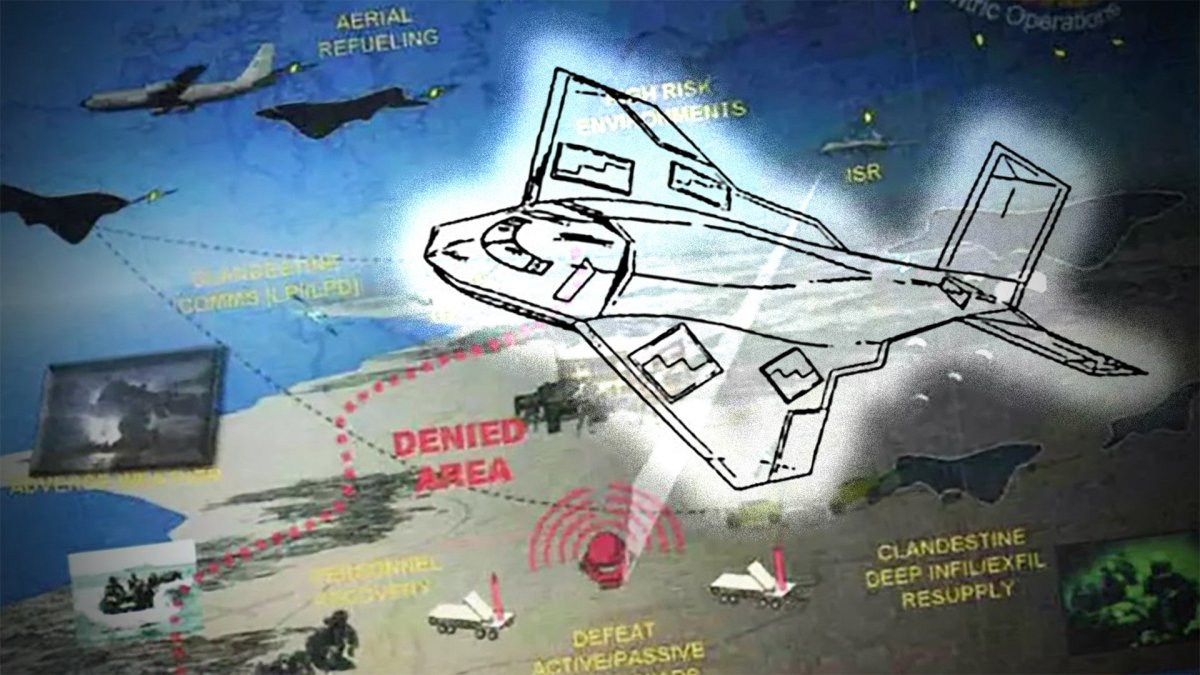
By Joseph Trevithick and Tyler Rogoway
Updated Dec 1, 2019 6:43 AM EST
In the aftermath of the abortive attempt to rescue American hostages in Iran in April 1980, the U.S. military dramatically overhauled and expand its special operations forces and their capabilities. Among other things, it touched off nearly 40 years of programs and initiatives seeking to develop a stealthy transport aircraft that could pierce through dense enemy air defenses and then be able to land and take off inside extremely confined spaces.
The world changed yet again with the terrorist attacks in New York and Washington, D.C. on Sept. 11, 2001. The Global War On Terror that followed required a monumental shift in Pentagon planning. Bolstered by large budget increases, the U.S. military’s new focus would be on rapidly confronting asymmetric actors and rogue states. Money poured into the special operations community to take on this new brace of threats, which included an intensified requirement to clandestinely gain access to the airspace of friendly and unfriendly countries alike.
This was best exemplified by the rise of a penetrating and persisting stealth reconnaissance drone, the RQ-170 Sentinel , a craft with capabilities that had been sought after for decades and that would have been designed in part to work directly with any sort of stealthy special operations transport, feeding it surveillance in advance along the aircraft’s planned route and landing zone. There is abundant proof that the search for a stealthy special operations transport only intensified during this tumultuous decade, turbocharged by the new geopolitical realities around the globe and the tactical problems that the Pentagon was facing.
In this the second installment of our two-part investigation into the shadowy world of stealthy special operations transport, the first part of which you can find here , we pick up where we left off, and explore how the requirements for such an aircraft continued to evolve through the 1990s, into the first decade of the new millennium, and all the way to the present. We also offer an in-depth analysis of whether these aircraft actually exist, perhaps operationally in small numbers, or even still in a largely experimental form.
MC-X/Commando Spirit and M-X
After spending more than two decades advancing the idea of a stealthy special operations transport aircraft largely in secret, in the late 1990s, the Air Force did initiate a number of more public projects regarding such a plane. In addition, the service began pursuing a number of advanced general-purpose designs, with more limited low-observable (stealth) features, as well as improved short and vertical takeoff and landing abilities.
Air Force Special Operations Command (AFSOC), which had only become a major command in 1990, started a project that it referred to variously as Commando Spirit and MC-X . This project’s goal was to develop a smaller aircraft to replace its MC-130 types specifically in the special operations forces insertion and extraction roles. The existing C-130s would continue to perform complimentary special operations cargo-carrying missions in lower risk environments and fulfill air-to-air refueling requirements for special operations helicopters.
The requirements the service laid out for Commando Spirit/MC-X described a smaller, stealthy aircraft and were virtually identical to those for the Special Operations Forces Transport Aircraft (SOFTA) – a payload capacity of around 4,000 pounds and a combat radius of more than 1,000 miles – an earlier program we at The War Zone discussed at length in part one of this investigation. But despite the clear relationship between the two efforts, McDonnell Douglas was in charge of the design study under the new program and completed its work, at least publically, in 1997.
An extremely low-quality scan of McDonnell Douglas MC-X Commando Spirit concept art, showing what appears to be another rhombus-shaped stealth aircraft with individuals parachuting out of the rear. , McDonnell Douglas via USAF
There were also discussions about whether the same general aircraft design might be able to accommodate some form of onboard weaponry, akin to an AC-130 gunship , or extensive electronic warfare capabilities, which could have enabled it to take on additional missions. The proposed armed version was reportedly referred to variously as Commando Dagger or MA-X.
A more triangular looking MA-X Commando Dagger concept, that also appears to be firing a directed energy weapon ., McDonnell Douglas/USAF
By 2003, with U.S. forces find themselves increasingly engaged in both Afghanistan and Iraq, Commando Spirit/MC-X had gotten renamed again, this time as the Advanced Special Operations Forces (SOF) Air Mobility Platform, or simply M-X. The parameters for a stealthy, short or vertical takeoff and landing capable aircraft smaller than a C-130 remained in place.
The consultancy Jacobs Sverdrup Technology Inc. received a contract of unknown value to conduct the analysis of alternatives on M-X designs, completing that work in 2004. AFSOC formally approved the requirement in 2005, setting out a prospective initial operational capability date of 2018 for whatever final design the service settled on. The final study contained cost analyses for purchases of between 10 and 100 aircraft, with a projected service life of 20 years.
McDonnell Douglas concept art of a stealthy tanker from the same general time frame as the MC-X and MA-X programs. This design concept could have also served as the basis for an MC-X type aircraft., McDonnell Douglas
It remains unclear whether or not Air Force Special Operations Command ever acted on this requirement directly via any of these programs.
AMC-X, Joint Heavy Lift, and ATT
By 2007, the Air Force and the U.S. Army were looking at a mix of at least two new vertical- and short-takeoff and landing capable aircraft programs, known as the Advanced Mobility Concept (AMC-X) and Joint Heavy Lift (JHL) respectively.
The latter of these efforts was primarily an Army initiative that eventually helped inform the Joint Multi-Role (JMR) and Future Vertical Lift (FVL) programs. The focus of JHL, and subsequently JMR and FVL, was on replacement rotorcraft for existing helicopters and, potentially, the V-22.
AMC-X, on the other hand, ostensibly looked to pick up where the 1970s Advanced Medium Short Take Off and Landing (STOL) Transport program, or AMST , had left off. AMST had led to the Boeing YC-14 and McDonnell Douglas YC-15 , before the final product had morphed into the much larger Boeing C-17A Globemaster III many years later. The C-17 offered a blend of strategic and tactical airlift capabilities for more mainstream transport applications.
A C-17 Globemaster III touches down on an airstrip within the Nevada Test and Training Range during an exercise., USAF
The new AMC-X was also supposed to act as a more direct follow-on for a separate 1990s program called the Advanced Theater Transport (ATT). This latter project had sought to create a C-130-sized airlifter with extreme short-takeoff and landing capabilities.
As with SOFTA and MC-X, the Air Force wanted the ATT to have a combat radius of more than 1,000 miles and expected the plane to fly a high-low-low-high flight profile to its destination and back. The proposed aircraft would have an exponentially greater load capacity than the notional planes in the earlier programs, though, at between 30 to 40 tons. With a 30 ton payload, the aircraft would have to be able to take off and land within a distance of just 750 feet.
Boeing and Lockheed Martin developed concepts for the ATT. Boeing, having acquired McDonnell Douglas in 1997, proposed a tailless, tilting-wing derivative of the C-17 with four turboprop engines, nicknamed the Super Frog .
Concept art of Boeing’s Super Frog., Boeing
Lockheed Martin’s proposal was a stealthier hybrid or blended wing body design. This planform offers advantages in aerodynamic efficiency, which in turn improves fuel economy, as well as greater internal capacity in its wings for fuel. Clearly, the company’s ATT concept was also designed with stealth capability as a driving factor, when Boeing’s very much wasn’t.
A three-dimensional rendering of Lockheed Martin’s ATT concept, which evolved into its AMC-X/AJACS proposal., Lockheed Martin
Not long after it first emerged to the public in 2007, AMC-X experienced yet another name change, becoming the Advanced Joint Air Combat System (AJACS). As of March of that year, Alenia North America, Lockheed Martin, Piasecki Aircraft, and Voyager Aerospace had all indicated their intent to submit proposals.
Alenia North America was, at the time, competing for the Army-Air Force Joint Cargo Aircraft (JCA) light intra-theater airlifter program with its C-27J Spartan . Piasecki aircraft had been working with the Army and the Navy on high-speed compound helicopters .
Voyager Aerospace was a particularly interesting entrant in the context of the larger discussion about stealthy and short takeoff and landing capable transports. At the time, founder Dick Rutan, brother of Scaled Composites’ Burt Rutan, said the two of them had been working on an applicable twin-engine cargo aircraft design for more than 15 years, but offered no details, according to Flight magazine .
In 2007, this would have meant their supposed ongoing project began around 1992. This lines up with the time period shortly after Burt had submitted his proposals for the SOFTA program and right before the Senior Citizen special access program came to an end, both of which we covered in the first installment of this story.
Lockheed Martin’s ATT and AMC-X/AJACS proposals are similar in some respects to this 1992 North American Aircraft concept art of a special operations transport. However, this one features wing-mounted lift fans for vertical takeoff and landing that is more closely associated with the SOFA and Senior Citizen programs. North American supposedly crafted this notional design as part of a study for the USAF into ejection seats and other crew escape technologies, but it very well could have come from a defunct program., USAF
The AMC-X/AJACS program did not have a clear requirement for a reduced radar cross-section. At the same time, Lockheed Martin’s submission, which was of the same general configuration as its proposal for the preceding ATT project, makes it clear that there was no prohibition against including stealth features. It is very likely that the Air Force left the requirements relatively vague and asked potential manufacturers to propose a design that they thought would be best suited to accomplishing the necessary mission sets. This is something we have seen in more recent U.S. military research and development efforts .
We do know that some senior Defense Department officials at the time publicly held the view that it wasn’t a necessity for future transport aircraft to be stealthy. “Low observable characteristics [stealth] are a useful attribute for aircraft supporting special operations forces, but are less likely to be of critical importance for other aerial maneuver operations since non-low observable aircraft can operate at altitudes above shoulder-fired anti-aircraft weapons, and suppression of enemy air defenses is assumed for more sophisticated systems,” a 2007 Defense Science Board report on vertical and short takeoff and landing capable aircraft said.
This has turned out to be a glaringly short-sighted assessment . Within a handful of years, anti-access and area-denial enemy strategies and the proliferation of very capable integrated air defense systems would become the primary focus of the Pentagon when it comes to preparing to fight future conflicts.
There is also always the possibility this public position may have been deliberate disinformation. Beyond that, relying on the suppression of enemy air defenses to clear a path to the objective would ruin the element of surprise that stealth transport aircraft would afford and the deniability of a clandestine insertion or extraction, which had and continues to be one of the core mission sets for a low-observable transport.
Regardless, while some elements of the U.S. military weren’t entirely convinced that stealthy features would be compatible with the AMC-X/AJACS aircraft, the Air Force was certainly looking to reduce the signatures of its future transport aircraft. “The Air Force is also looking for ‘balanced survivablility’ against an array of sensors – ‘infrared, radio-frequency, and human’,” FlightGlobal reported at the time, citing Carl Zuene of the Air Force Research Laboratory (AFRL).
In 2007, Carl Zuene was the manager for another program called Speed Agile. This project was originally billed as supporting AJACS with low- and high-speed wind tunnel testing of the concept designs. Lockheed Martin and Boeing subsequently received contracts to build scale models of their proposed aircraft. The National Aeronautics and Space Administration (NASA) was also involved in this project.
A Speed Agile wind tunnel test model., USAF
Speed Agile ended up subsuming AJACS, which had hoped to produce a flying prototype by 2015. Here’s how the Air Force described what had become known as the Speed Agile Concept Demonstrator (SACD) in 2011:
“The Speed Agile Concept Demonstrator (SACD) concept is a four-engine, multi-mission aircraft that offers speed agility; operates routinely from short, improvised airfields; carries larger and heavier payloads; and employs precise and simple flight controls. The SACD’s high-efficiency STOL design incorporates a hybrid powered lift system. This lift system features a simplified mechanical design and low-drag integration. Together, these features greatly reduce both the vehicle weight and overall drag on the vehicle, resulting in greater efficiency and payload capacity than conventional powered lift systems. An aircraft employing Speed Agile technology could potentially operate from short, unprepared airfields. These benefits, coupled with the overall vehicle efficiency, could result in an extremely versatile aircraft capable of quickly and safely transporting equipment, supplies, and troops to remote areas.”
The models that Lockheed Martin and Boeing crafted were not entirely optimized for stealth, but did feature hybrid and blended wing body planforms that offered a reduced radar cross-section and some designs clearly had stealthy features. Speed Agile also leveraged separate work the Air Force and Lockheed Martin had done on developing advanced manufacturing processes for large composite material structures, such as the ones employed on stealth aircraft.
Lockheed Martin’s Skunk Works advanced design bureau needed only 20 months to build the experimental X-55A Advanced Composite Cargo Aircraft (ACCA) and put it into the air for its first flight. The company’s pioneering research for the Air Force, which you can read about in more detail here , would also have informed the company’s own submissions for programs such as Speed Agile.
Lockheed Martin’s experimental X-55A ACCA, derived from the Dornier 328JET design., Lockheed Martin
Since 2011, Lockheed Martin has used designs related to their Speed Agile proposals as the basis for stealthy aerial refueling tanker concepts, which are still under development . It is possible that such a plane with generous payload capacity could be configured to perform various other combat support mission sets , including intelligence, surveillance, and reconnaissance, and electronic warfare support.
As of January 2019, there is no indication that Speed Agile has either come to an end or produced a flying prototype. Lockheed Martin has said in the past that it hopes to flight test one of its blended or hybrid wing body designs in the 2020s, although this could be under a separate initiative altogether .
A model of a Lockheed Martin advanced aerial refueling tanker concept with a hybrid wing body planform. The company says it could adapt this design to meet the needs of special operations forces if necessary., Joseph Trevithick
In parallel to Speed Agile, AFSOC secretly developed requirements for C-130-sized aircraft as part of what it called Project IX, also sometimes written as Project 9. In a redacted 2009 concept of operations (CONOP), which the author previously obtained via the Freedom of Information Act (FOIA), the command describes the desired aircraft as such:
“The Project IX is a high-speed, medium-lift, long-range, short takeoff and landing (STOL), low observable (LO) platform to conduct special operations forces (SOF) mobility missions which exceed the capability of current SOF mobility platforms. Project IX will provide the capability to perform clandestine penetration into politically or militarily denied areas in two distinct mission areas: Strategic Special Operations and Supporting Joint Air/Joint SOF Missions in Denied Access Areas. … “The Project IX will provide significantly better aircraft performance than current AFSOC mobility platforms, including the C-130J , entail a smaller crew, require less logistical support, be able to operate from smaller, more austere airfields/locations, and provide significant interoperability improvements with other aircraft and command and control (C2) organizations. The Project IX will be reliable, survivable and able to conduct strategic clandestine SOF mobility infil/exfil/resupply in current and future denied access environments. … “Project IX supportability will initially rely heavily on contractor logistic support (CLS) because of the unique characteristics of the LO technologies. Service support, in terms of basing and security, will also be critical to transitioning Project IX from an advanced capability technology demonstrator (ACTD) program to a fully operational asset. There are lessons learned and precedents for such responsibility regarding other specialized aircraft ( F-117 , B-2 , F-22 , etc.), and Project IX will take full advantage of them.”
“The Project IX is a high-speed, medium-lift, long-range, short takeoff and landing (STOL), low observable (LO) platform to conduct special operations forces (SOF) mobility missions which exceed the capability of current SOF mobility platforms. Project IX will provide the capability to perform clandestine penetration into politically or militarily denied areas in two distinct mission areas: Strategic Special Operations and Supporting Joint Air/Joint SOF Missions in Denied Access Areas.
“The Project IX will provide significantly better aircraft performance than current AFSOC mobility platforms, including the C-130J , entail a smaller crew, require less logistical support, be able to operate from smaller, more austere airfields/locations, and provide significant interoperability improvements with other aircraft and command and control (C2) organizations. The Project IX will be reliable, survivable and able to conduct strategic clandestine SOF mobility infil/exfil/resupply in current and future denied access environments.
“Project IX supportability will initially rely heavily on contractor logistic support (CLS) because of the unique characteristics of the LO technologies. Service support, in terms of basing and security, will also be critical to transitioning Project IX from an advanced capability technology demonstrator (ACTD) program to a fully operational asset. There are lessons learned and precedents for such responsibility regarding other specialized aircraft ( F-117 , B-2 , F-22 , etc.), and Project IX will take full advantage of them.”
A number of general Air Force and U.S. Special Operations Command (SOCOM) requirements informed the Project IX CONOP. The document also specifically makes reference to the aircraft outlined under the early 2000s’ M-X program and Air Force censors redacted another related CONOP in its entirety. It’s worth noting that the author’s inquiries to various public affairs offices and subsequent FOIA requests have yet to turn up evidence of any projects numbered one through eight.
The requirements for Project IX call for efforts to reduce the aircraft’s radar cross-section, as well as infrared, acoustic, and radio frequency signatures. “Regardless of altitude and the LO [low obsevable] and EW [electronic warfare] technologies incorporated into Project IX, visual and electronic detection of the aircraft may still be possible,” the CONOP warned.
Since it used the M-X concept as a baseline, Project IX’s desired combat radius was again set at more than 1,000 miles. The total required distance to take off or land was to be less than or equal to 1,500 feet. Any specific payload information that might have been present in the CONOP is redacted.
CONOPs that AFSOC identified as being related to Project IX’s requirements, including one that is entirely redacted., USAF via FOIA
Not surprisingly, Project IX called for an aircraft with extensive communications capabilities and advanced electro-optical and infrared sensors to help with low-level flight and maneuvering on the ground, day-or-night, at austere locations. Particularly interesting was a desire for an electronic warfare system that could detect and classify threats in the air and on the ground and then instruct the aircraft to automatically make adjustments in the route to the target area to optimize survivability.
The crew would have the option of disabling the system’s automated functions “based upon the threat/mission circumstances.” “The EW [electronic warfare] suite should maximize receive only options from national intelligence sources to prevent compromise should aircraft be commandeered, while reducing weight and space,” the CONOP noted, as well.
This mix of stealth technology, electronic warfare countermeasures, and nap-of-the-earth flight capability would be essential for penetrating into a modern denied area deep inside an opponent’s home turf. Even the most specially configured MC-130 would almost certainly be far too vulnerable to operate in this kind of extremely high-risk environment.
The status of Project IX is unknown, but in 2010, Michael Vickers , then-Assistant Secretary for Special Operations and Low-Intensity Conflict, a retired Army Special Forces soldier who had also previously been a paramilitary operations officer in the Central Intelligence Agency’s (CIA) Special Activities Division (SAD), seemed to allude to the program publicly . AFSOC’s stated goal was to field the aircraft sometime between 2019 and 2025 and this is a schedule the Air Force could still very well be intent on keeping.
An “Operational View,” or OV, showing how the Project IX aircraft might fit into a broader concept of operations involving clandestine special operations forces activities., USAF via FOIA
Project IX in interesting because it seems like a realistic and detailed rationalization of decades of concepts that appear to have come and gone. In some ways, by the late 2000s, technology had also caught up with the tactical special operations concept to some degree, especially in terms of off-the-shelf subsystems, composite material science and manufacturing , and low-observable (stealth) design and applications. It stands as neither the most ambitious special operations low observable airlifter program nor the least, also making its feasibility much more probable.
Making the most out of what you already have
In 2013, AFSOC initiated what appears to be the most recent effort to investigate the possibility of developing an enhanced, short takeoff and landing capable transport capability that featured some signature reduction measures. The project, however, was far less ambitious than any of its predecessors, according to various additional documents the author has obtained via FOIA.
Known as Project 10, an apparent reference to having a relation to Project IX, the initiative primarily explored a raft of already available and potential upgrades for the C-130 aircraft. AFSOC did say that a second phase of the new project could “reenergize [the] SOF R&D [research and development] Community for next gen SOF mobility platform,” according to one January 2013 briefing, which name-checked a host of previous programs, including Credible Sport , MC-X, Speed Agile, and Project IX.
Project 10 was also known by the nicknames New Magic and Super Sport, the latter being a direct reference to Credible Sport. AFSOC described the proposed final product as the Low Signature Mobility Aircraft, as well. An April 2013 Capabilities Development Document (CDD) for the “Super Sport” outlines the basic need for such an aircraft as such:
“It is the nature of special operations that missions will be conducted against high-value, politically sensitive targets of critical importance to the nation. There will be occasions where these targets are located deep inside denied/sensitive territory and do not possess a landing zone suitable for current MC-130 aircraft. For these occasions, a Super Sport version of the MC-130 must be able to INFIL/EXFIL a special operations team and their equipment in the shortest time frame possible to conduct national-level, strategic missions. To meet dynamic mission requirements, the MC-130 Super Sport aircraft could be configured with the specialized equipment required to perform the majority of its MC-130 SOF Mobility missions to include airdrop/airland resupply, FARP [Forward Arming and Refueling Point], and MISO [Military Information Support Operations; also known as Psychological Operations ]. “These Super Sport operations will be planned and conducted to very short landing zones in all environments to include high density altitude (i.e., high pressure altitude, high ambient temperature) with long-range insertion (with or without inflight refueling) direct from home station. In other situations, MC-130 Super Sport aircraft could self-deploy with a logistics support package to an interim staging base or a remote, sparsely equipped forward base. Support personnel would rapidly configure and equip the aircraft for its Super Sport configuration and aircrews could execute missions in minimal time with little external support.”
“It is the nature of special operations that missions will be conducted against high-value, politically sensitive targets of critical importance to the nation. There will be occasions where these targets are located deep inside denied/sensitive territory and do not possess a landing zone suitable for current MC-130 aircraft. For these occasions, a Super Sport version of the MC-130 must be able to INFIL/EXFIL a special operations team and their equipment in the shortest time frame possible to conduct national-level, strategic missions. To meet dynamic mission requirements, the MC-130 Super Sport aircraft could be configured with the specialized equipment required to perform the majority of its MC-130 SOF Mobility missions to include airdrop/airland resupply, FARP [Forward Arming and Refueling Point], and MISO [Military Information Support Operations; also known as Psychological Operations ].
“These Super Sport operations will be planned and conducted to very short landing zones in all environments to include high density altitude (i.e., high pressure altitude, high ambient temperature) with long-range insertion (with or without inflight refueling) direct from home station. In other situations, MC-130 Super Sport aircraft could self-deploy with a logistics support package to an interim staging base or a remote, sparsely equipped forward base. Support personnel would rapidly configure and equip the aircraft for its Super Sport configuration and aircrews could execute missions in minimal time with little external support.”
In the first real divergence from what was then three decades of increasingly firm requirements, Project 10 called for a plane capable of flying high-low-low-high mission profile across a combat radius of fewer than 520 miles – 450 nautical miles – with a payload of no more than 10 tons. The aircraft had to be able to take off and land within 2,000 feet.
A notional Super Sport mission profile., USAF via FOIA
The goal was to outline the modifications necessary to a MC-130H or J aircraft that would meet AFSOC’s needs and still be able to achieve initial operational capability (IOC) with within 30 months of issuing a contract. The Air Force defined IOC in this case as having three modified aircraft and five fully-trained aircrews, together with either an organic or contractor-operated support chain. The full fleet would consist of approximately 10 aircraft.
The possible Project 10 upgrades ranged from modifications to specific components to entire upgrade packages from Lockheed Martin, Northrop Grumman, and smaller firm Snow Aviation. AFSOC broke these options down into three categories: “low hanging fruit,” “more complex” upgrades, and “Far Term/Expensive” proposals.
The first category included adding microvanes to various portions of the aircraft to improve airflow, installing eight-bladed Hamilton Sundstrand NP2000 propellers on all four engines, digital engine control systems for greater efficiency, a Lift Distribution Control System (LDCS), and simple weight reduction. A detailed description of the LDCS in documents obtained through FOIA is entirely redacted, but it reportedly offered improved fuel efficiency, greater payload capability, and long wing life all by itself. The microvanes offered greater fuel efficiency, as well as acoustic signature reduction .
The NP2000 propellers were the only individual proposal of any kind to offer fuel savings, improved flight and short takeoff and landing performance, increased reliability and reduced maintenance demands, as well as a reduced acoustic signature. Coupled with the engine modifications, these benefits only increased. The Air Force has considered adding these updates to standard C-130 airlifters, which you can read about in more detail here , but had still not moved ahead with the program in earnest as of January 2018.
A C-130H aircraft with the NP2000 propellers, as well as other internal engine-related upgrades. This particular aircraft also has the Modular Airborne Fire Fighting System II ( MAFFS II ) system installed., USAF
AFSOC’s “low hanging fruit” category also included a modest upgrade package proposal from Lockheed Martin. This consisted of an engine upgrade with a new control system for optimal performance, improved flaps for added lift, and “speed break spoilers” to rapidly slow and stop the plane during landings. Available for the newer MC-130J Commando II only, this would give the aircraft the ability to takeoff within 1,400 feet and land inside 1,200 feet at sites at altitudes up to 4,000 feet and with a total aircraft gross weight of 110,200 pounds. A standard C-130J airlifter has a maximum takeoff weight of 155,000 pounds.
Options such as winglets, a system to blow compressed air over the wing surfaces to improve lift, extra internal fuel, and infrared, acoustic, and visual signature reductions were in the mid-tier category. There was also a second level of upgrade package from Lockheed Martin, which added further improved engines and flaps, and new propellers, which could work with either the MC-130H or MC-130J.
The winglets offered better fuel economy and improved short takeoff and landing performance. The Air Force has since tested the winglets on MC-130Js and standard C-130Js to further investigate the potential fuel savings, but has yet to make them a standard feature in either fleet.
An MC-130J with the winglets., USAF
The descriptions of the added fuel capacity are redacted entirely. The slide on the blown air system notes that the Japanese ShinMaywa US-2 four-engine amphibian has this feature and that the technology is well established, but that it’s unclear how much it might cost to integrate onto an MC-130.
The options to reduce the infrared signature are the most rudimentary, consisting of exhaust diverters and heat sinks. AFSOC also noted potential options to reduce propeller noise, engine vibration, and dampen the sound of the aircraft simply moving through the air, all of which would make it harder for an opponent to hear it coming, especially at night.
The visual signature reduction possibilities are especially fascinating. Project 10 noted advances in active camouflage, carbon nanotubes , and metamaterials , all of which could break up the outline of the aircraft or change its appearance in the visual light spectrum, making it difficult to identify, especially at extended ranges. Lastly, there was a proposal to use what are known as femtosecond lasers , which emit pulses of amplified light at extremely high speeds, to absorb visible light hitting the aircraft’s skin.
A low-quality scan of a briefing slide discussing possible visual signature reduction options for AFSOC MC-130s., USAF via FOIA
If these proposals worked, it could’ve allowed for the aircraft to have more options for operating in the daytime. The briefing specifically cites “lots of unsubstantiated claims on the internet, higher risk” as “cons” for these concepts, though. This is somewhat humorous, but it also seems indicative of just how unsubstantiated these applications were at the time of publishing.
The final collection of options under Project 10 consisted of major upgrade packages from Lockheed Martin, Northrop Grumman, and Snow Aviation, as well as the possibility of adding stealthy features to the MC-130s. Northrop Grumman’s “C-130M” concept was listed as “Competition Sensitive” and censors blacked it out completely.
Lockheed Martin’s third tier upgrade and Snow Aviation’s plan both involved major modifications to the aircraft’s fuselage, wings, tail, and other surfaces, primarily to improve short takeoff and landing capability. Snow Aviation’s proposal also had a significant increased fuel capacity, in both new internal and wingtip tanks, for greater range. In addition, it featured employed the NP2000 propeller, giving it the acoustic signature reduction benefit.
Snow Aviation’s ex-US Air Force WC-130E Hercules, which served as a test bed for the company’s modifications. , via c-130.net
As noted, some of these modifications have worked their way into the Air Force’s general modernization plans for the C-130. So far, there isn’t any indication that AFSOC has proceeded in any significant way with the plans it outlined in Project 10.
“At this time, AFSOC is not actively engaged in development of new requirements for a short takeoff and landing variant of the MC-130,” a public affairs officer for the command told the author in 2015. “The last analysis was completed in April 2013, and the documents were never validated as formal AFSOC requirements.”
In 2013, the Project 10 managers had recommended exploring some of the smaller upgrades, such as the NP2000 propellers and microvanes, in the near term. “Commission ‘Stealth Mobility Study’ to determine next steps,” was their final suggestion.
Project 10’s recommendations as of January 2013., USAF via FOIA
Overall, Project 10’s near-term goals seem to be a logical path toward getting the most out of the C-130 for low and medium threat missions. Such an aircraft could even assist a Project IX aircraft stage at remote locales along the edges of highly contested territory. So with Project IX and Project 10, we are talking about two disparate capabilities and mission sets that are more complimentary of each other than anything else.
Additional evidence?
With such persistent, stable requirements, spanning four decades and at least a dozen known, named programs, and more we surely still don’t know of, it is hard to imagine that one or more them did not actually produce flying prototypes or even an operational capability. The alternative is that the U.S. military, and the Air Force, in particular, has run all of these projects and design studies on various assault transport aircraft with vertical and/or short takeoff and landing capabilities and stealthy features for nearly 40 years, at the cost of many millions of dollars at least, without any tangible results whatsoever. If indeed this is the case, a seemingly large and very well identified capability gap has remained unfulfilled.
There have also been repeated reports and alleged sightings of aircraft that fit the description of an advanced, stealthy transport plane, including the various claims about the Senior Citizen program. The existence of such an aircraft could also offer an explanation for the sightings of the so-called “ flying Doritos ” in the skies over Texas in 2014. We have also received a number of tips about stealth transport aircraft of a particular description working in the Arctic region for some time now, and that is not counting all the other reported sightings of advanced aircraft over the previous three-plus decades.
Continued technological developments in stealth and vertical and short takeoff and landing capabilities didn’t come to a halt, either. Lockheed Martin’s Vertical Takeoff and Landing (VTOL) Advanced Reconnaissance Insertion Organic Unmanned System program, or VARIOUS , among many others, shows that companies are still leveraging their past work and publicly applying it to contemporary concepts. The F-35B alone is a remarkable showcase of operational STOVL technology and its powerplant components alone could be a springboard for stealthy special operations transport capabilities.
Concept art for Lockheed Martin’s VARIOUS unmanned aircraft looks more than a little similar to concepts it crafted for the SOFA program in the 1980s and 1990s., Lockheed Martin
On top of that, there is a significant amount of tertiary information that suggests this capability is available, at least in small numbers or in a quasi-experimental state. The biggest indicator is the proven existence of a far less capable, but still stealthy vertical takeoff and landing capable special operations transport aircraft.
The aircraft in question are the Stealth Black Hawks that SOCOM employed during the raid on Al Qaeda leader Osama Bin Laden’s compound in Abbottabad, Pakistan on May 2, 2011. These aircraft represent a more survivable counterpart to other special operations rotorcraft, such as the Army’s MH-60M Black Hawks . The MH-60M, and earlier special operations specific MH-60s, themselves reflect a lower tier of a more conventional clandestine insertion and extraction capability. Even if the Stealth Hawks only existed in tiny numbers and even in an experimental form, they did indeed exist even though there was far less proof – as in next to none – of such a concept being realized compared to a stealth fixed-wing tactical transport.
Then there is the V-22 Osprey, which gave special operations forces a revolutionary platform that allows them to rapidly deploy over longer ranges than a standard helicopter, but without giving up the ability to infiltrate and exfiltrate vertically into constrained areas. Air Force Special Operations Command’s CV-22B Ospreys possess the speed, range, electronic warfare and self-protection defenses, situational awareness and communications capabilities, and nap-of-the-earth flight abilities that collectively allow it to penetrate some enemy defenses in order to carry out risky special operations missions. In fact, for shorter-range missions with more limited payloads, this aircraft addressed many of the operational needs that the Credible Sport C-130 had sought to fill back in the early 1980s .
But the Osprey is not a low-observable asset by any means and it still has limited unrefueled range. In this day and age of anti-access tactics and dense integrated air defenses, the CV-22B would be hard pressed to carry out deep insertion and extraction of special operations forces in high-risk, anti-access environments and especially against peer state foes.
Doing anything like this clandestinely, without relying on nearby support assets, would be all but impossible even according to the Pentagon’s own decades-old white paper that we discussed earlier. Well before the V-22 was even in service, the Air Force was already of the view that the Osprey would not obviate the requirement for a separate stealth special operations platform to operate over long-ranges in higher risk environments.
“The V-22 can only be utilized in [a] low intensity environment and does not meet the postulated range requirements,” according to a 1987 memo from Air Force’s Aerospace Sustainment Directorate, then part of Air Force Materiel Command, which Reddit user u/aclockworkgreen1 posted online in 2014. “All indications are that the V-22 will not, in fact, fulfill the requirements for stealth and range.”
At that time, the Air Force warned that if other services, such as the Army and the Navy, abandoned the V-22, it might similarly withdraw from the program. In that case, the proposed course of action was to “take the lead in the mid 1990s with a more capable aircraft.”
A US Air Force CV-22B Osprey in action., USAF
Further evidence that some sort of a stealthy special operations transport exists is out there, as well. Journalist and author Sean Naylor’s Relentless Strike : The Secret History Of Joint Special Operations Command mentions that in 2011 the raiding force considered parachuting into Osama Bin Laden’s compound, but does not say how a transport aircraft would have been able to successfully deliver the force to the drop zone.
The employment of the Stealth Hawks initially indicated that there were major concerns about the Pakistani military detecting the infiltrating aircraft and engaging them or Al Qaeda sympathizers within Pakistan’s security forces taking any information provided to the government in advance of the raid and alerting Bin Laden. We now know that this was all true and more.
There was a high probability that if an aircraft was detected, Pakistan’s Air Force, that sits on high alert due to tensions with India, would have tried to shoot it down. At the very least, such a situation would have ended in an aerial standoff between U.S. and Pakistani fighters.
With all this in mind, flying a lumbering MC-130 or CV-22s nearly over the major Pakistani military base in Abbottabad seems extremely unlikely as far as options go. Powered parachutes , wingsuits , and high-altitude high-opening parachuting techniques may have enabled a stand-off insertion from a non-stealthy platform, but they would have still required a cargo plane to fly deep into highly monitored Pakistani airspace at higher altitudes where they are extremely vulnerable to detection.
Then there is the whole issue with how do you get the teams out without accepting too much up-front risk if they were to parachute in from an asset that couldn’t also recover them. During the raid, the special operations MH-47 Chinooks didn’t push into the target area until the very end of the operation as part of a contingency plan should a Stealth Hawk crash, which one did. If that aircraft hadn’t gone down, the Stealth Hawks would have exfiltrated the teams and we would never have known a stealthy Black Hawk variant even exists.
MH-47 special operations Chinook like the ones used during the raid on Bin Laden’s compound in 2011. They worked as contingency extraction assets and to set up forward refueling points to gas up the Stealth Hawks on their way out of Pakistan. , DoD
In the end, U.S. Navy Admiral William McRaven, then head Joint Special Operations Command (JSOC) reportedly axed the plan, but only apparently because of the danger of the SEALs getting their parachutes tangled in power and phone lines in the area, according to Naylor’s book . So once again, the big question here is what platform was really being considered for this option? With what we know, a non-stealthy one seems unlikely.
The existence of the RQ-170 Sentinel penetrating surveillance drone mentioned at the start of this piece is also an interesting example to comprehend. It is another capability requirement that emerged in the early 1980s, in its case in the form of Northrop’s Tacit Blue , but remained unsatisfied, at least publically in an operational state, until the appearance of the RQ-170 at Kandahar Airfield in Afghanistan back in 2007. You can read all about the RQ-170’s direct lineage to Tacit Blue here , but suffice it to say that if it took nearly 30 years and many steps to realize that game-changing capability set, there is nothing to say that the same wasn’t true of for a stealthy special operations tactical transport.
Maybe the most interesting potential tell that at least some type of highly secretive special operations transport exists is the fact that those that are tasked with the aerial refueling of special operations aircraft on the most complex missions they execute cannot speak of every type of aircraft they work with. All the other known types in the U.S. military’s inventory that would require the aerial refueler’s unique skills seem to be accounted for, but there are still “others” that remain undisclosed and that individuals associated with the Special Operations Aerial Refueling program cannot discuss. We also know that elements of the tanker community have provided gas to secret exotic aircraft operating over war zones and over the U.S. from time to time.
In the black world of super-secret U.S. military aviation units, which we at The War Zone have previously examined in detail based on what information is publicly available, there are prime candidates for who might operate such an aircraft. The Air Force’s 66th Air Operations Squadron, about which virtually nothing is known, is often simply said to fly C-130s .
A 66th Air Operations Squadron patch with various references to Area 51., USAF
Another secretive unit, the 427th Special Operations Squadron , appears to own the covert and clandestine infiltration and exfiltration mission in low-threat environments, using a fleet of civilian-styled turboprop light utility and small transport aircraft .
The Army’s Flight Concepts Division (FCD), now known as the Aviation Technology Office (ATO), could also operate the stealth aircraft. This unit, by most accounts, was also the unit in charge of the Stealth Hawks. Before the Bin Laden raid, FCD/ATO already had a long history conducting clandestine missions and working with the most elite of America’s special operations forces, as well as the CIA.
Though typically associated with helicopters , this organization has reportedly acquired a number of C-27Js , an aircraft that sits between the CV-22 and the C-130 in terms of payload, range, and STOL capabilities. The Air Force mothballed these aircraft in 2012, the result of an entirely separate saga , and subsequently began divesting them to other U.S. government entities, including the Army.
We know that the U.S. Army Special Operations Command’s (USASOC) Flight Battalion has acquired some of them. This unit is ostensibly a training and non-combat support unit that provides organic airlift and airdrop capabilities during drills, including Robin Sage , the capstone exercise for candidates hoping to become Army Special Forces soldiers.
The Aviation Applied Technology Directorate (AATD) may also have some for research and development activities. This office is responsible for various advanced, but generally public Army aviation research and development efforts.
A US Army C-27J Spartan., US Army
But it is possible that the AATD may share its fleet to some degree with that of the top-secret FCD/ATO. Both organizations are situated at Felker Army Airfield at Fort Eustis, Virginia , but the latter operates under extremely tight security out of a highly secure hangar at the airfield.
FCD/ATO is slated to get a new, larger hangar, as well as associated facilities, in a remote area near the airfield in the coming years. Concept art and dimensional diagrams both feature the C-27J prominently, reinforcing the significance of those aircraft, and/or ones of similar size, to the unit’s operations.
Art showing the Aviation Technology Office’s future hangar complex at Felker Army Airfield with C-27Js prominently featured., USACE
A diagram from a 2016 environmental assessment regarding the new Aviation Technology Office facilities, also featuring a C-27J as a typical aircraft for determining safety considerations., USAF
The Spartans may serve as a cover and training surrogate for a similarly sized clandestine transport aircraft. There is definitely a precedent for this, with the Air Force using A-7 Corsair II combat jets and T-38 Talon jet trainers to help hide the F-117 stealth combat jet program during the 1980s.
It is even possible that a C-27J-sized stealth transport aircraft resides under the FCD/ATO’s purview and a C-130-sized stealth aircraft does the same under the control of the 66th. This would again reflect the multiple tiers of capabilities that the Pentagon has been describing in its stealthy transport requirements for years now. Both of these units also work closely together in general under the broader umbrella of Joint Special Operations Command’s Aviation Tactics Evaluation Group (AVTEG).
The parent services might have limited knowledge and control over any stealth transports that might exist assigned to units under the AVTEG umbrella, further obfuscating the true “owner” of these planes. We know that there are still units assigned or attached to JSOC the existence of which remains classified.
This portion of the Table of Contents from JSOC’s 2011 Annual History Report shows the existence of a number of units assigned or attached to the command remains classified. AVTEG is notably absent among the unredacted units on this list, as well., SOCOM via FOIA
A stealth transport program could very well be an interagency affair, as well. The CIA, in particular, has a long-standing relationship with advanced and novel aircraft programs and has a regular need for covert and clandestine means of inserting and extracting personnel in denied areas.
There is also a history of the Agency working with the U.S. military, directly or indirectly , and taking part in top-secret interagency operations that might require this kind of stealthy transport capability. Operators from the CIA’s Special Activities Division were notably involved in the Bin Laden raid, for instance.
If the aircraft only exist in tiny numbers and in experimental form, then it may be the case that no unit formally flies them in an operational capacity, at least not outside of unique circumstances.
If any of these planes do indeed exist, where is the U.S. military, or its interagency partners, keeping them? An advanced special operations transport in the C-27 size class, a fleet of which would likely exist only in small numbers if they do indeed exist, would be relatively easy to conceal without the need for large specialized hangars and associated facilities that would stand out and draw attention. A small fleet of C-130-sized planes would be more difficult to keep hidden from the public eye based on already available facilities.
The secretive Tonopah Test Range (TTR) Airport would be one ideal home for these aircraft. AFSOC and the special operations community, in general, have been active at the field over the last decade and has used it to carry out key tests and training. Area 51 and a small handful of other secret test sites would also be possibilities, but only if the aircraft are still in testing in tiny numbers. The U.S. military might look to utilize more public bases, but only in remote areas, such as Eielson Air Force Base in Alaska or Holloman Air Force Base in New Mexico for operational home-basing.
It’s important to note that if the fleet of these aircraft is truly minuscule in size, and it likely is, with a dozen or less airframes on hand, the majority of these aircraft would likely spend much of their lives forward deployed to major hotspots. Keeping a couple airframes stationed in Europe, the Middle East, and the Pacific region, near foes such as Russia, Iran, North Korea , and even China, would require a standing training cadre of just a couple airframes back home in the United States for training and tactics development. If this is the case, even a C-130 sized stealth transport would be quite easy to hide at a variety of locations, with the aircraft only venturing out at night for training and actual operations. If the airframe doesn’t even require a long runway, the potential basing locations increase dramatically as well.
There is also, of course, the possibility that the U.S. military continues to lack this capability in any form. “The requirements outlined within the M-X MNS [Mission Needs Statement] and AOA [Analysis of Alternatives] are still valid, and the Global War on Terrorism (GWOT) and the associated combat lessons learned show that USSOCOM requires an air mobility platform that is more survivable, agile, flexible, and austere field capable than the current MC-130H platform, AFSOC’s most capable penetrating platform,” AFSOC explained in its Project IX Concept of Operations (CONOP).
A US Air Force MC-130J refuels over Iraq or Syria in 2017., USAF
The Project 10 documentation similarly used phrasing that suggested there was no actual applicable aircraft within the U.S. military. “Air Force Special Operations Command (AFSOC) currently does not possess the capability to execute an enhanced short takeoff and landing (STOL) mission with a significant amount of cargo or personnel,” the command said bluntly in the 2013 Super Sport Capabilities Development Document (CDD).
It’s interesting to note that they mention “a significant amount of cargo or personnel.” Smaller stealth penetrating special operations concepts have had less lifting capacity than a CV-22 Osprey, so this statement does not preclude the existence of such an aircraft. In addition, a smaller type capable of delivering and extracting a squad of operators would be far less expensive and risky of a program than one that mirrors the capability of a C-130.
None of this addresses the possibility that one or even multiple concepts made it to the flight demonstration phase, but never proceeded past that point in a larger operational sense. In fact, there could be multiple approaches to various aspects of this unique mission set in storage or even buried out at Area 51.
But it’s also worth remembering that the Project IX CONOP was only ever classified “Secret” and the Super Sport CDD was always unclassified. Though units such as the 66th Air Operations Squadron and the Aviation Technology Office technically belong to their parent services, they operate almost exclusively under the direction of JSOC and in highly compartmentalized spaces at levels of classification well above Secret.
US Marines onboard a US Air Force MC-130J prepare for a nighttime freefall parachute jump during an exercise in 2017., USAF
So, it is not hard to imagine that the individuals drafting the documents in question were unaware of what was or is still occurring in the “black” realm. As noted throughout this two-part story, the ever-lengthening parade of publicly acknowledged programs could easily serve as a cover for unacknowledged active developments or even operational activities. We at The War Zone have previously explored similar relationships within some of the most secretive ends of the Air Force’s unmanned aviation community .
After 40 years of programs, all of the sudden having the requirement go unaddressed in any way would also be a big indicator to foreign adversaries that the capability exists and the requirement has been satisfied. So this long slog of perpetual initiatives to provide an advanced low-observable special operations transport could now serve as a necessary cover for a capability that was indeed realized some time ago.
Furthermore, the demand for stealthy, or at least stealthier combat support aircraft, such as aerial refueling tankers and transports , is rapidly becoming a necessity for conventional units as the air defense capabilities of potential opponents continue to improve. Why would the U.S. military’s most elite units have ignored this reality, on top of their own standing requirements, for so long?
“The Super Sport program is not new in concept nor requirement; the need to provide SOF support any time, any place can be directly traced to the Credible Sport programs of the 1980s,” AFSOC declared in 2013. “The Super Sport program is the natural evolution in AFSOCs desire to provide flexible solutions to SOF requirements.”
With this in mind, if the U.S. military does indeed still lack this capability after all these years and piles of money spent, it would seem to be an outrageous oversight.
Contact the author: Tyler@thedrive.com
Comments couldn’t be loaded. Please refresh the page.
作者:约瑟夫·特雷维西克和泰勒·罗戈韦
更新于美国东部时间2019年12月1日上午6:43
1980年4月,营救美国人质的行动在伊朗失败后,美军对其特种作战部队及其能力进行了大刀阔斧的改革和扩充。其中一项举措是启动了近40年的计划和项目,旨在研发一种能够突破敌方密集防空系统并在极其狭小的空间内起降的隐形运输机。
2001年9月11日,纽约和华盛顿特区的恐怖袭击再次改变了世界。随之而来的全球反恐战争迫使五角大楼的计划发生了巨大转变。在大幅增加的预算支持下,美军的新重点转向迅速应对非对称行为体和流氓国家。大量资金涌入特种作战部队,以应对这一系列新的威胁,其中包括更严格地秘密获取友好和敌对国家领空的使用权。
RQ-170“哨兵”隐形侦察无人机的崛起便是最好的例证。这款无人机具备数十年来人们梦寐以求的能力,其部分设计目的就是为了与任何类型的隐形特种作战运输机直接配合,提前向其提供沿预定航线和着陆区的侦察信息。大量证据表明,在动荡的十年间,对隐形特种作战运输机的需求有增无减,而全球新的地缘政治格局和五角大楼面临的战术难题更是加速了这一趋势。
在本系列两篇关于隐形特种作战运输机的调查文章的第二部分(第一部分请点击此处阅读),我们将继续探讨此类飞机的需求在20世纪90年代、新千年的第一个十年以及直至今日的演变历程。我们还将深入分析这些飞机是否真实存在,是否已少量投入使用,或者是否仍处于实验阶段。
MC-X/突击队精神和MX
在秘密推进隐形特种作战运输机项目二十余年后,美国空军于上世纪九十年代末启动了一系列公开的此类飞机项目。此外,空军还开始研发一系列先进的通用型飞机,这些飞机隐身性能较弱,但短距起降和垂直起降能力有所提升。
空军特种作战司令部(AFSOC)于1990年才升格为主要司令部,随即启动了一个项目,该项目曾被命名为“突击队精神”(Commando Spirit)或“MC-X”。该项目的目标是研发一种小型飞机,以取代现有的MC-130系列飞机,专门用于特种作战部队的渗透和撤离任务。现有的C-130飞机将继续在风险较低的环境中执行辅助性的特种作战货物运输任务,并为特种作战直升机提供空中加油服务。
军方对“突击队精神”/MC-X的要求是:一种更小巧、更隐蔽的飞机,其要求与特种作战部队运输机(SOFTA)的要求几乎完全相同——有效载荷约4000磅,作战半径超过1000英里——我们“战区”栏目曾在本调查的第一部分中详细讨论过SOFTA项目。尽管这两个项目之间存在明显的关联,但麦克唐纳·道格拉斯公司负责新项目的设计研究,并于1997年完成了相关工作(至少公开完成的工作是如此)。
这是一张质量极低的麦克唐纳·道格拉斯MC-X“突击队员精神”概念图扫描件,图中显示的是一架菱形隐形飞机,后部似乎有人员跳伞逃生。图片来源:麦克唐纳·道格拉斯公司,经美国空军授权使用。
此外,还有人讨论过,同样的飞机设计是否能够容纳某种形式的机载武器,类似于AC-130炮艇机,或者具备强大的电子战能力,从而使其能够执行更多任务。据报道,拟议的武装版本曾被命名为“突击匕首”(Commando Dagger)或“MA-X”。
一款外形更偏三角形的MA-X突击匕首概念机,似乎还能发射定向能武器。(麦克唐纳·道格拉斯/美国空军)
到2003年,随着美军在阿富汗和伊拉克军事行动中介入的日益增多,突击队精神/MC-X再次更名,这次定名为先进特种作战部队(SOF)空中机动平台,简称MX。其隐身、短距或垂直起降能力小于C-130的飞机的基本参数保持不变。
咨询公司 Jacobs Sverdrup Technology Inc. 获得了一份金额未知的合同,负责对 MX 设计方案进行分析,并于 2004 年完成了这项工作。空军特种作战司令部 (AFSOC) 于 2005 年正式批准了这项需求,并设定了无论最终采用何种设计,其初始作战能力预期日期均为 2018 年。最终的研究报告包含了采购 10 至 100 架飞机的成本分析,预计使用寿命为 20 年。
麦克唐纳·道格拉斯公司绘制的隐形加油机概念图,其时间与MC-X和MA-X项目大致相同。该设计概念也可能成为MC-X型飞机的设计基础。
目前尚不清楚空军特种作战司令部是否曾通过这些项目中的任何一个直接采取过行动来满足这一需求。
AMC-X、Joint Heavy Lift 和 ATT
到 2007 年,美国空军和美国陆军正在考虑至少两个新的垂直起降和短距起降飞机项目,分别被称为先进机动概念(AMC-X)和联合重型运输(JHL)。
后一项工作主要是陆军的一项举措,最终为联合多用途(JMR)和未来垂直起降(FVL)项目提供了参考。JHL以及后来的JMR和FVL的重点是为现有直升机以及潜在的V-22倾转旋翼机研发替代旋翼机。
另一方面,AMC-X 表面上是为了延续 20 世纪 70 年代先进中型短距起降 (STOL) 运输机项目(简称 AMST)的成果。AMST 项目催生了波音 YC-14 和麦克唐纳·道格拉斯 YC-15,最终产品在多年后演变为体型更大的波音 C-17A“环球霸王 III”。C-17 兼具战略和战术空运能力,适用于更主流的运输应用。
一架C-17“环球霸王III”运输机在内华达州试验训练靶场的一条简易跑道上降落,当时正在进行演习。(美国空军)
新型AMC-X的设计初衷也是作为上世纪90年代另一项名为“先进战区运输机”(ATT)项目的直接后续。后者旨在研发一种C-130大小的运输机,具备极强的短距起降能力。
与SOFTA和MC-X一样,空军希望ATT的作战半径超过1000英里,并期望该机采用高-低-低-高的飞行剖面往返目的地。不过,拟议中的飞机载荷能力将比早期项目中的概念机高出指数级,达到30至40吨。30吨的有效载荷意味着该机必须能够在仅750英尺的距离内起降。
波音公司和洛克希德·马丁公司都曾为ATT开发过概念。波音公司在1997年收购了麦克唐纳·道格拉斯公司后,提出了一种无尾倾转翼的C-17衍生机型,配备四个涡轮螺旋桨发动机,绰号为“超级青蛙”。
波音公司“超级青蛙”概念图,波音公司
洛克希德·马丁公司的方案是一种更具隐身性能的混合式或翼身融合设计。这种平面布局在空气动力效率方面具有优势,从而提高了燃油经济性,同时机翼内部也拥有更大的燃油容量。显然,该公司的ATT概念设计也是以隐身性能为主要考量因素,而波音公司的方案则并非如此。
这是洛克希德·马丁公司ATT概念的三维渲染图,该概念后来演变为AMC-X/AJACS方案。
AMC-X于2007年首次公开亮相后不久,便再次更名,成为先进联合空中作战系统(AJACS)。截至同年3月,阿莱尼亚北美公司、洛克希德·马丁公司、皮亚塞基飞机公司和航海家宇航公司均已表示有意提交方案。
当时,阿莱尼亚北美公司正凭借其C-27J“斯巴达”运输机参与陆军-空军联合货运飞机(JCA)轻型战区内空运项目的竞标。而皮亚塞基飞机公司则一直在与陆军和海军合作研发高速复合式直升机。
在关于隐形短距起降运输机的广泛讨论中,Voyager Aerospace 的出现尤其引人注目。据《飞行》杂志报道,当时该公司创始人迪克·鲁坦(Dick Rutan,Scaled Composites 公司创始人伯特·鲁坦的兄弟)表示,他们两人已合作研发一款适用的双引擎货机超过 15 年,但并未透露更多细节。
如果按照这个时间推算,到 2007 年,他们所谓的持续项目应该始于 1992 年左右。这与伯特提交 SOFTA 计划提案后不久,以及老年人特殊访问计划结束前的时间段吻合,这两件事我们都在本故事的第一部分中进行了报道。
洛克希德·马丁公司的ATT和AMC-X/AJACS方案在某些方面与北美飞机公司1992年发布的特种作战运输机概念图相似。然而,北美飞机公司这款概念图采用了翼下安装的升力风扇,用于垂直起降,这与《驻军地位协定》(SOFA)和“老年公民”(Senior Citizen)计划更为密切相关。据称,北美飞机公司设计这款概念图是为了配合美国空军对弹射座椅和其他机组人员逃生技术的研究,但它很可能源自一个已经终止的项目。
AMC-X/AJACS项目并没有明确要求降低雷达反射截面。同时,洛克希德·马丁公司提交的方案(其总体配置与之前ATT项目的方案相同)表明,并未禁止加入隐身功能。空军很可能并未明确提出具体要求,而是要求潜在制造商提出他们认为最适合完成所需任务的设计方案。这种情况在近期的美国军事研发项目中屡见不鲜。
我们确实知道,当时一些国防部高级官员公开表示,未来的运输机没有必要具备隐身能力。2007年国防科学委员会一份关于垂直起降飞机的报告指出:“低可探测性(隐身)对于支援特种作战部队的飞机来说是一项有用的属性,但对于其他空中机动行动而言,其重要性可能较低,因为非低可探测性飞机可以在肩扛式防空武器上方的高度飞行,而且压制敌方防空系统的能力是更先进系统所固有的。”
事实证明,这是一个目光短浅的评估。不出几年,反介入/区域拒止敌方战略以及性能卓越的综合防空系统的扩散,将成为五角大楼在准备应对未来冲突时的主要关注点。
当然,也不排除这种公开立场可能是故意散布的虚假信息。此外,依靠压制敌方防空系统来开辟通往目标的道路,会破坏隐形运输机所能提供的出其不意优势,也会使秘密渗透或撤离行动难以否认——而这正是低可探测性运输机的核心任务之一,并且至今仍然如此。
尽管如此,虽然美国军方部分人士并不完全确信隐身性能与AMC-X/AJACS飞机兼容,但空军无疑正在寻求降低其未来运输机的特征信号。“空军还在寻求在面对各种传感器——‘红外、射频和人体’——时实现‘平衡的生存能力’,”FlightGlobal当时援引空军研究实验室(AFRL)的卡尔·祖恩(Carl Zuene)的话报道称。
2007年,卡尔·祖恩负责另一个名为“速度敏捷”(Speed Agile)的项目。该项目最初旨在为美国联合航空司令部(AJACS)的概念设计提供低速和高速风洞测试支持。随后,洛克希德·马丁公司和波音公司获得了合同,负责建造其拟建飞机的比例模型。美国国家航空航天局(NASA)也参与了该项目。
美国空军的敏捷速度风洞试验模型
Speed Agile最终收购了AJACS,后者原本希望在2015年之前制造出一架飞行原型机。以下是空军在2011年对后来被称为Speed Agile概念验证机(SACD)的项目的描述:
“速度敏捷概念验证机(SACD)是一款四引擎多用途飞机,具备速度敏捷性;可从简易短距起降机场起降;有效载荷更大更重;并采用精准简便的飞行控制系统。SACD的高效短距起降设计融合了混合动力升力系统。该升力系统采用简化的机械结构和低阻力集成设计。这些特性显著降低了飞机重量和整体阻力,使其效率和有效载荷能力均优于传统的动力升力系统。采用速度敏捷技术的飞机有望在简易短距机场起降。这些优势,加上飞机整体的高效性,使其成为一款用途极其广泛的飞机,能够快速安全地将装备、物资和部队运送到偏远地区。”
洛克希德·马丁公司和波音公司联合研制的模型并非完全针对隐身性能进行优化,但采用了混合翼身布局,从而降低了雷达反射截面,其中一些设计显然具备隐身特性。此外,Speed Agile公司还利用了空军和洛克希德·马丁公司此前在开发大型复合材料结构(例如隐身飞机所用结构)先进制造工艺方面所做的独立研究成果。
洛克希德·马丁公司臭鼬工厂的先进设计局仅用了20个月就建造出了实验性的X-55A先进复合材料运输机(ACCA),并成功完成了首飞。该公司为美国空军开展的开创性研究(详情请点击此处阅读)也为该公司参与“速度敏捷”(Speed Agile)等项目的竞标提供了参考。
洛克希德·马丁公司的实验型X-55A ACCA,源自多尼尔328JET的设计。
自2011年以来,洛克希德·马丁公司一直以其“速度敏捷”(Speed Agile)方案相关的设计为基础,开发隐形空中加油机概念,这些概念目前仍在研发中。这种有效载荷能力强大的飞机有可能被配置用于执行各种其他作战支援任务,包括情报、监视和侦察以及电子战支援。
截至2019年1月,尚无迹象表明“速度敏捷”(Speed Agile)项目已经结束或制造出飞行原型机。洛克希德·马丁公司过去曾表示,希望在2020年代对其混合翼身或翼身融合设计进行飞行测试,但这可能属于完全不同的项目。
洛克希德·马丁公司一款采用混合翼身设计的先进空中加油机概念模型。该公司表示,如有必要,可以对该设计进行调整,以满足特种作战部队的需求。——约瑟夫·特雷维西克
在“速度敏捷”计划的同时,空军特种作战司令部秘密制定了C-130大小飞机的需求,作为其所谓的“第九项目”(有时也写作“第九项目”)的一部分。在作者此前通过《信息自由法》(FOIA)获得的一份经过删减的2009年作战概念(CONOP)文件中,该司令部对所需飞机的描述如下:
“Project IX”是一款高速、中型运输机、远程、短距起降(STOL)、低可探测性(LO)平台,旨在执行特种作战部队(SOF)机动任务,其能力超越了现有特种作战部队机动平台。Project IX将具备在政治或军事上被拒止区域执行秘密渗透任务的能力,涵盖两个不同的任务领域:战略特种作战和支援在受限区域执行联合空中/联合特种作战部队任务。……“Project IX的飞机性能将显著优于包括C-130J在内的现有空军特种作战司令部(AFSOC)机动平台,所需机组人员更少,后勤保障需求更低,能够在更小、更简陋的机场/地点起降,并显著提升与其他飞机和指挥控制(C2)机构的互操作性。Project IX将具备可靠性、生存能力,能够在当前和未来的受限环境中执行战略性、秘密的特种作战部队机动渗透/撤离/补给任务。 ……“由于低空飞行器技术的独特性,Project IX的保障能力初期将高度依赖承包商的后勤保障(CLS)。基地建设和安保方面的服务保障对于Project IX从先进能力技术验证(ACTD)项目过渡到全面作战资产也至关重要。其他特种飞机(如F-117、B-2、F-22等)在这方面已有经验教训和先例,Project IX将充分利用这些经验教训和先例。”
“Project IX”是一款高速、中型运输机、远程、短距起降(STOL)、低可探测性(LO)平台,旨在执行特种作战部队(SOF)机动任务,其能力超越了现有特种作战部队机动平台。Project IX将具备在两个不同的任务领域秘密渗透到政治或军事禁区的能力:战略特种作战和支援在禁区执行联合空中/联合特种作战任务。
“第九号项目”将提供比目前空军特种作战司令部(AFSOC)的机动平台(包括C-130J)显著更优异的飞机性能,所需机组人员更少,后勤保障需求更低,能够在更小、更简陋的机场/地点起降,并显著提升与其他飞机和指挥控制(C2)机构的互操作性。第九号项目将具备可靠性、生存能力,并能够在当前和未来的受限环境下执行战略性、隐蔽的特种作战部队机动渗透/撤离/补给任务。
“由于低空飞行器技术的独特性,Project IX的保障能力初期将高度依赖承包商的后勤支持(CLS)。基地建设和安保方面的服务支持对于Project IX从先进能力技术验证(ACTD)项目过渡到全面作战资产也至关重要。其他特种飞机(如F-117、B-2、F-22等)在这方面已有经验教训和先例,Project IX将充分利用这些经验。”
空军和美国特种作战司令部(SOCOM)的多项通用需求为“第九项目作战概念”(Project IX CONOP)提供了依据。该文件还特别提及了2000年代初期的MX项目所概述的飞机,而空军审查人员则完全删除了另一份相关的作战概念。值得注意的是,作者向多个公共事务办公室询问以及随后根据《信息自由法》(FOIA)提出的申请,均未找到任何编号为一至八的项目的证据。
第九项目要求采取措施降低飞机的雷达反射截面积以及红外、声学和射频特征。“无论飞行高度如何,也无论第九项目采用了何种低可观测性和电子战技术,飞机仍有可能被目视和电子探测到,”作战概念报告警告说。
由于以MX概念为基础,Project IX的作战半径再次设定为超过1000英里。起飞或降落所需的总距离应小于或等于1500英尺。作战概念中可能包含的任何具体有效载荷信息均已隐去。
美国空军特种作战司令部(AFSOC)认定与第九项目需求相关的作战概念(CONOPs),其中一份已被完全删减。(信息自由法案)
不出所料,第九号项目要求飞机具备强大的通信能力和先进的光电及红外传感器,以便在条件恶劣的环境下进行昼夜低空飞行和地面机动。尤其引人注目的是,该项目希望飞机配备一套电子战系统,能够探测和识别空中及地面威胁,并指示飞机自动调整飞往目标区域的航线,从而最大限度地提高生存能力。
机组人员可以根据威胁/任务情况选择禁用系统的自动功能。作战概念还指出,“电子战套件应最大限度地仅接收来自国家情报来源的选项,以防止飞机被征用时信息泄露,同时减轻重量并节省空间。”
隐身技术、电子战对抗措施和超低空飞行能力的结合,对于深入敌方腹地,渗透到现代化的禁区至关重要。即使是经过最特殊改装的MC-130,在这种极高风险的环境下作战,也几乎肯定过于脆弱。
第九号项目的现状尚不明朗,但2010年,时任负责特种作战和低强度冲突事务的助理部长迈克尔·维克斯(Michael Vickers)——一位退役陆军特种部队士兵,此前也曾在中央情报局(CIA)特别行动处(SAD)担任准军事行动官员——似乎公开暗示过该项目。空军特种作战司令部(AFSOC)曾公开表示,目标是在2019年至2025年间部署该型飞机,而空军很可能仍然打算按此计划执行。
一份“作战视图”(Operational View,简称OV),展示了“第九项目”飞机如何融入更广泛的作战概念,包括秘密特种作战部队的活动。(美国空军,通过《信息自由法》发布)
“第九号计划”之所以引人注目,是因为它似乎是对数十年来那些看似已成往事的概念进行现实而详尽的理性化阐释。在某些方面,到21世纪初,技术也已在一定程度上赶上了战术特种作战的概念,尤其是在现成子系统、复合材料科学与制造以及低可探测性(隐身)设计和应用方面。它既不是最雄心勃勃的特种作战低可探测性运输机项目,也不是最不具雄心的,这也使得它的可行性大大增加。
充分利用你已有的资源
2013年,美国空军特种作战司令部(AFSOC)启动了一项似乎是最新一次的探索项目,旨在研究开发一种具备增强型短距起降能力并包含一些特征降低措施的运输能力的可能性。然而,根据笔者通过《信息自由法》获取的各种其他文件显示,该项目远不如其之前的任何项目那样雄心勃勃。
该项目被称为“10号项目”,显然与“9号项目”有关。该项目主要探索了一系列现有的和潜在的C-130飞机升级方案。根据2013年1月的一份简报,美国空军特种作战司令部(AFSOC)表示,新项目的第二阶段可以“重振特种作战部队研发界,以开发下一代特种作战机动平台”。该简报还提及了一系列之前的项目,包括“可信运动”(Credible Sport)、“MC-X”、“速度敏捷”(Speed Agile)和“9号项目”。
10号项目也被称为“新魔法”(New Magic)和“超级运动”(Super Sport),后者直接指“可信运动”(Credible Sport)。美国空军特种作战司令部(AFSOC)也将最终产品描述为“低特征机动飞机”。2013年4月发布的“超级运动”能力发展文件(CDD)概述了此类飞机的基本需求:
特种作战的性质决定了其任务目标必须是对国家至关重要的高价值、政治敏感目标。有时,这些目标位于敌方控制/敏感区域深处,现有MC-130飞机无法降落。在这种情况下,MC-130超级运动型飞机必须能够在最短时间内将特种作战小组及其装备注入/撤离到位,以执行国家级战略任务。为了满足动态的任务需求,MC-130超级运动型飞机可以配置执行其大部分MC-130特种作战机动任务所需的专用设备,包括空投/空地补给、前沿武器和加油点(FARP)以及军事信息支援行动(MISO,也称为心理战)。这些超级运动型飞机的作战行动将在各种环境下进行,包括高密度海拔(即高气压海拔、高温环境)和远程渗透,且着陆点距离极短。 (无论是否进行空中加油)均可直接从母港起飞。在其他情况下,MC-130 超级运动型飞机可以携带后勤保障包自行部署到临时中转基地或偏远、装备简陋的前沿基地。支援人员将迅速完成飞机的配置和装备,使其符合超级运动型飞机的规格,机组人员可以在极短时间内执行任务,且几乎无需外部支援。
特种作战的性质决定了其任务目标必须是对国家至关重要的高价值、政治敏感目标。有时,这些目标位于敌方控制/敏感区域深处,没有适合现有MC-130飞机起降的着陆区。在这种情况下,MC-130超级运动型飞机必须能够在最短时间内将特种作战小组及其装备注入/撤离到位,以执行国家级战略任务。为了满足动态的任务需求,MC-130超级运动型飞机可以配置执行其大部分MC-130特种作战机动任务所需的专用设备,包括空投/空地补给、前沿武器和加油点(FARP)以及军事信息支援行动(MISO,也称为心理战)。
“这些超级运动型飞机的作战行动将计划并执行至各种环境下的极短着陆区,包括高密度海拔(即高气压海拔、高环境温度),并可从基地直接进行远程部署(可选择是否进行空中加油)。在其他情况下,MC-130超级运动型飞机可以携带后勤保障包自行部署至临时中转基地或装备简陋的偏远前沿基地。支援人员将迅速完成飞机的超级运动型配置,机组人员可以在极短时间内完成任务,且几乎无需外部支援。”
与此前三十年来日益严格的要求相比,10号工程首次出现真正的分歧,它要求研制一种能够在作战半径小于520英里(450海里)的范围内,执行高-低-低-高飞行任务的飞机,有效载荷不超过10吨。该飞机必须能够在2000英尺的范围内起降。
美国空军根据《信息自由法》提供的超级跑车任务概要示意图。
目标是制定对MC-130H或J型飞机进行必要改装的方案,以满足空军特种作战司令部(AFSOC)的需求,并确保在合同签订后30个月内达到初始作战能力(IOC)。空军在此将IOC定义为拥有三架改装后的飞机和五支训练有素的机组人员,以及一套自有或承包商运营的后勤保障体系。整个机队将由大约10架飞机组成。
“10号工程”可能的升级方案包括对特定部件进行改造,以及由洛克希德·马丁公司、诺斯罗普·格鲁曼公司和规模较小的雪地航空公司提供的整套升级方案。空军特种作战司令部将这些方案分为三类:“易于实施”的升级方案、“较为复杂”的升级方案和“长期/昂贵”的方案。
第一类改进措施包括在飞机各处加装微型导流叶片以改善气流,在所有四台发动机上安装八叶汉密尔顿·桑德斯特兰NP2000螺旋桨,采用数字发动机控制系统以提高效率,以及加装升力分配控制系统(LDCS)和减轻重量。根据《信息自由法》获取的文件中,LDCS的详细描述已被完全涂黑,但据报道,该系统本身就能提高燃油效率、增加有效载荷能力并延长机翼寿命。微型导流叶片不仅提高了燃油效率,还降低了声学特征。
NP2000螺旋桨是唯一一项能够同时实现节油、提升飞行和短距起降性能、提高可靠性、降低维护需求以及减少声学特征的独立方案。配合发动机改进,这些优势更加显著。美国空军曾考虑将这些升级应用于标准的C-130运输机(详情请点击此处),但截至2018年1月,该项目尚未正式启动。
一架配备NP2000螺旋桨的C-130H飞机,以及其他内部发动机相关升级。这架飞机还安装了模块化机载灭火系统II(MAFFS II)。(美国空军)
空军特种作战司令部(AFSOC)的“唾手可得”项目还包括洛克希德·马丁公司提出的一个适度升级方案。该方案包括对发动机进行升级,配备新的控制系统以优化性能;改进襟翼以增加升力;以及加装“减速板”扰流板,以便在着陆时迅速减速并停止飞机。该方案仅适用于较新的MC-130J“突击队员II”型飞机,升级后飞机能够在海拔4000英尺以内、总重110200磅的场地起飞,并在1200英尺以内着陆。标准的C-130J运输机的最大起飞重量为155000磅。
中级升级选项包括翼梢小翼(一种向机翼表面吹送压缩空气以增加升力的系统)、额外的内部燃油以及红外、声学和视觉特征降低装置。洛克希德·马丁公司还提供第二级升级包,该升级包增加了性能更优的发动机和襟翼,以及新型螺旋桨,可与MC-130H或MC-130J兼容。
翼梢小翼提高了燃油经济性,并改善了短距起降性能。空军随后在MC-130J和标准C-130J上测试了翼梢小翼,以进一步研究其潜在的燃油节省效果,但尚未将其作为两款飞机的标准配置。
一架装有翼梢小翼的MC-130J,美国空军
关于新增燃油容量的描述已被完全删除。关于增压空气系统的幻灯片指出,日本新明和US-2四引擎水陆两用飞机具备此功能,且该技术已相当成熟,但目前尚不清楚将其集成到MC-130上需要多少成本。
降低红外特征的方案最为基础,包括排气导流罩和散热器。空军特种作战司令部(AFSOC)还指出,可以采取一些措施来降低螺旋桨噪音、发动机振动,并减弱飞机在空中飞行时产生的噪音,所有这些都能使对手更难察觉飞机的来袭,尤其是在夜间。
视觉特征降低的可能性尤其引人注目。“项目10”指出,主动伪装、碳纳米管和超材料等领域取得了进展,这些技术都能打破飞机的轮廓或改变其在可见光谱中的外观,使其难以识别,尤其是在远距离。最后,还有一项提议是使用飞秒激光器,这种激光器以极高的速度发射放大的光脉冲,用于吸收照射到飞机蒙皮上的可见光。
这是一份低质量扫描的简报幻灯片,讨论了美国空军特种作战司令部(AFSOC)MC-130战机可能的视觉特征降低方案。(美国空军通过《信息自由法》获得)
如果这些方案可行,飞机就能在白天拥有更多作业选择。不过,简报特别指出,这些方案的“缺点”在于“网上充斥着大量未经证实的说法,风险也更高”。这多少有些滑稽,但也似乎表明,在发布之时,这些方案的依据是多么不足。
“第十项目”的最终方案包括洛克希德·马丁公司、诺斯罗普·格鲁曼公司和斯诺航空提供的重大升级方案,以及为MC-130加装隐身功能的可能性。诺斯罗普·格鲁曼公司的“C-130M”概念机被列为“竞争敏感信息”,审查人员将其完全涂黑。
洛克希德·马丁公司的第三阶段升级方案和雪地航空的方案都涉及对飞机机身、机翼、尾翼和其他翼面进行重大改造,主要目的是提高短距起降能力。雪地航空的方案还大幅增加了燃油容量,包括新增的内部油箱和翼尖油箱,以提升航程。此外,该方案还采用了NP2000螺旋桨,从而降低了飞机的声学特征。
Snow Aviation公司曾使用美国空军的WC-130E“大力神”运输机作为其改装项目的试验平台。(图片来自c-130.net)
如前所述,其中一些改进措施已被纳入空军C-130的总体现代化计划。但到目前为止,没有任何迹象表明空军特种作战司令部已就其在“10号项目”中概述的计划取得任何实质性进展。
“目前,AFSOC并未积极参与MC-130短距起降型飞机的新需求开发,”该司令部的一位公共事务官员在2015年告诉作者。“上次分析是在2013年4月完成的,但相关文件从未被确认为AFSOC的正式需求。”
2013年,Project 10的管理人员建议,近期可以先探索一些较小的升级方案,例如NP2000螺旋桨和微型叶片。“委托开展‘隐形机动性研究’,以确定下一步措施”,这是他们最后的建议。
根据《信息自由法》,美国空军于2013年1月公布了“第十项目”的建议。
总体而言,10号项目的近期目标似乎是充分利用C-130在低威胁和中等威胁任务中的优势的合理途径。这种飞机甚至可以协助9号项目的飞机在高度敌对区域边缘的偏远地点进行部署。因此,9号项目和10号项目虽然拥有不同的能力和任务类型,但它们之间的互补性远胜于其他任何组合。
还有其他证据吗?
鉴于这些持续稳定的需求,跨越四十年,涉及至少十几个已知的项目(而且肯定还有更多我们尚未知晓的项目),很难想象其中任何一个项目最终都没有制造出飞行原型机,甚至连作战能力都没有。另一种可能是,美国军方,特别是空军,近四十年来耗资数百万美元,开展了各种具备垂直起降和/或短距起降能力以及隐身性能的突击运输机项目和设计研究,却没有任何实质性成果。如果情况确实如此,那么一个看似巨大且显而易见的技能缺口仍然没有得到弥补。
此外,还有多次报告和目击事件称,有人目击到符合先进隐形运输机描述的飞行器,其中包括关于“老年人计划”的各种说法。这种飞行器的存在或许也能解释2014年在德克萨斯州上空出现的所谓“飞行多力多滋”的目击事件。我们还收到一些线索,称某种特定类型的隐形运输机已经在北极地区活动了一段时间,这还不包括过去三十多年来报告的所有其他先进飞行器的目击事件。
隐身技术、垂直起降和短距起降能力的持续技术发展也并未停滞。洛克希德·马丁公司的“垂直起降先进侦察突击有机无人系统”(VTOL Advanced Reconnaissance Insertion Organic Unmanned System,简称VARIOUS)项目,以及其他众多项目,都表明各公司仍在利用其过去的研究成果,并将其应用于当代概念。仅F-35B战斗机本身就是STOVL作战技术的杰出代表,而其动力装置部件本身就足以成为隐身特种作战运输能力的跳板。
洛克希德·马丁公司各种无人机的概念图与该公司在20世纪80年代和90年代为SOFA项目设计的概念图非常相似。
此外,还有大量间接信息表明这种能力已经存在,至少数量不多或处于准实验状态。最有力的佐证是,一种性能远逊于此但同样具备隐身能力的垂直起降特种作战运输机的存在已被证实。
文中提到的飞机是特种作战司令部(SOCOM)在2011年5月2日突袭巴基斯坦阿伯塔巴德基地组织头目奥萨马·本·拉登住所时使用的隐形黑鹰直升机。这些飞机比其他特种作战旋翼机(例如陆军的MH-60M黑鹰直升机)具有更高的生存能力。MH-60M以及更早期的特种作战专用MH-60本身,代表了较为传统的秘密渗透和撤离能力的较低水平。即使隐形黑鹰直升机数量极少,甚至可能只是实验性质,但它们的确存在过,尽管与隐形固定翼战术运输机相比,几乎没有任何证据表明这种概念已经实现。
此外,V-22“鱼鹰”倾转旋翼机为特种作战部队提供了一个革命性的平台,使其能够在比标准直升机更远的距离上快速部署,同时又不失垂直渗透和撤离受限区域的能力。美国空军特种作战司令部的CV-22B“鱼鹰”倾转旋翼机拥有速度、航程、电子战和自卫防御能力、态势感知和通信能力,以及超低空飞行能力,这些优势使其能够突破部分敌方防御,执行高风险的特种作战任务。事实上,对于有效载荷有限的短程任务,这款飞机满足了C-130“可靠运动”运输机在20世纪80年代初试图满足的许多作战需求。
但“鱼鹰”绝非低可探测性资产,其不加油航程也仍然有限。在如今反介入/区域拒止战术和密集一体化防空体系盛行的时代,CV-22B很难在高度危险的反介入/区域拒止环境中,尤其是在对抗势均力敌的对手时,执行特种作战部队的纵深渗透和撤离任务。
即使按照我们之前讨论过的五角大楼几十年前的白皮书来看,在不依赖附近支援力量的情况下秘密执行此类任务也几乎是不可能的。早在V-22“鱼鹰”倾转旋翼机服役之前,空军就已经认为,它并不能取代在更高风险环境下进行远程作战所需的独立隐形特种作战平台。
根据美国空军航空航天保障局(当时隶属于空军装备司令部)1987年的一份备忘录(Reddit 用户 u/aclockworkgreen1 于 2014 年将其发布到网上),“V-22 只能在低强度环境下使用,并且无法满足预期的航程要求。” “所有迹象都表明,V-22 实际上无法满足隐身和航程的要求。”
当时,空军警告说,如果其他军种,例如陆军和海军,放弃V-22项目,空军也可能退出该项目。在这种情况下,拟议的行动方案是“在20世纪90年代中期率先研发出性能更强大的飞机”。
美国空军一架CV-22B“鱼鹰”倾转旋翼机正在执行任务。
还有进一步的证据表明,某种隐蔽的特种作战运输工具确实存在。记者兼作家肖恩·内勒在其著作《无情打击:联合特种作战司令部的秘密历史》中提到,2011年突袭部队曾考虑空降到奥萨马·本·拉登的住所,但并未说明运输机如何才能成功地将部队运送到空降区。
最初使用隐形鹰无人机表明,人们非常担心巴基斯坦军方会发现并拦截渗透的飞机,或者巴基斯坦安全部队内部的基地组织同情者会利用突袭前提供给政府的任何情报,从而惊动本·拉登。现在我们知道,这一切都是真的,而且远不止如此。
如果发现敌机,由于与印度关系紧张而处于高度戒备状态的巴基斯坦空军很可能会将其击落。至少,这种情况最终会导致美巴战机之间的空中对峙。
考虑到所有这些因素,驾驶笨重的MC-130或CV-22飞机飞越阿伯塔巴德巴基斯坦主要军事基地上空似乎极不可能。动力降落伞、翼装飞行和高空高开伞技术或许能够使非隐身平台实现远距离渗透,但这仍然需要运输机深入巴基斯坦严密监控的空域,在高空飞行,极易被发现。
接下来就是如何安全撤离队员的问题,尤其是在他们从无法回收的平台上跳伞的情况下,如何避免承担过大的风险。在这次突袭行动中,特种作战部队的MH-47“支奴干”直升机直到行动接近尾声才进入目标区域,这是应急预案的一部分,以防“隐形鹰”直升机坠毁——而确实有一架“隐形鹰”坠毁了。如果那架飞机没有坠毁,“隐形鹰”直升机本可以撤离队员,我们也永远不会知道“黑鹰”隐形直升机的存在。
MH-47“支奴干”特种作战直升机,例如2011年突袭本·拉登住所时使用的那种。它们作为应急撤离力量,并设立前沿加油点,为从巴基斯坦撤离的“隐形鹰”直升机加油。(美国国防部)
据内勒的书中记载,最终,时任联合特种作战司令部(JSOC)司令的美国海军上将威廉·麦克雷文否决了这项计划,但显然仅仅是因为担心海豹突击队员的降落伞会缠绕在该地区的主要电线和电话线上。因此,关键问题再次出现:究竟考虑过使用哪种平台?就我们目前所知,非隐蔽平台似乎不太可能。
本文开头提到的RQ-170“哨兵”穿透式侦察无人机的存在也是一个很好的例子。这种能力需求早在20世纪80年代初就已出现,当时诺斯罗普公司的“静默蓝”(Tacit Blue)无人机就是一个例证,但直到2007年RQ-170在阿富汗坎大哈机场亮相之前,至少在公开层面上,这种需求一直未能得到满足。您可以在这里阅读关于RQ-170与“静默蓝”直接渊源的全部内容,但总而言之,如果实现这种改变游戏规则的能力组合用了近30年的时间和诸多步骤,那么隐形特种作战战术运输机的研发过程也必然如此。
或许最能说明某种高度机密的特种作战运输工具存在的证据是,负责为执行最复杂任务的特种作战飞机进行空中加油的人员无法透露他们合作过的所有机型。美军现役所有已知需要空中加油员特殊技能的机型似乎都已列入考虑范围,但仍有一些“其他”机型尚未公开,与特种作战空中加油项目相关的人员也对此讳莫如深。我们还知道,加油机部队曾不时为在战区和美国上空执行任务的秘密特种飞机提供加油服务。
在美军高度机密的航空部队的黑暗世界里(我们“战区”栏目此前曾根据公开信息对其进行过详细调查),存在着一些极有可能操作此类飞机的候选单位。空军第66空中作战中队,一个几乎无人知晓的单位,通常只被简单地称为C-130运输机的飞行中队。
美国空军第66空中作战中队臂章,包含多个与51区相关的元素。
另一个神秘的部队,第 427 特种作战中队,似乎擅长在低威胁环境下执行秘密渗透和撤离任务,他们使用一支民用风格的涡轮螺旋桨轻型多用途飞机和小运输飞机机队。
陆军飞行概念处(FCD),现更名为航空技术办公室(ATO),也具备操作隐形飞机的能力。据大多数说法,该部门也是“隐形鹰”教练机的负责人。在击毙本·拉登行动之前,FCD/ATO就已在执行秘密任务和与美国最精锐的特种作战部队以及中央情报局合作方面拥有丰富的经验。
虽然该组织通常与直升机联系在一起,但据报道,它已购入多架C-27J运输机。C-27J的有效载荷、航程和短距起降能力介于CV-22和C-130之间。由于另一桩完全不同的事件,空军于2012年封存了这些飞机,随后开始将它们移交给包括陆军在内的其他美国政府机构。
我们知道,美国陆军特种作战司令部(USASOC)飞行营已经装备了其中一些。该部队表面上是一个训练和非战斗支援部队,在演习期间提供自主空运和空投能力,其中包括“罗宾·塞奇”演习——这是希望成为陆军特种部队士兵的候选人的最终考核演习。
航空应用技术局(AATD)也可能有一些资金用于研发活动。该机构负责各种先进但通常公开的陆军航空研发项目。
美国陆军C-27J“斯巴达”运输机。
但AATD有可能与高度机密的FCD/ATO在一定程度上共享机队。这两个机构都位于弗吉尼亚州尤斯蒂斯堡的费尔克陆军机场,但后者在机场内一个高度安全的机库中运作,安保措施极其严密。
未来几年,FCD/ATO计划在机场附近的偏远地区建造一座新的、更大的机库及相关设施。概念图和尺寸图均显著突出了C-27J运输机,强调了该机型或类似尺寸的飞机对该部队作战行动的重要性。
艺术作品展示了费尔克陆军机场航空技术办公室未来的机库综合体,其中C-27J运输机占据了显著位置。(美国陆军工程兵团)
这是一张来自2016年环境评估报告的图表,内容涉及新建的航空技术办公室设施,图中还以C-27J飞机作为典型模型,用于确定安全因素。(美国空军)
“斯巴达”战机或许可以作为同等规模的秘密运输机的掩护和训练替代品。这并非没有先例,美国空军曾在上世纪80年代利用A-7“海盗II”战斗机和T-38“鹰爪”喷气式教练机来掩盖F-117隐形战斗机项目。
甚至有可能一架C-27J大小的隐形运输机隶属于FCD/ATO管辖,而一架C-130大小的隐形运输机则隶属于第66航空联队。这再次印证了五角大楼多年来在其隐形运输需求中所描述的多层次能力。这两个单位通常在联合特种作战司令部航空战术评估组(AVTEG)的统筹下密切合作。
所属部门可能对隶属于AVTEG的部队所使用的隐形运输机了解有限,控制力也有限,这进一步掩盖了这些飞机的真正“所有者”。我们知道,目前仍有一些隶属于或附属于联合特种作战司令部(JSOC)的部队,其存在仍属机密。
联合特种作战司令部 (JSOC) 2011 年年度历史报告目录中的这一部分显示,一些隶属于该司令部或与其有关联的单位仍然属于机密。值得注意的是,AVTEG 也未出现在这份未删节的单位名单中。(信息来源:美国特种作战司令部,依据《信息自由法》)
隐形运输项目很可能也是一项跨部门合作。特别是中央情报局,它与先进新型飞机项目有着长期的合作关系,并且经常需要秘密地将人员送入和撤离到敌对区域。
该机构也曾直接或间接地与美国军方合作,并参与过一些可能需要此类隐蔽运输能力的绝密跨部门行动。例如,中央情报局特别行动处的特工就曾参与击毙本·拉登的行动。
如果这些飞机仅以极少量和实验形式存在,那么可能没有任何部队正式将其用于作战用途,至少在特殊情况下不会。
如果这些飞机确实存在,美国军方或其跨部门合作伙伴将它们存放在哪里?C-27 级别的先进特种作战运输机(如果确实存在,其机队规模可能很小)相对容易隐藏,无需大型专用机库和相关设施,避免引起注意。而根据现有设施,少量 C-130 级别的飞机则更难不被公众发现。
神秘的托诺帕试验场(TTR)机场将是这些飞机的理想基地之一。过去十年间,美国空军特种作战司令部(AFSOC)和整个特种作战部队一直在该机场活动,并利用它进行关键测试和训练。51区和其他少数几个秘密试验场也是可能的选择,但前提是这些飞机仍处于小规模测试阶段。美军或许会考虑利用更多公共基地,但仅限于偏远地区,例如阿拉斯加的艾尔森空军基地或新墨西哥州的霍洛曼空军基地,作为作战基地。
值得注意的是,如果这些飞机的机队规模确实很小(很可能如此,只有十几架甚至更少),那么其中大部分飞机很可能大部分时间都会部署到主要热点地区。在欧洲、中东和太平洋地区,靠近俄罗斯、伊朗、朝鲜甚至中国等敌对国家,驻扎几架飞机就只需要在美国本土配备几架飞机作为常备训练部队,用于训练和战术发展。如果情况真是如此,即使是C-130大小的隐形运输机也很容易隐藏在各种地点,飞机只会在夜间进行训练和实际作战行动。如果这种飞机甚至不需要长跑道,那么潜在的基地选择范围也会大幅增加。
当然,也存在美军仍然缺乏任何形式的这种能力的可能性。“任务需求声明(MX MNS)和替代方案分析(AOA)中概述的要求仍然有效,全球反恐战争(GWOT)及其相关的作战经验表明,美国特种作战司令部(USSOCOM)需要一种比目前MC-130H平台(AFSOC最强大的渗透平台)更具生存能力、敏捷性、灵活性和野外作战能力的空中机动平台,”AFSOC在其第九期作战概念(CONOP)中解释道。
2017年,一架美国空军MC-130J在伊拉克或叙利亚上空进行空中加油。
Project 10 的文件也使用了类似的措辞,暗示美国军方实际上没有适用的飞机。“空军特种作战司令部 (AFSOC) 目前不具备执行携带大量货物或人员的增强型短距起降 (STOL) 任务的能力,”该司令部在 2013 年的《超级运动飞机能力发展文件》(CDD) 中直言不讳地指出。
值得注意的是,他们提到了“大量货物或人员”。小型隐蔽突防特种作战概念机的运载能力通常不如CV-22“鱼鹰”,因此这一说法并不排除此类飞机的存在。此外,一种能够运送和撤离一个作战小队的小型机型,其成本和风险远低于研发类似C-130能力的机型。
以上内容并未提及这样一种可能性:或许一个或多个概念方案曾进入飞行演示阶段,但最终却未能更大规模地投入实际应用。事实上,针对这项独特任务的各个方面,可能存在多种不同的方案,这些方案或许被封存,甚至埋藏在51区。
但值得注意的是,第九号项目作战概念(Project IX CONOP)的保密级别始终为“秘密”,而超级运动型飞机设计文档(Super Sport CDD)则始终为非机密。虽然像第66空中作战中队和航空技术办公室这样的单位在名义上隶属于各自的上级军种,但它们几乎完全在联合特种作战司令部(JSOC)的指挥下运作,并且在高度保密的环境中执行任务,其保密级别远高于“秘密”。
2017年,美国海军陆战队员在一架美国空军MC-130J运输机上准备进行夜间自由落体跳伞演习。
因此,不难想象,起草相关文件的人员对“秘密”领域正在发生或仍在发生的事情一无所知。正如这篇分为两部分的文章中所述,不断增加的公开项目很容易成为掩盖未公开的积极研发甚至作战活动的幌子。我们“战区”栏目此前曾探讨过空军无人机领域一些最隐秘部门中存在的类似关系。
经过40年的项目推进,突然间这项需求完全没有得到满足,这无疑会向外国对手发出一个强烈的信号,表明该能力已经存在,需求也已得到满足。因此,这项旨在提供先进的低可探测性特种作战运输工具的长期持续努力,如今可能成为掩盖一项早已实现的能力的必要手段。
此外,随着潜在对手防空能力的不断提升,对隐形或至少更隐形的作战支援飞机(例如空中加油机和运输机)的需求正迅速成为常规部队的必需品。为什么美国军方最精锐的部队在满足自身既定需求的同时,却长期忽视了这一现实?
“超级运动计划的概念和要求并不新鲜;随时随地为特种作战部队提供支持的需求可以直接追溯到上世纪80年代的可信运动计划,”美国空军特种作战司令部在2013年宣称。“超级运动计划是美国空军特种作战司令部希望为特种作战部队的需求提供灵活解决方案的自然演进。”
考虑到这一点,如果美国军方在投入这么多年和大量资金后仍然缺乏这种能力,那将是一个令人愤慨的疏忽。
联系作者:Tyler@thedrive.com
评论加载失败,请刷新页面。