South Korea’s Hyundai feeds rapid naval upgrades in the Philippines韩国现代汽车为菲律宾海军快速升级提供零部件。
Two new frigates will be the first Philippine warships boasting a vertical launch system for missiles.
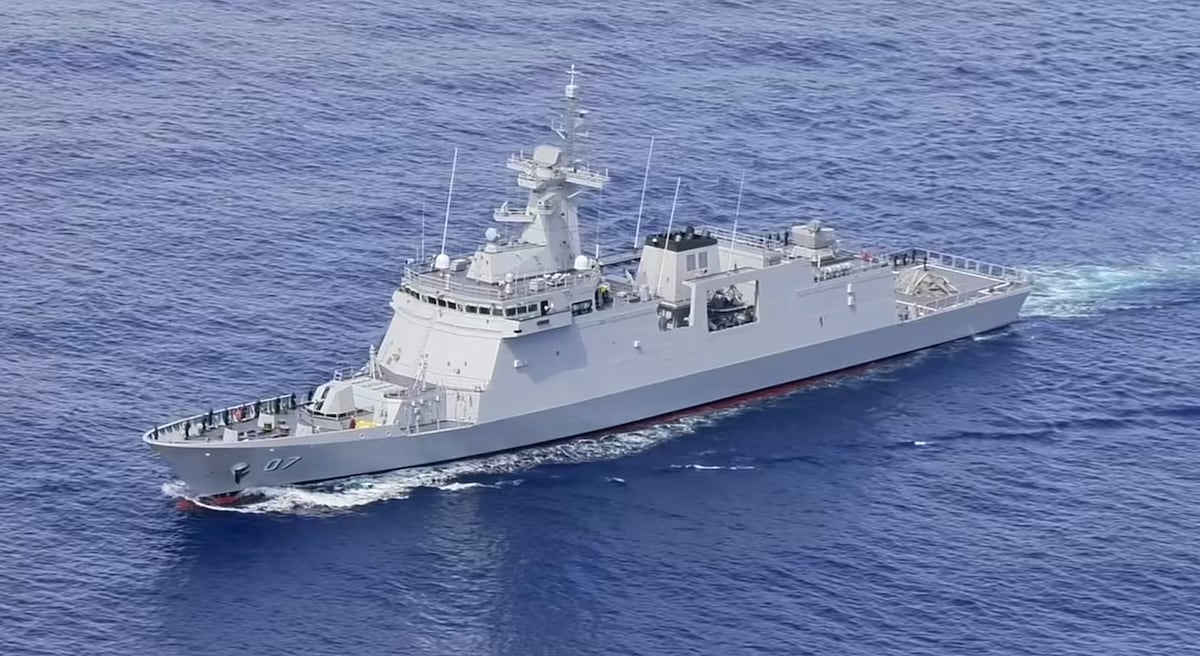
CHRISTCHURCH, New Zealand — Once reliant on aging, second-hand vessels from the United States, a steady drumbeat of new warships is beginning to enter Philippine Navy service.
The new capabilities are part of a rapid modernization program there, prompted by aggressive Chinese tactics and territorial claims in the adjacent South China Sea .
The world’s largest shipbuilder, South Korea’s HD Hyundai Heavy Industries (HHI), is the primary supplier of these new vessels, and the latest warship to enter Philippine service is a second HDF-3200 Hybrid frigate.
The Philippine Navy – or PN for short – commissioned BRP Diego Silang on Dec. 2. The milestone came just six and half months after the first-of-class BRP Miguel Malvare entered service.
The two frigates had been ordered from HD HHI via a 28 billion peso ($550 million) contract inked in 2021. Displacing 3,200 tons and measuring 118.4m in length, they are the most sophisticated warships ever owned by the Philippines.
Rear Adm. Roy Vincent Trinidad, the Navy spokesperson for the West Philippine Sea, said at the Diego Silang commissioning ceremony: “This will add to the capital ships of the PN that are capable of patrolling all the way up to our exclusive economic zone and even beyond. It will be the most modern warship that we have.”
These are also the first Philippine warships boasting a vertical launch system for missiles, with the frigates possessing 16 cells of VL MICA missiles from MBDA. They also carry eight SSM-700K C-Star anti-ship missiles from Korean missile house LIG Nex1.
The pair joins two other frigates previously constructed by the Korean shipbuilder. Those two 2,600-ton Jose Rizal-class frigates were inducted in 2020-2021, marking the start of a lucrative relationship between Hyundai and its Philippine customer.
In a tour of Hyundai’s Ulsan shipyard earlier this year, Defense News observed Diego Silang under construction, as well as a first offshore patrol vessel (OPV) for the Philippines. A company spokesperson indicated that the latter should be handed over to Manila in March 2026, following sea trials and final outfitting.
Under a 2022 order, Hyundai is constructing six such HDP-2200+ OPVs for the Philippine Navy. The second vessel in the class – Rajah Lakandula – was launched on Nov. 20, and all six are meant to be operational by 2028.
Philippine naval ambitions continue to advance even further.
Spokesperson Trinidad said discussions are under way for a further pair of frigates. Under the armed forces’ Re-Horizon 3 program, the sea service has set aside 43 billion pesos (US$294 million) for two new frigates and their weapons.
The navy has not selected a platform yet, but Hyundai is proffering an updated version of the HDF-3200 or the larger HDF-3500. A contract award could happen soon, and choosing Hyundai again would bring advantages in commonality.
HD Hyundai describes the Philippines as a “strategic customer.” One executive told Defense News: “Commercial ships are our major business, and naval ship revenue is around 10% at HHI. Although the revenue proportion is small, our pride and technology are not small, as it even surpasses the commercial ship business.”
The other major naval shipbuilder in South Korea is Hanwha Ocean. It is currently promoting KSS-III diesel-electric submarines for an emerging Philippine requirement.
Because these two shipbuilding rivals have been competing directly against each other in overseas competitions, the country’s Defense Acquisition Program Administration decided to mediate.
To prevent business overlaps, the three parties signed a memorandum of understanding on Feb. 25 to create a “One Team” formation that unites their marketing campaigns.
Hanwha Ocean is supposed to take the lead on submarine export campaigns, while the Hyundai shipyard is responsible for surface warships.
Regardless, that agreement has done little to ease intra-Korean competition. The two companies are currently competing for both Saudi and Thai frigate requirements, for example.
Hyundai is promoting its 6,500-ton HDF-6000 frigate, and Hanwha its Ocean 4500 design for Saudi Arabia.
Meanwhile, at last month’s Defense & Security 2025 exhibition in Bangkok, Hyundai displayed scale models of HDF-3200, HDF-3600 and HDF-4000 frigates as suitable solutions for the Royal Thai Navy. Likewise, Hanwha Ocean showcased its 4,000-ton Ocean-40F frigate for Thailand.
Even as many Western navies struggle with or cancel warship programs – the U.S. Navy’s Constellation-class frigates are a case in point – South Korean shipbuilders such as HD Hyundai Heavy Industries point to a track record of delivering on time and within budget.
For 2025, the company predicts delivery of 48 commercial vessels and two naval ships to customers. This will bring to 149 the number of naval vessels the shipbuilder has built to date.
Gordon Arthur is an Asia correspondent for Defense News. After a 20-year stint working in Hong Kong, he now resides in New Zealand. He has attended military exercises and defense exhibitions in about 20 countries around the Asia-Pacific region.
新西兰基督城——菲律宾海军曾经依赖从美国进口的老旧二手舰艇,如今,一批批新的军舰正陆续加入其服役队伍。
由于中国在邻近的南海采取咄咄逼人的策略和领土主张,促使该国开展了快速现代化计划,而这些新能力正是该计划的一部分。
世界最大的造船企业韩国现代重工(HHI)是这些新舰艇的主要供应商,而最新加入菲律宾海军服役的军舰是第二艘HDF-3200混合动力护卫舰。
菲律宾海军(简称PN)于12月2日正式启用BRP Diego Silang号。这一里程碑事件距离首舰BRP Miguel Malvare号服役仅六个半月。
这两艘护卫舰是菲律宾于 2021 年通过一份价值 280 亿比索(5.5 亿美元)的合同向 HD HHI 订购的。它们排水量为 3200 吨,长度为 118.4 米,是菲律宾有史以来拥有的最先进的军舰。
海军西菲律宾海发言人罗伊·文森特·特立尼达少将在“迭戈·西朗”号的服役仪式上表示:“这将增强菲律宾海军主力舰的巡逻能力,使其能够巡逻至专属经济区甚至更远的区域。这将是我们拥有的最现代化的军舰。”
这些也是菲律宾首批配备垂直发射导弹系统的军舰,护卫舰搭载了16个MBDA公司生产的VL MICA导弹发射单元。此外,它们还携带了8枚韩国LIG Nex1导弹公司生产的SSM-700K C-Star反舰导弹。
这两艘护卫舰与此前由这家韩国造船厂建造的另外两艘护卫舰一同服役。这两艘2600吨级的何塞·黎刹级护卫舰于2020年至2021年入役,标志着现代造船与其菲律宾客户之间一段利润丰厚的合作关系的开始。
今年早些时候,《防务新闻》记者参观了现代集团位于蔚山的造船厂,期间他们看到“迭戈·西朗”号正在建造中,同时还看到菲律宾首艘近海巡逻舰(OPV)正在建造中。公司发言人表示,后者在完成海上试航和最终舾装后,将于2026年3月交付给马尼拉。
根据2022年签订的订单,现代造船正在为菲律宾海军建造六艘HDP-2200+型近海巡逻舰。该级舰艇的第二艘——“拉贾·拉坎杜拉”号——已于11月20日下水,所有六艘舰艇预计将于2028年全部服役。
菲律宾的海军野心仍在不断推进。
发言人特立尼达表示,目前正在就增建两艘护卫舰进行磋商。根据武装部队的“重塑地平线3”计划,海军已拨款430亿比索(约合2.94亿美元)用于建造两艘新型护卫舰及其武器装备。
海军尚未选定平台,但现代汽车公司正在推荐HDF-3200的升级版或更大的HDF-3500。合同可能很快就会授予,再次选择现代汽车将带来通用性方面的优势。
现代重工将菲律宾描述为“战略客户”。一位高管告诉《防务新闻》:“商用船舶是我们的主要业务,海军舰艇收入约占现代重工总收入的10%。虽然收入占比不大,但我们的实力和技术却不容小觑,其海军舰艇业务甚至超过了商用船舶业务。”
韩国另一家主要的海军造船企业是韩华海洋。该公司目前正在向菲律宾推销KSS-III型柴电潜艇,以满足其新出现的需求。
由于这两家造船业竞争对手一直在海外竞标中直接竞争,该国的国防采办计划管理局决定进行调解。
为防止业务重叠,三方于 2 月 25 日签署了一份谅解备忘录,组建“一个团队”,将各自的营销活动联合起来。
韩华海洋公司将主导潜艇出口业务,而现代造船厂则负责水面战舰的建造。
然而,该协议并未有效缓解韩国内部的竞争。例如,这两家公司目前都在竞标沙特阿拉伯和泰国的护卫舰订单。
现代正在向沙特阿拉伯推销其 6500 吨级的 HDF-6000 型护卫舰,而韩华则为其 Ocean 4500 型护卫舰设计方案。
与此同时,在上个月于曼谷举行的“2025防务与安全展”上,现代集团展示了HDF-3200、HDF-3600和HDF-4000型护卫舰的模型,作为泰国皇家海军的理想解决方案。同样,韩华海洋也展示了其为泰国设计的4000吨级Ocean-40F型护卫舰。
尽管许多西方国家的海军在军舰项目上举步维艰或取消了军舰项目(例如美国海军的星座级护卫舰),但韩国造船企业,如现代重工,却有按时按预算交付的良好记录。
该公司预计到2025年将向客户交付48艘商船和2艘军舰。这将使该造船厂迄今为止建造的军舰总数达到149艘。
戈登·阿瑟是《防务新闻》的亚洲特派记者。在香港工作20年后,他现居新西兰。他曾到访亚太地区约20个国家,参加过军事演习和防务展览。