Disembodied Voices Were Blasted Into The Jungle By The U.S. In Vietnam To Spook The Enemy在越南战争期间,美军向丛林中播放了虚幻的声音,以恐吓敌人。
During the Vietnam War, Operation Wandering Soul used ghost stories and creepy sounds to encourage the enemy to surrender.
新闻视频
Updated Oct 29, 2021 7:07 PM EDT
In the Vietnam-era U.S. military’s ceaseless quest to find new ways of sapping the morale of an often-elusive enemy, ‘ghosts’ were drafted in, too, as part of Operation Wandering Soul. It broadcast an eerie soundtrack of human voices as well as moans, screams, and shrieks, all calculated to mess with the minds of the enemy. The ultimate success (or otherwise) of this bizarre psychological warfare operation is hard to determine, but the surviving soundtrack of the so-called “Ghost Tape Number 10” makes for fascinating listening … especially around Halloween.
In Bao Ninh’s famous Vietnam War novel
The Sorrow of War , the protagonist, Kien, is given the job of helping to recover the remains of fallen soldiers once the Americans have left the country. The story, while fictionalized, is based on the real-life experiences of Vietnam’s Missing in Action teams, who gathered the dead while haunted by the conflict and what it had left behind.
Ninh’s recollections of the battlefields — “Bloated human corpses, floating alongside the bodies of incinerated jungle animals, mixed with the branches and trunks cut down by artillery, all drifting in a stinking marsh” — remain in the reader’s mind, but so do the descriptions of the many ghosts that populate the jungles and the imaginations of the soldiers and civilians who survived.
In the traditional Vietnamese understanding of death, ghosts play an important role, tied in with concepts of “good deaths” and “bad deaths.” Many of the almost one million North Vietnamese and Viet Cong war dead were understood as being in the category of “chet duong,” meaning that they had died violently, away from their family homes, and were unable to transition properly from the living world to the spirit world. Instead, tradition has it, their spirits were left to wander the battlefields, suspended between this life and the next.
In traditional Vietnamese culture, these ghosts are known as ‘linh hon,’ or wandering souls.’
Ghosts, in general, had been identified by the U.S. military as a potentially effective element of psychological warfare operations in Vietnam. A U.S. Military Assistance Command Vietnam (MACV) fact sheet published in December 1969, a portion of which you can find reproduced here , even outlined different types of ghosts that might be mobilized in support of psyops campaigns. The document describes the “ma heo” (pig ghost), “ma cho” (dog ghost), and “ma meo” (cat ghost) that were part of rural folklore in Vietnam. Other, more malevolent spirits included “the ‘tightening-knot ghost,’ which goads people into suicide by muttering ‘co co’ (neck, neck) into their ears. Ma A Phien is the opium ghost, related to addiction and eventual ‘death in the pleasures.’”
A U.S. Marine Corps intelligence scout escorts a North Vietnamese Army soldier to the unit command post for interrogation. The NVA soldier surrendered to the Marines during operations close to An Hoa Combat Base., U.S. Marine Corps
In its essence, Operation Wandering Soul had much in common with previous psychological warfare efforts, broadcasting specially prepared audio tracks to undermine the adversary. The difference was how it relied on this particular Vietnamese idea of the battlefield ghost to spook the enemy.
The surviving Ghost Tape Number 10 was prepared by the U.S. Army’s 6th Psychological Operations Battalion, or 6th PSYOP Battalion , which had been activated in Vietnam in November 1965. Worthy of a horror movie soundtrack, it deployed disembodied voices and other unearthly sounds that would carry through the jungle like the wandering souls themselves.
These were not just spooky sounds engineered to creep out the listener but were intended to have a much more visceral reaction among troops very likely to be familiar with the idea of “chet duong.” After all, for the credulous, what they were hearing was nothing less than the sounds of the fallen soldiers they had once fought alongside. South Vietnamese participants were brought into the recording process to make the audio tracks sound more authentic.
Ghost Tape Number 10 was employed by the units of the U.S. Army and Navy, broadcast from loudspeakers on helicopters, Patrol Craft Fast (PCF) “Swift” boats , or by specialist infantry who would infiltrate enemy areas, normally at night.
Nhan Ngoc Mai, a former Viet Cong soldier, uses a microphone to speak to villagers on the shore from a psyop boat during Project Loudspeaker, conducted by the 7th PSYOP Battalion, in the Chu Lai area, in 1969., NATIONAL ARCHIVES
“My friends,” pleads a disembodied Vietnamese voice on the tape. “I have come back to let you know that I am dead… I am dead!”
“It’s hell. … I’m in hell!” the track continues. “Don’t end up like me. Go home, friends, before it’s too late!”
As well as the voices of fallen soldiers, the same tape included banging gongs, crying women, and a child calling for her father.
To be sure, this particular psywar campaign was not always effective. There are reports of soldiers immediately opening fire in the direction of the speaker-equipped helicopters broadcasting it, for example. Another time, it’s reported that the crew of a Swift boat gave up playing the ghost tape in favor of Tina Turner after their boat began to be targeted with rockets.
Soldiers drop leaflets and use loudspeakers from a UH-1 helicopter, as depicted in a painting by Craig L. Stewart, U. S. Army Vietnam Combat Artists Team IX. , PUBLIC DOMAIN
Since leaflet-dropping, surrender pamphlets, and other propaganda broadcasts were already widely employed already, many troops would have been familiar with the broader concept of U.S. psyops campaigns.
A propaganda leaflet urging VC and North Vietnamese regular soldiers to defect to the South. , National Archives
Others reckon that Ghost Tape Number 10 was at least sometimes very effective. “Even if the Viet Cong didn’t believe there were in fact ghosts in the jungle with them, that this was just a supernatural horror show being put on by the Americans, just the sounds and the message were more than a little eerie,” explains Nathan Mallett, of MilitaryHistoryNow.com, on The Stuff of Life
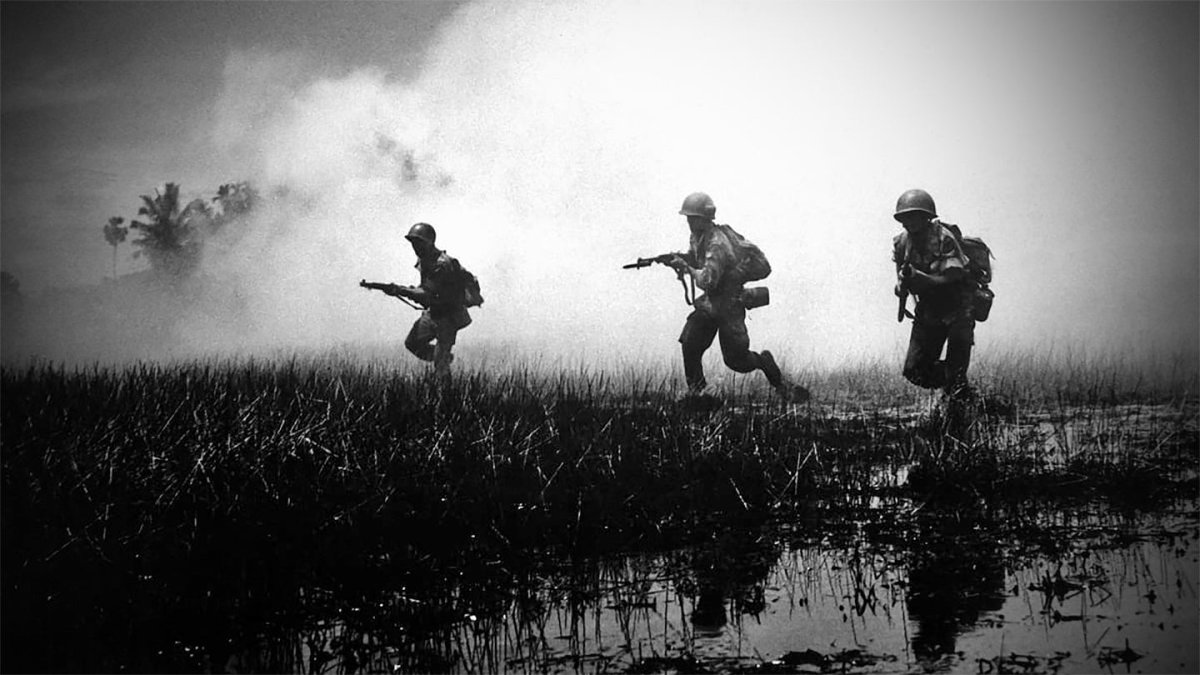
Soldiers of the 101st Airborne Division prepare to move across a rice field in search of Viet Cong in Tuy Hoa, South Vietnam, in 1966., U.S. DoD
In one truly remarkable extension of the ghost tape idea, it’s said that the 6th PSYOP Battalion added a tiger’s roar , capitalizing on rumors that there was a dangerous big cat attacking North Vietnamese Army and Viet Cong troops. A former member of the battalion recalled the incident to psyops researcher Sergeant Major (ret.) Herbert A. Friedman:
The 6th PSYOP got an Air Force pilot to fly to Bangkok, to get an actual recording of a tiger from their zoo. We had a Chieu Hoi [a Viet Cong defector] come down the mountain and tell of a tiger that was attacking the Viet Cong for the past few weeks. So, we mixed the tiger roar onto a tape of 69-T, “the Wandering Soul,” and a two-man team got up on the mountain, played the tape and 150 Viet Cong came off that mountain.
As well as that account, there are reports of the tape being played in different parts of South Vietnam in late 1969 and early 1970 “with mixed results.” One mission, carried out in the jungle near the U.S. Army’s Fire Support Base Chamberlain in Hau Niga Province, on the night of Feb. 10, 1970, was described in a contemporaneous account in The Tropic Lightning News , which is reproduced here :
If you were a Wolfhound of the First Battalion, 27th Infantry, 25th Infantry Division, and were at Fire Support Base Chamberlain on the night of February 10 you might have sworn the place was being haunted by poltergeists, ghosts that is. The moans, groans, and weird sounds began at eight that night, a likely time for the cloudlike forms to reveal themselves. Of course, ghosts are nonexistent, or are they? In this case, the ghosts and weird sounds were furnished by the Sixth PSYOP Team and the S-5 Section of the 1/27th Wolfhounds who were conducting a night mission at Chamberlain. With the help of loudspeakers and a tape of ‘The Wandering Soul,’ a mythical tale of a Viet Cong gone to Buddha, the mission was a success.
A U.S. soldier hands out small yellow plastic balls to children to play with. The balls had “Chieu Hoi” printed on them in red, with the idea that they would fall into the hands of the Viet Cong and NVA and encourage them to give themselves up., AP Photo/Eddie Adams
Furthermore, Raymond Deitch, who had commanded the 6th PSYOP Battalion, later recalled that “The tape was so effective that we were instructed not to play it within earshot of the South Vietnamese forces because they were as susceptible as the Viet Cong or North Vietnamese Army.”
There’s even some evidence that the enemy leadership was indeed worried about the possible results of the ghost tape, and psyops broadcasts more generally. One account of the 4th Psychological Operations Group in Vietnam has it that a Viet Cong commander complained that “audio messages were hard to ignore, for the sound even penetrated through the earth to VC hidden in underground tunnels.” The same commander apparently pointed to Ghost Tape Number 10 as being particularly effective.
A U.S. Marine explores a Viet Cong tunnel complex found by the 2d Battalion, 26th Marines, on the Batangan Peninsula during Operation Bold Mariner in 1969., U.S. MARINE CORPS
On the other hand, even on the occasions that the ghost tape backfired and instead drew enemy fire, that could also be useful to uncover the location of the adversary. One unnamed U.S. Navy helicopter pilot told Herbert A. Friedman that their crew played the ghost tape “many times” in 1968 and 1969. “On about half the missions a PSYOP officer would fly with us and attempt to direct the mission. We dropped leaflets, magazines, and played the tape. Without exception, we drew fire each mission. This was one of the primary objectives of the mission.”
The door gunner of a UH-1B gunship prepares for a firing run over a Viet Cong ambush site in the Mekong Delta. The helicopter was assigned to Helicopter Attack Squadron (Light) 3, or HA(L)-3, which is known to have used the ghost tape on psyop missions., NATIONAL ARCHIVES
Ultimately, it seems the success of Operation Wandering Soul was mixed, at best, at least when it came to diminishing the fighting morale of the enemy and motivating defections. However, similar concepts have resurfaced in successive U.S. campaigns since then, including the use of heavy metal music to make Manuel Noriega surrender and the broadcasts of crying, retreating troops, and other confusing sounds used against ISIS in the Middle East in recent years.
But the sinister sounds of Ghost Tape Number 10 provide a remarkable glimpse into the psyche, real or imagined, of the different antagonists involved in the war in Southeast Asia.
Contact the author: thomas@thedrive.com
Comments couldn’t be loaded. Please refresh the page.
更新于美国东部时间2021年10月29日晚上7:07
在越战时期,美军不断探索削弱难以捉摸的敌人士气的新方法,其中一项名为“游魂行动”(Operation Wandering Soul)的计划也采用了“幽灵”录音。该行动播放一段诡异的音轨,其中包含人声、呻吟、尖叫和嘶吼,旨在扰乱敌人的心理。这场奇特的心理战行动最终是否成功难以定论,但现存的所谓“幽灵录音带10号”(Ghost Tape Number 10)的音轨却引人入胜……尤其是在万圣节前后。
在宝宁著名的越南战争小说中
在《战争的悲哀》中,主人公基恩受命在美军撤离越南后,协助搜寻阵亡士兵的遗骸。故事虽为虚构,但取材于越南失踪人员搜寻队的真实经历。这些队员在战争及其遗留问题的阴影下,搜寻着阵亡者的遗骸。
宁对战场的回忆——“肿胀的人类尸体,与被烧焦的丛林动物尸体一起漂浮,混杂着被炮火砍断的树枝和树干,全都漂浮在散发着恶臭的沼泽中”——留在了读者的脑海中,但同样留在读者脑海中的还有丛林中众多鬼魂的描述,以及幸存的士兵和平民的想象。
在越南传统的死亡观念中,鬼魂扮演着重要的角色,与“善死”和“恶死”的概念紧密相连。近百万北越和越共战争死难者中,许多人被认为是“chet duong”(意为“死后亡魂”),这意味着他们死于非命,远离家乡,无法顺利地从人间过渡到灵界。按照传统,他们的灵魂被遗弃在战场上,徘徊于生死之间。
在越南传统文化中,这些鬼魂被称为“灵魂”,或游荡的灵魂。
总的来说,美军认为鬼魂是越南心理战行动中一种潜在的有效手段。美国驻越军事援助司令部(MACV)于1969年12月发布的一份情况说明书(部分内容可在此处找到)甚至列出了可用于支持心理战行动的不同类型的鬼魂。该文件描述了越南乡村民间传说中的“猪鬼”、“狗鬼”和“猫鬼”。其他一些更为邪恶的鬼魂包括“勒紧绳结的鬼魂”,它会在人们耳边低语“co co”(脖子,脖子),引诱他们自杀。还有鸦片鬼“Ma A Phien”,它与鸦片成瘾以及最终的“死于享乐”有关。
一名美国海军陆战队情报侦察兵押送一名北越士兵前往部队指挥所接受审讯。这名北越士兵在安和作战基地附近的一次行动中向海军陆战队投降。
从本质上讲,“游魂行动”与以往的心理战行动有很多共同之处,都是通过播放特制的音频来削弱敌方的信心。不同之处在于,它利用了越南人特有的“战场幽灵”概念来震慑敌人。
现存的第 10 号幽灵磁带是由美国陆军第 6 心理作战营(或称第 6 PSYOP 营)制作的,该营于 1965 年 11 月在越南成立。它堪称恐怖电影配乐,运用了无形的声音和其他超自然的声音,这些声音如同游荡的灵魂一般在丛林中传播。
这些并非刻意营造的恐怖音效,而是旨在唤起士兵们更为强烈的本能反应,因为他们很可能对“chet duong”(战死沙场)的概念耳熟能详。毕竟,对于那些轻信的人来说,他们听到的正是曾经并肩作战的阵亡士兵的哀嚎。为了让音轨听起来更加真实,录音过程中还邀请了南越方面参与。
美国陆军和海军部队使用第 10 号幽灵磁带,通过直升机、快速巡逻艇 (PCF)“迅捷”艇上的扬声器进行广播,或者由渗透到敌方区域的特种步兵进行广播,通常是在夜间。
1969年,在朱莱地区,前越共士兵阮玉梅(Nhan Ngoc Mai)在第七心理战营开展的“扩音器计划”中,从一艘心理战船上用麦克风向岸边的村民讲话。(美国国家档案馆)
“我的朋友们,”录音带中一个越南口音哀求道,“我回来告诉你们,我已经死了……我已经死了!”
“这里是地狱……我身处地狱!”歌曲继续唱道。“别落得和我一样的下场。朋友们,趁现在还来得及,赶紧回家吧!”
除了阵亡士兵的声音外,同一盘录音带中还包括敲锣声、妇女的哭泣声以及一个孩子呼唤父亲的声音。
当然,这场心理战并非总是奏效。例如,有报道称,士兵们立即向播放这段录音的装有扬声器的直升机开火。还有一次,据报道,一艘快艇上的船员在遭到火箭弹袭击后,放弃了播放这段“幽灵录音带”,转而播放蒂娜·特纳的歌曲。
士兵们从UH-1直升机上散发传单并使用扩音器,这幅画作由美国陆军越南战争第九战斗艺术家团队的克雷格·L·斯图尔特创作。(公共领域)
由于散发传单、投降小册子和其他宣传广播已经广泛使用,许多士兵都熟悉美国心理战行动的更广泛概念。
一份敦促越共及北越正规军士兵投奔南方的宣传单。(美国国家档案馆)
另一些人则认为,第十号“鬼魂录像带”至少在某些时候非常有效。“即使越共不相信丛林里真的有鬼魂,认为这只是美国人上演的一场超自然恐怖秀,但仅仅是那些声音和信息就足以令人毛骨悚然,”MilitaryHistoryNow.com网站的内森·马利特在《生活琐事》一书中解释道。
1966年,在南越绥和,第101空降师的士兵准备穿越稻田,搜寻越共武装分子。(美国国防部)
在“幽灵录音带”概念的一个真正令人震惊的延伸中,据说第6心理战营在录音带中添加了老虎的咆哮声,利用了当时关于一只危险的大型猫科动物正在袭击北越军队和越共部队的谣言。该营的一名前成员向心理战研究员、退役军士长赫伯特·A·弗里德曼回忆了这件事:
第六心理战中队派了一名空军飞行员飞往曼谷,从那里的动物园里获取老虎的真实录音。我们让一名越共叛逃者(Chieu Hoi)从山上下来,讲述了过去几周一只老虎袭击越共的情况。于是,我们将老虎的吼声混入了69-T号录音带《流浪的灵魂》中,然后派出一个两人小组上山,播放了这段录音,结果150名越共从山上下来了。
除了上述说法外,还有报道称,这段录音带在1969年末和1970年初在南越各地播放,“效果不一”。其中一次任务发生在1970年2月10日晚,地点位于美军在后尼加省张伯伦火力支援基地附近的丛林中。当时的《热带闪电新闻》对此进行了报道,内容如下:
如果你是第25步兵师第27步兵团第1营“狼犬”营的一名士兵,并且在2月10日晚驻扎在张伯伦火力支援基地,你或许会觉得那里闹鬼,或者说是闹鬼。当晚八点,呻吟声、呜咽声和各种怪异的声音开始出现,这很可能是那些云状物体现身的时间。当然,鬼魂并不存在,或者说,它们真的存在吗?实际上,这些鬼魂和怪异的声音是由第六心理战小组和第27步兵团第1营的S-5分队制造出来的,他们当时正在张伯伦基地执行夜间任务。借助扬声器和一盘名为《游魂》的磁带——一个越共皈依佛门的传说故事——任务取得了成功。
一名美国士兵向孩子们分发黄色小塑料球玩耍。这些球上用红色印着“投降”字样,其用意是让这些球落入越共及北越军队手中,以此鼓励他们投降。(美联社照片/埃迪·亚当斯)
此外,曾指挥第 6 心理战营的雷蒙德·迪奇后来回忆说:“这段录音非常有效,我们被指示不要在南越军队的听力范围内播放,因为他们和越共或北越军队一样容易受到影响。”
甚至有证据表明,敌方领导层确实担忧“幽灵录音带”以及更广泛的心理战广播可能造成的后果。据驻越美军第四心理作战大队的一份记录显示,一名越共指挥官抱怨说:“音频信息很难被忽视,因为声音甚至能穿透泥土,传到藏身于地下隧道中的越共士兵耳中。”这位指挥官显然还指出,第10号“幽灵录音带”尤其有效。
1969年“勇敢水手行动”期间,美国海军陆战队员在巴坦甘半岛探索由第26陆战团第2营发现的越共隧道群。(美国海军陆战队)
另一方面,即使“幽灵录音带”有时适得其反,反而引来敌方火力,也有助于发现敌方位置。一位不愿透露姓名的美国海军直升机飞行员告诉赫伯特·A·弗里德曼,他们的机组在1968年和1969年“多次”播放过“幽灵录音带”。“大约一半的任务中,会有一名心理战军官与我们同行,试图指挥任务。我们散发传单、杂志,并播放录音带。每次任务都毫无例外地引来敌方火力。这正是任务的主要目标之一。”
一架UH-1B武装直升机的舱门机枪手正准备对湄公河三角洲的越共伏击地点进行射击。这架直升机隶属于第3轻型直升机攻击中队(HA(L)-3),该中队曾使用过“幽灵录像带”执行心理战任务。(美国国家档案馆)
最终,“流浪之魂行动”的成效充其量只能说是喜忧参半,至少在削弱敌军士气和促使士兵叛逃方面是如此。然而,类似的策略此后在美国的后续军事行动中屡次出现,例如利用重金属音乐迫使曼努埃尔·诺列加投降,以及近年来在中东地区对ISIS使用播放士兵哭泣、撤退等令人困惑的声音。
但《鬼带 10》中阴森恐怖的声音,让我们得以窥见东南亚战争中不同敌对双方的真实或想象的心理。
联系作者:thomas@thedrive.com
评论加载失败,请刷新页面。