Spanish spending spike to help hit NATO budget target this year西班牙大幅增加支出,以帮助北约实现今年的预算目标。
Spain so far has been among the alliance’s lowest defense spenders, with just 1.3% of the country’s total economic power going to the military.
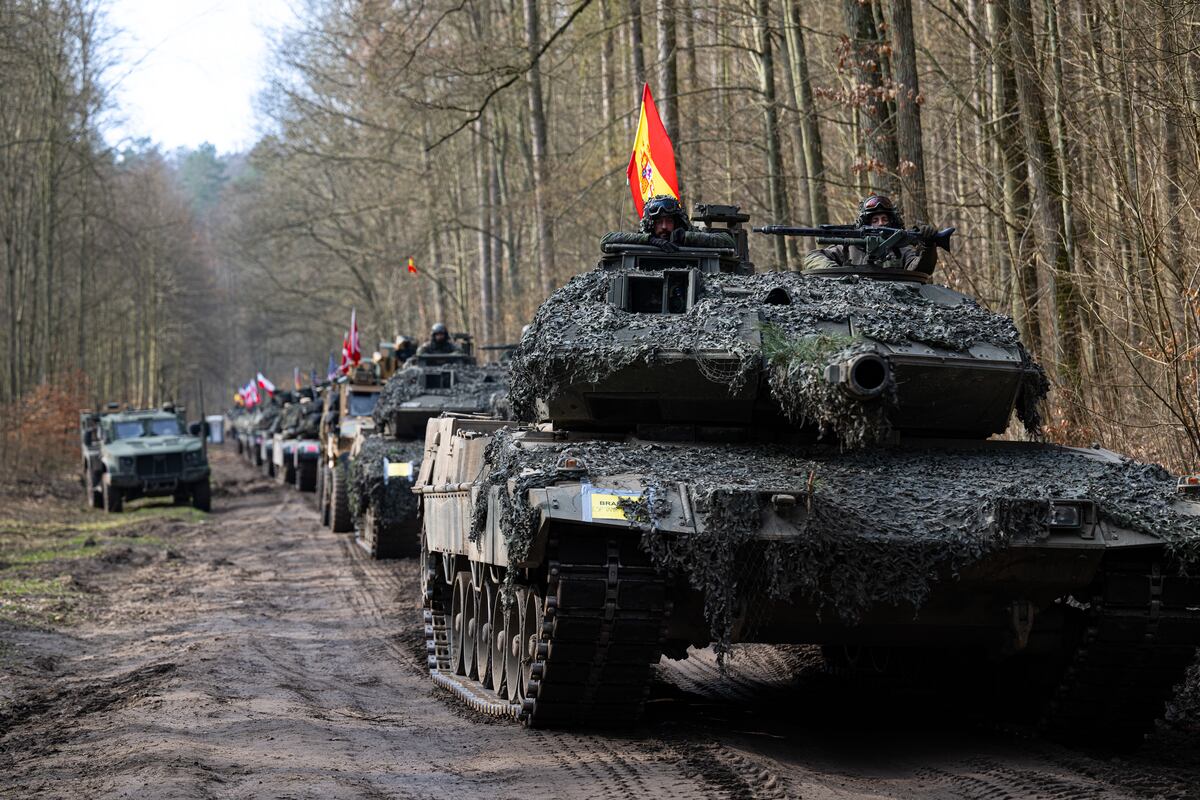
THE HAGUE, Netherlands — Spain will rapidly increase its military spending rate this year to reach the 2% of GDP target set for NATO members, the country’s prime minister announced on Tuesday.
Spain so far has been among the alliance’s lowest defense spenders, with just 1.3% of the country’s total economic power going to the military.
The €10.5 billion boost ($12 billion) in defense spending will raise the Spanish total to €34 billion ($39 billion) for this year.
Madrid originally set a goal of reaching 2% of GDP for defense spending by 2029, but the envisioned cash infusion will mean that the target is reached in 2025 instead.
While announcing the increased military budget on Tuesday, the country’s left-of-center prime minister, Pedro Sánchez, said most of the funding — almost 90% — is expected to boost Spain’s domestic economy. He stressed that the country remained “pacifist” but that he hoped the increased military readiness would act as a deterrent to “those who might think of attacking Europe.”
The money will come from the post-pandemic recovery funds, from the government’s savings due to Spain’s strong economic growth, and from several line items included in the government budget that were “no longer needed,” Sánchez said.
Less than a fifth of the extra money will be used for the “purchase of arms in the traditional sense of the word,” the prime minister added.
Of the €10.5 billion boost ($12 billion), 35% is earmarked for improving the working conditions of troops, over 31% will be spent on new telecom technologies and cybersecurity, nearly 19% will go to defense and deterrence tools, and close to 17% to support for emergency and natural disaster management.
Spain’s economy has been doing remarkably well compared to much of the West in recent years, with GDP growing by 3.2% in 2024, making it the fastest-growing in the Eurozone. The country has been under left-of-center leadership since 2020, whose priorities have usually focused on social issues and the fair redistribution of wealth, not military spending.
The Spanish boost in military spending follows a broader trend across Europe, which has experienced a historic about-face in the wake of Russia’s full-scale invasion of Ukraine. Defense budgets across the continent have significantly grown since, with military spending across the EU last year totaling €326 billion ($374 billion), or just under 2% of total GDP.
U.S. President Donald Trump has repeatedly called into question the collective security assured under NATO’s treaty for member states that don’t spend enough. The 2% target had been formally agreed by the alliance’s heads of state in 2014, following Russia’s annexation of Ukraine’s Crimean Peninsula, although the number had first been pledged noncommittally in 2006.
The target may be raised to 3% at the upcoming NATO summit in the Hague, which will be held in June.
Linus Höller is Defense News' Europe correspondent and OSINT investigator. He reports on the arms deals, sanctions, and geopolitics shaping Europe and the world. He holds master’s degrees in WMD nonproliferation, terrorism studies, and international relations, and works in four languages: English, German, Russian, and Spanish.
荷兰海牙——西班牙首相周二宣布,西班牙今年将迅速提高军费开支,以达到北约成员国设定的占GDP 2%的目标。
迄今为止,西班牙一直是北约国防开支最低的国家之一,该国仅有1.3%的经济实力用于军事。
西班牙国防开支增加 105 亿欧元(120 亿美元),今年的国防开支总额将达到 340 亿欧元(390 亿美元)。
马德里最初设定的目标是到 2029 年国防开支达到 GDP 的 2%,但预计的资金注入意味着该目标将在 2025 年实现。
周二,西班牙中左翼首相佩德罗·桑切斯宣布增加军费预算。他表示,近90%的资金预计将用于提振西班牙国内经济。他强调,西班牙仍然是“和平主义国家”,但他希望加强军事准备能够对“那些可能企图攻击欧洲的人”起到威慑作用。
桑切斯表示,这笔资金将来自疫情后的复苏基金、西班牙强劲经济增长带来的政府储蓄,以及政府预算中“不再需要”的几个项目。
总理补充说,额外资金中不到五分之一将用于“传统意义上的武器购买”。
在105亿欧元(120亿美元)的增资中,35%将用于改善部队的工作条件,超过31%将用于新的电信技术和网络安全,近19%将用于国防和威慑工具,近17%将用于支持紧急情况和自然灾害管理。
近年来,西班牙经济表现远超西方大部分国家,预计2024年GDP将增长3.2%,成为欧元区增长最快的国家。自2020年以来,西班牙一直由中间偏左的政党领导,其执政重点通常集中在社会问题和财富的公平分配上,而非军事开支。
西班牙增加军费开支符合欧洲的整体趋势,而俄罗斯全面入侵乌克兰后,欧洲的国防政策发生了历史性的转变。此后,整个欧洲大陆的国防预算大幅增长,欧盟去年的军费开支总额达到3260亿欧元(3740亿美元),略低于GDP的2%。
美国总统唐纳德·特朗普多次质疑北约条约对军费开支不足的成员国所保障的集体安全。尽管北约成员国早在2006年就曾做出过不具约束力的承诺,但在俄罗斯吞并乌克兰克里米亚半岛后,北约各国元首于2014年正式同意将军费开支目标设定为占欧盟军费开支的2%。
在即将于6月在海牙举行的北约峰会上,这一目标可能会提高到3%。
林努斯·霍勒是《防务新闻》的欧洲记者和开源情报调查员。他报道影响欧洲乃至全球的军火交易、制裁和地缘政治。他拥有大规模杀伤性武器不扩散、恐怖主义研究和国际关系三个硕士学位,并精通英语、德语、俄语和西班牙语四种语言。