The U.S. Government Hides Some Of Its Darkest Secrets At The Department Of Energy美国政府在能源部隐藏了一些最黑暗的秘密
The Department of Energy controls many 'black projects' that live outside of the limelight that is intrinsic to the DoD and the intel community.
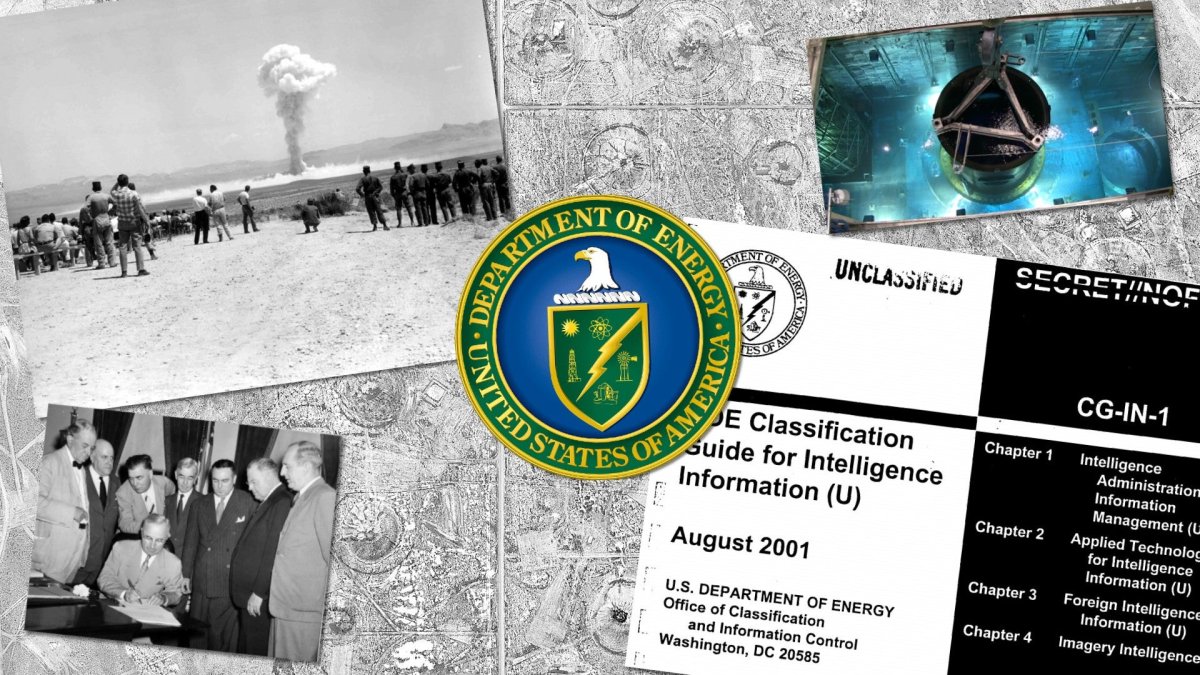
Updated May 13, 2021 7:37 PM EDT
When it comes to discussions of government secrecy, much of the conversation tends to revolve around the Department of Defense (DOD) or the U.S. Intelligence Community (IC). After all, the U.S. military develops many of the United States’ most sensitive weapon systems used to defend America and project its power globally, and the IC gathers and analyzes sensitive information on foreign threats and external national security matters. Each year, the budget requests from the U.S. military are packed with classified and Special Access Programs , or SAPs, sporting vague code names, many of which never see the light of day. When we talk of the “black world,” most often that conversation centers around these programs and technologies suspected to be housed deep within the classified ends of the Pentagon and its various service branches.
Often left out of this conversation is the fact that there is a wholly separate cabinet-level department of the U.S. government that is arguably even more opaque in terms of secrecy and oversight than the Department of Defense. Over the last few years, allegations of secret, exotic technologies have reinvigorated claims that the DOD may be concealing scientific breakthroughs from the American public. However, if the U.S. government, or some faction within it, hypothetically came across a groundbreaking development in energy production or applied physics, a very strong case could be made that such a revolution would likely be housed deep within the Department of Energy (DOE) rather than DOD.
The DOE is tasked with maintaining America’s nuclear weapons stockpile, among many other things. , DOE
Laying The Atomic Groundwork
The Department of Energy was officially formed in 1977, although its roots were planted in the Atomic Energy Act of 1946. The Atomic Energy Act established the Atomic Energy Commission (AEC), an agency designed to manage and control the United States’ nuclear technology under a civilian regime, rather than one overseen directly by the military itself. This is a gray area of sorts, however, as there are and have always been numerous positions at both the DOE and National Nuclear Security Administration (NNSA) filled by uniformed military officers. For example, NNSA’s Deputy Administrator for Naval Reactors, who also heads up the joint Navy-DOE Naval Nuclear Propulsion Program , is and has always been an admiral.
Ultimately, one of the main points of the AEC was to bring all of the United States’ nuclear technologies firmly together under one roof. From the beginning, the AEC focused almost exclusively on designing and manufacturing nuclear weapons and nuclear reactors for naval use . With the passage of the Atomic Energy Act of 1954, the AEC also began exclusively regulating the growing commercial nuclear power industry.
Like the DOE of today, AEC was focused on much more than simply the weaponization of nuclear technologies. Many atomic scientists intended nuclear explosives to be used for much more than simply weapons. As early as the 1950s, scientists at what are today Los Alamos National Laboratory and Sandia National Laboratories held classified discussions “to discuss the possibilities of using energy unleashed by nuclear explosions to produce power, dig excavations, and produce isotopes.” The AEC continued looking into these industrial uses of atomic technologies throughout the 1960s and early 1970s as part of its Plowshare Program .
President Harry Truman signing the Atomic Energy Act of 1946., Wikimedia Commons
Motivated in large part by the oil crisis of the early 1970s, the United States government under President Jimmy Carter passed The Department of Energy Organization Act of 1977. With that, the DOE as we know it today was formed by bringing together many different energy and science programs and administrations under one roof. This new department would oversee “ long-term, high-risk research and development of energy technology, federal power marketing, energy conservation, the nuclear weapons program, energy regulatory programs, and a central energy data collection and analysis program.”
One of the main tasks of DOE today is to develop, test, and maintain the United States’ nuclear weapons stockpile. While the DOD develops, operates, and maintains the systems that deliver those nuclear weapons, the DOE is the department actually tasked with the development and acquisition of nuclear warhead technologies. DOE handles all functions not related to warhead delivery : storing and securing nuclear warheads that are not deployed onboard DOD systems, securing the materials that are used in nuclear weapons, and dismantling older nuclear weapons which have been removed from the national stockpile. To facilitate cooperation between the two, the Nuclear Weapons Council was established in 1986 . This council consists of senior level officials from both the DOE and the DOD who coordinate on interagency activities related to the maintenance of the U.S. nuclear stockpile.
An organizational chart from the 2018 DOD manual “DOD Procedures for Joint DOD-Department of Energy/National Nuclear Security Administration (DOE/NNSA) Nuclear Weapon Life-Cycle Activities.”, DOD OIG
In addition to controlling and producing America’s nuclear power and weapons technologies, today’s DOE fosters research and innovation into clean energy solutions, energy efficiency, climate change mitigation, and alternative fuel technologies for the transportation sector. As its name implies, DOE has a hand in all of America’s short- and long-term energy needs. That’s far from all that the DOE oversees, however, as it also conducts a significant amount of secret and classified research and manufacturing.
Secrecy And Classification In The Department Of Energy
In many cases, DOE has its own classification systems and policies, some of which are even classified themselves . The highest level of these DOE security clearances is the Q clearance, equivalent to a Top Secret clearance in the DOD. That doesn’t mean that anyone with a Q clearance can access all classified information overseen by DOE. According to its Personnel Security FAQs page , “for access to some classified information, such as Sensitive Compartmented Information (SCI) or Special Access Programs (SAPS), additional requirements or special conditions may be imposed by the information owner even if the person is otherwise eligible to be granted a security clearance or access authorization.”
DOE Security Clearance Chart listing various clearances for different levels of information: Confidential (C), Secret (S), Top Secret (TS), Restricted Data (RD), Formerly Restricted Data (FRD), and National Security Information (NSI), special nuclear material (SNM), Critical Nuclear Weapon Design Information (CNWDI). , DOE
Groups, such as the Federation of American Scientists (FAS), through its Project on Government Secrecy , are actively pursuing further declassification of DOE records and have managed to get the DOE to declassify many records related to American nuclear technology . Despite these efforts, the DOE still remains one of the most secretive institutions of the U.S. government.
Steven Aftergood, director of FAS’s Project on Government Secrecy, told The War Zone that these extreme levels of secrecy were baked right into the DOE from the beginning, explaining:
One of the unique features of government secrecy at the Department of Energy is that it is shaped in part by law – the Atomic Energy Act – and not just by executive order. So it can be even slower and more difficult to change or to update than at some other agencies. Not only that, DOE secrecy policy on nuclear weapons is intertwined to a great extent with the policy of the Department of Defense. When the two agencies differ on whether to declassify and disclose information, either one can veto the decision. We’ve seen this happen repeatedly. So, for example, the size of the US nuclear arsenal was declassified most recently in 2017 . We asked for the number of weapons to be updated in 2018 and 2019, and DOE was willing to do so, but the Department of Defense blocked the disclosure .
One of the unique features of government secrecy at the Department of Energy is that it is shaped in part by law – the Atomic Energy Act – and not just by executive order. So it can be even slower and more difficult to change or to update than at some other agencies.
Not only that, DOE secrecy policy on nuclear weapons is intertwined to a great extent with the policy of the Department of Defense. When the two agencies differ on whether to declassify and disclose information, either one can veto the decision.
We’ve seen this happen repeatedly. So, for example, the size of the US nuclear arsenal was declassified most recently in 2017 . We asked for the number of weapons to be updated in 2018 and 2019, and DOE was willing to do so, but the Department of Defense blocked the disclosure .
Protecting this highly sensitive information is obviously a top priority for the DOE, and for that reason, the agency operates its own independent intelligence and counterintelligence arms, which are part of its relatively extensive and uniquely equipped apparatus of security forces . The DOE’s Office of Intelligence and Counterintelligence (OICI) was founded along with the Department in 1977, and aims to “identify and mitigate threats to U.S. national security and the DOE Enterprise and inform national security decision making through scientific and technical expertise.”
Members of NNSA’s Special Response Force train to protect a Safeguards Transporter (SGT) tractor-trailer used to transport nuclear weapons and related cargoes. This picture offers a rare look at the inside of the armored doors on the cab., GAO
The OICI answers to the Director of National Intelligence and the Secretary of Energy. A declassified and highly redacted copy of the DOE’s 2001 Classification Guide for Intelligence Information outlines the scope of the Office of Intelligence, specifically, within OICI. The document states that as a member of the Intelligence Community (IC), the DOE shall:
Participate with the Department of State in overtly collecting information with respect to foreign energy matters; Produce and disseminate foreign intelligence necessary for the [Department of Energy] Secretary to fulfill his/her responsibilities; Participate in formulating intelligence collection and analysis requirements where the special expert capability of the Department can contribute; and Provide expert technical, analytical, and research capabilities to other agencies within the IC.
Participate with the Department of State in overtly collecting information with respect to foreign energy matters;
Produce and disseminate foreign intelligence necessary for the [Department of Energy] Secretary to fulfill his/her responsibilities;
Participate in formulating intelligence collection and analysis requirements where the special expert capability of the Department can contribute; and
Provide expert technical, analytical, and research capabilities to other agencies within the IC.
In 1999, Congress created another semi-autonomous DOE outfit known as the National Nuclear Security Administration (NNSA) to oversee military applications of nuclear sciences. NNSA’s duties include maintaining and protecting the U.S. nuclear weapons stockpile, attempting to counter nuclear proliferation, and responding to nuclear emergencies. NNSA is part of DOE, but operates with significant autonomy given its role and the sensitive nature of its work. There had even been an initial proposal to establish it as a completely independent entity. In yet another example of the many gray areas in terms of civilian vs. military control of the DOE, the first person to head up NNSA was John Alexander Gordon, a uniformed Air Force officer (who was also CIA Deputy Director at the time).
According to the FY 2021 Department of Energy budget request , NNSA requested over $26 billion in 2021 for defense activities, while $1 billion was requested for undisclosed “Other Defense Activities.” In 2017, the Congressional Research Service reported that roughly 3% of National Defense funding went to the Department of Energy and other federal agencies for “Atomic Energy Defense Activities,” which is one of NNSA’s primary tasks.
One of the other main objectives of NNSA is overseeing and operating some of the most secure facilities in the United States, including several national laboratories, the Nevada National Security Site , the Pantex Plant in Amarillo, Texas, which produces nuclear weapons, and the Y-12 National Security Complex near Oak Ridge, Tennessee, which produces all of the United States’ enriched uranium. Y-12 is also home to the production facility for the mysterious Fogbank , a material so sensitive to U.S. nuclear weapon technology that its manufacturing process, composition, use, and even the material itself remain classified. In fact, Fogbank is wrapped in so much secrecy that the DOE once “forgot” how to manufacture it due to a lack of actual records about how to make it and dwindling institutional knowledge as a result of read-in employees aging out of the workforce.
The Y-12 facility near Oak Ridge, Tennessee., Wikimedia Commons
Among the other facilities the NNSA oversees is the Nevada National Security Site (NNSS), formerly known as the Nevada Test Site. The site, which boasts extreme security measures including its own security forces, stretches across some 1,400 square miles of desert and includes a nuclear weapons assembly plant, an experimental flight test facility, and explosive testing sites. The Air Force’s Nevada Test and Training Range (NTTR), which includes the notorious Area 51, surrounds the NNSS on three sides.
The Nevada National Security Site contains many DOE facilities for nuclear research including subcritical experiments and special nuclear material staging. The NNSS is also home to underground test facilities, and is among the United States’ most highly classified, restricted access areas. The NNSS offers limited tours, but these are conducted under the utmost security at pre-arranged times. During the Cold War, the Nevada Test Site, now NNSS, was home to hundreds of above-ground nuclear weapons tests which spread radioactive fallout across large swaths of the American West and Midwest. The DOE also maintains many “tombs” throughout the desert, where it stores the radioactive remains of nuclear experiments, spent nuclear fuel or enrichment products, and other remnants of America’s nuclear activities that are too dangerous to be disposed of anywhere else.
In another example of highly compartmentalized knowledge being lost due to workforce losses, a dismantling program had to be specially designed for the B53 nuclear bomb due to the fact that the scientists who knew its inner workings were either retired or dead. That program concluded in 2013 when the last one of these 10,000-pound bombs was successfully dismantled .
More recently, the Government Accountability Office (GAO) published the 2021 report “DOD and DOE Face Challenges Mitigating Risks to U.S. Deterrence Efforts” about the Nuclear Triad, which presently consists of Ohio class ballistic missile submarines , Minuteman III intercontinental ballistic missiles , and B-2 and B-52 bomber aircraft . The GAO report found that DOE frequently “loses” valuable knowledge about its highly explosive weapon systems due to its knowledge base growing old:
As we reported in June 2019, there are about 100 different nuclear weapon components that contain explosive materials, some of which are highly specialized and limited in supply. For example, only a single container of one specialized material remains. DOE officials and contractor representatives said that the agency is working to replenish the supply of such materials, but the agency faces challenges because some specialized explosive materials were created decades ago, and the knowledge base to successfully produce them is now gone. Moreover, even if DOE can replicate the “lost recipes” for specialized explosive materials, it faces the challenge of finding suppliers willing and able to provide small quantities of specialized raw materials that meet the exacting standards required for use in nuclear weapons.
Clearly, the extent to which knowledge and operations within DOE are protected can make it difficult to understand or even be aware of the full scope of its activities. To help us contextualize the high levels of secrecy and classification at the Department of Energy, The War Zone spoke with nuclear historian Dr. Alex Wellerstein, Director of Science and Technology Studies at the Stevens Institute in New Jersey. Wellerstein’s latest book , Restricted Data: The History of Nuclear Secrecy in the United States , “traces the complex evolution of the US nuclear secrecy regime from the first whisper of the atomic bomb through the mounting tensions of the Cold War and into the early twenty-first century.”
Wellerstein told The War Zone that the levels of secrecy at the DOE are not common knowledge, saying:
I think most people are surprised to learn that there are basically two classification systems in the United States. There’s national defense information which is all the secrets and top secrets, everything to do with the military and the state department and all of that stuff, then there’s nuclear stuff. It has a different statutory basis, the Atomic Energy Act, it’s handled differently and conceived of differently by the Restricted Data clause , it has its own clearances, and is meant to be a parallel classification system. The fact that only nuclear weapons have this, that no other weapons technology has its own category – not even biological weapons or chemical weapons, they’re national defense information – is highly reflective of its origins in the Cold War.
When the first nuclear technologies were developed and the AEC was formed, the U.S. government saw a need for higher levels of secrecy in order to protect these terrifying new weapons. That’s not to say that those higher levels of secrecy were approved of by the entire government or even the AEC. “It’s been a point of contention since the very beginning whether this particular technology is so dangerous or so apt to carry secrets that it needs its own separate classification systems,” Wellerstein says. “The secrecy was created out of fear, out of a belief that nuclear technology could be easily communicated as information. Whether that’s true has been debated since the 1940s.”
Many experts have questioned whether these levels of extreme secrecy are beneficial or even needed. Many of the scientists working on the Manhattan Project or in science administration during World War II felt that secrecy would not be an effective way to control nuclear weapons, and that international agreements would ultimately be the only way. “Any competent nation with any sort of technical or industrial base would, if they devoted resources to it, would be able to reinvent them – even if the secrecy was total, which it wasn’t,” Wellerstein says. “I don’t think that secrecy is what keeps new nations from developing nuclear weapons and I don’t think it’s what’s keeping terrorists from getting nuclear weapons. I think its impact is not that large on preventing those kinds of things. Its impact on policy and public knowledge is very high by contrast.” Still, Wellerstein adds, “I’ve talked with government officials who emphasize that nuclear weapons are so disproportionately powerful that maybe it’s worth being disproportionately cautious about the unknown.”
Image of “The Gadget” being prepared for detonation at the Trinity test site. It was used for the first atomic weapon explosion on July 16th, 1945. , Public Domain
Again, it’s natural that the DOE would not disclose specific parts of its most sensitive and dangerous weapons and associated technologies due to the ramifications of these potentially falling into the wrong hands. Still, by concealing many of its activities under the blanket of national security, NNSA and DOE leave plenty of room for activities or research programs that are never disclosed to the public.
The Question Of Oversight
Even with the high level of compartmentalization and autonomy surrounding the DOE, as well as America’s nuclear weapons stockpile, the department has its own oversight bureaucracies, as well. After all, if you allow only the DOE to control and produce your nuclear weapons and related research, you also need your own separate oversight systems in place to watch over how that control and production is managed. To that end, the DOE has its own Office of Inspector General (DOE OIG), whose mission is to “help the Department and the American taxpayer” by identifying management shortfalls, assessing vulnerabilities, auditing the agency’s financial activities, and investigating crimes against the Department. The DOE OIG advises and makes key recommendations to the Secretary of Energy.
A slide from a presentation given by the DOE OIG at the Nuclear Regulatory Commission Regulatory Information Conference in March 2019., DOE OIG
Aside from the OIG, the DOE is advised by the independent Federal Energy Regulation Commission , which oversees the transmission and sale of electricity and natural gas in interstate commerce, including oil pipelines. The DOE also has an Oversight Board , which monitors the environmental impacts of its operations specifically in New Mexico, including activities at Los Alamos National Laboratory (LANL), Sandia National Laboratories /New Mexico (SNL/NM), and the Waste Isolation Pilot Plant (WIPP).
There are a variety of mechanisms through which the U.S. government exercises oversight of the DOE and NNSA. The U.S. Congress, for one, has two subcommittees devoted to energy-related issues including nuclear weapons and facilities. The Energy Subcommittee of the House Energy and Commerce Committee and the Subcommittee on Energy of the Senate Committee on Energy and National Resources oversee the creation of legislation regarding a wide range of energy issues beyond nuclear matters alone. The House’s Energy Subcommittee oversees nuclear energy, nuclear facilities, the Department of Energy, the Nuclear Regulatory Commission, and the Federal Energy Regulatory Commission, while also legislating on national energy policy, fossil fuels, and other government activities affecting energy matters. While the Senate’s Subcommittee on Energy has oversight jurisdiction over nuclear fuels research and development, nuclear commercialization projects, nuclear fuel cycle policy, and the DOE National Laboratories, it also oversees energy-related issues such as fossil fuel management, pipeline development, strategic fuel reserves, and sustainable energy research.
Steven Aftergood told The War Zone that, while there are Congressional structures in place to provide oversight of the DOE, “ the quality of oversight depends on many factors, including Members’ level of interest, the expertise of committee staff, the cooperation of the agency, and the attention of the press and public interest organizations… With respect to secrecy and classification at DOE, my impression is that congressional oversight is nearly non-existent. But that is true regarding classification policy across the board.”
It is certainly true that these committees have a huge portfolio and it isn’t clear how they would effectively oversee a huge swathe of deeply classified programs the DOE is executing at any given time, some of which have many sub-programs and unique facets beyond their topline justification.
To bolster DOE oversight, Congress established the Defense Nuclear Facilities Safety Board (DNFSB) in 1988 as an independent organization that would provide oversight of the DOE’s nuclear production and testing facilities. Through this board, Congress is theoretically granted oversight of the DOE’s and NNSA’s operations and management, and Congress is responsible for the authorization and appropriation of funds for America’s Nuclear Security Enterprise. The DNFSB was set up as an independent oversight organization, which would offer recommendations to the Secretary of Energy that concerned public health and safety at the DOE’s nuclear weapons complex. Members of the board are appointed by the U.S. Senate. A full record of correspondence between the DOE and the DNFSB can be found on the DOE’s website , including all recommendations the board made between 2012 and today.
That doesn’t mean the DNFSB has always had full cooperation from the DOE. As recently as 2018, there were complaints that the DOE was stonewalling the DNFSB and preventing it from carrying out its oversight duties. According to one Senate staffer who helped draft the original DNFSB legislation, the DOE was trying to “isolate and fence off” the board, as part of a “constant effort to chip away at the ability of the board to do oversight.” There have even been calls from within the board to abolish itself entirely, and the NNSA has frequently tried to limit the board’s access to information.
A DOE special investigative panel concluded in 1999 that the department is “a dysfunctional bureaucracy that has proven it is incapable of reforming itself” and that “accountability at DOE has been spread so thinly and erratically that it is now almost impossible to find.” The panel added that, “Never before has the panel found an agency with the bureaucratic insolence to dispute, delay, and resist implementation of a Presidential directive on security,” and that “Never have the members of the Special Investigative Panel witnessed a bureaucratic culture so thoroughly saturated with cynicism and disregard for authority.”
One reason for this dysfunction could be that on the legislative side, the DOE does not get the public or official scrutiny the DOD or the IC gets. “What’s interesting to me about the AEC and the DOE is that unlike a lot of federal agencies, they don’t have natural allies in the political ecosystem,” Dr. Alex Wellerstein told The War Zone . “They don’t have a constituency in the same way that, say, the Dept. of Agriculture does, or how the DOD has the military, for example.”
Bruce Hamilton, who at the time was chair of the Defense Nuclear Facilities Safety Board, said DOE officials routinely flout new regulations which were to limit the amount of information that the DNFSB could obtain directly from nuclear facilities and instead restrict the board from obtaining the same information directly from DOE administration. “We have repeatedly heard from DOE representatives that they really don’t mean what they wrote (in the rule) or at least that they really don’t intend to follow what they wrote,” said Hamilton, adding that this is a “particularly bizarre argument coming out of the nuclear culture that has set the standard for following the written rules to the letter.” Those new measures, outlined in DOE Order 140.1 A , also excluded many of the DOE’s weapons complex facilities from DNFSB’s formal safety recommendations, and changed the definition of “public health and safety” under DNFSB oversight to exclude the safety of workers at nuclear facilities
In 2020, the ranking member of the Senate Armed Services Committee, Jim Inhofe, an Oklahoma Republican, even went so far as to accuse DOE officials of being “rogue actors” who to “undermine” the security of America’s nuclear activities. The Department of Energy Organization and Management Improvement Act, introduced in the House in September 2020 by then-Representative Greg Walden, an Oregon Republican, would, if made law, give the DOE even more control over the NNSA . This means it could operate with even less government oversight than it already has now.
Holding The Keys To America’s Most Sensitive Research
Aside from developing and maintaining the United States nuclear weapons stockpile, there is a great deal of advanced research being performed at Department of Energy laboratories, including pioneering work on some of the most cutting-edge topics science has to offer. Nearly $5.9 billion was allocated to the DOE’s Office of Science (SC) in 2021 to “deliver scientific discoveries and major scientific tools to transform our understanding of nature and advance the energy, economic and national security of the United States.”
A large part of this research is conducted at the 17 United States Department of Energy National Laboratories and Technology Centers, which are spread across the country. Much of the research and technology development conducted at these labs goes straight to the DOD: LANL has conducted space-based directed energy weapon experiments for the Missile Defense Agency (MDA); the Lawrence Livermore National Laboratory (LLNL) has developed advanced munitions for the Air Force; Sandia has had a hand in producing some of America’s first hypersonic weapon prototypes .
A slide from 2021 highlighting the unique capabilities Los Alamos National Laboratory offers the DOD, including technology demonstration., LANL
One of the reasons why the DOE-controlled laboratories develop advanced weapons technologies designed for transfer to the DOD is that they, as well as various other facilities today under NNSA, have the capacity for specialized research and development and unique manufacturing work that just cannot be done in many places. If you need to do novel manufacturing on a large scale, and are looking to do so within a system that already has significant security measures in place, the DOE laboratories are the place to go, and it’s been that way for decades.
For instance, when the Air Force decided to try using massive floating bombs during the Vietnam War to blow up the Thanh Hoa bridge, there was simply no one else within the national security apparatus besides Y-12 at Oak Ridge that could build large metal structures to the kind of exacting specifications the service needed. Some details of that top-secret mission, known as Operation Carolina Moon, are still classified.
Hand-drawn Air Force art depicting the design and basic concept of operation of a floating bomb, built in part at Oak Ridge, which was developed as part of Operation Carolina Moon, which was obtained by Joseph Trevithick via the Freedom of Information Act., USAF via FOIA
More recently, the DOE signed a Memorandum of Understanding (MOU) with the Department of Defense to confirm and enhance the “the longstanding partnership between DOE and DOD on space-related research and technology development in support of U.S. national space policy goals.” In a press release that accompanied the MOU, then-Deputy Secretary of Energy Mark Menezes called the agreement “historic,” and claimed it “lays out the framework for DOE to harness the world’s greatest science and technology researchers at DOE’s National Labs, and program offices, to augment DOD’s critical national security space mission and will play a crucial role for future space developments across the two departments.”
More specifically, the MOU establishes joint working groups and promotes scientific exchange between the two departments in emerging and disruptive research fields such as advanced power and propulsion, artificial intelligence, quantum computing, next-generation communications, and autonomous or remotely piloted vehicles. That MOU came on the heels of one of President Donald Trump’s final Executive Orders that called for the DOE to work together with NASA and the Department of Defense to research and develop miniaturized nuclear reactor technologies for space exploration and powering military bases.
An NNSA slide highlighting the multi-agency efforts the MOU will support., NNSA
The DOE also currently operates a Fusion Energy Sciences (FES) program , an Advanced Scientific Computing Research (ASCR) program, and a Nuclear Sciences program , the latter of which seeks to put together “a roadmap of matter that will help unlock the secrets of how the universe is put together.” To that end, in April 2020, the DOE put together a 10-year plan to invest in plasma physics research encompassing both “discovery” plasma sciences, which involves understanding the properties of plasma and non-energy applications of plasmas; and fusion science and technology, which is related to fusion energy generation. “Research in high energy physics not only advances our understanding of the universe, but is also critical to maintaining American leadership in science,” former Under Secretary of Energy for Science Paul Dabbar said in a 2019 DOE press release . “These research efforts, at dozens of universities across the nation, will not only yield fresh insights into such problems as dark matter and dark energy, but also help build and sustain the nation’s science and technology workforce.”
A nuclear reactor at Palo Verde in Arizona. , Energy.gov
DOE also funds research initiatives in sustainable and alternative energies, AI and machine learning, quantum computing, and even genomics, one of the more controversial areas of its scientific endeavors. According to the “Genomics” section on Energy.gov , the Human Genome Project was initially launched by DOE to better understand the genetic effects of radiation exposure, “but there was clear awareness that success in the project would have much broader consequences for both science and society.”
DOE has quite a checkered past when it comes to its biological experimentation. In 1994, then-President Bill Clinton formed an advisory committee to look into DOE’s human radiation experiments, releasing nearly two million pages of formerly classified documents that detailed unwitting human test subjects such as orphans, hospital patients, or mentally disabled children being fed or injected radioactive materials.
In the Executive Summary released by the Advisory Committee on Human Radiation Experiments, it was reported that close to 4,000 human radiation experiments were carried out by the U.S. government between 1944 and 1974. The Committee’s report was conveniently, or coincidentally, released by the White House on Tuesday, October 3, 1995, the same day that the O.J. Simpson murder trial verdict was announced.
That report did not stop DOE’s interest in human subject research (HSR). As recently as 2018, it was still actively conducting classified research on human subjects , arguing that “research using human subjects provides important medical and scientific benefits to individuals and to society.” Because many of these projects use code names such as “Moose Drool” and “Little Workers,” it’s unknown what exactly they are studying with these human subjects.
When it comes to whether there is a chance that advanced energy research or other groundbreaking scientific breakthroughs could possibly be locked away deep behind DOE secrecy, Wellerstein told The War Zone it’s certainly possible, although it’s more likely funding, rather than secrecy, is what keeps these programs in the dark. “It’s possible, although a lot of the peaceful aspects have been declassified over the years starting in the 1950s. Whether that’s all been beneficial or not is a topic for debate since a lot of those things are dual-use, like reactors. But it’s always possible. The most important thing for the development of reactor technology or say, nuclear fusion, is less the classification, but funding.”
Wellerstein told The War Zone that there are plenty of avenues by which the DOE might use its budget for classified or non-disclosed activities. According to the FY 2021 DOE budget request , for example, the NNSA was allocated $15.6 billion for “Weapons Activities to maintain the safety, security, and effectiveness of the nuclear stockpile, continue the nuclear modernization program, and modernize and recapitalize NNSA’s nuclear security infrastructure portfolio.” In the volume of the budget request dedicated to descriptions of the NNSA’s spending , there is little clarification as to the specific technologies and capabilities the NNSA is developing:
The Weapon Technology and Manufacturing Maturation program is responsible for developing agile, affordable, assured, and responsive technologies and capabilities for nuclear stockpile sustainment and modernization to enable Defense Programs’ mission success and the future success of the NSE [Nuclear Security Enterprise] and will continue these activities in FY 2021. The core areas of work include agile, assured, and affordable technologies; partnership with stakeholders to meet stockpile and customer requirements; qualification and certification; and skilled technical workforce and enhanced capabilities.
A W80 nuclear warhead undergoing handling., Public Domain
Keepers of America’s Secrets
With both the extreme levels of secrecy surrounding much of the Department of Energy’s research and even the scope of DOE’s research, it’s possible, if not probable, that there are more radical and more exotic developments than these hidden behind the doors of DOE laboratories. It would be hard to argue that breakthroughs in advanced physics, nuclear aerospace propulsion, or energy production would live somewhere other than the Department of Energy. While that much may ultimately be impossible to verify, it certainly seems possible that the DOE could conceal such a breakthrough given how compartmentalized and classified much of its work remains and how specialized and advanced its facilities are. And once again, while maintaining a very close relationship with the U.S. military, as the two institutions are tied together strategically very tightly, the DOE really doesn’t get the attention the DOD does and that may be true in terms of oversight, as well.
Still, it makes complete sense that DOE would be one of the most secretive departments of the United States government. Nuclear technologies are among the most dangerous and sensitive in the world, and the risk of nuclear weaponry falling into the wrong hands remains near the top of the most pressing threats faced by the modern world. But more so, the nuclear secrets that underpin America’s nuclear deterrent, as well as those that could define it in the future, would be considered among the country’s ‘crown jewels’ when it comes to sensitive technologies.
All this seems to provide a uniquely fertile and undisturbed environment in which bringing new, highly powerful, and potentially very destructive technologies from concept to reality could flourish. In fact, one could argue that is historically bred right into the DNA of the agency. Unfortunately, all this is hard to quantify, but then again, that seems to be the point.
Contact the author: Brett@TheDrive.com
Comments couldn’t be loaded. Please refresh the page.
更新于美国东部时间2021年5月13日晚上7:37
谈到政府保密问题,人们往往会把目光聚焦在国防部(DOD)或美国情报界(IC)身上。毕竟,美国军方研发了许多用于保卫美国和在全球范围内投射力量的最敏感武器系统,而情报界则负责收集和分析有关外国威胁和外部国家安全问题的敏感信息。每年,美国军方的预算申请中都充斥着大量的机密项目和特殊访问项目(SAP),这些项目往往使用模糊的代号,其中许多项目从未公开。当我们谈到“黑世界”时,通常指的是那些被怀疑藏匿于五角大楼及其各军种机密部门深处的项目和技术。
人们常常忽略一个事实:美国政府还有一个完全独立的内阁级部门,其保密性和监管力度甚至可能比国防部还要低。近年来,有关秘密、前沿技术的指控再次引发了人们对国防部可能向美国公众隐瞒科学突破的质疑。然而,假设美国政府或其内部某个部门真的在能源生产或应用物理领域取得了突破性进展,那么完全可以推断,这项革命性成果很可能出自能源部(DOE)内部,而非国防部。
美国能源部(DOE)的职责之一是维护美国的核武器库,此外还有许多其他职责。
奠定原子能基础
美国能源部正式成立于1977年,但其根源可以追溯到1946年的《原子能法》。《原子能法》设立了原子能委员会(AEC),该机构旨在以文职机构而非军方直接监管的方式管理和控制美国的核技术。然而,这在某种程度上是一个灰色地带,因为能源部和国家核安全管理局(NNSA)中一直都有许多职位由身着制服的军官担任。例如,国家核安全管理局负责海军反应堆的副局长,同时也是海军与能源部联合开展的海军核动力推进计划的负责人,一直以来都是一名海军上将。
最终,美国原子能委员会(AEC)的主要目标之一是将美国所有的核技术整合到一个统一的机构之下。从一开始,AEC几乎完全专注于设计和制造核武器以及海军使用的核反应堆。随着1954年《原子能法》的通过,AEC也开始专门监管蓬勃发展的商业核电产业。
与今天的能源部一样,原子能委员会的关注点远不止于核技术的武器化。许多原子科学家设想核爆炸的用途远不止于制造武器。早在20世纪50年代,如今的洛斯阿拉莫斯国家实验室和桑迪亚国家实验室的科学家们就举行了秘密讨论,“探讨利用核爆炸释放的能量发电、挖掘和生产同位素的可能性”。在整个20世纪60年代和70年代初,原子能委员会在其“犁铧计划”中继续研究原子技术的这些工业用途。
美国总统哈里·杜鲁门签署1946年《原子能法案》。(图片来自维基共享资源)
受20世纪70年代初石油危机的强烈推动,吉米·卡特总统领导下的美国政府于1977年通过了《能源部组织法案》。该法案将众多不同的能源和科学项目及管理机构整合到一起,组建了我们今天所熟知的能源部。这个新部门将负责“能源技术的长期高风险研发、联邦电力市场、节能、核武器项目、能源监管项目以及中央能源数据收集和分析项目”。
美国能源部(DOE)目前的主要任务之一是研发、测试和维护美国的核武器库。国防部(DOD)负责研发、运行和维护核武器运载系统,而能源部才是实际负责核弹头技术研发和采购的部门。能源部还负责所有与弹头运载无关的职能,例如:储存和保管未部署在国防部系统上的核弹头;保管核武器制造材料;以及拆除已从国家核武库中移除的旧核武器。为了促进能源部和国防部之间的合作,双方于1986年成立了核武器委员会。该委员会由能源部和国防部的高级官员组成,负责协调与维护美国核武库相关的跨部门活动。
组织结构图,出自2018年美国国防部手册《国防部-能源部/国家核安全管理局(DOE/NNSA)联合核武器生命周期活动程序》,美国国防部监察长办公室
除了控制和生产美国的核能和核武器技术外,如今的美国能源部(DOE)还致力于清洁能源解决方案、能源效率、气候变化减缓以及交通运输领域替代燃料技术的研究与创新。顾名思义,能源部参与满足美国所有短期和长期的能源需求。然而,这远非能源部监管的全部,它还开展大量秘密和机密的研究与制造工作。
美国能源部的保密和分类
在许多情况下,美国能源部(DOE)拥有自己的分类系统和政策,其中一些本身也属于机密。能源部最高级别的安全许可为Q级,相当于国防部的绝密级。但这并不意味着任何持有Q级许可的人都可以访问能源部监管的所有机密信息。根据其“人员安全常见问题解答”页面,“对于某些机密信息的访问,例如敏感隔离信息(SCI)或特殊访问项目(SAPS),即使相关人员符合获得安全许可或访问权限的条件,信息所有者仍可能施加额外的要求或特殊条件。”
美国能源部安全许可级别表列出了不同信息级别的各种许可:机密 (C)、秘密 (S)、绝密 (TS)、限制数据 (RD)、原限制数据 (FRD)、国家安全信息 (NSI)、特殊核材料 (SNM) 和关键核武器设计信息 (CNWDI)。
包括美国科学家联盟(FAS)在内的多个组织,通过其政府保密项目,积极推动美国能源部档案的进一步解密,并已成功促使能源部解密了许多与美国核技术相关的档案。尽管如此,能源部仍然是美国政府中最神秘的机构之一。
美国农业部外国科学家协会(FAS)政府保密项目主任史蒂文·阿夫特古德告诉《战区》杂志,这种极端程度的保密性从一开始就根植于美国能源部,他解释说:
能源部政府保密制度的一个独特之处在于,它部分受法律——《原子能法》——而非仅仅由行政命令决定。因此,与其他一些机构相比,能源部的信息变更或更新可能更加缓慢和困难。不仅如此,能源部关于核武器的保密政策与国防部的政策在很大程度上交织在一起。当这两个机构在是否解密和披露信息的问题上存在分歧时,任何一方都可以否决该决定。我们已经多次目睹这种情况发生。例如,美国核武库的规模最近一次解密是在2017年。我们在2018年和2019年要求更新武器数量,能源部也愿意这样做,但国防部阻止了信息的披露。
能源部政府保密制度的一个独特之处在于,它部分受法律——《原子能法》——而非仅仅由行政命令塑造。因此,与其他一些机构相比,能源部的保密制度变更或更新可能更加缓慢和困难。
不仅如此,能源部关于核武器的保密政策与国防部的政策在很大程度上交织在一起。当这两个机构在是否解密和披露信息的问题上存在分歧时,任何一个机构都可以否决该决定。
我们已经多次目睹这种情况发生。例如,美国核武库的规模最近一次解密是在2017年。我们在2018年和2019年要求更新武器数量,能源部也愿意这样做,但国防部阻止了信息的披露。
保护这些高度敏感的信息显然是美国能源部的首要任务,因此,该机构设有独立的情报和反情报部门,这些部门是其规模相对较大且装备独特的安全部队的一部分。能源部情报与反情报办公室(OICI)与能源部一同成立于1977年,其目标是“识别和减轻对美国国家安全和能源部机构的威胁,并通过科学和技术专长为国家安全决策提供信息”。
美国国家核安全管理局(NNSA)特种反应部队成员正在接受训练,以保护用于运输核武器及相关货物的“安全保障运输车”(SGT)半挂车。这张照片罕见地展现了驾驶室内部装甲门的内部情况。(美国政府问责局,GAO)
情报信息办公室 (OICI) 向国家情报总监和能源部长负责。一份已解密且经过大量删减的能源部 2001 年《情报信息分类指南》概述了情报办公室(特别是 OICI)的职权范围。该文件指出,作为情报界 (IC) 的成员,能源部应:
与国务院一起公开收集有关外国能源事务的信息;制作和传播能源部长履行职责所需的外国情报;参与制定情报收集和分析要求,发挥能源部的特殊专家能力;并向情报界的其他机构提供专家技术、分析和研究能力。
与国务院合作,公开收集有关外国能源事务的信息;
制作和传播能源部长履行职责所需的外国情报;
参与制定情报收集和分析需求,发挥本部门的专业知识优势;
为情报界其他机构提供专业的技术、分析和研究能力。
1999年,国会设立了另一个半自治的能源部下属机构——国家核安全管理局(NNSA),负责监管核科学的军事应用。NNSA的职责包括维护和保护美国的核武器库、遏制核扩散以及应对核紧急情况。NNSA隶属于能源部,但鉴于其角色和工作的敏感性,它拥有相当大的自主权。最初甚至有人提议将其设立为一个完全独立的实体。在能源部文职与军事控制权存在诸多灰色地带的又一例证中,NNSA的首任局长是约翰·亚历山大·戈登,一位身着制服的空军军官(当时他也是中央情报局副局长)。
根据2021财年能源部预算申请,国家核安全管理局(NNSA)申请了超过260亿美元的国防活动经费,另有10亿美元用于未公开的“其他国防活动”。2017年,国会研究服务处报告称,约3%的国防经费流向了能源部和其他联邦机构,用于“原子能国防活动”,而这正是NNSA的主要任务之一。
美国国家核安全管理局(NNSA)的另一项主要目标,是监管和运营美国一些最安全的设施,包括多个国家实验室、内华达国家安全基地、位于德克萨斯州阿马里洛的潘泰克斯工厂(该工厂生产核武器)以及位于田纳西州橡树岭附近的Y-12国家安全综合体(该综合体生产美国所有的浓缩铀)。Y-12也是神秘的“雾库”(Fogbank)的生产基地。“雾库”是一种对美国核武器技术极其敏感的材料,其制造工艺、成分、用途,甚至材料本身都属于机密。事实上,“雾库”的保密程度之高,以至于美国能源部(DOE)一度“忘记”了如何制造它,原因在于缺乏相关的制造记录,以及由于负责相关工作的员工逐渐退休,导致机构知识的流失。
位于田纳西州橡树岭附近的Y-12设施。(图片来自维基共享资源)
美国国家核安全管理局(NNSA)监管的设施还包括内华达国家安全基地(NNSS),该基地前身为内华达试验场。该基地拥有极其严密的安保措施,包括配备自己的安保部队,占地约1400平方英里,位于沙漠地带,内设核武器组装厂、实验飞行测试设施和爆炸物试验场。空军的内华达试验训练靶场(NTTR,包括臭名昭著的51区)从三面环绕着NNSS。
内华达国家安全基地(NNSS)内设有众多美国能源部(DOE)的核研究设施,包括亚临界实验和特殊核材料储存设施。NNSS还拥有地下试验设施,是美国最高机密、限制进入的区域之一。NNSS提供有限的参观行程,但所有参观均在预先安排的时间和最高级别的安保措施下进行。冷战期间,内华达试验场(现为NNSS)曾进行过数百次地面核武器试验,放射性尘埃扩散至美国西部和中西部的大片地区。能源部还在沙漠中维护着许多“核废料墓”,用于存放核实验的放射性残留物、乏核燃料或浓缩产品,以及其他因过于危险而无法在其他地方处置的美国核活动遗留物。
另一个因人员流失而导致高度分散的知识失传的例子是,由于了解B53核弹内部构造的科学家要么已经退休,要么已经去世,因此必须专门设计一套拆除方案。该方案于2013年结束,当时最后一枚重达10000磅的B53核弹被成功拆除。
最近,美国政府问责局 (GAO) 发布了 2021 年报告《国防部和能源部在降低美国威慑力量风险方面面临挑战》,该报告探讨了核三位一体问题。核三位一体目前包括俄亥俄级弹道导弹潜艇、民兵 III 型洲际弹道导弹以及 B-2 和 B-52 轰炸机。GAO 的报告发现,由于知识库老化,能源部经常“丢失”有关其高爆炸性武器系统的宝贵知识。
正如我们在2019年6月报道的那样,大约有100种不同的核武器部件含有爆炸材料,其中一些高度专业化且供应有限。例如,目前仅存一个装有某种特殊材料的容器。美国能源部官员和承包商代表表示,该机构正在努力补充此类材料的供应,但由于一些特殊爆炸材料是几十年前研制的,成功生产这些材料所需的技术知识已经失传,因此该机构面临着诸多挑战。此外,即使能源部能够复制这些特殊爆炸材料的“失传配方”,也面临着寻找愿意且能够提供少量符合核武器使用严格标准的特殊原材料的供应商的难题。
显然,美国能源部内部知识和运作受到的高度保护,使得人们难以理解甚至了解其活动的全部范围。为了帮助我们理解能源部的高度保密和分类,《战区》栏目采访了新泽西州史蒂文斯理工学院科学与技术研究主任、核历史学家亚历克斯·韦勒斯坦博士。韦勒斯坦的最新著作《受限数据:美国核保密史》“追溯了美国核保密制度从原子弹的最初传闻,到冷战时期日益紧张的局势,再到21世纪初的复杂演变历程。”
韦勒斯坦告诉《战区》杂志,美国能源部的保密程度并非众所周知,他说:
我认为大多数人都会惊讶地发现,美国基本上存在两套信息分类系统。一套是国防信息,涵盖所有机密和绝密,包括与军方、国务院等相关的一切;另一套是核信息。核信息的法律依据不同,是《原子能法》,其处理方式和概念也不同,受《限制数据条款》的约束,拥有独立的权限审查制度,旨在构建一套平行的信息分类系统。只有核武器拥有独立的分类,其他任何武器技术——甚至包括生物武器和化学武器,它们都属于国防信息——都没有自己的分类,这充分反映了其冷战时期的遗留问题。
当第一批核技术研发成功,美国原子能委员会(AEC)成立时,美国政府意识到需要更高程度的保密措施来保护这些可怕的新型武器。但这并不意味着整个政府甚至原子能委员会都认可这种更高程度的保密措施。“从一开始,这项技术是否真的如此危险,或者如此容易泄露秘密,以至于需要一套独立的保密体系,就一直存在争议,”韦勒斯坦说。“保密措施的建立源于恐惧,源于一种认为核技术很容易以信息的形式传播的信念。而这种信念是否正确,自20世纪40年代以来就一直备受争议。”
许多专家质疑这种极端保密程度是否有益,甚至是否必要。二战期间参与曼哈顿计划或从事科学管理的许多科学家认为,保密并非控制核武器的有效途径,最终只有通过国际协议才能实现。“任何拥有技术或工业基础的有能力的国家,只要投入资源,就能重新研制出核武器——即便完全保密,而事实并非如此,”韦勒斯坦说道。“我不认为保密能够阻止新兴国家研发核武器,也不认为它能够阻止恐怖分子获得核武器。我认为保密在预防此类事件方面的影响并不大。相比之下,它对政策和公众认知的影响却非常巨大。”不过,韦勒斯坦补充道,“我曾与一些政府官员交谈,他们强调核武器的威力如此巨大,或许值得对未知事物保持格外谨慎。”
“小玩意”(The Gadget)在三位一体核试验场准备引爆的图片。它被用于1945年7月16日的首次原子弹爆炸。(公共领域)
同样,能源部不会披露其最敏感、最危险的武器及其相关技术的具体细节,这是很自然的,因为一旦落入不法分子之手,后果不堪设想。然而,通过将许多活动掩盖在国家安全之下,国家核安全管理局和能源部也留下了大量空间,用于开展从未向公众公开的活动或研究项目。
监督问题
即使美国能源部及其核武器储备都高度独立运作且拥有高度自主权,该部门也设有自身的监督机构。毕竟,如果只允许能源部控制和生产核武器及相关研究,那么也需要建立独立的监督体系来监督这种控制和生产的管理。为此,能源部设立了监察长办公室(DOE OIG),其使命是通过识别管理缺陷、评估漏洞、审计机构的财务活动以及调查针对能源部的犯罪行为来“帮助能源部和美国纳税人”。能源部监察长办公室向能源部长提供建议并提出关键意见。
这是美国能源部监察长办公室 (DOE OIG) 在 2019 年 3 月核管理委员会监管信息会议上所作演示文稿中的一张幻灯片。
除了监察长办公室 (OIG) 之外,能源部还接受独立的联邦能源监管委员会 (FERC) 的建议。FERC 负责监管州际电力和天然气(包括石油管道)的输送和销售。能源部还设有监督委员会,专门负责监测其在新墨西哥州的运营活动对环境的影响,包括洛斯阿拉莫斯国家实验室 (LANL)、桑迪亚国家实验室/新墨西哥州 (SNL/NM) 和废物隔离试验工厂 (WIPP) 的活动。
美国政府通过多种机制对能源部(DOE)和国家核安全管理局(NNSA)进行监督。例如,美国国会设有两大专门负责能源相关议题(包括核武器和核设施)的委员会。众议院能源与商务委员会的能源小组委员会和参议院能源与国家资源委员会的能源小组委员会负责制定涵盖核能以外广泛能源议题的立法。众议院能源小组委员会负责监督核能、核设施、能源部、核管理委员会和联邦能源管理委员会,同时还负责制定国家能源政策、化石燃料以及其他影响能源的政府活动。参议院能源小组委员会虽然对核燃料研发、核能商业化项目、核燃料循环政策和能源部国家实验室拥有监督权,但也负责监督化石燃料管理、管道建设、战略燃料储备和可持续能源研究等能源相关议题。
史蒂文·阿夫特古德告诉《战区》杂志,虽然国会设有监督能源部的机制,但“监督的质量取决于诸多因素,包括议员的关注程度、委员会工作人员的专业水平、能源部的合作程度以及媒体和公共利益组织的关注度……就能源部的保密和分类而言,我的印象是国会的监督几乎不存在。但就所有分类政策而言,情况都是如此。”
这些委员会确实肩负着巨大的职责,而且目前还不清楚他们将如何有效地监督能源部在任何特定时间执行的大量高度机密的项目,其中一些项目除了其总体理由之外,还有许多子项目和独特的方面。
为了加强对能源部的监管,国会于1988年设立了国防核设施安全委员会(DNFSB),作为一个独立的机构,负责监督能源部的核生产和试验设施。通过该委员会,国会理论上可以监督能源部和国家核安全管理局(NNSA)的运营和管理,并负责授权和拨款,以保障美国的核安全。DNFSB被设立为一个独立的监督机构,负责就能源部核武器综合设施的公共健康和安全问题向能源部长提出建议。委员会成员由美国参议院任命。能源部网站上提供了能源部与DNFSB之间所有往来信函的完整记录,包括该委员会自2012年至今提出的所有建议。
但这并不意味着国家核安全委员会(DNFSB)一直都能得到能源部的全力配合。就在2018年,还有人抱怨能源部阻挠DNFSB履行其监督职责。据一位曾参与起草DNFSB最初法案的参议院工作人员透露,能源部试图“孤立和隔离”该委员会,这是其“不断削弱委员会监督能力”的举措之一。甚至委员会内部也曾有人呼吁彻底解散该委员会,而国家核安全管理局(NNSA)也经常试图限制委员会获取信息的权限。
美国能源部一个特别调查小组在1999年得出结论,该部门“是一个运转失灵的官僚机构,已经证明它无力进行自我改革”,并且“能源部的问责机制如此松散且混乱,以至于现在几乎无法找到”。该小组还补充说,“小组从未见过哪个机构如此傲慢无礼,竟敢质疑、拖延和抵制总统关于安全的指令的执行”,并且“特别调查小组的成员也从未见过如此彻底地充斥着犬儒主义和对权威的蔑视的官僚文化”。
造成这种功能失调的原因之一可能是,在立法方面,能源部不像国防部或情报机构那样受到公众或官方的严格审查。“原子能委员会和能源部最让我感兴趣的是,与许多联邦机构不同,它们在政治生态系统中没有天然的盟友,”亚历克斯·韦勒斯坦博士告诉《战区》杂志。“它们不像农业部那样拥有固定的支持者,或者像国防部那样拥有军队的支持。”
时任国防核设施安全委员会(DNFSB)主席的布鲁斯·汉密尔顿表示,能源部官员经常无视新规。这些新规旨在限制DNFSB直接从核设施获取的信息量,并禁止该委员会直接从能源部行政部门获取相同信息。汉密尔顿说:“我们多次听到能源部代表说,他们实际上并非真心想执行(规则中规定的)内容,或者至少他们根本不打算遵守。”他还补充道,这种说法“尤其令人匪夷所思,因为核能界一直以来都以严格遵守成文规则为标准。”这些新措施在能源部第140.1 A号命令中有所概述,它们还将能源部的许多武器综合设施排除在DNFSB的正式安全建议之外,并修改了DNFSB监管下“公共健康与安全”的定义,将核设施工作人员的安全排除在外。
2020年,参议院军事委员会资深成员、俄克拉荷马州共和党参议员吉姆·英霍夫甚至指责能源部官员是“流氓行为者”,企图“破坏”美国核活动的安全。同年9月,时任众议员、俄勒冈州共和党人格雷格·瓦尔登在众议院提出了《能源部组织与管理改进法案》。该法案一旦通过,将赋予能源部对国家核安全管理局(NNSA)更大的控制权。这意味着NNSA的运作可能比现在受到的政府监管更少。
掌握着美国最敏感研究的关键信息
除了发展和维护美国的核武器储备外,能源部实验室还在开展大量前沿研究,包括一些最前沿的科学课题的开创性工作。2021年,能源部科学办公室(SC)获得了近59亿美元的拨款,用于“提供科学发现和重要的科学工具,以改变我们对自然的理解,并促进美国的能源、经济和国家安全”。
这项研究的大部分工作是在美国能源部下属的17个国家实验室和技术中心进行的,这些实验室遍布全国各地。这些实验室开展的大部分研究和技术开发都直接应用于国防部:洛斯阿拉莫斯国家实验室(LANL)为导弹防御局(MDA)进行了天基定向能武器实验;劳伦斯·利弗莫尔国家实验室(LLNL)为空军开发了先进弹药;桑迪亚国家实验室参与制造了美国最早的一些高超音速武器原型。
一张2021年的幻灯片,重点介绍了洛斯阿拉莫斯国家实验室(LANL)为美国国防部提供的独特能力,包括技术演示。
美国能源部下属实验室之所以能够研发出旨在移交给国防部的先进武器技术,原因之一是它们以及目前隶属于美国国家核安全管理局(NNSA)的其他一些机构,都具备开展专业研发和独特制造工作的能力,而这些工作在很多地方都无法完成。如果您需要大规模进行新型制造,并且希望在一个已经具备完善安全措施的体系内进行,那么能源部实验室就是您的最佳选择,几十年来一直如此。
例如,越战期间,当空军决定尝试使用巨型漂浮炸弹炸毁清化大桥时,除了橡树岭的Y-12公司之外,国家安全机构中根本没有其他任何部门能够按照空军所需的精确规格建造大型金属结构。这项被称为“卡罗莱纳之月行动”的绝密任务的一些细节至今仍属机密。
这是一幅手绘的空军艺术图,描绘了一种漂浮炸弹的设计和基本操作概念。该炸弹部分在橡树岭建造,是“卡罗莱纳之月行动”的一部分。这幅图由约瑟夫·特雷维西克根据《信息自由法》获得。
最近,美国能源部与国防部签署了一份谅解备忘录(MOU),旨在确认并加强“能源部与国防部在支持美国国家太空政策目标的太空相关研究和技术开发方面的长期合作关系”。在随备忘录发布的新闻稿中,时任能源部副部长马克·梅内塞斯称该协议“具有历史意义”,并表示该协议“为能源部利用其国家实验室和项目办公室中世界顶尖的科学技术研究人员,加强国防部至关重要的国家安全太空任务奠定了基础,并将对两部门未来的太空发展发挥关键作用。”
更具体地说,该谅解备忘录设立了联合工作组,并促进能源部和美国国家航空航天局(NASA)在先进动力和推进、人工智能、量子计算、下一代通信以及自主或遥控飞行器等新兴和颠覆性研究领域开展科学交流。这份谅解备忘录是在唐纳德·特朗普总统签署的最后几项行政命令之一之后签署的,该行政命令要求能源部与NASA和国防部合作,研发用于太空探索和军事基地供电的小型化核反应堆技术。
美国国家核安全管理局(NNSA)的一张幻灯片重点介绍了该谅解备忘录将支持的多机构合作项目。
美国能源部目前还运营着聚变能源科学(FES)项目、先进科学计算研究(ASCR)项目和核科学项目,其中核科学项目旨在构建“物质路线图,以揭开宇宙构成的奥秘”。为此,能源部于2020年4月制定了一项为期十年的计划,投资于等离子体物理研究,涵盖“探索性”等离子体科学(涉及理解等离子体的特性及其非能源应用)和聚变科学与技术(与聚变能源产生相关)。前能源部主管科学事务的副部长保罗·达巴尔在2019年能源部的一份新闻稿中表示:“高能物理研究不仅增进了我们对宇宙的理解,而且对于保持美国在科学领域的领先地位也至关重要。这些在全国数十所大学开展的研究工作,不仅将为暗物质和暗能量等问题带来新的见解,还将有助于建设和维持国家的科技人才队伍。”
位于亚利桑那州帕洛弗德的核反应堆。(美国能源部网站)
美国能源部还资助可持续和替代能源、人工智能和机器学习、量子计算,甚至基因组学等领域的研究项目。基因组学是能源部科学探索中最具争议的领域之一。根据美国能源部网站Energy.gov的“基因组学”部分,人类基因组计划最初由能源部发起,旨在更好地了解辐射暴露的遗传效应,“但人们清楚地意识到,该项目的成功将对科学和社会产生更广泛的影响。”
美国能源部在生物实验方面劣迹斑斑。1994年,时任总统比尔·克林顿成立了一个顾问委员会,调查能源部的人体辐射实验,并公布了近两百万页此前被列为机密的文件,详细记录了孤儿、住院病人或智障儿童等不知情的人体实验对象被喂食或注射放射性物质的情况。
在人体辐射实验咨询委员会发布的执行摘要中,报告称美国政府在1944年至1974年间进行了近4000次人体辐射实验。该委员会的报告恰好(或者说是巧合地)于1995年10月3日星期二由白宫发布,而就在同一天,辛普森谋杀案的判决结果也公布了。
那份报告并未阻止美国能源部对人体受试者研究(HSR)的兴趣。直到2018年,它仍在积极开展人体受试者的机密研究,并辩称“利用人体受试者进行的研究能为个人和社会带来重要的医学和科学益处”。由于许多此类项目使用诸如“麋鹿口水”(Moose Drool)和“小工人”(Little Workers)之类的代号,因此人们并不清楚他们究竟在用这些人体受试者研究什么。
当被问及先进能源研究或其他突破性科学成果是否有可能被美国能源部严密保密时,韦勒斯坦告诉《战区》杂志,这当然有可能,尽管更有可能是资金而非保密才是这些项目不为人知的原因。“这并非不可能,尽管从20世纪50年代开始,许多和平利用方面的技术已经解密。这些解密究竟是好是坏还有待商榷,因为很多技术都是军民两用的,比如反应堆。但这种可能性始终存在。对于反应堆技术或核聚变技术的发展而言,最重要的不是保密级别,而是资金。”
韦勒斯坦告诉《战区》杂志,能源部有很多途径可以利用其预算开展机密或未公开的活动。例如,根据2021财年能源部预算申请,国家核安全管理局(NNSA)获得了156亿美元的拨款,用于“武器活动,以维护核武库的安全、保障和有效性,继续推进核现代化计划,并对NNSA的核安全基础设施组合进行现代化改造和资本更新”。在预算申请中,大量篇幅用于描述NNSA的支出,但对于NNSA正在开发的具体技术和能力却鲜有说明。
武器技术与制造成熟计划负责开发敏捷、经济、可靠且响应迅速的技术和能力,用于核武库的维护和现代化,以确保国防项目任务的成功以及核安全企业(NSE)的未来发展,并将于2021财年继续开展这些活动。其核心工作领域包括:敏捷、可靠且经济的技术;与利益相关方合作以满足武库和客户需求;资质认证;以及培养技术熟练的劳动力和提升能力。
一枚正在进行处理的W80核弹头。(公共领域)
美国秘密的守护者
鉴于能源部的大部分研究都高度保密,而且其研究范围之广,即使并非必然,也很有可能在能源部实验室的大门后隐藏着比这些更为激进和奇特的进展。很难说先进物理学、核动力航天推进或能源生产方面的突破会出自能源部之外的机构。虽然这一点最终可能无法证实,但考虑到能源部大部分工作的保密程度和高度机密性,以及其设施的专业性和先进性,能源部隐藏此类突破的可能性确实存在。此外,尽管能源部与美国军方保持着非常密切的关系(这两个机构在战略上紧密相连),但能源部受到的关注远不及国防部,这在监督方面可能也是如此。
然而,美国能源部成为美国政府最保密的部门之一完全合情合理。核技术是世界上最危险、最敏感的技术之一,核武器落入不法分子之手的风险仍然是当今世界面临的最紧迫威胁之一。更重要的是,支撑美国核威慑力量的核机密,以及未来可能决定美国核威慑力量走向的机密,在敏感技术领域,都被视为国家的“皇冠上的明珠”。
这一切似乎提供了一个独一无二的肥沃且未受干扰的环境,使得将新型、威力强大且可能极具破坏性的技术从概念变为现实成为可能。事实上,有人可能会说,这从历史角度而言,早已根植于该机构的基因之中。遗憾的是,这一切都难以量化,但话说回来,这似乎正是问题的关键所在。
联系作者:Brett@TheDrive.com
评论加载失败,请刷新页面。