What It Was Like Dogfighting In The F-14 Against America’s Secret MiG Squadron驾驶F-14与美国秘密米格中队进行空战是怎样的体验
Ward Carroll recalls battling Floggers and Fishbeds over Nevada and the shroud of secrecy surrounding their remote base.
新闻视频
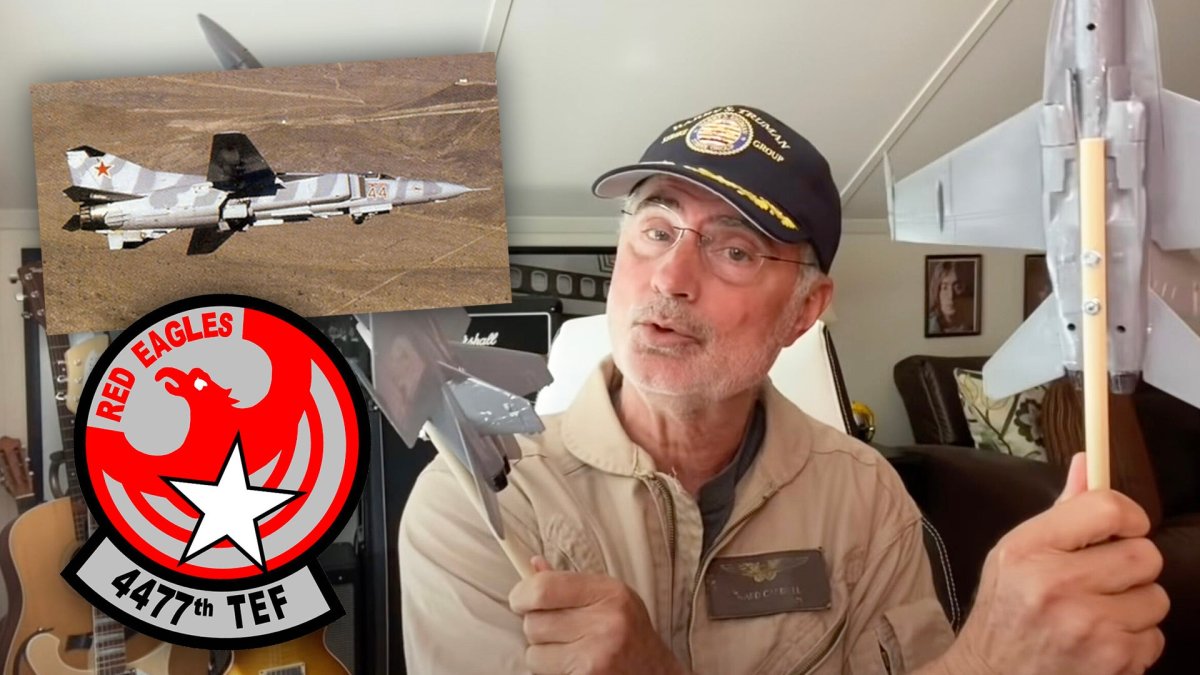
Published Jun 3, 2021 3:15 PM EDT
In a recently posted new video, a former F-14 Tomcat Radar Intercept Officer, or RIO , describes exactly what happened when he was chosen to take part in the ultra-secretive Constant Peg program and given the unique chance to fly against actual enemy aircraft not far from a desolate airbase near Tonopah , Nevada.
The video , on Ward Carroll’s YouTube channel, is well worth a look, since it deals not only with the mighty F-14 fleet air defender, but also Constant Peg, which yielded the 4477th Test and Evaluation Squadron, or “Red Eagles,” America’s Cold War MiG aggressor squadron . Since the existence of that program was formally declassified in 2006, more and more details, as well as photos and video , have gradually come to light. There are plenty more tales to tell .
In the fall of 1985, Ward was assigned to Fighter Squadron 32 (VF-32), the “Swordsmen,” and, after coming off his first deployment aboard the Forrestal class aircraft carrier USS Independence , was now engaged in workups for his second deployment, a process that took him to Fallon, Nevada — a hotbed of naval fighter activity, then , and now .
A VF-32 F-14A Tomcat launches from the aircraft carrier USS John F. Kennedy in 1986., NATIONAL ARCHIVES
“One day we were informed that we were going to participate in an exercise called Constant Peg, something I had never heard of before we got to Fallon,” he recalls.
Constant Peg, of course, was the brainchild of Air Force Colonel Gaillard R. Peck, who had the idea of revamping dogfight training using actual Soviet-made fighter jets. The elite training unit would be made available to Air Force, Navy, and Marine Corps pilots. You can see Peck’s awesome brief on the Constant Peg program in this past article of ours .
Retired Air Force Colonel Gaillard Peck Jr., the former 4477th Test and Evaluation Squadron commander., U.S. Air Force/David Bedard
Ward explains how the instructors serving with the 4477th were the cream of the crop, their posting requiring around 3,000 flight hours in tactical jets as well as graduation from the Air Force Fighter Weapons School at Nellis Air Force Base in Nevada , or from the Navy’s Topgun program. In order to preserve the secrecy of the unit, these instructors were technically based at Nellis, a deception that extended to their family members living nearby. For their day job, however, they would be shuttled by C-12 transport plane 150 miles north to Tonopah — “Wild West kind of operations,” in Ward’s considered opinion.
At the time Ward had the chance to go up against the 4477th, the unit was flying the Soviet-made MiG-21 Fishbed and the derivative Chinese-made F-7, as well as both air-to-air and air-to-ground versions of the swing-wing MiG-23 Flogger .
The maintenance effort was another aspect of the “Red Eagles” that really caught Ward’s eye. Mirroring the pilots who flew the jets, the technicians who looked after them — both Air Force personnel and civilian contractors — were the very best in the business. Not only did they sometimes have to fix broken jets using spare parts harvested from crashed aircraft and secreted out of foreign countries by CIA agents, but they kept up an aggressive schedule of flight operations. As of 1985, this called for eight MiG-21 and three MiG-23 sorties each morning, and the same pattern in the afternoon — meaning 11 jets had to be ready to go at any time of the day, without any kind of established spares source.
Members of the 4477th TES pose with one of the squadron’s MiG-21s, in around 1986., U.S. AIR FORCE
After a briefing from 4477th crews at Fallon, and another telephone call with the pilots who they’d be flying against, it was time for the sortie itself. This pitted Ward and his pilot, callsign “Truck,” against both an F-7 and a MiG-21 in the space of around 45 minutes.
Using a common radio frequency, the pilots were expressly prohibited from using the real names of the threat aircraft. The Air Force had given the Flogger the cover designation YF-113, while the Fishbeds and F-7s were collectively referred to as YF-110s.
An air-to-air variant of the MiG-23 — in this case an export MiG-23MS variant — of the type that Ward flew against in 1985., U.S. AIR FORCE
First up was the Flogger and Ward’s initial impression was that the jet was much smaller than he’d anticipated. Until now, the most he’d seen of a MiG-23 was in grainy intelligence photos.
After joining up with the air-to-air variant of the MiG-23, the first point on the flight plan was a speed demo. With Tomcat and MiG-23 side-by-side, the command came over the radio: “On my mark, go to full afterburner.” In the F-14A, the TF30 engines had to be carefully advanced through the stages up to full military power. Not so in the MiG. “Bottom line is, the MiG-23 just walked away from us … First lesson learnt, don’t try to outrun a MiG-23,” Ward says.
An F-14 demonstrates its impressive dogfighting capabilities as it turns with an adversary A-4F Skyhawk in 1982., U.S. NAVY
Next up were maneuvers with the Tomcat alternating between defensive and offensive starting positions. With the MiG-23 on the offensive, a max-g turn by the F-14 was enough to force the MiG to overshoot immediately. Subsequently, with the F-14 on the offensive, the Navy jet was able to keep pace with the turning MiG, maintain the advantage, and get in close enough for a potential gun kill.
The third Flogger event was a neutral setup, starting with the jets three miles apart and at 350 knots. This time, the MiG-23 pilot dived very low and very fast, and the F-14 crew lost sight of it over the desert. The Soviet jet then reappeared on their wing line and took a simulated shot — it was “a real eye-opener” for Ward and his pilot.
Ward poses with an F-14 in the same year that he experienced the 4477th Test and Evaluation Squadron., YOUTUBE SCREENCAP
The YF-110 — an F-7 in this case — was next and, conversely, this looked bigger than Ward was expecting.
In the speed demo, the F-14 could keep pace with the Chinese Fishbed clone. In the defensive setup, however, the F-7 was able to hang in the turn with the Tomcat, demonstrating a similar turn rate, but a smaller radius over the first 90 degrees of the turn. Beyond that, the F-7 pilot was “spat out,” unable to keep tabs on the Tomcat and overshooting. With the F-14 on the offensive, Ward and “Truck” could stay glued to the Fishbed throughout the turn.
The neutral setup provided another surprise for the VF-32 crew. With the F-7’s limited turning ability in mind, they didn’t expect the bandit to enter a one-circle fight. But then, the F-7 went vertical “in a way that was very surprising.” The adversary pilot deployed flaps in a “magic move” and was suddenly looming behind the F-14 in an offensive position. Another lesson learned.
Tonopah Test Range Airport in 1982. , U.S. DEPARTMENT OF DEFENSE
“That was so awesome to actually see MiGs for real,” Ward reflected as they headed back from their adrenaline-filled trip over the Nevada desert. A big part of the Constant Peg program was elminating ‘buck fever’ pilots may get when actually seeing a long-touted foreign adversary for the first time, causing them to freeze or be distracted from making a kill.
Meeting the “Red Eagles” was enormously useful for Ward and the tactical lessons imparted from this kind of highly realistic training would be put to use by Tomcat crews during clashes with Libyan jets over the Gulf of Sidra and later in Operation Desert Storm over Iraq.
A fully armed F-14A from VF-32 on a combat patrol off of the aircraft carrier USS John F. Kennedy during Operation Desert Storm in 1991., U.S. DEPARTMENT OF DEFENSE
The two VF-32 aviators also left Fallon with the niggling feeling that there was something more at Tonopah, hidden by the already-secret MiGs. They had been told to not divert to Tonopah Test Range Airport unless they experienced a total failure of some kind. Even a single-engine emergency would have required nursing their jet back to Fallon.
“I think there’s something they care about more than the MiGs,” Ward’s pilot, “Truck,” observed at the time.
A 4450th Tactical Group F-117A and a T-38 chase plane over Tonopah Test Range Airport soon after the stealth fighter was revealed to the public., NATIONAL ARCHIVES
There was something else there, of course, with the F-117 stealth combat jet program being run out of the same base. This remarkable aircraft wasn’t revealed to the public until 1988, although the Constant Peg pilots knew about it, and how the exotic planes flew out regularly under cover of darkness.
It was, as Ward points out, “A miracle that they were able to develop and operationally test the stealth fighter in absolute secrecy .” It’s appropriate, therefore, that the same base still sometimes plays host to the F-117, as the stealth jet continues its mysterious second life .
Contact the author: thomas@thedrive.com
Comments couldn’t be loaded. Please refresh the page.
发布于美国东部时间2021年6月3日下午3:15
在最近发布的一段新视频中,一位前 F-14 雄猫战斗机雷达拦截官(RIO)详细描述了他被选中参加高度机密的“恒钉”计划,并获得在内华达州托诺帕附近一个荒凉的空军基地附近与真正的敌机进行空战的独特机会时所发生的事情。
这段发布在沃德·卡罗尔YouTube频道上的视频非常值得一看,因为它不仅讲述了强大的F-14舰队防空战斗机,还提到了“恒常钉”(Constant Peg)计划,该计划催生了第4477测试评估中队,即“红鹰”(Red Eagles),美国冷战时期对抗米格战斗机的假想敌中队。自2006年该计划正式解密以来,越来越多的细节、照片和视频逐渐浮出水面。关于这个计划,还有很多故事值得讲述。
1985 年秋季,沃德被分配到第 32 战斗机中队(VF-32),绰号“剑士”。在福莱斯特级航空母舰“独立”号上完成首次部署后,他正在为第二次部署做准备,这一过程将他带到了内华达州的法伦——当时是海军战斗机活动的热点地区,现在也是如此。
1986年,一架VF-32中队的F-14A“雄猫”战斗机从“约翰·F·肯尼迪”号航空母舰上起飞。(美国国家档案馆)
“有一天,我们被告知要参加一项名为‘恒定钉’的训练,在到达法伦之前,我从未听说过这项训练,”他回忆道。
当然,“恒速训练”(Constant Peg)计划是空军上校盖拉德·R·佩克(Gaillard R. Peck)的创意,他设想使用真正的苏联制造的战斗机来革新空战训练。这支精英训练部队将向空军、海军和海军陆战队的飞行员开放。您可以在我们之前的这篇文章中看到佩克关于“恒速训练”计划的精彩简报。
退役空军上校盖拉德·佩克二世,前第4477测试与评估中队指挥官。(美国空军/大卫·贝达德摄)
沃德解释说,在第4477飞行大队服役的教官都是精英中的精英,他们必须拥有约3000小时的战术喷气机飞行经验,并且毕业于内华达州内利斯空军基地的空军战斗机武器学校,或海军的“壮志凌云”计划。为了保守部队的秘密,这些教官名义上驻扎在内利斯空军基地,这种欺骗甚至延伸到了住在附近的家人。然而,他们的日常工作却是乘坐C-12运输机向北飞行150英里前往托诺帕——用沃德的话来说,这简直是“狂野西部式的行动”。
当沃德有机会与第 4477 战斗机大队交锋时,该部队正在使用苏联制造的米格-21“鱼窝”和中国制造的衍生型 F-7,以及可变后掠翼米格-23“鞭挞者”的空对空和空对地版本。
“红鹰”中队的维护工作是真正吸引沃德眼球的另一个方面。与驾驶这些战机的飞行员一样,负责维护的技术人员——包括空军人员和民用承包商——都是业内顶尖高手。他们不仅有时需要使用从坠毁飞机上拆卸下来、由中央情报局特工秘密从国外运来的备件来修理故障战机,而且还要维持高强度的飞行任务。截至1985年,这意味着每天上午要出动8架米格-21和3架米格-23进行飞行任务,下午也是如此——这意味着一天中的任何时间都必须有11架战机随时待命,而且没有任何固定的备件来源。
大约在1986年,美国空军第4477测试评估中队的成员与该中队的一架米格-21战斗机合影。
在法伦空军基地听取了第4477飞行中队机组人员的简报,并与即将交战的飞行员进行了电话沟通后,正式的飞行任务开始了。这次任务中,沃德和他的飞行员(呼号“卡车”)将在大约45分钟内分别与一架F-7和一架米格-21交战。
飞行员们使用统一的无线电频率,并被明确禁止使用威胁飞机的真实名称。空军将“鞭挞者”(Flogger)战斗机的掩护代号定为YF-113,而“鱼窝”(Fishbed)和F-7战斗机则统称为YF-110。
这架米格-23的空对空改型——在本例中是出口型米格-23MS——正是沃德在1985年与之交战的那种机型。(美国空军)
首先是“鞭挞者”战斗机,沃德的第一印象是这架喷气式飞机比他预想的要小得多。在此之前,他对米格-23的了解仅限于一些模糊的情报照片。
与米格-23的空对空型会合后,飞行计划的第一项就是速度演示。雄猫和米格-23并排飞行时,无线电里传来指令:“听我号令,开启加力燃烧室。”在F-14A上,TF30发动机必须小心翼翼地分阶段推进,才能达到最大军用功率。但在米格-23上则不然。“结果就是,米格-23轻松甩开了我们……第一个教训就是,别想着跟米格-23比速度,”沃德说道。
1982年,一架F-14战斗机与一架敌方A-4F“天鹰”攻击机进行缠斗,展现了其令人印象深刻的近距离空战能力。(美国海军)
接下来是F-14“雄猫”战机在防御和进攻起始位置之间交替进行的机动演练。当米格-23处于进攻状态时,F-14进行的最大过载转弯足以迫使米格立即冲出预定航线。随后,F-14转守为攻,这架海军战机能够跟上米格的转弯速度,保持优势,并最终接近到足以进行机炮击落的距离。
第三次“鞭挞者”演习采用中立设置,两架战机相距三英里,速度均为350节。这次,米格-23飞行员以极低的速度俯冲,F-14机组人员在沙漠上空失去了它的踪迹。随后,这架苏联战机重新出现在他们的机翼附近,并进行了一次模拟射击——这对沃德和他的飞行员来说“真是大开眼界”。
沃德与一架F-14战斗机合影,同年他还在第4477测试评估中队服役。(YouTube截图)
接下来是 YF-110(在本例中是 F-7),与沃德的预期相反,它看起来比沃德预想的要大。
在速度演示中,F-14 可以与中国仿制的“鱼窝”战斗机保持同步。然而,在防御模式下,F-7 能够与“雄猫”战斗机并驾齐驱,展现出相近的转弯速率,但在转弯的前90度内,F-7 的转弯半径更小。超过这个范围后,F-7 飞行员就被甩了出去,无法继续追踪“雄猫”战斗机,最终导致过冲。而当 F-14 转入进攻模式时,沃德和“卡车”则能够全程紧贴“鱼窝”战斗机。
中立阵型给VF-32机组带来了另一个意外。考虑到F-7有限的转弯能力,他们没想到这架敌机会进行一圈缠斗。然而,F-7却以一种“非常出乎意料”的方式垂直起降。敌方飞行员以“神奇的举动”放下襟翼,突然出现在F-14后方,占据了进攻位置。又一次吸取了教训。
1982年托诺帕试验场机场,美国国防部
“亲眼见到米格战机真是太棒了,”沃德在结束内华达沙漠惊险刺激的飞行后,一边回味着一边说道。“持续瞄准”计划的一个重要目标就是消除飞行员在首次真正见到长期以来备受瞩目的外国对手时可能出现的“雄鹰恐惧症”,这种恐惧症会导致他们反应迟钝或注意力分散,从而无法完成击落任务。
与“红鹰”的会面对于沃德来说非常有帮助,从这种高度逼真的训练中学到的战术经验,将在锡德拉湾与利比亚战机的冲突以及后来的伊拉克沙漠风暴行动中得到应用。
1991年“沙漠风暴”行动期间,一架隶属于VF-32中队的全副武装的F-14A战斗机在“约翰·F·肯尼迪”号航空母舰附近执行战斗巡逻任务。(美国国防部)
两名VF-32中队的飞行员离开法伦时,心中始终萦绕着一种挥之不去的预感:托诺帕似乎隐藏着什么秘密,就藏在那些早已秘密的米格战机背后。他们曾被告知,除非飞机发生彻底故障,否则不得转飞托诺帕试验场机场。即使是单引擎故障,也需要小心翼翼地驾驶战机返回法伦。
“我认为他们还有比米格战机更关心的东西,”沃德的飞行员“卡车”当时说道。
一架隶属于第4450战术大队的F-117A战斗机和一架T-38伴飞飞机在托诺帕试验场机场上空飞行,当时隐形战斗机刚刚向公众亮相。(国家档案馆)
当然,那里还有其他项目,比如F-117隐形战斗机项目也是在同一基地进行的。这款非凡的飞机直到1988年才向公众公开,尽管“恒线之钉”的飞行员们早已知晓,也知道这些奇特的飞机经常在夜幕掩护下进行飞行。
正如沃德所指出的,“他们能够在绝对保密的情况下研发并进行隐形战斗机的作战测试,这简直是个奇迹。” 因此,同一基地至今仍偶尔会驻扎F-117隐形战斗机,也就不足为奇了,因为这款隐形战机仍在继续其神秘的“第二人生”。
联系作者:thomas@thedrive.com
评论加载失败,请刷新页面。