7 Revolutionary Hardware Changes the US Navy Should Make in the Trump Era特朗普时代美国海军应进行的7项革命性硬件变革
With a new administration in office there is great potential for the Navy to make the very most of its planned increase in budget, and better tailor its force to the demands of the 21st Century.
新闻视频
Updated Jul 3, 2020 4:19 AM EDT
Along with all branches of the military, the Navy is set for a series of changes over the next four years of the Trump administration. Although an arbitrary if not counterproductive goal of fielding a 350 ship Navy has been set by the administration, there are also seven key changes in hardware procurement related to the naval combat domain that the US Navy and the administration should make.
These recommended hardware initiatives range from large strategic ones to smaller tactical ones, but they would all result in a far more flexible and deadly sea faring force, and total force overall. And it’s not just about making use of an increased Navy budget—it is more about spending money more wisely and creating a more adaptable fleet tailored to tackling the unique challenges of the 21st century.
Our regular readers will recognize a few of these, as we have discussed some them in great detail before, but for the sake of brevity we will keep each recommendation largely conceptual in scope. Additional links will provide more detail and background on each recommendation. Also, this piece does not include procurement changes that are already emerging or underway, or recommended changes in tactics and operating procedures—such as more training to operate in GPS and space communications denied environments—that are also important but outside the scope of this report.
The War Zone’s recommendations are:
Procure a diesel-electric submarine fleet with an advanced form of air independent propulsion that can be forward based abroad.
The Navy’s mix of Los Angeles , Sea Wolf and Virginia class nuclear fast attack submarines are in extreme demand. With the Virginia class boats currently in production costing over $2.6 billion per unit, the service will be hard-pressed to provide the capacity the USN needs to meet emerging missions demands and threats.
These include keeping a resurgent Russian Navy in check, countering China in the Asia-Pacific theatre, keeping tabs on North Korea’s submarine movements, protecting carrier and amphibious strike groups, countering Iran’s naval forces in and around the Persian Gulf, as well as all their other tasks like special operations support and reconnaissance.
The Virginia class USS John Warner under construction, Newport News Shipbuilding
In all, the US Navy will maintain a force of roughly just 55 attack submarines for the foreseeable future under current plans. Considering a large portion of that fleet is pier-side, in training, or under heavy maintenance at any given time, and how many missions the fleet has to address, that number of boats seems far too small for today, let alone for tomorrow. Adding a few more Virginia class submarines to the inventory would help, but they are so expensive to build and operate that depending on an all nuclear force seems to be a unsustainable strategy.
Since the Navy retired its last diesel-electric submarine in 1990— the USS Blueback —many submarine manufacturers around the globe have perfected multiple types of advanced diesel-electric submarines that use a variety air independent propulsion (AIP) concepts. From Stirling Engine based , to fuel cell based to lithium-ion battery based , these technologies allow diesel-electric submarines to dive for long periods of time (multiple weeks in many instances) while remaining as quiet, if not quieter than their nuclear counterparts.
As many as five of these vessels could be built for the price of a single Virginia class SSN. With all this in mind, the USN should embrace this new paradigm in sub-surface warfare and procure an advanced diesel electric submarine design alongside serial production of the ever more capable Virginia class.
Japan’s Soryu class would be an ideal candidate for the US Navy., AP
So that the Navy can get the best submarine for its dollar, license manufacturing a foreign design here in the US, such as Japan’s cutting-edge lithium-ion battery powered Soryu class submarine or even an advanced version of Germany’s proven Dolphin class AIP capable submarine, would be ideal. These vessels can be outfitted with US combat systems and sensors and forward-based in friendly countries abroad, something our nuclear submarines cannot do. They can even be teamed with Littoral Combat Ships that are being fielded under a similar concept.
The Swedish A26 is a planned outgrowth of the highly successful and relatively affordable Gotland class AIP submarine. , Saab-Kockums
By building say four AIP equipped diesel electric submarines instead of every third or fourth Virginia class boat ordered, the Navy will have a far more capacious attack submarine force. A majority of the regional missions can be executed by these far less expensive but still very deadly submarines, freeing up the big Virginia class boats for missions where their nuclear capabilities are far more of a necessity. In doing so the Navy will be able to meet the growing demands for attack submarine capabilities in the coming decades, and the service will be able to adjust its submarine building requirements more easily based on foreseeable demands.
Replace the Littoral Combat Ship with a frigate capable of area air defense as soon as possible.
The Littoral Combat Ship program has been a failure. The Navy needs to change course as soon as it possibly can and replace the design with a more capable and survivable frigate that features a potent area air defense capability.
This specific capability would come in the form of a vertical launch system (VLS) capable of firing RIM-162 Evolved Sea Sparrow Missiles . This feature alone, paired with the proper radar and combat system upgrades needed for targeting, would allow these ships to operate independently of multi-billion dollar and already over taxed Aegis-equipped cruisers and destroyers in medium and even high-threat environments. This way the frigate could not only do anything the LCS can do, but it can also take the pressure off America’s most capable and expensive surface combatants for many missions, like convoy escort duties and protecting key elements that support the sea basing concept.
Beyond being far more versatile and able to operate much more independently than the standard LCS, this ship will be able to confront the growing anti-ship missile threat, one that it is rapidly proliferating among non-state actors . It will also feature other improvements, like the ability to fire medium-range land-attack and anti-ship missiles. The current LCS configuration—a giant jet boat meant to supposedly fight in the littorals where the anti-ship missile threat is most unpredictable—simply will not do. And that is not to mention the baseline LCS’s many other design and conceptual deficiencies and failures.
A model of the Freedom class LCS design adapted for carrying two eight-cell Mk 41 vertical launch systems, as well as other enhancements and added firepower., Joseph Trevithick
Currently, the Ingalls Patrol Frigate concept —which is based on the Coast Guard’s Legend class National Security Cutter —seems like the most attractive, low risk and logical fit for this mission set. Yet at this point, even acquiring a reworked Littoral Combat Ship design of either class would be acceptable if it would mean getting these capabilities fielded a better chance of actually happening.
Under the Obama administration, the LCS was already truncated to 32 examples (from 50), with just another eight “up-gunned” models that feature enhanced armor and some extra bolt-on weaponry coming to fruition from ship 33 to 40. After which the program is slated to be shuttered, and long before that point, the Navy would have to down-select a single LCS design —either Independence or Freedom class—to be built.
If the Trump administration cannot cancel the LCS entirely and work quickly to replace it with a proper frigate, maybe a compromise to rework the LCS deal altogether by putting a “frigate” version—one that includes ESSM capability—into production far sooner than before the 33rd vessel (at best) would be an acceptable way forward. Currently the Navy has contracts through the 26th LCS hull in place, so at the very least, it could switch over to an LCS “frigate” derivative at that time, but sooner would be better.
A rendering of what a “frigate” variant that includes ESSM capability of the Independence class would look like. , Austal
Even if ultimately less hulls can be bought for the same amount of money by quickly moving to a more complex frigate version of the LCS design or a new frigate design altogether, these ships will have far greater utility and will be able to operate independently in a much wider threat spectrum than their weaker progenitors.
Under such a plan a 350 ship Navy may remain elusive, but a 340 ship Navy, where a much higher number of those ships can operate without the need of a multi-billion dollar destroyer or cruiser nearby, and are much more survivable and deadly in actual combat, results in a far more effective and flexible overall force.
USS Freedom gets a new diesel engine . The LCSs have been plagued with mechanical and operational issues, which has led to a full reorganizing of the fleet. Now the first four ships will be training and test vessels, and massive manning and training restructuring continues. , USN
Both manufacturers, Austal USA and Lockheed Martin in conjunction with Marinette Marine are now actively pitching their enhanced LCS “frigate” designs, and Saudi Arabia was very interested in buying the Freedom class version. If the US agreed to do so as well, some development costs could be shared, along with the realization of larger production numbers, and thus lower unit costs.
Build smaller aircraft carriers
The supercarrier still has its place in America’s arsenal, but naval aviation and naval warfare have changed since its genesis during the early decades of the Cold War. Since then, the supercarrier has become grossly expensive to construct, with the first of the new Ford class supercarrier costing roughly $13 billion, without research and development included. The second carrier in the class, the USS John F. Kennedy (CVN-79), is slated to cost roughly $11.5 billion .
At the same time, the carrier air wing has shrunk from nearly 90 aircraft during the 1980s down to around 65. In addition, precision guided munitions have allowed one strike fighter to reliably take out multiple targets on a single mission, instead of an entire air wing going after a single strategic target or small set of targets in a single alpha strike in single day. With all this in mind, the Navy’s demand to build ever larger aircraft carriers is counter productive and may be unsustainable in the long term.
USS Gerald R. Ford sets sail for the first time., USN
Nuclear supercarriers are also extremely costly to operate, and their availability is based around a highly rigid and complex timetable. The recent carrier gap has proven just how little elasticity there is in America’s all supercarrier force. A mix of supercarriers and smaller carriers in the 65,000 ton class would allow for a more flexible overall aircraft carrier force , with greater strike capacity being able to be deployed on short notice.
For instance, if the Navy were to replace every third Nimitz class super carrier with two smaller carriers, let’s use a license-built CATOBAR version of the Royal Navy’s Queen Elizabeth class aircraft carriers for instance, the fleet would eventually be made up of eight super carriers and eight smaller carriers, for 16 in total. Or replace every fourth supercarrier with two smaller carriers, which would result in a fleet of nine supercarriers and six smaller carriers, for 15 in total. That is based on modifying Donald Trump’s current mandate for 12 supercarriers. You can play with the numbers as you like, but even cutting America’s supercarrier force to ten ships, while adding four smaller carriers, would be a worthwhile endeavor.
With the retirement of USS Enterprise , the Navy is down to ten carriers, one less than mandated by congress. Delays in the USS Gerald R. Ford have only made the situation worse. , USN
Under such a plan, supercarriers can also have their schedules better adjusted for concentrating on deployments and projecting power abroad, instead of executing more menial tasks like training new Naval Aviators or keeping up fleet aircrews’ carrier qualifications. The smaller carriers could be made available for these tasks, and would expand America’s ability to rapidly deploy naval power as need be along a far less rigid schedule.
As to whether conventional or nuclear propulsion would be used for these smaller vessels is up for debate, but there are benefits to both. Regardless, increasing the Navy’s carrier fleet density should be more important than its magnitude. And even if these ships run on nuclear power, they will create more overall carrier availability at any given time.
Licensing a CATOBAR version of the QE class could save money, time and lead to certain synergies with the Royal Navy’s planned carrier force. , BAE Systems
Some may say that the Navy should just procure America class LHAs that are currently being produced to support the USMC’s growing F-35B fleet. This is also a possibility, but their sortie rates cannot approach anywhere near those of a CATOBAR carrier, nor can the overall capabilities of their air wing. Even the F-35B lacks the 2,000lb class internal weapons carrying capabilities of their counterparts.
Still, this would be a very cost effective alternative to continuing with an all supercarrier strategy, and the USMC is already working on its plans to deploy the America class in “Lightning Carrier” configuration , where nearly two dozen F-35Bs would be deployed aboard at one time.
America class LHA in a “Lightning Carrier” configuration., USMC
The America class could be further modified to support F-35 strike fighter operations as the Navy would have no need for the spaces set aside for the current design’s embarked Marine contingent. As such, hangar space could be further expanded, as could magazine and fuel capacity. Although under such a plan, the US Navy would have to procure the F-35B with its short takeoff and vertical landing capabilities, but that may actually be a good thing when paired with the strategy below.
Prioritize the deployment of unmanned combat air vehicles (UCAVs) aboard Navy aircraft carriers.
The technology exists, it is a game changer, and the aircraft carrier concept can be totally revitalized by it. The advanced semi-autonomous/autonomous UCAV, basically an operational version of the X-47B , would give the carrier air wing what it needs the most—far more reach and penetrating punch.
X-47B and Super Hornet high over the carrier., USN
With an unrefueled combat radius double or even triple that of their manned fighter counterparts, UCAVs can reach deep into the enemy’s anti-access/area denial bubble and begin to break it down at its core. At their most basic, they can accomplish penetrating strike and surveillance missions, but their true potential becomes unlocked when they can work as an autonomous swarm to break the enemy’s decision cycle and pick out its metaphorical eyes and ears cooperatively.
All this and so much more is detailed in my past special feature about this revolutionary technology, which is a must read in order to understand the UCAV’s overwhelming potential to revolutionize air combat, and why they have disappeared from the public’s view in recent years.
The X-47B operating from an aircraft carrier, USN
The Navy was supposed to field an advanced UCAV for its carriers by the end of decade. Strangely that requirement has been dumbed down into a sensor and refueling platform once dubbed Carrier-Borne Aerial Refueling System, or C-BARS. Now the Navy calls it a MQ-25 Stingray , but what it isn’t is a stealthy, hard hitting, penetrating UCAV that it could have been.
The terrible decision to go for a drone tanker and sensor platform over a UCAV—that could have done both roles as well as many others—was likely the result of a cultural override by the Navy that historically protects the fighter pilot as a concept, as well as a move to protect high priority (and highly lucrative) manned fighter programs like the F-35C, and even the Super Hornet to some extent. These aircraft could quickly become far less relevant once the UCAV genie is let out of its bottle. But tanking and orbiting around collecting information, that unglamorous role can be done by the drone without putting the fighter cadre at risk.
Sadly, by not procuring a carrier-borne UCAV, America loses, as the UCAV revolution will just be prolonged and our capabilities as a fighting force, not just to strike at the enemy but to survive while attempting to do so, will suffer for it. Not just that, but a very stealthy UCAV could have made procuring the F-35C irrelevant, and frankly it still can.
X-47B traps aboard the carrier, USN
Pursuing UCAVs over the F-35C would be a valiant endeavor for NAVAIR. It would give the Navy the stealth strike capability it was promised way back in the late 1980s as part of the long defunct A-12 Avenger program. It would also do so likely at far lower cost than the F-35C and with greater range and low observability—all without putting a pilot at risk for the most dangerous of missions.
The Navy could still procure the F-35, but in the form of the B variant, alongside purchasing smaller America class derivative carriers as part of an overall revamp of the Navy’s current carrier/carrier air wing force mixture. In fact, a supercarrier loaded with advanced UCAVs, Super Hornets, Growlers and Hawkeyes, paired with a modified America class “Lightning Carrier” loaded with F-35Bs, may represent the best of both worlds. Under such an arrangement, a full variant of the F-35 could be eliminated from production—and the most expensive one at that—the F-35C.
Lockheed Sea Ghost UCAV concept derived from the RQ-170 Sentinel, Lockheed Martin
Maybe the ultimate modern rendition of the aircraft carrier concept will eventually feature a deck filled with only UCAVs, each easily adapted for a whole host of roles. And once there is no man in the loop directly, and no manned fighter aircraft to integrate with, the efficiency and lethality of automated air combat can be unleashed on a grand scale. Really, the aircraft carrier is more suitable for UCAVs than land bases, especially if the entire air wing is made up of advanced inter-networked drones. Above all else, such a capability would be a quantum leap over anything the enemy has to counter with.
Outfit the Navy’s three Zumwalt class destroyers as they were originally intended.
The Navy loves to tout its out-of-this-world looking DDG-1000 Zumwalt class destroyers, but really, they are a sad shell of their originally intended selves. You can read all about this grim reality here , and that report doesn’t include the fact that even the DDG-1000’s big Advanced Gun Systems, which take up literally the forward third of the ship, have no ammunition because the Navy cancelled the program due to cost concerns.
The “Zunwalts” lack their original radar suite and missile outfit among many other features, and are also having their stealth shaping that came at such a high cost bastardized with bolt on sensors, masts and communications gear to save money. Even their smaller guns have been downgraded to off-the-shelf 30mm Bushmaster cannons. In the end the class of just three ships will be lucky to serve for a handful of years before becoming test ships, and they will probably be cannibalized for parts in the process.
This sad fate can all be averted if the Navy just commits to letting the design prove itself, and not handicap it severely before it ever even goes on patrol. Fit these ships to reflect their original concept. If they are so good at what they do we can build more of them, and if that threatens the Navy’s highly questionable decision to move on to building Flight III Arleigh Burke class destroyers instead of more DDG-1000s than so be it.
Currently the tiny class is setup to fail, but we have already invested tens of billions into the design. So making the best of those three ships should be an essential goal for the US Navy going forward. The worst that can happen is that we will have three incredible ships to use for decades to come, but I have a feeling these vessels will prove to be far more revolutionary and valuable than that if they are given the chance—and that includes outfitting them as they were originally designed.
Expand the Columbia class nuclear ballistic missile submarine program at the expense of America’s land-based intercontinental ballistic missile force.
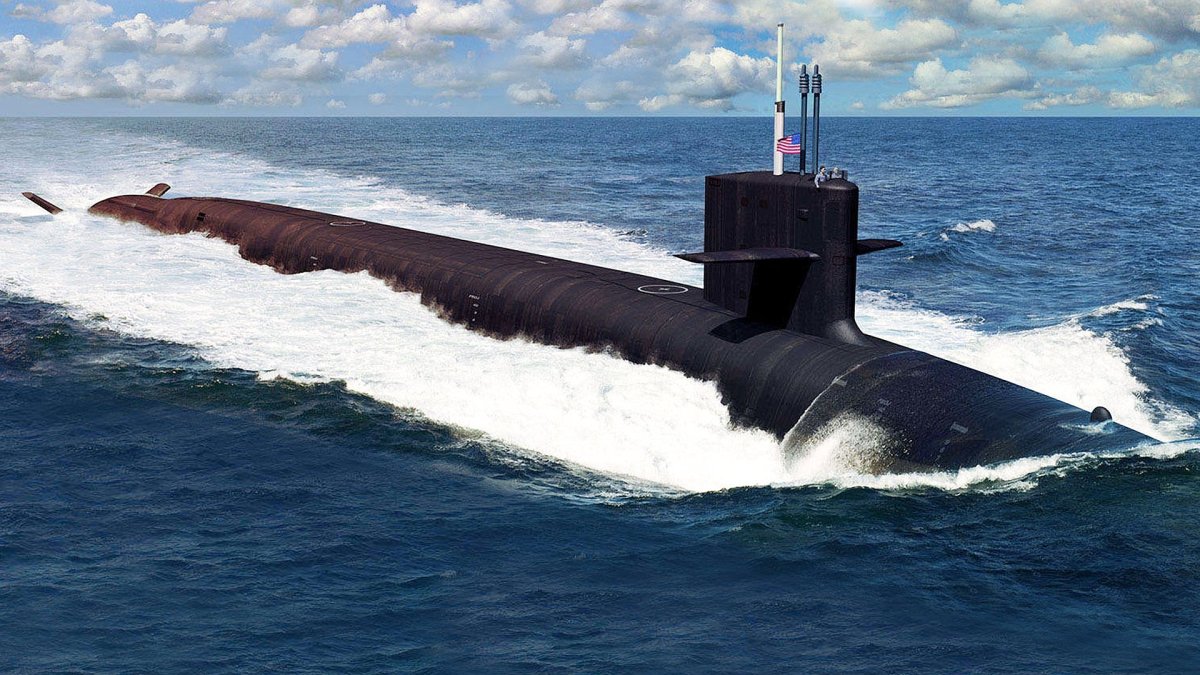
The Columbia class nuclear ballistic missile submarine (SSBN) will replace America’s aging Ohio class SSBNs. Although the program is proceeding, the budget is very tight for these 12 new boats, and each one is slated to have an average cost of $8 billion—that figure includes research and development costs.
The fact is the Navy’s SSBNs are the heart of America’s nuclear deterrent, and represent the core of America’s dedicated second strike capability . Along with constantly improving the Trident submarine-launched ballistic missile , keeping this specific portion of America’s nuclear arsenal as capable as it possibly can be should be a top priority for the Pentagon. Doing so is not a cheap affair—it never has been. But as Russia pushes to rapidly improve their own nuclear arsenal, and is building new SSBNs of their own, the US is spreading itself to thin across its own nuclear triad.
Rendering of Columbia class SSBN., USN
What I propose is controversial, but I think it is wise. At the very least, the Pentagon needs to deeply review options for reorganizing America’s nuclear triad into a nuclear dyad. America’s tired land based intercontinental ballistic missile program could be retired, and those many tens of billions of dollars could refocused to build a larger, far better funded nuclear ballistic missile submarine force. The Air Force would also receive a large portion of those savings to buy the B-21 Raider stealth bomber force it says it desperately needs, as well as a new very stealthy and smart nuclear-tipped cruise missile to go along with it.
There is no doubt that some will oppose screwing with the nuclear triad at all, but the fact is hundreds of billions of dollars are required over the next decade to modernize the triad, and still capability sacrifices will have to be made. Yes, America’s ICBMs would theoretically work as a strategic “sponge” to soak up hundreds of enemy warheads during a nuclear exchange, but that strategy can be viewed as flawed on multiple levels. The fact is, the land-based leg of our nuclear arsenal is disposable, and the money it sucks up and will continue to suck up can be used to bolster the other two legs of the triad to an extreme degree.
Also, by eliminating the land-based ICBM leg of the triad, not only can the other two legs be greatly improved, but advances in conventional war fighting capability can also be realized as a secondary result.
B-52 being loaded with AGM-86 ALCMs., USAF
For instance, currently the Columbia class relies heavily on existing technologies, many of which are already found on the Virginia class fast attack boats. If more funds for the Columbia class submarine program were made available, new technologies can be developed that can be used to not only make the Columbia class better and more future-proof, but they can also be adapted for the fast attack submarine fleet as well. Also, significantly more money will allow for more of these boats to be built, and more new and improved Trident missiles to fill their launch tubes.
Although the Columbia class is roughly the same size as the Ohio class, the type will have eight less SLBM tubes than its predecessor—16 instead of 24. By adding say another eight Columbia class boats to the planned fleet of 12 would go a long way in realizing economies of scale in their construction and would help even-out the warheads that were lost when the land-based portion of the triad was retired.
America’s Ohio class boomers are aging, and the Columbia class will be more maintainable and will feature a “lifetime reactor” that will not need refueling during the boat’s nearly 50 year lifespan., USN
When it comes to the USAF, ensuring a larger B-21 buy also would mean a drastic increase in high-end conventional attack capabilities as well. Not just that, but the AGM-86 cruise missile could be retired and money saved could be invested in buying new Long Range Stand-Off (LRSO) stealthy cruise missiles. A conventional derivative of this new nuclear tipped air launched cruise missile could also be pursued with these extra funds.
It is a tough call, but really an extremely advanced nuclear dyad is better than a aging nuclear triad that is constantly under severe fiscal pressure. And let’s face it, if doomsday came , the world as we know it could end at the hands of our submarine-launched ballistic missiles alone. But by also reinforcing the aerial leg of the triad, the US will retain the ability to deliver a flexible and credible “scaled response” without even having to resort to ballistic missile barrages.
Outfit LPD-17 San Antonio class of amphibious transport docks with Mark 41 vertical launch systems.
The San Antonio class (LPD-17) has proven to be an incredibly effective “micro military in a box.” These ships can be deployed off the coasts of low-intensity conflicts where they can execute a wide spectrum of missions. These include everything from humanitarian relief to special operations to embassy evacuation to close air support to strike missions, and many others in between. The USS San Antonio’s recent deployment to Libya proved this model to an unprecedented degree.
These are incredibly versatile ships, and they don’t necessarily need to be locked within the standard “Gator Navy” concept of operations. The fact that a single ship has a voluminous flight deck and hangar space that can embark a “pocket air force” of AH-1Zs, UH-1Ys, MV-22s and unmanned vehicles, carries an embarked Marine contingent of roughly 700 grunts and their gear, retains a well deck that can accommodate a large variety of water craft ranging from RHIBs to LCACs, and has mission planning and command and control spaces and capabilities, makes the San Antonio class unique.
What they lack is the ability to defend themselves from a credible aerial threat and the ability to strike deep into contested territory. They have RIM-116 Rolling Airframe missile launchers fore and aft for point defense, but like the LCS, they lack the ability to provide area air defense for themselves or other ships nearby for that matter.
Two San Antonio class LPDs sail side-by-side, USN
Luckily the San Antonio’s designers weren’t nearsighted when it came to the ship’s potential, as they actually designed these ships with an area for two eight-cell Mark 41 vertical launch systems to be installed. These cells are capable of packing four Evolved Sea Sparrow Missiles (ESSMs) each, for a total loadout of 64 highly capable anti-air missiles. Or a mix of ESSMs and other missiles could be carried. For instance, eight of those cells could house BGM-109 Tomahawk cruise missiles , giving the ship an independent penetrating strike capability. Or, upgrade dependent, even the very capable SM-6 could be adapted for the ship’s use.
SM-6 has the ability to hit air breathing and some types of ballistic missile targets, as well as possessing a secondary medium-range surface-to-surface/ground capability. In recent months, Lockheed has pushed to get the Navy to fund the installation of the Aegis combat system on LPD-17 class ships, which would allow them to employ the SM-6.
The San Antonio class’s large well deck., USN
Even without Aegis or the SM-6, the ability to lug around 36 ESSMs and eight Tomahawks would usher in a whole new dynamic when it comes to the ship’s mission capabilities. The Tomahawks could also be sidelined by bolt-on canisters of Norway’s much touted medium-range Naval Strike Missile —which is likely to show up on many other Navy surface vessels in the not so distant future.
With these additions, a single San Antonio class ship alone could provide a hardened and capable presence in low and medium threat environments, and would be especially capable of supporting contingency operations in “hot spot” regions around the globe. If they were paired with an LCS or frigate for anti-submarine warfare, they could venture into the high-threat realm as well.
The LPD-17 class has am ample flight deck and hangar area that allows the ship to embark unique mixes of Marine rotary-wing air power. , USN
The same concept can be ported over to the upcoming LX(R) ships that will replace the Harpers Ferry and Whidbey Island classes of dock landing ships. These vessels will very likely leverage the existing LPD-17 hull design, although their overall capabilities will be degraded compared to their San Antonio class cousins to save money and to better emulate the more basic ships they replace.
LX(R) concept based on the LPD-17 design, Huntington Ingalls
But providing room for a VLS on these vessels as well may be prudent, even to work just as a remote magazine for Aegis equipped cruisers and destroyers, and especially for their LPD-17 sister ships that will accompany them during most operations. But if not, an LPD-17 class could protect them with their own anti-air capabilities alone, all without the need for a nearby destroyer or cruiser. This would allow for new pairings of ships for various operations.
For instance, an single LPD-17 class ship could be accompanied by a single LX(R) for additional war fighting capacity. Basically, in doing so the LPD-17 could double its combat power, without the need of another costly LPD-17. All the high-end combat capability, including air defense capabilities, and the small flotilla’s “brains” are deployed aboard the LPD-17 with the LX(R) working as something of a subordinate force.
A VLS equipped LPD-17 could also be useful for sea basing operations, by being able to provide air defense for the assets around it. Once again, this would free up destroyers and cruisers for other tasks.
Various sea basing and forward basing strategies the USMC wants to use during a major conflict will see assets spread thin over vast distances., USMC
Basically, by giving the San Antonio class its VLS system, it will be able to operate more independently in many more scenarios than it can today. This gets back to the whole arbitrary 350 ship navy mandate. It is better to have a few less ships, but ones that are far less rigidly dependent on others for protection under most circumstances. It allows the US Navy as a whole to be in more places, with more capabilities, at one time than simply demanding “more ships.”
Currently 12 LPD-17 ships are planned, a 13th could be ordered to bridge the gap between LPD-17 and LX(R) production if the LX(R)s end up being built based on the LPD-17 hull.
Contact the author: Tyler@thedrive.com
Comments couldn’t be loaded. Please refresh the page.
更新于美国东部时间2020年7月3日凌晨4:19
与所有军种一样,海军在特朗普政府未来四年的任期内也将经历一系列变革。尽管政府设定了拥有350艘舰艇的海军规模这一目标,这一目标或许有些武断,甚至适得其反,但美国海军和政府在与海军作战领域相关的硬件采购方面,也应该做出七项关键的调整。
这些推荐的硬件升级方案涵盖了从大型战略到小型战术的各个层面,但它们都将打造一支更加灵活、更具杀伤力的海上力量,并提升整体作战能力。这不仅仅是增加海军预算的问题,更重要的是更明智地使用资金,打造一支更具适应性的舰队,以应对21世纪的独特挑战。
我们的老读者可能对其中一些建议并不陌生,因为我们之前已经详细讨论过。但为了简洁起见,我们将尽量保持每项建议的概念性阐述。更多链接将提供每项建议的详细内容和背景信息。此外,本文不包含已经出现或正在进行的采购变更,也不包含战术和操作程序方面的建议变更——例如加强在GPS和空间通信受限环境下的作战训练——这些变更虽然重要,但超出了本报告的范围。
战区提出的建议是:
采购一支采用先进不依赖空气推进技术的柴电潜艇舰队,该舰队可以部署在海外前沿。
美国海军的洛杉矶级、海狼级和弗吉尼亚级核动力快速攻击潜艇需求量极大。目前在建的弗吉尼亚级潜艇单价超过26亿美元,海军将难以提供满足不断涌现的任务需求和应对新威胁所需的作战能力。
这些任务包括遏制复兴的俄罗斯海军,在亚太地区对抗中国,监视朝鲜潜艇的动向,保护航母和两栖打击群,对抗伊朗在波斯湾及其周边地区的海军力量,以及所有其他任务,如特种作战支援和侦察。
弗吉尼亚级巡洋舰“约翰·华纳”号正在建造中,纽波特纽斯造船厂
根据目前的计划,美国海军在可预见的未来将仅维持约55艘攻击型潜艇。考虑到这支舰队的大部分潜艇在任何时候都处于停泊、训练或大修状态,以及舰队需要应对的众多任务,这个数量对于现在来说都远远不够,更不用说未来了。增加几艘弗吉尼亚级潜艇会有所帮助,但它们的建造和运营成本极其高昂,因此完全依赖核力量似乎并非一种可持续的战略。
自美国海军于1990年退役最后一艘柴电潜艇——“蓝背”号(USS Blueback)以来,全球众多潜艇制造商已研发出多种采用不同不依赖空气推进(AIP)技术的先进柴电潜艇。从斯特林发动机、燃料电池到锂离子电池,这些技术使柴电潜艇能够长时间潜航(在许多情况下可达数周),同时保持与核动力潜艇相当甚至更低的噪音水平。
建造五艘这样的潜艇的成本仅相当于一艘弗吉尼亚级攻击型核潜艇的成本。考虑到所有这些因素,美国海军应该接受这种新的水下作战模式,并在批量生产性能日益强大的弗吉尼亚级潜艇的同时,采购一种先进的柴电潜艇设计。
日本的苍龙级战列舰将是美国海军的理想选择。(美联社)
为了使海军能够以最少的投入获得最佳的潜艇性能,在美国获得外国设计的潜艇生产许可将是理想之选,例如日本先进的锂离子电池动力“苍龙”级潜艇,甚至是德国久经考验的具备AIP推进能力的“海豚”级潜艇的改进型。这些潜艇可以配备美国作战系统和传感器,并前沿部署在友好国家的海外基地,这是我们的核潜艇无法做到的。它们甚至可以与正在按照类似理念部署的濒海战斗舰协同作战。
瑞典A26型潜艇是在非常成功且相对经济实惠的哥特兰级AIP潜艇的基础上计划开发的。——萨博-科库姆
如果海军建造四艘配备AIP系统的柴电潜艇,而不是每订购三四艘弗吉尼亚级潜艇就建造一艘,那么海军将拥有一支规模更大的攻击型潜艇部队。这些造价低得多但依然威力强大的潜艇可以执行大部分区域性任务,从而使大型弗吉尼亚级潜艇能够腾出手来执行那些更需要其核能力的任务。如此一来,海军将能够满足未来几十年日益增长的攻击型潜艇需求,并能根据可预见的需求更轻松地调整其潜艇建造计划。
尽快用具备区域防空能力的护卫舰替换濒海战斗舰。
濒海战斗舰项目已经失败。海军需要尽快改变方向,用性能更强、生存能力更佳、具备强大区域防空能力的护卫舰来取代它。
这项特殊能力将体现在垂直发射系统(VLS)上,该系统能够发射RIM-162改进型海麻雀导弹。仅此一项功能,再加上必要的雷达和作战系统升级,就能使这些舰艇在中高威胁环境下独立作战,无需依赖价值数十亿美元且已不堪重负的宙斯盾巡洋舰和驱逐舰。如此一来,护卫舰不仅能够执行濒海战斗舰(LCS)的所有任务,还能在许多任务中减轻美国最先进、造价最高的水面作战舰艇的压力,例如护航任务和保护支持海上基地概念的关键要素。
除了比标准濒海战斗舰(LCS)用途更广、自主性更强之外,这艘舰艇还能应对日益增长的反舰导弹威胁,尤其是非国家行为体正在迅速扩散的反舰导弹威胁。它还将具备其他改进能力,例如发射中程陆攻导弹和反舰导弹。目前的LCS配置——一艘巨型喷气式快艇,原本设计用于在反舰导弹威胁最难以预测的近岸海域作战——根本无法胜任。更不用说LCS基础型本身在设计和概念上的诸多缺陷和不足了。
自由级濒海战斗舰(LCS)模型,经过改装,可搭载两套八单元Mk 41垂直发射系统,并进行了其他改进和火力增强。——约瑟夫·特雷维西克
目前来看,基于海岸警卫队“传奇”级国家安全舰的英格尔斯巡逻护卫舰方案似乎是最具吸引力、风险最低且最符合逻辑的方案,能够胜任这项任务。然而,即便采用经过改进的濒海战斗舰设计方案(无论哪个级别),只要能提高这些能力部署的可行性,也是可以接受的。
在奥巴马政府时期,濒海战斗舰(LCS)的建造数量已经从50艘削减到32艘,其中只有8艘是“升级版”型号,配备了增强型装甲和一些额外的外挂武器,建造编号为33至40。之后,该项目计划终止,而在此之前很久,海军就必须从“独立”级或“自由”级中选出一种LCS设计方案进行建造。
如果特朗普政府无法彻底取消濒海战斗舰(LCS)项目并迅速用合适的护卫舰取而代之,或许可以考虑一种折衷方案:重新制定LCS合同,尽早(最好是在第33艘之前)投入生产一种具备ESSM导弹能力的“护卫舰”版本。目前海军的合同已经执行到第26艘LCS,因此至少届时可以转而建造LCS的“护卫舰”衍生舰,但越早越好。
这是奥斯塔公司出品的“护卫舰”改进型的效果图,该改进型具备独立级护卫舰的ESSM导弹发射能力。
即使最终通过快速转向更复杂的 LCS 护卫舰版本或全新的护卫舰设计,可以用同样的钱购买更少的舰体,但这些舰艇的实用性将大大提高,并且能够在比其较弱的前辈更广泛的威胁范围内独立作战。
根据这样的计划,拥有 350 艘舰艇的海军可能仍然难以实现,但拥有 340 艘舰艇的海军,其中更多的舰艇无需在附近部署价值数十亿美元的驱逐舰或巡洋舰即可作战,并且在实际战斗中更具生存能力和杀伤力,从而形成一支更有效、更灵活的整体力量。
“自由”号濒海战斗舰换装了新的柴油发动机。濒海战斗舰一直饱受机械和操作问题的困扰,这导致了舰队的全面重组。现在,前四艘舰艇将作为训练和测试舰艇,大规模的人员配备和训练结构调整仍在继续。
奥斯塔美国公司和洛克希德·马丁公司(与马里内特海事公司合作)这两家制造商目前都在积极推销其改进型濒海战斗舰(LCS)“护卫舰”设计方案,沙特阿拉伯对购买自由级濒海战斗舰表现出浓厚的兴趣。如果美国也同意购买,双方可以分担部分研发成本,同时还能实现更大的产量,从而降低单价。
建造更小的航空母舰
超级航母在美国的武器库中仍然占有一席之地,但自冷战初期诞生以来,海军航空和海战已经发生了变化。此后,超级航母的建造费用变得极其昂贵,首艘福特级超级航母的造价约为130亿美元,这还不包括研发费用。该级第二艘航母“约翰·F·肯尼迪”号(CVN-79)的预计造价约为115亿美元。
与此同时,航母舰载机联队的规模已从上世纪80年代的近90架缩减至约65架。此外,精确制导武器的出现使得一架攻击战斗机能够在一次任务中可靠地摧毁多个目标,而无需像过去那样,整个舰载机联队只能在一天之内集中火力攻击单个战略目标或少数几个目标。鉴于以上种种因素,海军继续建造更大航母的需求不仅适得其反,而且从长远来看可能难以为继。
“杰拉尔德·R·福特”号航空母舰首次启航。
核动力超级航母的运营成本极其高昂,而且其可用性完全依赖于严格而复杂的计划安排。近期航母缺口充分证明了美国全超级航母舰队的灵活性有多么有限。如果将超级航母与6.5万吨级的小型航母相结合,就能打造一支更加灵活的航母舰队,并能在短时间内部署更强大的打击能力。
例如,如果海军用两艘较小的航母替换每三艘尼米兹级超级航母中的两艘(比如,我们假设使用的是皇家海军伊丽莎白女王级航母的特许建造的弹射起飞/拦阻起飞/挂载(CATOBAR)版本),那么舰队最终将由八艘超级航母和八艘小型航母组成,总计16艘。或者,用两艘小型航母替换每四艘超级航母中的两艘,这样舰队将由九艘超级航母和六艘小型航母组成,总计15艘。这是基于对唐纳德·特朗普目前12艘超级航母计划的修改。你可以随意调整数字,但即使将美国的超级航母数量削减到十艘,同时增加四艘小型航母,也是一项值得尝试的举措。
随着“企业”号航母退役,美国海军的航母数量减少到十艘,比国会规定的数量少了一艘。“杰拉尔德·R·福特”号航母的建造延误更是雪上加霜。
根据这项计划,超级航母的部署计划可以更好地调整,使其能够集中精力执行海外部署和力量投射任务,而不是执行诸如训练新海军飞行员或维持舰队飞行员航母飞行资格等琐碎任务。较小的航母可以用于执行这些任务,这将增强美国根据需要快速部署海军力量的能力,且部署计划也更加灵活。
至于这些小型舰艇应采用常规动力还是核动力,目前尚无定论,但两者各有优势。无论如何,提高海军航母舰队的密度比提升其规模更为重要。即使这些舰艇采用核动力,也能在任何特定时间提高航母的整体可用性。
授权生产伊丽莎白女王级航母的弹射起飞/拦阻降落(CATOBAR)版本可以节省资金和时间,并与英国皇家海军计划中的航母部队产生一定的协同效应。——英国航空航天系统公司
有人可能会说,海军应该直接采购目前正在生产以支持海军陆战队日益壮大的F-35B机队的“美国”级两栖攻击舰(LHA)。这也不失为一个办法,但它们的出动率远不及弹射起飞/拦阻降落(CATOBAR)航母,其舰载机联队的整体作战能力也相形见绌。即使是F-35B,其内部武器挂载能力也远不及同类舰艇,达不到2000磅级。
不过,这将是比继续推行全超级航母战略更具成本效益的替代方案,美国海军陆战队已经在制定计划,以“闪电航母”配置部署“美国”级航母,届时将同时部署近 24 架 F-35B 战斗机。
美国海军陆战队“闪电”级两栖攻击舰
“美国”级航母可以进一步改装以支持F-35攻击战斗机的作战行动,因为海军不再需要为目前舰载海军陆战队部队预留的空间。这样一来,机库空间、弹药库和燃料容量都可以进一步扩大。虽然按照这样的方案,美国海军将不得不采购具备短距起飞/垂直降落能力的F-35B,但这与下文所述的战略相结合,或许反而是一件好事。
优先在海军航空母舰上部署无人作战飞行器(UCAV)。
这项技术已经存在,它将彻底改变游戏规则,并能使航空母舰的概念焕然一新。这种先进的半自主/自主无人作战飞行器(UCAV),本质上是X-47B的作战版本,将为航母舰载机联队提供其最迫切需要的——更远的航程和更强的穿透力。
X-47B 和超级大黄蜂战斗机在航母上空高空飞行。(美国海军)
无人作战飞行器(UCAV)的作战半径是有人驾驶战斗机的两倍甚至三倍,无需加油即可深入敌方反介入/区域拒止防御圈,并从核心层面瓦解其防御体系。它们最基本的功能是执行穿透打击和侦察任务,但只有当它们能够组成自主集群协同作战,打破敌方决策周期,并共同找出其耳目时,才能真正发挥其全部潜力。
所有这些以及更多内容都在我之前关于这项革命性技术的专题报道中进行了详细介绍,为了了解无人作战飞行器 (UCAV) 在彻底改变空战方面的巨大潜力,以及为什么它们近年来从公众视野中消失,这篇专题报道是必读的。
从航空母舰上起飞的X-47B,美国海军
海军原本计划在本十年末为其航母部署一款先进的无人作战飞行器(UCAV)。奇怪的是,这项需求被简化为一个传感器和加油平台,该平台曾被称为舰载空中加油系统(C-BARS)。现在海军将其称为MQ-25“黄貂鱼”,但它并非原本可能成为的那种隐身、强火、穿透力强的无人作战飞行器。
选择无人加油机和传感器平台而非无人作战飞行器(UCAV)——后者本可以胜任这两项任务以及其他诸多工作——这一糟糕的决定,很可能是海军根深蒂固的文化因素所致。海军历来重视战斗机飞行员这一概念,而这一决定也是为了保护F-35C等高优先级(且利润丰厚)的有人驾驶战斗机项目,甚至在某种程度上也包括F/A-18“超级大黄蜂”。一旦无人作战飞行器真正投入使用,这些飞机的重要性可能会迅速下降。但是,像空中加油和空中巡逻收集情报这样看似不起眼的任务,完全可以由无人机完成,而且不会让战斗机飞行员面临风险。
令人遗憾的是,美国未能采购舰载无人作战飞机,这将使美国蒙受损失。无人作战飞机革命将被无限期延长,而我们作为一支作战力量的能力,不仅会因此而受损,而且在打击敌人和在作战过程中生存的能力也会受到影响。不仅如此,一款高度隐蔽的无人作战飞机本可以使采购F-35C变得毫无意义,坦白说,它现在仍然有可能做到这一点。
X-47B 挂载在航母上,美国海军
对于海军航空系统司令部(NAVAIR)而言,选择无人作战飞行器(UCAV)而非F-35C将是一项英勇的尝试。这将使海军获得早在上世纪80年代末期作为早已终止的A-12“复仇者”攻击机项目的一部分所承诺的隐身打击能力。此外,无人作战飞行器的成本可能远低于F-35C,航程更远,隐蔽性更强——所有这些都无需让飞行员冒着生命危险执行最危险的任务。
海军仍然可以采购F-35,但会选择F-35B型,同时采购较小的“美国”级衍生航母,作为海军现有航母/舰载机组合整体改造的一部分。事实上,一艘搭载先进无人作战飞行器(UCAV)、超级大黄蜂、咆哮者以及鹰眼等战机的超级航母,搭配一艘搭载F-35B的改进型“美国”级“闪电”航母,或许能实现两全其美的效果。在这种方案下,F-35的一个完整型号——而且是其中最昂贵的型号——F-35C——就可以停产。
洛克希德·马丁公司的“海幽灵”无人作战飞行器概念源自RQ-170“哨兵”无人机。
或许,现代航母概念的终极版本最终会是甲板上全部部署无人作战飞机(UCAV),每架飞机都能轻松适应各种不同的任务。一旦不再需要人工直接操控,也不再需要有人驾驶战斗机进行协同作战,自动化空战的效率和杀伤力就能得到大规模的释放。事实上,航母比陆地基地更适合部署无人作战飞机,尤其是在整个舰载机联队都由先进的联网无人机组成的情况下。最重要的是,这种能力将是敌人应对任何威胁的质的飞跃。
按照最初的设计,为海军的三艘朱姆沃尔特级驱逐舰配备装备。
海军喜欢吹嘘其外形惊艳的朱姆沃尔特级驱逐舰DDG-1000,但实际上,它们与最初的设计理念相去甚远。你可以在这里阅读有关这一残酷现实的全部内容,而该报告并未提及DDG-1000上占据舰体前三分之一的大型先进火炮系统,由于海军出于成本考虑取消了该项目,因此甚至连弹药都没有。
“尊沃尔特”级护卫舰缺少原有的雷达系统和导弹装置等诸多功能,其耗资巨大的隐身外形也被粗暴地改用外挂式传感器、桅杆和通信设备以节省成本。就连小型舰炮也被降级为现成的30毫米“大毒蛇”舰炮。最终,这三艘舰艇恐怕只能服役几年,之后便会被用作试验舰,而且很可能在此过程中被拆解利用。
如果海军能够让该设计经受考验,而不是在它投入巡逻之前就对其性能进行大幅限制,那么这种令人惋惜的命运是可以避免的。应该让这些舰艇按照最初的设计理念进行改装。如果它们真的性能卓越,我们可以建造更多;如果这会威胁到海军建造Flight III型阿利·伯克级驱逐舰而非更多DDG-1000驱逐舰这一极具争议的决定,那就让它威胁吧。
目前来看,这三艘小型舰艇的设计注定失败,但我们已经在设计上投入了数百亿美元。因此,如何最大限度地发挥这三艘舰艇的效用,应该是美国海军未来发展的重要目标。最坏的情况是,我们将拥有三艘性能卓越的舰艇,可以服役数十年。但我感觉,如果能给它们机会——包括按照最初的设计进行装备——它们将会展现出远超预期的革命性和价值。
以牺牲美国陆基洲际弹道导弹部队为代价,扩大哥伦比亚级核弹道导弹潜艇计划。
哥伦比亚级核动力弹道导弹潜艇(SSBN)将取代美国老旧的俄亥俄级SSBN。尽管该项目正在推进,但这12艘新潜艇的预算非常紧张,每艘潜艇的平均造价预计为80亿美元——该数字包含了研发费用。
事实上,海军的弹道导弹核潜艇(SSBN)是美国核威慑力量的核心,也是美国专门的二次打击能力的基石。除了不断改进三叉戟潜射弹道导弹之外,保持美国核武库中这一特定部分的最佳性能,应该是五角大楼的首要任务。这样做成本不菲——从来如此。然而,随着俄罗斯加速提升自身核武库,并建造新的弹道导弹核潜艇,美国在自身核三位一体的部署上显得捉襟见肘。
美国海军哥伦比亚级弹道导弹核潜艇渲染图
我的提议或许会引发争议,但我认为它是明智的。至少,五角大楼需要认真审视将美国核三位一体重组为核二元力量的各种方案。美国老旧的陆基洲际弹道导弹项目可以终止,节省下来的数百亿美元可以重新用于建设一支规模更大、资金更充足的核弹道导弹潜艇部队。空军也可以从节省下来的资金中获得很大一部分,用于购买其声称急需的B-21“突袭者”隐形轰炸机,以及与之配套的新型隐形智能核巡航导弹。
毫无疑问,有些人会反对对核三位一体进行任何改动,但事实是,未来十年需要数千亿美元来升级三位一体,而且即便如此,也必须做出一些能力上的牺牲。诚然,理论上美国的洲际弹道导弹可以像战略“海绵”一样,在核战争中吸收数百枚敌方核弹头,但这种战略在多个层面上都存在缺陷。事实上,我们陆基核武库是可有可无的,它耗费的资金(而且未来还会继续耗费)完全可以用来大幅加强三位一体的其他两个组成部分。
此外,通过消除三位一体中的陆基洲际弹道导弹,不仅可以大大改善其他两个方面,而且还可以作为次要结果实现常规战争作战能力的进步。
美国空军B-52轰炸机正在装载AGM-86空射巡航导弹。
例如,目前哥伦比亚级潜艇严重依赖现有技术,其中许多技术已应用于弗吉尼亚级快速攻击潜艇。如果哥伦比亚级潜艇项目获得更多资金,就可以开发新技术,不仅能提升哥伦比亚级潜艇的性能和未来适应性,还能将其应用于快速攻击潜艇舰队。此外,充足的资金还能建造更多此类潜艇,并为它们的发射管配备更多新型改进型三叉戟导弹。
虽然哥伦比亚级潜艇与俄亥俄级潜艇的尺寸大致相同,但其潜射弹道导弹发射管比俄亥俄级少了8个——16个而不是24个。如果在计划建造的12艘哥伦比亚级潜艇的基础上再增加8艘,将大大有助于实现建造规模经济,并有助于弥补陆基三位一体核力量退役后损失的核弹头数量。
美国俄亥俄级巡洋舰正在老化,而哥伦比亚级巡洋舰维护起来会更方便,并且将配备“终身反应堆”,在其近50年的服役期内无需补充燃料。(美国海军)
对美国空军而言,增加B-21轰炸机的采购量也意味着高端常规攻击能力的显著提升。不仅如此,AGM-86巡航导弹还可以退役,节省下来的资金可以用于采购新型远程防区外(LRSO)隐形巡航导弹。此外,还可以利用这些额外资金研发这种新型核弹头空射巡航导弹的常规衍生型号。
这是一个艰难的抉择,但实际上,一个极其先进的核二元体系远胜于一个老旧且持续面临严重财政压力的核三位一体体系。而且,我们必须承认,如果世界末日真的来临,仅凭潜射弹道导弹就足以终结我们所知的世界。但通过加强三位一体体系中的空中力量,美国将能够保持灵活可靠的“分级反应”能力,而无需动用弹道导弹齐射。
为 LPD-17 圣安东尼奥级两栖运输舰配备 Mark 41 垂直发射系统。
圣安东尼奥级(LPD-17)已被证明是一种极其高效的“微型军事力量”。这些舰艇可以部署在低强度冲突地区的沿海,执行范围广泛的任务,包括人道主义救援、特种作战、使馆撤离、近距离空中支援、打击任务等等。圣安东尼奥号最近在利比亚的部署,以前所未有的程度证明了这一模式的有效性。
这些舰艇用途极其广泛,并不一定非要局限于标准的“鳄鱼海军”作战概念。圣安东尼奥级护卫舰的独特之处在于:它拥有宽敞的飞行甲板和机库,可以搭载一支由AH-1Z、UH-1Y、MV-22等直升机和无人机组成的“袖珍空军”;能够搭载约700名海军陆战队员及其装备;拥有可容纳从充气艇到气垫登陆艇等各种水上舰艇的坞舱;并具备任务规划、指挥控制等功能。
它们缺乏抵御可靠空中威胁的能力,也缺乏深入敌方领土打击的能力。它们舰首和舰尾都配备了RIM-116“滚体”导弹发射器用于点防御,但与濒海战斗舰一样,它们缺乏为自身或附近其他舰艇提供区域防空的能力。
两艘圣安东尼奥级两栖船坞登陆舰并排航行,美国海军
幸运的是,圣安东尼奥号的设计者们并没有低估这艘舰艇的潜力,他们在设计之初就预留了安装两套八单元Mark 41垂直发射系统的空间。每个单元可装载四枚改进型海麻雀导弹(ESSM),总共可携带64枚性能卓越的防空导弹。此外,该舰还可以混合携带ESSM和其他类型的导弹。例如,其中八个单元可以装载BGM-109战斧巡航导弹,使该舰具备独立的突防能力。或者,根据升级情况,性能优异的SM-6导弹也可以改装后用于该舰。
SM-6导弹能够打击吸气式目标和某些类型的弹道导弹目标,同时还具备一定的中程地对地/对舰攻击能力。近几个月来,洛克希德·马丁公司一直积极游说海军拨款,希望在LPD-17级船坞运输舰上安装宙斯盾作战系统,以便能够使用SM-6导弹。
圣安东尼奥级战舰的大型坞舱。(美国海军)
即使没有宙斯盾系统或SM-6导弹,能够携带36枚ESSM导弹和8枚战斧巡航导弹也将为该舰的任务能力带来全新的局面。此外,挪威备受瞩目的中程海军打击导弹(NaVSM)的外挂发射管也可能取代战斧巡航导弹——这种导弹很可能在不久的将来出现在许多其他海军水面舰艇上。
有了这些新增装备,仅一艘圣安东尼奥级巡洋舰就能在低威胁和中等威胁环境下提供强大而可靠的存在,尤其能够支援全球“热点”地区的应急行动。如果与濒海战斗舰或护卫舰协同作战,它们也能进入高威胁区域。
LPD-17级船坞登陆舰拥有宽敞的飞行甲板和机库,使其能够搭载海军陆战队各种独特的旋翼机群。
同样的理念也可以应用于即将建造的LX(R)型舰艇,这些舰艇将取代哈珀斯费里级和惠德比岛级船坞登陆舰。这些舰艇很可能沿用现有的LPD-17型船体设计,但为了节省成本并更好地模拟其所取代的较基础型舰艇,它们的整体性能将比圣安东尼奥级舰艇有所降低。
LX(R)概念基于LPD-17设计,亨廷顿·英格尔斯
但即便只是为了给装备宙斯盾系统的巡洋舰和驱逐舰,特别是那些将在大多数作战行动中伴随它们的LPD-17姊妹舰提供远程弹药库,为这些舰艇预留垂直发射系统(VLS)的空间也可能是明智之举。即便不考虑垂直发射系统,LPD-17级舰艇也能凭借自身的防空能力保护它们,而无需附近有驱逐舰或巡洋舰支援。这将为各种作战行动提供新的舰艇组合。
例如,一艘LPD-17级舰艇可以配备一艘LX(R)舰艇以增强作战能力。这样一来,LPD-17的作战能力就能翻倍,而无需建造另一艘造价昂贵的LPD-17。所有高端作战能力,包括防空能力,以及小型舰队的“指挥中心”都部署在LPD-17上,而LX(R)则作为辅助力量发挥作用。
配备垂直发射系统的LPD-17船坞登陆舰也可用于海上基地作战,因为它能够为周围舰艇提供防空保护。这样一来,驱逐舰和巡洋舰就可以腾出手来执行其他任务。
美国海军陆战队在重大冲突中计划采用的各种海上基地和前沿基地战略,将导致兵力分散在广阔的地域上。
简而言之,为圣安东尼奥级巡洋舰配备垂直发射系统后,它将能够在比现在更多的场景下独立作战。这又回到了武断的350艘舰艇的海军扩充目标。与其简单地追求“更多舰艇”,不如少造几艘,但这些舰艇在大多数情况下对其他舰艇的依赖性要低得多。这样一来,美国海军就能同时在更多地方部署更多能力,而不仅仅是要求“更多舰艇”。
目前计划建造 12 艘 LPD-17 型舰艇,如果 LX(R) 型舰艇最终以 LPD-17 型舰艇的船体为基础建造,则可能会订购第 13 艘来弥补 LPD-17 型舰艇和 LX(R) 型舰艇生产之间的差距。
联系作者:Tyler@thedrive.com
评论加载失败,请刷新页面。