Air Force One Has This Unique Navigator’s Cockpit Station That’s Unlike Any Other 747空军一号拥有独一无二的导航员驾驶舱工作站,这与其他任何747飞机都不同。
The USAF's duo of highly modified VC-25A jumbo jets still have some surprising features even though they've been flying for nearly 30 years
新闻视频
Updated Dec 1, 2019 7:11 AM EST
The two Boeing VC-25As that are often referred to generally as ‘Air Force One’—which is really the callsign of any Air Force aircraft when the President is onboard—are incredibly capable and highly customized flying machines. From featuring one of the most elaborate flying communications systems in the world to being covered with directed-energy turrets that blind incoming heat-seeking missiles, these aircraft have taken the 747-200 design they are based on to the absolute max. And still, after decades of reporting, multiple books written and documentaries filmed, these flying symbols of America’s might can still surprise. Case in point, last night I was watching the National Geographic documentary Inside Air Force One, when something briefly shown in the aircraft’s cockpit grabbed my attention.
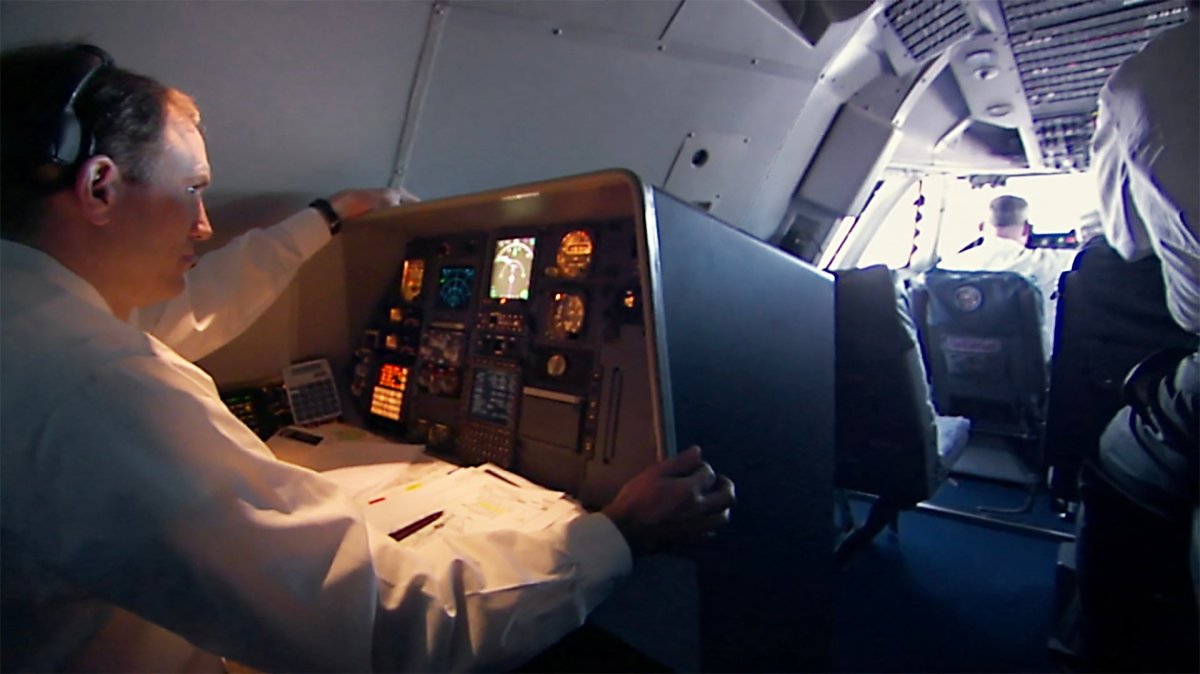
I have seen the film before, it’s fabulous and they have continued to update it over the years, but never before did I notice a feature I had previously never known existed on these historic planes. The VC-25As cockpits are configured for four crew—a pilot, co-pilot, engineer and navigator. The pilot, copilot and engineer’s stations have been shown for years, but apparently, a fourth console that is totally unique to these highly customized 747s is installed in what appears to be an enlarged rear cockpit area.
VC-25A over the Statue of Liberty., USAF
The 747 was designed originally for three crew, with a set of extra jump seats being arranged on the other side of the cockpit, across from the engineer’s cluttered instrument station. The next-generation 747-400 model that followed the first generation of 747s—the VC-25As are part of the classic 747 family as they were based on an advanced 747-200 configuration—cut the crew down to just a pilot and co-pilot with the help of modern avionics. On the VC-25A, a jump seat is still installed across from the engineer’s station, but behind that is a large console and a seating position facing forward that is purpose-built for a navigator. Check out the screengrabs below:
The console has all the things one would find on an advanced navigational station, including digital navigational display, radar and barometric pressure altimeters, weather radar display, flight management system, DME-VOR, and other instruments and an area to inspect charts and do table-top work., Screencap
The only other 747 that has something similar, at least that I know of, is the E-4B National Airborne Command Center , but that configuration doesn’t put the navigator facing forward in something of an open bridge-like layout like the one seen on the VC-25A.
After doing some searching, I was able to find some video that gives another glimpse of this station and of the cockpit layout as a whole. Check out the clip below starting right at the 2:30 mark and keep your eyes peeled, it goes by fast:
The need for the navigator aboard the VC-25A is likely multi-fold. Spreading out the crew’s workload helps for what already is pretty much the most demanding and sensitive airlift mission in the world. Also, back in the 1980s when the VC-25s were ordered, automation and ease of navigation weren’t anywhere near what they are today. But above all else, it probably has the most to do with the possibility that a VC-25 aircrew could find themselves flying in post-nuclear exchange skies—ones in which traditional navigational, air traffic control, and even weather tracking assistance may be all but non-existent. Being able to make it to a continuity of government site or to at least regroup with friendly forces would become a critical and highly challenging task.
A rare shot of Air Force One and Trump Force One in Scotland, AP
The fact that Air Force One is as much a hardened flying command post as an airborne West Wing, being able to quickly make navigational changes on the fly could be key to aircraft and its VVIP passengers survival during a major crisis. The ability to evade conventional threats pointed out by the aircraft’s electronic surveillance and countermeasure systems officers alone while still keeping a precise handle of exactly where the aircraft is in time and space would be essential during such an event.
It will be interesting to see what the crew concept is for the VC-25A replacement aircraft that are based on the far more modern cousin of the 747-200, the 747-8i . These aircraft are already designated VC-25B. The 747-8i only requires a pilot and co-pilot to operate, so it’s possible that the engineer position would be combined with the navigator’s position, or both could be eliminated entirely, although that’s doubtful.
747-8i like the ones that will replace the two existing VC-25As., Boeing
A similar, but even wider scope replacement program is just spinning up for the four C-32As that are largely referred to as ‘Air Force Two,’ but are used for Presidential airlift missions into smaller airports or when a VC-25A is not available. The VH-3D and VH-60N ‘Marine One’ helicopter fleet is also being replaced with the new type designated VH-92 . That is slated to reach operational status in 2020.
I highly recommend you watch Inside Air Force One, which you can do so for free right now on National Geographic’s website linked here . It’s an outstanding look at the VC-25 and its mission. The way I stumbled on the film again is I had tuned in an hour early by accident to watch to another National Geographic documentary—this one on the Secret Service—that premiered last evening. That two-hour film, named United States Secret Service: On the Front Line, was absolutely jaw-dropping . It went far more in-depth and unveiled way more operational details than anything I have ever seen on the subject before. It too is an absolute must watch. I talk a lot about all the labor and cost that goes into just moving the President from one place to another and keeping them safe in general . These two documentaries combined really convey this bewildering reality to an almost unsettling degree.
So there you have it, the full story of the Air Force One’s four crew cockpit and the navigator’s station that looks a bit more like it belongs on a starship than in an aircraft originally design from the designed in the late 1960s.
Contact the author: Tyler@thedrive.com
Comments couldn’t be loaded. Please refresh the page.
更新于美国东部时间2019年12月1日上午7:11
两架波音VC-25A飞机,通常被称为“空军一号”(实际上,当总统乘坐任何空军飞机时,这都是其呼号),是性能卓越、高度定制的飞行器。从配备世界上最精密的空中通信系统之一,到覆盖着能够干扰来袭热寻导弹的定向能炮塔,这些飞机在它们所基于的747-200设计基础上,将性能发挥到了极致。即便经过数十年的报道、多部书籍的出版和纪录片的拍摄,这些象征着美国强大力量的飞行器仍然能够给人带来惊喜。例如,昨晚我在观看国家地理频道纪录片《走进空军一号》时,飞机驾驶舱内短暂出现的一个画面就吸引了我的注意。
我以前看过这部电影,它非常精彩,而且这些年来他们一直在更新,但我从未注意到这些历史悠久的飞机上有一个我以前从未了解过的功能。VC-25A 的驾驶舱配置为四名机组人员——飞行员、副驾驶、工程师和领航员。飞行员、副驾驶和工程师的岗位已经展示多年,但显然,在这些高度定制的 747 飞机上,还安装了一个完全独特的第四控制台,位于一个看起来像是扩大的后驾驶舱区域。
VC-25A 飞机飞越自由女神像,美国空军
747 最初的设计是三名机组人员,驾驶舱另一侧,也就是工程师杂乱的仪表台对面,设置了一组额外的折叠座椅。第一代 747 之后的下一代 747-400 机型——VC-25A 属于经典的 747 系列,因为它基于先进的 747-200 配置——借助现代航空电子设备,将机组人员减少到只有一名正副驾驶。在 VC-25A 上,工程师工作站对面仍然安装了一个折叠座椅,但其后方是一个大型控制台和一个面向前方的座椅,专为导航员设计。请查看以下屏幕截图:
控制台配备了先进导航站的所有设备,包括数字导航显示器、雷达和气压高度表、气象雷达显示器、飞行管理系统、DME-VOR 以及其他仪器,还有一个用于查看海图和进行桌面工作的区域。(截图)
据我所知,唯一另一架拥有类似设计的 747 是 E-4B 国家空中指挥中心,但这种配置并没有像 VC-25A 那样,让导航员面向前方,采用类似开放式桥架的布局。
经过一番搜索,我找到了一段视频,可以从另一个角度展示了这个空间站以及整个驾驶舱的布局。请观看下方视频,从 2 分 30 秒开始,注意时间,画面很快:
VC-25A 需要导航员的原因可能有很多。分散机组人员的工作量有助于减轻这项几乎是世界上最艰巨、最敏感的空运任务的压力。此外,在 20 世纪 80 年代订购 VC-25 时,自动化程度和导航便捷性远不及今天。但最重要的是,VC-25 机组人员可能需要在核战后的空域飞行——届时传统的导航、空中交通管制甚至气象跟踪服务都可能几乎不存在。能否抵达政府机构所在地,或者至少与友军重新集结,将成为一项至关重要且极具挑战性的任务。
美联社拍摄到空军一号和特朗普一号在苏格兰的罕见照片
空军一号既是坚固的空中指挥中心,也是空中的白宫西翼,因此,在重大危机中,能够迅速进行导航调整对于飞机及其贵宾乘客的生存至关重要。在能够躲避仅由飞机电子监视和对抗系统人员指出的常规威胁的同时,还能精确掌握飞机在时间和空间中的位置,在这样的事件中至关重要。
基于747-200的更现代化的同系机型747-8i的VC-25A替代飞机,其机组人员配置方案将会非常有趣。这些飞机已被命名为VC-25B。747-8i只需要一名飞行员和一名副驾驶即可操作,因此,工程师岗位可能会与导航员岗位合并,或者这两个岗位都可能被完全取消,尽管这种可能性不大。
波音公司将推出类似747-8i的机型,用于取代现有的两架VC-25A。
一项类似但规模更大的替换计划正在启动,该计划旨在替换四架通常被称为“空军二号”的C-32A运输机,这些飞机主要用于总统专机飞往小型机场或VC-25A无法使用时执行任务。此外,VH-3D和VH-60N“海军陆战队一号”直升机机队也将被新型VH-92直升机取代,后者预计将于2020年投入使用。
我强烈推荐您观看《空军一号内幕》(Inside Air Force One),您现在就可以在国家地理网站上免费观看(链接在此)。这部纪录片精彩地展现了VC-25及其任务。我偶然间又看到了这部影片,因为我提前一个小时打开了国家地理频道,观看了另一部纪录片——一部关于特勤局的纪录片——这部纪录片昨晚首播。这部名为《美国特勤局:前线》(United States Secret Service: On the Front Line)的两小时纪录片绝对令人震惊。它比我之前看过的任何相关纪录片都更加深入,揭示了更多运作细节。这部纪录片也绝对值得一看。我经常谈到总统出行以及保障总统安全所需的人力物力。这两部纪录片结合起来,以一种近乎令人不安的方式展现了这种令人匪夷所思的现实。
以上就是空军一号四人座舱和导航员站的完整故事,它的设计看起来更像是星际飞船上的装置,而不是一架最初设计于 20 世纪 60 年代末的飞机上的装置。
联系作者:Tyler@thedrive.com
评论加载失败,请刷新页面。