Amid focus on Strait of Hormuz, experts sound warning on Yemen’s Houthis and Red Sea在各方关注霍尔木兹海峡之际,专家们对也门胡塞武装和红海局势发出警告。
Foreign policy experts warn that the strait is not the only potential choke point that Iran and its proxies could leverage amid the war.
The world’s attention is fixed on the Strait of Hormuz now that the U.S. Navy is blockading the crucial shipping channel at President Donald Trump’s behest. But some foreign policy experts warn that the strait is not the only potential choke point that Iran and its proxies could leverage.
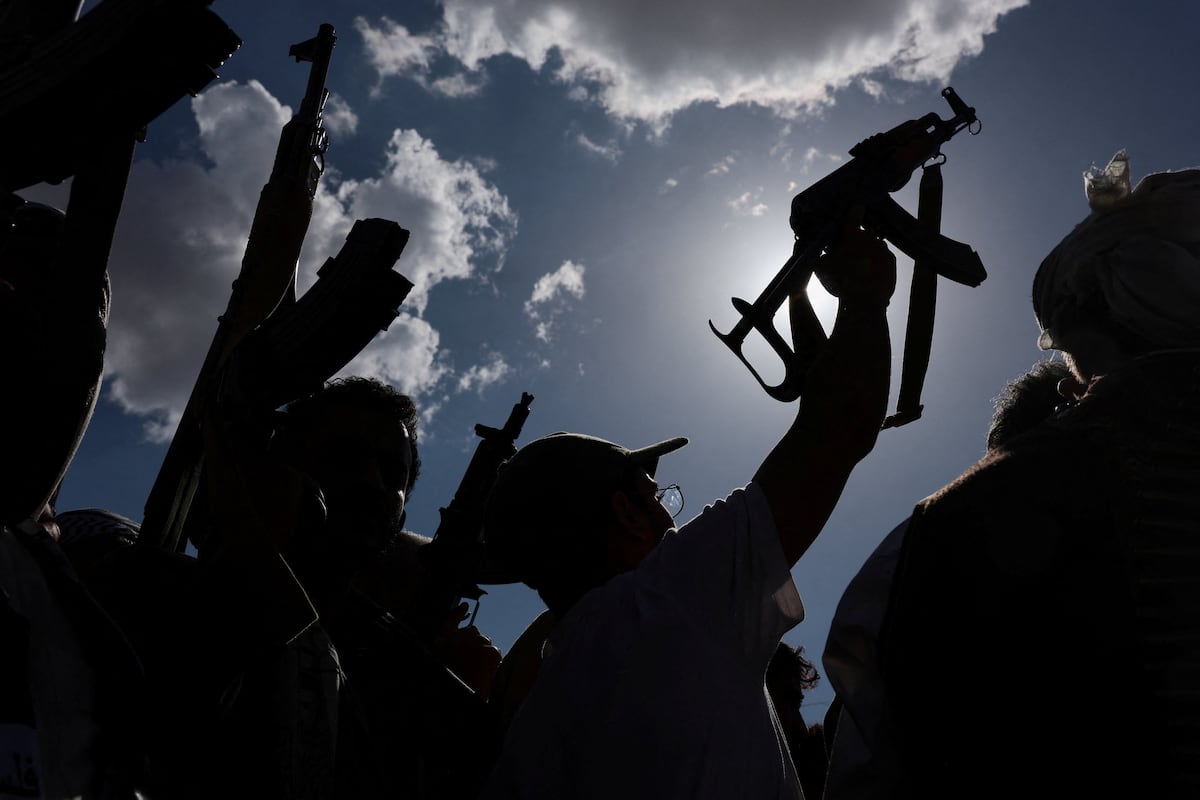
In particular, they cite the Bab el-Mandeb Strait, which sits at the mouth of the Red Sea just off the coast of Yemen. The waterway is highly susceptible to attack from the Iranian-backed Houthis , who control most of Yemen.
“The Houthis are the ones who pioneered, in a way, this idea of using asymmetric capabilities to disrupt maritime traffic,” Mona Yacoubian, the director of the Middle East Program at the Center for Strategic and International Studies, said in an interview with Military Times. “It has to be the right set of circumstances, but we could potentially see a situation in which they choose to engage on Red Sea shipping and ships attempting to cross the Bab el-Mandeb and also — by virtue of which way the water flows — the Suez Canal.”
Skeptics fear that if the Houthis stepped fully off the sidelines and into an aggressive posture on Bab el-Mandeb, another economic shock would result. This, in turn, would greatly complicate Trump’s desire to claim a victory in the war on Iran that began with combined U.S. and Israel strikes on Feb. 28.
Elisabeth Kendall, president of Girton College at the University of Cambridge, said that the Houthis’ restraint thus far should be seen as strategic patience, not avoidance.
“The reality is that asymmetric warfare suits the Houthis. They don’t need to be accurate or sophisticated. They just need to harass shipping to achieve their goal of disrupting trade and pressuring the U.S.,” Kendall told Military Times. “The Houthis are seasoned fighters. They have been at war — on and off — for over 20 years. Their battle logic is unlike our own inasmuch as war has become a way of life and they are relatively comfortable with absorbing casualties."
Kendall explained that a Houthi attempt to close the Bab el-Mandeb Strait would “likely prompt a further spike in oil prices and, in time, inflation,” significantly ramping up pressure on Trump.
This all takes place against the backdrop of a fragile ceasefire between the U.S. and Iran. After peace talks reached an impasse over the weekend, Trump recalibrated his strategy, aiming to turn the tables on Iran’s economy by seizing control of the Strait of Hormuz.
On Sunday, the president said the U.S. Navy would begin blockading “any and all ships trying to enter, or leave,” the strait. By Monday, U.S. Central Command had refined the operational scope to only apply to vessels bound for or departing Iranian ports. CENTCOM stressed that it would not impede on the freedom of navigation and will be “enforced impartially.” The Pentagon has not explained how the mission would be carried out.
Under international maritime law, naval forces have the right of visit and search, which authorizes them to board vessels — regardless of flag — to determine their “enemy character.” This categorization hinges on whether ships are materially supporting Iran’s war effort, including through arms transfers or financing. If so, they may be subject to diversion or capture by U.S. forces.
James Kraska, professor of international law at the Naval War College, told Military Times that the approach essentially constitutes an expansion of longstanding bipartisan sanctions targeting the Islamic Revolutionary Guard Corps.
“The U.S. sanctions are so aggressive that it’s sanctioned other entities that aid or facilitate transactions that benefit Iran,” Kraska said.
He added that he sees the blockade and the American assertion of the right of visit and search as “simply a wartime extension of what we’ve been doing for a decade. It’s economic warfare.”
Trump’s blockade is expected to cost Iran roughly $435 million a day — or $13 billion a month — Miad Maleki, a former official with the Treasury Department, wrote in a post on X.
Vice President JD Vance has argued that with this move, Trump has flipped the script on the Islamic Republic.
“What [the Iranians] have done is engage in this act of economic terrorism against the entire world,” Vance said in an interview with Fox News on Monday. “They’ve basically threatened any ship that’s moving through the Strait of Hormuz. Well, as the president of the United States showed, two can play at that game.”
Tanya Noury is a reporter for Military Times and Defense News, with coverage focusing on the White House and Pentagon.
现在,全世界的目光都聚焦在霍尔木兹海峡,因为美国海军奉唐纳德·特朗普总统之命封锁了这条至关重要的航道。但一些外交政策专家警告说,霍尔木兹海峡并非伊朗及其代理人可能利用的唯一潜在咽喉要道。
他们特别提到了位于红海入口、紧邻也门海岸的曼德海峡。这条水道极易受到伊朗支持的胡塞武装的攻击,而胡塞武装控制着也门的大部分地区。
“从某种意义上说,胡塞武装是利用非对称作战能力扰乱海上交通这一理念的先驱,”战略与国际研究中心中东项目主任莫娜·雅库比安在接受《军事时报》采访时表示。“这需要特定的环境条件,但我们可能会看到这样一种情况:他们选择攻击红海航运和试图穿越曼德海峡的船只,而且由于水流方向的原因,他们也可能攻击苏伊士运河。”
怀疑论者担心,如果胡塞武装彻底不再袖手旁观,而是在曼德海峡采取咄咄逼人的姿态,将会造成另一次经济冲击。反过来,这将极大地阻碍特朗普宣称在2月28日美以联合空袭开始的对伊战争中取得胜利的愿望。
剑桥大学格顿学院院长伊丽莎白·肯德尔表示,胡塞武装迄今为止的克制应该被视为战略耐心,而不是回避。
肯德尔告诉《军事时报》:“现实情况是,非对称战争对胡塞武装有利。他们不需要精准或复杂的战术,只需要骚扰航运就能达到扰乱贸易、向美国施压的目的。胡塞武装是经验丰富的战士,他们断断续续地打了20多年的仗。他们的作战逻辑与我们截然不同,因为战争对他们来说已经成为一种生活方式,他们也相对能够承受伤亡。”
肯德尔解释说,胡塞武装试图封锁曼德海峡“很可能导致油价进一步飙升,并最终导致通货膨胀”,这将大大增加特朗普面临的压力。
这一切都发生在美伊之间脆弱的停火协议背景下。周末和平谈判陷入僵局后,特朗普调整了战略,企图通过控制霍尔木兹海峡来扭转伊朗的经济局面。
周日,总统表示美国海军将开始封锁“任何试图进出”霍尔木兹海峡的船只。到周一,美国中央司令部已将行动范围缩小至仅适用于往返伊朗港口的船只。中央司令部强调,此举不会妨碍航行自由,并将“公正执行”。五角大楼尚未解释此次行动将如何实施。
根据国际海事法,海军拥有登临和搜查权,授权其登船检查任何悬挂不同国旗的船只,以确定其“敌对性质”。这一认定取决于船只是否在实质性地支持伊朗的战争行动,包括通过武器转让或融资等方式。如果答案是肯定的,这些船只可能被美军扣押或拦截。
海军战争学院国际法教授詹姆斯·克拉斯卡告诉《军事时报》,这种做法本质上是对长期以来针对伊斯兰革命卫队的两党制裁的扩大。
克拉斯卡说:“美国的制裁力度非常大,甚至连那些帮助或促成有利于伊朗的交易的其他实体也受到了制裁。”
他还补充说,他认为封锁以及美国对访问和搜查权的主张“只不过是我们过去十年所作所为的战时延伸。这是经济战。”
据美国财政部前官员米亚德·马莱基在 X 网站上发表的一篇文章称,特朗普的封锁预计每天将使伊朗损失约 4.35 亿美元,或每月损失 130 亿美元。
副总统 JD Vance 认为,特朗普此举彻底扭转了对伊朗伊斯兰共和国的局面。
“伊朗人所做的,是对全世界实施经济恐怖主义,”万斯周一在接受福克斯新闻采访时说。“他们基本上威胁了所有途经霍尔木兹海峡的船只。正如美国总统所表明的那样,这种游戏,谁都可以玩。”
Tanya Noury 是《军事时报》和《防务新闻》的记者,她的报道主要集中在白宫和五角大楼。