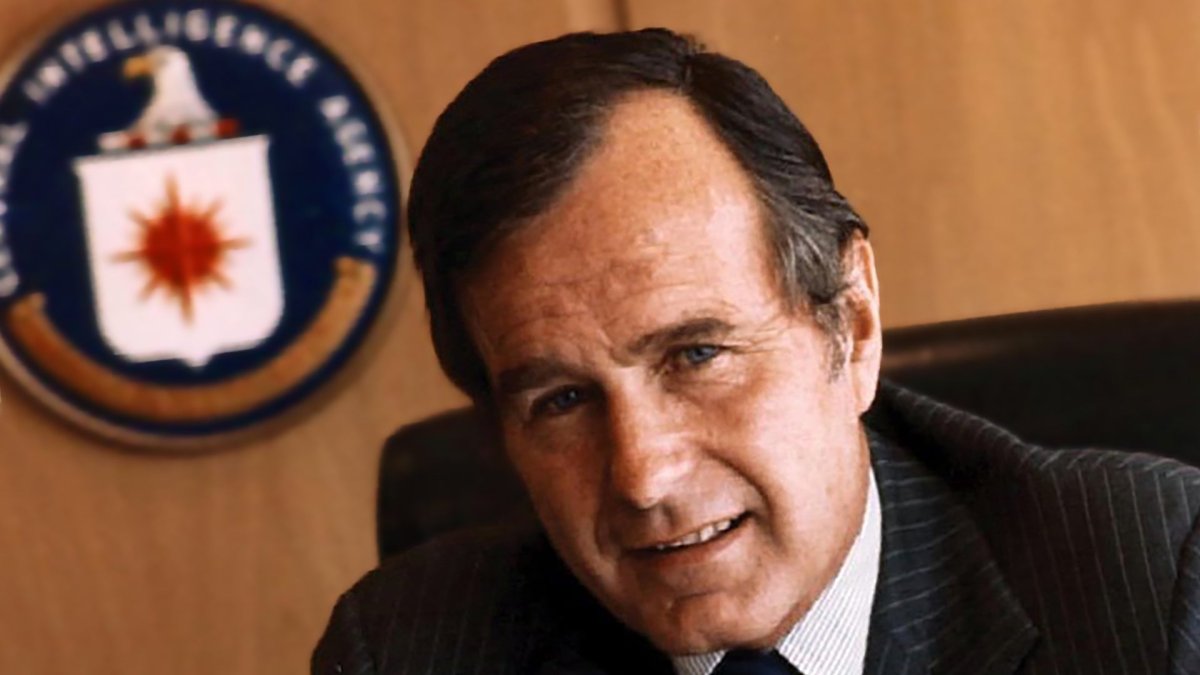
George Bush Saved The CIA乔治·布什拯救了中央情报局
The CIA was mired in controversy and battling for its life before George Bush took over and turned it around with long-lasting reforms.
新闻视频
Updated Dec 1, 2019 7:06 AM EST
Yesterday, we didn’t just lose a President and a war hero, we lost an incredible American that served our country his entire life in so many fascinating ways. He was the embodiment of a patriot volunteer, someone who raises their hand for the tough jobs because they know that it needs to be done right. In his career as a public servant, George Bush’s willingness to step into what at the time was a Central Intelligence Agency in freefall was probably the best embodiment of this trait.
The time that Bush took the reigns as Director of Central Intelligence (DCI) was so dismal for the CIA that some were questioning if it would even survive, and if so, in what form. The CIA has a page describing the providence Bush brought to the beleaguered institution, it states in part:
An Agency on the Brink The turbulent 1970s came to be known as the “time of troubles” for the CIA. Six different DCIs served within a ten-year timeframe, and the Agency was shrouded in controversy from the Vietnam War and covert action programs leaked to the press. By far the most devastating and consequential leak involved the “ Family Jewels ,” a list compiled for DCI James Schlesinger detailing controversial and, in some cases, illegal activities undertaken by the Agency. By December of 1974, the list had ended up in the hands of investigative journalist Seymour Hersh. President Gerald R. Ford sought to quell public and congressional concern by establishing a blue-ribbon commission led by Vice President Nelson Rockefeller to investigate any domestic espionage by the Agency. Congressional committees led by Representative Otis Pike and Senator Frank Church were formed in early 1975 and aimed to expunge the questionable activities of the CIA in the 1970s. Church referred to the CIA as a “rogue elephant,” claiming it was unsupervised and designed to tell the President what he wanted to hear. Neither committee discovered evidence capable of destroying the Agency, although the hearings decimated the public image of the CIA and the pride of its employees. As the committees continued their investigations into late 1975, the Ford Administration had come to feel that then-DCI William Colby had disclosed more information to Congress than was necessary. This belief, coupled with the harsh reality that a dark cloud now hung over the CIA, led the President to conclude the Agency needed a new sense of morale and a new director who could improve strained relations with Congress. On January 30, 1976, Ford replaced Colby with George H.W. Bush.
An Agency on the Brink
The turbulent 1970s came to be known as the “time of troubles” for the CIA. Six different DCIs served within a ten-year timeframe, and the Agency was shrouded in controversy from the Vietnam War and covert action programs leaked to the press.
By far the most devastating and consequential leak involved the “ Family Jewels ,” a list compiled for DCI James Schlesinger detailing controversial and, in some cases, illegal activities undertaken by the Agency. By December of 1974, the list had ended up in the hands of investigative journalist Seymour Hersh.
President Gerald R. Ford sought to quell public and congressional concern by establishing a blue-ribbon commission led by Vice President Nelson Rockefeller to investigate any domestic espionage by the Agency.
Congressional committees led by Representative Otis Pike and Senator Frank Church were formed in early 1975 and aimed to expunge the questionable activities of the CIA in the 1970s. Church referred to the CIA as a “rogue elephant,” claiming it was unsupervised and designed to tell the President what he wanted to hear.
Neither committee discovered evidence capable of destroying the Agency, although the hearings decimated the public image of the CIA and the pride of its employees.
As the committees continued their investigations into late 1975, the Ford Administration had come to feel that then-DCI William Colby had disclosed more information to Congress than was necessary. This belief, coupled with the harsh reality that a dark cloud now hung over the CIA, led the President to conclude the Agency needed a new sense of morale and a new director who could improve strained relations with Congress. On January 30, 1976, Ford replaced Colby with George H.W. Bush.
With the CIA having acquired the public image as a major source of America’s problems, not a solution to them, there were clearly a slew of systemic issues that would have to be solved the hard way in order for The Agency to survive. But who would want such a job? Fixing any sprawling government institution is an extremely perilous task with very questionable chances of success, but doing so with an agency that trades in secrecy, dabbles in assassination and insurrection, and uses secrets as leverage is a whole other untamed animal altogether.
Bush who was quickly climbing the political ladder, saw the job as DCI as a political dead-end and fraught with pitfalls, but he clearly didn’t value the risk to his career or political aspirations enough to be an impediment to taking on such a dubious and important challenge.
George H.W. Bush was sworn-in at DCI on January 30, 1976. He was the ultimate outsider in the ultimate insider’s agency. But what was remarkable is that his outgoing personality and openness to hearing out and understanding the problems CIA personnel were facing quickly tore down any artificial barriers put up between the rank and file and what was, in reality, a ‘turnaround guy.’
The job quickly went from a reluctant duty to a labor of love. He was fascinated by the camaraderie, secrecy, the creativity, the technology, and everything else that went with working at the CIA. Bush quickly educated himself on all the ins-and-outs of ongoing CIA operations and the critical intelligence products that The Agency was furnishing the military and government decision makers on a daily basis. He wasn’t just a ‘big picture’ executive, he was also an intelligence officer, personally editing important briefs to the National Security Council, and oftentimes presenting them in person so that he could convey his analysis and emphasize key points.
He would also bring officers from Langley to brief White House higher-ups and even the President directly, which was a huge change from the more rigid divisions between the CIA rank and file and the Executive Branch in the past. This alone elevated morale at The Agency by instilling a sense that the work individuals do there really mattered and influenced policymaking at the highest levels and often in near-real time.
President Ford and DCI Bush at Langley. , CIA
Presidential orders that created a new oversight regime and limitations on the CIA’s ability to spy domestically—hard pills to swallow for a spy institution that had run with far fewer strings attached for decades—were also embraced and implemented by Bush.
The horrid relationship between the Legislative Branch and the CIA was also a target for Bush to fix. Having been a Congressman himself he had unique insights into the mechanics of the House and Senate and the personalities and preconceived perceptions at play there. With this in mind, he set out to lay the foundation for a robust relationship between The Agency and both houses of Congress. He targeted key power players on The Hill and worked personally to change their perceptions of the CIA and eventually how Congress interacted and oversaw the activities at the spy agency.
This work helped spur the creation of the Senate Select Committee on Intelligence. Under this new oversight regime, 15 senators from both sides of the aisle would be briefed on the CIA’s activities and oversee the budgets of the entire intelligence community with the help of a broader picture of its challenges and goals. This was a huge departure from the past when it came to invasive oversight of the CIA and was intrinsic in slowly dissolving the bitterness between America’s elected representation in Washington and the shadowy intelligence community.
DCI Bush talking with President Ford in the Oval Office. , Gerald R. Ford Library
Bush also made himself available to Congress in a downright relentless manner. He sat and testified to Congress fifty-one times in his year in office, a record that remains unmatched to this very day. Looking back, such an effort is an outstanding example of extreme damage control on an executive level and ushered in a new era of openness between the two government bodies. In effect, it drastically lowered Congress’s hostilities towards the CIA that had been mounting for years prior and fostered an entirely new level of understanding of what the The Agency did, how they did it, and why.
In the end, amazingly, Bush possessed the very rare ability to walk the tightrope between being the CIA biggest cheerleader and supporting its corps of dedicated public servants internally while also catalyzing and embracing dramatic change externally. But above all else, he loved the CIA, its people, and its mission. He knew that what it did was absolutely vital to the nation’s survival.
He briefed Jimmy Carter directly on intelligence matters during the election. But once Carter he won, although he liked Bush, he decided that keeping him would not be the right choice politically. This turned out to be a great thing. If he had stayed on as DCI he would not have run against Reagan in 1980, and in losing that fight, become the Vice President and eventually the President. It is also very unlikely his son would have been elected President in 2000, either.
Upon leaving the CIA, whose image had morphed dramatically over the short time he had been in charge there, Bush stated the following during his farewell address:
“I take with me many happy memories. Even the tough, unresolved problems don’t seem so awesome; for they are overshadowed by our successes and by the fact that we do provide the best foreign intelligence in the world. I hope I can find some ways in the years ahead to make the American people understand more fully the greatness that is CIA.”
This is just a brief overview of Bush’s long-lasting impact on The Agency that came when it needed it desperately, but the videos below give a much deeper view of the struggles and brilliance that marked his time there. I highly recommend you watch them in full.
And yes, everything and everyone in life, and especially when it comes to espionage and intelligence collection, is a mixed bag. Bush’s work at The Agency doesn’t miraculously break this law. But overall and against great odds, he really did get the CIA back on a survivable track that would allow it to be in a good position to confront on the challenges faced during the final period of the Cold War.
On a final note, it is often mentioned that of any American, President George H.W. Bush would probably know more of the nation’s secrets than anyone else. That is probably accurate conjecture, with Dick Cheney being another contender. But George Bush was uniquely set up to carry those secrets to the end, his demeanor and a deep sense of service to his country were contributing factors, but also his time as a Bonesman at Yale can’t be discounted either.
George H.W. Bush did so many things in his life that any single one of his accomplishments would be big enough to define any other man, but for him, it’s just one of a “thousand points of light” that made up maybe one of the most impressive resumes in American history. Although turning around the CIA is often a footnote in his story, it really was an amazing undertaking and its positive repercussions are still felt to this very day.
Director Brennan talks to President Bush at the Memorial Star Wall—hallowed ground at Langley—in 2016. CIA Headquarters in Langley, Virginia was officially renamed the George Bush Center for Intelligence in 1999. , CIA
Contact the author: Tyler@thedrive.com
Comments couldn’t be loaded. Please refresh the page.
更新于美国东部时间2019年12月1日上午7:06
昨天,我们失去的不仅仅是一位总统和一位战争英雄,更是一位杰出的美国人,他以无数令人敬佩的方式为国家奉献了一生。他是爱国志愿者的化身,总是挺身而出承担艰巨的任务,因为他深知必须把事情做好。在乔治·布什的公职生涯中,他勇于接手当时正处于崩溃边缘的中央情报局,这或许是他这种品质的最佳体现。
布什担任中央情报局局长期间,中情局的处境极其糟糕,以至于有人质疑它能否继续存在下去,如果能,又将以何种形式存在。中情局有一个页面专门描述布什给这个陷入困境的机构带来的“神力”,其中部分内容如下:
岌岌可危的中央情报局 动荡的20世纪70年代被称为中央情报局的“麻烦时期”。十年间,中央情报局更换了六位不同的局长,越战和秘密行动计划泄露给媒体,令该机构深陷争议之中。其中最具破坏性和影响最大的泄密事件莫过于“家族珠宝”泄密事件。这份清单由局长詹姆斯·施莱辛格编制,详细记录了中央情报局开展的诸多争议性活动,其中一些甚至涉及非法行为。到1974年12月,这份清单落入了调查记者西摩·赫什手中。为了平息公众和国会的担忧,杰拉尔德·R·福特总统成立了一个由副总统纳尔逊·洛克菲勒领导的专家委员会,负责调查中央情报局在国内的任何间谍活动。 1975年初,由众议员奥蒂斯·派克和参议员弗兰克·丘奇领导的国会委员会成立,旨在清除中央情报局在20世纪70年代的种种可疑活动。丘奇将中央情报局比作“一头失控的大象”,声称它不受监管,其存在的目的就是迎合总统的意愿。尽管听证会严重损害了中央情报局的公众形象和员工的自尊心,但这两个委员会都没有发现足以摧毁该机构的证据。随着委员会的调查持续到1975年末,福特政府开始认为时任中央情报局局长威廉·科尔比向国会披露的信息过多。这种看法,加上中央情报局如今笼罩在阴云之下的严峻现实,促使总统得出结论:中央情报局需要重振士气,并需要一位能够改善与国会紧张关系的新局长。1976年1月30日,福特用乔治·H·W·布什取代了科尔比。
一个濒临崩溃的机构
动荡的 20 世纪 70 年代被称为中央情报局的“麻烦时期”。十年间更换了六位不同的中央情报局局长,越南战争和秘密行动计划泄露给媒体等丑闻使该机构深陷争议之中。
迄今为止,最具破坏性和影响最大的泄密事件莫过于“家族珠宝”清单,这份清单是为联邦调查局局长詹姆斯·施莱辛格编制的,详细列出了该机构开展的颇具争议的,甚至在某些情况下是非法的活动。到1974年12月,这份清单最终落入了调查记者西摩·赫什手中。
为了平息公众和国会的担忧,杰拉尔德·R·福特总统成立了一个由副总统纳尔逊·洛克菲勒领导的专家委员会,负责调查该机构在国内的任何间谍活动。
1975年初,由众议员奥蒂斯·派克和参议员弗兰克·丘奇领导的国会委员会成立,旨在清除中央情报局在20世纪70年代的可疑活动。丘奇将中央情报局比作“一头失控的大象”,声称它不受监管,其目的就是为了迎合总统,告诉他想听的话。
虽然两个委员会都没有发现足以摧毁中央情报局的证据,但听证会却严重损害了中央情报局的公众形象和其员工的自豪感。
随着各委员会的调查持续到1975年末,福特政府逐渐认为时任中央情报局局长威廉·科尔比向国会披露的信息过多。这种看法,加上中央情报局如今笼罩在阴云之下的严峻现实,促使总统得出结论:中央情报局需要提振士气,并需要一位能够改善与国会紧张关系的新局长。1976年1月30日,福特用乔治·H·W·布什取代了科尔比。
由于中央情报局在公众眼中已成为美国诸多问题的根源,而非解决方案,显然,为了使其生存下去,必须艰难地解决一系列系统性问题。但谁又愿意接手这样的工作呢?整顿任何一个庞大的政府机构都是一项极其危险的任务,成功的可能性微乎其微,而要整顿一个以保密为生、涉足暗杀和叛乱、并将秘密作为筹码的机构,则完全是另一回事,如同驯服一头难以驯服的野兽。
布什当时正在迅速攀升政治阶梯,他认为担任刑事侦缉总局局长是一条政治死路,充满了陷阱,但他显然没有足够重视对自己职业生涯或政治抱负的风险,以至于会阻碍他接受这样一项可疑而重要的挑战。
老布什于1976年1月30日宣誓就任中央情报局局长。在这个内部人员云集的机构里,他却是个彻头彻尾的局外人。但令人瞩目的是,他外向的性格以及乐于倾听和理解中央情报局人员所面临问题的态度,迅速打破了普通员工与这位实际上“扭转乾坤”的领导人之间人为设置的障碍。
这份工作很快就从不情愿的职责变成了他热爱的事业。他被中央情报局的同事情谊、保密性、创造力、技术以及其他一切与此相关的事物深深吸引。布什迅速掌握了中央情报局各项行动的来龙去脉,以及该机构每天向军方和政府决策者提供的关键情报产品。他不仅是一位着眼大局的管理者,更是一位情报官员,亲自编辑提交给国家安全委员会的重要简报,并且经常亲自汇报,以便阐述自己的分析并强调关键要点。
他还经常带领兰利总部的官员向白宫高层甚至总统本人汇报情况,这与过去中央情报局普通员工与行政部门之间较为僵化的分工截然不同。仅此一项就极大地鼓舞了中情局士气,让员工们意识到他们的工作至关重要,能够影响最高层的政策制定,而且往往是近乎实时的。
福特总统和布什中将访问兰利。(中央情报局)
布什总统也接受并实施了总统令,这些命令建立了新的监督机制,并限制了中央情报局在国内进行间谍活动的能力——对于一个几十年来几乎不受任何约束的间谍机构来说,这些命令是难以接受的——
立法部门与中央情报局之间糟糕的关系也是布什总统着手解决的目标之一。他本人曾担任国会议员,对参众两院的运作机制以及其中人物的性格和固有观念有着独到的见解。基于此,他着手为中央情报局与国会两院之间建立稳固的关系奠定基础。他重点关注国会山的关键人物,并亲自努力改变他们对中央情报局的看法,最终改变了国会与中央情报局的互动方式以及对情报机构活动的监督方式。
这项工作促成了参议院情报特别委员会的成立。在这种新的监督机制下,来自两党的15名参议员将听取中央情报局活动的简报,并在更全面地了解情报机构面临的挑战和目标的基础上,监督整个情报机构的预算。这与以往对中央情报局的侵入式监督截然不同,也是逐步消除美国民选代表与神秘情报机构之间隔阂的关键一步。
布什中校在椭圆形办公室与福特总统交谈。(杰拉尔德·R·福特图书馆)
布什还以近乎不遗余力的方式配合国会作证。在他任期内,他出席国会听证会51次,这一纪录至今无人能及。回顾历史,这种努力堪称行政层面极端危机公关的典范,并开启了政府两机构间更加开放的新时代。实际上,这大大降低了国会多年来对中央情报局日益增长的敌意,并促进了人们对中央情报局的职能、运作方式和原因有了全新的认识。
最终,令人惊叹的是,布什拥有极其罕见的才能,他既是中央情报局最坚定的支持者,又在内部大力扶持其忠诚的公务员队伍,同时还能在外部推动并拥抱变革。但最重要的是,他热爱中央情报局、热爱其人员、热爱其使命。他深知,中央情报局的工作对国家的存亡至关重要。
在竞选期间,他曾直接向吉米·卡特汇报情报事宜。但卡特胜选后,尽管他喜欢布什,但他认为从政治角度来看,继续留任布什并非明智之举。事实证明,这是一个明智之举。如果他继续担任中央情报局局长,就不会在1980年与里根竞选总统,也不会在败选后成为副总统,最终当选总统。他的儿子也极不可能在2000年当选总统。
布什离开中央情报局时,在他短暂的任期内,中央情报局的形象发生了巨大的变化。在告别演说中,布什发表了如下讲话:
“我带着许多美好的回忆离开。即使是那些棘手的、尚未解决的问题,现在看来也并不那么可怕;因为我们取得的成就,以及我们拥有世界上最好的对外情报机构这一事实,都掩盖了这些问题。我希望在未来的几年里,我能找到一些方法,让美国人民更充分地了解中央情报局的伟大之处。”
这只是对布什对该机构深远影响的简要概述,而布什的到来恰逢其时,但下面的视频更深入地展现了他在任期间的种种挑战和卓越成就。我强烈建议您完整观看这些视频。
没错,生活中的一切人和事,尤其是在间谍活动和情报搜集方面,都是好坏参半的。布什在中央情报局的工作并没有奇迹般地打破这条规律。但总的来说,尽管困难重重,他确实让中央情报局重回正轨,使其能够更好地应对冷战末期面临的挑战。
最后,人们常说,在所有美国人中,老布什总统可能比任何人都更了解国家机密。这种推测或许不无道理,迪克·切尼也是个有力竞争者。但老布什的独特之处在于他具备将这些机密保守到底的条件,他的举止和对国家的强烈责任感固然是促成因素,但他在耶鲁大学担任骷髅会成员的经历也不容忽视。
老布什一生功绩卓著,任何一项成就都足以定义一个普通人,但对他而言,这只是他“千点辉煌”中的一个缩影,而这些辉煌成就构成了他或许是美国历史上最令人瞩目的履历之一。尽管扭转中央情报局的颓势常常被他视为人生故事中的一个注脚,但这的确是一项了不起的壮举,其积极影响至今仍在延续。
2016年,布伦南局长在兰利中央情报局的纪念星墙(一处神圣之地)与布什总统会面。1999年,位于弗吉尼亚州兰利的中央情报局总部正式更名为乔治·布什情报中心。
联系作者:Tyler@thedrive.com
评论加载失败,请刷新页面。