Rogoway’s Reviews: Christopher Nolan’s War Epic Dunkirk罗戈韦影评:克里斯托弗·诺兰的战争史诗《敦刻尔克》
The race against time thriller is no doubt entertaining, but strange creative choices make it a lesser film than it could have easily been.
新闻视频
Updated Jul 5, 2020 7:16 PM EDT
There’s no doubt that Dunkirk is a hit. One of Hollywood’s hottest directors and creative minds, Christopher Nolan ( The Dark Knight, Inception, Interstellar ) delivered what is surely a unique war epic, and a highly entertaining one at that. But even though the film may succeed in the most obvious of and loudest of ways, it fails in smaller, more subdued but still critical aspects. In the end we are left with a relatively thrilling experience, but one filled with seemingly odd and somewhat distracting creative choices, which work to keep the film from rising to the top of the genre.
Spoilers ahead, turn back now if that type of thing ruins your day!
Let’s be clear, Dunkirk is an action thriller. It literally starts with a bang and builds in momentum and tension until its final intertwined crescendo. Above all else, the film reminds you that Nolan is an absolute master of blending sound, cinematography, and often times temporally complex editing to make a picture more than the sum of its parts. When it comes to those merits, and they are substantial, the movie was brilliant.
Nolan also took some risks by throwing out the usual tropes that have populated these types of movies in the past. Namely, there is no love story. In fact, there is very little character development of any kind. This will leave some viewers feeling chilly when walking out into the light of the concession stands after the film’s relatively tidy 106 minute run time is up, but I found it refreshing.
Additionally, in Dunkirk the audience never sees a single German soldier. Instead the movie’s nemesis is the passage of time. This is truly unorthodox storytelling for the genre, and works quite well. It also highlights the unique dynamics of the situation many allied troops found themselves in. But some viewers who don’t know the Dunkirk story going in may feel let down by the lack of running gun battles and Panzer tanks.
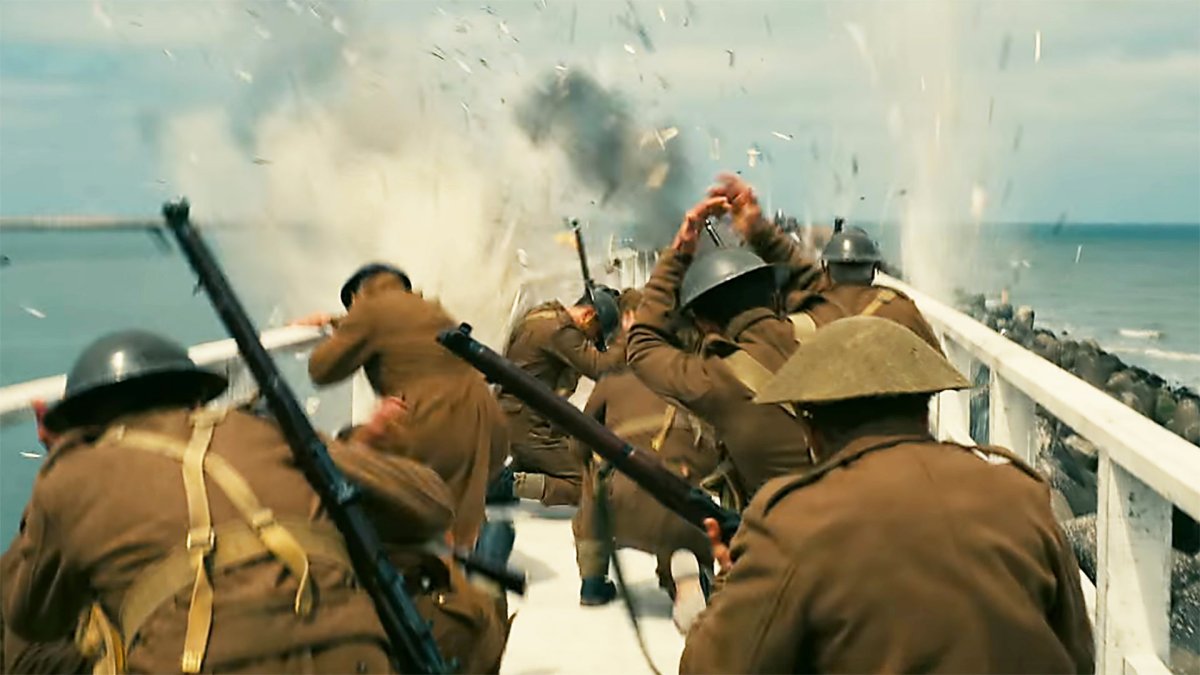
Yes this film depicts the origins of the term the “Dunkirk Spirit,” which will play much better contextually in the UK than in the US. The evacuation of Dunkirk, and the battles that proceeded it, are a major source of national pride in Great Britain—something akin to their Apollo 13 moment, albeit with much grander stakes. But the historical accuracy of the movie as well as some of its rickety set pieces were disappointing, and not just for this defense writer who has heard the story many times before, but also for friends who had a much looser handle of the source material.
Nolan on the set of Dunkirk . , AP
My biggest gripe with Nolan’s Dunkirk was that it stumbled when it came to depicting the sheer scale of the event. This sounds preposterous considering the director’s ability to turn huge concepts into readily consumable cinema. And maybe the high hopes that go along with his talent being attached to a film are part of this disappointment. It also sounds ironic considering the movie was shot on the largest mainstream “film” format around—70mm. With Dunkirk it almost seems as if everything was grand in scale but the depiction of the evacuation itself. This served to undermine the impact of the film’s complex finale and maybe the point of the movie as a whole.
Nolan relied heavily on practical effects when making Dunkirk instead of gobs of CGI or green screen wizardly. I applaud that, and greatly enjoyed seeing real Spitfires buzzing around over the English Channel, and real actors pulling off real stunts in choppy water. But there is a time and place for CGI, and when the movie needed it most, and still in a very sparingly manner—for the widest of shots—it failed to produce. Instead we were left with the impression that the evacuation of Dunkirk involved dozens of ships and thousands of men, not hundreds of ships—close to a thousands—and hundreds of thousands of men—nearly half a million.
More simply put, the vacant feel of the sandy beaches and bodies of water depicted in the film removed me from the world Nolan was trying to create. It was a contradictory distraction, and a totally puzzling one.
In some ways, it felt like you were watching a film from the 1960s shot on some magically high quality film for the era. It all seemed like a relatively small affair considering its source material, which created an odd tension between dialogue describing the scale of what we should be seeing and what we see with our own eyes.
Nolan used cardboard cutouts to up the numbers of “troops” on Dunkirk beach, but it really wasn’t enough., AP
Once again, this discrepancy could have been overlooked 30 years ago, but today, when television shows can afford believable CGI enhanced wide shots of great battles, it’s inexcusable. There were also small areas where CGI could have cleaned up or enhanced production mistakes and the limitations of superficial set dressings over modern buildings, and out of timeframe objects left in frame. Other issues, like the use of more modern naval ships as set pieces, seemed beneath this level of filmmaking too, but that type of thing could have been overlooked if the other issues were cleaned up in post production.
One particular setting choice was the most puzzling, and really jolted me out of the moment at the worst possible time. The main characters are seen in a train car at the end of the film. The train car was clearly from decades after the war, like the late 1970s or 1980s. It was a bizarre and undermining moment in the film. I have no clue how this was overlooked, but it underlined to the larger issues I mentioned earlier.
Obviously most of this was a conscious choice, but a logical or a creatively justified one? One would have a hard time arguing how.
One would be advised not to look closely at the background while enjoying Dunkirk, bad set dressings and production choices could really remove you from the moment. Here the Dunkirk beachfront is being modified sparingly for the film., AP
Then there was the orderly and overtly sanitary depiction of the event itself. Yes the British and allied forces showed stoic restraint during their seemingly futile wait for transport across the channel, but it wasn’t nearly as orderly or as sterile as what is depicted in the film. In fact, most of the soldiers looked like they just stepped out of the costuming trailers in fresh uniforms, a far cry from what the allied forces would have looked like after being on the run for days or even weeks prior to entering a siege-like state along Dunkirk’s shores.
The Royal Air Force was the real star of the movie, almost to a strange degree. The depiction of aerial engagements were pretty much standard movie affair—relatively undynamic close formation flying at low altitude. But the 70mm format the movie was shot in does capture the Spitfires beautifully at times, and the in-cockpit shots and sound didn’t glamorize the “nuts and bolts” reality of piston engined fighters of the era, which was nice.
Still, the Spitfire’s almost laughably endless ammunition magazine that only Hollywood can provide hurt the movie’s hardcore cred. A Spitfire had about a dozen or so seconds of firing time if I remember correctly, but these Spitfires might as well have been X-Wings considering their seemingly endless ammunition reserves.
Aerial scenes were captured traditionally, by actually filming historic aircraft near the French coastlines. , AP
Pilots’ inability to hit stationary targets at point-blank range was also an annoying lapse in authenticity, although filmmakers have traditionally sacrificed realism for narrative ease when it comes to dogfights. But maybe the ending scenes, where the hero Spitfire pilot, played by Tom Hardy, seems to glide for hours at low level—even doing a flyby and taking out another aircraft—before making a needless beach landing in enemy held territory at sunset, was the most eye roll inducing and needless feat of all. Then again there was even a scene where a heavily laden private catch, only capable of a handful of knots at flank speed, literally dodged a strafing run by a BF-109.
Once again, most of these sequences seemed like childish distractions, not a glorious example of artistic license.
Another strange choice was how the French were depicted in the film—largely as cowards that couldn’t save themselves. This was simply not representative of the big historical picture. The French not only helped with their own boats during the evacuation, but their soldiers held off the Germans so that British and other allied troops could escape. Many were killed or taken prisoner after standing their ground even though they knew that doing so was likely to be a death sentence.
Nolan is able to largely cover up Dunkirk’s misfires with his incredible knack for pacing and the use of sound and score to keep viewers engaged. But the existence of these issues in a film that clearly attempts to set itself apart from other war films via chilly realism makes them more damning in retrospect.
A good portion of the film takes place inside Supermarine Spitfires. , AP
Without hardcore adhesion to accuracy, and without any deep character development, and relatively little dialogue for that matter, the story that was depicted could have occurred on a far away moon in a science fiction setting and it would have paid off in a similar manner.
None of this makes Dunkirk a bad movie per se, far from it in fact. It is a good film, one that I recommend seeing in IMAX during its silver screen run. In fact, if action and suspense is all you’re looking for it is probably a great movie. But its blatant errors and odd creative choices keep it from rising to the top of its genre. And above all else, its inability to depict the grand scale of the historical event it is supposed to portray, meant the payoff was less than it could have been in the end.
Rogoway’s review rating: 7G out of 9G.
Rogoway’s Reivews G rating meter.
Contact the author: Tyler@thedrive.com
Comments couldn’t be loaded. Please refresh the page.
更新于美国东部时间2020年7月5日晚上7:16
毫无疑问,《敦刻尔克》是一部票房大卖的电影。好莱坞炙手可热的导演兼创意大师克里斯托弗·诺兰(代表作:《黑暗骑士》《盗梦空间》《星际穿越》)打造了一部独树一帜的战争史诗,而且娱乐性十足。然而,尽管这部电影在最显而易见、最引人注目的方面取得了成功,但在一些细微却至关重要的方面却存在不足。最终,我们得到的是一次相对刺激的观影体验,但其中却充斥着一些看似怪异、甚至有些分散注意力的创作选择,这些选择阻碍了影片跻身同类型电影的巅峰之作。
前方剧透,如果你受不了剧透,现在就别往下看了!
说清楚点,《敦刻尔克》是一部动作惊悚片。它开场就气势磅礴,之后节奏和紧张感层层递进,直至最终交织的高潮。最重要的是,这部电影再次证明了诺兰是一位融合音效、摄影和时而复杂的剪辑技巧的绝对大师,他能将各种元素完美融合,创造出远超其各部分之和的精彩作品。就这些方面而言——而这些方面确实非常出色——这部电影堪称杰作。
诺兰还冒险摒弃了这类电影中常见的套路。例如,影片中没有爱情故事。事实上,几乎没有任何人物塑造。这或许会让一些观众在看完这部时长仅106分钟的电影后,走出影院,来到小卖部时感到有些意犹未尽,但我却觉得这种做法令人耳目一新。
此外,《敦刻尔克》中观众从未见过任何德国士兵。相反,影片最大的敌人是时间的流逝。这种叙事手法在同类型影片中实属罕见,而且效果相当不错。它也突显了许多盟军士兵所处的独特困境。但一些事先不了解敦刻尔克故事的观众可能会因为缺少激烈的枪战和坦克而感到失望。
是的,这部电影描绘了“敦刻尔克精神”一词的由来,这在英国比在美国更能引起共鸣。敦刻尔克大撤退及其之前的战斗是英国民族自豪感的重要来源——类似于他们的阿波罗13号时刻,尽管意义更为重大。但这部电影的历史准确性以及一些粗糙的场景令人失望,这不仅让像我这样对这个故事耳熟能详的国防作家感到失望,也让那些对这段历史了解不多的朋友感到失望。
诺兰在《敦刻尔克》片场。(美联社)
我对诺兰的《敦刻尔克》最大的不满在于,它在展现这场灾难的规模时显得力不从心。考虑到这位导演将宏大的概念转化为易于理解的电影的能力,这听起来或许有些荒谬。也许正是因为人们对他的才华寄予厚望,才导致了这种失望。更讽刺的是,这部电影是用当时主流电影中最大的“胶片”格式——70毫米胶片拍摄的。在《敦刻尔克》中,似乎一切都气势恢宏,唯独对撤退过程的描绘略显不足。这削弱了影片复杂结局的冲击力,或许也偏离了整部电影的主旨。
诺兰在拍摄《敦刻尔克》时大量运用实景特效,而非大量使用电脑特效或绿幕技术。我对此表示赞赏,也十分享受看到真正的喷火式战斗机在英吉利海峡上空盘旋,以及真正的演员在波涛汹涌的海面上完成真实的特技表演。然而,电脑特效的使用也并非绝对必要,在影片最需要它的时候,即使使用得非常克制——仅仅用于最广角的镜头——它的表现也令人失望。最终,影片给人的印象是敦刻尔克大撤退动用了数十艘船只和数千名士兵,而不是数百艘船只(接近上千艘)和数十万名士兵(近五十万)。
更简单地说,影片中描绘的空旷沙滩和水域让我无法沉浸在诺兰试图营造的世界中。这是一种自相矛盾的干扰,而且令人费解。
在某种程度上,感觉就像在看一部用当时堪称神奇的高品质胶片拍摄的六十年代电影。考虑到它的素材来源,整部电影的格局显得相对较小,这在描述我们应该看到的宏大场面和我们亲眼所见的景象之间,造成了一种奇特的张力。
诺兰用纸板人像来增加敦刻尔克海滩上的“士兵”数量,但这远远不够。(美联社)
三十年前,这种瑕疵或许还能被忽略,但如今,电视节目完全可以负担得起逼真的电脑特效增强的宏大战争场面,这就显得不可原谅了。此外,电脑特效本可以弥补或改善一些制作上的失误,比如现代建筑上简陋的布景,以及画面中出现与时代不符的物体。其他一些问题,例如使用更现代的军舰作为布景,也显得与影片的制作水准不符,但如果其他问题能在后期制作中得到解决,这些问题或许还能被忽略。
其中一个场景选择尤其令人费解,它真的在最糟糕的时刻把我从沉浸感中拉了出来。影片结尾,主角们出现在一节火车车厢里。这节车厢显然是战后几十年的,比如20世纪70年代末或80年代的。这在影片中显得格格不入,也破坏了整体效果。我不明白为什么会忽略这一点,但这恰恰凸显了我之前提到的一些更深层次的问题。
显然,这其中大部分都是有意识的选择,但这种选择合乎逻辑或具有创造性吗?很难对此进行辩驳。
建议在观看《敦刻尔克》时不要仔细观察背景,糟糕的布景和制作选择会让你出戏。这里,敦刻尔克海滩的场景为了电影拍摄进行了少量改动。(美联社)
其次,影片对事件本身的描绘也显得井然有序,甚至过于干净整洁。诚然,英国及其盟军在看似徒劳地等待渡海运输的过程中展现出了坚忍克制,但实际情况远没有影片中描绘的那般井然有序、干净整洁。事实上,大多数士兵看起来就像刚从服装间走出来,穿着崭新的制服,这与盟军在敦刻尔克海岸陷入围困之前,已经逃亡数日甚至数周后的狼狈模样截然不同。
英国皇家空军才是这部电影真正的明星,甚至有点夸张。空战的描绘基本是电影的惯用手法——低空编队飞行,动作相对平淡。但影片采用的70毫米胶片拍摄方式,确实在某些时候完美地展现了喷火战斗机的风采,而座舱内的镜头和音效也没有美化那个时代活塞式战斗机的“机械构造”,这一点很不错。
然而,好莱坞电影里喷火战斗机那近乎荒谬的无限弹药量,损害了影片的硬核真实性。如果我没记错的话,一架喷火战斗机的射击时间大概只有十几秒,但考虑到这些喷火战斗机看似无穷无尽的弹药储备,它们简直可以和X翼战机相提并论了。
航拍画面采用传统方式拍摄,即实际拍摄法国海岸线附近的历史飞机。(美联社)
飞行员无法在近距离击中静止目标,这无疑是影片真实性上的一个令人恼火的缺陷,尽管电影制作人在拍摄空战场景时,为了叙事流畅性而牺牲真实性早已司空见惯。但或许最让人翻白眼、最莫名其妙的,还是结尾那几幕:由汤姆·哈迪饰演的英雄喷火战斗机飞行员,似乎在低空滑翔了数小时——甚至还进行了一次低空掠过并击落了另一架飞机——最后却在日落时分毫无必要地在敌占区海滩降落。此外,影片中还有一幕:一架满载货物、最大航速只有几节的私人飞机,竟然躲过了一架BF-109战斗机的扫射。
再次证明,这些片段大多像是幼稚的消遣,而不是艺术创作的精彩范例。
另一个令人费解的选择是影片对法国人的刻画——他们大多是懦夫,连自救都做不到。这完全不符合历史事实。法国人不仅在撤退过程中用自己的船只提供援助,他们的士兵还奋力阻挡德军,掩护英国和其他盟军部队撤离。许多人在明知必死无疑的情况下仍然坚守阵地,最终牺牲或被俘。
诺兰凭借其对节奏的精准把控以及对音效和配乐的巧妙运用,在很大程度上掩盖了《敦刻尔克》的不足之处,牢牢抓住了观众的注意力。然而,这部电影显然试图通过冷峻的现实主义风格来区别于其他战争片,而这些问题的存在,在事后看来更显致命。
影片的大部分场景都发生在喷火式战斗机内部。(美联社)
即使不严格遵循事实,也没有任何深入的角色塑造,而且对话也相对较少,所描绘的故事也可以发生在遥远的卫星上,以科幻的方式呈现,并且也能取得类似的成功。
这一切并不意味着《敦刻尔克》本身是一部烂片,恰恰相反。它是一部好电影,我建议在它上映期间去IMAX影院观看。事实上,如果你只追求动作和悬疑,它或许是一部很棒的电影。但它明显的错误和奇怪的创作选择使其无法跻身同类型电影的巅峰之列。最重要的是,它未能展现其所要描绘的历史事件的宏大规模,这意味着最终的呈现效果远不及预期。
Rogoway 的评价评分:7G(满分 9G)。
Rogoway 的评论 G 评级表。
联系作者:Tyler@thedrive.com
评论加载失败,请刷新页面。