Japan fires first-ever missiles from Philippine soil日本首次从菲律宾领土发射导弹
The first Type 88 missile hit its target – a former minesweeper dating from WWII – 47 miles away after a six-minute flight.
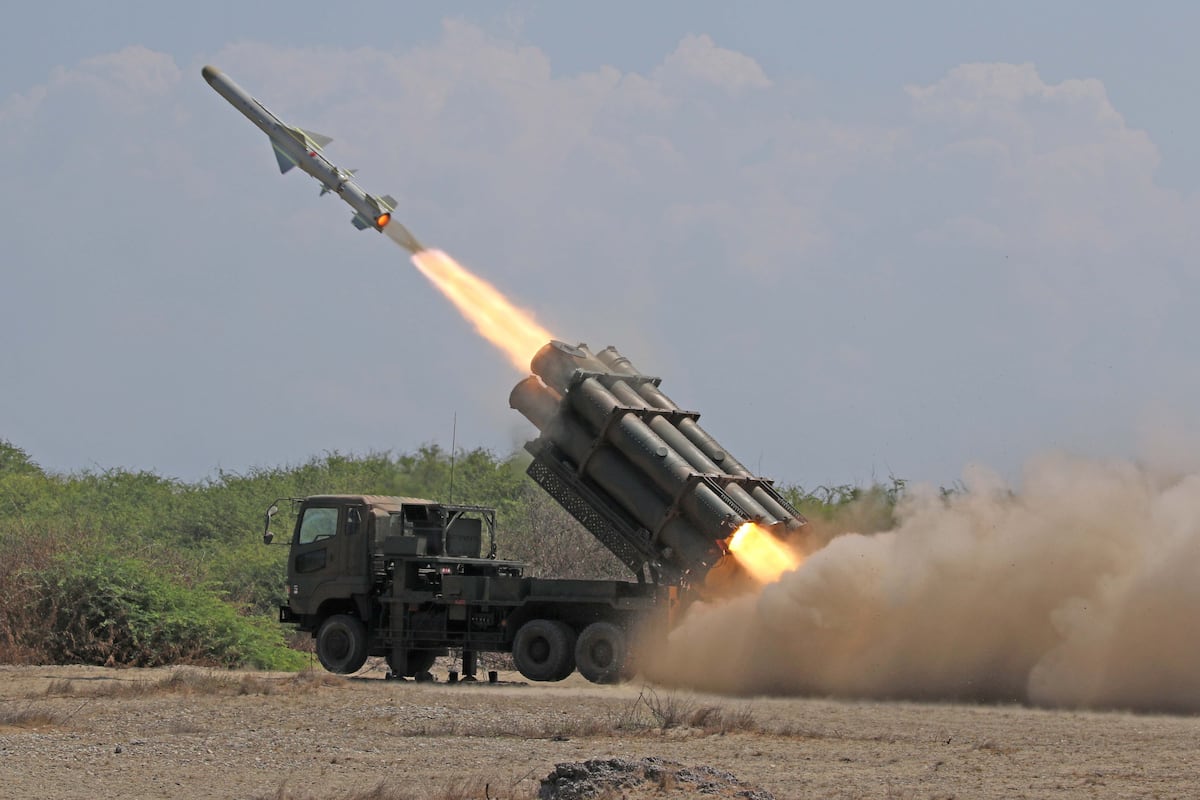
LAOAG, Philippines — A Japanese anti-ship missile smashed into and sunk a decommissioned Philippine naval vessel afloat in the South China Sea, headlining a culminating event of Exercise Balikatan 2026.
This missile firing of the Japan Ground Self-Defense Force’s Type 88 surface-to-ship system from sand dunes near Laoag in northwest Luzon on May 6 was significant for several reasons.
Firstly, this was the maiden deployment of Japanese combat troops on Philippine soil since the end of World War II. Abetted by a reciprocal access agreement ratified by Manila and Tokyo on Sep. 11, 2025, approximately 1,400 Japanese soldiers exercised in the Philippines.
Secondly, the firing of anti-ship missiles presages growing cooperation between Japan and the Philippines, especially as both nations grapple with the specter of an aggressive China in waters around both countries.
If an imaginary curved line is drawn north to south from the Japanese mainland, it would first pass through Taiwan and then continue on to the Philippines. These land masses, plus their archipelagic territories, form a key part of what military planners call the First Island Chain.
Anti-ship missiles positioned on Japanese islands north of Taiwan, and on Philippine islands south of it, have the ability to control who passes through the maritime straits near this democratically governed country that Beijing covets for itself.
In a time of conflict, if the People’s Liberation Army ever invaded Taiwan, the race would be on for either China or the United States and its allies to control these maritime chokepoints.
This is why the deployment and firing of two Japanese Type 88 anti-ship missiles was so important. Such weapons could target any Chinese invasion fleet, or help prevent the passage of Chinese warships into the Western Pacific.
Although only two missiles were fired, as well as a GMLRS rocket from a U.S. Army HIMARS, other anti-ship missile systems such as a U.S. Marine Corps NMESIS and a ship-based Philippine Navy C-Star simulated attacks, too.
The first Type 88 missile hit its target – a former minesweeper dating from WWII – 47 miles away after a six-minute flight.
The Philippines possesses a similar anti-ship missile system – the BrahMos acquired from India – but it did not join in the firing on this occasion.
Meanwhile, the Hawaii-based 3rd Marine Littoral Regiment of the U.S. Marine Corps oversaw command and control of this maritime strike exercise.
Philippine Defense Secretary Gilberto Teodoro Jr. and his Japanese counterpart, Shinjiro Koizumi, attended the missile firing, a day after they met in Manila. One topic of their discussion was Tokyo’s recently relaxed policy on selling lethal weapons.
The Philippines is already planning to buy second-hand equipment like Beechcraft King Air light aircraft and Abukuma-class destroyers from Japan.
Highlighting the bilateral friendship, Teodoro said, “No one country can do deterrence, and the more partners that are converged … the stronger we are.”
Exercise Balikatan took place from Apr. 20 to May 8. It involved approximately 17,000 troops from seven countries.
Gordon Arthur is an Asia correspondent for Defense News. After a 20-year stint working in Hong Kong, he now resides in New Zealand. He has attended military exercises and defense exhibitions in about 20 countries around the Asia-Pacific region.
菲律宾老沃——一枚日本反舰导弹击沉了一艘在南海漂浮的菲律宾退役海军舰艇,这是“肩并肩2026”联合军演的压轴事件。
5月6日,日本陆上自卫队88式舰对舰导弹系统在吕宋岛西北部老沃附近的沙丘上进行导弹试射,这次试射意义重大,原因有以下几点:
首先,这是自二战结束以来日本作战部队首次部署在菲律宾领土上。在马尼拉和东京于2025年9月11日批准的互惠准入协议的支持下,约有1400名日本士兵在菲律宾进行了演习。
其次,反舰导弹的发射预示着日本和菲律宾之间的合作将日益密切,尤其是在两国都在努力应对中国在两国周边水域咄咄逼人的威胁之际。
如果从日本本土向南画一条假想的曲线,这条曲线会先经过台湾,然后继续延伸到菲律宾。这些陆地及其群岛领土构成了军事策划者所称的“第一岛链”的关键部分。
部署在台湾以北的日本岛屿和台湾以南的菲律宾岛屿上的反舰导弹,能够控制谁能通过靠近这个民主国家(北京觊觎的领土)的海峡。
在冲突时期,如果中国人民解放军入侵台湾,中国或美国及其盟友将展开一场争夺这些海上咽喉要道的控制权的竞赛。
这就是为什么部署和发射两枚日本88式反舰导弹如此重要的原因。这种武器可以打击任何中国入侵舰队,或者有助于阻止中国军舰进入西太平洋。
虽然只发射了两枚导弹,以及一枚来自美国陆军 HIMARS 的 GMLRS 火箭,但其他反舰导弹系统,如美国海军陆战队的 NMESIS 和菲律宾海军舰载 C-Star 也进行了模拟攻击。
第一枚 88 型导弹飞行 6 分钟后击中了目标——一艘二战时期的退役扫雷舰——距离目标 47 英里。
菲律宾也拥有类似的反舰导弹系统——从印度购买的布拉莫斯导弹——但此次并未参与发射。
与此同时,驻扎在夏威夷的美国海军陆战队第3近海团负责指挥和控制此次海上打击演习。
菲律宾国防部长吉尔伯托·特奥多罗和日本国防部长小泉进次郎出席了导弹试射,此前一天他们在马尼拉会晤。会晤内容之一是东京近期放宽的致命性武器销售政策。
菲律宾已经计划从日本购买二手装备,例如比奇空中国王轻型飞机和阿武隈级驱逐舰。
特奥多罗强调了双边友谊,他说:“任何一个国家都无法单独发挥威慑作用,合作的伙伴越多……我们就越强大。”
“肩并肩”联合军演于4月20日至5月8日举行,共有来自七个国家的约17000名士兵参加。
戈登·阿瑟是《防务新闻》的亚洲特派记者。在香港工作20年后,他现居新西兰。他曾到访亚太地区约20个国家,参加过军事演习和防务展览。