Dutch Navy to buy armed sidekick ships for its air-defense frigates荷兰海军将为其防空护卫舰购买武装辅助舰艇
Dutch shipyard Damen will build the vessels, with Israel Aerospace Industries supplying interceptors, drones and electronic-warfare equipment.
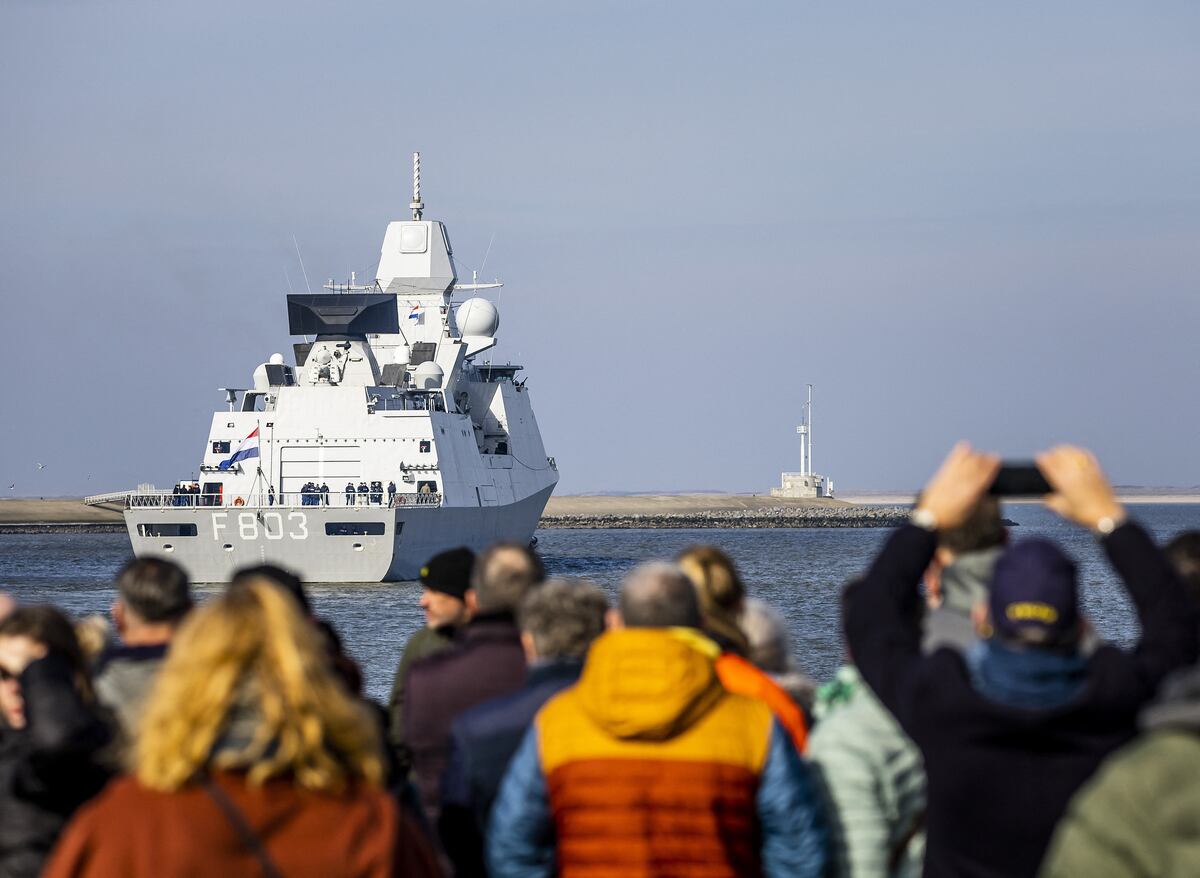
PARIS — The Netherlands plans to buy two support vessels that will act as sidekicks to its air-defense frigates, packing additional missiles to defeat swarms of anti-ship missiles and drones, for an investment in the range of €250 million to €1 billion (US$279 million to $1.1 billion).
The support vessels will also be able to provide fire support for amphibious operations using long-range loitering munitions, as well as equip underwater drones to track and identify suspicious activity in the North Sea, Dutch State Secretary for Defence Gijs Tuinman said in a letter to parliament on Tuesday.
The Royal Netherlands Navy needs to strengthen its air defenses and firepower for operations in the “higher violence spectrum,” as well as capabilities to protect critical North Sea infrastructure such as drilling platforms and data cables, according to the Ministry of Defence.
“These vessels are needed to better protect the Netherlands and allies in the event of a threat,” Tuinman said in a post on X , formerly Twitter, describing the two future support vessels as “sailing toolboxes” for the lead vessel. “The ships are capable of carrying a lot of equipment, such as additional firepower and long-range anti-aircraft missiles.”
Dutch shipyard Damen will build the vessels, with Israel Aerospace Industries supplying its Barak ER surface-to-air interceptor, Harop long-range loitering munition as well as electronic-warfare equipment. Buying the missiles, long-range munitions and EW equipment from a single supplier will simplify integration work, the defense ministry said.
The vessels will have a length of about 53 meters and a beam of 9.8 meters, for a displacement of 550 tons, a MoD spokesman told Defense News. That compares to a length of around 144 meters and displacement of more than 6,000 tons for the De Zeven Provinciën-class air-defense and command frigates operated by the Dutch Navy.
The service’s air-defense frigates will continue to be equipped with RTX’s SM-2 surface-to-air missile, and the frigate’s radar and fire-control systems will handle launch and targeting for the missiles on the support vessels.
The support ships will each have a crew of at least eight sailors. While current technology isn’t sufficiently mature for fully autonomous vessels, the new ships will provide the Navy with experience in operating with small crews, as a first step toward unmanned vessels, Tuinman said.
The first iteration will be available for the North Sea in 2026, and both vessels will be fully operational in 2027. Equipment on the support vessels will be packed in containers, meaning air-defense kit can be swapped out for long-range munitions based on the specific needs of the mission, according to the letter.
The Barak ER air-defense missile that will equip the support ships has a range of up to 150 kilometers and can target anything from fighters to tactical ballistic missiles and glide bombs, with eight missiles packed in a vertical launcher, according to the company’s spec sheet.
The Netherlands also looked at MBDA’s Aster missile, which the minister said can’t be fired from a container, while Rafael Advanced Defense Systems’ Stunner missile didn’t entirely fit the Dutch requirements.
The Netherlands needs to be prepared for swarming tactics, with massive and simultaneous attacks of anti-ship missiles and drones, which require larger stocks of missiles, Tuinman told parliament. Additionally, RTX is halting production of the SM-2, and the successor missile SM-2 Block IIICU isn’t compatible with the fire control on the Dutch air-defense frigates, the minister said.
Adversaries in coastal areas increasingly have access to advanced sensors and long-range weapons, which is changing doctrine for amphibious operations to a larger number of simultaneous landings, according to Tuinman. The IAI loitering munitions have a range of several hundreds of kilometers, and will be able to linger in the target area for some time before use, he said.
Meanwhile the threat to Dutch infrastructure in the North Sea remains undiminished, with Russia continuing to map the infrastructure in what appear to be preparations for disruption and sabotage, the minister said. The Navy escorted a Russian research vessel in June and July that spent several days in the Dutch part of the North Sea, with intelligence services suspecting the Russians were investigating opportunities for potential future sabotage.
The Ministry of Defence plans to buy off-the-shelf underwater drones equipped with long-range sensors to spot suspicious activity, while the support vessels will also be fitted with sensors to record suspicious vessels.
Rudy Ruitenberg is a Europe correspondent for Defense News. He started his career at Bloomberg News and has experience reporting on technology, commodity markets and politics.
巴黎——荷兰计划购买两艘支援舰艇,作为其防空护卫舰的辅助舰艇,配备额外的导弹以击退成群的反舰导弹和无人机,投资额在 2.5 亿欧元至 10 亿欧元(2.79 亿美元至 11 亿美元)之间。
荷兰国防国务秘书吉斯·图因曼周二在致议会的一封信中表示,这些支援舰艇还将能够使用远程巡飞弹为两栖作战提供火力支援,并配备水下无人机来跟踪和识别北海的可疑活动。
荷兰国防部表示,荷兰皇家海军需要加强其防空能力和火力,以应对“更高强度的冲突”,并增强保护北海关键基础设施(如钻井平台和数据电缆)的能力。
图因曼在X(前身为Twitter)上发帖称:“这些舰艇对于在面临威胁时更好地保护荷兰及其盟友至关重要。”他将这两艘未来的支援舰艇描述为主力舰的“海上工具箱”。“这些舰艇能够携带大量装备,例如额外的火力支援和远程防空导弹。”
荷兰达门造船厂将负责建造这些舰艇,以色列航空航天工业公司将提供其巴拉克ER型地对空拦截导弹、哈罗普远程巡飞弹以及电子战设备。国防部表示,从单一供应商采购导弹、远程弹药和电子战设备将简化集成工作。
英国国防部发言人告诉《防务新闻》,这些舰艇长约53米,宽9.8米,排水量550吨。相比之下,荷兰海军的“七省”级防空指挥护卫舰长约144米,排水量超过6000吨。
该军种的防空护卫舰将继续配备RTX公司的SM-2舰空导弹,护卫舰的雷达和火控系统将负责支援舰艇上导弹的发射和瞄准。
每艘支援舰至少配备八名水兵。图伊曼表示,虽然目前的技术尚不足以实现完全自主航行,但这些新舰将为海军提供小规模船员操作的经验,作为迈向无人舰艇的第一步。
首批舰艇将于 2026 年在北海投入使用,两艘舰艇将于 2027 年全面投入使用。信中指出,支援舰艇上的设备将装在集装箱内,这意味着可以根据任务的具体需要,将防空装备更换为远程弹药。
根据该公司的规格表,将装备支援舰的巴拉克ER防空导弹射程可达150公里,可以打击从战斗机到战术弹道导弹和滑翔炸弹的任何目标,垂直发射器中装有8枚导弹。
荷兰也考察了MBDA公司的“紫菀”导弹,但部长表示该导弹无法从集装箱内发射;而拉斐尔先进防御系统公司的“眩晕”导弹又不完全符合荷兰的要求。
图伊曼在议会表示,荷兰需要做好应对集群战术的准备,这种战术会使用反舰导弹和无人机进行大规模同步攻击,因此需要储备更多的导弹。此外,他还指出,RTX公司已停止生产SM-2导弹,而其后续型号SM-2 Block IIICU与荷兰防空护卫舰的火控系统不兼容。
图伊曼表示,沿海地区的敌方越来越多地拥有先进的传感器和远程武器,这正在改变两栖作战的理论,使其转向更多次的同步登陆。他说,以色列航空工业公司(IAI)的巡飞弹射程达数百公里,能够在目标区域停留一段时间后再使用。
与此同时,荷兰北海基础设施面临的威胁依然严峻。这位部长表示,俄罗斯仍在继续绘制相关基础设施地图,这似乎是在为破坏和蓄意破坏做准备。今年6月和7月,荷兰海军曾护送一艘俄罗斯科考船在北海荷兰海域停留数日,情报部门怀疑俄罗斯此举意在探查未来可能实施破坏活动的机会。
国防部计划购买配备远程传感器的现成水下无人机,用于发现可疑活动,同时支援船只也将配备传感器,用于记录可疑船只。
鲁迪·鲁伊滕贝格是《防务新闻》的欧洲记者。他的职业生涯始于彭博新闻社,拥有报道科技、大宗商品市场和政治方面的经验。