How Russian Drones Forced Ukraine To Park Its M1 Abrams Tanks俄罗斯无人机如何迫使乌克兰停放其M1艾布拉姆斯坦克
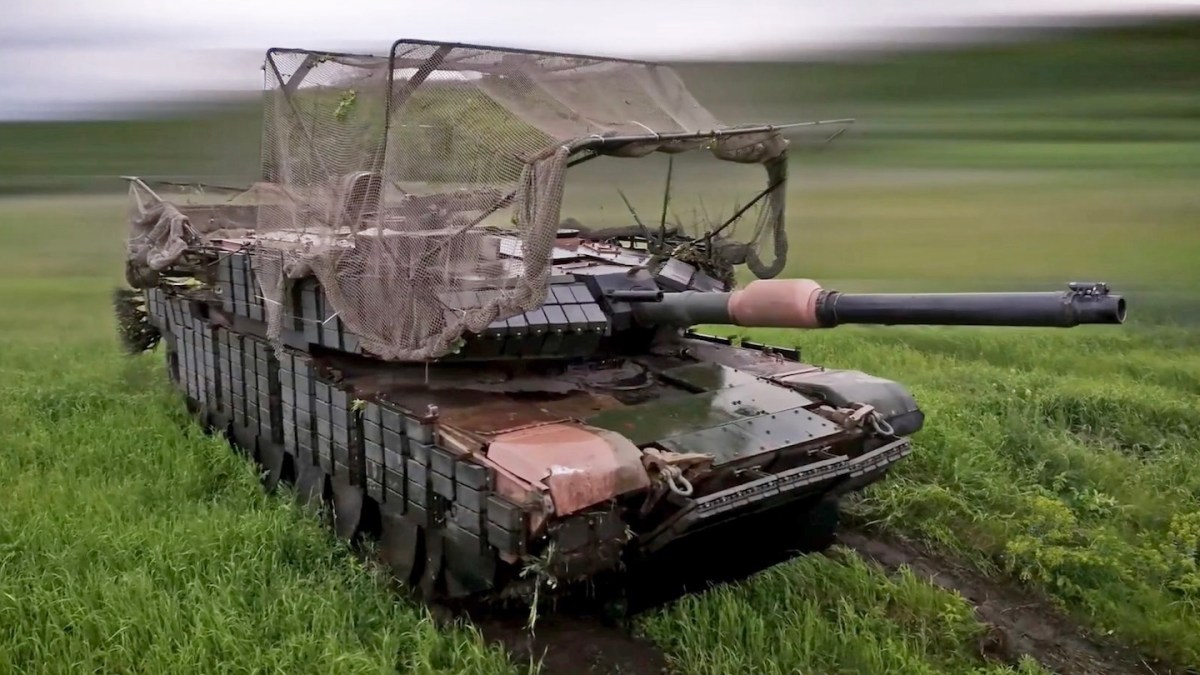
After two costly operations, Ukraine's 425th “Skala” Regiment stopped deploying its M1A1s, but they have not lost all faith in the main battle tank. After two costly operations near Pokrovsk, the 425th “Skala” Regiment has stopped deploying its M1A1s until it can find a way to counter the drone threat.
新闻视频
Published Sep 4, 2026 1:12 PM EDT
Ukrainian Armed Forces
Ukrainian crews operating Australian-supplied M1A1 Abrams tanks say the battlefield has become so saturated with Russian drones that their tanks cannot currently be used in combat, but they reject the idea that main battle tanks have become forever obsolete .
Since receiving these tanks last year , the crews, serving with Ukraine’s 425th Separate Assault Regiment “Skala,” have used the Abrams in two combat operations in the fight for Pokrovsk , a key Ukrainian logistics hub and part of a defensive belt of towns in Ukraine’s eastern Donetsk region. They recounted their experiences to Hromadske , an independent media channel in Ukraine.
Fighting around Pokrovsk
The first major deployment described by the crews took place in December of last year, when Abrams tanks were used to support assault groups entering Pokrovsk.
The crewmember with the callsign Kent described moving into the city behind a mine-clearing tank and ahead of two infantry fighting vehicles (IFVs) carrying assault troops, during a mission that was deliberately aggressive.
“Since a tank is a priority target — my task was to draw their attention, while our infantry dismounted and moved in successfully.”
The Abrams was also assigned three target points to engage along the route.
“We went right in there, poured it on, and drove back out,” he recalled.
A video showing the 425th Separate Assault Regiment in action in August 2025, soon after receiving the Abrams:
The second operation, on March 31, involved an attempt to enter and hold an industrial area near Pokrovsk to help block Russian movement toward Hryshyne, a contested village in the district.
The operation was prepared for more than two weeks. Ukrainian forces conducted reconnaissance flights, examined difficult sections of the planned routes, and provided crews with extensive video and imagery.
“They knew every meter of the route,” another of the unit’s commanders, with the callsign Kubik, said.
Weather was considered essential. The Ukrainians waited for fog and rain, hoping to limit the effectiveness of Russian drones.
“Without the right weather we wouldn’t have been able to pull off operations like that,” Kubik said.
The operation nevertheless resulted in the destruction of four out of five armored vehicles, some of which are seen in the video embedded below.
Russia's Rubicon Drone Center FPV drones destroyed a Ukrainian assault group near Pokrovsk, hitting an M1A1 Abrams tank, M1117 APC and BMP-2 as the unit tried to advance near Hryshyne under fog cover. #Ukraine pic.twitter.com/ZzE52qAYxp — NOELREPORTS 🇪🇺 🇺🇦 (@NOELreports) April 1, 2026
Russia's Rubicon Drone Center FPV drones destroyed a Ukrainian assault group near Pokrovsk, hitting an M1A1 Abrams tank, M1117 APC and BMP-2 as the unit tried to advance near Hryshyne under fog cover. #Ukraine pic.twitter.com/ZzE52qAYxp
The commander acknowledged that the Russian side may have had advance knowledge of the operation.
“I can’t rule out the possibility that the enemy knew our plan,” he said.
His Abrams was not immediately destroyed. According to the crew, it completed its task and the assault troops dismounted before the weather changed.
“Once the fog lifted, they started working on it with an FPV drone ,” the commander said.
Why use tanks at all?
The losses prompted criticism from Ukrainian military commentators, particularly after footage of the destroyed vehicles was published.
However, the crews defend the decision to use armored vehicles for the missions. According to the men of the Skala interviewed, the alternative was often to send infantry over several miles on foot while carrying weapons, ammunition, water, and other supplies.
“That takes more time,” Kubik explained. “And the enemy isn’t standing still — the enemy is moving toward them.”
🇦🇺🇺🇦 Australia-supplied M1A1 Abrams AIM main battle tank in service of the Ukrainian 425th Separate Assault Regiment "Skala." The tanks of such type recently saw combat in the area of Pokrovsk. pic.twitter.com/qhjSyGbhH6 — Status-6 (War & Military News) (@Archer83Able) December 23, 2025
🇦🇺🇺🇦 Australia-supplied M1A1 Abrams AIM main battle tank in service of the Ukrainian 425th Separate Assault Regiment "Skala." The tanks of such type recently saw combat in the area of Pokrovsk. pic.twitter.com/qhjSyGbhH6
The argument that infantry could simply move more stealthily on foot also has limitations.
“Every day the Mavic drones are flying , the fixed-wing drones are flying,” he said. “No fog, guys are visible.”
Combined witu IFVs, the Abrams can provide the ability to rapidly move troops while simultaneously delivering heavy direct fire against enemy positions and offering substantial protection to its crew.
The crews argue that this capability remains worthwhile even when the tank itself may eventually be lost.
One commander was asked whether deploying a roughly $5-million tank makes sense if a single sortie can result in its destruction.
“Yes, of course it makes sense to deploy it,” he replied.
“First and foremost — it saves the lives of the crew inside it.”
Russian forces captured a relatively lightly damaged M1A1SA Abrams main battle tank operated by the 47th Separate Mechanized Brigade in the Pokrovsk direction. The tank is equipped with added cage armor, as well as Kontakt and ARAT ERA. pic.twitter.com/mHyKk1xNRY — Status-6 (War & Military News) (@Archer83Able) October 27, 2024
Russian forces captured a relatively lightly damaged M1A1SA Abrams main battle tank operated by the 47th Separate Mechanized Brigade in the Pokrovsk direction. The tank is equipped with added cage armor, as well as Kontakt and ARAT ERA. pic.twitter.com/mHyKk1xNRY
A tank under attack by drones
The Ukrainian crews repeatedly highlighted the Abrams’ accuracy and survivability.
“What are the biggest advantages of the Abrams?”, Kent was asked.
Its biggest disadvantage, he said, is equally obvious on a modern battlefield: “It’s very tall — and very large — so it’s hard to conceal.”
A video showing a U.S.-supplied Abrams under attack from Russian FPV drones:
🇺🇸🇺🇦 An Abrams tank withstands 9 FPV drones hits. Eventually, the tank was destroyed, but the tank crew successfully survived. pic.twitter.com/4NBKdg2zmW — PS01 □ (@PStyle0ne1) July 7, 2024
🇺🇸🇺🇦 An Abrams tank withstands 9 FPV drones hits. Eventually, the tank was destroyed, but the tank crew successfully survived. pic.twitter.com/4NBKdg2zmW
Kent described surviving an engagement in which his tank was struck repeatedly while on the move.
“More than 20 drones hit me,” he said of one operation into Pokrovsk.
He attributed the Abrams’ survival to the combination of its armor and additional anti-drone protection fitted to the vehicle.
“All of it together is effective,” he said.
He pointed to fairly basic modifications including rubber strips and a foldable wire cage mounted on the turret, as additional layers of protection against drone attacks.
“A drone doesn’t hit the actual penetrating element directly — it just can’t reach it,” he explained. “It hits the rubber, and then the blast wave travels from there.”
Even with their tanks festooned with explosive reactive armor (ERA) bricks, the crews acknowledge that such protection has limits.
A head-on view of an M1A1 of the 425th Separate Assault Regiment shows the ERA bricks installed around the turret and in front of the hull. Ukrainian Armed Forces
US-supplied M1A1 Abrams tank in service of the Armed Forces of Ukraine with added Kontakt-1 ERA on the frontal hull and standard ARAT ERA on the sides. pic.twitter.com/PC2kDfxefO — Status-6 (War & Military News) (@Archer83Able) May 21, 2024
US-supplied M1A1 Abrams tank in service of the Armed Forces of Ukraine with added Kontakt-1 ERA on the frontal hull and standard ARAT ERA on the sides. pic.twitter.com/PC2kDfxefO
Kent also noted that the Abrams was still missing the ‘hedgehog’-type protective coverings that have been seen on Russian tanks .
“They also protect very well. An effective thing,” he said.
A Russian tank with the ‘hedgehog’-type protective covering. Russian state media
For now, the drone threat has led the regiment to keep its Abrams out of combat, as we will return to later.
The Abrams as a machine
The crews’ assessment of the Abrams included praise for its mobility, roomy interior, gun, and fire-control system.
Kubik said he had personally driven an Abrams to 50 miles per hour cross-country.
“The engine is an absolute beast,” he added.
The tank can also rapidly perform a pivot turn, which the crews consider particularly useful when maneuvering in confined spaces. Despite its prodiguous weight, it only rarely becomes bogged down after the kind of very heavy snow-melt that effects all vehicles on the battlefield.
Loading a 120mm M1028 canister cartridge into an M1A1 AIM Abrams main battle tank of the tank battalion of the 425th Assault Regiment. pic.twitter.com/tMd8QcROQe — 𝔗𝔥𝔢 𝕯𝔢𝔞𝔡 𝕯𝔦𝔰𝔱𝔯𝔦𝔠𝔱 🦩🇬🇪🇺🇦🇺🇲🇬🇷 (@TheDeadDistrict) June 21, 2026
Loading a 120mm M1028 canister cartridge into an M1A1 AIM Abrams main battle tank of the tank battalion of the 425th Assault Regiment. pic.twitter.com/tMd8QcROQe
Its disadvantages include its demanding maintenance requirements. The running gear was described as particularly sensitive, with crews inspecting, lubricating, and replacing components after every sortie.
Fuel consumption is another major burden. The crew cited roughly 400 to 700 liters (106 to 185 gallons) per 100 kilometers (62 miles) depending on terrain and operating conditions.
“On asphalt it burns about 400 liters,” one said. In boggy terrain, consumption can reach “700 liters or more.”
The Abrams thirsty gas turbine engine and extreme logistical demands have always been a criticism of the platform.
An M1A1 of the 425th Separate Assault Regiment fording a river. Ukrainian Armed Forces
The crews said the vehicle’s ability to operate on different fuels is useful, although diesel provides the best engine-hour performance in their experience. Prior to delivery, the gas turbine engines of the tanks were reconfigured to use diesel fuel instead of the standard JP-8 aviation kerosene, according to earlier reports .
They also praised the Abrams’ protected ammunition storage and crew space compared with Soviet-designed tanks.
The version operated by the Ukrainians is an M1A1 rather than the latest Abrams configuration , with less sophisticated electronics than newer variants. It also lacks the classified armor found on its U.S. Army counterpart.
“For me — as a tanker — this configuration, what we have right now, is more than enough,” Kubik said. “The sight is absolutely excellent. The gun is also great.”
🔥 Abrams destroys a house with Russian infantry in the Pokrovsk direction. pic.twitter.com/StUoZoMTO3 — MAKS 26 🇺🇦👀 (@Maks_NAFO_FELLA) August 25, 2024
🔥 Abrams destroys a house with Russian infantry in the Pokrovsk direction. pic.twitter.com/StUoZoMTO3
Waiting for a solution to the drone problem
The interview ultimately presents a more complicated picture than either the declaration that tanks are obsolete on the Ukrainian battlefield.
At the time of writing, at least 25 Abrams have been confirmed visually to have been destroyed, damaged, or abandoned in Ukrainian service. This is from a total of 31 provided by the United States and 49 from Australia.
“For now, we’re not using them further — there’s no way to,” Kubik said. “The enemy has developed their drone component very heavily, and for now we don’t have the means to counter that .”
While tanks remain exceptionally powerful direct-fire and protected mobility platforms, the proliferation of inexpensive uncrewed aircraft has made operating them increasingly difficult.
M1A1 AIM Abrams tanks of the 425th Assault Regiment 🇺🇦. The reinforced upper glacis and turret roofs are clearly visible. pic.twitter.com/Sn9h8OWZ9P — 𝔗𝔥𝔢 𝕯𝔢𝔞𝔡 𝕯𝔦𝔰𝔱𝔯𝔦𝔠𝔱 🦩🇬🇪🇺🇦🇺🇲🇬🇷 (@TheDeadDistrict) June 21, 2026
M1A1 AIM Abrams tanks of the 425th Assault Regiment 🇺🇦. The reinforced upper glacis and turret roofs are clearly visible. pic.twitter.com/Sn9h8OWZ9P
“If someone had told me, as a tanker, back in 2022: ‘Take this — we’re giving you an Abrams, we’ll give you time to train and you’ll fight in it,’” Kubik said, “I would never have climbed out of it.”
“I’d only be saying: ‘Bring me shells. I’ll drive non-stop wherever needed, arrive and work.’”
An M1A1 of the 425th Separate Assault Regiment firing its main gun. Ukrainian Armed Forces
As it stands, reconnaissance drones can find the Abrams, FPV drones can attack it, and persistent surveillance makes concealment difficult. Experience has shown that without more effective counter-drone capabilities, even a heavily protected tank can eventually be overwhelmed.
But Kubik believes that will change.
“The day will come when one of our bright minds figures out some excellent solution against drones — and we’ll start using them again.”
Asked whether the era of tanks is over, his answer was unequivocal.
“It’s not over … They’re just waiting it out for now, biding their time. Writing off tanks — in my opinion — is still too early.”
Contact the author: thomas@thewarzone.com
Comments couldn’t be loaded. Please refresh the page.
发布于美国东部时间2026年9月4日下午1:12
乌克兰武装部队
使用澳大利亚提供的 M1A1 艾布拉姆斯坦克的乌克兰士兵表示,战场上俄罗斯无人机泛滥,他们的坦克目前无法用于战斗,但他们不认同主战坦克已经永远过时的说法。
自去年接收这些坦克以来,隶属于乌克兰第425独立突击团“斯卡拉”的乘员组已在波克罗夫斯克战役中使用艾布拉姆斯坦克参与了两次作战行动。波克罗夫斯克是乌克兰重要的后勤枢纽,也是乌克兰东部顿涅茨克地区城镇防御带的一部分。他们向乌克兰独立媒体Hromadske讲述了他们的经历。
波克罗夫斯克附近的战斗
机组人员描述的第一次大规模部署发生在去年 12 月,当时艾布拉姆斯坦克被用来支援进入波克罗夫斯克的突击队。
呼号为肯特的机组人员描述了在一次蓄意进攻的任务中,他们驾驶着一辆扫雷坦克跟在一辆扫雷坦克后面,走在两辆载有突击部队的步兵战车(IFV)前面进入城市。
“由于坦克是优先目标——我的任务是吸引他们的注意力,以便我们的步兵能够下车并成功推进。”
艾布拉姆斯坦克还被分配了沿途的三个目标点进行攻击。
“我们直接进去,把东西倒上去,然后开车出来了,”他回忆道。
一段视频展示了第425独立突击团在2025年8月接收艾布拉姆斯坦克后不久的作战场景:
第二次行动发生在 3 月 31 日,目标是进入并占领波克罗夫斯克附近的一个工业区,以阻止俄罗斯向该地区的争议村庄格里申内推进。
此次行动准备时间超过两周。乌克兰军队进行了侦察飞行,勘察了计划路线上的难点路段,并向机组人员提供了大量的视频和图像资料。
“他们对路线的每一米都了如指掌,”该部队的另一位指挥官,呼号为库比克说道。
天气被认为至关重要。乌克兰人等待着雾和雨,希望以此削弱俄罗斯无人机的效能。
“如果没有合适的天气,我们就无法完成这样的行动,”库比克说。
尽管如此,此次行动还是摧毁了五辆装甲车中的四辆,其中一些可以在下面嵌入的视频中看到。
俄罗斯鲁比孔无人机中心的FPV无人机在波克罗夫斯克附近摧毁了一支乌克兰突击队,击中了一辆M1A1艾布拉姆斯主战坦克、一辆M1117装甲运兵车和一辆BMP-2步兵战车。当时这支部队正试图在格里申附近利用雾气推进。#乌克兰 pic.twitter.com/ZzE52qAYxp — NOELREPORTS 🇪🇺 🇺🇦 (@NOELreports) April 1, 2026
俄罗斯鲁比孔无人机中心的FPV无人机在波克罗夫斯克附近摧毁了一支乌克兰突击队,击中了一辆M1A1艾布拉姆斯主战坦克、一辆M1117装甲运兵车和一辆BMP-2步兵战车。当时这支部队正试图在格里申附近利用雾气推进。#乌克兰 pic.twitter.com/ZzE52qAYxp
指挥官承认,俄方可能事先知晓此次行动。
他说:“我不能排除敌人知道我们计划的可能性。”
他的艾布拉姆斯坦克并没有立即被摧毁。据乘员称,坦克完成了任务,突击部队在天气变化前下了车。
“雾散之后,他们就开始用FPV无人机进行作业,”指挥官说。
为什么要使用坦克?
这些损失引发了乌克兰军事评论员的批评,尤其是在被摧毁车辆的视频公布之后。
然而,机组人员为使用装甲车辆执行任务的决定辩护。据接受采访的斯卡拉士兵称,另一种选择通常是派遣步兵徒步跋涉数英里,同时还要携带武器弹药、水和其他补给品。
“那需要更多时间,”库比克解释说。“而且敌人不会原地不动——敌人正在向他们逼近。”
🇦🇺🇺🇦 澳大利亚提供的M1A1艾布拉姆斯AIM主战坦克正在乌克兰第425独立突击团“斯卡拉”服役。这种坦克最近在波克罗夫斯克地区参与了战斗。 pic.twitter.com/qhjSyGbhH6 — Status-6 (战争与军事新闻) (@Archer83Able) 2025年12月23日
🇦🇺🇺🇦 澳大利亚提供的M1A1艾布拉姆斯AIM主战坦克正在乌克兰第425独立突击团“斯卡拉”服役。这种坦克最近在波克罗夫斯克地区参与了战斗。 pic.twitter.com/qhjSyGbhH6
认为步兵可以更隐蔽地徒步行军的观点也有局限性。
“每天都有 Mavic 无人机和固定翼无人机在飞,”他说。“没有雾,人都能看得见。”
与步兵战车配合使用,艾布拉姆斯坦克能够快速运送部队,同时对敌方阵地进行猛烈的直接火力攻击,并为乘员提供实质性的保护。
乘员们认为,即使坦克本身最终可能会损失,这种能力仍然很有价值。
有人问一位指挥官,如果一次出击就可能导致一辆价值约 500 万美元的坦克被摧毁,那么部署这辆坦克是否有意义。
“是的,部署它当然是合理的,”他回答说。
“首先,也是最重要的一点——它能拯救船上船员的生命。”
俄军在波克罗夫斯克方向缴获了一辆由第47独立机械化旅操作的、受损程度相对较低的M1A1SA艾布拉姆斯主战坦克。该坦克加装了笼式装甲,以及Kontakt和ARAT反应装甲。 pic.twitter.com/mHyKk1xNRY — Status-6 (战争与军事新闻) (@Archer83Able) 2024年10月27日
俄军在波克罗夫斯克方向缴获了一辆由第47独立机械化旅操作的、受损程度相对较低的M1A1SA艾布拉姆斯主战坦克。该坦克加装了笼式装甲,以及Kontakt和ARAT反应装甲。 pic.twitter.com/mHyKk1xNRY
一辆坦克遭到无人机攻击
乌克兰参谋人员反复强调了艾布拉姆斯坦克的精准度和生存能力。
“艾布拉姆斯坦克的最大优势是什么?”有人问肯特。
他说,它最大的缺点在现代战场上同样显而易见:“它很高,也很大,所以很难隐藏。”
一段视频显示,一辆美国提供的艾布拉姆斯坦克遭到俄罗斯FPV无人机的攻击:
🇺🇸🇺🇦 一辆艾布拉姆斯坦克承受了9架FPV无人机的攻击。最终,坦克被摧毁,但坦克乘员全部幸存。 pic.twitter.com/4NBKdg2zmW — PS01 □ (@PStyle0ne1) July 7, 2024
🇺🇸🇺🇦 一辆艾布拉姆斯坦克经受住了9架FPV无人机的攻击。最终,坦克被摧毁,但坦克乘员全部幸存。 pic.twitter.com/4NBKdg2zmW
肯特描述了他在一次战斗中幸存的经历,当时他的坦克在行进中遭到多次攻击。
“有超过 20 架无人机袭击了我,”他谈到对波克罗夫斯克的一次行动时说道。
他将艾布拉姆斯坦克的幸存归功于其装甲和加装的额外反无人机防护装置的结合。
“所有这些结合起来是有效的,”他说。
他指出,一些相当基本的改进措施,例如在炮塔上安装橡胶条和可折叠的金属丝笼,可以增加对无人机攻击的防护层。
他解释说:“无人机不会直接击中穿透元件——它根本够不着。它击中的是橡胶,然后冲击波从那里传播开来。”
即使他们的坦克上装满了爆炸反应装甲(ERA)砖,乘员们也承认这种保护是有局限性的。
从正面拍摄的乌克兰武装部队第425独立突击团的M1A1坦克照片显示,炮塔周围和车体前方都安装了爆炸反应装甲砖。
乌克兰武装部队使用的美国提供的M1A1艾布拉姆斯主战坦克,其车体正面加装了Kontakt-1爆炸反应装甲,侧面则配备了标准的ARAT爆炸反应装甲。 pic.twitter.com/PC2kDfxefO — Status-6 (战争与军事新闻) (@Archer83Able) 2024年5月21日
乌克兰武装部队使用的美国提供的M1A1艾布拉姆斯主战坦克,其车体正面加装了Kontakt-1爆炸反应装甲,侧面则安装了标准的ARAT爆炸反应装甲。 pic.twitter.com/PC2kDfxefO
肯特还指出,艾布拉姆斯坦克仍然缺少俄罗斯坦克上常见的“刺猬”型防护罩。
“它们的防护效果也非常好。非常有效,”他说。
一辆装有“刺猬”式防护罩的俄罗斯坦克。(俄罗斯国家媒体)
目前,无人机的威胁导致该团的艾布拉姆斯坦克无法投入战斗,我们稍后会再谈到这一点。
艾布拉姆斯作为一台机器
乘员们对艾布拉姆斯坦克的评价包括对其机动性、宽敞的内部空间、火炮和火控系统的赞扬。
库比克说他曾亲自驾驶一辆艾布拉姆斯坦克以每小时 50 英里的速度横穿美国。
“这台发动机简直就是个怪物,”他补充道。
该坦克还能快速进行原地转向,乘员认为这在狭窄空间内机动时尤为有用。尽管其重量惊人,但在战场上所有车辆都会遇到的那种大雪融化后,它却很少陷入泥泞中。
正在向第425突击团坦克营的M1A1 AIM艾布拉姆斯主战坦克装填120毫米M1028型霰弹。 pic.twitter.com/tMd8QcROQe — 𝔗𝔥𝔢 𝕯𝔢𝔞𝔡 𝕯𝔦𝔰𝔱𝔯𝔦𝔠𝔱 🦩🇬🇪🇺🇦🇺🇲🇬🇷 (@TheDeadDistrict) June 21, 2026
正在将一枚120毫米M1028型霰弹装入第425突击团坦克营的M1A1 AIM艾布拉姆斯主战坦克。 pic.twitter.com/tMd8QcROQe
它的缺点之一是维护要求很高。据说其行走装置特别精密,每次飞行任务结束后,机组人员都需要检查、润滑和更换部件。
燃油消耗是另一大负担。机组人员表示,根据地形和作业条件的不同,每行驶100公里(62英里)大约需要消耗400至700升(106至185加仑)燃油。
“在沥青路面上,大约要烧掉400升汽油,”一位用户说。“在沼泽地上,油耗可能达到700升甚至更多。”
艾布拉姆斯坦克耗油量大的燃气涡轮发动机和极高的后勤需求一直是该平台的诟病之处。
乌克兰武装部队第425独立突击团的一辆M1A1坦克正在涉水过河。
工作人员表示,该车辆能够使用多种燃料固然实用,但根据他们的经验,柴油的发动机每小时效率最高。此前有报道称,交付前,这些坦克的燃气涡轮发动机已进行改装,使用柴油而非标准的JP-8航空煤油。
他们还称赞艾布拉姆斯坦克的弹药储存和乘员空间比苏联设计的坦克更加安全。
乌克兰军队使用的版本是M1A1型,而非最新的艾布拉姆斯主战坦克,其电子设备也比新型坦克更为简陋。此外,它还缺少美军同类坦克所配备的机密装甲。
库比克说:“对我这个坦克兵来说,目前的配置已经绰绰有余了。瞄准具非常出色,火炮也很棒。”
🔥 一辆艾布拉姆斯坦克在波克罗夫斯克方向摧毁了一栋房屋,屋内有俄军步兵。 pic.twitter.com/StUoZoMTO3 — MAKS 26 🇺🇦👀 (@Maks_NAFO_FELLA) 2024年8月25日
🔥 一辆艾布拉姆斯坦克在波克罗夫斯克方向摧毁了一栋房屋,屋内有俄军步兵。 pic.twitter.com/StUoZoMTO3
等待无人机问题的解决方案
这次采访最终呈现出的图景比“坦克在乌克兰战场上已经过时”这种说法要复杂得多。
截至撰稿时,已通过目视确认至少有25辆艾布拉姆斯坦克在乌克兰服役期间被摧毁、损坏或遗弃。这其中包括美国提供的31辆和澳大利亚提供的49辆。
库比克说:“目前我们不会继续使用它们——也没有办法。敌人已经大力发展了他们的无人机系统,而我们目前还没有应对的手段。”
虽然坦克仍然是威力强大的直接火力攻击和防护机动平台,但廉价无人驾驶飞机的普及使得操作坦克变得越来越困难。
美国第425突击团的M1A1 AIM艾布拉姆斯坦克。加固的上部装甲板和炮塔顶部清晰可见。pic.twitter.com/Sn9h8OWZ9P — 𝔗𝔥𝔢 𝕯𝔢𝔞𝔡 𝕯𝔦𝔰𝔱𝔯𝔦𝔠𝔱 🦩🇬🇪🇺🇦🇺🇲🇬🇷 (@TheDeadDistrict) June 21, 2026
美国陆军第425突击团的M1A1 AIM艾布拉姆斯坦克🇺🇦。加固的上部装甲板和炮塔顶清晰可见。pic.twitter.com/Sn9h8OWZ9P
库比克说:“如果2022年有人告诉我,当时我还是个坦克兵,‘拿着这辆艾布拉姆斯坦克——我们会给你时间训练,然后你就可以开着它去战斗了——’,那我肯定不会从里面爬出来。”
“我只会说:‘给我炮弹。我会不停地开车去任何需要的地方,到达后就开始工作。’”
乌克兰武装部队第425独立突击团的一门M1A1坦克正在发射主炮。
目前来看,侦察无人机可以发现艾布拉姆斯坦克,第一人称视角无人机可以攻击它,持续的监视使得隐蔽变得困难。经验表明,如果没有更有效的反无人机能力,即使是防护严密的坦克最终也可能被击溃。
但库比克认为这种情况将会改变。
“总有一天,我们当中某个聪明人会找到对抗无人机的绝佳解决方案——到那时,我们就会再次开始使用无人机。”
当被问及坦克时代是否已经结束时,他的回答斩钉截铁。
“事情还没结束……他们现在只是在观望,等待时机。在我看来,现在就断言坦克已经没救了。”
联系作者:thomas@thewarzone.com
评论加载失败,请刷新页面。