Face-Off Over The Aegean: How Greek And Turkish Air Forces Stack Up爱琴海之争:希腊和土耳其空军实力对比
With tensions rising over energy reserves in the Aegean Sea, the disgruntled neighbors have air arms that are well-equipped and at high readiness.
新闻视频
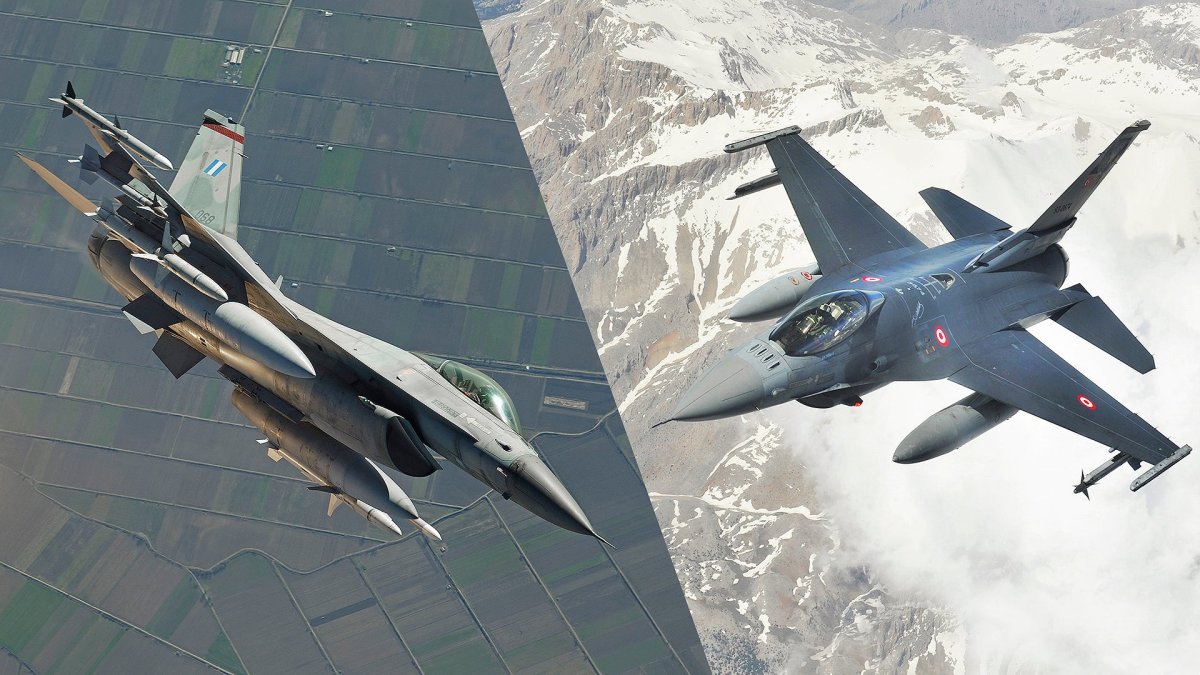
Updated Feb 4, 2021 5:23 AM EST
Greece and Turkey have a long history of animosity despite both being NATO members. However, there’s a real concern that the current spike in tensions — mainly related to control of oil and gas reserves and maritime rights in the eastern Mediterranean — could escalate. If they do, the respective air arms of the two countries are likely to be heavily engaged, so it’s a good time to take a detailed look at their respective assets and how their capabilities compare.
It’s worth noting here that the Hellenic and Turkish Air Forces regularly spar over the Aegean Sea. Turkey and Greece broadly have a long history of confrontation, including an all-out war fought in support of competing factions in Cyprus in 1974 . That independent Mediterranean island, which is still divided between areas under the control of ethnic Greek and Turkish Cypriots to this day, remains a focus of antagonism between the two countries. However, current developments in the region have caused alarm in both NATO and the European Union.
The background to the current dispute surrounds the race to exploit energy reserves in the eastern Mediterranean . The two countries have claims on overlapping areas containing undersea oil and gas fields. In July, Turkey announced it was sending its research vessel Oruç Reis to carry out a drilling survey in disputed waters off the coast of southwest Turkey, but close to the Greek island of Kastellorizo. The Greek military was put on alert and the vessel eventually left port on August 10, 2020.
NormanEinstein/wikicommons
“The illegal and provocative behavior of Turkey has a serious backlash not only to peace and stability in the eastern Mediterranean but to the cohesion of NATO and to its relations with the European Union,” said Greek Foreign Minister Nikos Dendias , in response to the Turkish drilling mission.
“Greece claims 40,000 square kilometers of maritime jurisdiction area due to this tiny island [Kastellorizo] and attempts to stop the Oruç Reis and block Turkey in the eastern Mediterranean,” declared Çağatay Erciyes , Director General at the Turkish Ministry of Foreign Affairs.
The build-up to the latest phase in the standoff included a collision between Greek and Turkish frigates on August 12, 2020. The Turkish warship involved was one of five escorting the research vessel Oruç
Reis . The Greek frigate Limnos made contact with its Turkish counterpart Kemal Reis and the resulting damage was apparently confirmed by photos published soon afterward in the Greek media.
Complicating matters, some of the recent exercises in the area have involved foreign participation, including French Air Force Rafale fighter jets that arrived at Souda-Chania Air Base on Crete for joint training with Greek F-16s on August 13, 2020. The French Ministry of Defense described the deployment as a “temporarily strengthening [of] their presence in the eastern Mediterranean.” Souda then received four F-16E/F Desert Falcons from the United Arab Emirates, which had touched down at the Greek base by August 27 to take part in further joint exercises.
On August 26, Greece began a naval exercise south of Cyprus involving forces from Cyprus , France, and Italy. At the same time, warships from Turkey and the United States were taking part in separate drills in the same area. The U.S. Navy has taken part in maneuvers with both the Greek and Turkish navies in recent weeks, including involvement from Greek F-16s and the U.S. Navy Arleigh Burke -class destroyer USS Winston S. Churchill .
The Arleigh Burke -class guided-missile destroyer USS Winston S. Churchill (DDG 81) executes drills with the Hellenic Navy frigate Aigaion (F 460) in the Mediterranean, August 24, 2020. , U.S. NAVY/MASS COMMUNICATION SPECIALIST 3RD CLASS LOUIS THOMPSON STAATS IV
As well as a war of words and aggressive acts between ships, there have been other examples of direct posturing, too. The Turkish Ministry of Defense released what it claims is footage from the head-up display (HUD) of one of its F-16 fighters showing an incident that occurred on August 27, 2020, in which six Greek F-16s were supposedly warded off by Turkish Vipers. According to a statement from the ministry, the Greek fighters launched from Crete and were heading towards southern Cyprus when they approached an area in which Turkey had previously declared a restricted zone for a naval exercise.
The Turkish Ministry of Defense said the Greek jets were “removed from the region” and local media reported that the Oruç Reis was also active in the area at the time. The supplied HUD footage shows F-16s in a turning fight at close quarters and includes several tone alerts indicating that the Turkish pilot’s AIM-9 Sidewinder air-to-air missile (AAM) was locked on to the opposing F-16. The full story behind the incident is unclear, but encounters of this kind are not uncommon over the contested waters of the Aegean. However, by posting the video now, the Turkish Ministry of Defense seems keen to display its willingness and ability to take on Greek airpower to protect its interests in the region.
The most recent altercations between Greek and Turkish forces, and the soaring rhetoric that has come with them, have been met with concern among the wider European Union, of which Greece is a member. The German Defense Minister, Annegret Kramp-Karrenbauer, has called for the situation in the Aegean to be “defused” and criticized the latest rounds of potentially provocative naval exercises staged by both countries in the area. Kramp-Karrenbauer’s words suggest there’s now a wider recognition that another incident could put Greece and Turkey on a more serious collision course again, including in the air.
NATO Secretary General Jens Stoltenberg spoke with Turkish President Recep Tayyip Erdoğan on August 28, 2020, to talk about developments in the eastern Mediterranean. Stoltenberg stressed dialogue and de-escalation and the two discussed deconfliction mechanisms to prevent further incidents. For NATO, any tensions between Greece and Turkey threaten the solidarity of the alliance, potentially diminishing its ability to confront common security challenges.
“We’re urging everyone to stand down to reduce tensions and begin to have diplomatic discussions” added U.S. Secretary of State Mike Pompeo . “It is not useful to increase military tensions in the region.”
After examining the background to the latest standoff, let’s look at the key combat aircraft types that make up the two countries’ respective air arms.
The two countries’ air forces are spearheaded today by Lockheed Martin F-16 Viper fleets, which have now recorded three decades of service in Greece and Turkey. In both cases, the fighter jets were primarily purchased to replace aging F-104 Starfighters and F-5 Freedom Fighters.
The Hellenic Air Force (HAF, or Elliniki Polemiki Aeroporia) received 170 F-16s of various types between 1989 and 2010 and, with a large-scale modernization program underway, the Viper will remain the backbone of the air arm for many years to come.
A Hellenic Air Force F-16C Block 50 in the markings of 341 Mira and armed with AGM-88 HARMs. , HELLENIC AIR FORCE
Greek Vipers were acquired via Foreign Military Sales (FMS) channels, through the Peace Xenia program, which included four distinct phases.
Peace Xenia I provided 34 single-seat F-16C and six two-seat F-16D Block 30 jets delivered between 1988 and 1990.
Peace Xenia II added another 32 F-16C and eight F-16D Block 50 aircraft. These jets are capable of night attack missions with the LANTIRN targeting pod and have AGM-88 High-speed Anti-Radiation Missile (HARM) capability, making them suitable for the suppression/destruction of enemy air defenses (SEAD/DEAD) mission.
Peace Xenia III provided 40 F-16C and 20 F-16D Block 52+ jets, all equipped with conformal fuel tanks for extended range. These were delivered between 2003 and 2004.
After scrapping plans to purchase the Eurofighter Typhoon , the Greek government instead opted for another Viper order, under Peace Xenia IV, to replace the veteran fleet of A-7H/TA-7H Corsair II attack jets. The deal covered 20 F-16C and 10 F-16D Block 52+ Advanced versions, also sometimes referred to as Block 52M aircraft, and was signed in December 2005.
The HAF’s aging F-16 Block 30s are now consolidated with a single squadron, 330 Mira, and the jets have undergone the Falcon UP service-life extension, work being undertaken locally by Hellenic Aerospace Industry (HAI).
Of the 150 or so Vipers still operational, the bulk is divided among eight operational squadrons based at Araxos, Lárisa, Néa Anghialos, and Souda-Chania, but the HAF also maintains a number of rotational detachments on islands in the Aegean. All HAF F-16 squadrons maintain a full air-to-air capability and undertake quick reaction alert (QRA) readiness duties to counter potential Turkish airspace violations, despite the fact that some are specialized air-to-ground squadrons.
The Collins Aerospace DB-110 reconnaissance pod is available to Greek F-16s for reconnaissance missions, and additional weapons options include the AIM-120C AMRAAM, AGM-154C Joint Stand-Off Weapon (JSOW), Joint Direct Attack Munition (JDAM), and — reportedly — Wind Corrected Munitions Dispensers (WCMD). Unusually, the HAF has opted for the pan-European IRIS-T as the primary short-range AAM for the Viper, rather than the AIM-9X Sidewinder .
Eyeing a longer-term modernization for its Vipers, Greece selected the F-16V upgrade that will bring 84 aircraft — all of them Block 52+ and Block 52+ Advanced jets — to Block 70/72 standard , including the AN/APG-83 Scalable Agile Beam Radar ( SABR ) with active electronically scanned array (AESA), Raytheon Modular Mission Computer, remodeled cockpit including the second-generation Joint Helmet Mounted Cueing System (JHMCS ΙΙ), and the Link 16 data link, among other enhancements. Most of the work will be undertaken by HAI in Greece. There have been suggestions that the remaining 38 Block 50 jets could also undergo an upgrade, bringing them to a so-called Block 50+ Advanced standard, but this hasn’t been contracted. The fate of the Block 30 aircraft is unclear, but they could be sold off, or perhaps used as aggressors for air defense training.
A Turkish Air Force F-16 pair heads out for a training mission, led by an F-16C Block 50., TURKISH MINISTRY OF NATIONAL DEFENSE
On the other side, the Turkish Air Force, or Türk Hava Kuvvetleri (THK), is the world’s third-largest Viper operator, with a total of 270 aircraft delivered in successively more capable Block 30, Block 50 and Block 50+ configurations.
Local industry also plays a significant part in the Turkish Viper program, with involvement from Turkish Aerospace Industries (TAI) from the outset, including local assembly of aircraft and production of center/aft fuselage sections and wings.
The Turkish Viper procurement took place in four phases: Peace Onyx I to IV.
Under Peace Onyx I, Turkey received 136 F-16Cs and 24 F-16Ds, of which the first 44 were completed to Block 30 standard. The next 116 aircraft within Peace Onyx I were Block 40-standard jets that included the provision for LANTIRN pods. Deliveries took place from 1987.
Peace Onyx II covered 60 F-16C and 20 F-16D Block 50 aircraft, which were delivered between 1996 and 1999. Like the HAF Vipers, Turkish F-16 Block 50s were provided with the AGM-88 HARM anti-radiation missile.
The Peace Onyx III contract provided another batch of 40 F-16C/Ds, intended as attrition replacements. These aircraft were delivered between 1998 and 1999.
Turkish F-16s have also been subject to the Common Configuration Implementation Program (CCIP) upgrade. As well as adding more sophisticated weapons and sensors, this improved logistics support and reduced life-cycle costs. Lockheed Martin provided a total of 163 CCIP kits for Turkey’s surviving F-16C/D Block 40/50s. After modernization, the aircraft featured APG-68(V)9 multi-mode radar, color cockpit displays and recorders, JHMCS, Link 16 data link, Sniper targeting pods, and new weapons, including the AGM-84K Joint Standoff Land Attack Missile — Expanded Response ( SLAM-ER ), AGM-154A/C JSOW, AIM-9X , and CBU-103/105 Wind Corrected Munitions Dispensers (WCMD). Other weapons available to Turkish Vipers include the AIM-120 AMRAAM as well as the AGM-65 Maverick TV-guided air-to-ground missile.
The most recent Peace Onyx IV program provided another 14 F-16C and 16 F-16D Block 50+ jets, which are known to be compatible with the 1,300-pound Roketsan Stand-Off Missile (SOM) for standoff precision strike, as well as other indigenous weapons. These aircraft were delivered between June 2011 and December 2012.
More recently, TAI has set about upgrading 35 of its oldest Block 30 Vipers. This is based around a service-life extension using kits supplied by Lockheed Martin. The status of this program is currently uncertain, with reports that the U.S. Congress may have blocked the contract in response to Ankara’s purchase of the S-400 air defense system.
Today, the THK’s F-16C/D fleet is operated by two squadrons at Balikesir, two squadrons at Bandirma, two squadrons at Diyarbakir, one squadron at Eskişehir, one squadron at Konya, and two squadrons at Merzifon. Units are assigned particular roles, among them air defense, SEAD/DEAD, tactical air support for maritime operations, close air support, reconnaissance, and aggressor.
Eskişehir is home to 113 Filo, a former RF-4E operator, which is assigned the DB-110 reconnaissance pod that is used with the F-16, four of these pods having been acquired.
F-16 inventory (this and subsequent similar data is provided by Flight International’s
World Air Forces 2020 publication):
The Hellenic Air Force also operates the Mirage 2000 multi-role fighter, having acquired two distinct versions of the delta-wing jet. The first order was placed for 36 single-seat Mirage 2000EGs and four two-seat Mirage 2000DGs and deliveries began in 1988. Although being used primarily for air defense, these aircraft can be armed with the AM.39 Exocet anti-ship missile.
Afterburner take-off for a Hellenic Air Force Mirage 2000-5EG., HELLENIC AIR FORCE
The HAF subsequently obtained a further 15 new-build Mirage 2000-5BG/EG (Mirage 2000-5 Mk 2) jets and brought 10 of its earlier aircraft to the same standard. One reason for adding the more capable Mirage 2000-5 Mk 2 may have been to match the beyond-visual-range capabilities of Turkey’s F-16s armed with AIM-120 AMRAAM missiles. The French-made jets are armed with the MBDA MICA missile, available in both radar-guided and infrared-guided variants.
The Greek Mirage 2000-5 Mk 2 jets also have an important long-range conventional strike role with the MBDA SCALP-EG cruise missile. A first airframe upgraded by HAI took to the air in 2005 and the first new-built fighters from Dassault began to arrive in Greece in 2007.
The HAF’s Mirage fleet is divided between two squadrons based at Tanágra, and the jets also conduct rotational detachments to islands in the Aegean.
Mirage 2000 inventory:
As well as both flying the F-16, Greece and Turkey are among the last operators of the F-4 Phantom II. However, both countries have now retired their reconnaissance-configured RF-4 fleets.
The Hellenic Air Force has a single unit operating F-4E fighters that were upgraded to Peace Icarus 2000 standard under the Avionics Upgrade Program (AUP) between 1997 and 2001. Stationed at Andravida near the west coast of the Peloponnese peninsula, these jets are multi-role-capable, but it’s thought they now focus on air-to-ground missions.
A Hellenic Air Force F-4E in its hardened aircraft shelter, armed with the Vietnam War-era HOBOS TV-guided bomb., HELLENIC AIR FORCE
Among others, the AUP added AN/APG-65Y radar, inertial navigation system/GPS, AN/ALR-68(V)2 radar warning receiver, color multifunctional displays, a new head-up display, and hands on throttle and stick (HOTAS) controls. The Rafael Litening II laser targeting pod provides day/night precision targeting and weapons include laser-guided bombs, AGM-65 Maverick air-to-ground missiles, AIM-120 AMRAAM, and AIM-9 Sidewinder.
While 33 of the 36 Greek F-4Es that underwent the AUP remain operational, it’s thought that around 20 are actually available for operations at any given time.
Turkey’s Phantoms also underwent a significant mid-life upgrade, emerging as the F-4E Terminator 2020. The modernization involved Israel Aircraft Industries (IAI) and covered 54 airframes, including structural and avionics work. The upgraded avionics include an Elta EL/M-2032 multi-mode radar, digital glass cockpit, wide-angle HUD, and HOTAS controls. The jets can be armed with the Israeli-made Popeye standoff missile, as well as the indigenous Roketsan SOM for use against land and sea targets. Other stores include the HGK 500-pound INS/GPS-guided bomb, KGK 500-pound or 1,000-pound glide bomb, and the LGK-82 — an indigenous version of the 500-pound GBU-12 laser-guided bomb.
A pair of Turkish Air Force F-4E Terminator 2020s. , TURKISH MINISTRY OF NATIONAL DEFENSE
While both countries have made efforts to acquire new-generation fighters to modernize their fighter arms, Turkey was ejected from the F-35 stealth fighter program in response to its purchase of Russian-made S-400 air defense systems. Greece, meanwhile, has been identified as a possible F-35 customer too, and more recently unconfirmed reports have emerged in the Greek press that the country is examining a potential purchase of 18 Rafale multi-role fighters .
It was expected that the Turkish Phantoms would be retired with the arrival of the F-35, but with Ankara’s expulsion from the Joint Strike Fighter program, it’s possible the THK F-4s will continue in service until around 2030, by which time the next-generation TF-X fighter may be available. Today, the F-4Es serve with a single squadron at Eskişehir.
Airborne early warning and control
Airborne early warning (AEW) is a critical function for modern complex air operations and both Greece and Turkey contribute to NATO’s E-3A Sentry Component , which maintains a pooled fleet of the Airborne Warning and Control System (AWACS) aircraft at Geilenkirchen Air Base in Germany. The component also has forward operating bases at Aktion in Greece and Konya in Turkey. However, both countries have also established independent airborne early warning and control (AEW&C) capabilities.
The EMB-145H combines the Ericsson Erieye AESA radar with the Embraer EMB-145 bizjet airframe. , HELLENIC AIR FORCE
Greece opted for its own AEW&C solution in 1999 when it ordered four Embraer EMB-145H aircraft from an Embraer, Ericsson, and Thales consortium. The aircraft are equipped with Ericsson Erieye AESA radar. These aircraft also have a signals intelligence (SIGINT) capability using Elettronica ALR-733(V)5 electronic support measures (ESM). The Greek aircraft has five workstations and the mission crew typically comprises a radar operator, mission commander, SIGINT specialist, and two weapons controllers.
Prior to the delivery of the EMB-145H aircraft, the HAF leased a pair of S 100B Argus AEW&C aircraft from the Swedish Air Force for a two-year period as an interim solution. The EMB-145H aircraft have been operational at Elefsis, west of Athens, since 2009. Using the Link 11 and Link 16 networks, the Embraers can exchange data with airborne, naval, and ground-based assets.
A pre-delivery shot of the fourth and final 737 AEW&C for Turkey., BOEING
Turkey’s airborne early warning and control fleet is based around the Boeing 737 AEW&C that was acquired under the Peace Eagle program and is sometimes referred to by the local designation E-7T. The aircraft’s primary sensor is the Northrop Grumman Multi-Role Electronically Scanned Array (MESA) surveillance radar. The impetus to acquire the aircraft seems to have been to “fill the gaps” in airspace coverage over Turkey’s mountainous territory, where ground-based radars wouldn’t necessarily detect high-speed, low-flying targets.
The Boeing 737 AEW&C was selected in 2000 and four examples were eventually ordered, the first provided by Boeing, while the remaining three were outfitted by TAI. The project experienced a number of delays, including as a result of a breakdown in relations between Ankara and Israel, the latter which was to provide the Elta ESM system. The first aircraft was finally delivered to the air force in 2014, six years late. Today, the four aircraft are stationed at Konya and as well as working with fighters and monitoring airspace over the Aegean, the fleet has been used to monitor movements along the Syrian border including reportedly tracking Wing Loong II drones operating over Libya. Unlike the HAF’s EMB-145H, the 737 AEW&C can use inflight refueling to extend the duration of its missions.
Greece: EMB-145H (4)
Turkey: 737 AEW&C (4)
Tactical transport and tankers
With most combat operations anticipated to take place regionally, the Hellenic Air Force has a fairly modest tactical transport fleet. It also lacks an organic air-to-air refueling capability, meaning fighters would have to be refueled on the ground, perhaps at forward-located island airstrips. The air force operates around seven older C-130B/H Hercules airlifters, plus two more H-models modified for electronic intelligence (ELINT) missions. Surviving Hercules underwent an Avionics Upgrade Program (AUP) between 2005 and 2010, including modifications to the INS/GPS, autopilot, weather radar, and digital engine controls. A partially glass cockpit and revised electronic warfare system were also included.
A Hellenic Air Force C-27J Spartan tactical airlifter., HELLENIC AIR FORCE
The HAF also flies eight more modern twin-turboprop C-27J Spartan tactical transports, delivered from 2005, although these have experienced limited availability in recent years. Mainly employed for airlift, the Spartans can also be used for medical evacuation and maritime patrol.
Three different Turkish Air Force tactical transports on the runway. From front to back: A400M, C-130, and C-160. , TURKISH MINISTRY OF NATIONAL DEFENSE
In contrast to the HAF, the Turkish Air Force has an aerial refueling capacity using seven KC-135R Stratotankers, which can deliver fuel via their boom or a boom-to-drogue adapter. For its transport needs, the THK relies upon around 16 C-130B/Es (airframes that are even older than those operated by Greece) and a diminishing number of Transall C-160Ds, as well as smaller CN235s , 42 of which were ordered and two of which have been adapted for ELINT duties.
The Turkish airlift fleet is also in the process of modernization through the induction of the A400M , and the last of 10 examples are scheduled to be handed over in 2022. Two C-160Ds have been adapted for communications jamming and can reportedly also undertake communications intelligence (COMINT) missions.
Tactical transport and tankers inventory
Greece: C-27J (8), C-130B/H (9)
Turkey: A400M (9), C-130B/E (16), C-160D (13), CN235 (42), KC-135R (7)
Both nations include fixed-wing maritime patrol aircraft (MPA) with anti-submarine warfare (ASW) capabilities and, although these are assigned to their respective naval air arms, there is some crossover as Greece’s P-3 Orion aircraft are operated by Hellenic Air Force flight crews working alongside naval mission crews.
The Hellenic Navy ceased operations with its five P-3Bs in September 2009 before a mid-life upgrade and modernization program was launched, Lockheed Martin being awarded a $142-million, seven-year contract covering reactivation of one aircraft plus hardware and software for the other four. The first refurbished P-3B was handed over by HAI in Tanagra in May 2019.
Official handover of the first refurbished P-3B to Hellenic Navy officials in May 2019., LOCKHEED MARTIN
The aircraft are initially undergoing an interim upgrade, but it’s planned for them to be brought up to full P-3HN standard that should provide another 20 years of service. This also includes an indigenous tactical mission suite, the Maritime Mission Integration and Management System (M2IMS). The Greek Orion fleet is stationed at Elefsis. Once back to full strength, the P-3 will provide Greece with a long-range maritime patrol capability to monitor the Mediterranean, and especially the Aegean, including the Aphrodite gas field off the coast of Cyprus.
Turkish MPA capability rests not with its air force but with its naval air arm. After the retirement of the veteran S-2 Tracker in the early 1990s, the Turkish Navy was left without a fixed-wing MPA capability until the launch of the Meltem project at the end of that decade. This has provided six MPA-configured CN235M-100 twin turboprops, acquired under Meltem I, and then outfitted with the Thales AMASCOS-300 (Airborne Maritime Situation and Control System) under Meltem II. For ASW missions, the aircraft can be armed with Mk 46 torpedoes .
Finally, the Turkish Meltem III program is now providing a more advanced MPA capability, based on the ATR 72-600 twin-engine turboprop, outfitted by Leonardo. The work has been subject to delays, however, and the first of six aircraft was reportedly still undergoing final tests in April 2020, having made a first post-conversion test flight back in 2014.
Maritime patrol inventory
Greece: P-3B (1, plus 4 to be refurbished)
Turkey: CN235M-100 MPA (6)
Combat search and rescue helicopters
With significant coastlines and numerous islands to patrol, search and rescue is a critical element of both the Greek and Turkish air arms. As well as a dwindling number of venerable “ Hueys ,” in various versions, the air forces are each equipped with a smaller fleet of helicopters configured for combat search and rescue (CSAR). These would be tasked with retrieving any downed pilots during a conflict, but are also very active during peacetime, during which they provide an important night/all-weather rescue capability.
One of the dozen AS332C-1 Super Pumas in service with the Hellenic Air Force., HELLENIC AIR FORCE
The HAF CSAR rotary-wing fleet includes a squadron of 12 AS332C-1 Super Pumas home-based at Elefsis, but with regular detachments to operational areas. Of the 12 Super Pumas, four are assigned to duties on behalf of the Hellenic Coastguard .
The THK operates around 20 of the more advanced AS532UL Cougar helicopter with detachments based throughout the country. The HAF Super Pumas are also understood to have a special forces support role and this may well extend to the Turkish Cougars, too.
It’s worth noting that both militaries have more rotary-wing capacity with similar capabilities spread throughout their army and navy branches.
Combat search and rescue helicopters inventory
Greece: AS332C-1 (12)
Turkey: AS532UL (21)
After the HAF’s retirement of the RF-4E, some reconnaissance taskings have been taken over by a squadron operating the HAI Pegasus II unmanned aerial vehicle (UAV), based at Lárisa. Longer-term, the HAF will receive three maritime-configured Heron UAVs leased from Israel Aerospace Industries (IAI), which will provide a much-needed capability boost. According to the Greek Ministry of Defense, these drones will mainly be used for “border defense.”
A Turkish Air Force Anka armed UAV., TURKISH MINISTRY OF NATIONAL DEFENSE
The THK already operates the IAI Heron, alongside indigenous drones. The center of its UAV operations is Batman Air Base, which is home to the Heron, and located closer to the Syrian border. Meanwhile, indigenous TAI Anka drones are also found at Incirlik, while a squadron at Malatya is reportedly responsible for the armed UAVs, including examples of the indigenous Bayraktar TB2.
How do they stack up?
The orders of battle of the Greek and Turkish air arms are fairly well balanced, although Turkey maintains a notable edge in transport and tanker assets, with a total of 36 medium/heavy tactical airlifters and tankers compared with 17 for Greece, which has no aerial refueling tankers.
Turkey also enjoys a considerable UAV advantage over its Greek counterpart. The Turkish Air Force has extensive combat experience with drones in Libya and Syria as well as a highly active local industry involved in producing UAVs for different applications .
In terms of fighters, the capabilities of the two air arms are nearly on a par, while Greece has 228 fast jets compared with 293 for Turkey. So, Turkey does have a numerical advantage, but that is just one aspect of a force’s ability to project tactical airpower. The availability of refueling tankers could be a critical advantage for the Turkish Air Force. These force-multipliers would provide Turkey’s larger fighter force with even more time on station and longer sustained sortie rates.
Combat helicopters — which would play a key CSAR role in times of conflict — also see Turkey edge out Greece in the numbers game, with 21 for the THK compared with 12 for the HAF.
Of course, these numbers only represent the total airframes understood to be in the inventory, and do not represent availability, or the numbers of sorties that could be generated in wartime. The other critical factor is pilot training, to which both air forces dedicate considerable resources, maintaining tactics and air warfare centers, plus a dedicated F-16 aggressor unit within the THK.
Decades of encounters over the Aegean have sharpened the combat capabilities of the Greek and Turkish air forces and the latest altercations are unlikely to see any major changes in posture, as the air arms continue to maintain their high levels of readiness. Greece and Turkey have been to the brink of war before, but since 1974, the various hostilities have never escalated beyond limited scenarios.
A gaggle of Turkish Air Force F-16Cs top-up from a KC-135R air-to-air refueling tanker., TURKISH MINISTRY OF NATIONAL DEFENSE
As we have mentioned, Greek and Turkish fighter jets have repeatedly clashed over the Aegean Sea without actually employing weapons, but the available accounts of those incidents tend to be highly partisan and it’s hard to find evidence of confirmed losses. An exception is the October 1996 encounter in which a Greek Mirage 2000 shot down a Turkish F-16D Block 40 using a Magic 2 air-to-air missile. While the Athens government said the Turkish jet had violated Greek airspace, Ankara claimed it had been on a training mission close to the Turkish mainland. The Turkish pilot died, while the co-pilot ejected and was rescued by Greek forces.
In another example of previous escalations, a Greek and a Turkish F-16C were apparently involved in a mid-air collision over the southern Aegean in May 2006. Two Hellenic Air Force F-16s had been scrambled to intercept a Turkish RF-4E reconnaissance jet escorted two Turkish F-16s. While the Turkish pilot was rescued by a civilian ship, the Greek pilot was reportedly killed.
As well as confronting Greek Vipers, the THK F-16 force has seen action against the Russian Aerospace Forces. An F-16C downed a Su-24M Fencer strike aircraft that had strayed into Turkish airspace during a mission over Syria in November 2015 .
During Turkey’s Operation Spring Shield in March 2020, THK F-16s downed two Syrian Arab Air Force Su-24s, reportedly launching AIM-120C AMRAAMs from within Turkish aerospace. A Syrian L-39ZO was also downed during the same campaign. Meanwhile, air-to-ground missions have been flown by THK F-16s against the Kurdish Workers’ Party, a militant group better known by its Kurdish acronym PKK , which is based in the Kurdish regions of Turkey and Iraq.
Despite Turkey having much more experience of recent combat operations, there are potential negative factors, too. The attempted coup in Turkey in July 2016 had a significant effect on the air force, and on the F-16 units in particular — the coup-plotters had used F-16s in their efforts to oust President Erdoğan. In the wake of the coup attempt, many F-16 personnel were arrested or removed from their posts and the Viper wing based at Ankara-Akinci was disbanded, the aircraft from its three squadrons (141, 142, and 143 Filos) being distributed to other units.
Elements of an S-400 air defense system are unloaded from a Russian Il-76 transport aircraft at Murted Air Base, Turkey, in July 2019., TURKISH MINISTRY OF NATIONAL DEFENSE
The Turkish Air Force may also be hampered by the political fallout from the increasingly strained relations with the United States, and above all on Ankara’s insistence to pursue its S-400 purchase. Turkish officials have voiced concerns that this might lead to a wider arms embargo, which could have negative operational impacts , especially on the air force’s U.S.-supplied fleets.
Overall, Turkey’s quantitative edge in fighter airframes, albeit somewhat minor, paired with organic tanker support, would appear to give Turkey an advantage, although that is just in terms of hardware and numbers, and many factors are also at play, as we have discussed earlier.
While non-shooting skirmishes over the Aegean Sea are nothing new, it seems that the rhetoric surrounding the current dispute is becoming increasingly belligerent. Turkish Deputy President Fuat Oktay recently said that the Erdoğan government aims to take control of Greek islands close to Turkey. While statements of this kind are clearly engineered primarily for nationalist consumption, they also run the risk of potentially exacerbating an already precarious situation. Larger geopolitical shifts, including major energy reserves being potentially at stake and Turkey’s far more expeditionary minded and assertive military strategy aboard, also point to an elevated possibility that this dispute could take a darker turn.
Undoubtedly capable and held at high levels of readiness, the air forces of Greece and Turkey have planned and trained for combat in the Aegean theater for decades. Clearly, a full-scale conflict in the eastern Mediterranean could potentially be very costly for both sides.
Contact the author: thomas@thedrive.com
Comments couldn’t be loaded. Please refresh the page.
更新于美国东部时间2021年2月4日凌晨5:23。
尽管希腊和土耳其同为北约成员国,但两国之间长期存在敌对关系。然而,目前紧张局势的加剧——主要围绕东地中海油气资源控制权和海洋权益——令人担忧,并可能导致局势进一步升级。一旦升级,两国空军很可能将投入激烈的军事行动,因此现在正是详细了解两国空军装备及其作战能力对比的好时机。
值得注意的是,希腊和土耳其空军经常在爱琴海上空发生交锋。土耳其和希腊之间长期存在对抗历史,包括1974年为支持塞浦路斯冲突各方而爆发的全面战争。这个位于地中海的独立岛屿至今仍被希腊族塞人和土耳其族塞人分别控制,一直是两国敌对的焦点。然而,该地区的最新局势已引起北约和欧盟的警惕。
当前争端的背景是两国争夺东地中海能源资源。两国都对包含海底油气田的重叠区域提出主权声索。今年7月,土耳其宣布将派遣其科考船“奥鲁奇·雷伊斯”号前往土耳其西南部沿海争议海域(靠近希腊卡斯特洛里佐岛)进行钻探勘测。希腊军方随即进入戒备状态,该船最终于2020年8月10日离港。
NormanEinstein/wikicommons
希腊外交部长尼科斯·登迪亚斯在回应土耳其的钻探任务时表示:“土耳其的非法和挑衅行为不仅对东地中海的和平与稳定造成了严重反噬,而且对北约的团结及其与欧盟的关系也造成了严重反噬。”
土耳其外交部总干事恰塔伊·埃尔吉耶斯宣称:“希腊声称卡斯特洛里佐岛这个小岛对其拥有 4 万平方公里的海上管辖权,并试图阻止‘奥鲁奇·雷伊斯’号驱逐舰,封锁土耳其在东地中海的活动。”
此次对峙最新阶段的起因是2020年8月12日希腊和土耳其护卫舰之间的碰撞。涉事的土耳其军舰是为科考船“奥鲁奇”号护航的五艘军舰之一。
雷伊斯号。希腊护卫舰“利姆诺斯”号与土耳其同级舰“凯末尔·雷伊斯”号发生碰撞,随后希腊媒体发布的照片似乎证实了碰撞造成的损坏。
更复杂的是,该地区近期的一些演习有外国参与,包括法国空军的“阵风”战斗机于2020年8月13日抵达克里特岛苏达-哈尼亚空军基地,与希腊的F-16战斗机进行联合训练。法国国防部称此次部署是“暂时加强其在东地中海的存在”。随后,苏达空军基地又接收了来自阿联酋的四架F-16E/F“沙漠猎鹰”战斗机,这些战机于8月27日抵达希腊基地,参加进一步的联合演习。
8月26日,希腊在塞浦路斯南部海域展开联合海军演习,塞浦路斯、法国和意大利的海军力量也参与其中。与此同时,土耳其和美国的军舰也在同一海域进行各自的演习。近几周来,美国海军与希腊和土耳其海军均有联合演习,希腊海军的F-16战斗机和美国海军的“阿利·伯克”级驱逐舰“温斯顿·S·丘吉尔”号均参与了演习。
2020年8月24日,阿利·伯克级导弹驱逐舰“温斯顿·S·丘吉尔”号(DDG 81)与希腊海军护卫舰“艾盖翁”号(F 460)在地中海进行联合演习。(美国海军/三级大众传播专家路易斯·汤普森·斯塔茨四世摄)
除了舰艇间的口水战和挑衅行为外,还有其他一些直接的姿态展示。土耳其国防部公布了一段据称是其F-16战斗机抬头显示器(HUD)拍摄的视频,显示2020年8月27日发生的一起事件:六架希腊F-16战斗机据称遭到土耳其F-16战斗机的拦截。根据土耳其国防部的声明,这些希腊战斗机从克里特岛起飞,正飞往塞浦路斯南部,途中接近了土耳其此前划定的用于海军演习的禁飞区。
土耳其国防部称希腊战机已“撤离该地区”,当地媒体报道称,当时“奥鲁奇·雷伊斯”号护卫舰也在该地区活动。提供的HUD视频显示,两架F-16战机在近距离进行缠斗,视频中多次出现警报声,表明土耳其飞行员的AIM-9“响尾蛇”空空导弹已锁定对方F-16战机。事件的来龙去脉尚不清楚,但在爱琴海争议水域,此类遭遇并不罕见。然而,土耳其国防部此时发布这段视频,似乎意在展示其对抗希腊空军以维护自身在该地区利益的意愿和能力。
希腊和土耳其军队最近发生的冲突以及随之而来的激烈言辞,引起了包括希腊在内的欧盟成员国的广泛关注。德国国防部长安妮格雷特·克兰普-卡伦鲍尔呼吁“缓和”爱琴海局势,并批评两国在该地区举行的最新几轮可能具有挑衅性的海上演习。克兰普-卡伦鲍尔的言论表明,人们普遍认识到,任何新的冲突都可能使希腊和土耳其再次陷入更严重的对抗,包括空中冲突。
2020年8月28日,北约秘书长延斯·斯托尔滕贝格与土耳其总统雷杰普·塔伊普·埃尔多安通电话,讨论了东地中海局势的发展。斯托尔滕贝格强调了对话与缓和局势的重要性,双方还探讨了冲突降级机制,以防止进一步的冲突事件发生。北约认为,希腊和土耳其之间的任何紧张关系都会威胁到联盟的团结,并可能削弱其应对共同安全挑战的能力。
美国国务卿迈克·蓬佩奥补充说:“我们敦促各方停止军事行动,以缓和紧张局势,并开始进行外交对话。加剧该地区的军事紧张局势无济于事。”
在了解了最近这次对峙的背景之后,让我们来看看构成两国空军的主要作战飞机类型。
希腊和土耳其的空军目前均以洛克希德·马丁公司生产的F-16“蝰蛇”战斗机为旗舰,这些战机在两国都已服役三十年。两国购买这些战斗机的主要目的都是为了替换老旧的F-104“星式战斗机”和F-5“自由战士”战斗机。
希腊空军(HAF,或称Elliniki Polemiki Aeroporia)在1989年至2010年间接收了170架各种型号的F-16战斗机,并且随着大规模现代化计划的进行,蝰蛇战机将在未来许多年里继续成为空军的中坚力量。
一架希腊空军F-16C Block 50战斗机,涂装为第341中队(Mira)的标志,并装备有AGM-88 HARM导弹。
希腊的Viper战机是通过对外军售(FMS)渠道,通过和平Xenia计划获得的,该计划包括四个不同的阶段。
“和平泽尼亚一号”提供了 34 架单座 F-16C 和 6 架双座 F-16D Block 30 喷气式飞机,交付时间为 1988 年至 1990 年。
“和平泽尼亚二期”演习又增加了32架F-16C和8架F-16D Block 50型战斗机。这些战机配备LANTIRN目标指示吊舱,能够执行夜间攻击任务,并具备AGM-88高速反辐射导弹(HARM)的发射能力,使其适用于压制/摧毁敌方防空系统(SEAD/DEAD)任务。
“和平·泽尼亚三期”项目提供了40架F-16C和20架F-16D Block 52+型战斗机,全部配备保形油箱以延长航程。这些飞机于2003年至2004年间交付。
在放弃购买欧洲台风战斗机的计划后,希腊政府转而选择根据“和平与泽尼亚四号”协议再次订购F-16战斗机,以替换老旧的A-7H/TA-7H“海盗II”攻击机。该协议涵盖20架F-16C和10架F-16D Block 52+改进型(有时也称为Block 52M),并于2005年12月签署。
希腊空军老旧的 F-16 Block 30 战机现已合并为一个中队,即 330 Mira 中队,这些战机已进行了 Falcon UP 延寿改造,这项工作由希腊航空航天工业公司 (HAI) 在当地进行。
目前仍有约150架F-16战斗机处于服役状态,其中大部分分布在阿拉克索斯、拉里萨、新安吉亚洛斯和苏达-哈尼亚的八个作战中队中。此外,希腊空军还在爱琴海岛屿上驻扎着若干轮换分遣队。尽管部分F-16中队是专门执行对地攻击任务的中队,但所有希腊空军F-16中队都保持着完整的空对空作战能力,并承担快速反应警戒(QRA)任务,以应对潜在的土耳其领空侵犯。
希腊空军的F-16战斗机可选装柯林斯宇航公司的DB-110侦察吊舱执行侦察任务,其他武器选项包括AIM-120C先进中程空空导弹(AMRAAM)、AGM-154C联合防区外武器(JSOW)、联合直接攻击弹药(JDAM),以及据报道的风偏修正弹药投放器(WCMD)。不同寻常的是,希腊空军选择泛欧型IRIS-T导弹作为F-16战斗机的主要近程空空导弹,而非AIM-9X响尾蛇导弹。
希腊着眼于其F-16“蝰蛇”战斗机的长期现代化升级,选择了F-16V升级方案,将84架飞机(全部为Block 52+和Block 52+ Advanced型)升级至Block 70/72标准,其中包括配备有源相控阵雷达(AESA)的AN/APG-83可扩展敏捷波束雷达(SABR)、雷神模块化任务计算机、重新设计的座舱(包括第二代联合头盔瞄准系统(JHMCS II))以及Link 16数据链等。大部分工作将由希腊航空航天工业公司(HAI)负责。有消息称,剩余的38架Block 50型飞机也可能进行升级,达到所谓的Block 50+ Advanced标准,但目前尚未签订合同。Block 30型飞机的命运尚不明朗,它们可能会被出售,或者用作防空训练的假想敌机。
土耳其空军两架F-16战斗机出发执行训练任务,领头的是一架F-16C Block 50。(土耳其国防部)
另一方面,土耳其空军(Türk Hava Kuvvetleri,简称THK)是世界第三大蝰蛇战斗机运营商,共接收了270架飞机,配置依次为性能更强的Block 30、Block 50和Block 50+。
当地工业在土耳其蝰蛇战斗机项目中也发挥着重要作用,土耳其航空航天工业公司(TAI)从一开始就参与其中,包括飞机的本地组装以及中/后机身段和机翼的生产。
土耳其的 Viper 采购分四个阶段进行:和平缟玛瑙 I 至 IV。
根据“和平缟玛瑙一期”计划,土耳其接收了136架F-16C和24架F-16D战斗机,其中首批44架为Block 30标准。“和平缟玛瑙一期”计划后续交付的116架飞机为Block 40标准,并预留了安装LANTIRN吊舱的空间。交付工作从1987年开始。
“和平缟玛瑙 II”计划涵盖了 1996 年至 1999 年间交付的 60 架 F-16C 和 20 架 F-16D Block 50 型飞机。与 HAF Viper 一样,土耳其的 F-16 Block 50 型飞机也配备了 AGM-88 HARM 反辐射导弹。
“和平缟玛瑙III”合同提供了另外40架F-16C/D战斗机,旨在作为损耗替换机。这些飞机于1998年至1999年间交付。
土耳其的F-16战机也进行了通用配置实施计划(CCIP)升级。除了加装更先进的武器和传感器外,此次升级还改善了后勤保障并降低了全寿命周期成本。洛克希德·马丁公司为土耳其现存的F-16C/D Block 40/50战机共提供了163套CCIP升级套件。现代化改造后,这些战机配备了APG-68(V)9多模式雷达、彩色座舱显示器和记录器、联合头戴式显示器控制系统(JHMCS)、Link 16数据链、狙击手(Sniper)瞄准吊舱以及新型武器,包括AGM-84K联合防区外陆攻导弹-扩展响应型(SLAM-ER)、AGM-154A/C联合防区外武器系统(JSOW)、AIM-9X导弹和CBU-103/105风偏修正弹药投放器(WCMD)。土耳其蝰蛇战机可使用的其他武器包括 AIM-120 AMRAAM 和 AGM-65 小牛电视制导空地导弹。
最新的“和平缟玛瑙IV”计划提供了14架F-16C和16架F-16D Block 50+战斗机,这些飞机可兼容1300磅重的“火箭”防区外导弹(SOM),用于防区外精确打击,并可搭载其他国产武器。这些飞机于2011年6月至2012年12月期间交付。
最近,土耳其航空航天工业公司(TAI)着手升级其35架最老的Block 30型“蝰蛇”战斗机。升级计划主要采用洛克希德·马丁公司提供的套件进行延寿改造。目前该项目的进展尚不明朗,有报道称,美国国会可能因安卡拉购买S-400防空系统而否决了该合同。
目前,土耳其空军的F-16C/D机队由驻扎在巴勒克埃西尔的两个中队、驻扎在班德尔马的两个中队、驻扎在迪亚巴克尔的两个中队、驻扎在埃斯基谢希尔的一个中队、驻扎在科尼亚的一个中队以及驻扎在梅尔济丰的两个中队操作。各部队被分配了特定的任务,包括防空、压制/破坏敌方火力压制、海上作战战术空中支援、近距离空中支援、侦察以及假想敌作战。
埃斯基谢希尔是第 113 中队的驻地,该中队曾是 RF-4E 的操作员,现在被分配使用与 F-16 一起使用的 DB-110 侦察吊舱,该中队已获得四个这样的吊舱。
F-16库存(此数据及后续类似数据由《飞行国际》提供)
(2020年世界空军出版物):
希腊空军也装备了幻影2000多用途战斗机,并采购了两种不同型号的三角翼喷气式飞机。首批订单包括36架单座幻影2000EG和4架双座幻影2000DG,并于1988年开始交付。虽然主要用于防空,但这些飞机也可以携带AM.39“飞鱼”反舰导弹。
希腊空军幻影2000-5EG战斗机加力燃烧室起飞。
随后,叙利亚空军又采购了15架新制造的幻影2000-5BG/EG(幻影2000-5 Mk 2)战斗机,并将其早期生产的10架飞机升级至相同标准。采购性能更强大的幻影2000-5 Mk 2的原因之一可能是为了与土耳其装备AIM-120 AMRAAM导弹的F-16战斗机在超视距作战能力上相匹敌。这些法国制造的战斗机配备的是MBDA公司生产的MICA导弹,该导弹有雷达制导和红外制导两种型号。
希腊的幻影2000-5 Mk 2战斗机也承担着重要的远程常规打击任务,配备MBDA SCALP-EG巡航导弹。首架由HAI公司升级的飞机于2005年首飞,而达索公司新制造的首批战斗机则于2007年开始交付希腊。
希腊空军的幻影战机机队分为两个中队,驻扎在塔纳格拉空军基地,这些战机还会轮换部署到爱琴海的各个岛屿。
Mirage 2000 库存:
希腊和土耳其都装备了F-16战斗机,同时也是F-4“鬼怪II”战斗机的最后几个用户之一。不过,两国目前都已退役了其侦察型RF-4机队。
希腊空军有一个部队装备了 F-4E 战斗机,这些战斗机在 1997 年至 2001 年期间根据航空电子设备升级计划 (AUP) 升级到了和平伊卡洛斯 2000 标准。这些喷气式飞机驻扎在伯罗奔尼撒半岛西海岸附近的安德拉维达,具有多用途能力,但据信它们现在专注于空对地任务。
一架希腊空军的F-4E战斗机停放在加固的机库中,机上挂载着越战时期研制的HOBOS电视制导炸弹。
AUP系统新增了AN/APG-65Y雷达、惯性导航系统/GPS、AN/ALR-68(V)2雷达告警接收机、彩色多功能显示器、新型抬头显示器以及手不离杆操纵系统(HOTAS)。拉斐尔“闪电II”激光瞄准吊舱可提供昼夜精确制导,武器包括激光制导炸弹、AGM-65“小牛”空地导弹、AIM-120先进中程空空导弹(AMRAAM)和AIM-9“响尾蛇”导弹。
虽然接受 AUP 改装的 36 架希腊 F-4E 战斗机中有 33 架仍可服役,但据信任何时候实际可用于作战的只有大约 20 架。
土耳其的F-4“鬼怪”战斗机也进行了一次重要的中期升级,升级后的型号为F-4E“终结者2020”。此次现代化升级由以色列飞机工业公司(IAI)负责,涉及54架飞机,包括结构和航电系统。升级后的航电系统包括Elta EL/M-2032多模式雷达、数字化玻璃座舱、广角平视显示器(HUD)和手不离手操纵系统(HOTAS)。这些战机可以携带以色列制造的“大力水手”(Popeye)防区外导弹,以及国产的“火箭”(Roketsan)SOM反舰导弹,用于打击陆地和海上目标。其他可挂载的武器包括HGK 500磅惯性导航/全球定位系统(INS/GPS)制导炸弹、KGK 500磅或1000磅滑翔炸弹,以及LGK-82——国产版500磅GBU-12激光制导炸弹。
两架土耳其空军F-4E“终结者”2020战斗机。,土耳其国防部
尽管土耳其和希腊都致力于采购新一代战斗机以实现战斗机部队的现代化,但土耳其因购买俄罗斯制造的S-400防空系统而被踢出F-35隐形战斗机项目。与此同时,希腊也被认为是F-35的潜在客户,最近希腊媒体出现了一些未经证实的报道,称该国正在考虑购买18架“阵风”多用途战斗机。
人们原本预期随着F-35的到来,土耳其的F-4“鬼怪”战斗机将会退役,但由于安卡拉被逐出联合攻击战斗机(JSF)项目,土耳其空军的F-4“鬼怪”战斗机可能会继续服役到2030年左右,届时下一代TF-X战斗机或许已经可以投入使用。目前,F-4E战斗机仅在埃斯基谢希尔的一个中队服役。
空中预警与控制
空中预警(AEW)是现代复杂空中作战的关键功能,希腊和土耳其都参与了北约的E-3A“哨兵”预警机项目。该项目在德国盖伦基兴空军基地维护着一支共享的空中预警与控制系统(AWACS)机队。此外,该项目还在希腊的阿克提翁和土耳其的科尼亚设有前沿作战基地。然而,两国也各自建立了独立的空中预警与控制(AEW&C)能力。
EMB-145H 将爱立信 Erieye AESA 雷达与巴西航空工业公司 EMB-145 公务机机身相结合。希腊空军
1999年,希腊选择自主研发预警机(AEW&C)系统,向巴西航空工业公司、爱立信和泰雷兹组成的联合体订购了四架EMB-145H飞机。这些飞机配备了爱立信Erieye有源相控阵雷达(AESA)。此外,它们还具备信号情报(SIGINT)能力,采用Elettronica ALR-733(V)5电子支援措施(ESM)。希腊的预警机设有五个工作站,机组通常包括一名雷达操作员、一名任务指挥官、一名信号情报专家和两名武器控制员。
在EMB-145H飞机交付之前,希腊空军曾从瑞典空军租赁两架S 100B“阿格斯”预警机,为期两年,作为过渡方案。EMB-145H飞机自2009年起在雅典以西的埃莱夫西斯空军基地投入使用。利用Link 11和Link 16网络,这些巴西航空工业公司的飞机可以与空中、海上和地面资产交换数据。
交付土耳其的第四架也是最后一架737预警机的交付前照片,波音公司
土耳其的空中预警与控制机队以波音737 AEW&C预警机为核心,该机是根据“和平之鹰”计划采购的,有时也被称为当地型号E-7T。该机的主要传感器是诺斯罗普·格鲁曼公司的多用途电子扫描阵列(MESA)监视雷达。采购该机的初衷似乎是为了“填补”土耳其山区空域的空域覆盖空白,因为地面雷达未必能够探测到高速低空飞行的目标。
波音737预警机于2000年被选中,最终订购了四架,首架由波音公司交付,其余三架由土耳其航空航天工业公司(TAI)改装。该项目经历了多次延误,其中包括安卡拉与以色列关系破裂,后者原本计划提供埃尔塔电子支援措施(ESM)系统。首架飞机最终于2014年交付空军,比原计划晚了六年。如今,这四架飞机驻扎在科尼亚空军基地,除了与战斗机协同作战、监控爱琴海空域外,该机队还被用于监视叙利亚边境的动向,据报道,其任务还包括追踪在利比亚上空活动的翼龙II无人机。与土耳其空军的EMB-145H预警机不同,737预警机可以进行空中加油,从而延长任务持续时间。
希腊:EMB-145H (4)
土耳其:737 AEW&C(4)
战术运输车和油罐车
由于预计大部分作战行动将在区域内进行,希腊空军的战术运输机队规模相对较小。此外,希腊空军缺乏空中加油能力,这意味着战斗机必须在地面进行加油,例如在前沿部署的岛屿简易机场。希腊空军目前拥有约7架老旧的C-130B/H“大力神”运输机,以及2架改装用于电子情报(ELINT)任务的H型“大力神”运输机。这些幸存的“大力神”运输机在2005年至2010年间进行了航空电子设备升级计划(AUP),包括对惯性导航/全球定位系统(INS/GPS)、自动驾驶仪、气象雷达和数字发动机控制系统的改进。升级内容还包括部分玻璃座舱和改进的电子战系统。
希腊空军C-27J“斯巴达”战术运输机。
希腊空军还装备有八架更为先进的C-27J“斯巴达”双涡轮螺旋桨战术运输机,这些飞机自2005年起陆续交付,但近年来其可用性受到限制。“斯巴达”主要用于空运,也可用于医疗后送和海上巡逻。
跑道上停着三架不同的土耳其空军战术运输机。从前到后依次为:A400M、C-130 和 C-160。(土耳其国防部)
与希腊空军不同,土耳其空军拥有空中加油能力,使用七架KC-135R同温层加油机,可通过伸缩式加油管或伸缩式加油适配器进行加油。在运输方面,土耳其空军主要依靠约16架C-130B/E运输机(机体甚至比希腊空军使用的还要老旧)和数量逐渐减少的Transall C-160D运输机,以及较小的CN235运输机。土耳其空军订购了42架CN235,其中两架已改装用于电子情报侦察任务。
土耳其的空运机队也在通过引进A400M进行现代化改造,最后一批10架A400M计划于2022年交付。两架C-160D已被改装用于通信干扰,据报道还可以执行通信情报(COMINT)任务。
战术运输和油罐车库存
希腊:C-27J(8架),C-130B/H(9架)
土耳其:A400M(9架)、C-130B/E(16架)、C-160D(13架)、CN235(42架)、KC-135R(7架)
两国都拥有具备反潜作战能力的固定翼海上巡逻机(MPA),虽然这些飞机分别分配给各自的海军航空兵,但两者之间存在一些交叉,因为希腊的 P-3 猎户座飞机由希腊空军的飞行机组人员操作,他们与海军任务机组人员一起工作。
希腊海军于2009年9月停止使用其五架P-3B反潜巡逻机,随后启动了中期升级和现代化改造计划。洛克希德·马丁公司获得了一份价值1.42亿美元、为期七年的合同,负责其中一架飞机的重新启用以及其余四架飞机的硬件和软件升级。首架翻新后的P-3B于2019年5月由希腊航空工业公司(HAI)在塔纳格拉交付。
2019年5月,洛克希德·马丁公司正式向希腊海军官员交付首架翻新后的P-3B飞机。
这些飞机目前正在进行过渡性升级,但计划最终升级至完整的P-3HN标准,预计可再服役20年。升级内容还包括一套自主研发的战术任务系统——海上任务集成与管理系统(M2IMS)。希腊的P-3“猎户座”机队驻扎在埃莱夫西斯。一旦恢复满员,P-3将为希腊提供远程海上巡逻能力,用于监控地中海,特别是爱琴海,包括塞浦路斯海岸附近的阿芙罗狄蒂天然气田。
土耳其的海上巡逻能力并非源于空军,而是源于海军航空兵。上世纪90年代初,老旧的S-2“追踪者”反潜巡逻机退役后,土耳其海军一直缺乏固定翼海上巡逻机,直到90年代末“梅尔特姆”项目启动。该项目一期采购了六架CN235M-100双涡桨飞机,这些飞机被改装为海上巡逻机,并在“梅尔特姆”二期项目中加装了泰雷兹公司的AMASCOS-300(机载海上态势与控制系统)。这些飞机可携带Mk 46鱼雷执行反潜任务。
最后,土耳其的Meltem III项目正在提供更先进的海上巡逻机(MPA)能力,该项目基于ATR 72-600双引擎涡轮螺旋桨飞机,由莱昂纳多公司进行改装。然而,该项目进展缓慢,据报道,六架飞机中的第一架在2020年4月仍在进行最终测试,而其改装后的首次试飞早在2014年就已完成。
海上巡逻队装备清单
希腊:P-3B(1架,另有4架待翻新)
土耳其:CN235M-100 MPA(6)
战斗搜救直升机
由于希腊和土耳其拥有漫长的海岸线和众多岛屿,搜救任务对两国空军而言都至关重要。除了数量日渐减少的老式“休伊”直升机(各种型号)外,两国空军还各自配备了一支规模较小的战斗搜救(CSAR)直升机队。这些直升机在冲突期间负责营救被击落的飞行员,但在和平时期也十分活跃,提供重要的夜间/全天候救援能力。
这是希腊空军现役的十几架AS332C-1“超级美洲狮”直升机之一。
希腊空军搜救直升机队包括一个由12架AS332C-1“超级美洲狮”直升机组成的飞行中队,基地位于埃莱夫西斯,但会定期分遣前往作战区域。这12架“超级美洲狮”直升机中,有4架被指派为希腊海岸警卫队执行任务。
土耳其武装部队(THK)拥有约20架较为先进的AS532UL“美洲狮”直升机,并在全国各地设有分遣队。据了解,叙利亚空军的“超级美洲狮”直升机也承担着特种部队支援任务,而土耳其的“美洲狮”直升机很可能也会承担类似的任务。
值得注意的是,两国军队都拥有较强的旋翼机能力,陆军和海军各军种都具备类似的旋翼机能力。
战斗搜救直升机库存
希腊:AS332C-1 (12)
土耳其:AS532UL (21)
希腊空军退役RF-4E侦察机后,部分侦察任务已由驻扎在拉里萨空军基地的HAI Pegasus II无人机中队承担。从长远来看,希腊空军还将从以色列航空航天工业公司(IAI)租赁三架海上型Heron无人机,这将极大地提升其作战能力。据希腊国防部称,这些无人机将主要用于“边境防御”。
土耳其空军的安卡武装无人机。土耳其国防部
土耳其空军(THK)目前已装备以色列航空工业公司(IAI)的“苍鹭”(Heron)无人机以及国产无人机。其无人机作战中心位于巴特曼空军基地,该基地也是“苍鹭”无人机的驻地,且靠近叙利亚边境。与此同时,土耳其国产的TAI“安卡”(Anka)无人机也部署在因吉尔利克空军基地。据报道,驻扎在马拉蒂亚的一个中队负责武装无人机,其中包括土耳其国产的拜拉克塔尔TB2无人机。
它们的性能如何?
希腊和土耳其空军的作战序列相当均衡,尽管土耳其在运输机和加油机方面保持着明显的优势,共有 36 架中型/重型战术运输机和加油机,而希腊只有 17 架,希腊也没有空中加油机。
土耳其在无人机领域也比希腊拥有显著优势。土耳其空军在利比亚和叙利亚拥有丰富的无人机作战经验,并且其本土无人机产业非常活跃,能够生产用于各种用途的无人机。
就战斗机而言,两国空军实力几乎不相上下,希腊拥有228架快速喷气式战斗机,而土耳其则拥有293架。因此,土耳其在数量上确实占优,但这只是衡量一军战术空中力量投射能力的一个方面。空中加油机的可用性对土耳其空军而言可能至关重要。这些力量倍增器将使土耳其规模更大的战斗机部队拥有更长的作战时间和更持久的出动架次。
在战斗直升机方面——战斗直升机将在冲突时期发挥关键的战斗搜救作用——土耳其在数量上也略胜希腊一筹,土耳其空军拥有 21 架,而希腊空军只有 12 架。
当然,这些数字仅代表目前已知的库存飞机总数,并不代表可用数量,也不代表战时可执行的出动架次。另一个关键因素是飞行员训练,两国空军都投入了大量资源,维持着战术和空战中心,并在土耳其空军(THK)内设立了一支专门的F-16假想敌部队。
数十年来在爱琴海上空的交锋提升了希腊和土耳其空军的作战能力,而最近的冲突不太可能导致双方阵型发生重大变化,因为两国空军都保持着高度战备状态。希腊和土耳其此前也曾濒临战争边缘,但自1974年以来,各种敌对行动从未升级到超出有限范围的程度。
一群土耳其空军F-16C战斗机正在接受KC-135R空中加油机的加油。(土耳其国防部)
正如我们之前提到的,希腊和土耳其的战斗机曾在爱琴海上空多次发生冲突,但并未实际使用武器。然而,关于这些事件的现有描述往往带有强烈的党派色彩,而且很难找到确凿的伤亡证据。1996年10月的一次遭遇是个例外,当时一架希腊幻影2000战斗机使用“魔术2”空空导弹击落了一架土耳其F-16D Block 40战斗机。雅典政府称土耳其战机侵犯了希腊领空,而安卡拉方面则声称该战机当时正在土耳其大陆附近执行训练任务。土耳其飞行员阵亡,副驾驶弹射逃生后被希腊军队救起。
另一起此前冲突升级的案例是,2006年5月,一架希腊F-16C战斗机和一架土耳其F-16C战斗机在爱琴海南部上空发生空中相撞。当时,两架希腊空军F-16战斗机紧急升空拦截一架土耳其RF-4E侦察机,该侦察机当时正护送两架土耳其F-16战斗机。土耳其飞行员被一艘民用船只救起,而希腊飞行员据报道不幸遇难。
除了与希腊“毒蛇”战斗机交战外,土耳其空军的F-16部队也曾与俄罗斯空天军交战。2015年11月,一架F-16C战斗机在执行叙利亚上空任务期间击落了一架误入土耳其领空的苏-24M“击剑手”攻击机。
在2020年3月土耳其发起的“春季之盾”行动中,土耳其空军(THK)的F-16战机击落了两架叙利亚阿拉伯空军的苏-24战机,据报道,这些战机是从土耳其空军基地发射的AIM-120C先进中程空空导弹(AMRAAM)。在同一行动中,一架叙利亚L-39ZO运输机也被击落。与此同时,土耳其空军的F-16战机还对库尔德工人党(PKK)——一个主要活动于土耳其和伊拉克库尔德地区的武装组织——执行了空对地攻击任务。
尽管土耳其在近期作战行动中拥有更丰富的经验,但也存在一些潜在的不利因素。2016年7月土耳其发生的未遂政变对空军,尤其是F-16部队造成了重大影响——政变策划者曾使用F-16战机试图推翻埃尔多安总统。政变后,许多F-16人员被捕或被撤职,驻扎在安卡拉-阿金奇空军基地的F-16联队被解散,其下属三个中队(141、142和143中队)的战机被分配给其他部队。
2019年7月,在土耳其穆尔泰德空军基地,S-400防空系统的部件从一架俄罗斯伊尔-76运输机上卸载。(土耳其国防部)
土耳其空军可能还会受到与美国日益紧张的关系所带来的政治影响,尤其是安卡拉坚持购买S-400防空导弹系统。土耳其官员担心,这可能导致更广泛的武器禁运,从而对作战行动产生负面影响,特别是对土耳其空军从美国获得的机队。
总体而言,土耳其在战斗机数量上的优势虽然不大,但加上其自身的加油机支持,似乎使土耳其占据了优势,尽管这只是在硬件和数量方面,还有很多因素在起作用,正如我们之前讨论的那样。
尽管围绕爱琴海的非军事冲突并非新鲜事,但围绕当前争端的言论似乎愈发好战。土耳其副总统福阿特·奥克塔伊近日表示,埃尔多安政府的目标是控制靠近土耳其的希腊岛屿。此类言论显然主要是为了迎合民族主义情绪,但也存在加剧本已岌岌可危局势的风险。更大的地缘政治格局变化,包括可能面临重大能源储备的威胁,以及土耳其在海上采取的更具侵略性和更强硬的军事战略,都预示着这场争端极有可能走向更加黑暗的局面。
希腊和土耳其空军实力雄厚,战备水平极高,数十年来一直在为爱琴海战区作战进行规划和训练。显然,东地中海地区爆发全面冲突可能会给双方都带来极其惨重的代价。
联系作者:thomas@thedrive.com
评论加载失败,请刷新页面。