Rheinmetall, MBDA to develop laser weapon for German Navy莱茵金属公司和MBDA公司将为德国海军研发激光武器
Rheinmetall and MBDA aim to field an operational laser weapon for the German Navy in 2029.
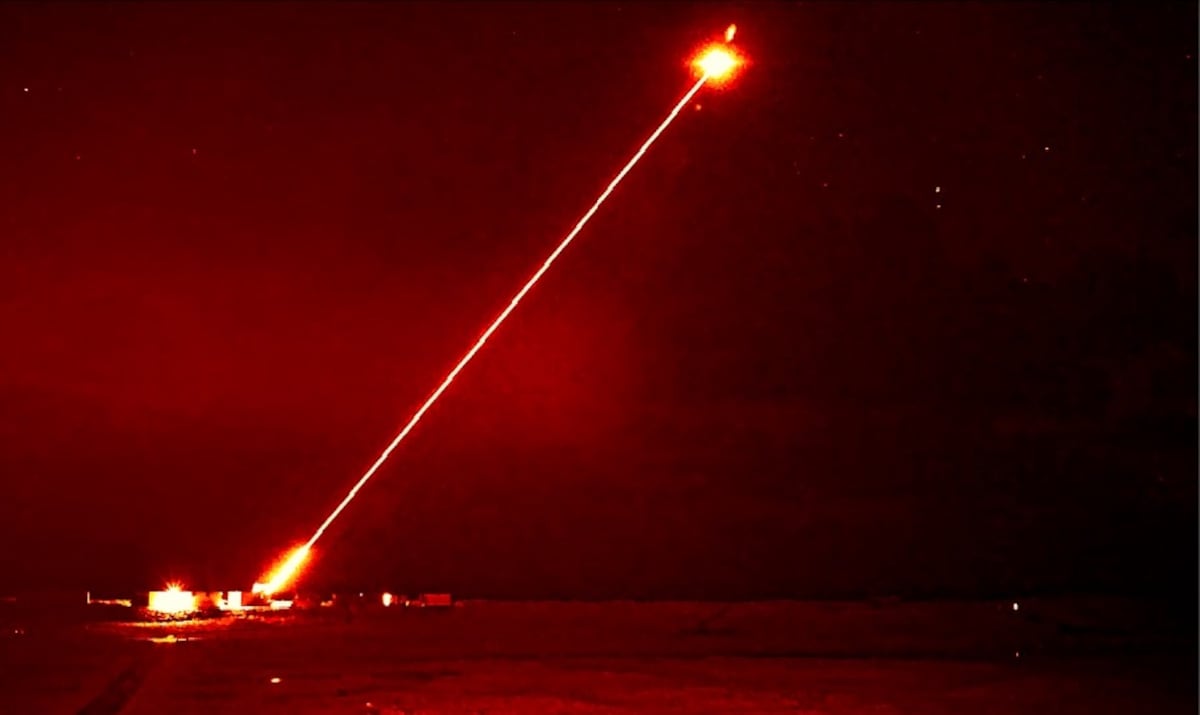
PARIS — Rheinmetall and MBDA will develop a high-energy laser weapon for the Germany Navy that builds on previous work by the two companies on a laser demonstrator, with the weapon system expected to be operational in 2029.
The equipment office of the German armed forces signed a contract with MBDA Deutschland and Rheinmetall Waffe Munition in June to develop the full system, from reconnaissance to target tracking and engagement, the companies said in statements on Thursday. The contract value is in the “mid three-digit” million-euro range, Rheinmetall said .
Several European navies are working on laser weapons, with the United Kingdom’s Royal Navy planning to fit the DragonFire directed-energy weapon on a destroyer by 2027, in work led by MBDA in partnership with Leonardo and QinetiQ. Naval vessels are particularly suited to deploy powerful lasers, as they can provide the physical space, electrical power, sensors and cooling required.
The German military has tested an Rheinmetall-MBDA laser weapon demonstrator aboard the frigate Sachsen. (Rheinmetall)
“The laser weapon system will provide our personnel deployed on naval vessels with a significantly higher level of protection, particularly when it comes to countering drones,” Roman Koehne, head of Rheinmetall’s weapons and ammunition division, said in a statement.
The laser weapon system from MBDA and Rheinmetall has a “very high level” of technological maturity, the companies said. The demonstrator has been deployed on the German frigate Sachsen, covering 28,000 nautical miles from the Baltic Sea to the Mediterranean, and firing over 1,000 shots at air, sea and land targets in more than a year of testing, according to MBDA and Rheinmetall.
The containerized laser effector will also be a cost-effective weapon for port security, MBDA Deutschland Managing Director Thomas Gottschild said. The system can focus power on an area measuring just a few centimeters, and has proven to be effective even in adverse weather conditions, according to Rheinmetall and MBDA.
The MBDA-Rheinmetall joint venture will place “particular emphasis” on German supply chains and local systems expertise to secure national sovereignty in the technology, the companies said. Serial production will “largely” take part in Germany, according to Koehne.
In other weapon-development news, the French-German Research Institute of Saint-Louis said it tested its electromagnetic railgun outdoors for the first time in June, moving the system out of laboratory conditions. The institute will now work on higher energy levels and longer distances as a path towards a possible future deployable system, it said in a statement on Thursday .
Railguns use electromagnetic acceleration rather than chemical propellants to fire a projectile, and could provide a possible counter to hypersonic threats.
Meanwhile, Belgium said it will buy 20 of Rheinmetall’s Skyranger 30 anti-drone cannons as well as 14 Thales GM200 radars, in addition to a previously announced plan to buy 10 NASAMS air-defense systems from Kongsberg. The country is investing €3.1 billion ($3.5 billion) to build up a layered air defense system, after two decades of going without, Defense Minister Theo Francken said .
Rudy Ruitenberg is a Europe correspondent for Defense News. He started his career at Bloomberg News and has experience reporting on technology, commodity markets and politics.
巴黎——莱茵金属公司和MBDA公司将为德国海军开发一种高能激光武器,该武器建立在两家公司之前在激光演示器方面的工作基础上,预计该武器系统将于2029年投入使用。
德国联邦国防军装备办公室于6月与MBDA德国公司和莱茵金属武器弹药公司签署合同,共同开发一套完整的系统,涵盖侦察、目标跟踪和交战等各个方面。两家公司周四在声明中表示,合同金额约为数亿欧元。莱茵金属公司称,合同金额为数亿欧元。
欧洲多国海军正在研发激光武器,其中英国皇家海军计划在2027年前将“龙火”(DragonFire)定向能武器安装在一艘驱逐舰上。该项目由MBDA公司牵头,并与莱昂纳多公司和QinetiQ公司合作开展。海军舰艇尤其适合部署高功率激光器,因为它们能够提供所需的物理空间、电力、传感器和冷却系统。
德国军方在“萨克森”号护卫舰上测试了莱茵金属-MBDA公司的一款激光武器演示样机。(莱茵金属公司)
莱茵金属公司武器弹药部门负责人罗曼·科恩在一份声明中表示:“激光武器系统将为部署在海军舰艇上的人员提供更高水平的保护,尤其是在对抗无人机方面。”
MBDA和莱茵金属公司表示,他们联合研发的激光武器系统技术成熟度“非常高”。据MBDA和莱茵金属公司称,该演示系统已部署在德国“萨克森”号护卫舰上,航行里程达28000海里,从波罗的海延伸至地中海,并在一年多的测试中对空中、海上和陆地目标进行了超过1000次射击。
MBDA德国公司总经理托马斯·戈特希尔德表示,这种集装箱式激光效应器也将成为港口安保领域一种经济高效的武器。莱茵金属公司和MBDA公司称,该系统可以将能量集中在仅几厘米大小的区域内,并且已被证明即使在恶劣天气条件下也能有效工作。
MBDA与莱茵金属的合资企业表示,将“特别重视”德国的供应链和本地系统技术专长,以确保该技术的自主性。科恩表示,批量生产将“主要”在德国进行。
在其他武器研发新闻方面,位于圣路易斯的法德联合研究所表示,其电磁轨道炮于6月首次在户外进行了测试,使其脱离了实验室环境。该研究所周四在一份声明中表示,接下来将致力于提升能量水平和扩大射程,以期未来能够部署相关系统。
电磁轨道炮利用电磁加速而不是化学推进剂来发射弹丸,可以作为对抗高超音速威胁的一种可能手段。
与此同时,比利时宣布将购买20门莱茵金属公司的“天际游侠30”(Skyranger 30)反无人机火炮以及14部泰雷兹公司的GM200雷达,此外,此前比利时已宣布计划从康斯伯格公司购买10套NASAMS防空系统。国防部长西奥·弗兰肯表示,比利时将投资31亿欧元(约合35亿美元)建设多层防空系统,此前该国已有20年没有此类系统。
鲁迪·鲁伊滕贝格是《防务新闻》的欧洲记者。他的职业生涯始于彭博新闻社,拥有报道科技、大宗商品市场和政治方面的经验。