Ukraine can soon build its own Patriots – but it could take years乌克兰很快就能建造自己的“爱国者”导弹系统——但这可能需要数年时间。
Ukraine may soon possess a license the U.S. currently extends to only a handful of allies — but it could be years before Patriots protect Ukrainian cities.
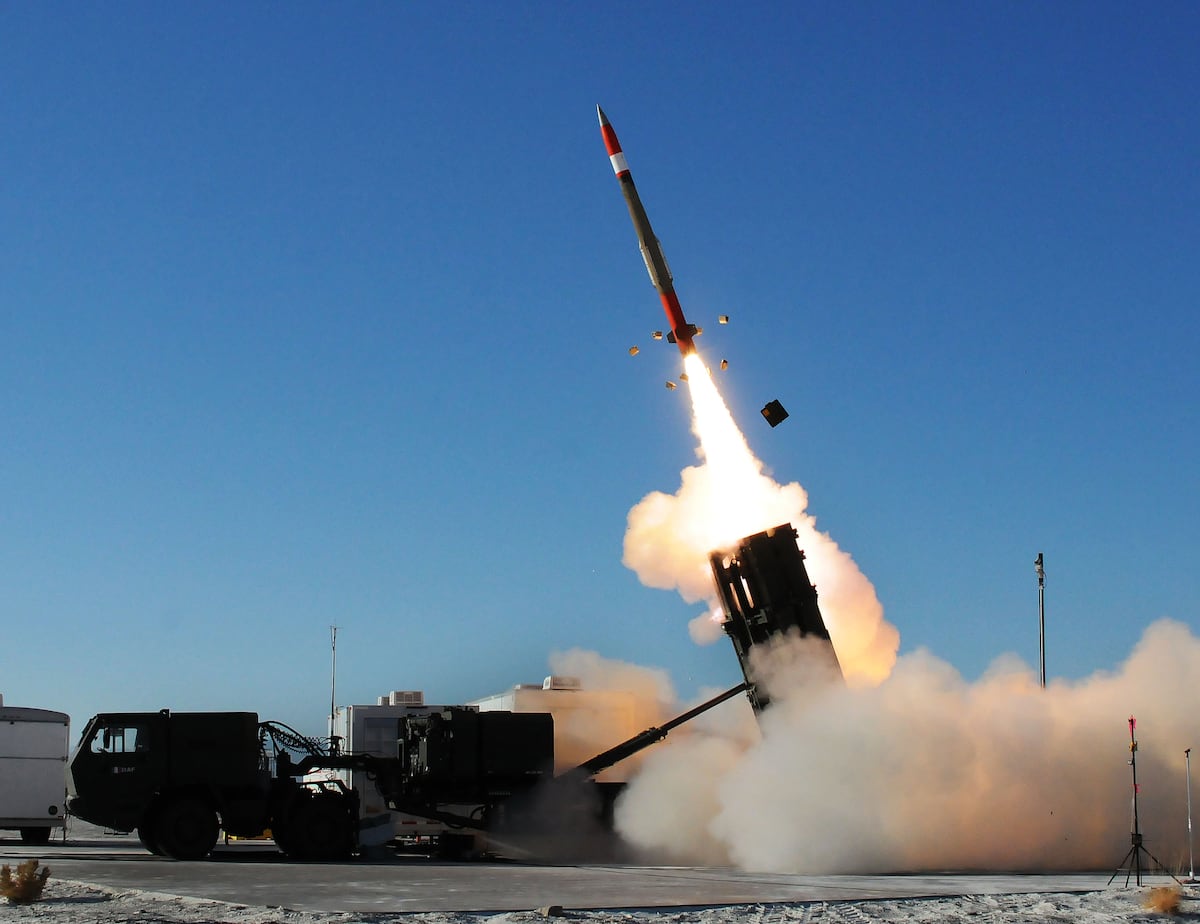
KYIV, Ukraine — U.S. President Donald Trump’s pledge to give Ukraine a license to build its own Patriot interceptors would grant a manufacturing right the United States currently extends to only a handful of allies. It is one Kyiv has eyed since the war began, though it could be years before a homegrown iteration defends a Ukrainian city.
Ukrainian President Volodymyr Zelenskyy , detailing the deal on Thursday after he and Trump met at the NATO summit in Turkey earlier in the week, said the two have resolved it “as leaders” and that Ukraine has been “recognized by America as a country that is ready” to build the system .
“Thank you for the positive decision regarding the license for the production of Patriots ,” Zelenskyy said, noting that Trump “repeatedly emphasized that today only two or three countries in the world can produce Patriots, because others are not technologically ready.”
Zelenskyy has pressed Washington for the interceptors for years, as Russia has fired ever more ballistic missiles at Ukrainian cities. Trump’s offer to let Kyiv produce Patriots could hand it an edge both on the battlefield and in its standing with allies and foes alike, but only on a timeline that will take years and cost billions of dollars.
“Our groups, our diplomats, the Ministry of Foreign Affairs and the Ministry of Defense need to agree on all the other technical matters,” Zelenskyy told journalists on Thursday. “The sooner we agree, the sooner we will be able to produce Patriots.”
The promise moves Ukraine from a war it entered reliant on Western arms toward building the most sought after air defense weapon of the conflict itself, a milestone for Kyiv and a measure of how far Washington has shifted. It also moves Kyiv a step closer to defending itself without leaning on allies who have rationed what they send.
So far, the nuts and bolts of the deal remain largely undecided from both government officials and industry leaders — and unsigned. The manufacturer has also not been entirely brief.
“We haven’t informed the company of that yet,” Trump said of Lockheed Martin, which builds the interceptor, while announcing the agreement.
U.S. President Donald Trump meets with Ukrainian President Volodymyr Zelenskyy in Ankara, Turkey, July 8, 2026. (Jonathan Ernst/Reuters)
The Patriot’s PAC-3 interceptor destroys its target on impact, a “hit-to-kill” design, and is one of the only weapons able to stop a ballistic missile, making it among the most closely guarded technology the United States exports.
A Patriot interceptor brings together an entire ecosystem of weapons: a radar, a command post, along with the launchers and the interceptors themselves. Ukraine is aiming for permission to manufacture the PAC-3 MSE , the newest and the hardest to build.
Japan is the only other country that builds Patriots under a U.S. license today. Germany, the Netherlands and Spain are jointly standing up a European production line, and Berlin is separately negotiating its own license.
Washington licenses it sparingly because of fears the tech could end up in enemy hands. That caution has only deepened now.
The U.S. fired between 1,060 and 1,430 Patriots in this year’s war with Iran at roughly $3.9 million apiece, many more than the hundreds Ukraine received from all of its Western allies over a span of four years.
Each interceptor takes 24 months to build and 30 for its solid rocket motor, and a single Boeing plant in Huntsville, Alabama, makes the seeker for each one, a Foreign Policy Research Institute analysis found.
That single plant turned out between 650 and 700 seekers last year, a bottleneck that paces the whole line.
Although the Pentagon signed a separate deal in April to triple the key part’s production, even the interceptors ordered under an accelerated $4.8 billion contract this year are not expected for delivery until 2030.
“Fewer such missiles are produced worldwide each month than the enemy fires at Ukraine in that same period,” Defense Minister Mykhailo Fedorov said.
Lockheed Martin delivered 620 of its top PAC-3s last year. A January framework with the Pentagon aims to lift that to 2,000 a year by 2030, according to a Foreign Policy Research Institute analysis.
And Ukraine has no anti-ballistic system of its own — yet.
Zelenskyy this week announced Ukraine is pouring resources into a homegrown version, a cheaper, mass-produced answer to the Patriot he calls FREYA , built around a Ukrainian-made missile and European radars, launchers and command systems.
He plans to present it to partners in France in the coming days, he said Thursday.
Russia’s ballistic missiles are its deadliest weapon against Ukrainian cities. A mass attack overnight on Sunday killed at least 22 people in Kyiv, with all of Russia’s 29 ballistic missiles dodging air defenses, Ukraine’s air force said.
More than 16,000 Ukrainian civilians have been killed since Russia’s 2022 invasion, the U.N. human rights office has verified.
Zelenskyy has called those strikes Russia’s “only advantage” left and named Patriot production his “priority number one.”
Ukraine is “working in different directions” at once, he said, pursuing the American license, European financing and French systems side by side.
The French-Italian SAMP/T, a costly system Zelenskyy called an “analogue of Patriot,” is already arriving under agreements he struck with French President Emmanuel Macron. It is the only other weapon in Ukraine’s arsenal built specifically to stop a ballistic missile.
“Production is very small, queues are very long, involving different countries,” Zelenskyy said of the Patriot and the French systems.
The president acknowledged that none of these solutions will end Russia’s onslaught of Ukrainian cities overnight, making the development of domestic defense systems Kyiv’s top priority.
“Then we will close Ukraine’s sky with our own capabilities,” he said.
Katie Livingstone is the Ukraine correspondent for Defense News and Military Times. Based in Kyiv, she has covered Russia's full-scale invasion since its first days. She is a former Fulbright fellow whose award-winning work has appeared in outlets across Europe and the U.S.
乌克兰基辅——美国总统唐纳德·特朗普承诺向乌克兰颁发“爱国者”导弹拦截器的制造许可证,这将赋予乌克兰一项目前仅授予少数几个盟国的制造权。自战争爆发以来,基辅就一直渴望获得这项许可,但或许还需要数年时间,乌克兰本土研制的“爱国者”导弹才能真正保卫一座城市。
乌克兰总统泽连斯基周四详细介绍了这项协议。此前,他和特朗普本周早些时候在土耳其举行的北约峰会上会面。泽连斯基表示,两人“作为领导人”解决了这个问题,并且乌克兰已被“美国承认为一个准备好”建立该体系的国家。
泽连斯基说:“感谢你们对爱国者导弹生产许可证的积极决定。”他指出,特朗普“反复强调,目前世界上只有两三个国家能够生产爱国者导弹,因为其他国家在技术上还没有做好准备。”
多年来,泽连斯基一直敦促华盛顿提供拦截导弹,而俄罗斯则不断向乌克兰城市发射弹道导弹。特朗普提议让基辅生产“爱国者”导弹系统,这或许能让乌克兰在战场上以及与盟友和对手的关系中都占据优势,但这需要数年时间,耗资数十亿美元。
泽连斯基周四对记者说:“我们各方,包括我们的外交官、外交部和国防部,需要就所有其他技术问题达成一致。我们越早达成一致,就能越早生产出‘爱国者’导弹系统。”
这一承诺使乌克兰摆脱了对西方武器的依赖,开始自主研发冲突中最令人梦寐以求的防空武器,这对基辅而言是一个里程碑,也标志着华盛顿的立场发生了多大的转变。此外,这也使基辅在摆脱对盟友的依赖、实现自卫方面更进一步,因为盟友们一直在限制武器供应。
目前,政府官员和行业领袖仍未就该交易的具体细节达成一致,也尚未签署任何文件。制造商方面也并未完全坦诚。
“我们还没有通知该公司,”特朗普在宣布这项协议时谈到制造拦截器的洛克希德·马丁公司时说道。
2026年7月8日,美国总统唐纳德·特朗普在土耳其安卡拉会见乌克兰总统弗拉基米尔·泽连斯基。(乔纳森·恩斯特/路透社)
爱国者导弹系统的PAC-3拦截器采用“直接命中摧毁”设计,在撞击时即可摧毁目标,是少数几种能够拦截弹道导弹的武器之一,因此也是美国出口的技术中最严密保护的技术之一。
“爱国者”拦截导弹系统整合了一整套武器系统:雷达、指挥所、发射装置以及拦截导弹本身。乌克兰正寻求获得生产PAC-3 MSE导弹的许可,这是最新型也是制造难度最高的导弹。
目前,除德国外,日本是唯一一个在美国授权下生产“爱国者”导弹系统的国家。德国、荷兰和西班牙正在联合建立一条欧洲生产线,而柏林方面也在单独洽谈自己的生产许可。
华盛顿方面出于担心这项技术最终可能落入敌方之手,对其授权发放十分谨慎。如今,这种谨慎态度有增无减。
在今年与伊朗的战争中,美国发射了 1060 至 1430 枚“爱国者”导弹,每枚造价约为 390 万美元,这远远超过了乌克兰在四年间从所有西方盟友那里获得的数百枚导弹。
外交政策研究所的一项分析发现,每个拦截器需要 24 个月才能制造完成,其固体火箭发动机需要 30 个月才能制造完成,而每个拦截器的导引头都由位于阿拉巴马州亨茨维尔的一家波音工厂制造。
去年,那一个工厂生产了 650 到 700 台寻宝机,这是整条生产线的瓶颈。
尽管五角大楼在 4 月份签署了一项单独的协议,将关键部件的产量提高三倍,但即使是今年根据加速合同订购的价值 48 亿美元的拦截器,预计也要到 2030 年才能交付。
国防部长米哈伊洛·费多罗夫表示:“全球每月生产的此类导弹数量少于同期敌军对乌克兰的炮火数量。”
洛克希德·马丁公司去年交付了620台顶级PAC-3无人机。根据外交政策研究所的分析,该公司与五角大楼于今年1月达成的框架协议旨在到2030年将年交付量提高到2000台。
而乌克兰目前还没有自己的反弹道导弹系统。
泽连斯基本周宣布,乌克兰正在投入资源研发国产版本,一种更便宜、可大规模生产的“爱国者”导弹系统,他称之为“弗雷亚”(FREYA),该系统以乌克兰制造的导弹和欧洲的雷达、发射器和指挥系统为核心。
他周四表示,计划在未来几天向法国的合作伙伴展示该方案。
俄罗斯的弹道导弹是其对乌克兰城市最致命的武器。乌克兰空军称,周日晚间基辅发生的大规模袭击造成至少22人死亡,俄罗斯的29枚弹道导弹全部突破了乌克兰的防空系统。
联合国人权事务高级专员办事处证实,自俄罗斯2022年入侵乌克兰以来,已有超过16000名乌克兰平民丧生。
泽连斯基称这些打击是俄罗斯仅存的“唯一优势”,并将“爱国者”导弹的生产列为他的“首要任务”。
他说,乌克兰正在“同时朝着不同的方向努力”,一边寻求美国的许可证,一边寻求欧洲的融资,一边寻求法国的体系。
泽连斯基称之为“爱国者导弹”的法意联合研制的SAMP/T系统造价昂贵,根据他与法国总统马克龙达成的协议,该系统已开始交付乌克兰。这是乌克兰武器库中唯一一种专门用于拦截弹道导弹的武器。
泽连斯基谈到“爱国者”导弹和法国的导弹系统时说:“产量非常小,排队很长,而且涉及不同的国家。”
总统承认,这些解决方案都无法在一夜之间结束俄罗斯对乌克兰城市的猛烈攻击,因此发展国内防御系统成为基辅的首要任务。
“然后我们将凭借自身能力封锁乌克兰的领空,”他说。
凯蒂·利文斯通是《防务新闻》和《军事时报》的乌克兰特派记者。她常驻基辅,自俄罗斯全面入侵乌克兰之初便开始报道此事。她曾是富布赖特学者,其获奖作品发表于欧洲和美国的多家媒体。