Europe’s Hydis project settles on concept for hypersonic interceptor欧洲的Hydis项目确定了高超音速拦截器的概念。
Europe's push to field a hypersonic-defense interceptor will come down to two competing projects.
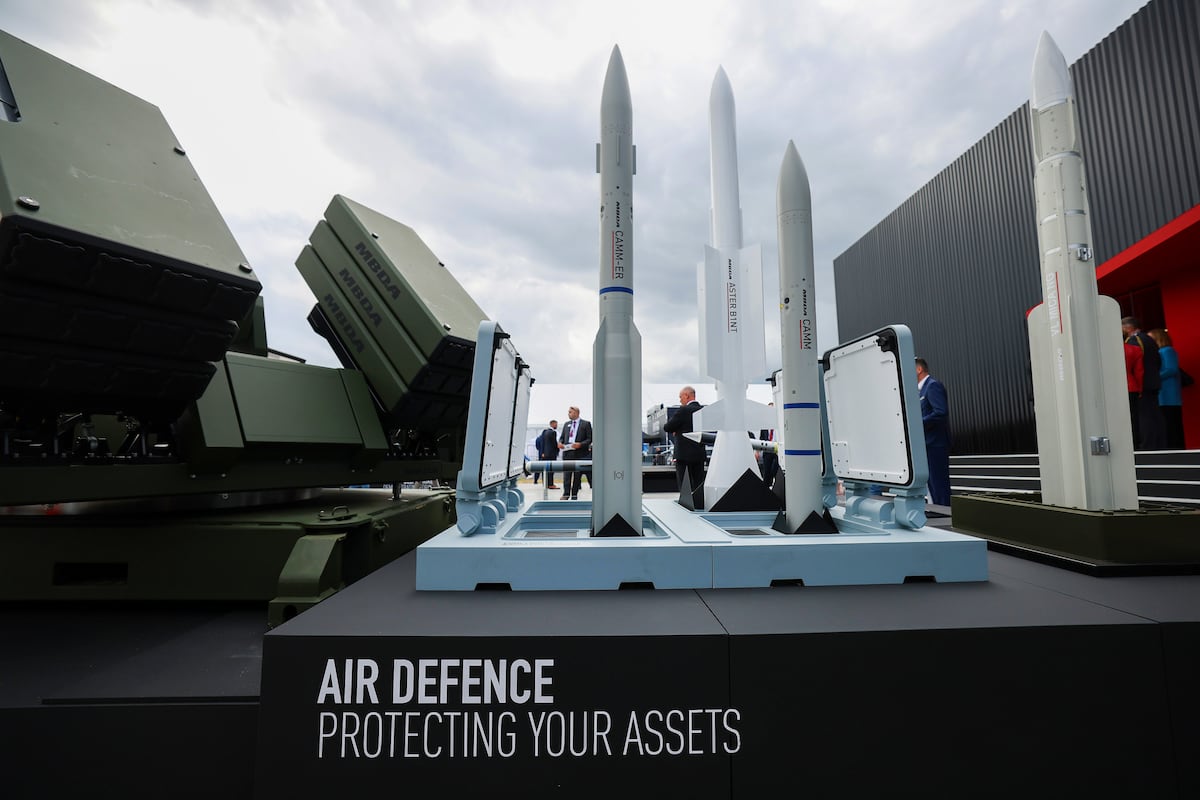
PARIS — The Hydis project to develop a European interceptor against hypersonic threats settled on a concept based on a solid-propellant rocket motor, according to MBDA, Europe’s biggest missile maker, with the program’s steering committee validating the final concept review milestone on Friday.
The remaining year of the Hydis program will focus on advancing critical technologies to at least Technology Readiness Level 3, Europe’s Organisation for Joint Armament Co-Operation said in a separate statement on Friday. That level corresponds to experimental proof of concept.
Hydis is one of two European projects to develop a counter against hypersonic threats, competing with the Hydef program led by Germany’s Diehl Defence and coordinated by Spain’s SMS Sistemas de Misiles de España. The European Defence Fund plans to allocate €100 million ($114 million) for an endo-atmospheric interceptor as part of its 2026 work program, with only one of the proposals to be funded.
Completion of the final concept review is “a significant step forward in the development of a future European capability to counter hypersonic threats,” OCCAR said. The organization, which manages the program on behalf of France, Germany, Italy and the Netherlands, said the four countries validated “the most promising interceptor concept proposed by the Hydis industrial consortium.”
The interceptor will be designed to defeat threats including hypersonic glide vehicles, hypersonic cruise missiles and maneuvering ballistic missiles, and the concept was assessed against threat models developed by Italy’s research organization Centro Italiano di Ricerca Aerospaziale, France’s Onera and Dutch technology institute TNO.
The final concept review focused specifically on the terminal phase of interception by the kill vehicle, according to OCCAR, which said the program enters the next phase with a “clear path” toward technology maturation.
Avio worked on the architecture of the solid rocket motor propulsion, ArianeGroup and MBDA’s Roxel on the final interceptor stage control mechanism, and Lynred on the terminal infra-red sensor, according to MBDA, with the missile maker handling the integration into a coherent concept.
Thales provided performance data for naval and ground-sensor suite options, while GKN Fokker worked on integration of the ammunition into the MK41 naval launcher, MBDA said.
“This new milestone demonstrates the consortium’s full expertise in the fields of hypersonic and ballistic threats, backed by in-depth knowledge of air defense systems.” MBDA said in its statement on Friday.
The EDF has provided €80 million in funding for the three-year Hydis program , with the four partner countries jointly providing around €60 million. The largest share of EDF funds for Hydis has gone to MBDA, with more than €60 million allocated across seven MBDA entities in the program.
Meanwhile, Hydef has received €100 million from the EDF, and another €10 million from participating countries Belgium, Germany, Norway, Poland and Spain. Diehl is the biggest beneficiary of the European funding for Hydef, accounting for €34.7 million.
Hydef originally won the EDF competition to develop a hypersonic interceptor in 2022, with the European Commission funding Hydis as a second effort after objections from France and MBDA, which had already been working on hypersonic technology for years. MBDA presented its counter-hypersonic interceptor concept Aquila at the Paris Air Show in 2023.
Both programs are linked to the broader European project Twister to detect, track and counter hypersonic threats with space-based early warning and endo-atmospheric interceptors.
Rudy Ruitenberg is a Europe correspondent for Defense News. He started his career at Bloomberg News and has experience reporting on technology, commodity markets and politics.
巴黎——据欧洲最大的导弹制造商MBDA称,旨在开发欧洲高超音速拦截器的Hydis项目最终确定了基于固体推进剂火箭发动机的概念,该项目的指导委员会于周五确认了最终概念审查里程碑。
欧洲联合军备合作组织周五在一份单独声明中表示,Hydis项目剩余的一年将重点推进关键技术,使其至少达到技术成熟度3级。该级别相当于概念验证实验阶段。
Hydis是两个旨在研发高超音速威胁应对方案的欧洲项目之一,与由德国迪尔防务公司牵头、西班牙导弹系统公司(SMS)协调的Hydef项目展开竞争。欧洲防务基金计划在其2026年工作计划中拨款1亿欧元(1.14亿美元)用于研发大气层内拦截器,但最终只会资助其中一个方案。
OCCAR表示,最终概念评审的完成是“欧洲未来应对高超音速威胁能力发展进程中的重要一步”。该组织代表法国、德国、意大利和荷兰管理该项目,并表示这四个国家验证了“Hydis工业联盟提出的最有前景的拦截器概念”。
该拦截器旨在击败包括高超音速滑翔飞行器、高超音速巡航导弹和机动弹道导弹在内的威胁,该概念已根据意大利航空航天研究中心、法国国家航空航天研究院和荷兰应用科学研究组织TNO开发的威胁模型进行了评估。
据 OCCAR 称,最终概念审查特别关注了拦截飞行器的末端拦截阶段,该计划进入下一阶段,并拥有了一条“清晰的”技术成熟之路。
据 MBDA 称,Avio 负责固体火箭发动机推进系统的架构设计,ArianeGroup 和 MBDA 旗下的 Roxel 负责最终拦截器级控制机构的设计,Lynred 负责末端红外传感器的设计,而导弹制造商 MBDA 则负责将这些设计集成到一个连贯的概念中。
MBDA表示,泰雷兹公司提供了海军和地面传感器套件选项的性能数据,而GKN福克公司则致力于将弹药集成到MK41海军发射器中。
MBDA在周五的声明中表示:“这一新的里程碑表明,该联盟在超音速和弹道威胁领域拥有全面的专业技术,并具备深厚的防空系统知识。”
欧洲发展基金(EDF)为为期三年的Hydis项目提供了8000万欧元的资金,四个伙伴国家共同出资约6000万欧元。Hydis项目获得EDF资金的最大份额流向了MBDA,超过6000万欧元分配给了MBDA旗下参与该项目的七个实体。
与此同时,Hydef已从欧洲发展基金(EDF)获得1亿欧元,并从比利时、德国、挪威、波兰和西班牙等参与国获得另外1000万欧元。Diehl是Hydef欧洲基金的最大受益者,获得了3470万欧元。
Hydef最初于2022年赢得了法国电力公司(EDF)的高超音速拦截器研发竞赛,但由于法国和MBDA的反对,欧盟委员会资助Hydef进行第二次尝试。MBDA此前已在高超音速技术领域耕耘多年。MBDA于2023年在巴黎航展上展示了其反高超音速拦截器概念“阿奎拉”(Aquila)。
这两个项目都与更广泛的欧洲“旋风”项目有关,该项目旨在利用天基预警和大气层内拦截器来探测、跟踪和应对高超音速威胁。
鲁迪·鲁伊滕贝格是《防务新闻》的欧洲记者。他的职业生涯始于彭博新闻社,拥有报道科技、大宗商品市场和政治方面的经验。