US Marines successfully test-fire new medium-range air defense system美国海军陆战队成功试射新型中程防空系统
U.S. Marines on Guam successfully fired the service's new Medium-Range Intercept Capability system during Exercise Valiant Shield.
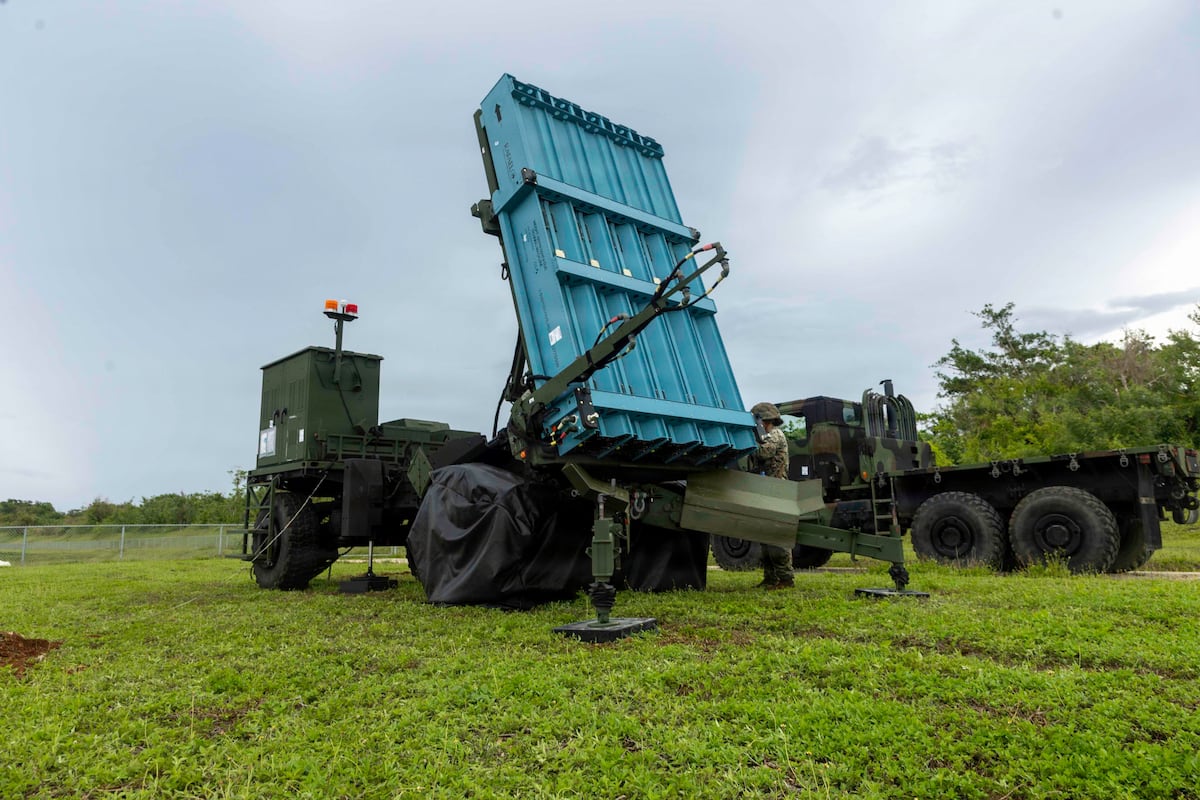
U.S. Marines on Guam recently fired the service’s new Medium-Range Intercept Capability system, representing the validation of the Corps’ first medium-range air defense system since the divestment of the service’s legacy HAWK platform in the 1990s.
The ongoing Exercise Valiant Shield became the proving ground for III Marine Expeditionary Force personnel, as Marines at Camp Blaz successfully used the MRIC to intercept an aerial target on June 30, 2026.
The MRIC is a “significant leap in operational capability,” a service release stated. The system bridges the gap between the shoulder-fired Stinger Man-Portable Air Defense System and the long-range Patriot missile system and is designed for the “expeditionary nature of Marine Corps operations.”
Deployed via trailers carrying 20 interceptors each, MRIC systems can down targets from two to 43 miles away.
The deployment of the system allows Marines to provide an “air defense umbrella” that moves with Marine forces as they maneuver inside an enemy’s weapons engagement zone, all while defending critical assets like expeditionary air bases, runways and forward arming and refueling points, according to a service release.
In 2023, the service announced that it would incorporate technology from Israel’s Iron Dome system to help furnish the Corps with its first medium-range air defense system in decades.
According to the service’s Force Design 2030 , three batteries of MRIC are slated to be fielded by 2028.
“Before the MRIC, we were primarily a short-range air defense capability,” Maj. Emi Gutierrez, commander of the firing battery, said in the release. “The Marine Corps employed the Stinger for years, but that capability is significantly different. With the evolution of air defense weapon systems, we saw a need to adapt.
“Our ability to rapidly insert and fill critical gaps within an integrated air defense system is critical not only to the Marine Corps but also the joint force as a whole,” Gutierrez continued. “The MRIC fits into expeditionary warfare perfectly because of its ability to be rapidly deployed.”
Claire Barrett is an editor and military history correspondent for Military Times. She is also a World War II researcher with an unparalleled affinity for Sir Winston Churchill and Michigan football.
驻关岛的美国海军陆战队员最近试射了该军种的新型中程拦截能力系统,这标志着自上世纪 90 年代该军种淘汰老旧的“鹰”式平台以来,海军陆战队首个中程防空系统得到了验证。
正在进行的“英勇之盾”演习成为了第三海军陆战队远征军人员的试验场,2026 年 6 月 30 日,驻扎在布莱兹营的海军陆战队员成功地使用 MRIC 拦截了一个空中目标。
一份军方新闻稿称,MRIC系统是“作战能力的一次重大飞跃”。该系统弥合了肩扛式“毒刺”便携式防空系统和远程“爱国者”导弹系统之间的差距,并专为“海军陆战队远征作战的性质”而设计。
MRIC 系统通过拖车部署,每辆拖车可携带 20 枚拦截器,可击落 2 至 43 英里外的目标。
据军方发布的消息,该系统的部署使海军陆战队能够提供一个“防空伞”,该防空伞会随着海军陆战队在敌方武器交战区内的机动而移动,同时还能保护远征空军基地、跑道和前沿武器补给和加油点等关键资产。
2023 年,该军种宣布将采用以色列“铁穹”系统的技术,以帮助海军陆战队获得几十年来首个中程防空系统。
根据该军种的《2030 年部队设计》,到 2028 年将部署三个 MRIC 连。
“在装备MRIC之前,我们主要具备短程防空能力,”火力连指挥官埃米·古铁雷斯少校在新闻稿中表示。“海军陆战队使用毒刺导弹多年,但其能力已截然不同。随着防空武器系统的演进,我们意识到需要做出调整。”
古铁雷斯继续说道:“我们快速部署并填补一体化防空系统中关键缺口的能力,不仅对海军陆战队至关重要,对整个联合部队也同样重要。MRIC之所以能快速部署,是因为它非常适合远征作战。”
克莱尔·巴雷特是《军事时报》的编辑和军事历史记者。她也是一位二战研究员,对温斯顿·丘吉尔爵士和密歇根大学橄榄球队有着无与伦比的热爱。