What options does the Pentagon have to cover its mounting FY26 operational costs?五角大楼有哪些方案来支付不断上涨的 2026 财年运营成本?
“If I were still in the building, I would say, ‘I'm probably screwed now," a former official told Breaking Defense.
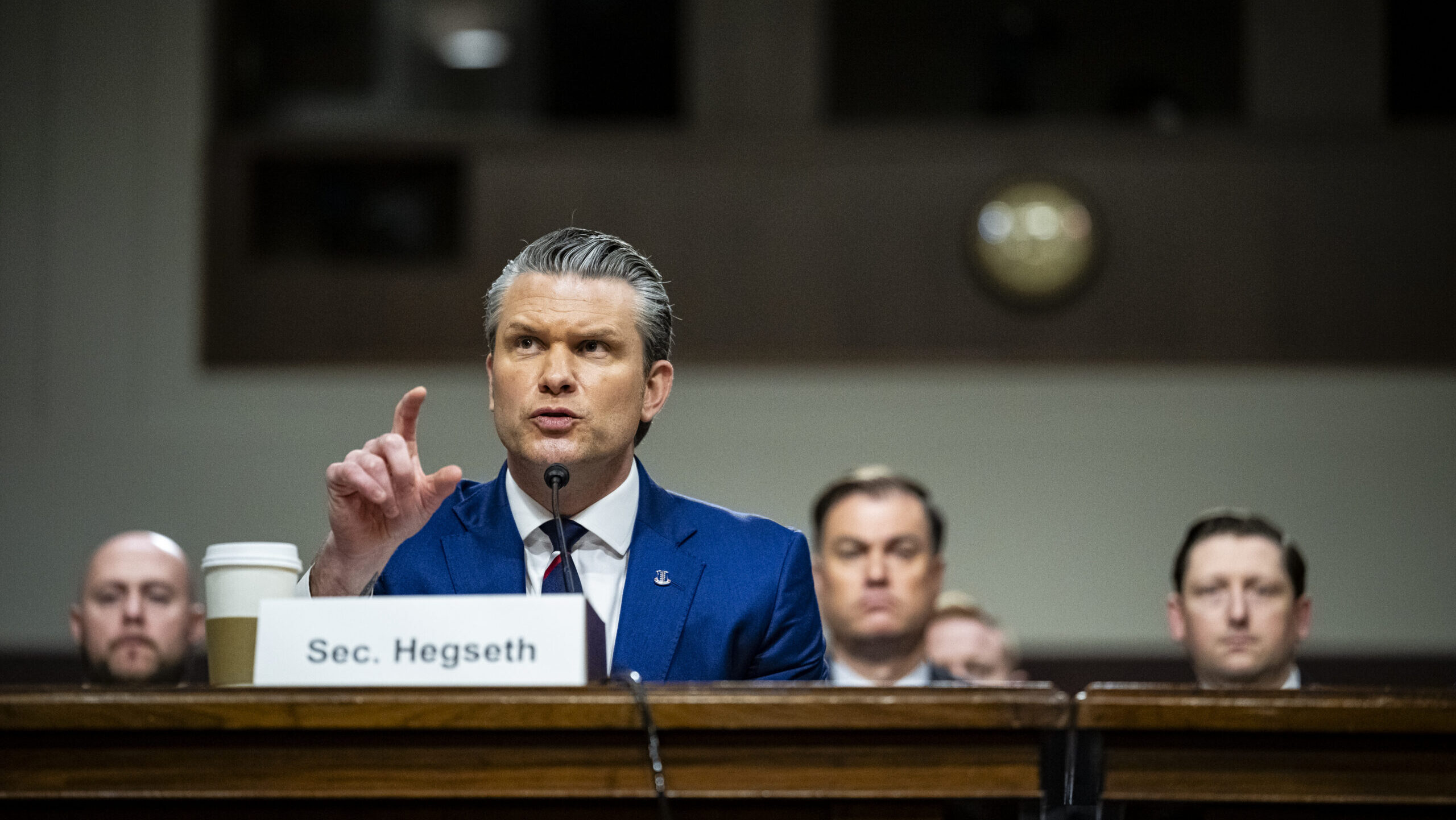
U.S. Secretary of Defense Pete Hegseth testifies during a Senate Armed Services Committee hearing on April 30, 2026 in the Dirksen Senate Office Building in Washington, DC. (Photo by Graeme Sloan/Getty Images)
WASHINGTON — With Congress headed on break, a continuing resolution in place through Dec. 11 and no hope for a near-term defense supplemental, Defense Department planners are scrambling to stretch available funds and make it through the end of the fiscal year.
The issue took center stage this week, thanks to a Thursday statement from Rep. Rosa DeLauro, the top Democrat on the House Appropriations Committee, where she said the Pentagon is making a “secretive attempt to siphon” billions of dollars away from the National Institutes of Health through an “interagency agreement.”
“These funds were provided for lifesaving medical research, not as extra money for the Department of Defense,” she added. “It is no secret that the Department of Defense is facing enormous financial pressure because of President Trump’s war of choice with Iran. But the Trump administration cannot make American patients, families, and scientists pay the price.”
In a statement to NOTUS , NIH said the proposed agreement was around a collaboration on medical technologies, and notably, neither NIH or DeLauro said a deal was ever consummated. DeLauro’s office did not respond to a request for additional details, and neither did DoD and the Office of Management and Budget. DoD also did not respond to multiple requests for comment about ongoing FY26 budget pressures.
But the fact that the Pentagon’s budget is under stress is no secret, thanks to a mix of six months of military operations against Iran, National Guard deployments inside the US, increased fuel costs, end-strength overages and the lack of full reimbursement from the Department of Homeland Security for DoD border operations.
The White House in June sent lawmakers a supplemental spending request in June that included $67.1 billion in defense funds, though Defense Secretary Pete Hegseth later said that he expects “certain aspects” of the Iran war to cost $37.5 billion through the end of September. However, with Congress effectively shuttered until after November’s elections, that supplemental isn’t coming anytime soon, if it ever gets done.
Finding outside sources of money and putting them towards the Pentagon is just one of a handful of options available to defense budget planners, a pair of former defense officials told Breaking Defense. But none of them, they said, are pretty.
“Their problem right now is the operating costs that they didn’t plan for, and that has to be solved by 26 days from now,” a former senior defense official granted amenity to speak freely, told Breaking Defense this week.
“If I were still in the building, I would say, ‘I’m probably screwed now.’”
Viable Options And Roadblocks
Both the former senior official and Elaine McCusker, an acting comptroller during the first Trump administration, spoke to Breaking Defense before DeLauro’s statement came out. However, they broadly laid out some of the available options to get operations and maintenance (O&M) funds lined up.
One option is via DoD requests to reprogram money between coffers. Broadly speaking, Pentagon officials have more legal wiggle room to reshuffle O&M as they see fit — cancelling training exercises, for example, is fully within the department’s decision space.
In July, for example, US Pacific Air Forces Commander Gen. Kevin Schneider warned that the military was reevaluating its upcoming exercise schedule to help preserve “readiness” in the face of increased commitments around the globe, including the Middle East. Such moves are likely more wide-spread, especially for the Navy given its operational tempo in the Middle East. “[You] can’t really let the services go ahead, go full speed ahead, on training and stuff, on the 45 percent chance that more money will show up because we’ll be broke in the operating accounts if we don’t slow down,” the former defense official added.
Another option is to seek Congressional approval to move dollars between accounts. In early July, for example, the Pentagon asked Congress for permission to reroute roughly $4.3 billion from FY26 coffers in order to pay for “higher priority items,” including increased personnel and operational costs around the globe.
Lawmakers on the appropriations committees did not respond to questions about the status of this reprogramming request, but $4.3 billion is just a fraction of Hegseth’s $37.5 billion Iran estimate and the $67.1 billion requested for defense in the supplemental ask.
“Reprogramming requests submitted to Congress, if approved, would help with some immediate cash flow challenges, particularly in the military personnel account, but the sources to fund these reprogramming actions are not good and will need replenished as well,” McCusker explained.
“The Pentagon is close to the cap on general transfer authority (GTA),” she added. “If it does not get supplemental relief, it will have to defer maintenance and potentially stall acceleration of modernization and procurement. Some bills could carry into next year.”
But given the Pentagon is in the middle of a major modernization push, and how officials always like to note that delayed modernization usually costs more down the road, cutting technology buys to fund O&M isn’t ideal.
Another option on the table to cut costs by furloughing civilian workers or cutting back their hours.
“You could tell civilians to only work three days a week, but the question is how much you can do this late in the year that would really move the needle,” the former senior defense official added. “You could also slow purchases of things that you normally buy with O&M funds and hope for relief later.” Then there are more creative “maneuvers,” like using funds from the $152 billion reconciliation pot to pay the bills, the former senior defense official said. While that money has been earmarked, the Pentagon could shift funding around, similar to how the department diverted $3.8 billion to pay for the wall along the southern border in 2020 .
Notably, the Pentagon has to get its reconciliation funding on contract this year or lose roughly 8.3 percent of its funds. In theory, that means the department could do some acrobatics and shift money from procurement to O&M, then shift reconciliation to cover those holes in procurement — but eventually, something gets cut.
While some of DoD’s funding pressure could abate on Oct. 1 when FY27 starts, it still has funds to backfill and will likely be under a continuing resolution until early December. “The financial challenges will only get worse until a final appropriations bill and supplemental are passed,” McCusker said. “Always wasteful and disruptive, a CR will be particularly destructive this year as only the 2026 base budget will extend. This means an immediate budget reduction of more than $150 billion or about $400 million per day compared to what was requested and planned for 2027.”
2026年4月30日,美国国防部长皮特·赫格塞斯在华盛顿特区迪克森参议院办公大楼出席参议院军事委员会听证会。(图片来源:格雷姆·斯隆/盖蒂图片社)
华盛顿——由于国会即将休会,一项持续拨款决议将持续到 12 月 11 日,而且近期没有获得国防补充拨款的希望,国防部规划人员正在争分夺秒地利用现有资金,以撑到本财政年度结束。
本周,这个问题成为了焦点,这要归功于众议院拨款委员会首席民主党议员罗莎·德劳罗周四发表的声明。她在声明中表示,五角大楼正在“秘密地试图通过一项‘机构间协议’从美国国立卫生研究院挪用”数十亿美元。
她补充说:“这些资金是用于拯救生命的医学研究,而不是作为国防部的额外经费。众所周知,由于特朗普总统选择对伊朗发动战争,国防部正面临巨大的财政压力。但特朗普政府不能让美国患者、家属和科学家为此付出代价。”
美国国立卫生研究院(NIH)在给NOTUS的一份声明中表示,拟议的协议围绕医疗技术合作展开。值得注意的是,NIH和德劳罗均未表示最终达成协议。德劳罗的办公室没有回应有关更多细节的请求,国防部和管理与预算办公室也未作出回应。国防部也未回应关于2026财年预算持续压力的多次置评请求。
但五角大楼预算紧张已不是什么秘密,这主要是由于对伊朗长达六个月的军事行动、国民警卫队在美国境内的部署、燃料成本增加、兵力超支以及国土安全部未能全额报销国防部边境行动费用等因素造成的。
白宫6月份向国会提交了一份补充支出申请,其中包括671亿美元的国防预算。不过,国防部长皮特·赫格塞斯后来表示,他预计伊朗战争的“某些方面”到9月底将耗资375亿美元。然而,由于国会实际上要到11月大选后才会复会,这份补充预算即便最终能够通过,也至少不会很快生效。
两位前国防官员告诉《防务新闻》,寻找外部资金来源并将其用于五角大楼只是国防预算规划人员可选择的少数几种方案之一。但他们表示,这些方案都不尽如人意。
一位获准自由发言的前高级国防官员本周告诉《防务新闻》:“他们目前的问题是运营成本没有得到规划,这个问题必须在26天内解决。”
“如果我还在那栋楼里,我会说,‘我这下可能完蛋了。’”
可行的方案和障碍
在德劳罗发表声明之前,这位前高级官员和特朗普第一任期内的代理审计长伊莱恩·麦卡斯克都接受了《防务新闻》的采访。不过,她们大致概述了一些筹集运营和维护资金的可行方案。
一种方法是通过国防部请求重新分配资金。总的来说,五角大楼官员在法律上拥有更大的回旋余地,可以根据需要调整运行和维护预算——例如,取消训练演习完全属于国防部的决策范围。
例如,今年7月,美国太平洋空军司令凯文·施耐德将军警告称,鉴于全球(包括中东地区)军事任务日益增多,军方正在重新评估即将举行的演习计划,以保持“战备”状态。考虑到海军在中东地区的作战节奏,此类举措可能会更加普遍。“你不能指望更多资金到位,就让各军种继续全速推进训练和其他事务,因为如果我们不放慢脚步,运营经费就会告罄。”这位前国防官员补充道。
另一种选择是寻求国会批准在不同账户之间转移资金。例如,7月初,五角大楼请求国会批准从2026财年金库中挪用约43亿美元,用于支付“优先级更高的项目”,包括增加全球范围内的人员和运营成本。
拨款委员会的议员们没有回应有关这项重新拨款请求状态的问题,但 43 亿美元只是赫格塞斯估计的 375 亿美元伊朗援助费用和补充拨款请求中要求的 671 亿美元国防预算的一小部分。
麦库斯克解释说:“如果向国会提交的重新拨款申请获得批准,将有助于解决一些迫在眉睫的现金流挑战,尤其是在军人账户方面,但这些重新拨款行动的资金来源并不充足,也需要补充。”
她补充说:“五角大楼的通用拨款授权(GTA)已接近上限。如果得不到额外拨款,就不得不推迟维护工作,并可能阻碍现代化和采购进程。一些法案的审议可能会延至明年。”
但鉴于五角大楼正处于大规模现代化改造的进程中,而且官员们总是喜欢指出,延迟的现代化改造通常会在以后付出更高的代价,因此削减技术采购来资助运维并不是一个理想的选择。
另一种削减成本的方案是让文职人员暂时休假或减少他们的工时。
这位前高级国防官员补充道:“你可以让文职人员每周只工作三天,但问题是,在年底这个时间点,你能做多少真正能产生影响的事情。”他还说:“你也可以放缓通常用运营维护资金购买的物品的采购,并寄希望于以后能得到缓解。”这位前高级国防官员表示,还有一些更具创造性的“策略”,例如动用1520亿美元的预算协调资金来支付账单。虽然这笔钱已经指定用途,但五角大楼可以重新分配资金,就像该部门在2020年挪用38亿美元用于修建南部边境墙一样。
值得注意的是,五角大楼今年必须通过合同落实其预算协调资金,否则将损失约8.3%的资金。理论上,这意味着国防部可以采取一些权宜之计,将资金从采购转移到运营和维护,然后再用预算协调资金来弥补采购方面的缺口——但最终,总会有一些项目被削减。
虽然国防部的部分资金压力可能会在10月1日2027财年开始时有所缓解,但仍需填补资金缺口,而且很可能要到12月初才能解除持续拨款决议。“在最终拨款法案和补充拨款法案获得通过之前,财政挑战只会愈演愈烈,”麦库斯克说。“持续拨款决议总是浪费资源且扰乱秩序,今年尤其如此,因为只有2026财年的基本预算会延续下去。这意味着与2027财年申请和计划的预算相比,预算将立即削减超过1500亿美元,相当于每天削减约4亿美元。”