USAF Wants MQ-9 Reaper Successor At A Fraction Of The Cost At $10M Each美国空军希望以每架1000万美元的极低成本,采购MQ-9“死神”无人机的后继机型。
The USAF has aggressive cost and schedule goals for new drones to succeed the MQ-9 fleet that has suffered major losses.
By Joseph Trevithick
Published Sep 4, 2026 7:43 PM EDT
The U.S. Air Force is targeting an approximately $10 million unit price, excluding sensors and certain other systems, for a drone to succeed the MQ-9A Reaper. The cost of a fully kitted-out Reaper today is generally reported to be between $30 million and $50 million. The Air Force is also now pushing to accelerate the program to acquire the new drones, dubbed the Massed Modular Aircraft (MMA) , amid what it admits are “concerning” Reaper losses in the course of recent operations against Iran .
Air Force Lt. Gen. Christopher Niemi, the service’s Chief Modernization Officer, told reporters that the goal was for the MMAs to be “closer to half” the cost of a Collaborative Combat Aircraft (CCA), at a roundtable at the Pentagon yesterday, according to Breaking Defense . He also said the service was hoping to see the price tag on its future CCAs fall to around $20 million after full-rate production of those drones gets underway.
A row of USAF MQ-9A Reapers. USAF/Staff Sgt. Ariel OShea
Beyond cost, the Air Force has previously said that it wants the MMA drone to perform the same general intelligence, surveillance, and reconnaissance (ISR) and strike missions as the MQ-9A. To that end, stated program requirements to date include a speed of at least 200 knots true airspeed, a munition and sensor payload capacity of at least 2,800 pounds, an unrefueled combat radius of at least 2,300 nautical miles with payload, the ability to self-deploy one-way at least 8,000 nautical miles, and the ability to operate from runways no longer than 6,000 feet. The MMAs also need to be highly modular and use open architecture mission systems to make it easier to integrate new capabilities and functionality down the line.
With all that in mind, Niemi’s MMA cost “estimate includes only the cost of the air vehicle, without being fully missionized,” an Air Force spokesperson clarified after yesterday’s roundtable, per Breaking Defense .
The MQ-9A is out of production, but, as mentioned, the full cost of each one in Air Force service today is generally pegged at between $30 million and $50 million, depending on the sensors, weapons, and other mission equipment they carry. Speaking yesterday, Lt. Gen. Niemi explicitly used the $50 million price point to underscore the MMA program’s unit cost target, as well as explain why the Air Force does not view the newer, in-production MQ-9B as a path to meeting its current needs. General Atomics developed the MQ-9B from the Reaper, but the former is a significantly evolved design with substantial differences from its predecessor.
“If you don’t like losing an MQ-9A that cost on the order of $50 million, with the sensors, you’re probably not going to like losing an MQ-9B at a higher price point,” Niemi said at yesterday’s roundtable, according to a separate report from Air & Space Forces Magazine .
An MQ-9B drone. General Atomics
“There’s a, I think, sort of a misconception that because the MQ-9B is in production, we can walk down there with a big fat check and have 100 of them this year,” the general also said, Breaking Defense also reported. “That’s not reality.”
Niemi acknowledged that tradeoffs will have to be made to find an MMA design that is substantially lower cost compared to the MQ-9A.
“You’re going to have to certainly give up something,” he said, per Breaking Defense . “There’s no doubt if we try and pursue the exact same approach that we had with things like the MQ-9, we’re going to get something that costs about the same as an MQ-9.”
However, “what makes the MQ-9 special has nothing to do with the aircraft itself. Like there is no cutting-edge technology for how fast it flies, how high it flies, how far it flies, all that is proven, decades-old technology,” he added, according to that outlet. “So, if you’re focusing on the truck, and you do it in a way where you’re able to make some smart design compromises … we do think you can drive the cost down.”
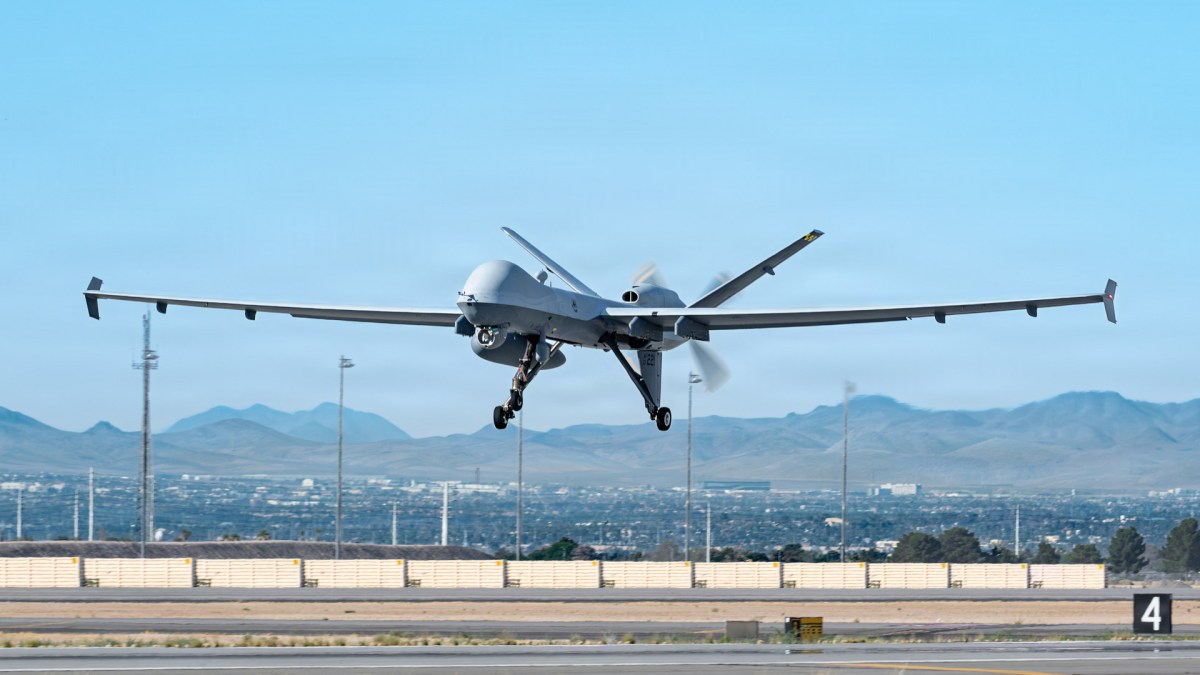
Niemi said that he expected the MMA, in very general terms, to look much like an MQ-9, including that it would likely also be turboprop powered and have a similarly shaped main wing.
A US Air Force MQ-9A Reaper. USAF
“I think it’s all going to be proven stuff, because that’s how I’m going to drive down the cost so I can get to that goal that I laid out,” Niemi, added.
For its part, General Atomics has had choice words in the past regarding discussions about the costs of the MQ-9A and MQ-9B, as well as their capabilities, particularly in light of recent losses. We will come back to the matter of attrition in a moment.
“Some say we need cheaper, disposable aircraft, so that we can use them and throw them away, or lose them and not feel bad about it. No one is talking about actual capability, ready today,” C. Mark Brinkley, a spokesperson for the company, told TWZ back in June after new discussions about a Reaper successor for the Air Force first began to surface. “No one is talking about all of the hard lessons, already learned, about icing and weather and weapons integration. No one is talking about the multiple survivability upgrades available for the existing platforms and the lack of investment in those.”
“These make-believe weapons that don’t exist have the luxury of being anything you imagine them to be,” Brinkley added at that time. “Unscratched lottery tickets, promising all of the win and none of the lose [sic].”
“I think it’s really unfortunate that MMA has been branded as a ‘Reaper replacement’ because it misrepresents what America needs now and what we need later,” he told us last month. “We need an immediate backfill solution to a critical shortage of unmanned MALE [medium altitude, long endurance] ISR/Strike. We need to get going on that now. MMA isn’t a backfill solution, or even a bridge to a backfill solution. This isn’t that.”
Brinkley was speaking here in the context of a discussion about Wildfire, a new drone General Atomics is now developing in response to the MMA requirements.
Wildfire “addresses all of the concerns posed by the MMA solicitation. We can deliver years earlier and maintain the same high quality. You can have everything that makes Reaper special, plus more, at a price that doesn’t break the bank,” Brinkley also told Breaking Defense for its story yesterday.
All of this brings us back around to the matter of MQ-9A losses and the Air Force’s efforts now to accelerate the schedule for the MMA program.
Exactly how many MQ-9As the Air Force has lost due to enemy fire or for any other reason in the course of operations against Iran this year is unknown, but it is reliably reported to be in the dozens . The service is also understood to have lost dozens more Reapers last year during operations targeting Iranian-backed Houthi militants in Yemen . The service is on record saying that its Reaper fleet had shrunk to 135 airframes as of May , down from an official total of 165 as of the start of Fiscal Year 2026. It is also important to note here that these inventory numbers do not include Reapers operated by the Marine Corps or the Central Intelligence Agency .
A Marine MQ-9 Reaper. USMC
Air Force officials have offered glowing assessments of the MQ-9A’s performance in operations against Iran, despite these losses, but have also said that the level of attrition is worrisome. That reality, in turn, had major impacts on discussions that led to the current MMA program.
“Although we have plenty of MQ-9As today, we are going through them at a rate that is concerning to us,” Niemi said yesterday, according to Air & Space Forces Magazine . “There’s not a lot of good options to immediately replace those aircraft.”
When the MMA program was first announced in July, the stated goal was to have an initial operational fleet of 20 of the drones in service by 2031. The Air Force is now working to push that timeline to the left, but still sees fielding of the new drones as being around three years away, at least. The service eventually hopes to acquire at least 180 MMAs.
“I can’t buy an MMA today. The reality is, based on the budget and other constraints, that I’m not going to buy a whole lot of MQ-9Bs today either,” Niemi conceded, per Breaking Defense .
It is important to remember here that the Air Force has already tried multiple times to develop a replacement for the MQ-9 without success. In that time, the idea of what a successor to the Reaper would look like has changed dramatically. As we’ve written previously :
“The Pentagon has long worked on the basis that a future conflict with a peer rival, and especially with China in the Pacific, would see it facing highly robust anti-access/area-denial (A2/AD) scenarios. With that in mind, previous Reaper replacement studies had suggested that low observability would need to be incorporated into the design.”
“The latest thinking seems to reject that, or at least reorient the program toward a lower-cost platform of the kind that the Air Force would be able to field in mass, as well as to absorb the anticipated attrition in a high-end conflict. This does not preclude this airframe from featuring low-observable elements. In fact, it most likely will. But those would be more aggressively balanced against cost.”
MMA is also looking at a wider slate of potential vendors. General Atomics, which has long had a monopoly on the U.S. MALE combat drone market, is not the only one angling now for an MMA contract .
A rendering of a stealthy concept Northrop Grumman previously put forward as a possible MQ-9 replacement, underscoring how the thinking in this regard has changed over the years. Northrop Grumman
Overall, as we have previously written in the context of the Air Force’s latest effort to move beyond the Reaper :
“…the U.S. drone landscape has changed considerably in terms of manufacturers. A few years ago, Northrop Grumman , Lockheed Martin , and General Atomics would have been seen as the front-runners for the MQ-9 replacement. Now, there are more contenders, often with a founding focus on rapidly scaling up production at low cost. Still, these firms have much to prove, especially considering the risk in replacing an aircraft as important as the MQ-9. At the same time, in the more advanced drone space, the legacy defense ‘prime’ contractors are also making major progress in leveraging new technologies to reduce production costs and migrating away from exquisite, very expensive drones as their default offerings.”
The possibility was reportedly raised yesterday that the MMA program could ultimately lead to the fielding of multiple types of drones through successive incremental development cycles. This is exactly how the Air Force is running its CCA program now.
With the Air Force now pushing for a more aggressive schedule for the MMA effort, more details about the designs it is considering may begin to emerge relatively soon. The service certainly has a pressing need already for these drones after so many MQ-9A losses.
Contact the author: joe@twz.com
Comments couldn’t be loaded. Please refresh the page.
作者:约瑟夫·特雷维西克
发布于美国东部时间2026年9月4日晚上7:43
美国空军计划以约1000万美元的单价(不包括传感器和其他一些系统)采购一款新型无人机,以取代MQ-9A“死神”无人机。目前,一架装备齐全的“死神”无人机的造价通常在3000万美元至5000万美元之间。鉴于近期针对伊朗的军事行动中“死神”无人机的损失“令人担忧”,美国空军正加紧推进新型无人机(即“模块化飞机”项目)的采购工作。
据《防务新闻》报道,空军中将、空军现代化事务首席官克里斯托弗·尼米昨日在五角大楼举行的一次圆桌会议上告诉记者,目标是使多用途无人机(MMA)的成本“接近”协同作战飞机(CCA)的一半。他还表示,空军希望在未来的协同作战飞机全面投产后,其价格能降至2000万美元左右。
一排美国空军MQ-9A“死神”无人机。美国空军/参谋军士阿里尔·奥谢
除了成本之外,美国空军此前曾表示,希望MMA无人机能够执行与MQ-9A相同的通用情报、监视与侦察(ISR)以及打击任务。为此,目前公布的项目要求包括:至少200节的真实空速;至少2800磅的弹药和传感器有效载荷;在不进行空中加油的情况下,有效载荷作战半径至少为2300海里;单程自主部署能力至少为8000海里;以及能够在长度不超过6000英尺的跑道上起降。此外,MMA无人机还需要高度模块化,并采用开放式架构的任务系统,以便日后更轻松地集成新的功能和特性。
据 Breaking Defense 报道,空军发言人在昨天的圆桌会议后澄清说,考虑到所有这些因素,尼米的 MMA 成本“估算仅包括飞行器的成本,而没有完全实现任务化”。
MQ-9A无人机已停产,但正如前文所述,目前空军每架MQ-9A无人机的总成本通常在3000万美元至5000万美元之间,具体价格取决于其搭载的传感器、武器和其他任务设备。尼米中将昨天在讲话中明确提及5000万美元的价格点,旨在强调MMA项目的单价目标,并解释空军为何认为正在生产的新型MQ-9B无人机无法满足其当前的需求。通用原子公司在“死神”无人机的基础上研发了MQ-9B,但前者是一款经过大幅改进的设计,与前者存在显著差异。
据《空军与太空部队杂志》的另一篇报道,尼米在昨天的圆桌会议上说:“如果你不喜欢损失一架价值约 5000 万美元的 MQ-9A(含传感器),那么你可能也不会喜欢损失一架价格更高的 MQ-9B。”
MQ-9B无人机。通用原子公司
据《防务新闻》报道,这位将军还表示:“我认为,人们存在一种误解,认为MQ-9B既然已经投入生产,我们就可以拿着一大笔钱去采购,今年就能拿到100架。但事实并非如此。”
尼米承认,要找到一种比 MQ-9A 成本低得多的 MMA 设计,就必须做出权衡。
据《防务新闻》报道,他说:“你肯定要做出一些牺牲。毫无疑问,如果我们试图沿用开发MQ-9等项目时的做法,最终得到的东西成本将与MQ-9差不多。”
然而,据该媒体报道,他补充道:“MQ-9 的特别之处与飞机本身无关。比如,它的飞行速度、飞行高度和飞行距离并没有什么尖端技术,这些都是经过验证的、已有数十年历史的技术。所以,如果你专注于卡车本身,并且能够做出一些巧妙的设计妥协……我们认为你可以降低成本。”
尼米表示,他预计MMA总体上会很像MQ-9,包括它也可能采用涡轮螺旋桨动力,并且主翼形状也类似。
美国空军MQ-9A“死神”无人机。
“我认为所有这些都将是经过验证的东西,因为只有这样我才能降低成本,从而实现我设定的目标,”尼米补充道。
通用原子公司过去曾就MQ-9A和MQ-9B的成本及其性能(尤其是在近期损失之后)发表过一些颇具争议的言论。我们稍后会再讨论损耗问题。
“有人说我们需要更便宜、用完即弃的飞机,这样我们就可以把它们用完就扔掉,或者就算损失了也不会感到愧疚。但没人谈论真正具备现成能力的飞机,”该公司发言人C·马克·布林克利在6月份接受TWZ采访时表示,当时关于空军“死神”无人机后继机型的讨论刚刚开始出现。“没人谈论我们已经吸取的关于结冰、天气和武器集成方面的所有惨痛教训。也没人谈论现有平台可用的多种提升生存能力的升级方案,以及对这些方案投资的匮乏。”
“这些虚构的、并不存在的武器,可以随意想象成任何样子,”布林克利当时补充道,“就像未刮开的彩票,承诺带走所有奖金,不承担任何损失。”
“我认为将MMA贴上‘死神’无人机替代品的标签非常不幸,因为它误解了美国现在和将来真正需要的是什么,”他上个月告诉我们。“我们需要立即找到一个解决方案,以弥补无人中空长航时(MALE)情报、监视和侦察(ISR)/打击能力的严重短缺。我们必须立即着手解决这个问题。MMA并非替代方案,甚至连过渡方案都算不上。它不是那种方案。”
布林克利在此发表讲话的背景是关于 Wildfire 无人机的讨论,Wildfire 是通用原子公司为响应 MMA 的要求而正在开发的新型无人机。
“Wildfire解决了MMA招标中提出的所有问题。我们可以提前几年交付,并保持同样的高质量。您可以以合理的价格,拥有Reaper的所有优点,甚至更多,”布林克利昨天在接受Breaking Defense采访时表示。
这一切又让我们回到了 MQ-9A 损失的问题上,以及空军现在为加快 MMA 项目进度所做的努力。
今年在对伊朗的军事行动中,美国空军究竟因敌方火力或其他原因损失了多少架MQ-9A无人机尚不得而知,但据可靠消息称,损失数量已达数十架。据悉,去年在也门打击伊朗支持的胡塞武装的行动中,空军也损失了数十架“死神”无人机。空军曾公开表示,截至今年5月,其“死神”无人机机队规模已缩减至135架,低于2026财年初的官方统计总数165架。需要注意的是,这些库存数字并不包括海军陆战队或中央情报局使用的“死神”无人机。
一架美国海军陆战队的MQ-9“死神”无人机。
尽管遭受了这些损失,空军官员仍对MQ-9A在对伊朗作战中的表现给予了高度评价,但也表示损失程度令人担忧。而这一现实反过来又对最终促成当前多用途无人机(MMA)项目的讨论产生了重大影响。
据《空军与太空部队杂志》报道,尼米昨天表示:“虽然我们现在拥有大量的MQ-9A无人机,但它们的损耗速度令我们担忧。目前还没有太多好的方案可以立即替换这些飞机。”
MMA项目于7月首次公布时,其既定目标是在2031年前建成一支由20架无人机组成的初始作战机队。空军目前正努力提前这一时间表,但仍然认为新型无人机的部署至少还需要三年时间。空军最终希望采购至少180架MMA无人机。
据 Breaking Defense 报道,尼米承认:“我今天买不起 MMA 无人机。事实上,考虑到预算和其他限制,我今天也不可能买很多 MQ-9B 无人机。”
值得注意的是,空军此前曾多次尝试研发MQ-9的替代机型,但均以失败告终。在此期间,人们对“死神”无人机后继机型的设想也发生了巨大变化。正如我们之前所写:
“五角大楼长期以来一直认为,未来与势均力敌的对手,特别是与中国在太平洋地区的冲突,将使其面临极其强大的反介入/区域拒止(A2/AD)作战场景。考虑到这一点,之前的‘死神’无人机替代方案研究表明,低可探测性需要纳入设计之中。”
“最新的思路似乎否定了这种想法,或者至少将项目方向转向成本更低的平台,以便空军能够大规模部署,并能承受高端冲突中预期的损耗。但这并不排除该机型采用低可探测性元件。事实上,它很可能会采用。但这些元件的性能将与成本进行更严格的平衡。”
MMA也在考虑更广泛的潜在供应商。长期以来垄断美国中空长航时作战无人机市场的通用原子公司,并非唯一一家目前有意争取MMA合同的公司。
这是诺斯罗普·格鲁曼公司此前提出的一款隐形概念机的效果图,该概念机曾被考虑作为MQ-9无人机的替代机型,这也凸显了多年来这方面思路的转变。诺斯罗普·格鲁曼
总而言之,正如我们之前在讨论空军为摆脱“死神”无人机而采取的最新举措时所写的那样:
“……美国无人机制造商格局已发生显著变化。几年前,诺斯罗普·格鲁曼、洛克希德·马丁和通用原子公司被视为MQ-9替代机型的领跑者。如今,竞争者更多了,它们往往从一开始就专注于以低成本快速扩大生产规模。然而,这些公司仍有很多需要证明的地方,尤其考虑到替换MQ-9这样重要的机型所存在的风险。与此同时,在更先进的无人机领域,传统的国防“主承包商”也在利用新技术降低生产成本方面取得了重大进展,并逐渐摆脱将精巧但极其昂贵的无人机作为默认产品的模式。”
据报道,昨天有人提出,MMA项目最终可能通过一系列渐进式的研发周期,最终部署多种类型的无人机。这正是空军目前正在实施的CCA项目的方式。
随着空军加快推进多用途无人机(MMA)项目的进度,有关其正在考虑的设计方案的更多细节可能很快就会浮出水面。鉴于MQ-9A无人机的大量损失,空军对这些无人机的需求无疑已经十分迫切。
联系作者:joe@twz.com
评论加载失败,请刷新页面。