How US strike curbs for Ukraine morphed from caveats to ‘common sense’美国对乌克兰的打击限制是如何从附加条件演变为“常识”的
In an effort to avoid escalation, the Biden administration has withheld certain weapons requested by Ukraine, only to later change course.
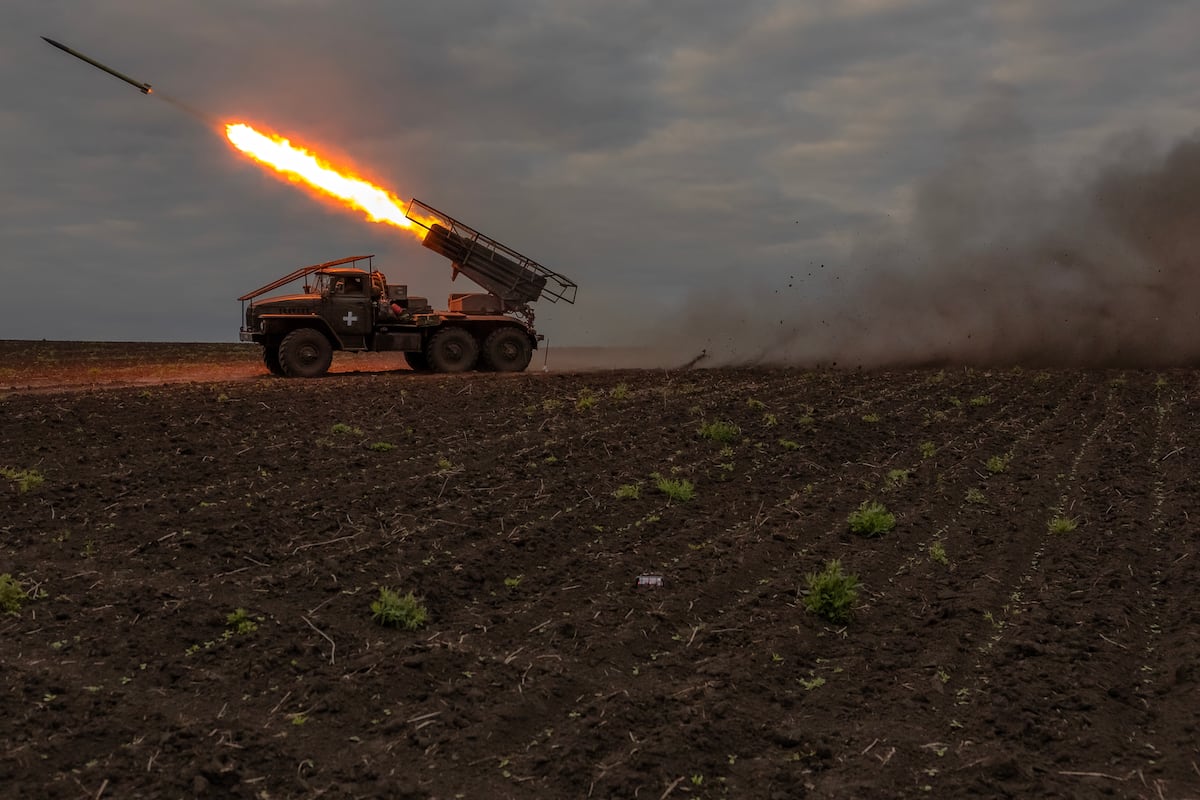
BRUSSELS — In late May, the Biden administration announced a major policy change: Washington would now let Ukrainian forces fire American-provided weapons into Russia — though only around one region in the northeast.
This had long been a bright red line in the administration’s support for Kyiv, fearing an expanded war.
It took only a few days for Ukraine to say it wasn’t enough.
“Is that sufficient? No,” said President Volodymyr Zelenskyy, speaking at a news conference in Singapore hours after meeting with U.S. Defense Secretary Lloyd Austin.
The comment was a microcosm of a much longer-term challenge for Washington. In an effort to avoid escalation, the administration has withheld certain weapons requested by Ukraine, only to later change course. The result is an ever-shifting policy that often leaves Kyiv dissatisfied — why accept one change to the rules when pushing for another could loosen them more?
The latest and perhaps most significant example of this situation has been cross-border strikes. The limited authority the White House gave Ukraine to fire into Russia is already expanding. And if this continues, analysts say, it may make a real impact in the fight.
“It could really change the war,” said George Barros, who leads the Russia and geospatial intelligence teams at the Institute for the Study of War, a public policy research outfit .
Two weeks after Zelenskyy’s comments, a senior U.S. official defense official said the policy may just be moving in that direction. On the sidelines of a June meeting at NATO headquarters in Brussels, the official listed examples of things Ukraine has wanted that America has changed its mind on: fighter jets, long-range missiles, shooting into Russia.
“If you look back over the course of a conflict, you can find a number of areas where we were reluctant to do something and then we did it,” the official said, speaking on the condition of anonymity, per Pentagon policy. “So never say never.”
A different approach
The path to the late-May policy change began weeks before Zelenskyy’s comments in Singapore.
Earlier in May, Russia launched a new offensive near Kharkiv, Ukraine’s second-largest city. Unlike other major urban areas in the country, Kharkiv sits near the Russian border — about 20 miles away. Largely due to limitations on how Ukraine could use Western-provided weapons, Russia was able to fire from its side of the border without significant retaliation.
“You could just look at the maps ... showing the Russians amassing just across the border and using that to strike into Ukraine,” the U.S. defense official said.
Russia used glide bombs to attack the Epicenter shopping complex in Kharkiv, Ukraine, in May 2024, killing at least 19 people, including two children. (Evgeniy Maloletka/AP)
Ukraine asked for the ability to fire into Russia, which Washington granted after some European partners publicly supported the request. But it would be limited: Ukraine could fire U.S. weapons — like the High Mobility Artillery Rocket System, with a range of nearly 50 miles — across the border to defend itself around Kharkiv. It still couldn’t fire long-range American weapons — such as the ATACMS missile with a reach of about 186 miles — at targets deeper into Russia.
Within weeks U.S. officials were crediting the change, in part, to a more stable front line. When Austin visited NATO headquarters in June, members of the U.S. delegation called the mood “upbeat.”
“What I see is a slowing of the Russian’s advance and a stabilizing of that particular piece of the front,” Austin said.
Some analysts were skeptical of that account.
Michael Kofman, who studies the Ukraine war at the Carnegie Endowment for International Peace think tank, said that by the time America’s policy changed, Russia had already started to lose momentum.
“The Russian offensive had already culminated before the policy change went into effect,” he said.
That isn’t to say the approval to fire into Russia was useless. The point is to create dilemmas, according to Barros. Under the current policy Russian forces will have to spread farther apart, lest they become easy targets. That will make it harder to launch new offensives.
But that’s a limited benefit, Barros told Defense News.
“It’s not going to make a massive difference in the long run, as it stands,” he said.
‘Right to self-defense’
Hence, a bevy of officials in the U.S. and abroad have pushed to end the remaining restrictions. Among this group is NATO’s secretary general.
Shortly before the June meeting in Brussels, Jens Stoltenberg stepped into the headquarters lobby to speak with reporters . On strikes into Russia, he made two points: Because the border and the front lines are so close near Kharkiv, Ukraine would struggle to defend itself if it couldn’t fire into Russia. And the burden shouldn’t be on Ukraine to avoid escalation.
“Ukraine has the right to strike military targets on Russian territory — part of the right to self-defense — and we have the right to support them in defending themselves,” he said.
Members of Congress, prominent Democrats among them, have urged the Biden administration to loosen restrictions for Ukraine. Many European partners have joined them.
“Russia is organizing the attacks from Russian territory, and we put restrictions on Ukraine,” Lithuanian Defence Minister Laurynas Kasčiūnas said in an interview with Defense News. “It’s nonsense.”
Ukrainian President Volodymyr Zelenskyy speaks during the Shangri-La Dialogue summit in Singapore on June 2, 2024. (Nhac Nguyen/AFP via Getty Images)
But based on several recent statements from American officials, it’s unclear what those restrictions are.
When asked to clarify America’s policy on strikes into Russia, the U.S. defense official speaking in Brussels paused and opened a binder of prepared notes. Reading them, the official listed several of the talking points the administration has used when discussing the policy: “limited,” “military targets,” “just across the border.”
“That’s not much more detail,” the official said, as reporters in the room laughed.
In a news conference later that day, Austin answered questions about the policy, framing it around Ukraine’s northeast. “The ability to conduct counterfire in this close fight in Kharkiv region is what this is all about,” he said.
But several days later in an interview with PBS , U.S. national security adviser Jake Sullivan said the permission to strike “extends to anywhere that Russian forces are coming across the border from the Russian side to the Ukrainian side to try to take additional territory.”
“This is not about geography,” Sullivan added. “It’s about common sense.”
From Ukraine’s perspective, the policy is “quite clear,” according to Dmytro Klimenkov, the deputy minister of defense for procurement. He declined to comment on whether the policy should be looser.
When it comes to long-range fires, specifically the ATACMS, the Biden administration has drawn a red line. But there are reasons for the limit.
The U.S. wants Ukraine to concentrate its responses to Russia’s invasion as much as possible — the difference between one uppercut and multiple jabs in a boxing match. Preventing Ukraine from firing even farther into Russia forces the embattled nation to focus on what U.S. officials call “the close fight” around Kharkiv and other parts of the front line.
There’s also the escalation factor: Russia is a nuclear-armed country and has threatened to use those weapons multiple times during the war, although that hasn’t happened. The Russian government can also harass the U.S. and other allies elsewhere: supporting militant groups targeting American forces or staging limited attacks in European cities .
Concern over a deeper or wider war has influenced the Biden administration’s policies since the full-scale invasion two years ago. But that concern has changed as the Pentagon gets a better sense for Russia’s actual willingness to escalate.
“The risk of escalation is not as high as maybe it was at the beginning of the process,” Gen. CQ Brown, the U.S. military’s top uniformed officer, said during a March roundtable with reporters. “You understand a bit more over time.”
And over time, with the threat of escalation unrealized, Ukraine has received more capable weapons and greater authority to use them.
An ATACMS weapon fires during a test at White Sands Missile Range, N.M. (U.S. Army)
It wasn’t until March when the Biden administration sent Ukraine the long-range ATACMS missiles. The country is already using them by, for example, hitting air defense batteries stationed in Crimea, a peninsula Russia seized in 2014.
Ukraine’s ability to hit Russian assets on Crimea has made Moscow restructure its forces there, shifting much of its naval fleet farther away . One could imagine a similar move elsewhere if the ban on long-range strikes into Russia were lifted, said Barros, the analyst at the Institute for the Study of War. For example, Russia would likely be forced to spread its air defense and electronic warfare assets farther apart.
It might also struggle to launch as many raids on Ukrainian cities, threatened by Russian bombers that sit on airfields that are out of reach under the current policy.
“Russia is permanently firing in calm, knowing that Ukraine will not fire back,” Zelenskyy said at the news conference in Singapore.
‘Sovereign decision’
But Ukraine has fired back. Throughout this year, its military struck oil refineries across Russia in an attempt to damage one of the government’s core sources of revenue.
The strikes proved controversial in Washington.
During a hearing before the House Armed Services Committee in April , the assistant secretary for defense for international security affairs said the Pentagon doesn’t want Ukraine attacking civilian infrastructure.
“So far the strikes that we have seen against Russian energy sources have not significantly altered Russia’s ability to prosecute the war,” Celeste Wallander said.
But Ukraine wasn’t using American-provided weapons for those strikes, which meant they didn’t apply to existing restrictions.
“This is Ukraine’s sovereign decision,” Wallander noted.
Ukrainian soldiers operate at an artillery position on June 9, 2024, near Vovchansk in the Kharkiv region. (Nikoletta Stoyanova/Getty Images)
A senior Ukrainian official, who spoke on the condition of anonymity due to the sensitivity of the topic, told Defense News his country has two sets of long-range weapons: drones that can fire up to 900 miles and missiles that can reach 430 miles. The limiting factor for these capabilities, the official said, is scale.
In other words, the official claimed, Ukraine knows how to build them and could increase production, but it lacks the funding to do so.
Klimenkov, the Ukrainian defense procurement official, was more cautious.
“We don’t have enough capacity” to build the required amount of long-range weapons alone, he said.
That means for now, Ukraine will need to keep using other countries’ weapons and conforming to their rules. But building its own long-range fires remains a top priority, he added.
“That is not easy,” he said. “It takes time.”
Noah Robertson is the Pentagon reporter at Defense News. He previously covered national security for the Christian Science Monitor. He holds a bachelor’s degree in English and government from the College of William & Mary in his hometown of Williamsburg, Virginia.
布鲁塞尔——5 月下旬,拜登政府宣布了一项重大政策变化:华盛顿现在将允许乌克兰军队向俄罗斯境内发射美国提供的武器——尽管仅限于东北部的一个地区。
长期以来,这都是美国政府支持基辅的一条明显红线,他们担心战争会扩大。
仅仅几天后,乌克兰就表示这还不够。
“这足够吗?不够,”弗拉基米尔·泽连斯基总统在新加坡举行的新闻发布会上说。此前数小时,他刚刚与美国国防部长劳埃德·奥斯汀会面。
这一评论是华盛顿面临的长期挑战的一个缩影。为了避免局势升级,美国政府扣留了乌克兰要求的某些武器,但之后又改变了立场。其结果是政策不断变化,常常令基辅不满——既然推动另一项可能进一步放宽规则的措施,为何还要接受一项规则的改变呢?
最新且或许最为显著的例子便是跨境打击。白宫赋予乌克兰向俄罗斯境内开火的有限授权正在不断扩大。分析人士指出,如果这种情况持续下去,可能会对战局产生切实的影响。
“这可能会真正改变战争的走向,”乔治·巴罗斯说道,他是战争研究所(一家公共政策研究机构)俄罗斯和地理空间情报团队的负责人。
泽连斯基发表上述言论两周后,一位美国高级国防官员表示,美国的政策可能正朝着这个方向发展。在6月于布鲁塞尔北约总部举行的一次会议间隙,这位官员列举了乌克兰曾希望获得但美国已改变主意的一些例子:战斗机、远程导弹、向俄罗斯境内射击。
“回顾冲突历程,你会发现很多我们起初不愿采取某些行动,但最终还是做了,”这位官员说道,他因五角大楼的政策而要求匿名。“所以,永远不要说‘绝不’。”
另一种方法
5 月下旬政策转变的道路早在泽连斯基在新加坡发表讲话前几周就已经开始了。
5月初,俄罗斯在乌克兰第二大城市哈尔科夫附近发动了新的攻势。与乌克兰其他主要城市不同,哈尔科夫靠近俄罗斯边境,距离约20英里。由于乌克兰使用西方提供的武器受到诸多限制,俄罗斯得以在其边境一侧开火而未遭到乌克兰的大规模报复。
“你只要看看地图……就能看到俄罗斯军队在边境另一侧集结,并利用这一点打击乌克兰,”这位美国国防官员说。
2024年5月,俄罗斯使用滑翔炸弹袭击了乌克兰哈尔科夫的Epicenter购物中心,造成至少19人死亡,其中包括两名儿童。(Evgeniy Maloletka/AP)
乌克兰要求获得向俄罗斯境内发射武器的能力,在一些欧洲伙伴公开支持这一请求后,华盛顿同意了。但这种能力受到限制:乌克兰可以越过边境,向哈尔科夫周边地区发射美国武器——例如射程近50英里的高机动性火箭炮系统——以进行自卫。但它仍然无法向俄罗斯境内更深处的目标发射美国远程武器——例如射程约186英里的ATACMS导弹。
几周之内,美国官员便将这一变化部分归功于前线局势的稳定。奥斯汀6月访问北约总部时,美国代表团成员称当时的气氛“乐观”。
奥斯汀说:“我看到的是俄军推进速度放缓,以及该特定战线局势趋于稳定。”
一些分析人士对这种说法表示怀疑。
卡内基国际和平基金会智库中研究乌克兰战争的迈克尔·科夫曼表示,等到美国政策改变时,俄罗斯已经开始失去势头。
他说:“在政策改变生效之前,俄罗斯的攻势就已经达到了顶峰。”
这并非意味着批准向俄罗斯开火毫无用处。巴罗斯认为,关键在于制造两难困境。按照目前的政策,俄军将不得不进一步分散部署,以免成为活靶子。这将使发动新的攻势变得更加困难。
巴罗斯告诉《防务新闻》,但这带来的好处有限。
“就目前情况来看,从长远来看,这不会产生巨大的影响,”他说。
“自卫权”
因此,美国和海外众多官员一直在推动取消剩余的限制措施,其中包括北约秘书长。
在布鲁塞尔六月会议召开前不久,延斯·斯托尔滕贝格走进总部大厅与记者交谈。关于对俄罗斯的打击,他提出了两点:由于哈尔科夫附近边境和前线距离很近,如果乌克兰不能向俄罗斯开火,它将难以自卫;而且,避免局势升级的责任不应该落在乌克兰身上。
他说:“乌克兰有权打击俄罗斯境内的军事目标——这是自卫权的一部分——我们也有权支持他们进行自卫。”
包括一些知名民主党人在内的国会议员敦促拜登政府放松对乌克兰的限制。许多欧洲伙伴国也加入了他们的行列。
立陶宛国防部长劳里纳斯·卡修纳斯在接受《防务新闻》采访时表示:“俄罗斯从其领土组织袭击,而我们却对乌克兰实施限制。这简直是无稽之谈。”
乌克兰总统弗拉基米尔·泽连斯基 (Volodymyr Zelenskyy) 于 2024 年 6 月 2 日在新加坡举行的香格里拉对话峰会上发表讲话。(Nhac Nguyen/法新社,盖蒂图片社)
但根据美国官员最近的几份声明,目前尚不清楚这些限制是什么。
当被问及如何阐明美国对俄罗斯的打击政策时,这位在布鲁塞尔发言的美国国防官员停顿了一下,打开了一个事先准备好的笔记文件夹。他念着笔记,列举了政府在讨论这项政策时常用的几个要点:“有限”、“军事目标”、“就在边境对面”。
“这并没有透露更多细节,”这位官员说道,房间里的记者们都笑了。
当天晚些时候的新闻发布会上,奥斯汀回答了有关这项政策的问题,他将其重点放在乌克兰东北部地区。“这项政策的核心在于,我们有能力在哈尔科夫地区的这场近距离战斗中进行反击,”他说。
但几天后,美国国家安全顾问杰克·沙利文在接受 PBS 采访时表示,打击的许可“适用于俄罗斯军队从俄罗斯一侧越过边境进入乌克兰一侧,试图夺取更多领土的任何地方”。
“这与地理位置无关,”苏利文补充道,“这关乎常识。”
乌克兰国防部负责采购的副部长德米特罗·克利缅科夫表示,从乌克兰的角度来看,这项政策“非常明确”。但他拒绝就该政策是否应该放宽发表评论。
在远程灭火方面,特别是针对ATACMS系统,拜登政府划定了一条红线。但这条红线是有原因的。
美国希望乌克兰尽可能集中火力应对俄罗斯的入侵——这就像拳击比赛中一记上勾拳和多记刺拳之间的区别。阻止乌克兰进一步向俄罗斯境内开火,迫使这个饱受战火蹂躏的国家将注意力集中在美国官员所称的哈尔科夫周边及其他前线地区的“近距离战斗”上。
此外,还有局势升级的因素:俄罗斯是核武器国家,并在战争期间多次威胁使用核武器,尽管最终并未动用。俄罗斯政府还可以骚扰美国和其他盟友,例如支持针对美军的武装组织,或在欧洲城市发动小规模袭击。
自两年前全面入侵以来,对战争升级或扩大的担忧一直影响着拜登政府的政策。但随着五角大楼对俄罗斯实际升级战争的意愿有了更清晰的认识,这种担忧也发生了变化。
“事态升级的风险可能不像一开始那么高了,”美国军方最高军官CQ·布朗将军在3月份与记者举行的圆桌会议上说。“随着时间的推移,你会对情况有更深入的了解。”
随着时间的推移,由于局势升级的威胁并未成为现实,乌克兰获得了更强大的武器和更大的使用权。
在新墨西哥州白沙导弹靶场进行的一次测试中,一枚ATACMS武器发射。(美国陆军)
直到今年3月,拜登政府才向乌克兰交付了远程ATACMS导弹。乌克兰已经开始使用这些导弹,例如,用来打击部署在克里米亚半岛的防空阵地。克里米亚半岛是俄罗斯在2014年占领的。
乌克兰打击克里米亚境内俄罗斯目标的能力迫使莫斯科调整其在克里米亚的兵力部署,将其大部分海军舰队转移至更远的地方。战争研究所分析师巴罗斯表示,如果解除对俄罗斯境内远程打击的禁令,可以预见俄罗斯在其他地区也会采取类似的行动。例如,俄罗斯很可能被迫进一步分散其防空和电子战资产。
此外,由于俄罗斯轰炸机驻扎在乌克兰机场,而根据目前的政策,这些机场超出了乌克兰的控制范围,因此乌克兰城市可能难以遭到如此多的空袭。
泽连斯基在新加坡举行的新闻发布会上说:“俄罗斯一直在冷静地进行炮击,因为它知道乌克兰不会还击。”
“主权决定”
但乌克兰也进行了反击。今年以来,乌克兰军队袭击了俄罗斯各地的炼油厂,试图破坏俄罗斯政府的核心收入来源之一。
这些罢工在华盛顿引发了争议。
今年 4 月,在众议院军事委员会的一次听证会上,负责国际安全事务的国防部助理部长表示,五角大楼不希望乌克兰攻击民用基础设施。
“到目前为止,我们看到的针对俄罗斯能源设施的袭击并没有显著改变俄罗斯进行战争的能力,”塞莱斯特·瓦兰德说。
但乌克兰在这些袭击中并没有使用美国提供的武器,这意味着这些袭击不受现有限制的约束。
“这是乌克兰的主权决定,”瓦兰德指出。
2024年6月9日,乌克兰士兵在哈尔科夫州沃夫昌斯克附近的一个炮兵阵地进行演习。(Nikoletta Stoyanova/Getty Images)
一位因话题敏感而要求匿名的乌克兰高级官员告诉《防务新闻》,乌克兰拥有两类远程武器:射程可达900英里的无人机和射程可达430英里的导弹。这位官员表示,这些武器能力的限制因素是规模。
换句话说,这位官员声称,乌克兰知道如何建造这些设备,也可以提高产量,但缺乏资金来实现这一目标。
乌克兰国防采购官员克里缅科夫则更为谨慎。
他说:“我们没有足够的能力”单独建造所需数量的远程武器。
这意味着目前乌克兰仍需继续使用其他国家的武器并遵守其规则。但他补充说,发展自身的远程火力仍然是重中之重。
“这并不容易,”他说。“这需要时间。”
诺亚·罗伯逊是《防务新闻》的五角大楼记者。他此前曾为《基督教科学箴言报》报道国家安全新闻。他拥有弗吉尼亚州威廉斯堡威廉与玛丽学院的英语和政治学学士学位。