European NATO nations reduce reliance on US arms imports: SIPRI data欧洲北约国家减少对美国武器进口的依赖:斯德哥尔摩国际和平研究所(SIPRI)数据显示
European governments are spending more defense money in South Korea, France and Israel, according to a new analysis.
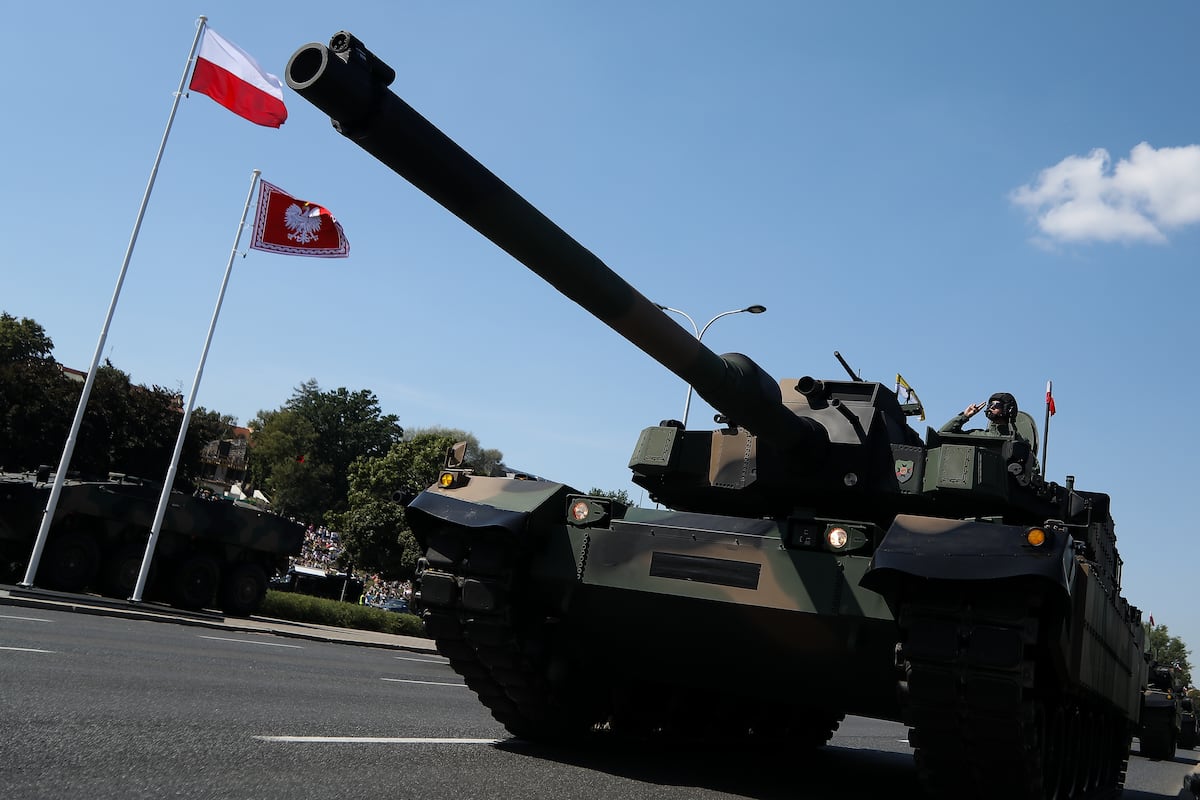
PARIS — European NATO countries reduced their reliance on the United States for weapons imports in the past year, funneling a greater share of their foreign defense acquisitions to South Korea, France and Israel, analysis by the Stockholm International Peace Research Institute showed.
The U.S. accounted for 58% of major arms imports by NATO’s European member states in the 2021-2025 period, according to a March 9 report by the Swedish think tank. That’s down from 64% for the five years through 2024, based on SIPRI’s year-earlier report.
Europe stepped up defense spending following Russia’s 2022 invasion of Ukraine, prompting a more than threefold jump in the region’s arms imports. Now European leaders are looking to reduce their dependency on the U.S., as threats by President Donald Trump against allies and a policy shift towards American homeland defense have raised doubts whether the country is still a reliable ally.
“Threat perceptions concerning Russia, compounded by uncertainties over the USA’s commitment to defending its European allies, have boosted demand for arms among European member states,” SIPRI said in its report.
While European defense firms boosted production, and European Union investment support for the bloc’s domestic weapons industry led to a number of intra-EU orders, European nations continued to import U.S. arms in the past five years, especially combat aircraft and long-range air-defense systems, according to Katarina Djokic, a researcher with SIPRI’s Arms Transfers Programme.
Twelve European countries had a total of 466 F-35 fighter jets on order or preselected for order by the end of 2025, including 39 of the Lockheed Martin jets ordered or preselected for order last year.
South Korea was the next-biggest supplier to European NATO members, securing 8.6% of their arms imports in the most recent five-year period, from 6.5% reported last year. Israel accounted for 7.7% of European NATO imports, from 3.9% in the period through 2024. France increased its share to 7.4% from 6.5%.
Global weapons exports rose at the fastest pace in a decade as Europe more than tripled weapons imports in the face of a threatening Russia. The volume of major arms transferred between states rose 9.2% in 2021-2025 from the prior five-year period, the biggest increase since the 2011-2015 bracket, according to SIPRI..
‘Deliveries to Ukraine since 2022 are the most obvious factor, but most other European states have also started importing significantly more arms to shore up their military capabilities against a perceived growing threat from Russia,” said Mathew George, director of SIPRI’s Arms Transfers Programme.
Shipments of U.S. weapons to Europe rose 217% in 2021-2025 from the prior five-year period, according to SIPRI. That included arms for Ukraine, with the think tank counting weapons bought by other countries for transfer to the Ukrainian forces, including air-defense missiles and guided bombs, as U.S. exports to Ukraine.
The U.S. remained the world’s biggest arms exporter in 2021-2025, with a market share of 34%, ahead of France with 9.8%. Russia accounted for 6.8% of global weapons transfers between states, about a third of its share in the prior five-year period.
“For importers, U.S. arms offer advanced capabilities and a way of fostering good relations with the USA, while the USA views arms exports as a tool of foreign policy and a way of strengthening its arms industry,” said Pieter Wezeman, senior researcher with the SIPRI Arms Transfers Programme.
Germany overtook China to become the world’s fourth-biggest arms exporter in 2021-2025, with 24% of German exports going to Ukraine. Italy climbed to sixth place from 10th in the prior five-year period, with 59% of the country’s arms exports going to the Middle East.
The U.S. had outstanding orders for 936 combat aircraft by the end of 2025, followed by France with 180 or more aircraft, and China with 90 combat aircraft in its order book. Order data can give “a rough indication” of which countries will be the top exporters in coming years, SIPRI says.
The United Kingdom had 34 or more major warships on order, similar to Germany, according to SIPRI. Israel had at least 78 export orders for missile air-defense systems, Germany had at least 66 such systems on order, and the U.S. 55 or more, according to SIPRI.
Ukraine was the largest weapons importer in the 2021-2025 period, accounting for 9.7% of global arms imports, with the U.S. the source for 44% of Ukraine’s imports, followed by Germany with 14%. Arms transfers to Ukraine were “substantially lower” in 2025 than in the preceding two years as the U.S. reduced its military aid to the country, according to SIPRI.
India was the world’s second-biggest importer of arms, even if its share of global imports fell 4% in the period, based on the SIPRI data. Elsewhere in Asia, Pakistan’s imports of major arms rose 66% from the prior five years, while Japan lifted imports by 76% and Taiwan by 54%.
“Fears over China’s intentions and its growing military capabilities continue to influence armament efforts in other parts of Asia and Oceania, which often still depend on imported arms,” said Siemon Wezeman, senior researcher with the SIPRI Arms Transfers Programme.
“In South Asia, the high volume of arms that India imports is largely due to the perceived threat from China and to India’s long-running conflict with the main recipient of Chinese arms exports, Pakistan,” Siemon Wezeman said. “Imported weapons were used in the 2025 clash between India and Pakistan, both nuclear-armed states.”
In Africa, imports by Algeria fell by 78% in 2021-2025 from the prior period, while those by Morocco increased 12%, making the latter the continent’s largest arms importer.
Rudy Ruitenberg is a Europe correspondent for Defense News. He started his career at Bloomberg News and has experience reporting on technology, commodity markets and politics.
巴黎——斯德哥尔摩国际和平研究所的分析显示,过去一年,欧洲北约国家减少了对美国武器进口的依赖,并将更大比例的对外国防采购转向韩国、法国和以色列。
根据瑞典智库斯德哥尔摩国际和平研究所3月9日发布的一份报告,2021年至2025年期间,美国占北约欧洲成员国主要武器进口总额的58%。而根据该研究所前一年发布的报告,2024年之前五年的这一比例为64%。
在俄罗斯2022年入侵乌克兰之后,欧洲加大了国防开支,导致该地区武器进口量增长超过三倍。如今,随着美国总统唐纳德·特朗普对盟友发出威胁,以及美国政策转向本土防御,欧洲领导人正寻求减少对美国的依赖,这引发了人们对美国是否仍是可靠盟友的质疑。
“对俄罗斯的威胁认知,加上对美国保卫其欧洲盟友的承诺存在不确定性,推高了欧洲成员国对武器的需求,”斯德哥尔摩国际和平研究所(SIPRI)在其报告中表示。
据斯德哥尔摩国际和平研究所武器转让项目研究员卡塔琳娜·乔基奇称,尽管欧洲国防企业提高了产量,欧盟对本国武器工业的投资支持也促成了许多欧盟内部订单,但在过去五年里,欧洲国家仍然继续进口美国武器,特别是战斗机和远程防空系统。
到 2025 年底,12 个欧洲国家共订购或预选订购了 466 架 F-35 战斗机,其中包括去年订购或预选订购的 39 架洛克希德·马丁公司生产的战斗机。
韩国是欧洲北约成员国的第二大武器供应国,在过去五年中占其武器进口总额的8.6%,高于去年的6.5%。以色列占欧洲北约武器进口总额的7.7%,高于2024年之前的3.9%。法国的份额也从6.5%上升至7.4%。
全球武器出口增速创十年新高,欧洲为应对俄罗斯的威胁,武器进口量增长超过三倍。斯德哥尔摩国际和平研究所(SIPRI)的数据显示,2021年至2025年期间,国家间主要武器转让量较前五年增长9.2%,为2011年至2015年期间以来的最大增幅。
“自 2022 年以来向乌克兰交付武器是最明显的因素,但大多数其他欧洲国家也开始大量进口武器,以加强其军事能力,应对他们认为来自俄罗斯日益增长的威胁,”斯德哥尔摩国际和平研究所武器转让项目主任马修·乔治说。
根据斯德哥尔摩国际和平研究所(SIPRI)的数据,2021年至2025年期间,美国对欧洲的武器出口量比前五年增长了217%。这其中包括对乌克兰的武器出口。该智库将其他国家购买并转交给乌克兰军队的武器,包括防空导弹和制导炸弹,也计入了美国对乌克兰的武器出口。
2021年至2025年,美国仍然是世界上最大的武器出口国,市场份额为34%,领先于法国的9.8%。俄罗斯占全球国家间武器转让的6.8%,约为前五年份额的三分之一。
“对于进口商而言,美国武器提供了先进的能力,也是与美国建立良好关系的一种途径;而美国则将武器出口视为外交政策的工具,也是加强其军工产业的一种方式,”斯德哥尔摩国际和平研究所武器转让项目高级研究员皮特·韦泽曼表示。
2021年至2025年,德国超越中国成为世界第四大武器出口国,其中24%的德国武器出口流向乌克兰。意大利的排名从前五年的第十位上升至第六位,该国59%的武器出口流向中东。
到2025年底,美国尚未交付的战斗机订单为936架,法国紧随其后,订单数量超过180架,中国则有90架。斯德哥尔摩国际和平研究所(SIPRI)表示,订单数据可以“大致表明”未来几年哪些国家将成为最大的出口国。
根据斯德哥尔摩国际和平研究所(SIPRI)的数据,英国订购了34艘或更多大型军舰,与德国的情况类似。以色列至少有78套导弹防空系统的出口订单,德国至少有66套,美国则有55套或更多。
在2021年至2025年期间,乌克兰是最大的武器进口国,占全球武器进口的9.7%,其中美国占乌克兰武器进口的44%,其次是德国,占14%。斯德哥尔摩国际和平研究所(SIPRI)表示,由于美国减少了对乌克兰的军事援助,2025年乌克兰的武器转让量将比前两年“大幅下降”。
根据斯德哥尔摩国际和平研究所(SIPRI)的数据,印度仍是世界第二大武器进口国,尽管其在全球武器进口中所占份额在此期间下降了4%。在亚洲其他地区,巴基斯坦的主要武器进口量较前五年增长了66%,日本增长了76%,台湾增长了54%。
“对中国意图及其日益增长的军事能力的担忧继续影响着亚洲和大洋洲其他地区的军备建设,这些地区往往仍然依赖进口武器,”斯德哥尔摩国际和平研究所武器转让项目高级研究员西蒙·韦泽曼表示。
西蒙·韦泽曼表示:“在南亚,印度大量进口武器主要是由于其认为中国构成威胁,以及印度与中国武器出口的主要接收国巴基斯坦之间长期存在的冲突。在印巴两国(均为核武器国家)2025年的冲突中,就使用了进口武器。”
在非洲,2021-2025 年阿尔及利亚的进口量比上一时期下降了 78%,而摩洛哥的进口量则增长了 12%,使摩洛哥成为非洲大陆最大的武器进口国。
鲁迪·鲁伊滕贝格是《防务新闻》的欧洲记者。他的职业生涯始于彭博新闻社,拥有报道科技、大宗商品市场和政治方面的经验。