SAAB’s Viggen Could Stick a Landing and Takeoff Again Like No Other Fighter萨博的维根战斗机或许能再次像其他战斗机一样完美地完成起降。
Now that’s a quick turnaround!
新闻视频
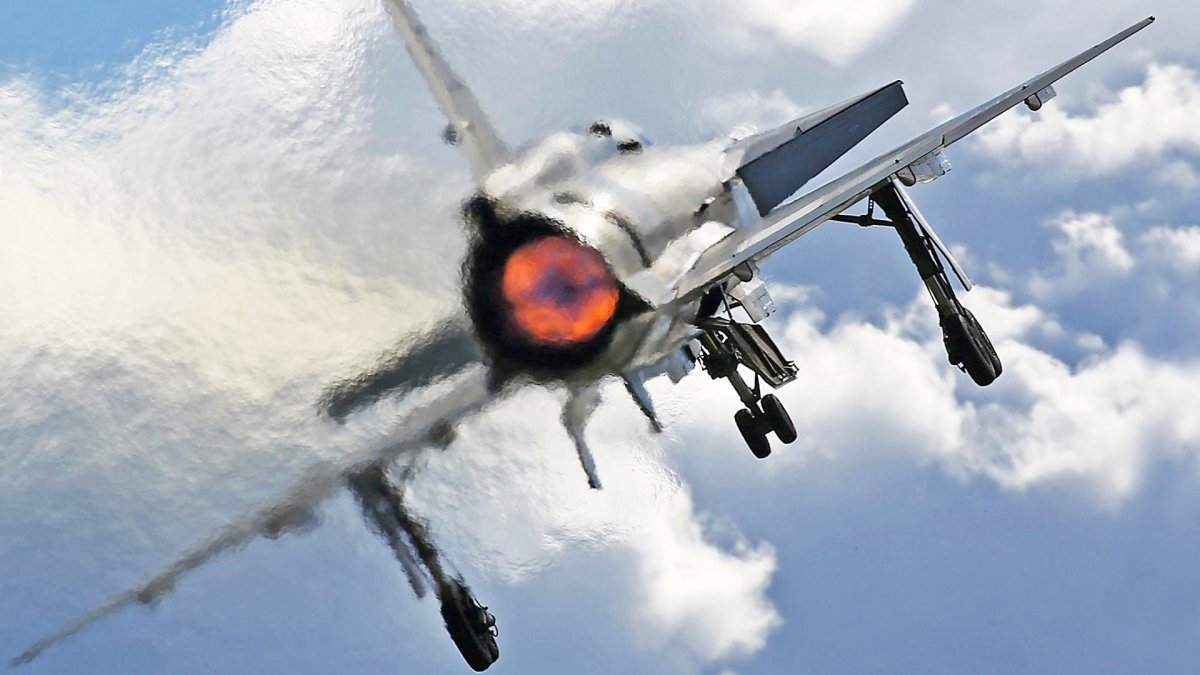
Updated Jul 3, 2020 3:35 AM EDT
Sweden has built some fascinating aircraft over the years, but the SAAB 37 Viggen has to be one of the most interesting. The jet was unique—its delta-canard configuration was cutting-edge, and its ability to operate in austere conditions made it quite independent compared to most other western fighters of the era. The Saab’s unique engine choice not only resulted in its stout appearance, and also gave it unique performance characteristics—especially when it came to short field operations.
In the early 1960s while turbojets still filled the sky SAAB designers pursued a turbofan engine for their new multi-role fighter-attack-reconnaissance-interceptor. The type even had a maritime patrol variant. It was a broad mandate: The requirements for what became the Viggen dictated that the jet be capable of Mach two at high altitude and Mach one at sea level, all while possessing very good short takeoff and landing capabilities with good fuel efficiency at low and medium altitudes.
The only remaining flyable Viggen performs at the RAF Waddington Air Show in 2013. , John5199/wikicommons
Few engine options were available that could satisfy such demanding specs. Turbofans were just emerging as the next great thing in aerospace propulsion technology. SAAB ended up with a license-built version of the Pratt & Whitney JT8D—the same engine flown on the 727 and DC-9 airliners—known locally as the Volvo RM8.
A “naked” JT8D-9 version of the venerable engine. , Alan Radecki/Wikicommons
Beyond having its internals tweaked for supersonic operations, the RM8 featured some major additions to the JT8D’s baseline design that were specifically suited for the Viggen’s mission set. A large afterburner can was attached to the end of the engine, this massively increased thrust, but also turned the engines miserly fuel consumption into a gas guzzler when it was activated. The second was the addition of a set of thrust reverser petals housed inside the engine’s exhaust nozzle, along with perimeter bypass veins that would allow air to exit in a forward direction when the reversers were activated.
The RM8B blasted out an incredible 28,100lbs of thrust in afterburner and 16,200lbs of ‘dry’ thrust without. To give you an idea of just how powerful the engine was for a fighter of the day, the popular General Electric J79 turbojet which powered the F-4 Phantom and F-104 Starfighter put out between 16,000lbs and 18,000lbs depending on the variant. The Pratt & Whitney F100 that would equip the state-of-the-art F-15A/B years after the Viggen first flew put out about 24,000lbs of thrust.
The Viggen trainer—this one a SK37E electronic warfare trainer aircraft—was especially cool looking with its staggered cockpit layout. , Teijo Hakala/wikicommons
For what the Viggen gained in thrust with its RM8, it lost in sleekness. The large diameter engine necessitated a thick fuselage, but area-rule was still applied to the design to give it better supersonic capabilities than otherwise. With the jet’s fixed inlet design, it was never meant to be the fastest aircraft in the air anyway.
The Viggen’s unique powerplant was paired with very tough landing gear—four wheels for the mains and two for the nose gear—and a unique vortex generating “double delta’ canard design, with flaps making up the trailing edge of the canards. All this added up to a marvelous short-field performer, with the Viggen being able to get airborne in less than 1,500 feet and become agile at low speeds right after liftoff.
An impressive lineup of Viggens., Rune Rydh/wikicommons
If Viggen departures were often dramatic, its landings were even more so. The jet would make flareless high-rate of descent landings—with sink rates of 15 feet per second being normal—in order to plant the jet firmly on the ground as soon as possible. The RM8’s thrust reversers were automatically triggered to engage once the nose wheel touched down, at which time the Viggen would throttle up and the pilot would engage the aircraft’s brakes to quickly slow its velocity as it chugged down the runway.
The Viggen’s thrust reversers could also be engaged for ground handling, including backing out of tight spots and especially for executing the Viggen’s trademark J-turn on the runway. The jet could touchdown, slow with its reversers on, and keep them engaged while it flipped around and took off in the opposite direction and in the same distance—all without ever coming to a stop.
Although nowhere near as sleek and beautiful as its J35 Draken predecessor, it was truly a special brute of a machine.
The jet’s whole short takeoff and landing capability went along with a larger concept of austere and dispersed fighter operations that Sweden has held onto ever since. But the Viggen’s impact extended even further. The Saab packed pretty exciting technology for its time, including a heads-up display, digital mission computer, anti-skid braking system and an electronic flight control system—the first of its kind in a production aircraft. A fairly exotic Tactical Instrument Landing System was also fielded, which made precise landings on short strips much more reliable. Yet above all else the Viggen was built to be reliable and easy to maintain without the dense infrastructure needed by comparable fighters.
At war, Viggens would be expected to operate from airfields that were nothing more than narrow and tree-lined strips of rural highway, with concrete caverns or camouflage netted revetments in the vicinity to park and service the aircraft. In fact, the jet’s tail was made to automatically fold over via an actuator system so that the aircraft could fit in low-slung parking areas.
A Viggen inside a fortified cavern with its tail folded. , Alan Wilson/Wikicommons
There are stories of these jets operating from roads in horrible weather conditions, including snow, mud and ice, and being just caked with muck sprayed up by their big thrust reversers after days of flying. These were truly tough machines.
The Viggen’s thrust reversers remain an oddity till this very day—only the Panavia Tornado has employed a form of the concept with its “bucket” style thrust reversers. In general, tactical aircraft used simpler and lighter drogue chutes and anti-skid braking systems to slow themselves down. Short takeoff and landing requirements have taken far less precedence on the high-tech fighters. Today though, the ability to operate from austere locations—even with fighters not specifically designed to do so—is making quite the comeback.
The Panavia Tornado’s bucket-style thrust reversers in action., …
329 Viggens were built, and the aircraft served from 1970 to 2005 in a variety of roles and configurations. While the plane never achieved export success like the JAS39 Gripen that followed, it will long be remembered for prowling low and fast over Swedish countryside—and above all else, for its dramatic short field takeoffs and landings.
Contact the author Tyler@thedrive.com
Comments couldn’t be loaded. Please refresh the page.
更新于美国东部时间2020年7月3日凌晨3:35
瑞典多年来制造过许多令人着迷的飞机,但萨博37“维根”无疑是其中最引人注目的一款。这款喷气式飞机独树一帜——其三角鸭式布局在当时堪称尖端,而且它能够在严苛的条件下作战,这使得它与同时期的大多数西方战斗机相比,拥有相当的独立作战能力。萨博独特的发动机选择不仅造就了它粗犷的外观,也赋予了它独特的性能——尤其是在短距起降方面。
20世纪60年代初,当涡轮喷气式飞机仍占据天空时,萨博公司的设计师们却着手为其新型多用途战斗攻击侦察截击机研发涡扇发动机。该机型甚至还有海上巡逻型。这是一项艰巨的任务:最终被命名为“维根”(Viggen)的喷气式飞机必须能够在高空达到2马赫的速度,在海平面达到1马赫的速度,同时还要具备优异的短距起降性能,并在中低空拥有良好的燃油效率。
2013年,唯一一架仍可飞行的维根战斗机在英国皇家空军瓦丁顿航展上进行了表演。(图片来源:John5199/wikicommons)
当时能够满足如此苛刻规格的发动机选择寥寥无几。涡扇发动机正处于航空航天推进技术的新兴阶段,被视为下一个重大突破。最终,萨博公司获得了普惠JT8D发动机的授权生产版本——这款发动机也用于波音727和DC-9客机——在当地被称为沃尔沃RM8。
一台“裸露”的JT8D-9发动机。图片来源:Alan Radecki/Wikicommons
除了内部结构针对超音速飞行进行了调整外,RM8发动机还在JT8D的基本设计基础上进行了一些重大改进,这些改进专门针对维根战斗机的任务需求。发动机尾部加装了一个大型加力燃烧室,这极大地提升了推力,但也使得发动机原本的节油性能在启动后变成了油耗惊人的“油老虎”。第二个改进是在发动机的排气喷嘴内增加了一组反推瓣片,以及用于在反推装置启动时向前排出空气的周边旁通导流管。
RM8B发动机在加力燃烧室开启时可产生惊人的28,100磅推力,而未开启加力燃烧室时也能产生16,200磅的“干推力”。为了让您更直观地了解这款发动机对于当时的战斗机来说有多么强大,我们可以参考一下当时流行的通用电气J79涡轮喷气发动机:它曾为F-4“鬼怪”和F-104“星式”战斗机提供动力,但根据型号不同,其推力在16,000磅到18,000磅之间。而几年后,普惠公司为当时最先进的F-15A/B战斗机配备的Pratt & Whitney F100发动机,其推力约为24,000磅。
这架维根教练机——这是一架SK37E电子战教练机——外观特别酷炫,采用了交错式座舱布局。,Teijo Hakala/wikicommons
维根战斗机虽然凭借RM8发动机获得了更大的推力,但却牺牲了机身的流线型。大直径发动机需要厚重的机身,但设计中仍然运用了面积律,使其拥有比其他飞机更好的超音速性能。而且,由于该喷气式飞机采用固定式进气道设计,它原本就不是为了成为空中速度最快的飞机而设计的。
维根战斗机的独特动力装置搭配极其坚固的起落架——主起落架四个轮子,前起落架两个轮子——以及独特的涡流生成“双三角翼”鸭翼设计,襟翼构成鸭翼的后缘。所有这些加起来,造就了维根战斗机卓越的短距起降性能,它能在不到1500英尺的距离内起飞,并在离地后立即展现出低速机动性。
令人印象深刻的维根斯阵容。,Rune Rydh/wikicommons
如果说维根的起飞常常惊险刺激,那么它的着陆则更加扣人心弦。这架喷气式飞机采用无拉平着陆,下降率高达每秒15英尺(约4.6米/秒),力求尽快稳稳地落在地面上。一旦前轮触地,RM8的反推装置就会自动启动,此时维根会加大油门,飞行员则会踩下刹车,迅速降低飞机在跑道上滑行的速度。
Viggen的反推装置也可用于地面操控,包括从狭窄空间倒车,尤其适用于在跑道上执行其标志性的J形转弯。这架喷气式飞机可以着陆,在反推装置的作用下减速,并在保持反推装置开启的情况下,掉头并沿相反方向以相同的距离起飞——所有这一切都无需完全停止。
虽然远不如它的前身 J35 Draken 那样流畅美观,但它确实是一款特别的猛兽。
这架喷气式飞机的短距起降能力与瑞典自此以来一直坚持的精简分散式战斗机作战理念相契合。但维根战斗机的影响远不止于此。萨博公司在当时搭载了相当先进的技术,包括抬头显示器、数字任务计算机、防滑刹车系统和电子飞行控制系统——这是量产飞机上的首创。此外,它还配备了相当先进的战术仪表着陆系统,大大提高了在短跑道上精确着陆的可靠性。然而,最重要的是,维根战斗机的设计目标是可靠性和易维护性,无需像同类战斗机那样复杂的维护基础设施。
战时,维根斯战斗机需要在狭窄的、树木林立的乡村公路旁简易机场起降,附近通常只有混凝土掩体或伪装网遮蔽的停机坪供飞机停放和维修。事实上,为了便于停放在低矮的停机坪上,该机的尾翼采用了自动折叠式设计,可通过作动器系统实现折叠。
一只维根兽蜷缩在坚固的洞穴中。(图片来源:Alan Wilson/Wikicommons)
据说这些喷气式飞机曾在恶劣天气条件下从公路起飞,包括积雪、泥泞和冰面,而且在连续飞行数日后,机身还会沾满反推装置溅起的泥浆。这些飞机真是坚固耐用。
维根战斗机的反推装置至今仍显得十分奇特——只有帕纳维亚“旋风”战斗机采用了类似概念的“桶式”反推装置。通常,战术飞机使用更简单、更轻便的减速伞和防滑刹车系统来减速。对于高科技战斗机而言,短距起降的要求远没有那么重要。然而,如今,即使是并非专门为此设计的战斗机,在简陋场地起降的能力也正在强势回归。
帕纳维亚“旋风”战斗机的桶式反推装置正在工作中……
瑞典共生产了329架维根战斗机,该机从1970年到2005年服役,用途和配置多种多样。虽然它不像后来的JAS39“鹰狮”战斗机那样在出口方面取得成功,但它低空高速掠过瑞典乡村的壮举,尤其是其惊险刺激的短距起降,将永远被人们铭记。
联系作者:Tyler@thedrive.com
评论加载失败,请刷新页面。