Norway picks Hanwha to supply rocket artillery in $2 billion deal挪威选择韩华公司以20亿美元的价格供应火箭炮。
None of the other commercial bidders could deliver a comparable range, Norway said.
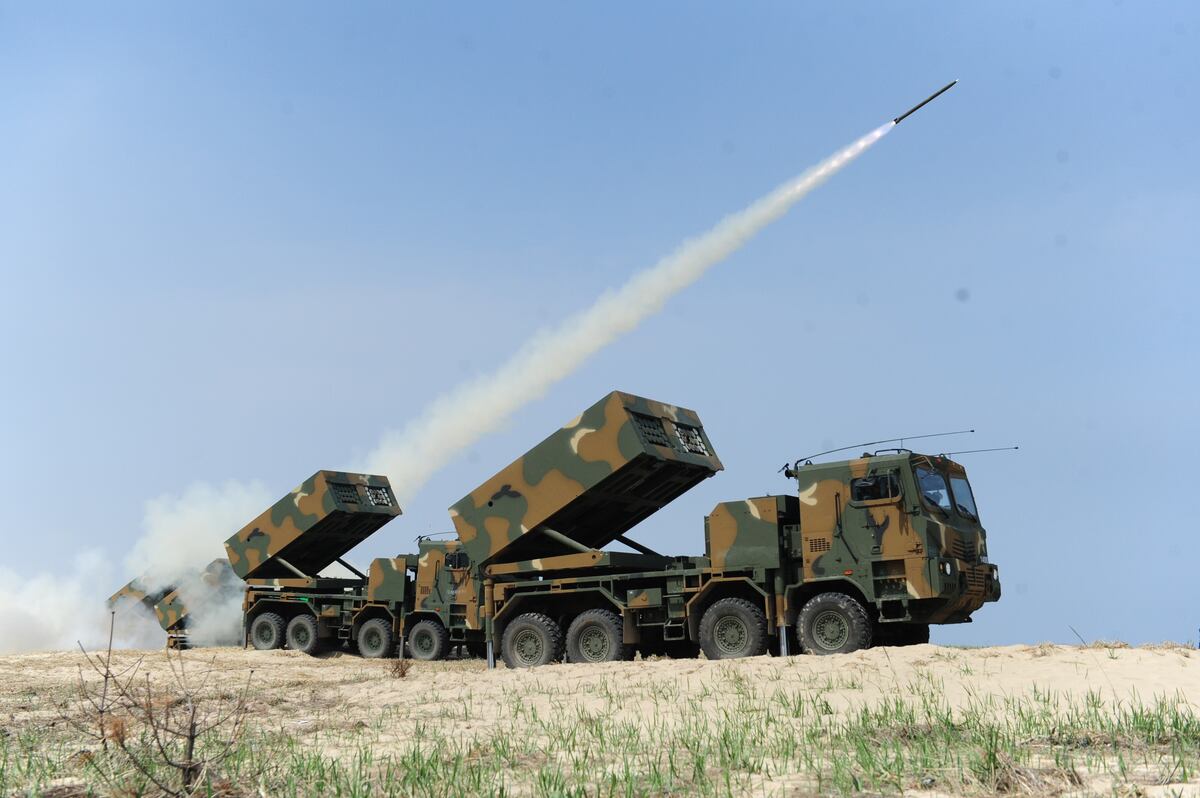
PARIS — Norway picked Hanwha to supply the army with long-range precision artillery in a deal worth 19 billion Norwegian kroner (US$2 billion), preferring the South Korean company’s Chunmoo system over competing offers from KNDS and Rheinmetall as well as the U.S. High Mobility Artillery Rocket System.
Norway agreed to buy 16 launch systems as well as a “large number” of missiles, including munitions with a range of up to 500 kilometers, the government said in a statement on Thursday. None of the other commercial bidders could deliver a comparable range, Norway said.
European countries are looking to add long-range strike in a recognition that taking out enemy launch capabilities will be required to protect civilians and troops against the kind of massed drone and missile strikes Russia has used in Ukraine.
Denmark said in September it needed deep-strike capabilities for deterrence, Germany in July inquired after the U.S. Typhon missile-launcher system, while France plans to test a domestic HIMARS alternative by the middle of this year.
“The government’s priority is to rapidly strengthen Norway’s defense capabilities, and this acquisition will strengthen our ability to credibly deter potential adversaries,” Minister of Defence Tore O. Sandvik said in the statement. “Hanwha is the only supplier that meets all requirements for performance, delivery time, and cost framework.”
Land-based long-range precision fire is a new capability for the Norwegian armed forces, and the investment is one of the largest ever made by the army, according to Sandvik, who said the choice was based on a competition held by the Norwegian Defence Material Agency .
Poland is also buying the Chunmoo system and has signed a contract with Hanwha for local missile production, which will strengthen security of supply for European users, Norway said. Hanwha now plans to supply all European customers of the system, including Norway, with missiles produced in Poland, the government said.
Hanwha will deliver launchers in 2028 and 2029, allowing the armed forces to start training personnel, and will deliver missiles in 2030 and 2031, for an operational system within four years, Norway said.
The South Korean defense firm has offered industrial cooperation agreements with Norwegian companies corresponding to 120% of the contract value, the government said. Norway’s Kongsberg is one of Europe’s largest producers of missile systems.
Europe would need more than three years to build up sufficient long-range strike capabilities as part of a range of critical enablers required to deter Russia without the United States, according to a majority of security researchers and experts surveyed by Defense News in February 2025.
The Norwegian competition for long-range strike announced in November 2024 included KNDS, Rheinmetall, Hanwha and Saab/Boeing, with all bidders except the Saab/Boeing combination submitting their offer by the March 2025 deadline, the government said. Norway had also considered the U.S. HIMARS from Lockheed Martin.
KNDS was excluded from the competition in June 2025, as the Defense Materiel Agency considered the French-German company didn’t meet the requirements for delivering a full system, according to the government. The Ministry of Defence didn’t consider reopening the competition, as that would have entailed a “significant risk” of higher costs and delayed delivery, Norway said.
Hanwha’s Chunmoo was the only bid that met all the requirements in the competition, and the armed forces considered that the South Korean system could be delivered faster and more cheaply than the alternatives, the government said.
Rudy Ruitenberg is a Europe correspondent for Defense News. He started his career at Bloomberg News and has experience reporting on technology, commodity markets and politics.
巴黎——挪威选择韩华公司为其军队提供远程精确火炮,交易金额达 190 亿挪威克朗(20 亿美元)。挪威更倾向于这家韩国公司的“天武”系统,而不是 KNDS 和莱茵金属公司的竞争方案以及美国的“高机动性火箭炮系统”。
挪威政府周四发表声明称,挪威已同意购买16套发射系统以及“大量”导弹,其中包括射程达500公里的弹药。挪威方面表示,其他商业竞标者均无法提供同等射程的导弹。
欧洲各国正在寻求增加远程打击能力,因为他们认识到,要保护平民和军队免受俄罗斯在乌克兰使用的那种大规模无人机和导弹袭击,就必须摧毁敌人的发射能力。
丹麦在 9 月份表示需要纵深打击能力以进行威慑,德国在 7 月份询问了美国的 Typhon 导弹发射系统,而法国计划在今年年中测试其国产的 HIMARS 替代方案。
挪威国防部长托雷·桑德维克在声明中表示:“政府的首要任务是迅速加强挪威的国防能力,此次采购将增强我们有效威慑潜在对手的能力。韩华是唯一一家能够满足性能、交付时间和成本框架所有要求的供应商。”
陆基远程精确火力是挪威武装部队的一项新能力,据山特维克称,这项投资是挪威军队有史以来最大的投资之一。山特维克表示,这一选择是基于挪威国防物资局举办的竞标。
挪威方面表示,波兰也正在采购“春武”导弹系统,并已与韩华公司签署合同,由韩华在波兰生产导弹,这将加强对欧洲用户的导弹供应安全。挪威政府称,韩华公司计划向包括挪威在内的所有欧洲“春武”导弹系统客户供应在波兰生产的导弹。
挪威方面表示,韩华将在 2028 年和 2029 年交付发射器,使武装部队能够开始训练人员,并在 2030 年和 2031 年交付导弹,以便在四年内建成一个可操作的系统。
挪威政府表示,这家韩国国防公司已向挪威企业提出与其合作的产业合作协议,协议金额相当于合同总额的120%。挪威康斯伯格公司是欧洲最大的导弹系统生产商之一。
据《防务新闻》2025 年 2 月对大多数安全研究人员和专家进行的调查显示,欧洲需要三年多的时间才能建立起足够的远程打击能力,这是在没有美国的情况下威慑俄罗斯所需的一系列关键能力的一部分。
挪威政府表示,2024年11月宣布的远程打击系统招标项目包括KNDS、莱茵金属、韩华和萨博/波音四家公司,除萨博/波音联合体外,所有竞标者均已在2025年3月截止日期前提交了报价。挪威政府还曾考虑过洛克希德·马丁公司的美国HIMARS系统。
据挪威政府称,由于国防物资局认为法德合资企业KNDS不符合交付完整系统的要求,该公司于2025年6月被排除在竞标之外。挪威国防部表示,由于重新启动竞标会带来成本上升和交付延误的“重大风险”,因此没有考虑重新启动竞标。
韩国政府表示,韩华的“天武”系统是唯一符合所有竞标要求的方案,军方认为韩国的这套系统比其他方案交付速度更快、成本更低。
鲁迪·鲁伊滕贝格是《防务新闻》的欧洲记者。他的职业生涯始于彭博新闻社,拥有报道科技、大宗商品市场和政治方面的经验。