Russia claims $15 billion in 2025 arms exports, with focus on Africa俄罗斯声称2025年武器出口额将达到150亿美元,重点出口非洲。
Russia stopped publicly disclosing detailed data on arms export contracts following the start of the full-scale invasion of Ukraine in February 2022.
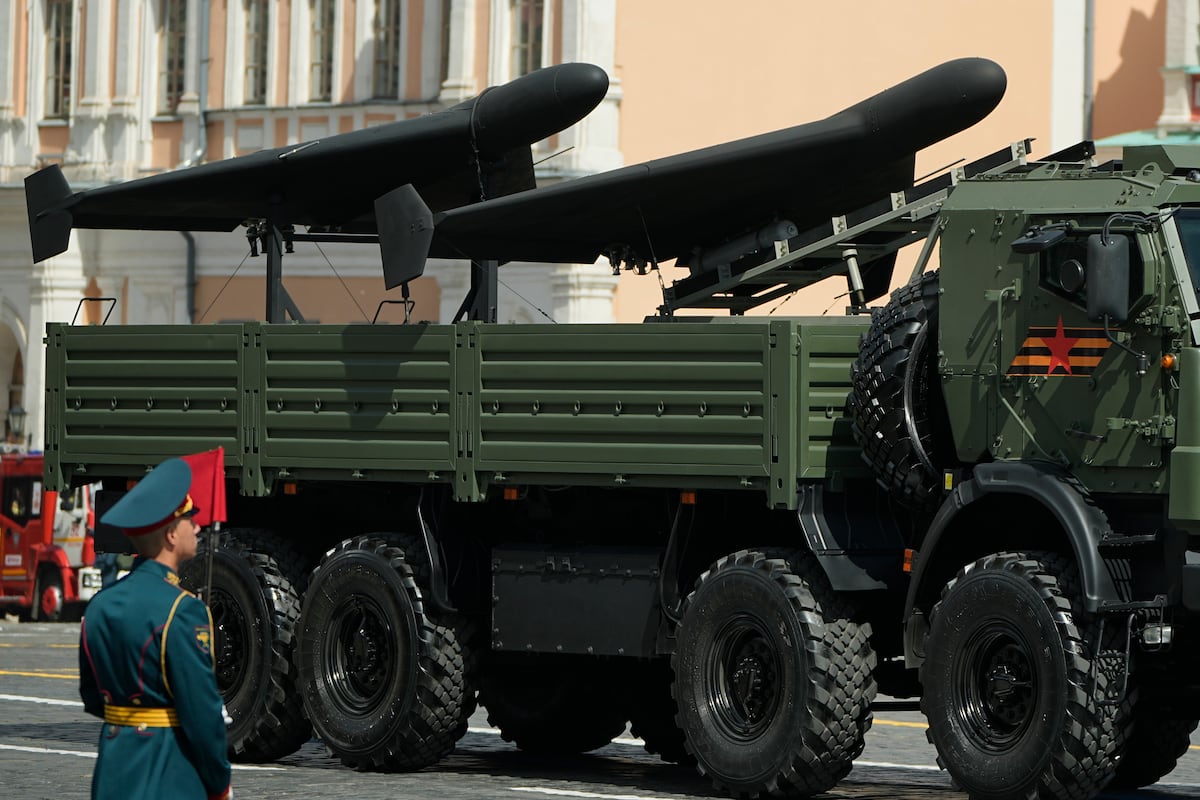
GRAZ, Austria — Russia earned over $15 billion from arms exports in 2025, supplying military equipment to more than 30 countries despite Western sanctions aimed at isolating Moscow over its invasion of Ukraine, President Vladimir Putin announced last week, though questions remain about the number’s validity.
Speaking at a Jan. 30 meeting of the Commission on Military-Technical Cooperation in Moscow, Putin said export contracts had been “reliably fulfilled” despite mounting pressure from Western nations attempting to block Russia’s defense partnerships. The revenue, he said, would help modernize defense enterprises, expand production capacity and fund research programs.
The $15 billion figure represents a significant income stream for Russia’s defense industrial base as the country continues its war in Ukraine, now approaching its fourth year. The revenue may help offset some effects of Western economic sanctions, though the long-term sustainability of these export levels remains uncertain given Moscow’s increased own consumption of military goods and ongoing diplomatic isolation.
If accurate, the new numbers would represent a remarkable rebound to near pre-war levels for Russia’s military exports.
According to the Stockholm International Peace Research Institute, which closely tracks the global major arms trade using transparent methodology, Russian large weapons exports fell 47% between 2022 and 2024, while the broader trend reveals a 64% decline comparing the 2015-19 period to 2020-24, though the descent began before the invasion of Ukraine.
Russia dropped to third place globally for arms exports, behind the U.S. and France, by 2024 due to its declining influence in the global military marketplace, SIPRI data shows.
There may be credibility problems with the official Russian numbers. The government in Moscow claimed $13.75 billion in exports for 2024, while Western analysts estimated them to be billions of dollars lower.
Russian arms exports collapsed between 2021 and 2023 and may have dropped from $14.6 billion to approximately $3 billion, according to an analysis from the Jamestown Foundation, a Washington-based think tank founded in 1984 to support Soviet defectors.
While exact estimates differ, the trend holds true across methodologies and Western reports.
Russia stopped publicly disclosing detailed data on arms export contracts following the start of the full-scale invasion of Ukraine in February 2022, including ceasing to provide information to relevant United Nations organizations.
This has also made it harder for independent observers to accurately estimate the full picture of Russia’s arms trade, evidenced by divergent estimates by different Western organizations.
SIPRI data shows Russia’s leading arms companies, Rostec and United Shipbuilding Corporation, increased their revenues by 23% in 2025, but this growth came from domestic military demand, which the researchers note “more than offset the revenues lost due to falling arms exports.”
Putin’s announcement came alongside new remarks from Rosoboronexport’s CEO, Alexander Mikheyev, who told the Russian state news agency TASS that military-technical cooperation with African countries has reached levels last seen during the Soviet era and “surpassed it in some respects.” Rosoboronexport is also expanding its activities in Africa, Mikheyev said, following the presidential commission meeting.
Rosoboronexport, Russia’s state arms export monopoly, oversees more than 85 percent of the country’s military exports. The company has concluded over 30,000 contracts with 122 countries since its establishment, with total exports exceeding $230 billion.
In total, the company’s order book now exceeds $60 billion, Mikheyev said on Jan. 30.
The Kremlin has prioritized arms sales to Africa, Asia and the Middle East, which aren’t directly subject to the Western restrictions imposed following Russia’s 2022 invasion of Ukraine. Putin said more than 340 joint defense projects with 14 countries were either underway or in development, and announced additional state support measures for military exports covering 2026 through 2028.
If the reported numbers are accurate, Russia’s ability to maintain arms exports at these levels would raise questions about Western sanctions effectiveness. While the restrictions have targeted Russia’s banking, technology, and trade sectors, many countries in Africa and Asia continue to do business with Russia and purchase Russian military equipment due to lower costs and longstanding defense relationships. The continued sales also reflect Moscow’s use of its weapons exports to strengthen its geopolitical position in far-flung parts of the globe.
However, Russia’s defense industry is already operating at wartime production levels to supply its own military. Defense spending had reached 7.3% of GDP as of December 2025, according to official numbers . Additionally, combat losses of Russian-made equipment in Ukraine, Venezuela and Iran may have raised questions among some potential buyers about the effectiveness of Moscow’s weapons systems in modern warfare.
Linus Höller is Defense News' Europe correspondent and OSINT investigator. He reports on the arms deals, sanctions, and geopolitics shaping Europe and the world. He holds master’s degrees in WMD nonproliferation, terrorism studies, and international relations, and works in four languages: English, German, Russian, and Spanish.
奥地利格拉茨——俄罗斯总统弗拉基米尔·普京上周宣布,尽管西方因俄罗斯入侵乌克兰而对莫斯科实施制裁以使其孤立,但俄罗斯在2025年仍通过武器出口获得了超过150亿美元的收入,并向30多个国家提供了军事装备。不过,这一数字的有效性仍存在疑问。
普京在1月30日于莫斯科举行的军事技术合作委员会会议上表示,尽管西方国家不断施压试图阻止俄罗斯的防务合作,但出口合同仍“得到可靠履行”。他表示,这些收入将有助于国防企业的现代化改造、扩大产能和资助科研项目。
150亿美元的数字对于俄罗斯的国防工业基地来说是一笔可观的收入来源,因为俄罗斯在乌克兰的战争已经持续了近四年。这笔收入或许有助于抵消西方经济制裁的部分影响,但考虑到莫斯科自身军需品消耗量的增加以及持续的外交孤立,这种出口水平的长期可持续性仍存在不确定性。
如果准确的话,这些新数字将代表俄罗斯军火出口显著反弹,接近战前水平。
根据斯德哥尔摩国际和平研究所的数据,该研究所采用透明的方法密切追踪全球主要武器贸易,俄罗斯大型武器出口在 2022 年至 2024 年间下降了 47%,而更广泛的趋势显示,与 2015-2019 年期间相比,2020-2024 年期间下降了 64%,尽管下降趋势在入侵乌克兰之前就开始了。
斯德哥尔摩国际和平研究所的数据显示,由于俄罗斯在全球军事市场的影响力下降,到 2024 年,俄罗斯在全球武器出口排名将跌至第三位,落后于美国和法国。
俄罗斯官方数据可能存在可信度问题。莫斯科政府声称2024年出口额将达到137.5亿美元,而西方分析人士估计实际出口额会低数十亿美元。
据总部位于华盛顿的智库詹姆斯敦基金会(成立于 1984 年,旨在支持苏联叛逃者)的分析,俄罗斯武器出口在 2021 年至 2023 年间大幅下降,可能从 146 亿美元降至约 30 亿美元。
虽然具体的估算结果有所不同,但无论采用何种方法,西方报告都得出相同的结论。
自 2022 年 2 月全面入侵乌克兰以来,俄罗斯停止公开披露有关武器出口合同的详细数据,包括停止向联合国相关组织提供信息。
这也使得独立观察员更难准确评估俄罗斯武器贸易的全貌,不同西方组织给出的不同估计就证明了这一点。
斯德哥尔摩国际和平研究所的数据显示,俄罗斯领先的武器公司——俄罗斯国家技术集团和联合造船集团——在2025年的收入增长了23%,但这一增长来自国内军事需求,研究人员指出,这“足以弥补因武器出口下降而造成的收入损失”。
普京发表上述声明的同时,俄罗斯国防出口公司首席执行官亚历山大·米赫耶夫也向俄罗斯塔斯社表示,俄罗斯与非洲国家的军事技术合作已达到苏联时期以来的最高水平,并且“在某些方面甚至超越了当时”。米赫耶夫在总统委员会会议后表示,俄罗斯国防出口公司正在扩大其在非洲的业务。
俄罗斯国防出口公司(Rosoboronexport)是俄罗斯的国有武器出口垄断企业,负责监管该国超过85%的军火出口。自成立以来,该公司已与122个国家签订了超过3万份合同,出口总额超过2300亿美元。
米赫耶夫1月30日表示,该公司目前的订单总额已超过600亿美元。
克里姆林宫优先向非洲、亚洲和中东地区出售武器,这些地区不受俄罗斯2022年入侵乌克兰后西方实施的限制措施的直接影响。普京表示,与14个国家的340多个联合防御项目正在进行或正在开发中,并宣布了2026年至2028年期间的额外国家军事出口支持措施。
如果报道的数据准确,俄罗斯能够维持如此高的武器出口水平,将引发人们对西方制裁有效性的质疑。尽管制裁主要针对俄罗斯的银行、科技和贸易领域,但由于成本较低以及长期存在的防务关系,许多非洲和亚洲国家仍然与俄罗斯开展业务并购买俄罗斯军事装备。持续的军售也反映出莫斯科正利用武器出口来加强其在全球偏远地区的政治影响力。
然而,俄罗斯国防工业已达到战时生产水平,以供应本国军队。官方数据显示,截至2025年12月,俄罗斯国防开支已占GDP的7.3%。此外,俄制装备在乌克兰、委内瑞拉和伊朗的战斗损失,可能引发了一些潜在买家对莫斯科武器系统在现代战争中效能的质疑。
林努斯·霍勒是《防务新闻》的欧洲记者和开源情报调查员。他报道影响欧洲乃至全球的军火交易、制裁和地缘政治。他拥有大规模杀伤性武器不扩散、恐怖主义研究和国际关系三个硕士学位,并精通英语、德语、俄语和西班牙语四种语言。