Fragile Bosnia pops up as test case for Europe acting without the US脆弱的波斯尼亚成为欧洲在没有美国参与的情况下采取行动的试金石。
With backing from Washington, separatists in Bosnia could be emboldened like they haven’t been in decades.
BERLIN — When the Trump administration lifted sanctions on Bosnian Serb separatist leader Milorad Dodik in late October, it marked a dramatic realignment in the Western Balkans that has sparked concerns in Europe that the fragile post-war order in Bosnia and Herzegovina may become shaky.
In the Western Balkan country of three million, where the fateful shots that caused World War I once rang out, there has been a tense stalemate ever since the genocidal fighting of the 90s stopped. A complex framework including 15 parliaments, three simultaneous presidents, and a European peacekeeping force, all imposed by the international community, has kept the country more or less stable but stagnant. A European Union military force with a UN mandate, dubbed Operation Althea, has been keeping the peace on the ground since it replaced a NATO mission in 2004.
But with Trump in charge in the United States, this delicate balance may be upended. With backing from Washington, separatists in Bosnia could be emboldened like they haven’t been in decades.
For the first time since the 1995 Dayton Peace Agreement ended Bosnia’s brutal civil war, Washington and Moscow now find themselves on the same side when it comes to Dodik, the nationalist politician who has spent nearly two decades undermining the U.S.-brokered peace deal.
In this pool photograph distributed by the Russian state agency Sputnik, Russia's President Vladimir Putin meets with Bosnian Serb leader Milorad Dodik at the Kremlin in Moscow on April 1, 2025. (Mikhail Tereshchenko/POOL/AFP via Getty Images)
As a consequence, Europe faces a crucial test of whether it can maintain the tenuous post-war security architecture at the heart of the Western Balkans without American backing − and whether it has the political will to do so.
Extensive lobbying pays off
The U.S. Treasury Department’s Office of Foreign Assets Control removed Dodik, his family members, and dozens of associates from its sanctions list on Oct. 29, 2025, reversing penalties imposed for what Washington had previously described as undermining Bosnia’s territorial integrity and the Dayton framework.
Dodik, the leader of the majority-Serb region of Bosnia known as Republika Srpska, has long threatened to secede from the rest of the country, which is Muslim-Bosniak dominated. His administration and allies have enacted a number of power-grab laws that weakened Sarajevo’s ability to exert control over the territory and many of which were deemed illegal by the courts.
The American decision to remove the sanctions followed an intensive lobbying campaign by Republika Srpska authorities, who hired multiple U.S. firms with Republican Party connections after Trump’s reelection, including Becker & Poliakoff, Tactic Global, and MO Strategies.
These contracts, filed under the Foreign Agents Registration Act and first reported by Bosnian media , aimed to “initiate and promote dialogue between the authorities in Republika Srpska and the Trump administration.”
Among those who lobbied for sanctions relief were disgraced former Illinois Governor Rod Blagojevich, whose prison sentence Trump commuted in 2020, as well as Trump associates Michael Flynn and Rudy Giuliani. Right-wing influencer Laura Loomer also pushed for the sanctions to be lifted.
“Some of these were quite short-term contracts,” said Kurt Bassuener, senior fellow at the Democratization Policy Council, a Berlin-based think-tank, referring to the lobbying efforts. “The asks were for, you know, to get these sanctions lifted.”
The U.S. Treasury provided no official explanation for the reversal in policy at the time. The State Department characterized the move as a response to “constructive actions,” including the annulment of some separatist laws and Dodik stepping aside after being banned from politics.
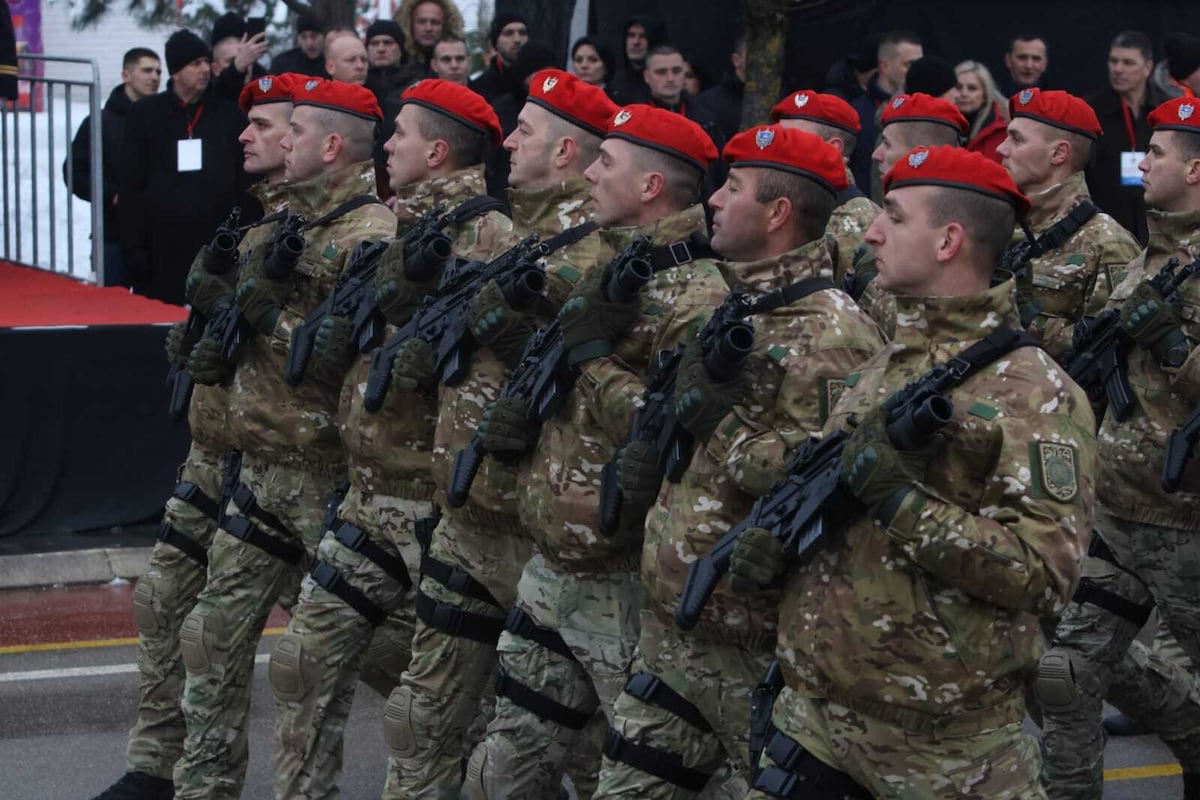
Just a few months after sanctions were lifted, a military-style parade was held in Banja Luka, the capital of the would-be breakaway region. Dodik used the celebration on Jan. 9, which Bosnian courts prohibited for being unconstitutional, for a martial speech.
“Do they truly believe we will comply?” he asked. “Do they think we are intimidated? History does not belong to the fearful.”
Bassuener, who has previously worked as a policy analyst for the international office overseeing Bosnia’s peace deal, said: “He’s already gone right back to his escalatory hate speech, talking about Muslims, talking about Bosniaks as Turks, all this kind of stuff.”
Despite stepping down as Republika Srpska president in June 2025 following a court ruling that barred him from office for six years, Dodik has maintained effective control over the entity’s politics. His chosen replacement from the ruling SNSD party, which Dodik controls, Siniša Karan, won a November 2025 special election with 50.39% of the vote.
In his social media response to the sanctions relief, Dodik thanked Trump “for correcting a grave injustice” and called the decision “a moral vindication of the truth about Republika Srpska.”
Russia holds fire on veto threat
The American reversal on Dodik aligned with another surprise development: Russia did not veto the renewal of the European Union Force Althea when the U.N. Security Council voted unanimously on Oct. 30 − just one day after the sanctions were lifted − to extend the peacekeeping mission’s mandate for another year.
Before the vote, concerns were swirling that Moscow may choose to block the mission’s renewal, continuing its pattern of obstructing international oversight in Bosnia and beyond. Instead, Russian representatives continued their rhetorical attacks on the Office of the High Representative − the international watchdog with sweeping powers to impose laws and remove officials in Bosnia − while allowing the military mission to proceed.
“One idea is they don’t think that the EU will reinforce it to be a truly credible deterrent,” Bassuener said on the Russian calculus. “There’s a sense that once the Europeans dodge the bullet [of a Russian veto], it’ll be more business as usual.”
Russia may also calculate that it can achieve its destabilization goals through other means while its military is tied down in Ukraine, Bassuener suggested. “I think now they can count on their very close partnership with Dodik.”
EU foreign affairs chief Kaja Kallas acknowledged the precariousness of the situation when asked by Defense News shortly after the vote. “The mandate is now extended for one more year, and then comes the question what’s next,” she said, adding that “so far, there hasn’t been a veto by Russia and there are different reasons for that.”
Kallas, who visited EUFOR troops in Bosnia two weeks before the mandate vote, said that the Western Balkans being the EU’s closest neighborhood meant stability there was “very important.” Asked about what steps Europe would take ahead of the next vote to prepare for a potential veto, Kallas said that she planned to visit other parts of Bosnia “to see what more can we do in order to actually break the tensions down.”
Europeans left to hold the line
At the Security Council meeting, Britain and Denmark delivered strong statements in support of the High Representative’s office, while France offered more measured backing. The U.S. representative expressed opposition to “nation building” and called for compromise among Bosnia’s ethnic groups, breaking with longstanding bipartisan U.S. rhetoric on the implementation of the Dayton accords.
The U.S. doubled down through its ambassador in Croatia, Nicole McGraw, at a celebration for the 30th anniversary of the peace deal that ended the Bosnian civil war. McGraw said that Washington is “no longer pursuing ‘nation-building’ or strong interventions” in Bosnia, instead emphasizing the need for “local solutions and local leadership.”
The policy shift in Washington has left the European Union in the uncomfortable position of being the primary international actor trying to preserve Bosnia’s constitutional order, without the full American support they have grown accustomed to over the three decades since the peace deal was signed.
Kallas visited Sarajevo immediately after the mandate renewal, telling officials that “we will not allow history to repeat itself.” She emphasized that international supervision should be phased out only when domestic authorities demonstrate the capacity to govern effectively.
But European officials face significant obstacles. The EU military mission currently maintains approximately 1,600 troops in Bosnia, far below the brigade-level force of around 4,800 troops that military professionals have recommended.
“What I’m not seeing anywhere is a strategy to get out of the dead end that we’re in,” Bassuener said. The question now is whether Europeans are bold enough to reinforce the mission and potentially stay even if Russia eventually vetoes a mandate renewal, he said.
Strategic implications
Bosnia’s instability sits in the heart of the Western Balkans, a region where the EU has long sought to extend its sphere of influence through eventual membership for all six countries.
“This is the one area on Earth where the EU can be a decisive geopolitical actor,” Bassuener said. “But it refuses to use its full toolbox. It prefers to stick to the enlargement model, which mainly deals with trying to induce people to do the right thing through money.”
“It has two sides,” Kallas told Defense News. “One is of course the military presence so that things don’t go out of hand, but the other hand is the political side, which is really to help them with the EU enlargement process, to help them to really work together so that the tensions are down.”
According to Bassuener, Dodik has made two fundamental bets that have proven right so far. “One is that the international community will not align strongly enough and resist him hard enough to force him to back down,” he said. The second bet is that the Bosniak community would be too divided to resist him effectively.
Editor’s note: This story was updated to correct the association of issue expert Kurt Bassuener, who is a senior analyst at the Berlin-based Democratization Policy Council.
Linus Höller is Defense News' Europe correspondent and OSINT investigator. He reports on the arms deals, sanctions, and geopolitics shaping Europe and the world. He holds master’s degrees in WMD nonproliferation, terrorism studies, and international relations, and works in four languages: English, German, Russian, and Spanish.
柏林——10 月下旬,特朗普政府解除了对波斯尼亚塞族分离主义领导人米洛拉德·多迪克的制裁,这标志着西巴尔干地区的局势发生了戏剧性的重组,引发了欧洲的担忧,即波斯尼亚和黑塞哥维那脆弱的战后秩序可能会变得不稳定。
在这个拥有三百万人口的西巴尔干国家,第一次世界大战爆发的枪声曾在此响起。自上世纪90年代种族灭绝式的冲突结束后,这里一直处于紧张的僵局之中。国际社会强加的复杂框架——包括15个议会、三位同时执政的总统以及一支欧洲维和部队——使这个国家勉强维持着稳定,但却停滞不前。一支名为“阿尔忒弥斯行动”的欧盟军事部队,拥有联合国授权,自2004年取代北约维和部队以来,一直在当地维持和平。
但随着特朗普执掌美国,这种微妙的平衡可能会被打破。在华盛顿的支持下,波斯尼亚的分裂分子可能会像几十年来从未有过的那样胆大妄为。
自1995年《代顿和平协议》结束波斯尼亚残酷内战以来,华盛顿和莫斯科首次在多迪克问题上站到了一起。多迪克是一位民族主义政客,他近二十年来一直在破坏美国斡旋达成的和平协议。
这张由俄罗斯国家通讯社卫星通讯社发布的合影显示,2025年4月1日,俄罗斯总统弗拉基米尔·普京在莫斯科克里姆林宫会见了波斯尼亚塞族领导人米洛拉德·多迪克。(图片来源:Mikhail Tereshchenko/POOL/AFP via Getty Images)
因此,欧洲面临着一个关键的考验:在没有美国支持的情况下,它能否维持西巴尔干地区脆弱的战后安全架构,以及它是否有这样做的政治意愿。
广泛的游说活动取得了成效
2025年10月29日,美国财政部外国资产控制办公室将多迪克、他的家人和数十名同伙从制裁名单中移除,推翻了此前华盛顿方面所称的破坏波斯尼亚领土完整和《代顿框架》的行为而施加的制裁。
多迪克是波斯尼亚塞族共和国(Republika Srpska)的领导人,该地区以塞族人为主。他长期以来一直威胁要将该地区从以穆斯林和波斯尼亚克族为主的波斯尼亚其他地区分离出去。他的政府及其盟友颁布了一系列旨在攫取权力的法律,削弱了萨拉热窝对该地区的控制能力,其中许多法律被法院裁定为非法。
美国决定解除制裁之前,塞族共和国当局进行了密集的游说活动。在特朗普连任后,塞族共和国当局聘请了多家与共和党有联系的美国公司,包括 Becker & Poliakoff、Tactic Global 和 MO Strategies。
这些根据《外国代理人登记法》备案的合同,最初由波斯尼亚媒体报道,旨在“发起和促进塞族共和国当局与特朗普政府之间的对话”。
游说解除制裁的人士包括声名狼藉的前伊利诺伊州州长罗德·布拉戈耶维奇(特朗普于2020年减免了他的刑期),以及特朗普的盟友迈克尔·弗林和鲁迪·朱利安尼。右翼影响者劳拉·卢默也推动了解除制裁的进程。
“其中一些是相当短期的合同,”柏林智库民主化政策委员会高级研究员库尔特·巴苏纳在谈到游说活动时说。“他们的诉求是,你知道,解除这些制裁。”
美国财政部当时并未就政策逆转给出官方解释。国务院则将此举描述为对“建设性行动”的回应,这些行动包括废除一些分裂主义法律以及多迪克在被禁止参政后退出政坛。
制裁解除仅几个月后,在即将脱离波斯尼亚的地区首府巴尼亚卢卡举行了一场军事风格的阅兵式。多迪克利用1月9日的庆祝活动发表了军事演说,而波斯尼亚法院以违宪为由禁止了这场庆祝活动。
“他们真的相信我们会屈服吗?”他问道,“他们以为我们会害怕吗?历史不属于胆怯者。”
巴苏纳曾担任负责监督波斯尼亚和平协议的国际办公室的政策分析师,他说:“他已经又开始发表不断升级的仇恨言论,谈论穆斯林,把波斯尼亚人说成是土耳其人,诸如此类的话。”
尽管多迪克因法院裁决被禁止在六年内担任塞族共和国总统,并于2025年6月卸任,但他仍然有效地控制着该国的政治。他从执政党塞族社会民主联盟(SNSD,由多迪克控制)中挑选的接班人西尼沙·卡兰在2025年11月的特别选举中以50.39%的得票率获胜。
多迪克在社交媒体上回应制裁解除时,感谢特朗普“纠正了严重的冤屈”,并称该决定“是对塞族共和国真相的道德辩护”。
俄罗斯暂缓对否决威胁采取行动
美国在多迪克问题上的立场转变与另一个出人意料的进展不谋而合:10 月 30 日,联合国安理会一致投票决定将欧盟阿尔忒弥斯维和部队的任务期限延长一年,而俄罗斯并未对此表示否决——就在制裁解除的第二天。
投票前,人们普遍担忧莫斯科可能会阻止特派团续签,延续其阻挠国际社会在波斯尼亚及其他地区进行监督的惯常做法。然而,俄罗斯代表却继续对联合国高级代表办公室——这个拥有广泛权力、可在波斯尼亚强制执行法律和罢免官员的国际监督机构——进行言辞攻击,同时允许军事特派团继续开展工作。
巴苏纳在谈到俄罗斯的考量时说:“一种想法是,他们认为欧盟不会加强制裁,使其成为真正可信的威慑力量。人们感觉,一旦欧洲人躲过了俄罗斯的否决,一切就会恢复原状。”
巴苏纳认为,俄罗斯可能也盘算着,趁着军队被牵制在乌克兰,可以通过其他手段实现其破坏稳定的目标。“我认为现在他们可以指望与多迪克的紧密合作了。”
欧盟外交事务负责人卡娅·卡拉斯在投票结束后不久接受《防务新闻》采访时承认了当前局势的不稳定性。她说:“授权期限现在延长了一年,接下来的问题是什么?”她还补充说,“到目前为止,俄罗斯还没有行使否决权,这其中有各种各样的原因。”
卡拉斯在授权投票前两周访问了驻波斯尼亚的欧盟部队,她表示,西巴尔干地区是欧盟最亲近的邻国,因此那里的稳定“至关重要”。当被问及欧洲将在下次投票前采取哪些措施来应对可能的否决时,卡拉斯表示,她计划访问波斯尼亚的其他地区,“看看我们还能做些什么来真正缓和紧张局势”。
欧洲人留下来坚守阵地
在安理会会议上,英国和丹麦发表了措辞强硬的声明,支持高级代表办公室,而法国则提供了更为谨慎的支持。美国代表反对“国家重建”,并呼吁波斯尼亚各族群达成妥协,这打破了美国两党长期以来在执行《代顿协议》问题上的一致立场。
在庆祝结束波斯尼亚内战的和平协议签署30周年的活动上,美国驻克罗地亚大使妮可·麦格劳重申了其立场。麦格劳表示,华盛顿“不再在波斯尼亚推行‘国家建设’或进行强力干预”,而是强调需要“本地解决方案和本地领导”。
华盛顿的政策转变使欧盟陷入了尴尬的境地:作为维护波斯尼亚宪政秩序的主要国际行为体,欧盟却无法获得自和平协议签署以来三十年来习以为常的美国的全力支持。
卡拉斯在授权延期后立即访问了萨拉热窝,并告诉官员们“我们绝不允许历史重演”。她强调,只有当国内当局展现出有效治理的能力时,国际监督才能逐步取消。
但欧洲官员面临着诸多障碍。欧盟军事特派团目前在波斯尼亚驻扎着约1600名士兵,远低于军事专家建议的约4800人的旅级兵力。
巴苏纳说:“我目前看不到任何摆脱困境的战略。” 他说,现在的问题是,即使俄罗斯最终否决了任务延期,欧洲人是否有足够的勇气加强这项任务,并有可能继续留任。
战略意义
波斯尼亚的不稳定局势位于西巴尔干半岛的中心地带,欧盟长期以来一直试图通过最终接纳该地区所有六个国家加入欧盟来扩大其影响力。
巴苏纳表示:“这是欧盟在地球上唯一能够发挥决定性地缘政治作用的领域。但它却拒绝动用全部手段,而是坚持扩大模式,这种模式主要试图通过金钱来促使人们做正确的事。”
卡拉斯告诉《防务新闻》:“这有两方面。一方面当然是军事存在,以防止事态失控;另一方面是政治方面,这确实是为了帮助他们推进欧盟扩大进程,帮助他们真正携手合作,从而缓解紧张局势。”
巴苏纳认为,多迪克做出了两项迄今为止已被证明是正确的重大决定。“第一,国际社会不会团结一致,不会对他进行足够强烈的抵制,迫使他让步,”他说。“第二,波斯尼亚克族群内部存在严重分裂,无法有效地抵制他。”
编者按:本文已更新,以更正问题专家 Kurt Bassuener 的身份,他是总部位于柏林的民主化政策委员会的高级分析师。
林努斯·霍勒是《防务新闻》的欧洲记者和开源情报调查员。他报道影响欧洲乃至全球的军火交易、制裁和地缘政治。他拥有大规模杀伤性武器不扩散、恐怖主义研究和国际关系三个硕士学位,并精通英语、德语、俄语和西班牙语四种语言。