France to boost munitions spending by nearly $10 billion through 2030法国计划到2030年将军火开支增加近100亿美元
The country plans to set up a platform called France Munitions that will serve as an ammunition wholesaler for France, allies and export clients.
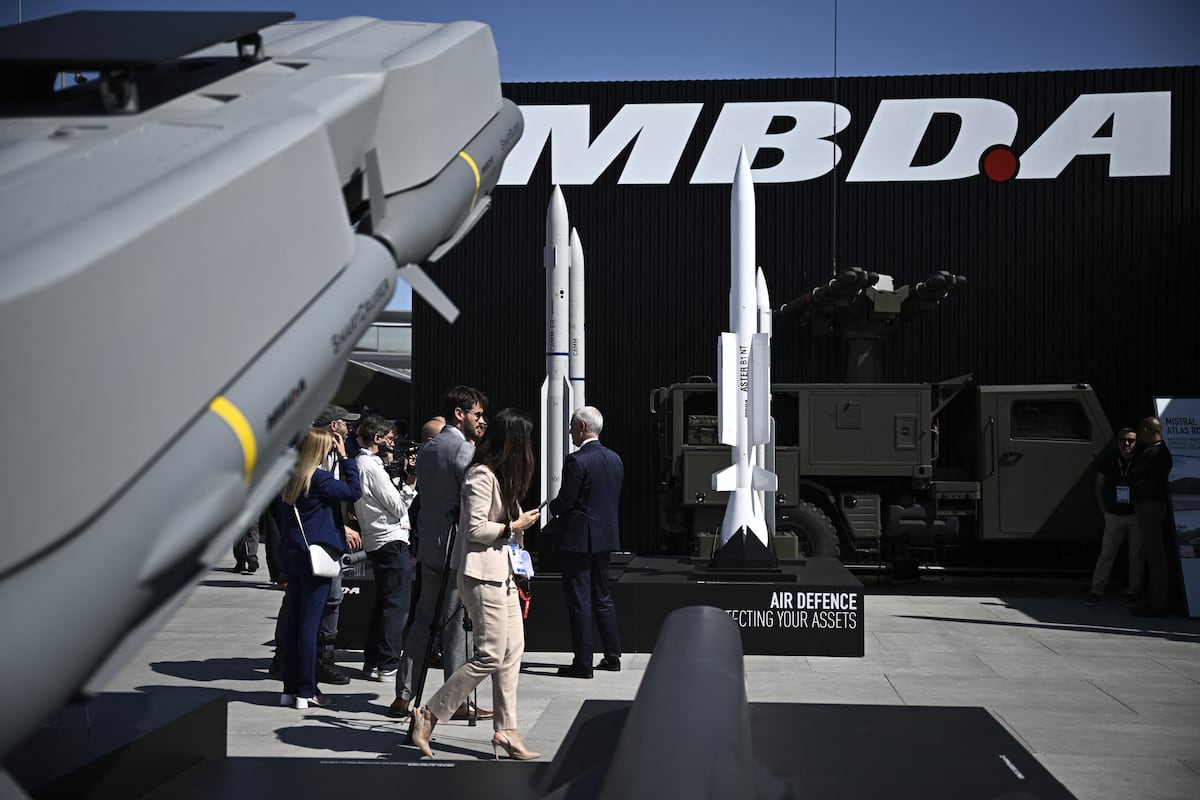
PARIS — France plans to spend an additional €8.5 billion (U.S.$9.8 billion) to buy munitions through to 2030, with the return of high-intensity warfare in the Middle East and Ukraine showing a need for more mass, Prime Minister Sébastien Lecornu told parliament on Wednesday.
The country plans to set up a platform called France Munitions that will serve as an ammunition wholesaler for the French armed forces as well as allies and export clients. The goal is to place bulk orders with manufacturers to speed up an overhaul of industrial production capacity and raise ammo output in France, with funding coming from both the government and private investors, Lecornu said.
European countries have observed munition spending in Ukraine and the Middle East with concern, with the volumes of drones and missiles used in the space of weeks well beyond what they have in stock, and outpacing production capabilities of Europe’s defense manufacturers, for now. The updated spending plan allocates four times more funding to ammunition than a previous law, Lecornu said.
“The urgency is clearly munitions,” Lecornu said. The prime minister said the focus will be on ground-based air defense, early warning drones and particularly counter-drone measures, including interceptor drones and loitering munitions, “which at last must be produced in large quantities at controlled costs.”
The spending on munitions is part of an overall defense budget increase of €36 billion for the 2026-2030 period announced by President Emmanuel Macron in January. The ammunition budget comes on top of €16 billion planned for munitions in the military spending program approved in 2023, according to Lecornu, who was previously France’s armed forces minister.
The security situation requires parliament to speed up the review of the updated military programming law, Lecornu said. The government will present the update on April 8, and table its plans in the National Assembly in the week of May 4 and the week of June 1 in the senate.
France needs to take a deeper look at its models, with drones that cost a few thousand euros capable of triggering the use of an interceptor missile that costs several millions, according to Lecornu, in reference to the conflict in the Middle East.
“Our entire concept of weaponry needs to be rethought,” Lecornu said. “That is one of the lessons of this war, as well as from Ukraine.”
Several innovative French companies are now capable of producing interceptor drones, and Lecornu said he will inaugurate a new production plant near Paris that can churn out thousands of drones per month, together with Armed Forces Minister Catherine Vautrin.
The need is for “quantity and quality, cost and efficiency, innovation and speed, saturation munitions but also precision munitions and therefore decisive strikes,” Lecornu said. “This is a military challenge, it is also an industrial challenge, and therefore a challenge of sovereignty.”
France will also create a €300-million dual-use industrial plan to relocate production lines for critical components that are essential to national defense, modernize others and help civilian industry invest in defense, according to the prime minister.
Lecornu also called for stronger coordination across Europe’s defense industrial base.
The government will propose a new “national security alert regime” that will temporarily speed up decision making, simplify procedures and remove bureaucratic obstacles to strategic projects, Lecornu said. That will also be the purpose of other proposed measures in areas such as counter-drone operations and management of strategic stockpiles, according to the prime minister.
“It would be unacceptable for the nation to be hampered by its own bureaucratic delays in the face of an imminent threat,” Lecornu said. “Our competitors do not impose such constraints on themselves. We cannot be the only ones to impose them when our security is at stake.”
Rudy Ruitenberg is a Europe correspondent for Defense News. He started his career at Bloomberg News and has experience reporting on technology, commodity markets and politics.
巴黎——法国总理塞巴斯蒂安·勒科尔努周三在议会表示,随着中东和乌克兰高强度战争的回归,法国计划在2030年前额外花费85亿欧元(98亿美元)购买弹药,这表明法国需要更多的大规模武器装备。
法国计划建立一个名为“法国军需品”(France Munitions)的平台,作为法国武装部队、盟国及出口客户的弹药批发商。勒科尔努表示,该平台的目标是向制造商批量订购弹药,以加快工业生产能力的改造,提高法国的弹药产量。资金将来自政府和私人投资者。
欧洲各国对乌克兰和中东的军火支出表示担忧,短短几周内使用的无人机和导弹数量就远远超过了它们的库存,而且目前也超过了欧洲国防制造商的生产能力。莱科尔努表示,更新后的支出计划将军火采购资金增加了四倍,是之前法律规定的四倍。
“当务之急显然是军火,”莱科尔努说。总理表示,重点将放在地面防空、预警无人机,特别是反无人机措施上,包括拦截无人机和巡飞弹,“这些最终必须以可控的成本大规模生产。”
这笔军费开支是法国总统马克龙今年1月宣布的2026-2030年国防预算总额增加360亿欧元的一部分。据法国前武装部队部长勒科尔努称,这笔军费预算是在2023年批准的军事开支计划中已规划的160亿欧元军费开支之外的额外支出。
莱科尔努表示,鉴于安全形势,议会必须加快对更新后的军事规划法的审查。政府将于4月8日提交更新后的方案,并分别于5月4日当周和6月1日当周提交国民议会和参议院审议。
勒科尔努在谈到中东冲突时表示,法国需要更深入地审视其无人机模型,这些无人机造价仅几千欧元,却能触发价值数百万欧元的拦截导弹的使用。
莱科尔努说:“我们整个武器装备理念都需要重新思考。这是这场战争以及乌克兰战争给我们带来的教训之一。”
几家具有创新精神的法国公司现在有能力生产拦截无人机,勒科尔努表示,他将与武装部队部长凯瑟琳·沃特兰一起,为巴黎附近一家每月可生产数千架无人机的新生产厂揭幕。
莱科尔努表示,我们需要的是“数量和质量、成本和效率、创新和速度,既包括饱和弹药,也包括精确制导弹药,从而实现决定性打击”。“这既是军事挑战,也是工业挑战,因此也是主权挑战。”
据总理称,法国还将制定一项 3 亿欧元的军民两用工业计划,用于转移对国防至关重要的关键部件的生产线,对其他生产线进行现代化改造,并帮助民用工业投资国防。
莱科尔努还呼吁加强欧洲国防工业基地之间的协调。
莱科尔努表示,政府将提出一项新的“国家安全警戒机制”,旨在暂时加快决策速度、简化程序并消除战略项目面临的官僚障碍。总理还指出,其他拟议措施,例如反无人机行动和战略储备管理等领域的措施,也将达到同样的目的。
莱科尔努表示:“面对迫在眉睫的威胁,国家不应因自身的官僚作风而受阻。我们的竞争对手不会给自己设限。当国家安全受到威胁时,我们不能成为唯一一个给自己设限的国家。”
鲁迪·鲁伊滕贝格是《防务新闻》的欧洲记者。他的职业生涯始于彭博新闻社,拥有报道科技、大宗商品市场和政治方面的经验。