A Helicopter Crash Almost Kept Gene Cernan From Going To The Moon直升机坠毁险些让吉恩·塞尔南与登月失之交臂
Cernan became one of the greats, but it took a little bit of luck to get there.
Updated Jul 3, 2020 3:50 AM EDT
Many Americans are heartbroken over the loss of yet another one of our space pioneers . Eugene Cernan was one of a kind—a daring, focused and super charismatic guy, and his long list of accomplishments, which includes flying into space three times and being the last man on the moon proves it. Even among the elite cadre of test pilots that made up the backbone of the US astronaut corps in the 1960s and early 1970s, Cernan stood out. But his bold nature did get him into a little trouble, and almost cost him his trip to the moon.
It was 1970 and training for mankind’s third mission to land on the moon was well underway. Apollo 14 would follow NASA’s incredibly triumphant failure that was Apollo 13. Alan Shepard, Stuart Roosa and Edgar Mitchell made up the mission’s primary crew, all but Shepard had never been in space, and he only had been up there for a matter of minutes. The backup crew for the mission included Gene Cernan as mission commander, as well as Ronald Evans and Joe Engle. Although it seemed as if Gene’s crew would never need to make the mission, and the training to do so was just for contingency purposes, the training continued in earnest nonetheless.
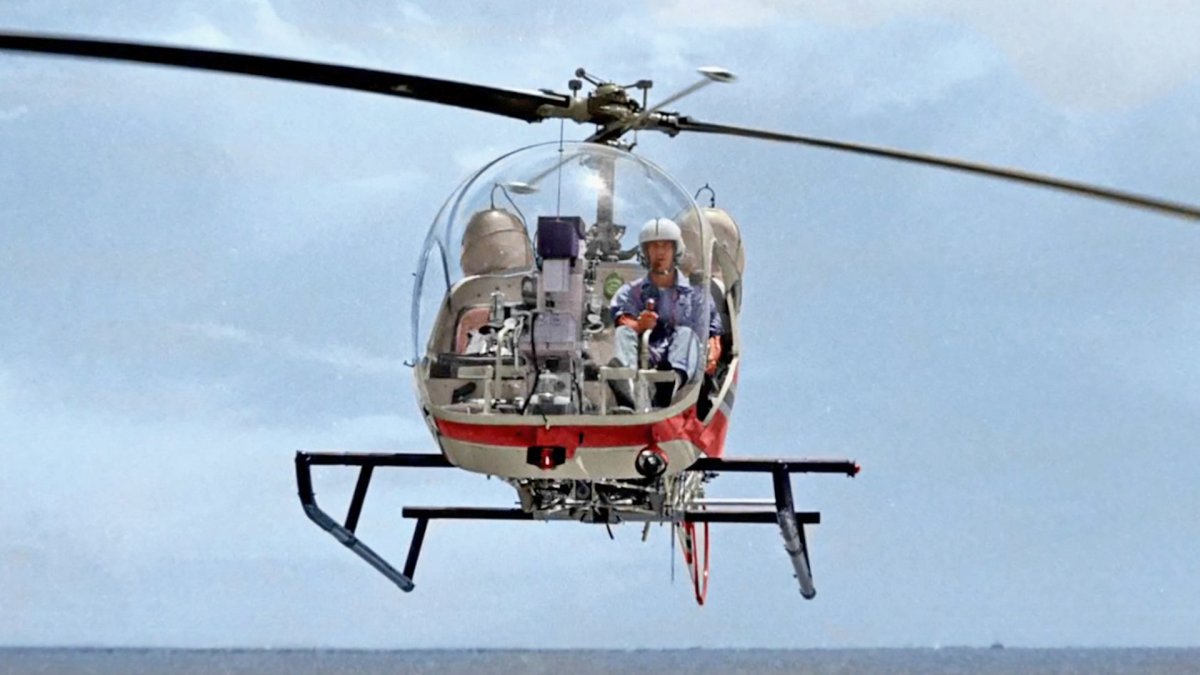
Part of that syllabus was for Cernan, a fixed-wing naval fighter pilot by trade, to keep current on helicopter flying. There were loose similarities between flying a helicopter and handling the lunar module, and being a test pilot it was just another airframe to master. A small fleet of Bell 47Gs were used by the astronauts for this training, one of which Cernan found himself in on January 23rd, 1971, just a week before Apollo 14 was scheduled to leave without him.
After taking off from Patrick AFB near Cocoa Beach, Florida, he took the chopper down to the Banana River, then over the Atlantic, before turning back in towards the coastline. As he made his way towards the Indian river at around 300 feet, he began dropping in altitude. Eventually he was skimming mere inches above the water when the Bell’s left skid submerged, and the helicopter somersaulted into the river, the spinning rotor smashing against the water’s surface and detaching from its mast. A fire quickly broke out when stricken aircraft’s fuel tank ruptured. As the helicopter sank to the river’s shallow bottom. Cernan, who had been fighting to get out of the obliterated aircraft, and eventually surfaced and began swimming away from the wind and fuel-fed fire. Cernan was not wearing a lifevest at the time, but the helmet he was wearing told a very deadly story. The entire top of it that had floated to the surface was totally charred. He was lucky that wasn’t his him.
A 19 year-old in a boat nearby rushed to help the helicopter’s occupant, fearing that they would be badly injured from the violent impact and resulting fire. That wasn’t the case. Gene was alert, mobile and aside from some 2nd degree burns and singed flightsuit and hairline, he seemed fine. After being transported back to Patrick Air Force Base for emergency treatment, the doctors couldn’t find much wrong with him that would require further care. In fact, Cernan seemed barely shaken by the near-death incident.
Following the the crash, James Lovell of Apollo 13 fame headed the investigation board tasked with finding out what happened. Eventually a handful of potential causes for the crash were identified. These human factors were largely associated with illusions of speed and distance that occur when flying over smooth water. Cernan’s past experience as a Navy fighter pilot was also cited as the visual cues while flying at low level in a high-speed fighter are very different than those experienced when plugging along at under 100 knots in a gangly helicopter.
After the investigation ended, Cernan’s assignment as commander of Apollo 17 was put into jeopardy. How was NASA going to hand over a Saturn V rocket, command module and a lunar lander to a guy that just flew a sluggish Bell 47 into a river? Apparently, that was the subject of very heated debate within the institution.
As a result of cutbacks following Apollo 13, NASA’s ten planned missions to the moon were cut down to just six. As such, those astronauts that were in the running to go on an Apollo moon-landing mission were faced with the fact that the chances of doing so were much lower than they had been originally. Under the revised flight schedule, Apollo 17 would be the last mission to the moon and two crews were competing for it. Considering Cernan had the helicopter crash under his belt, it seemed logical that another commander would take his place. Dick Gordon was that other commander.
One man in particular, the head of flight crew operations and Mercury Seven alumn Donald “Deke” Slayton , held much of the power as to who would get to fly and on what mission. Apparently he wanted Cernan, not Gordon to command America’s final moonshot. Geologist Harrison Schmitt,that was originally part of Gordon’s crew was ported over to Cernan’s crew in the shuffle, which added to the friction between the two command-level astronauts. Today the Apollo 17 crest reads Cernan, Schmitt and Evans. In the end even dumping a perfectly good helicopter in a river couldn’t keep Cernan from reaching the lunar landscape, and as a result, Gordon would never touch the lunar surface.
The 1971 crash wouldn’t be the last time Gene Cernan had a brush with death while traveling in a helicopter. On October 29th, 2001 nearly 30 years after his first helicopter crash, Cernan, fellow astronaut John Blaha and Cosmonaut Vladimir Remek were flying aboard a Mi-8 over the Czech Republic when the aircraft rapidly lost engine power and crashed roughly 60 miles south of Prague. Nobody died in the incident, but two of the crew were badly injured. Once again Cernan walked away from the helicopter, or at least what was left of it, unharmed.
Cernan, like many of us, has become fairly disgusted with the state of America’s space program , and was a strong advocate for going back to the moon and beyond. He has also been incredibly forthcoming about the complexities of the incredible life he lived, and how work often took precedence over family. Something he described as “a selfish life” in recent years. A true hero, Cernan was not unafraid to openly share his own weaknesses and failures as well as his triumphs.
Thankfully, this complex American icon conveyed many of his reflections on life, both inside a flightsuit and out, in the marvelous documentary “Last Man On The Moon.” You will have a hard time finding a better way to spend your time or money than renting it here on YouTube , especially to reflect on and to celebrate the amazing life of this modern-day explorer
In closing, I would like to share Gene’s last word’s on the Moon, they are also the last ones any human has spoken on another celestial body:
“…As I take man’s last step from the surface, back home for some time to come–but we believe not too long into the future–I’d like to just say what I believe history will record: that America’s challenge of today has forged man’s destiny of tomorrow. And, as we leave the Moon at Taurus–Littrow, we leave as we came and, God willing, as we shall return, with peace and hope for all mankind.”
Godspeed Captain Eugene Cernan, who died at 82 years young yesterday, January 16, 2017.
Contact the author Tyler@thedrive.com
Comments couldn’t be loaded. Please refresh the page.
更新于美国东部时间2020年7月3日凌晨3:50
许多美国人为又一位太空先驱的离世而感到无比悲痛。尤金·塞尔南是一位独一无二的人物——他大胆无畏、目标明确、极具个人魅力,他辉煌的成就足以证明这一点,其中包括三次太空飞行和成为最后一位登上月球的人。即使在20世纪60年代和70年代初构成美国宇航员队伍中骨干的精英试飞员中,塞尔南也脱颖而出。然而,他大胆的性格也给他带来了一些麻烦,几乎让他与登月之旅失之交臂。
1970年,人类第三次登月任务的训练正在如火如荼地进行中。阿波罗14号将接在NASA阿波罗13号那次令人振奋却又以失败告终的壮举之后。艾伦·谢泼德、斯图尔特·罗萨和埃德加·米切尔组成了此次任务的主力乘组,除了谢泼德之外,其他三人此前都从未进入过太空,而谢泼德也仅仅在太空停留了几分钟。任务的备用乘组包括任务指挥官尤金·塞尔南,以及罗纳德·埃文斯和乔·恩格尔。尽管尤金的乘组似乎永远不需要执行这次任务,相关的训练也只是为了应对突发情况,但训练仍然如火如荼地进行着。
课程的一部分内容是让塞尔南——一位原本是固定翼海军战斗机飞行员——保持直升机飞行技能。驾驶直升机和操控登月舱有一些相似之处,作为一名试飞员,这只不过是另一种需要掌握的机型而已。宇航员们使用少量贝尔47G直升机进行训练,塞尔南在1971年1月23日乘坐了其中一架,而就在一周后,阿波罗14号计划在他缺席的情况下升空。
从佛罗里达州可可海滩附近的帕特里克空军基地起飞后,他驾驶直升机先是飞到香蕉河,然后飞越大西洋,最后转向海岸线。当他以大约300英尺的高度接近印第安河时,飞机开始下降。最终,他几乎贴着水面飞行,贝尔直升机的左侧起落架突然没入水中,直升机翻滚着坠入河中,旋转的旋翼撞击水面并与桅杆脱落。受损飞机的油箱破裂,迅速引发火灾。直升机沉入河底。塞尔南一直在努力从损毁的飞机中逃生,最终浮出水面,开始游向远离风和燃油助燃的火源。当时塞尔南没有穿救生衣,但他戴的头盔却诉说着一场致命的遭遇。头盔顶部漂浮到水面的部分已经完全烧焦。幸运的是,他没有被烧死。
附近一艘船上的一名19岁青年立即冲上前去帮助直升机上的乘客,他担心乘客会因猛烈撞击和随后的火灾而受重伤。但事实并非如此。吉恩意识清醒,行动自如,除了几处二级烧伤、飞行服和发际线被烧焦外,他看起来并无大碍。在被送回帕特里克空军基地接受紧急治疗后,医生们并没有发现他有什么需要进一步治疗的严重问题。事实上,塞尔南似乎并没有因为这次死里逃生而受到太大惊吓。
坠机事件发生后,因阿波罗13号任务而闻名的詹姆斯·洛弗尔领导了事故调查委员会,负责查明事故原因。最终,调查确定了几个可能的坠机原因。这些人为因素主要与在平静水面上空飞行时产生的速度和距离错觉有关。此外,塞尔南曾担任海军战斗机飞行员的经历也被提及,因为驾驶高速战斗机低空飞行时的视觉感知与驾驶笨重的直升机以低于100节的速度缓慢飞行时的视觉感知截然不同。
调查结束后,塞尔南担任阿波罗17号指令长的任命岌岌可危。美国宇航局怎么能把土星五号火箭、指令舱和登月舱交给一个刚刚把一架笨重的贝尔47直升机开进河里的人呢?显然,这在宇航局内部引发了激烈的争论。
由于阿波罗13号任务后的预算削减,NASA原计划的十次登月任务缩减至六次。因此,那些原本有机会执行阿波罗登月任务的宇航员们不得不面对一个残酷的现实:他们的机会远比最初设想的要低得多。根据修订后的飞行计划,阿波罗17号将是最后一次登月任务,而两组宇航员正在竞争这一任务。考虑到塞尔南曾遭遇直升机坠毁事故,由另一位宇航员接替他的位置似乎合情合理。迪克·戈登正是这位接替他的宇航员。
其中一位关键人物,飞行机组运行主管、水星七号成员唐纳德·“迪克”·斯莱顿,对谁能执行飞行任务以及执行哪个任务拥有很大的决定权。显然,他想让塞尔南而不是戈登指挥美国最后一次登月任务。地质学家哈里森·施密特原本是戈登机组的成员,但在这次人员调整中被调到了塞尔南的机组,这加剧了两位指挥级宇航员之间的摩擦。如今,阿波罗17号的徽章上刻着塞尔南、施密特和埃文斯的名字。最终,即使把一架完好的直升机扔进河里,也无法阻止塞尔南登上月球表面,结果,戈登永远也未能踏上月球。
1971年的那次坠机事故并非吉恩·塞尔南最后一次在乘坐直升机时与死神擦肩而过。2001年10月29日,在他第一次直升机坠毁近30年后,塞尔南与宇航员约翰·布拉哈和弗拉基米尔·雷梅克乘坐一架米-8直升机飞越捷克共和国上空时,飞机引擎突然失去动力,坠毁在布拉格以南约60英里处。事故中无人死亡,但两名机组人员受重伤。塞尔南再次毫发无损地离开了直升机——或者至少是从残骸中走了出来。
和我们许多人一样,塞尔南对美国太空计划的现状感到相当失望,他曾是重返月球乃至更远太空的坚定拥护者。他也非常坦诚地讲述了自己传奇人生的复杂性,以及工作如何常常凌驾于家庭之上。近年来,他将这种生活描述为“自私的生活”。作为一位真正的英雄,塞尔南毫不避讳地分享自己的弱点和失败,以及他的成就。
值得庆幸的是,这位复杂的美国偶像人物在精彩的纪录片《月球上的最后一人》中,分享了他对人生的诸多思考,无论是在飞行服内还是在日常生活中。你很难找到比在YouTube上租借观看这部纪录片更好的消遣方式,尤其适合用来反思和颂扬这位现代探险家的传奇人生。
最后,我想分享吉恩在月球上的最后遗言,这也是人类在其他天体上留下的最后遗言:
“……当我迈出人类离开月球表面的最后一步,返回家园——虽然我们相信不会太久——我只想说一句我相信历史将会记载的话:美国今天面临的挑战已经塑造了人类明天的命运。当我们离开金牛座的月球时,我们带着来时的和平与希望离开,愿上帝保佑,我们也带着来时的和平与希望返回,为全人类带来和平与希望。”
一路走好,尤金·塞尔南上尉,他于昨天(2017 年 1 月 16 日)去世,享年 82 岁。
联系作者:Tyler@thedrive.com
评论加载失败,请刷新页面。