Reflections And Wisdom From A Cold War Submarine Hunter一位冷战时期潜艇猎手的反思与智慧
We talk about what was and what could have been for the S-3 Viking, and about the future of the Navy's shrunken sub-hunting force.
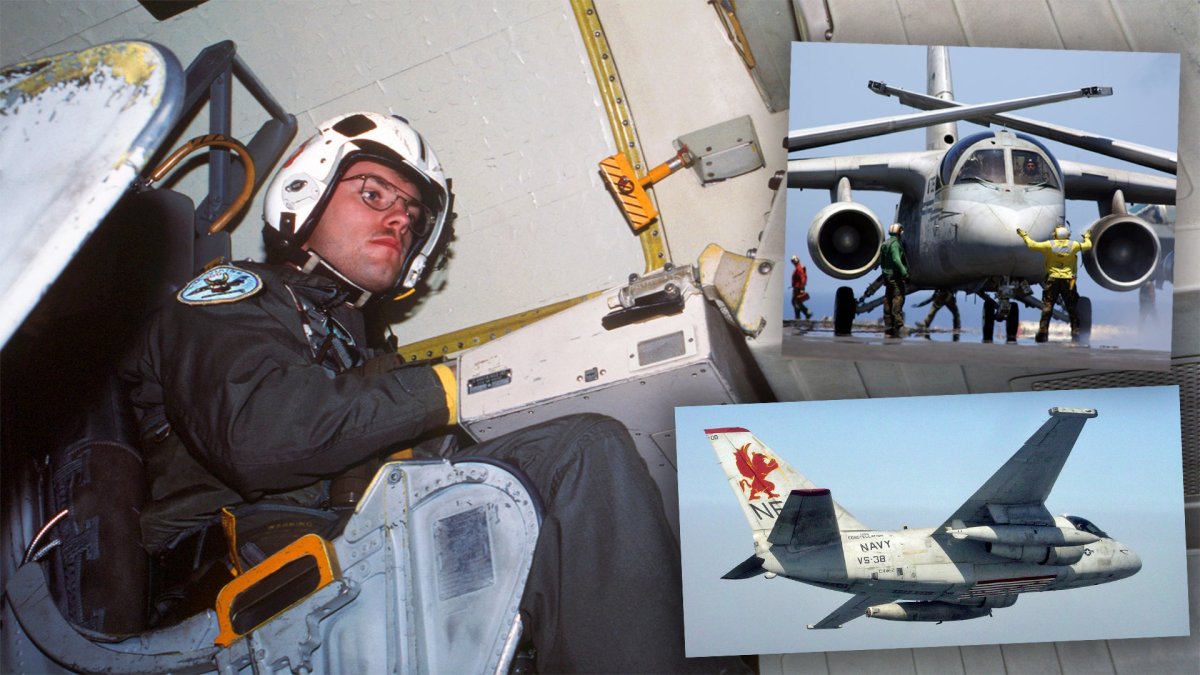
By Kevin Noonan and Tyler Rogoway
Updated Dec 30, 2020 4:11 PM EST
From overcoming his fears and personal roadblocks in order to master the complex art of submarine hunting to heading out on his first carrier cruise and working to fit into the Navy’s unique squadron culture to chasing-down Soviet submarines in the Mediterranean during the twilight of the Cold War, Kevin Noonan has strapped us into an S-3 Viking right beside him and has taken us on a thrilling ride. Now, in this fourth and final installment in our Confessions Of An Ancient Sub Hunter series, Noonan reflects on what was and what could have been for the enigmatic S-3, as well as the challenges looming on the horizon for the U.S. Navy’s shrunken anti-submarine warfare community and for the service overall.
We talk everything from secretive ES-3A Shadows, short-lived US-3A ‘Miss Piggies,’ how the Viking and her crews fought to make a name for themselves within the carrier air wing, the relevancy of the aircraft carrier in modern warfare, and what it is really like being the ‘guy in the back’ of a combat jet. So, strap back in, spool-up the turbofans, and prepare to launch!
An S-3 Viking armed with Mk 20 Rockeye cluster munitions is about to roar off the carrier’s bow., US Navy
The Viking’s Place In The Carrier Air Wing Pecking Order
‘Harpooning’ the Viking will meet another criticism of the aircraft made by traditional carrier aviators, who feel that the embarkation of fixed-wing ASW aircraft has compromised the concept of the attack carrier, and reduced its striking power . – An Illustrated Guide to Modern Naval Aviation and Aircraft Carriers
With the decommissioning of the Essex class anti-submarine warfare (ASW) carriers and the introduction of the S-3 to the supercarriers, deck space that was already at a premium was now jealously coveted. Fighter and attack guys, as well as carrier skippers and air wing commanders (CAGs), wanted as many F-4s, F-14s, A-4s, A-6s, and A-7s as possible to carry out the mission of the attack carrier. The presence of a handful of E-2s, EA-6Bs, and helicopters was tolerated since they served their masters well. The Viking, however, really did nothing to enhance their concept of the warfare they were charged with conducting. So, can you imagine what these gentlemen were thinking in the early to mid-1970s when a squadron of ten S-3 Vikings suddenly invaded their sacred deck-space?
A vertical view of the aircraft carrier USS Kitty Hawk (CV-63). Visible on the flight deck are the following aircraft: an H-46 Sea Knight helicopter, foreground, two A-7 Corsair IIs, and S-3 Viking, two E-2 Hawkeye Airborne Early Warning (AEW), center, aircraft, an F-14 Tomcat and S-3 Viking and five EA-6B Prowler aircraft, background. Circa 1983., US National Archives
Just to give you an idea of how much space, here are the S-3’s sexy measurements: Her wingspan was 68 feet with the wings spread or 29 feet with them folded. Her length was 53 feet. She stood tall at almost 23 feet, or 15 feet with her tail folded. By the way, at the apex of wings’ spreading or folding, the height of the Viking was 31 feet!
Among the punishments doled out for our excessive presence on the sovereign four and a half acres of fighter-attack territory, administered to all VS squadrons upon entering the Med [the Mediterranean Sea], was the banishment of two or three of our birds to the purgatory of Naval Air Station Sigonella, Sicily. What they assumed was punishment was actually a two to three-week vacation from the boat.
We would change-out aircraft and crews and maintenance personnel in order to give everyone a chance to ‘suffer.’ Ya know? I never did thank CAG and the fighter-attack guys for this! If there was a submarine in the general vicinity of Sicily, we would go out for a hunt. Otherwise, tasking while at ‘Sig’ tended to focus on recon of the Soviet anchorage just off of Tunisia or tracking the various ships the Soviets sent into the Med that steamed past Sicily.
Unfortunately, far worse for our reputation than the obesity of our presence on the carrier was that perennial problem plaguing the “A” model of the S-3, the one I touched on above.
Give me a moment to shed a little more light on the subject:
Since the technology placed in the Viking by Univac and Texas Instruments was cutting-edge for a carrier-based aircraft, our computer took a long time getting used to the standard-issue violence any aircraft endured during a catapult launch or arrested landing. Industry, engineers and NAVAIR evaluators at Pax River [Naval Air Station Patuxent River in Maryland] worked hard to eliminate the software and hardware problems that came to light as flight hours mounted through the 1970s. However, they never were able to completely cure a painfully regular problem associated with our Tape Transport Cartridge (TTC).
F/A-18 Hornet and S-3 Viking sharing an elevator on a carrier during nighttime. , USN
Basically, the TTC was a “floppy” disk that booted up the aircraft computer and had relevant software that could be loaded by the ASMOD [Anti-Submarine Modules, an intelligence element that coordinates ASW operations] for the pending mission (ESM [electronic support measures] emitters, target data, Link 11 info, fly-to-points, etc.). If we had any problems with the load while on deck, we’d shut down the #2 engine and one of our amazing AXs or ATs would come in and troubleshoot. The AX rating was an electronics technician that focused on our ASW black boxes. The ATs were electronics technicians that focused on aircraft electronics other than ASW gear. As the Cold War came to an end, the AX rating was retired and absorbed into the AT rating.
Keep in mind, we normally flew with a regular Air Wing cycle, which meant we launched with the E-2 ahead of perhaps four Tomcats, five A-6s, and four A-7s. If our troubleshooting took too long, the fighters and attack birds would launch ahead of us. When a problem didn’t get resolved, we were now affecting deck spotting for the previous cycle that had been waiting in the overhead stack to recover. Once we did launch, then everyone kept their fingers crossed that the computer’s load would hold.
Many times it didn’t.
The utter shock the aircraft suffers at the end of the cat stroke makes every airplane tremble. Can you imagine, then, how it is for any sensitive electronics on board? This is what occurred with each launch for the GPDC [general purpose digital computer] in the S-3A. As late as 1987, we were required to inform the Air Boss or Alpha X-ray of the status of our load once we were airborne: Alpha – fully working system. Bravo or Charlie – computer working in degraded state with only some sensors working. Delta – no computer load. When we reluctantly reported a Delta load, you could hear the wailing and gnashing of teeth in the voice of the Air Boss or Alpha X-ray.
Essentially, we were just a hunk of aluminum boring holes in CAG’s sky. If he was having a really bad day, he’d tell the Air Boss to send us to “Delta overhead and await the next recovery,” which meant we had to fly a purgatorial pattern above the ship and burn precious Air Wing fuel until we could land again. Our lack of a system meant no ESM, no radar except in an analog mode that couldn’t provide the battle group with any Link 11 surface plot data since the computer wasn’t working, no acoustics, nothing.
An Air Anti-submarine Squadron 21 (VS-21) S-3A Viking aircraft comes in for a landing on the flight deck of the nuclear-powered aircraft carrier USS Enterprise (CVN-65) during FLEET EX ’88. The Enterprise is seen here operating near Adak, Alaska., US National Archives
It took a long time for the S-3 to earn the respect she deserved. I’ve since discovered that there was a move in NAVAIR during the late ‘70s to early ‘80s to remove the S-3 from the carrier deck altogether and modify the airframes to be permanent tankers, CODs [Carrier Onboard Delivery], and a design to replace the Whale [the A-3 Skywarrior], all things that would actually come to pass. Thankfully, the complete removal didn’t happen. Someone somewhere was fighting for us—at least they were back then.
As the prominence of Vietnam-era dogfights and airstrikes faded with the close of the ‘70s and the increasing Soviet threat to the carrier battleground (CVBG) invaded the minds of senior officers, attitudes toward the Viking did begin to change. Then, as the decade of the ‘80s came to a close, significant changes were made to the S-3. Each of these changes, such as an exciting new radar, supplying the fighter-attack guys with the sweet nectar of JP-5 jet fuel from our own loins, and the Harpooning of the Viking, would contribute to the removal of the chip on the shoulder of the Air Wing and carrier toward the S-3, for the most part, anyway. Aboard some carriers, the Viking community would actually experience genuine respectful admiration, and dare I say…love?
Most importantly, damning computer loading problems would vanish.
It took time for the ship’s company and air wing crews to get used to the presence of the S-3 Viking squadrons. We adapted, and by the time I walked aboard the USS Nimitz at the end of 1986 and headed off for my first Med cruise, the Viking community was just another squadron in the sea of 5000-6000 sailors aboard. They certainly didn’t love us — nonetheless, we were family.
Onboard Nimitz , we were well established with our ready room, our maintenance spaces, and our berthing. Most importantly, to the AWs (Aviation Warfare Systems Operators) of VS-24, we had our own aircrew shop where we held shop meetings, did our various collateral duties, got our asses chewed out by the Chief, “smoked and Coked,” and played computer games on the shop’s Commodore 64…Yes, you read that right.
As aircrew, we didn’t suffer the 12 hours on, 12 hours off schedule that our squadron mates and ship’s company had to endure every day we were at sea. We lived according to our flight schedule.
An S-3 crewman boards the jet., US National Archives
During a Med cruise, an AW Shop tended to have between 14 and 17 Naval aircrewman. With 10 aircraft, we could man the birds, day and night, and still have three SENSOs [sensor operators] to stand Assistant Squadron Duty Officer watch in the ready room. When we weren’t briefing and flying, we were sleeping, training, and studying Soviet naval vessel recognition and tactics or doing our collateral duties such as filling out all the squadron aircrew log books, calculating crew/aircraft flight time and mission statistics, updating classified publications and NATOPS manuals.
My berthing aboard the Nimitz was particularly amazing. It was a 20 man-berth that was curtained off. It was our own sanctuary that was essentially off-limits to everyone. We could sleep day or night without interruption. I was grateful that I had a top rack (what the Navy calls a bed) that lay longitudinally along the ship’s axis. It takes heavy weather to make a 100,000-ton ship move and when we were sailing through a storm, my bunk would rock me into a magnificent slumber.
On a particular set of nights in the Western Mediterranean in early 1987, I was able to listen to a lullaby of our escorts’ bow-mounted SQS-26 sonars pinging through the water and the steel of our hull while we passed through a winter storm. It was pure heaven!
As I described above, all of this would change when we joined the brand new Theodore Roosevelt . I would never again enjoy the steel sanctuary and sense of a familiar old friend that the Nimitz was.
Surprisingly, during the two cumulative years I spent at sea over a four-year period, my carrier only went to General Quarters (GQ)—or battle stations—one time. Aboard the Theodore Roosevelt , we had a fire erupt in the auxiliary diesel engine room. The fire was quickly contained and put out by the outstanding Damage Control (DC) teams. Our blackshoe brethren were, for the most part, despised by the brownshoes—or aviation Navy—and vice versa. We rarely appreciated how often they saved our asses.
All of our other GQs were only exercise or training events. We used to have a standard joke: “When the carrier goes to battle stations, the air wing goes to bed”—or hides in our respective ready rooms. It was a pain in the ass to move around the ship since everywhere you went you technically had to get Damage Control (DC) Central’s permission to move and all the hundreds of water-tight doors were dogged down. If you did venture out of the ready room on your way to the flight deck to fly a mission, you had to step over members of the DC teams that were spread across the carrier on every deck.
Now, years later, and in light of what the USS Stark , Samuel B. Roberts , Cole , Fitzgerald , and McCain have suffered, I deeply regret not participating in these evolutions with the DC Teams. Had we collided with another ship, or received actual combat damage aboard my two carriers, we in the air wing would not have been prepared to help save our boat—just as the major carrier fires aboard USS Forrestal , Oriskany , and Enterprise had confirmed.
Crew members practice firefighting techniques while another crew member acts as a simulated casualty during a general quarters drill aboard the nuclear-powered aircraft carrier USS Theodore Roosevelt (CVN-71). An Air Anti-submarine Squadron 32 (VS-32) S-3A Viking aircraft is parked in the background. Circa 1987., US National Archives
Overall, life aboard an aircraft carrier was incredibly generous and, despite our bitchin’ while at sea, it was a truly fortunate experience for those of us who were aircrew.
I left the Navy before I had a chance to see one of the two most successful variants of the S-3, the ES-3A Shadow. It was my understanding that, at the time, you had to have a Top Secret (TS) clearance to simply climb up inside her cockpit. The vast majority of AWs only had a secret clearance until a TS became mandatory in the early ‘90s.
My one connection with this mysterious aircraft came when I was an instructor. Since no Shadow airframes were available at the time, the first class of enlisted backseaters needed to be trained in emergency egress procedures, inflight safety, and the operation of two of the sensors that the ES-3A would retain from her first life as a Viking – the APS-137 radar and the ESM suite. After classroom training, we took each of them on a single familiarization hop in the backseat of one of our S-3Bs.
Because of my lack of experience with this beautiful mutation of the Viking family—I’m a sucker for airplanes with all kinds of tumorous growths on them—I have to rely on the always-excellent work done by Squadron Signal Publications in their book S-3 Viking In Action by Brad Elward. His section on the Shadow is probably the best available. I highly recommend this particular text for its collection of magnificent pictures and outstanding info contained within a very short 80 pages.
Actually, I just missed seeing the ES-3A by a few months since the USN chose to do field conversions at NAS Cecil Field instead of at the Lockheed plant. Sixteen Viking airframes were chosen to morph into the Shadow. While the basic bones remained, it was quite obvious that she was nothing like her old ASW/ASuW [Anti-Submarine Warfare/Anti-Surface Warfare] self.
An Air Test and Evaluation Squadron 1 (VX-1) ES-3A Shadow aircraft sits on an elevator on the aircraft carrier USS Saratoga (CV-60) during the NATO exercise Display Determination ’92., US National Archives
The Navy decided in the late ‘80s to end the long career of its only carrier-based signals intelligence (SIGINT) aircraft, the EA-3B “Whale.” They didn’t have an immediate replacement but Lockheed offered their concept of the ES-3 to replace the ongoing need for the gathering of electronic intelligence (ELINT) and communications intelligence (COMINT) for the battlegroup. The USN accepted the concept and awarded the contract.
The Navy, which loved to tinker with aircraft already in its inventory, was wooed by Lockheed’s major selling point: the Viking’s airframe had proven itself inherently stable and reliable over the previous decade and a half. That foundation allowed for non-disruptive modifications, such as the removal of the sonobuoy chutes and the MAD [ magnetic anomaly detector ] boom.
Of course, the nature of the Shadow’s missions required significant additions of displays, devices, and the black boxes that ran them. Space inside the aircraft was carved out for these critical boxes with the removal of the acoustic processing equipment, which took up most of the left side of the avionics tunnel. However, it wasn’t near enough room.
More carving took place in the weapons bay, where a full suite of electronics replaced the space normally reserved for torpedoes and bombs. This exponential increase in electrons and heat would require an even better cooling source than what the original Viking design offered, so a vapor cycle system “was installed to provide air conditioning for the new electronics in the bay and to sanitize moisture and salt from the aircraft to reduce corrosion,” writes Elward. Her ESM was upgraded as were her communications and navigation capabilities.
The old GPDC was replaced with not one, not two, but with three computers. Elward continues: “Finally, the Shadow incorporated the Multi-Static Processor (MPS), which gave the ES-3A a passive airborne exploitation capability in the same league as the larger EP-3E and RC-135 Rivet Joint.”
The crew changed as well. Instead of the Viking’s three officers and one enlisted aircrew, the Shadow had a pilot who was the Electronic Warfare (EW) mission commander and an NFO (Naval Flight Officer) who was the EW [Electronic Warfare] Combat Coordinator (EWCC) upfront.
Behind the front seaters, two enlisted aircrewmen occupied the rear cockpit. If the mission was primarily COMINT, a Naval Aircrewman qualified as a cryptologist technician (CTI) would fly. If it was primarily ELINT, an EW Operator (EWOPS) would occupy one or both of the rear seats.
The addition of all the bells and whistles came at the cost of 4,000 additional pounds, making the aircraft considerably more sluggish. Regardless, the ES-3A performed her SIGINT missions for the CSG commander and was called upon to execute additional tasks, such as Overland Battle Damage Assessment (OBDA) and Over-The-Horizon Targeting (OTH-T), all-the-while keeping the air wing in the gas by retaining her much-needed tanker capability.
A U.S. Navy Lockheed ES-3A Shadow (BuNo 159401) from Fleet Reconnaissance Squadron VQ-6 Black Ravens in flight off the Florida coast. This aircraft was retired to the AMARC as 2S0036 on 24 February 1999 and scrapped on 8 January 2003., USN
Another critical mission that the Shadow performed for the CSG was assessing combat electronic order of battle (EOB), in which threat emitters and other enemy RF [radio frequency] sources would be categorized, mapped, and potentially exploited by the CVBG.
Elward describes just such a mission:
Typically, Shadows flew missions at high altitudes at long standoff range gathering information about enemy air defense networks, listening to communications, and helping identify and classify potential targets. Shadows often worked together with S-3Bs to create an overall EOB. Due to the limited number of ES-3As in the detachment, Shadows would often fly a mission along a designated route, followed by an S-3B Viking using its ESM suite and then compare data obtained from the two flights before making a second Shadow flight where the ES-3A would fine-tune the observations.
Typically, Shadows flew missions at high altitudes at long standoff range gathering information about enemy air defense networks, listening to communications, and helping identify and classify potential targets. Shadows often worked together with S-3Bs to create an overall EOB.
Due to the limited number of ES-3As in the detachment, Shadows would often fly a mission along a designated route, followed by an S-3B Viking using its ESM suite and then compare data obtained from the two flights before making a second Shadow flight where the ES-3A would fine-tune the observations.
The Shadow joined the fleet in 1992, with the birds going to one of two squadrons on each coast of the US. Fleet Air Reconnaissance Squadron (VQ-5), the Sea Shadows , was established initially at Guam and later was transferred to NAS North Island in 1994. In April of 1993, VQ-5 made the first operational deployment of the ES-3A aboard USS Independence . The east coast stood up VQ-6, the Black Ravens , at NAS Cecil Field with the first deployment aboard USS Saratoga in January of 1994.
The ES-3A Shadow flew operationally, including working with NATO operations in Bosnia, until 1999 when “costs and budgetary constraints” ended what should have been a remarkable aircraft’s long career. With its loss, CSG commanders would have to rely on land-based EP-3E assets and USAF aircraft to meet their ever-increasing SIGINT needs.
The Shadow airframes, now joined by their Viking kin, rest on a plot of desert Bone Yard in a world no longer at peace. Once again, one has to question the USN’s decision-making process and lack of foresight. Of course, budgetary myopia seems always to trump common sense, simple wisdom, and the unheeded lessons history keeps trying to teach us.
Obviously, with the transition from the propeller-driven S-2 to the jet-powered S-3 Viking, the C-1A Trader variant of the Tracker that served as the primary Carrier Onboard Delivery (COD) aircraft would have to be replaced, as well. Lockheed, seeing a chance to take a chunk out of Grumman’s dominance of carrier deck space which included the C-2A Greyhound, offered a variation of the S-3 airframe. Surprisingly, the USN awarded the contract in 1975 for six US-3A CODs.
Lockheed decided to make use of the seventh YS-3A airframe, stripping out all mission electronics. Since no passenger-now-prisoner of a crashing airplane would be pleased with having their flight crew leave them behind via pyrotechnics, the Viking’s four ejection seats were removed.
A U.S. Navy Lockheed US-3A Viking (BuNo 157995) from Fleet Logistic Support Squadron 50 (VRC-50), the “Foo Dogs,” prepares to be launched from the nuclear-powered aircraft carrier USS Carl Vinson (CVN-70) on 21 January 1987. The Viking BuNo 157995 was originally delivered as a YS-3A research and development aircraft and converted to a US-3A in the late 1970s. It was retired to AMARC as 2S0034 on 29 January 1996 and scrapped in 2003., USN
In their place, a pilot, co-pilot, a loadmaster, and up to six rear-facing passenger seats were installed. Cargo space was carved out of the weapons bay and two big cargo-carrying blivets could be slung under each wing station in place of fuel tanks. In lieu of passengers, additional cargo could be carried internally for a total capacity of 7,400 pounds. However, the addition of the blivets reduced her range from 2,700 nautical miles to just over 1,900 nautical miles, which was still very substantial.
Was Miss Piggy , as her crews and the fleet affectionately called her, a worthy replacement of the Trader? While the C-1A could carry up to nine passengers, it could only carry 3,500 pounds of cargo. As I mentioned above, the USN already had a COD aircraft, a variant of the E-2 Hawkeye. The C-2 Greyhound became operational in 1965, a full decade before the Viking variant contract was awarded. Its two Allison T-56 turboprops could haul 10,000 pounds of cargo, including outsized aircraft engines, personnel, and most importantly to the CVBG sailor, mail . Clearly, the Greyhound could do the job better.
Flight and ground crewmen unload cargo from US-3A “Miss Piggy’s” giant blivet. Circa 1981., US National Archives
So, why did the USN choose to utilize Miss Piggy ? I really don’t have a clue. Add to the mystery that the US-3s were limited to the west coast Navy and flew only in the 7th Fleet area of operations out of Subic Bay in the Philippines or Diego Garcia in the Indian Ocean. Also, the only squadron that flew the six aircraft was the Foo Dogs of VRC-50—“VRC” being the designation for Fleet Logistics Support Squadron. When I find an answer as to what the Navy was thinking with the US-3A, I’ll let you know.
A couple of times a month I’m asked if the decision by the U.S. Navy to retire the S-3 Viking in 2009 was a mistake. One conclusion I have drawn, while mulling over this critical question, is that there is a far more important consideration that is essentially ignored: “Was the resolution to remove the SENSO and the ASW mission equipment for which the Viking was originally designed, a fateful miscalculation?”
This move, made nine years prior to the aircraft’s retirement, was symptomatic of the utter failure of the Navy to stay the course after the end of the Cold War on what arguably was and is its most important mission—anti-submarine warfare.
Okay, so I got that small measure of bitching off my chest. Now, onto the larger issue of retiring the aircraft altogether. Was it a mistake for the Navy to do so? Should it bring the S-3 back to be a tanker and perform other missions? Are current ASW measures enough to protect the Carrier Strike Group (CSG) and Expeditionary Strike Group (ESG) while performing the other ASW missions necessary to meet the “new” threat posed by the Russians, not to mention the Chinese—a threat that is relatively new but not unexpected?
First, let me acknowledge just how ignorant the empowered minds had to be not to have seen how many hats the Viking had worn, and how many variants were theorized and produced from one, single, brilliant airframe. Of course, the ignorant aren’t completely to blame. The VS [air anti-submarine and sea control squadron] community had decades to develop a reputation, as the VP [patrol squadron] community did, and lobby for the life of the S-3. Our subordination in the air wing didn’t have to be an accepted limitation.
Now, in a world filled with contradiction, allow me to add one of the many I own:
It was a mistake to retire the S-3…and…it wasn’t a mistake.
An air to air left side view of an Air Anti-submarine Squadron 31 (VS-31) S-3A Viking aircraft banking right. The Soviet command cruiser Zhdanov is underway in the background. Circa 1987., US National Archives
It wasn’t, because at the time it did make fiscal sense – that is if you subscribe to the group who were quite certain that the end of history was upon us and we would all live happily ever after. However, Desert Storm, Bosnia, Somalia, and the planet changing effect of September 11th made it quite obvious that happily ever after is found only in naïve minds and fairy tales.
Yet, less than a decade after the same euphoric thinking that pulled the SENSO out of the Viking reared its ugly head and made the myopic choice to remove the aircraft from fleet inventories altogether. That thinking failed to consider, with one eye in a history book, what was really going on in the world and how removing a critical in-flight refueling asset would affect the only strike mission aircraft left on the carrier’s deck.
The Navy bought into the concept that there would always be a USAF tanker ready for the air wing to plug into, no matter where the carriers were in the world. This is the same thoughtless argument that believes a P-8 will always be overhead to protect every CSG and ESG while still having plenty of airframes to perform open ocean search and tracking of subsurface threats that, in the 21st Century, have slipped away from our convenient assumptions of how they’re supposed to behave. That’s not to mention the numerous other missions expected of the Poseidon.
P-8 Poseidon seen during testing., USN
A word about the P-8 and availability. Back in the day, if there was a potential submarine threat, VP (P-3 Orion squadron) support of a CVBG was mostly requested at night unless we were in a major ASW exercise. CAGs and carrier COs preferred daylight cyclical ops and needed the overnight time for maintenance and to rest their catapult and arresting gear crews.
Because submarines never get the memo about the carrier’s preferred schedule, they tend to attack at all hours. Thus, it was painful getting the CAG and CO [commanding officer] to support 24-hour or “flex deck” ops allowing the S-3s, an E-2, and the helos to launch and address the all-hours schedule of the enemy submarine. Now that there are no fixed-wing ASW assets aboard the carrier at all, so the need for the P-8 has risen dramatically .
A quick comparison is in order. Open source info tells me that a P-8 will be on station between four and six hours per mission depending on transit time. Also, according to data published in 2018, the U.S. Navy is planning on acquiring 117 Poseidons to handle the issues faced by a four ocean Navy that has to constantly attend to several seas and a troublesome Persian Gulf. Again, back in the day, at the height of the 1980s, there were 377 Orions spread across three oceans, several seas, and an increasingly disturbed Persian Gulf. The P-3 also tended to stay on station for an average of eight hours.
Granted, as the open-source materials state, the P-8’s acoustic suite and sonobuoy load are significantly better—and they damn well better be—than what came before. I’ll also give you the 60 or so MQ-4 Tritons drones if you’ll assure me that they can meet the tactical ASW needs that will haunt CSGs in the decades to come (they aren’t really an ASW platform). Thus, when I do the availability math, taking into account all other sources of intel and ASW support…well…I’m worried.
The P-8 flies alongside USS John C. Stennis . , USN
I’m sure you’ve heard the saying “generals and admirals are always fighting the last war.” Well, we are confronted with a new Cold War with a decidedly 21st Century flair while preparing for the Cold War of the 20th Century without the funds and assets we used to dominate and win that one.
Have I told you, lately, that I’m worried ?
Should the Viking, then, be brought back into service? No. It’s too late for the USN. That decision should have been made and acted on by wise minds a few years after its retirement as the Navy witnessed how much wear and tear tanking contributed to the life expectancy of the Super Hornet. They should have stripped the airframe of all of its electronics, save the radar and ESM, and filled all the available spaces with gas. But, as many rightly point out, bringing the Viking back would become a fiscal nightmare because of the well-documented propensity of the Navy to add on all kinds of bells & whistles to fulfill every need they perceive the airframe should meet…including fixed-wing ASW.
Now, let’s look at other ASW assets around the CSG in light of the Viking’s absence. There is the belief that all carriers have a nuclear fast attack submarine (SSN) supporting their deployment. Sorry, but here we go again with availability. That was nominally true during the latter part of the Cold War, but the number of Virginia class boats available today and in the foreseeable future don’t add up to the wide-ranging, burdensome needs now placed on the submarine community.
What happens if there is a war with China and Russia supports their communist acquaintance? Let’s be honest, there is a desperate need for the primary missions the SSN fulfills, not to mention the need to keep pace with the steady growth of the worldwide diesel submarine threat and the intel gathering that is needed to understand what makes the Chinese Navy and others tick. And the SSN is still our only reliable asset in the Arctic even as seasonally navigable waterways open up for longer periods. Remember, along with the White Sea, this region still remains the safest place for Russian SSBNs to hide if we get into a protracted shooting war with that country. And if we do, those SSBNs have to go.
Russian Borei class SSBN., Russian Government
The surface navy is finally getting its ASW act together. In light of their self-imposed lack of simple sailoring skills, I really hope they are. The reality? Even if they were at the top of their game today , only having two or three destroyers protecting a CVN simply won’t be enough to meet the submarine threat. There have always been and will always be too many variables in hunting submarines that will quickly deplete the capabilities of two or three surface warships.
Finally, the helicopter.
I will always remind anyone who asks how two or three helicopters with dipping sonar are the very best air ASW threat to a submarine. However, let me qualify that statement with the fact that this is true only after the submarine has been localized.
For these helos to be effective, the submarine’s general location must already be known, and in today’s and tomorrow’s environment, just like during the Cold War when we had assets a-plenty, a flaming datum may be the only way an initial detection is provided. Simply put, helicopters, by themselves, are not very good search platforms. Unless things have changed, a helo with a dipping sonar brings nothing to an initial search that the carrier’s escorts don’t already provide with their bow sonar in active mode—it is a waste of fuel, of crew endurance, and system use.
Once a potential contact has been gained, then the helo is the ideal sub-hunting platform. A sonobuoy search by a helo is also a waste since only a relatively small number are carried and the helo’s range and relatively slow speed prevent it from meeting the typical demands of the search phase of ASW. Oh, and there simply aren’t the numbers of helos aboard the ships of a CSG to perform all the missions expected of them while also performing a very time-consuming blind search.
The helo’s range and speed actually pose a major threat to the carrier. The presence of an ASW helicopter not only informs a submarine skipper that there are major warships present, but ensures that they are close by. Not having any ASW sensors or weapons aboard, the carrier’s only self-defense against a submarine is to run away at relatively high-speed.
An MH-60R Sea Hawk from the Raptors of Helicopter Maritime Strike Squadron (HSM) 71 assigned to the aircraft carrier USS John C. Stennis (CVN-74) tests lower a dipping sonar. John C. Stennis is deployed to the U.S. 5th Fleet area of responsibility conducting maritime security operations, theater security cooperation efforts, and support missions for Operation Enduring Freedom. , USN
While maritime geography and operational needs may tie an aircraft carrier to a certain, vulnerable location, her deployed helicopters hunting a submarine place additional leashes on an already exposed capital ship. The carrier must stay within the limiting range of its helos to ensure they can be safely recovered.
I love helicopters, but in the current ASW environment, just one potential submarine will sponge away all available ships, aircraft, and sensors. When the second and third possible submarine contact is detected, God help the ASW commander.
The loss of a sea-based fixed-wing “outer-zone” ASW aircraft has taken the USN back into the 1940s and 1950s where, in the vast majority of instances, they were forced to wait for the submarine to find them . If we are faced with a naval conflict against China and/or Russia, whether brief or protracted, the fog and chaos of war will exponentially add insult to the injury of “never enough assets” and create far too many flaming datums.
Oh, and the real irony of today’s CSG? There is plenty of deck space these days for 10 Vikings on the supercarriers with their shrinking air wings.
If I may: Laugh…out…fucking…loud!
An S-3B Viking assigned to the “Diamond Cutters” of Sea Control Squadron Three Zero (VS-30), flies over an oil rig in the Arabian Gulf during flight operations in support of Operation Iraqi Freedom (OIF)., USN
Here’s how I see it:
The Navy needs to gradually move away from total reliance on manned aircraft and begin to fill the decks of every ship in the Fleet, including auxiliaries, with all manner of unmanned air/surface/subsurface vehicles capable of performing each mission in any electronic environment. The irresistible movement toward this era of unmanned warfare is upon us whether we like it or not. We have, and will have, the technology to not only create various types, shapes, and sizes of sensor/weapon-carrying vehicles, but to employ them in the battlespace that is being created by this era. Most importantly, and for the moment, it is a field of play where we, our friends, and our enemies are all new to the game.
We need to move in this direction because every sea environment we enter will soon contain multiple subsurface threats of varying complexity. The CSG going through a choke point will not only face one, two, or three manned submarines in a layered defense, she will also face many mission-critical unmanned underwater vehicles (UUVs) that will accompany those submarines . Some of those UUVs will also find employment as decoys providing an almost perfect simulation of the host submarine’s acoustic and performance profile. Now, you have seven…no, 11 contacts!
S-3B moving around the carrier deck., USN
So, here’s my worried question:
Are we even training for this environment today? Does the acoustic sensor operator in the MH-60 and P-8 know how to detect, classify, and track a UUV? Does a surface ship sonar tech have the know-how? At the very least, they damn well better be training the sonar techs who serve aboard submarines to do this.
Instead of dismissing the navalized unmanned concept as “naive at best, delusional at worst,” we need to have the courage to accept that this is the natural evolution of naval warfare. After all, just a century ago the battleship admirals thought the same of the airplane and submarine.
No Foreign Viking Adopters
I am very disappointed that the Viking fleet continues to languish in the desert since its retirement. As I stated, I don’t think they are relevant to fulfill USN needs. However, I am surprised that Singapore, South Korea, Vietnam, or even Australia haven’t purchased a clutch or two of them.
The Viking’s range and endurance are perfect for the maritime geography that surrounds these countries. There is no question that Australia, for example, needs the P-8. However, they are costly and our good friends can only afford a limited number. Using an Aussie S-3 to cover her green and brown water would be a tremendous reduction of the burden a Poseidon-only fleet will have to carry.
Just some of the S-3 Vikings in storage at AMARG. , Google Earth
Despite arguments to the contrary, the Viking still has plenty of life in her and nations that would be able to use them wouldn’t be subjecting the airframes to the harsh aircraft carrier environment. The aircraft would make fantastic littoral MPAs (Maritime Patrol Aircraft) and with affordable non-acoustic and acoustic system/processor updates, could handle diesel, nuclear submarines, and UUVs with relative ease.
Is The Aircraft Carrier Still Relevant?
There’s a quote in my notes somewhere that argues against the aircraft carrier as being far too vulnerable in “modern naval warfare.” The quote is from an article written in…wait for it…
Submarines have proven that carriers, and all surface ships for that matter, are vulnerable. Airplanes have proven that aircraft carriers are vulnerable. Very angry anti-ship cruise missiles, and now anti-ship ballistic missiles, have threatened the survivability of the carrier. But in any argument against or for the aircraft carrier, many factors come into play, the least of which is defining what vulnerability and survivability actually mean. And let’s face it, warships of any type at any time in history have always been vulnerable.
One thing that needs to be recognized is that the majority of folks who emphasize the vulnerability of the aircraft carrier are also arguing about the incredibly high cost of building and operating them, and they are absolutely correct and right to do so.
I’m torn by all sides of the argument having served aboard Nimitz and Theodore
Roosevelt during the aircraft carrier’s glory days.
The Carl Vinson Carrier Strike Group, including the aircraft carrier USS Carl Vinson (CVN-70), Carrier Air Wing (CVW) 2, the guided-missile cruiser USS Lake Champlain (CG-57) and the guided-missile destroyers USS Wayne E. Meyer (DDG-108) and USS Michael Murphy (DDG-112), operate with the Ronald Reagan Carrier Strike Group including, USS Ronald Reagan (CVN-76), CVW-5, USS Shiloh (CG-67), USS Barry (DDG-52), USS McCampbell (DDG-85), USS Fitzgerald (DDG-62) and USS Mustin (DDG-89), and the Japan Maritime Self-Defense Force ships (JS) Hyuga (DDH-181) and JS Ashigara (DDG-178) in the western Pacific region. The Japan Maritime Self-Defense Force and U.S. Navy forces routinely train together to improve interoperability and readiness to provide stability and security for the Indo-Asia Pacific region., USN
Degrees of carrier vulnerability have come and gone and come back again over the aircraft carrier’s century of existence. World War II showed how easy it was to sink them and how difficult it was. The examples set by the USS Forrestal , Enterprise and, to a lesser extent, the USS Oriskany showed how a carrier can survive conventional weapons explosions and resulting fires due to the persistence and sacrifice of damage control teams and the dedication of the ship’s crew.
As opposed to land bases, the aircraft carrier is highly maneuverable and can take itself out of potential danger, or not go in harm’s way at all. The battlegroup commander can also pick and choose the level of risk he or she is willing to place their high-value assets in. Visual, electronic, and operational deception still works. The oceans and seas remain very large places to hide in despite modern technology.
But things, they are a-changing.
No one knows how effective Chinese anti-ship ballistic missiles will be against the aircraft carrier. Have they perfected the targeting and maneuvering required to hit such a dynamic target? That is once they’ve found it? Do they have the resources and stamina to go after more than one carrier?
Certainly, they invite capitalization of the carrier’s vulnerability if they pick and choose where the fight is going to be. If they get one carrier, will it escalate into a tactical nuclear war? Will it go further than that? Are they even afraid of this possibility in light of our current nuclear weapons theory and practice?
And that leads to the “newest” problem faced by our current carrier fleet: area denial weapons being developed and utilized are, in theory, pushing the aircraft carrier further and further away from the potential fight and we aren’t helping the matter. By placing manned aircraft on the deck that have less and less range to do the traditional missions of the aircraft carrier, we are supporting the effective, fear-based tactic the Chinese are currently using with the deployment of the anti-ship ballistic missile and far-ranging air defense systems.
One solution that has been argued for decades is to stop buying the supercarriers and start buying smaller ones . It is an important argument simply because the more assets you have, the more your enemy will face. But “smaller” invites a host of problems of its own to be dealt with. Reduced deck space limits the number and type of aircraft that can be flown off on missions. How is the smaller carrier powered? If it is conventionally powered, then you have to drag around more auxiliaries to ensure your higher number of carriers have the supplies, fuel, and gas they need. More carriers also need more crew, which means higher costs in manpower—one of the more expensive aspects of any military force.
America’s newest carrier, CVN-78, USS Gerald R. Ford , cost roughly $13B and is still suffering from a number of issues., USN
Today, the biggest problem with the larger number of small carriers argument is that anything touched by the military and industry mutates well beyond the original intent of design and cost. This frustrating neediness for all the latest “upgrades and apps” and a pathetic obsession with greed ends up bringing the costs into the neighborhood of the supercarrier. Meanwhile, we end up having ships originally designed to perform three missions, unable to perform any of the 32 missions we’ve added on.
I love the concept of the smaller carrier. In my thinking, I believe it can work…but I also suffer from a case of severe nostalgia.
In all honesty, I really don’t have an answer because there are so many factors and scenarios to consider. The aircraft carrier has served the United States very well as the peace-time political tool needed for influential diplomacy and power projection. But so was the battleship up until 1939.
In past wars, up to Desert Storm, aircraft carriers performed brilliantly. To meet the challenges of the rise of the Soviet Navy, particularly its submarine force, the aircraft carrier evolved and rolled very well with the punches. Today, the flat top remains, essentially the same; however, its actual weapon, the manned aircraft, has changed…for better?…for worse? As it has been said, repeatedly: a carrier’s true vulnerability relies on the range of its aircraft. Let’s hope the Super Hornet and F-35’s limited range can be “extended” by its amazing 21s Century capabilities.
And now, ladies and gentlemen, we have hypersonic weapons…
As a nation, we need to take the question of the future of the aircraft carrier seriously and find effective answers before one of those huge, nearly irreplaceable, intensively manned, and very costly assets meet their ultimate humiliation at the hand of a non-peer or peer state.
Maritime Patrol In An Age Of Advanced Air Defenses
The four nautical mile range ring.
A seemingly benign symbol that surrounded another seemingly benign submarine symbol on our screens. Placed there by Viking TACCOs [Tactical Coordinators], it had begun to strike fear in the hearts of Viking crews in the 1980s and early 1990s. Our sense of invulnerability was coming to its end.
Just remember, if you penetrate that circle, our Intel Officer admonished, you’re as good as dead!
INDIAN OCEAN (Feb. 23, 2011) – Royal Australian Navy Collins -class submarine and Combat Aircrew 1 of Patrol Squadron (VP) 4 operate together to improve anti-submarine warfare interoperability during maritime patrol aircraft exercise (TAMEX). VP-4 is currently partnered with No. 11 Squadron, Royal Australian Air Force conducting TAMEX exercise in Perth, Australia, designed to enhance maritime patrol interoperability between the United States Navy and the Royal Australian Air Force., USN
For most of the Cold War, the MPA and carrier-based ASW community flew with impunity in the skies around and above surfaced and submerged submarines. As World War II ended, deck guns were being traded for hydrodynamic sails and casings because, in a hostile environment, the submarine didn’t need to surface any more. All she had to do was stick her snorkel up to charge her batteries. Thus, we had no immediate threat to hinder our ability to perform our mission and stay close to the submarine. We did not have to fear AAA [anti-aircraft artillery] or SAMs [surface-to-air missiles] coming up from our targets simply because the stealth theory dominated the submariner’s mind. They preferred the depths. But then, somebody decided enough was enough: ASW aircraft had had far too much freedom.
Four nautical miles…
Today, MPA aircrews face range rings in the scale of hundreds of miles, depending on where in the world they are flying. Layers and layers of weapons-plus-geography are now being built in what appears to be our most serious theater of maneuver and warfare: the East and South China Seas.
The Chinese played the role of student during most of the Cold War. They watched. They learned. The 20th Century has been an interesting and powerful classroom for them.
With the fall of the Soviet Union and their own tremendous economic growth, they believe they’ve graduated and feel that the 21st Century belongs to them.
They may not be wrong.
One significant lesson they’ve learned from the US is the importance of dominating their hemisphere. Within that geographic hegemony, they are placing weapons such as the HQ-9, a variety of fighter aircraft with long-range air-to-air missiles, electronic air defense stations, and various anti-ship missile systems to prevent easy access to their overall strategic plan.
In theory, these systems will push warships and aircraft carriers back beyond their effective ranges and threaten the bases and governments that allow allied MPAs and other, critical land-based assets to freely and easily perform crucial missions.
In a world where technology demands a multi-platform approach to warfare, the MPA may not be able to penetrate the layers of defenses offered-up by the Chinese. Thus, we have to design and develop a new way of penetrating these defenses just as, in the past, every new weapon, tactic, and strategy was countered by another new weapon, tactic, and strategy.
A P-8 Poseidon refueling high over the Mediterranean. , USN
In the interim, there is good news—the Chinese can’t do this all at once. It will take time and we need to take advantage of that time. Also, as Tyler has pointed out , most recently in his Saudi oilfield attack , having the best air defense system doesn’t mean it’s going to work as advertised. While the Chinese are outstanding students, they haven’t fought a naval engagement or war since the late ‘70s, whereas, we have been on a war footing since 2001. And one of the greatest truths of warfare is that the defenders of any plot of land or area of the sea tend to fall into a malaise brought on by a false sense of security and superiority.
Even better news—unlike the neighborhood in our hegemony, China’s neighbors don’t trust her, and Japan, Vietnam, and South Korea hate her, and are arming themselves to deal with her. Also, China is primarily interested in her global status as an economic power. It’s not about philosophical domination…just economic. Once she leaves the bastion of the East and South China Seas, she becomes just another blue water navy.
There’s an old saying that is a profound truth: “Train like you fight; fight like you train.” MPA crews are going to have to continuously educate themselves on the Chinese theater of operations and train for the realities they will face. The men and women who man the P-8s, P-1s, P-3s, and other MPAs in the region need to speak up and offer ideas, concepts, and tactics to senior leadership about how they need to fight since they are the ones who are, and will be, actually doing the fighting. They just can’t rely on a playbook written by those who aren’t, or worse still, those who are preparing to fight the last war. The aircrewmen need to analyze and innovate about how to crack the Chinese shield and get in to perform their ASW and ASuW mission…and then get out alive.
Being The Guy In The Back
If I may, a word to any of you out there contemplating military aviation who are already bespectacled, don’t have a four-year degree, or have been told by a recruiter that you won’t make the pilot-cut:
There is a reason that certain airplanes have more souls on board than that one guy who is pushing rudder pedals and flipping ailerons .
That reason is that those airplanes are designed to do a mission only additional crewmembers can successfully complete. Despite not being the stars of Hollywood movies, the NFOs, WSOs, EWOs, AWs, SAR swimmers, boom operators, and yes, even loadmasters, complete the vital fabric of a complex and powerful weapon system.
I mean, let’s face it, the only reason we remember Anthony Edwards’ character “Goose” is because he is a brilliant actor and was funny as hell in Top Gun. S ome other RIO stunk while poor, helpless Mav got yelled at by a really cool RIO who wore a really cool VF-111 helmet.
It is worth pursuing, but it will cost you.
The guys in the front get the most attention, but history is made in the back of the jet, as well. , USN
If I may offer some advice:
You have to become an expert at your job. Not only developing technical expertise, but a complete immersion into the tactics, the issues, and histories of the seat you’re occupying. Take advantage of every peripheral job, class, and opportunity that allows you to learn more about your weapon system and how it fits in with others within your own branch and all others of the US and Allied militaries.
Also, and this is crucial, become the subject matter expert on the enemy you will face.
You’ll be crewed with some very strong egos, which speaks to the need to come to the game with a strong sense of humility and a strong understanding of the purpose of your mission. Also, you will have to “grow a pair” in order to handle a world and attitude that subordinates you while happily glorifies the pilots. In many ways, like ole’ Goose, you’ll have to mother your pilots, and with larger crews, you’ll have to be a den mother.
I had the honor of flying with some genuinely amazing NFOs who took their job very seriously and were also fantastic, humble human beings. Many of them admitted in our cockpit confessionals how they wanted to be pilots, but for various reasons didn’t make the cut. Instead, they motivated themselves to be the best and counted themselves fortunate to be crew members in an environment where history is made and every single day matters. Several of these tremendous souls went on to command S-3 squadrons, and one or two went on to skipper an aircraft carrier.
One guy, Lieutenant ‘H,’ who was my all-time favorite division officer and a magnificent COTAC/TACCO, decided to change horses in midstream and become a SEAL. He was warned by the ‘upper management’ that his naval career was over. He didn’t care, he wanted to swim, jump out of airplanes and do neat shit every damn day .
A year or so after he left, we actually called him one morning and you could hear the smile pulsating in his voice. After catching up, he said: “Boys, I just got back from a shooting exercise; good talking with you, but I gotta let you go because I’m off for bit o’ lunch and then a HALO [high-altitude, low-opening] jump out of a COD!”
I recently read where he had retired a few years ago…at the rank of Captain with NFO wings and SEAL trident adorning one helluva naval career.
Any branch of the military offers a universe full of opportunity and adventure. If you involuntarily (or voluntarily) decide to sit in the backseat of any aircraft, every day can be a treasure waiting to be unearthed—even those periods of time that will seem unbearably boring—and you will be blessed with plenty of those days. Most importantly, you will be given the opportunity to grow as a human being and become a leader, two qualities that will serve you well for the rest of your life.
The challenge, however, belongs to you to make the very best of it.
The flying gets done up front, but the mission largely takes place in the back., USN
Two additional things. First, find a mentor and then be a mentor . Be a mentor even if your charge doesn’t want you to be there for him or her.
But most of all, keep a photographic and written journal of each and every day of your life. I have lamented over and over again about the dearth of pictures that I have after being in the USN and flying in and working around some of the most historically awesome aircraft and warships the world has ever known. My pathetic handful of images haunt me every day.
However, the most powerful specter has been my failure to write a detailed account, each day, of the things I encountered, experienced, and did. I’ve missed so many precise dates and explanations of events that I’ve related to you here and elsewhere because I just simply didn’t write them down.
There are other events I’ve wanted to tell you about, but have had to exclude them because they are lost in the fog of time-past. In my research, I’ve encountered several pilots, who have briefly annotated notes in their logbooks describing what each particular flight accomplished. Why? WHY didn’t I think of that?!
Please… PLEASE ! WRITE!
I’ve enjoyed this journey back into all-things ASW, submarines, naval aviation, and Cold War history. It has sparked a passion within that I didn’t think I could find.
Partial blame goes to Tyler and you guys for that fateful day I stumbled upon Foxtrot Alpha in April of 2015. I was introduced to a community where the writer loves all-things military tech and is in love with military aviation while being stalked by an informed, witty, snarky, and faithful group of readers, detractors, stalkers, and bots whose comments and feedback are truly second-to-none. But it was Tyler’s article in September of that year on the possibility that South Korea might purchase a few Viking airframes that enlightened me to a hunger out there for the amazing history and stories of the great souls who created, developed, and operated the weapons and systems that have fought for an always-tenuous peace.
Kevin alongside his beloved S-3 Viking., Kevin Noonan
Another important place for me has been Twitter . Like TWZ, I have been away from there far too long and look forward to making more time for posts and conversation. I have had the honor of encountering a world of people who appreciate an unamended picture of a Cold War airplane, warship or submarine. It has been such a powerful experience to receive responses from the vets that actually served aboard them back then.
I have been genuinely humbled by the kindness of those individuals who have befriended me…particularly an old RC-135 driver, a couple of Royal Navy submariners and skippers, some authors and writers, and a former Soviet Naval officer, who I hope Tyler interviews someday.
I also received a gift of a private memoir from one of the Royal Navy’s nuclear submarine skippers who fought his boat during the Falklands War. It is a treasure I keep close to me and will carry it with my ashes, one day, on that final journey back to the sea.
I have decided to slowly, but fully pursue a long-lost love of mine—writing. As an airborne ASW operator, I stood on the shoulders of some tremendous souls who designed, developed, and flew the history that prepared me to perform my late Cold War mission. Their stories and the stories of their stunning creations need to be told.
Along with writing several histories related to Cold War ASW, I’d like to take a crack at naval fiction. Between now and then, in an effort to bring my writing up to par, I’m working on a variety of articles covering a wide range of popular as well as obscure subjects. In my reading, I’m encountering tremendous things that have happened that are lost to history and deserve a second look.
I am deeply grateful to Tyler for giving me this opportunity to spill some of the beans and your willingness to read it. All of you here at TWZ mean more to me than I can articulate. Thank you all for allowing me to reminisce.
In case you missed it, you can read the other three parts of the Confessions Of An Ancient Sub Hunter series linked in order here , here , and here .
Contact the editor: Tyler@thedrive.com
Comments couldn’t be loaded. Please refresh the page.
作者:凯文·努南和泰勒·罗戈韦
更新于美国东部时间2020年12月30日下午4:11。
从克服恐惧和个人障碍,最终掌握了复杂的反潜作战技巧,到首次航母巡航并努力融入海军独特的舰队文化,再到冷战末期在地中海追击苏联潜艇,凯文·努南带领我们坐进S-3“维京”反潜机,体验了一段惊心动魄的旅程。如今,在“一位古老反潜猎手的自白”系列的第四篇也是最后一篇中,努南回顾了神秘的S-3的过去和未来,以及美国海军日渐萎缩的反潜作战部队乃至整个海军即将面临的挑战。
我们畅聊了从神秘的ES-3A“影子”侦察机、昙花一现的US-3A“小猪小姐”侦察机,到“维京”号及其机组人员如何在航母舰载机联队中脱颖而出,再到航空母舰在现代战争中的重要性,以及驾驶战斗机“后座飞行员”的真实感受。那么,系好安全带,启动涡扇发动机,准备起飞吧!
一架装备有Mk 20“石眼”集束弹药的S-3“维京”反潜巡逻机即将从航母舰艏呼啸而出。(美国海军)
维京战机在航母舰载机联队等级制度中的地位
“用鱼叉攻击”维京战机将面临来自传统航母飞行员的另一项批评,他们认为固定翼反潜飞机的搭载损害了攻击型航母的概念,并削弱了其打击能力。——《现代海军航空兵和航空母舰图解指南》
随着埃塞克斯级反潜航母的退役和S-3“维京”反潜机的引入,原本就十分宝贵的甲板空间如今更是被争相抢夺。战斗机和攻击机飞行员,以及航母舰长和舰载机联队指挥官,都希望拥有尽可能多的F-4、F-14、A-4、A-6和A-7战机来执行攻击航母的任务。少量E-2、EA-6B和直升机的存在尚可接受,因为它们对舰艇的作战效能尚可。然而,“维京”反潜机的存在却丝毫没有提升他们对作战理念的理解。那么,你能想象在20世纪70年代初中期,当十架S-3“维京”反潜机突然闯入他们神圣的甲板空间时,这些官僚们会作何感想吗?
一张垂直拍摄的“小鹰”号航空母舰(CV-63)照片。照片中可见飞行甲板上的飞机包括:前景中的一架H-46“海骑士”直升机、两架A-7“海盗II”攻击机和一架S-3“维京”反潜巡逻机、中部两架E-2“鹰眼”空中预警机、背景中的一架F-14“雄猫”战斗机、一架S-3“维京”反潜巡逻机和五架EA-6B“徘徊者”电子战飞机。拍摄于1983年左右,美国国家档案馆藏。
为了让您更直观地感受一下它的空间,以下是S-3的惊人尺寸:展开双翼时翼展68英尺,收起双翼时翼展29英尺;机身长度53英尺;站立高度近23英尺,收起尾翼时约15英尺。顺便一提,无论双翼完全展开还是收起,这架维京战机的最高高度都达到了31英尺!
我们过度占用那片四英亩半的专属战斗机攻击区域,这是所有进入地中海的VS中队都必须遵守的惩罚措施之一。其中一项惩罚是将我们两三架战机流放到西西里岛锡戈内拉海军航空站的“炼狱”。他们以为这是惩罚,实际上却是两到三周的“假期”。
我们会轮换飞机、机组人员和维护人员,好让每个人都有机会“尝尝苦头”。你懂的?我还没为此感谢过联队长和战斗攻击机飞行员们呢!如果西西里岛附近有潜艇,我们就会出动搜寻。否则,在“西西里信号”基地执行的任务通常是侦察突尼斯附近苏联的锚地,或者追踪苏联派往地中海、途经西西里岛的各种舰船。
不幸的是,比我们在航母上存在的臃肿更损害我们声誉的是困扰 S-3“A”型飞机的那个老问题,也就是我上面提到的那个问题。
请允许我再详细解释一下这个问题:
由于Univac和德州仪器公司为“维京”号舰载机配备的技术在当时是舰载机中的尖端技术,我们的计算机需要很长时间才能适应弹射起飞或拦阻着陆过程中所有飞机都会经历的剧烈冲击。20世纪70年代,随着飞行时间的增加,帕图克森特河海军航空站(位于马里兰州)的工业界、工程师和海军航空系统司令部(NAVAIR)的评估人员努力消除软件和硬件问题。然而,他们始终未能彻底解决与磁带传输盒(TTC)相关的一个极其常见的棘手问题。
夜间,美国海军F/A-18“大黄蜂”战斗机和S-3“维京”反潜巡逻机共用航母上的升降机。
基本上,TTC(战术战术计算机)是一张“软盘”,用于启动飞机计算机,并包含反潜模块(ASMOD,一个负责协调反潜作战的情报部门)可以加载的与即将执行的任务相关的软件(例如电子支援措施发射器、目标数据、Link 11 信息、飞行目标点等)。如果我们在甲板上遇到任何加载问题,我们会关闭2号发动机,然后由我们优秀的AX(电子技师)或AT(电子技术员)前来排除故障。AX是专门负责反潜黑匣子的电子技术员。AT是专门负责除反潜设备以外的飞机电子设备的电子技术员。随着冷战的结束,AX职位被取消,并入了AT职位。
请记住,我们通常按照常规的航空联队飞行周期进行飞行,这意味着我们的E-2预警机可能会排在四架F-14“雄猫”战斗机、五架A-6攻击机和四架A-7攻击机之前起飞。如果我们的故障排除时间过长,战斗机和攻击机就会抢在我们前面起飞。如果问题无法解决,就会影响到之前在上方待命的飞机的甲板观测。一旦我们起飞,所有人都会祈祷计算机的负载能够承受住。
很多时候,事实并非如此。
飞机在猫式冲程结束时所遭受的巨大冲击力会让所有飞机都颤抖。你能想象机上任何精密电子设备会承受怎样的冲击吗?S-3A 的通用数字计算机 (GPDC) 每次发射都会经历这种情况。直到 1987 年,我们仍然需要在起飞后向空中指挥官或 Alpha X-ray 报告负载状态:Alpha——系统完全正常工作;Bravo 或 Charlie——计算机处于降级状态,只有部分传感器工作;Delta——计算机未加载。当我们不情愿地报告 Delta 负载时,你可以从空中指挥官或 Alpha X-ray 的声音中听出哀嚎和咬牙切齿。
基本上,我们就像一堆铝制飞机,在舰载机联队的上空不停地打洞。如果他心情特别差,就会命令航空指挥官把我们派到“三角洲上空等待下一次回收”,这意味着我们必须在舰上空盘旋,浪费宝贵的航空联队燃料,直到再次降落。由于缺乏系统,我们没有电子支援措施,没有雷达(模拟雷达也无法向战斗群提供任何Link 11水面目标数据,因为计算机也坏了),没有声学系统,什么都没有。
在1988年舰队演习期间,美国海军第21反潜中队(VS-21)的一架S-3A“维京”反潜机正在核动力航空母舰“企业”号(CVN-65)的飞行甲板上降落。照片显示,“企业”号当时正在阿拉斯加阿达克附近海域执行任务。(图片来源:美国国家档案馆)
S-3 花了很长时间才赢得她应有的尊重。后来我发现,在 20 世纪 70 年代末到 80 年代初,海军航空系统司令部 (NAVAIR) 曾计划将 S-3 从航母甲板上完全移除,并将其机身改装成永久加油机、舰载运输机 (COD),以及用于取代“鲸鱼”(A-3“空中战士”)的机型——而这些计划最终都变成了现实。值得庆幸的是,彻底移除 S-3 的计划最终没有实现。有人在为我们争取权益——至少当时是这样。
随着越战时期空战和空袭的辉煌在70年代末逐渐褪去,苏联对航母战斗群(CVBG)日益增长的威胁也开始在高级军官心中占据重要位置,他们对S-3“维京”反潜机的态度也开始转变。到了80年代末,S-3进行了重大改进。这些改进,例如令人振奋的新型雷达、为战斗攻击机提供国产JP-5喷气燃料,以及对“维京”的淘汰,在很大程度上消除了舰载机联队和航母对S-3的偏见。在一些航母上,“维京”的使用者甚至感受到了由衷的敬佩,甚至可以说……爱戴?
最重要的是,令人头疼的电脑加载问题将不复存在。
舰上的官兵和舰载航空联队的人员花了一段时间才适应S-3“维京”反潜机中队的存在。我们逐渐适应了,等到1986年底我登上“尼米兹”号航空母舰,开始我的第一次地中海巡航时,“维京”中队在5000到6000名水兵中也只是众多中队之一。他们当然不会特别喜欢我们——尽管如此,我们就像一家人。
在尼米兹号航母上,我们的战备室、维修间和宿舍都已准备就绪。最重要的是,对于VS-24中队的航空作战系统操作员(AW)来说,我们拥有自己的机组人员维修车间,在那里我们开会、处理各种杂务、被长官训斥、抽烟吸可卡因,还在车间的Commodore 64电脑上玩游戏……没错,你没看错。
作为机组人员,我们不必像我们的中队战友和舰上官兵那样,每天在海上忍受12小时工作、12小时休息的轮班制度。我们的生活完全按照飞行计划进行。
一名S-3机组人员登上喷气式飞机。(美国国家档案馆)
在地中海巡航期间,一个航空战队中队通常配备14至17名海军航空兵人员。有了10架飞机,我们就能日夜轮班值守,还能安排三名传感器操作员在准备室值班。除了飞行和简报之外,我们还要睡觉、训练、学习苏联海军舰艇识别和战术,或者处理一些辅助性工作,例如填写中队所有机组人员的飞行日志、计算机组/飞机飞行时间和任务统计数据、更新机密出版物和北约飞行操作程序手册。
我在“尼米兹”号上的铺位尤其令人惊叹。那是一个用帘子隔开的20人铺位,就像我们自己的世外桃源,几乎不对外开放。我们可以日夜安睡,不受打扰。我很庆幸自己睡的是上铺(海军称之为床),它沿着船的轴线纵向摆放。要让一艘10万吨的巨轮移动,需要极其恶劣的天气,而当我们在暴风雨中航行时,我的铺位会轻轻摇晃,让我安然入睡。
1987年初的几个夜晚,我们在西地中海航行时,遭遇了一场冬季风暴,护航舰艇船首安装的SQS-26声呐发出的噼啪声,仿佛一首催眠曲,穿透了海水和我们船体的钢铁。那感觉真是太棒了!
正如我上面所描述的,这一切在我们登上崭新的“西奥多·罗斯福”号航母后都发生了改变。我再也无法像“尼米兹”号那样,享受钢铁庇护所带来的舒适感和熟悉的老朋友般的温暖。
令人惊讶的是,在我四年海上服役期间,累计两年时间里,我的航母只进入过一次战斗状态(GQ)。在“西奥多·罗斯福”号上,辅助柴油机舱起火。幸亏出色的损管小组迅速控制并扑灭了火势。我们的“黑鞋”(航空兵)兄弟们大多被“棕鞋”(航空兵)鄙视,反之亦然。我们很少意识到他们多少次救了我们的命。
我们其他的例行任务都只是演习或训练活动。我们以前常开玩笑说:“航母进入战斗状态,舰载机联队就得睡觉”——或者躲进各自的舰载机舱。在舰上走动简直是噩梦,因为无论去哪里,理论上都需要得到损管中心的许可,而且数百扇水密门都紧闭着。如果你冒险离开舰载机舱,前往飞行甲板执行任务,就必须跨过分散在航母各个甲板上的损管小组成员。
如今,多年过去,鉴于“斯塔克”号、“塞缪尔·B·罗伯茨”号、“科尔”号、“菲茨杰拉德”号和“麦凯恩”号航母所遭受的损失,我深感遗憾当初没有与DC团队一起参与这些演习。如果我们的两艘航母与其他舰艇相撞,或者在战斗中遭受实际损伤,我们舰载航空联队将无法做好准备去拯救我们的舰艇——正如“福莱斯特”号、“奥里斯卡尼”号和“企业”号航母上的重大火灾所证实的那样。
在核动力航空母舰“西奥多·罗斯福”号(CVN-71)上,船员们正在进行消防演习,另一名船员则扮演模拟伤员。背景中停放着一架隶属于第32反潜中队(VS-32)的S-3A“维京”反潜巡逻机。约摄于1987年,美国国家档案馆藏。
总的来说,航空母舰上的生活非常优渥,尽管我们在海上抱怨连连,但对于我们这些机组人员来说,这真是一次幸运的经历。
我离开海军时还没来得及亲眼见到S-3系列最成功的两款机型之一——ES-3A“影子”。据我所知,当时想要进入它的座舱参观,必须持有绝密(TS)安全许可。在90年代初绝密安全许可成为强制性要求之前,绝大多数航空兵飞行员都只有秘密安全许可。
我与这架神秘飞机的唯一联系源于我担任教官期间。由于当时没有“影子”战机的机身可用,第一批后座学员需要接受紧急逃生程序、飞行安全以及ES-3A从其前身“维京”战机时期保留的两种传感器——APS-137雷达和电子支援措施(ESM)套件——的操作训练。课堂训练结束后,我们安排每位学员乘坐我们的一架S-3B反潜巡逻机的后座进行一次熟悉飞行。
由于我对维京家族的这款美丽变异机型缺乏了解——我偏爱各种外形奇特的飞机——我只能依靠Squadron Signal出版社出版的布拉德·埃尔沃德(Brad Elward)所著的《S-3维京实战》(S-3 Viking In Action)一书。书中关于“影子”(Shadow)的部分可能是目前市面上最好的。我强烈推荐这本书,它收录了大量精美的图片和精彩的信息,篇幅却只有短短80页。
事实上,我差几个月就错过了ES-3A,因为美国海军选择在塞西尔海军航空站进行现场改装,而不是在洛克希德工厂。十六架维京战机的机身被选中改装成“影子”。虽然基本结构保留了下来,但很明显,它与之前的反潜/反水面作战飞机已经截然不同了。
在北约“展示决心92”演习期间,一架隶属于美国空军测试与评估中队1(VX-1)的ES-3A“影子”预警机停放在“萨拉托加”号航空母舰(CV-60)的升降机上。(图片来源:美国国家档案馆)
上世纪80年代末,美国海军决定结束其唯一一款舰载信号情报(SIGINT)飞机EA-3B“鲸鱼”的漫长服役生涯。当时海军并没有现成的替代机型,但洛克希德公司提出了ES-3的概念,以满足战斗群持续收集电子情报(ELINT)和通信情报(COMINT)的需求。美国海军接受了这一概念,并授予了合同。
海军向来喜欢对现有飞机进行改造,因此被洛克希德公司的主要卖点所吸引:维京战机的机身在过去十五年中已经证明了其固有的稳定性和可靠性。这一基础使得一些非破坏性的改装成为可能,例如拆除声呐浮标降落伞和磁异常探测器(MAD)吊杆。
当然,“影子”战机的任务性质决定了它需要大量增加显示器、设备以及运行这些设备的黑匣子。为了容纳这些关键的黑匣子,飞机内部腾出了空间,而这空间是通过移除占据了航电通道左侧大部分空间的声学处理设备实现的。然而,这仍然远远不够。
武器舱也进行了进一步的改造,原本用于存放鱼雷和炸弹的空间被一整套电子设备所取代。电子和热量的指数级增长需要比原“维京”战斗机设计中更高效的冷却系统,因此,正如埃尔沃德所写,安装了一套蒸汽循环系统,“为舱内新安装的电子设备提供空调,并去除飞机上的水分和盐分,以减少腐蚀。” 此外,她的电子支援措施系统(ESM)以及通信和导航能力也得到了升级。
旧的GPDC被三台计算机取代,而不是一台,也不是两台。埃尔沃德继续说道:“最后,影子飞机集成了多静态处理器(MPS),这使得ES-3A拥有了与更大的EP-3E和RC-135铆钉联合飞机同等水平的被动空中侦察能力。”
机组人员也发生了变化。与维京战机的三名军官和一名士兵机组人员不同,影子战机配备了一名担任电子战任务指挥官的飞行员和一名担任电子战作战协调员的海军飞行军官。
前排座椅后方,两名士官机组人员占据后座舱。如果任务主要是通信情报(COMINT),则由一名具备密码技术员(CTI)资格的海军航空兵驾驶。如果任务主要是电子情报(ELINT),则由一名电子战操作员(EWOPS)占据后座的一个或两个座位。
所有这些附加设备的加装使飞机重量增加了4000磅,导致其飞行速度明显下降。尽管如此,ES-3A仍然出色地完成了为航母战斗群指挥官执行的信号情报任务,并被要求执行其他任务,例如陆上战损评估(OBDA)和超视距目标指示(OTH-T),同时还保持着至关重要的空中加油能力,确保了航空联队的持续作战能力。
一架隶属于美国海军舰队侦察中队VQ-6“黑渡鸦”的洛克希德ES-3A“影子”侦察机(BuNo 159401)正在佛罗里达海岸附近飞行。这架飞机于1999年2月24日退役并送往美国海军航空维修中心(AMARC),编号为2S0036,并于2003年1月8日拆解。
“影子”为CSG执行的另一项关键任务是评估作战电子序列(EOB),其中威胁发射器和其他敌方射频(RF)源将被分类、绘制,并有可能被CVBG利用。
埃尔沃德描述了这样一次任务:
通常情况下,“影子”侦察机执行高空远距离侦察任务,收集敌方防空网络信息,监听通信,并协助识别和分类潜在目标。“影子”侦察机经常与S-3B反潜巡逻机协同作战,完成整体作战部署。由于分遣队中ES-3A侦察机的数量有限,“影子”侦察机通常会先沿指定航线执行一次任务,然后由S-3B“维京”反潜巡逻机使用其电子支援措施(ESM)系统进行后续侦察,之后比较两次飞行获得的数据,再由“影子”侦察机进行第二次飞行,由ES-3A侦察机对观测结果进行微调。
通常情况下,“影子”反潜巡逻机执行高空远距离侦察任务,收集敌方防空网络信息,监听通信,并协助识别和分类潜在目标。“影子”反潜巡逻机经常与S-3B反潜巡逻机协同作战,共同完成作战部署。
由于分遣队中 ES-3A 的数量有限,“影子”侦察机通常会沿着指定路线执行任务,然后由一架 S-3B “维京”侦察机使用其 ESM 套件进行后续侦察,比较两次飞行获得的数据,然后再进行第二次“影子”侦察机飞行,由 ES-3A 对观测结果进行微调。
“影子”侦察机于1992年加入舰队,这些飞机被分配到美国东西海岸的两个中队之一。舰队空中侦察中队(VQ-5),又称“海影”,最初驻扎在关岛,后于1994年移至北岛海军航空站。1993年4月,VQ-5首次将ES-3A部署到“独立”号航空母舰上执行作战任务。东海岸的VQ-6中队,又称“黑渡鸦”,在塞西尔菲尔德海军航空站成立,并于1994年1月首次部署到“萨拉托加”号航空母舰上执行任务。
ES-3A“影子”侦察机一直执行作战任务,包括参与北约在波斯尼亚的行动,直到1999年“成本和预算限制”结束了这款原本应该拥有辉煌战绩的飞机的漫长服役生涯。随着它的退役,航母战斗群指挥官不得不依靠陆基EP-3E侦察机和美国空军飞机来满足日益增长的信号情报需求。
如今,影子战机的机体,连同它们的维京战机同属一类,静静地躺在沙漠中的一片墓地里,而这个世界早已不再和平。人们不禁再次质疑美国海军的决策过程和缺乏远见。当然,预算上的短视似乎总是凌驾于常识、简单的智慧以及历史不断试图告诫我们的那些被我们忽视的教训之上。
显然,随着螺旋桨驱动的S-2过渡到喷气式S-3“维京”,作为主要舰载运输机的C-1A“贸易者”运输机也必须被替换。洛克希德公司看到了削弱格鲁曼公司在航母甲板运输机市场(包括C-2A“灰狗”运输机)主导地位的机会,于是提出了S-3机身的改进型。令人惊讶的是,美国海军在1975年授予了六架US-3A舰载运输机的合同。
洛克希德公司决定利用第七架YS-3A飞机的机身,拆除了所有任务电子设备。由于任何被困在坠毁飞机上的乘客都不会乐意被机组人员用爆破装置抛弃,因此“维京”战机的四个弹射座椅也被拆除了。
1987年1月21日,美国海军第50舰队后勤支援中队(VRC-50,绰号“福狗”)的一架洛克希德US-3A“维京”飞机(BuNo 157995)准备从核动力航空母舰“卡尔·文森”号(CVN-70)上起飞。这架“维京”飞机最初是作为YS-3A研发飞机交付的,并在20世纪70年代末改装为US-3A。它于1996年1月29日退役,编号为2S0034,并于2003年拆解。
取而代之的是,飞机上安装了一名飞行员、一名副驾驶、一名装卸长以及最多六个面向后方的乘客座椅。武器舱被改造成货舱,两个大型货舱吊挂装置可以取代油箱挂载在每个机翼下方。这样一来,飞机内部可以装载更多货物,总载货量可达7400磅。然而,增加货舱吊挂装置使飞机的航程从2700海里缩短至略高于1900海里,但这仍然相当可观。
“猪小姐”(这是机组人员和舰队对她的亲切称呼)是否能胜任“贸易者”运输机的替代者呢?C-1A虽然可以搭载多达9名乘客,但载货量只有3500磅。正如我前面提到的,美国海军当时已经拥有一架C-1A运输机,它是E-2“鹰眼”预警机的改进型。C-2“灰狗”运输机于1965年投入使用,比“维京”运输机的合同授予早了整整十年。它的两台艾利逊T-56涡轮螺旋桨发动机可以运载10000磅的货物,包括超大型飞机发动机、人员,以及对航母战斗群水兵来说最重要的邮件。显然,“灰狗”运输机能够更好地完成这项任务。
机组人员和地勤人员正在从US-3A“猪小姐”巨型货舱中卸货。约摄于1981年。(美国国家档案馆)
所以,美国海军为什么会选择使用“猪小姐”这个名字呢?我真的百思不得其解。更令人费解的是,US-3飞机仅限于美国西海岸海军使用,而且只能在第七舰队的作战区域内飞行,该区域以菲律宾苏比克湾或印度洋的迪戈加西亚岛为基地。此外,唯一装备这六架飞机的飞行中队是VRC-50的“福狗”中队——“VRC”是舰队后勤支援中队的代号。等我找到关于海军当初为何选择US-3A的答案,我会告诉你。
我每个月都会被问到几次,美国海军在2009年决定退役S-3“维京”反潜巡逻机是否是个错误。在反复思考这个关键问题时,我得出的一个结论是,有一个更重要的因素基本上被忽略了:“移除‘维京’最初设计用于执行的SENSO和反潜任务设备,是否是一个致命的误判?”
这一举措发生在飞机退役前九年,这表明冷战结束后,海军在可以说是其最重要的任务——反潜战——上彻底失败了。
好了,我把这点抱怨发泄完了。现在,来说说更重要的问题:海军是否应该彻底退役S-3反潜巡逻机。海军这样做是个错误吗?是否应该让S-3重新服役,用作加油机并执行其他任务?现有的反潜措施是否足以保护航母打击群(CSG)和远征打击群(ESG),同时执行其他反潜任务,以应对来自俄罗斯(更不用说中国——虽然这种威胁相对较新,但也并非出乎意料)的“新”威胁?
首先,我必须承认,那些身居要职的人是多么无知,才会对“维京”反潜机的众多用途以及基于其卓越机身衍生出的众多型号一无所知。当然,无知并非完全是他们的错。反潜和海上控制中队(VS)和巡逻中队(VP)一样,都有数十年时间来建立声誉,并为S-3的服役争取权益。我们在航空联队中的从属地位本不应该成为一种默认的限制。
如今,在这个充满矛盾的世界里,请允许我补充一个我所拥有的矛盾之处:
让S-3退役是个错误……但……也不是个错误。
一张从左侧拍摄的空对空照片,显示第31反潜航空中队(VS-31)的一架S-3A“维京”反潜机正在向右倾斜飞行。背景中可以看到苏联指挥巡洋舰“日丹诺夫”号正在航行。约摄于1987年。(美国国家档案馆)
事实并非如此,因为在当时,从财政角度来看,这样做确实合理——前提是你认同那些坚信历史终结已至,我们将从此过上幸福生活的人的观点。然而,海湾战争、波斯尼亚战争、索马里战争以及9·11事件对世界格局的巨变,都清楚地表明,幸福生活只存在于天真的幻想和童话故事中。
然而,不到十年后,当初将SENSO从维京战机上撤下的那种盲目乐观的想法再次抬头,做出了将维京战机彻底从舰队序列中移除的短视决定。这种想法完全忽视了当时世界局势的真实情况,以及移除一项关键的空中加油设备会对航母甲板上仅存的攻击机造成怎样的影响。
海军接受了这样一种理念:无论航母身处世界何处,总会有一架美国空军的加油机随时待命,为舰载机联队提供空中加油。这种想法与认为P-8反潜巡逻机将始终盘旋在空中,保护每个航母打击群和远征打击群,同时还能拥有足够多的飞机执行远洋搜索和水下威胁追踪任务的盲目论调如出一辙。而到了21世纪,这些水下威胁早已脱离了我们以往的认知。更不用说“海神”反潜巡逻机还肩负着其他众多任务的重任了。
美国海军P-8“海神”反潜巡逻机在测试中被拍到。
关于P-8及其可用性,我想简单提一下。以前,如果存在潜在的潜艇威胁,除非是在进行大规模反潜演习,否则我们通常会在夜间请求VP(P-3猎户座中队)支援航母战斗群。舰载航空联队指挥官和航母舰长更倾向于白天执行周期性作战任务,他们需要利用夜间时间进行维护,并让弹射器和阻拦装置的操作人员休息。
由于潜艇无法获知航母的作战计划,它们往往会在任何时间发动攻击。因此,要让航母舰载机联队司令部和舰长支持24小时或“灵活甲板”作战,以便S-3反潜机、E-2预警机和直升机能够随时起飞应对敌方潜艇的攻击,着实不易。如今,航母上已完全没有固定翼反潜机,因此对P-8的需求急剧上升。
有必要做个简单的比较。公开信息显示,P-8 每次任务的驻留时间在四到六小时之间,具体取决于飞行时间。此外,根据 2018 年公布的数据,美国海军计划采购 117 架“海神”反潜巡逻机,以应对这支横跨四大洋、需要持续关注多个海域以及局势动荡的波斯湾的海军所面临的挑战。而回到上世纪 80 年代的鼎盛时期,当时有 377 架“猎户座”反潜巡逻机部署在三大洋、多个海域以及日益动荡的波斯湾。P-3 的平均驻留时间也约为八小时。
诚然,正如开源资料所述,P-8 的声学系统和声呐浮标载荷确实比以往的机型有了显著提升——而且它们理应如此。如果你能保证 MQ-4“海神”无人机能够满足未来几十年战区作战群面临的战术反潜需求(它们并非真正的反潜平台),我也可以给你提供大约 60 架。因此,当我计算可用性,并考虑所有其他情报来源和反潜支援时……嗯……我感到担忧。
P-8反潜巡逻机与“约翰·C·斯坦尼斯”号航空母舰并肩飞行。
我相信你一定听过“将军和海军上将总是在打上一场战争”这句话。如今,我们面临着一场带有明显21世纪特色的新冷战,同时还要准备应对20世纪的冷战,但我们却没有了当年主导和赢得那场冷战所需的资金和资源。
最近我有没有跟你说过我很担心?
那么,维京战机是否应该重新服役?不,对美国海军来说已经太晚了。这个决定本应在它退役几年后,由明智的决策者们做出并执行,当时海军已经目睹了加油对超级大黄蜂战机寿命的巨大损耗。他们本应拆除机身所有电子设备,只保留雷达和电子支援措施系统,并将所有可用空间装满汽油。但是,正如许多人正确指出的那样,让维京战机重新服役将会是一场财政噩梦,因为众所周知,海军总是喜欢给战机添加各种各样的附加设备,以满足他们认为战机应该具备的所有需求……包括固定翼反潜作战能力。
现在,让我们来看看在“维京”号缺席的情况下,航母打击群的其他反潜力量。人们普遍认为所有航母都配备有核动力快速攻击潜艇(SSN)为其部署提供支持。很遗憾,可用性问题又出现了。在冷战后期,这种说法或许勉强成立,但如今以及在可预见的未来,弗吉尼亚级潜艇的数量根本无法满足潜艇部队目前面临的广泛而繁重的需求。
如果与中国开战,而俄罗斯又支持其共产主义盟友,那会怎样?说实话,核潜艇(SSN)的主要任务至关重要,更不用说我们需要应对全球柴电潜艇威胁的持续增长,以及收集情报以了解中国海军和其他国家的海军运作方式。即使季节性航道开放时间延长,核潜艇仍然是我们在北极地区唯一可靠的资产。记住,如果与俄罗斯陷入旷日持久的战争,北极地区和白海仍然是俄罗斯弹道导弹核潜艇(SSBN)最安全的藏身之处。如果真的发生战争,这些弹道导弹核潜艇必须被清除。
俄罗斯北风之神级弹道导弹核潜艇,俄罗斯政府
水面舰艇的反潜作战能力终于有所提升。考虑到他们之前自认缺乏基本的航海技能,我真心希望他们能做到。但现实是,即便他们现在处于最佳状态,仅仅依靠两三艘驱逐舰来保护航母也远远不足以应对潜艇威胁。反潜作战中总是存在太多变数,两三艘水面舰艇的作战能力很快就会捉襟见肘。
最后,是直升机。
如果有人问我,两三架配备吊放式声呐的直升机为何是反潜作战对潜艇的最佳空中威胁,我都会一一解释。不过,我还要补充一点,这只有在潜艇被定位之后才成立。
这些直升机要想发挥作用,必须事先掌握潜艇的大致位置。在当今和未来的环境下,就像冷战时期我们拥有大量资源时一样,掌握潜艇的大致位置可能是提供初步探测的唯一途径。简而言之,直升机本身并不是很好的搜索平台。除非情况有所改变,否则配备吊放式声呐的直升机对初步搜索并无任何贡献,航母护航舰艇的舰艏声呐在主动模式下已经能够提供同样的信息——这只会浪费燃料、消耗机组人员的精力以及系统资源。
一旦发现潜在目标,直升机就是理想的反潜平台。用直升机进行声呐浮标搜索也是一种浪费,因为直升机携带的声呐浮标数量相对较少,而且其航程和速度都比较慢,无法满足反潜作战搜索阶段的典型需求。此外,作战群舰艇上配备的直升机数量也有限,既无法完成所有预期任务,也无法进行耗时的盲目搜索。
反潜直升机的航程和速度实际上对航母构成了重大威胁。反潜直升机的出现不仅向潜艇艇长表明附近有大型军舰,而且还能确保它们就在附近。由于航母上没有任何反潜传感器或武器,它对抗潜艇的唯一自卫手段就是以相对较高的速度逃离。
隶属于“约翰·C·斯坦尼斯”号航空母舰(CVN-74)的第71海上打击直升机中队(HSM-71)“猛禽”中队的一架MH-60R“海鹰”直升机正在进行吊放式声呐测试。“约翰·C·斯坦尼斯”号部署在美国第五舰队责任区,执行海上安全行动、战区安全合作以及“持久自由行动”的支援任务。
尽管海域地理环境和作战需求可能将航空母舰限制在某个特定的、易受攻击的位置,但其部署的直升机在搜寻潜艇时,又会给这艘本已暴露在外的主力舰增加额外的风险。航母必须保持在直升机的有效射程内,以确保直升机能够安全回收。
我喜欢直升机,但在当前的反潜环境下,只要发现一艘潜在的潜艇,就能消耗掉所有可用的舰艇、飞机和传感器。如果再发现第二艘甚至第三艘可能的潜艇,那反潜指挥官就只能祈祷上帝保佑了。
失去一架海基固定翼“外区”反潜飞机,使美国海军倒退回上世纪四五十年代,在绝大多数情况下,他们只能被动地等待潜艇发现。如果我们面临与中国和/或俄罗斯的海上冲突,无论冲突是短暂的还是持久的,战争的迷雾和混乱都将使“永远不够用”的局面雪上加霜,并造成大量伤亡。
哦,如今航母战斗群真正的讽刺之处在于?如今超级航母的舰载机联队规模不断缩减,但甲板空间却足以容纳10架维京战斗机。
如果可以的话:请你……放声大笑!
一架隶属于美国海军第三零海上控制中队(VS-30)“钻石切割者”的S-3B“维京”反潜巡逻机,在支援伊拉克自由行动(OIF)的飞行任务中,飞越阿拉伯湾的一处石油钻井平台。
我的看法是这样的:
海军需要逐步摆脱对有人驾驶飞机的完全依赖,并开始在舰队所有舰艇(包括辅助舰艇)的甲板上部署各种类型的无人空中/水面/水下航行器,使其能够在任何电子环境下执行各项任务。无论我们是否愿意,迈向无人作战时代的不可阻挡的步伐已经到来。我们现在拥有,将来也必将拥有制造各种类型、形状和尺寸的传感器/武器载具的技术,并且能够将它们应用于这个时代所创造的战场。最重要的是,就目前而言,这是一个我们、我们的盟友和我们的敌人都是新手的战场。
我们必须朝这个方向发展,因为我们进入的每个海域很快都将充斥着各种复杂程度不一的水下威胁。航母战斗群在通过咽喉要道时,不仅要面对一两艘或三艘有人潜艇组成的多层防御体系,还要面对许多伴随这些潜艇执行关键任务的无人水下航行器(UUV)。其中一些UUV还将作为诱饵,几乎完美地模拟母潜艇的声学特性和性能。现在,你们有七个……不,是十一个目标!
S-3B 在航母甲板上移动。(美国海军)
所以,我担心的是:
我们今天真的有针对这种环境进行训练吗?MH-60和P-8上的声学传感器操作员知道如何探测、识别和跟踪无人水下航行器(UUV)吗?水面舰艇的声呐技术人员掌握了这些技能吗?至少,他们应该对潜艇上的声呐技术人员进行这方面的培训。
我们不应将舰载无人作战概念斥为“往好了说是天真,往坏了说是妄想”,而应鼓起勇气接受这是海战发展的必然趋势。毕竟,仅仅一个世纪前,战列舰的将领们也曾对飞机和潜艇抱有同样的看法。
没有外国维京收养者
我对维京级战舰退役后一直闲置在沙漠中感到非常失望。正如我之前所说,我认为它们已经无法满足美国海军的需求。然而,令我惊讶的是,新加坡、韩国、越南甚至澳大利亚竟然都没有采购一两艘。
维京反潜巡逻机的航程和续航能力完美契合这些国家周边海域的地理环境。例如,澳大利亚无疑需要P-8反潜巡逻机。然而,P-8造价昂贵,我们的好朋友只能负担有限的数量。如果澳大利亚使用S-3反潜巡逻机来覆盖其近海和近海海域,将大大减轻仅配备波塞冬反潜巡逻机的舰队的负担。
这只是AMARG仓库中存放的部分S-3“维京”导弹防御系统。(谷歌地球)
尽管有人持相反观点,但“维京”级飞机仍然具有很长的使用寿命,而且有能力使用该型飞机的国家也不会让其机身承受航空母舰的恶劣环境。该型飞机非常适合作为近岸巡逻机,并且通过经济实惠的非声学和声学系统/处理器升级,可以相对轻松地应对柴油动力潜艇、核动力潜艇和无人水下航行器。
航空母舰现在还有存在的意义吗?
我的笔记里某处引用了一句话,认为航空母舰在“现代海战”中过于脆弱,因此不宜使用。这句话出自一篇……你猜是哪篇文章?
潜艇已经证明,航母,以及所有水面舰艇,都是脆弱的。飞机也证明了航母的脆弱。威力强大的反舰巡航导弹,以及如今的反舰弹道导弹,都对航母的生存能力构成了威胁。但是,无论支持还是反对航母,都需要考虑诸多因素,其中最不重要的就是如何定义脆弱性和生存能力。而且,我们必须承认,历史上任何类型的军舰都始终存在弱点。
需要认识到的一点是,大多数强调航空母舰脆弱性的人同时也在争论建造和运营航空母舰的成本极其高昂,他们的观点完全正确。
我曾在尼米兹号和西奥多号上服役,因此对这场争论的各方观点都感到很纠结。
罗斯福号在航空母舰的辉煌时期。
卡尔·文森号航母打击群,包括航空母舰卡尔·文森号(CVN-70)、舰载航空联队(CVW)2、导弹巡洋舰尚普兰湖号(CG-57)和导弹驱逐舰韦恩·E·迈耶号(DDG-108)和迈克尔·墨菲号(DDG-112),与罗纳德·里根号航母打击群,包括罗纳德·里根号(CVN-76)、舰载航空联队(CVW-5)、希洛号(CG-67)、巴里号(DDG-52)、麦坎贝尔号(DDG-85)、菲茨杰拉德号(DDG-62)和穆斯廷号(DDG-89),以及日本海上自卫队舰艇日向号(DDH-181)和足柄号(DDG-178),在西太平洋地区执行任务。日本海上自卫队和美国海军定期进行联合训练,以提高互操作性和战备水平,从而维护印太地区的稳定与安全。
在航空母舰一个世纪的发展历程中,航母的脆弱程度时而出现,时而消失,周而复始。第二次世界大战展现了击沉航母的难易程度。福莱斯特号、企业号以及奥里斯卡尼号(程度稍轻)的例子表明,航母能够凭借损管小组的坚持不懈和牺牲精神以及全体舰员的奉献精神,在常规武器爆炸和由此引发的火灾中幸存下来。
与陆地基地相比,航空母舰机动性极强,能够脱离潜在危险,甚至完全避免卷入险境。战斗群指挥官也可以根据自身情况,灵活选择将高价值资产置于何种风险级别。视觉、电子和作战欺骗依然有效。尽管现代科技日新月异,海洋仍然是绝佳的藏身之处。
但是,情况正在发生变化。
没人知道中国反舰弹道导弹对航母的杀伤力究竟如何。他们是否已经掌握了击中这种动态目标所需的瞄准和机动技术?前提是他们已经找到了目标?他们是否有足够的资源和精力去攻击多艘航母?
当然,如果他们选择性地选择作战地点,就等于是在引诱对方利用航母的弱点。如果他们击沉一艘航母,战事会升级为战术核战争吗?会不会发展到更严重的程度?鉴于我们目前的核武器理论和实践,他们真的害怕这种可能性吗?
这就引出了我们当前航母舰队面临的“最新”问题:正在研发和使用的区域拒止武器,理论上正将航母推离潜在的战场,而我们却无济于事。我们部署在甲板上的有人驾驶飞机,其航程越来越短,难以执行航母的传统任务,这实际上是在支持中国目前利用反舰弹道导弹和远程防空系统所采取的、基于恐惧的有效战术。
几十年来,一直有人提出停止购买超级航母,转而购买小型航母的解决方案。这个论点非常重要,因为拥有的资产越多,敌人面临的威胁就越大。但是,“小型化”也会带来一系列新的问题。甲板空间的减少限制了可执行任务的飞机数量和类型。小型航母如何提供动力?如果采用常规动力,就必须配备更多的辅助动力装置,以确保数量更多的航母拥有所需的补给、燃料和燃气。更多的航母也需要更多的船员,这意味着更高的人力成本——这是任何军队最昂贵的开支之一。
美国最新型的航空母舰CVN-78“杰拉尔德·R·福特”号造价约130亿美元,目前仍面临诸多问题。
如今,小型航母数量增多的最大问题在于,任何经军方和工业界之手的事物都会远远超出最初的设计意图和成本。这种对最新“升级和应用”的渴求,以及对贪婪的病态执念,最终导致成本飙升至超级航母的水平。与此同时,我们最终得到的却是原本设计用于执行三种任务的舰艇,却无法完成我们后来添加的32种任务中的任何一项。
我喜欢小型婴儿背带的设计理念。我觉得它可行……但我同时也深受怀旧之情的折磨。
说实话,我真的没有答案,因为需要考虑的因素和情况太多了。航空母舰作为和平时期美国开展影响力外交和投射力量的政治工具,发挥了非常重要的作用。但直到1939年,战列舰也同样如此。
在以往的战争中,直至“沙漠风暴”行动,航空母舰都表现出色。为了应对苏联海军,特别是其潜艇部队的崛起带来的挑战,航空母舰不断发展演变,并成功化解了各种冲击。如今,航母的外形基本保持不变;然而,其真正的武器——有人驾驶飞机——却发生了变化……是变得更好?还是更糟?正如人们反复强调的那样:航母真正的弱点在于其舰载机的航程。我们希望超级大黄蜂和F-35有限的航程能够凭借其21世纪的卓越性能得到“提升”。
女士们先生们,现在,我们拥有了高超音速武器……
作为一个国家,我们需要认真对待航空母舰的未来问题,并在这些庞大、几乎不可替代、人员密集且造价极其昂贵的资产之一最终被非同等或同等国家击败之前,找到有效的解决方案。
在先进防空系统时代,海上巡逻
四海里范围环。
屏幕上,一个看似无害的符号环绕着另一个看似无害的潜艇符号。这个符号是由维京号战术协调员放置的,它在20世纪80年代和90年代初开始让维京号船员们心生恐惧。我们曾经的无懈可击感即将终结。
记住,我们的情报官告诫说,如果你进入那个圈子,你就死定了!
印度洋(2011年2月23日)——澳大利亚皇家海军柯林斯级潜艇与第4巡逻中队(VP-4)的1号作战机组协同作战,旨在提升海上巡逻机联合演习(TAMEX)中的反潜作战互操作性。VP-4目前正与澳大利亚皇家空军第11中队在澳大利亚珀斯进行TAMEX演习,该演习旨在加强美国海军和澳大利亚皇家空军之间的海上巡逻互操作性。
在冷战的大部分时间里,海上巡逻机和舰载反潜机几乎不受任何干扰地在水面和水下潜艇周围及上方的空域飞行。二战结束后,由于在敌对环境中潜艇不再需要浮出水面,甲板炮被流线型的帆状结构和外壳所取代。潜艇只需伸出通气管为电池充电即可。因此,我们无需担心任何直接威胁会阻碍我们执行任务并保持与潜艇的近距离接触。我们不必担心目标会发射高射炮或地对空导弹,因为隐身理论主导了潜艇兵的思维。他们更喜欢深海作战。然而,后来有人认为反潜机的自由度已经过高,不能再这样下去了。
四海里……
如今,海上巡逻机机组人员面临的作战半径可达数百英里,具体取决于他们的飞行地点。在东海和南海——这片看似是我们最重要的机动和作战区域——层层叠叠的武器和地理环境正在形成。
在冷战的大部分时间里,中国人扮演着学生的角色。他们观察,他们学习。20世纪对他们来说是一个有趣而又意义非凡的课堂。
随着苏联解体和自身经济的飞速发展,他们认为自己已经毕业,并觉得21世纪属于他们。
他们或许没错。
他们从美国那里学到的一个重要教训是,控制本半球至关重要。为了巩固这一地理霸权,他们部署了诸如HQ-9防空导弹系统、配备远程空空导弹的各种战斗机、电子防空站以及各种反舰导弹系统等武器,以防止他人轻易获取其整体战略计划。
理论上,这些系统会将军舰和航空母舰推离其有效射程,并威胁到允许盟军海上巡逻队和其他关键陆基资产自由、轻松地执行重要任务的基地和政府。
在当今科技发展要求战争采用多平台作战方式的世界里,MPA可能无法突破中国设置的重重防御体系。因此,我们必须设计和开发一种新的突破这些防御的方法,正如过去每一种新的武器、战术和战略都会被另一种新的武器、战术和战略所应对一样。
一架P-8“海神”反潜巡逻机正在地中海上空进行空中加油。(美国海军)
与此同时,也有好消息——中国人不可能一蹴而就。这需要时间,而我们需要利用这段时间。此外,正如泰勒最近在沙特油田袭击事件中所指出的那样,拥有最先进的防空系统并不意味着它就能像宣传的那样有效。虽然中国人是杰出的学习者,但他们自上世纪70年代末以来就没有经历过海战或战争,而我们自2001年以来就一直处于战争状态。战争中一个最深刻的真理是,任何陆地或海域的防御者都容易陷入一种由虚假的安全感和优越感带来的困境。
更令人振奋的消息是——与我们霸权下的邻国不同,中国的邻国并不信任她,日本、越南和韩国甚至憎恨她,并且正在武装自己以应对她。此外,中国主要关注的是其作为全球经济强国的地位。这无关乎理念上的统治……仅仅是经济上的。一旦她离开东海和南海的堡垒,她就只不过是又一个远洋海军而已。
有一句古老的谚语蕴含着深刻的真理:“训练要像战斗一样,战斗要像训练一样。”海上巡逻机机组人员必须不断学习中国战区的相关知识,并针对即将面临的现实情况进行训练。在该地区驾驶P-8、P-1、P-3和其他海上巡逻机的官兵需要积极发言,向高级领导层提出作战思路、概念和战术,因为他们才是真正参与战斗的人,而且未来也将如此。他们不能依赖那些不了解情况的人编写的作战手册,更不能依赖那些还在准备打上一场战争的人编写的作战手册。机组人员需要分析并创新如何突破中国的防御体系,成功进入目标区域执行反潜和反水面作战任务……并最终安全撤离。
做个幕后英雄
如果可以的话,我想对那些正在考虑加入军用航空队伍,但已经戴上眼镜,没有四年制大学学位,或者被征兵人员告知你无法通过飞行员选拔的人说几句话:
某些飞机上搭载的乘客比那个踩着方向舵踏板、拨动副翼的飞行员要多得多,这是有原因的。
原因在于,这些飞机的设计任务只有额外的机组人员才能成功完成。尽管他们并非好莱坞电影中的明星,但海军飞行观察员、武器系统操作员、电子战官、空中作战员、搜救游泳员、空中加油操作员,甚至装卸长,都是构成复杂而强大的武器系统的关键组成部分。
我的意思是,说实话,我们之所以还记得安东尼·爱德华兹饰演的“古斯”这个角色,唯一的原因就是他演技精湛,而且在《壮志凌云》里搞笑得要命。其他一些后勤官表现糟糕,而可怜无助的马夫却被一个戴着酷炫VF-111头盔的超酷后勤官训斥了一顿。
这件事值得去做,但你会付出代价。
前面的飞行员最受关注,但飞机后部也同样创造着历史。——美国海军
如果我能提一些建议的话:
你必须成为你所在岗位的专家。这不仅意味着要精通技术,还要全面了解你所在岗位的战术、问题和历史。要充分利用所有相关的兼职、课程和机会,深入了解你的武器系统,以及它如何与你所在军种以及美国和盟军其他军种的武器系统协同运作。
此外,这一点至关重要,你要成为你将要面对的敌人的专家。
你的船员中不乏个性鲜明的成员,因此你必须保持谦逊,并深刻理解任务的意义。此外,你还得“硬气起来”,才能适应这个把你置于从属地位、却又无比崇尚飞行员的世界和氛围。在很多方面,你就像老鹅一样,需要像母亲一样照顾你的飞行员;而当船员人数更多时,你更需要像个“群母”。
我有幸与一些真正杰出的海军飞行观察员(NFO)一起飞行,他们工作极其认真负责,而且为人谦逊有礼。许多人在驾驶舱的谈话中坦言,他们原本想成为飞行员,但由于种种原因未能如愿。不过,他们激励自己做到最好,并为能成为机组人员而感到无比幸运,因为这是一个创造历史、每一天都至关重要的环境。这些杰出的人物中,有几位后来成为了S-3中队的指挥官,还有一两位甚至成为了航空母舰的舰长。
有个家伙,H中尉,是我最喜欢的分队军官,也是个出色的战术空中管制员/战术空中管制员,他突然决定中途转行,加入海豹突击队。上级警告他,他的海军生涯就此结束。但他毫不在乎,他只想游泳、跳伞,每天都干些酷炫的事。
大约一年后,他离开的一天早上,我们给他打了个电话,你能从他的声音里听出他脸上洋溢的笑容。寒暄过后,他说:“伙计们,我刚结束射击训练回来;和你们聊天很愉快,但我得挂电话了,因为我要去吃午饭,然后还要从COD飞机上跳伞(高空低开伞)!”
我最近读到他几年前退役的消息……他曾是海军上校,佩戴着海军飞行军官徽章和海豹突击队三叉戟徽章,拥有辉煌的海军生涯。
任何军种都蕴藏着无限的机遇和冒险。无论你是被迫还是自愿地选择坐在飞机后座,每一天都可能是一座等待你发掘的宝藏——即使是那些看似无比枯燥乏味的时刻——而你将会经历许多这样的日子。更重要的是,你将有机会成长为一个更优秀的人,并成为一名领导者,这两种品质将使你终身受益。
然而,如何充分利用这次机会,就取决于你自己了。
飞行任务在前部进行,但任务主要在后部执行。——美国海军
还有两点。第一,找到一位导师,然后成为导师。即使你指导的对象不需要你的帮助,也要成为他的导师。
但最重要的是,要坚持记录你生活中的每一天,包括拍照和写作。我曾在美国海军服役,驾驶过、接触过世界上一些最令人叹为观止的飞机和战舰,却只有寥寥几张照片,这让我感到无比遗憾。我那可怜的几张照片每天都让我耿耿于怀。
然而,最令我感到困扰的,是我未能每天详细记录我所遇到、经历和做的事情。我错过了太多我曾在这里或其他地方跟你讲述过的事件的具体日期和解释,原因就在于我根本没有把它们写下来。
还有一些事我想跟你讲,但因为时间久远,早已湮没在历史的迷雾中,所以只能作罢。在我的研究中,我遇到过几位飞行员,他们在飞行日志里简要地记录了每次飞行的具体情况。为什么?我怎么就没想到呢?!
求求你……求求你!写点什么吧!
我很享受这段重拾反潜作战、潜艇、海军航空兵和冷战历史的旅程。它点燃了我内心深处从未想过会找到的热情。
2015年4月,我偶然发现了Foxtrot Alpha,这其中一部分要归功于Tyler和你们。我由此进入了一个社群,这里的作者热爱一切军事科技,尤其钟情于军事航空,同时还被一群见多识广、机智幽默、略带讽刺却又无比忠实的读者、批评者、跟踪者和机器人“盯上”,他们的评论和反馈可谓独树一帜。但真正让我意识到世人渴望了解那些创造、研发和操作武器系统、为来之不易的和平而战的伟大人物的传奇历史和故事的,是Tyler在那年9月发表的关于韩国可能购买几架维京战机的文章。
凯文和他心爱的S-3维京战斗机,凯文·努南
对我来说,另一个重要的平台是推特。和TWZ一样,我已经很久没用推特了,很期待能抽出更多时间发帖和交流。我有幸结识了一群欣赏冷战时期飞机、军舰或潜艇原图的人们。能够收到当年在这些舰艇上服役的老兵们的回复,真是一次令人难忘的经历。
那些与我结为朋友的人的善意让我深受感动……特别是一位老 RC-135 驾驶员、几位皇家海军潜艇兵和艇长、一些作家和撰稿人,以及一位前苏联海军军官,我希望泰勒有一天能采访他。
我还收到了一份珍贵的礼物——一位曾在福克兰群岛战争中与潜艇浴血奋战的皇家海军核潜艇艇长的私人回忆录。我视之为至宝,终有一天,我会将它与我的骨灰一同带入大海,踏上回归大海的最终旅程。
我决定慢慢地、全身心地投入到我尘封已久的爱好——写作中。作为一名空降反潜作战人员,我站在一群伟大灵魂的肩膀上,他们设计、研发并驾驶着那些装备,为我执行冷战后期的任务奠定了基础。他们的故事,以及他们那些令人惊叹的杰作,都应该被世人铭记。
除了撰写几部与冷战时期反潜作战相关的历史著作外,我还想尝试创作海军小说。在此期间,为了提升写作水平,我正在撰写一系列文章,涵盖各种热门和冷门主题。在阅读过程中,我发现许多曾经发生过却被历史遗忘的伟大事件,它们值得重新被人们关注。
我由衷感谢Tyler给我这个机会倾诉心声,也感谢各位愿意阅读。TWZ的每一位成员对我来说意义非凡,难以言表。感谢大家让我有机会回忆往事。
如果你错过了,你可以按顺序阅读《古代潜艇猎人的自白》系列的其他三部分,链接如下:这里、这里和这里。
联系编辑:Tyler@thedrive.com
评论加载失败,请刷新页面。