Russia to hold Arctic drills with non-Arctic nations俄罗斯将与非北极国家举行北极联合军演
Participants include representatives from nine unnamed African, Latin American and Eurasian countries.
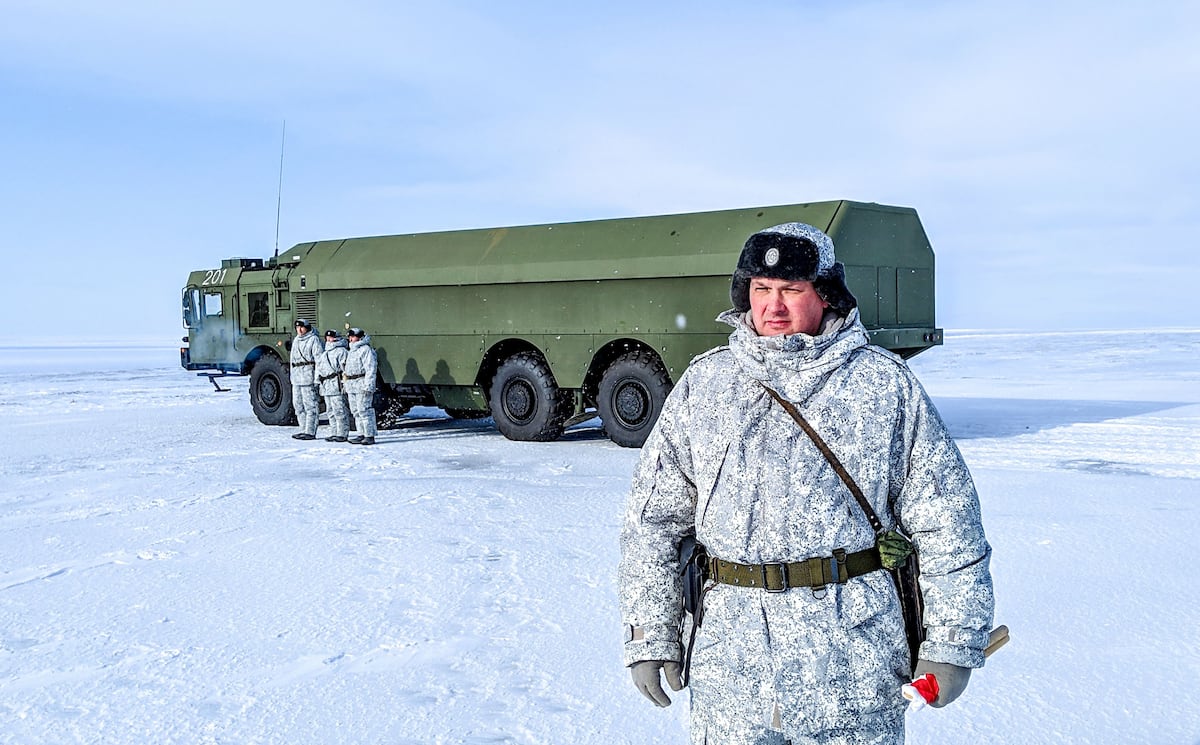
MILAN – Russia will kick-off multilateral drills across its Arctic territory this week, drawing in participants from nine non-Arctic nations to test Russian-made equipment, after regional cooperation halted with the West.
On April 6-7, the Russian Ministry of Emergency Situations will host the Safe Arctic 2023 exercises across nine regions of the country’s Arctic zone, it said in a statement. Participants include representatives from nine unnamed African, Latin American and Eurasian countries, it said. The exercises will demonstrate rescue methods as well as vehicles, aircraft and other types of equipment produced by Russian manufacturers.
In the run-up to the drills, Moscow has also been carrying out a 12-day Arctic research expedition to conduct additional tests of Russian gear designed to ensure regional safety.
While the nature of these events is not necessarily military, they do point to a larger trend in Russia’s Arctic defense strategy: an increased interest in non-Arctic partnerships to help it secure regional interests. This was underlined in a revised strategic planning document published by the Kremlin, which highlighted a greater openness towards international collaborations. In the past, Moscow arguably exercised a larger degree of caution when involving nations not bordered by Arctic zones in regional projects.
Russian activities in the Arctic are more threatened today than they were a few years ago. With Finland officially joining NATO, and Sweden set to follow, Russia risks becoming even more isolated than it is currently, as it would be the only Arctic state that is not a member of the alliance. This implies a considerable expansion of NATO’s borders with Russia and further military cooperation between the allies, who recently concluded the month-long Arctic Forge exercise involving troops from 16 NATO member-states.
These developments are bound to be unwelcomed by Moscow, which since March 2022 has been shunned from taking part in Arctic Council working groups. Following Russia’s invasion of Ukraine, the Arctic 7– Canada, the U.S., Iceland, Denmark, Norway, Sweden and Finland – had made the temporary decision to pause the Council’s work, only to issue a statement months later that projects would resume but without Russian participation.
The Safe Arctic exercises will be held as part of the events of Russia’s chairmanship of the AC in 2021-2023, which all other members have chosen to boycott. Since ties have been frozen, there has been a large debate among experts regarding whether Arctic cooperation can be restored.
In a survey carried out by Chatham House in December 2022, 56 percent of respondents, consisting of stakeholders and experts working on Arctic affairs, wanted AC member nations to re-establish cooperation with Russia. Skeptics said re-connecting with Moscow could symbolize a diplomatic win for the country and validate its hostile behavior.
Russia is increasingly looking to engage with other partners, including ones that the West sees as strategic competitors. A report by the Arctic Institute published last month, finds that the Kremlin is actively encouraging Chinese, Indian and Middle Eastern companies to invest in Arctic initiatives that formerly involved Western firms.
“After Western companies withdrew from the Russian Arctic due to sanctions, Russia’s Novatek is now looking to the Emirati firm Green Energy Solutions to receive important technology to construct liquefied natural gas projects and to the Turkish company Karpowership for a floating power plant,” the article states.
The Russian Federation is also exploring with India the possibility of creating a trans-Arctic container shipping road along the Northern Sea Route as an alternative route to transport cargo from New Delhi to Europe. If secured, this would prove to be a considerable development between South Asia and the Arctic.
Elisabeth Gosselin-Malo was a Europe correspondent for Defense News. She covers a wide range of topics related to military procurement and international security, and specializes in reporting on the aviation sector. She is based in Milan, Italy.
米兰——本周,俄罗斯将在其北极地区启动多边演习,吸引来自九个非北极国家的参与者,以测试俄罗斯制造的设备。此前,俄罗斯与西方在该地区开展的合作已经停止。
俄罗斯紧急情况部在一份声明中表示,4月6日至7日,将在该国北极地区的九个区域举办“安全北极2023”演习。声明称,参演人员包括来自九个未具名的非洲、拉丁美洲和欧亚国家的代表。演习将展示救援方法,以及俄罗斯制造商生产的车辆、飞机和其他类型的设备。
在演习开始前,莫斯科还进行了为期 12 天的北极科考探险,以对旨在确保区域安全的俄罗斯装备进行额外测试。
虽然这些事件的性质未必是军事性的,但它们确实指向俄罗斯北极防御战略的一个更大趋势:俄罗斯越来越重视与非北极国家建立伙伴关系,以维护其区域利益。克里姆林宫发布的一份修订后的战略规划文件强调了这一点,该文件突出了俄罗斯对国际合作更加开放的态度。过去,莫斯科在区域项目中与非北极国家合作时,无疑会更加谨慎。
如今,俄罗斯在北极的活动比几年前面临更大的威胁。随着芬兰正式加入北约,瑞典也即将加入,俄罗斯可能比现在更加孤立,因为它将成为唯一一个非北约成员国的北极国家。这意味着北约与俄罗斯的边界将大幅扩张,盟国之间也将加强军事合作。北约近期刚刚结束了为期一个月的“北极熔炉”联合军演,共有来自16个北约成员国的部队参加。
这些事态发展必然令莫斯科感到不满,自2022年3月以来,俄罗斯一直被排除在北极理事会工作组之外。在俄罗斯入侵乌克兰之后,北极七国(加拿大、美国、冰岛、丹麦、挪威、瑞典和芬兰)曾暂时决定暂停理事会的工作,但几个月后发表声明称,各项项目将恢复,但俄罗斯将不再参与。
“安全北极”演习将作为俄罗斯担任2021-2023年北极共同体轮值主席国期间的活动之一举行,但其他所有成员国都选择抵制此次演习。由于北极关系冻结,专家们就北极合作能否恢复展开了广泛讨论。
查塔姆研究所2022年12月进行的一项调查显示,56%的受访者(包括北极事务利益相关者和专家)希望北极委员会成员国与俄罗斯重建合作。持怀疑态度的人士则认为,与莫斯科重修旧好可能象征着俄罗斯的外交胜利,并为其敌对行为背书。
俄罗斯正日益寻求与其他伙伴合作,包括西方视为战略竞争对手的国家。北极研究所上月发布的一份报告指出,克里姆林宫正积极鼓励中国、印度和中东企业投资此前由西方公司参与的北极项目。
文章指出:“由于制裁,西方公司撤出俄罗斯北极地区后,俄罗斯诺瓦泰克公司现在正寻求从阿联酋绿色能源解决方案公司获得建设液化天然气项目的重要技术,并寻求从土耳其卡尔波瓦船厂公司获得建造浮式发电厂的技术。”
俄罗斯联邦正与印度探讨沿北方海路修建一条跨北极集装箱航运公路的可能性,以此作为从新德里向欧洲运输货物的替代路线。如果成功,这将是南亚与北极之间一项意义重大的发展。
伊丽莎白·戈斯林-马洛曾任《防务新闻》欧洲通讯员。她的报道涵盖军事采购和国际安全等广泛领域,尤其擅长航空领域的报道。她常驻意大利米兰。