Senate advances resolution to limit Trump’s war powers after Venezuela委内瑞拉战争后,参议院通过决议限制特朗普的战争权力。
The Senate advanced a resolution Thursday that would limit President Donald Trump’s ability to conduct further attacks against Venezuela.
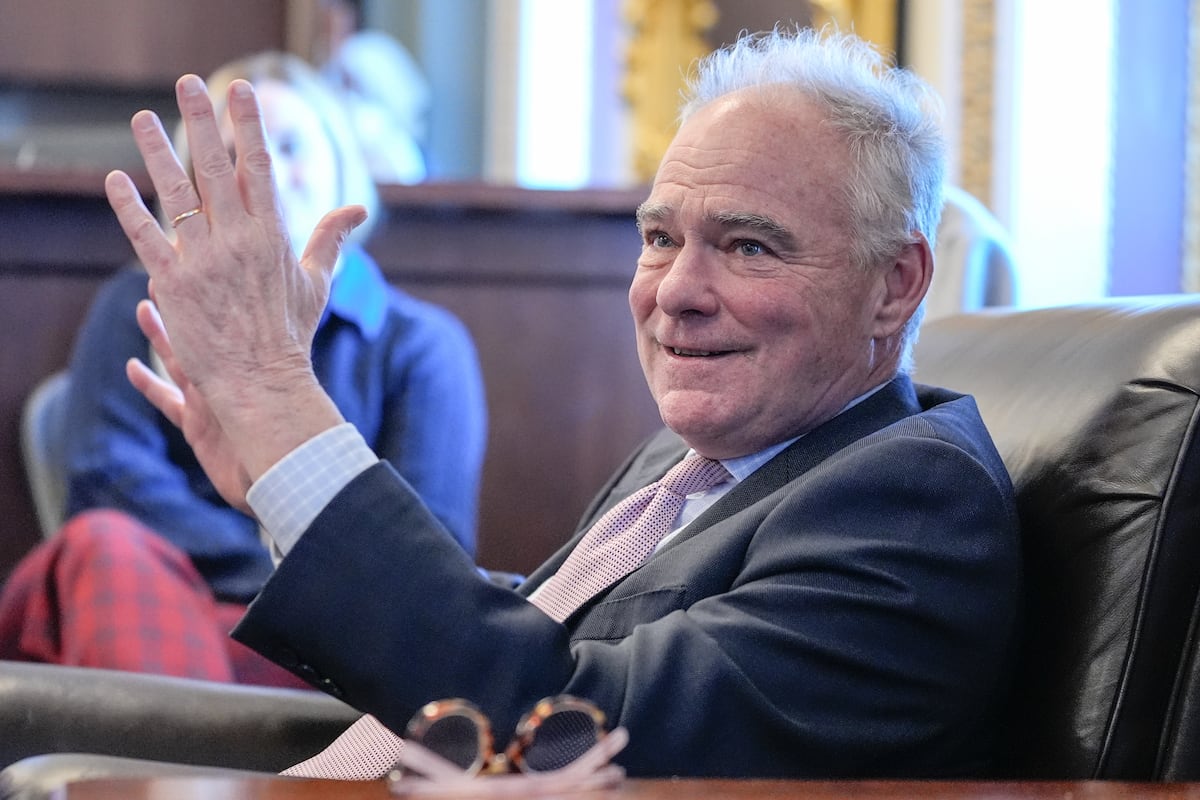
The Senate advanced a resolution Thursday that would limit President Donald Trump’s ability to conduct further attacks against Venezuela, sounding a note of disapproval for his expanding ambitions in the Western Hemisphere.
Democrats and five Republicans voted to advance the war powers resolution on a 52-47 vote and ensure a vote next week on final passage. It has virtually no chance of becoming law because Trump would have to sign it if it were to pass the Republican-controlled House. Still, it was a significant gesture that showed unease among some Republicans after the U.S. military seized Venezuelan leader Nicolás Maduro in a surprise nighttime raid.
Trump’s administration is now seeking to control Venezuela’s oil resources and its government, but the war powers resolution would require congressional approval for any further attacks on the South American country.
“To me, this is all about going forward,” said Missouri Sen. Josh Hawley, one of the five Republican votes.
“If the president should determine, ‘You know what? I need to put troops on the ground of Venezuela,’ I think that would require Congress to weigh in.”
The other Republicans who backed the resolution were Sens. Rand Paul of Kentucky, Lisa Murkowski of Alaska, Susan Collins of Maine and Todd Young of Indiana.
Democrats had failed to pass several such resolutions in the months that Trump escalated his campaign against Venezuela. But lawmakers argued that now that Trump has captured Maduro and set his sights to other conquests such as Greenland, the vote presents the Republican-controlled Congress with an opportunity.
“It’s time for Congress to assert its control over military action of this kind, and it’s time to get this out of secrecy and put it in the light,” said Sen. Tim Kaine, D-Va., who forced the vote.
Lawmakers’ response to the Venezuela operation
Republican leaders have said they had no advance notification of the raid early morning Saturday to seize Maduro and his wife, Cilia Flores, but mostly expressed satisfaction this week as top administration officials provided classified briefings on the operation.
The administration has used an evolving set of legal justifications for the monthslong campaign in Central and South America, from destroying alleged drug boats under authorizations for the global fight against terrorism to seizing Maduro in what was ostensibly a law enforcement operation to put him on trial in the United States.
Republican leaders have backed Trump.
“I think the president has demonstrated at least already a very strong commitment to peace through strength, especially in this hemisphere,” said Senate Majority Leader John Thune, R-S.D. “I think Venezuela got that message loudly and clearly.”
A vote on a similar resolution in November narrowly failed to gain the majority needed for passage. Paul and Murkowski were the only Republicans voting in favor then.
Paul, an outspoken proponent of war powers resolutions, acknowledged that Maduro is seen as a “bad guy” and “a socialist and an autocrat.” But, Paul added, “The question is about who has the power to take the country to war?”
Some progressive Democrats have suggested inserting language in a defense appropriations bill to limit certain military actions, but that idea met resistance from more pragmatic members of the caucus. Democratic leaders have tried to cast Trump’s foreign ambitions as a distraction from the issues that voters face at home.
“The American people are asking what the hell is going on in Venezuela and why is this president, who campaigned on ‘America First,’ now spending all his time and energy on escapades overseas?” Senate Democratic leader Chuck Schumer of New York said in a floor speech.
House Democrats were also introducing a similar resolution on Thursday.
The rarely enforced War Powers Act
Congress was once again left in the dark during the military operation in Venezuela, with Trump later confirming that he talked to oil executives but not leaders on Capitol Hill. That reflects a broader pattern in Trump’s second term, unfolding under a Republican-controlled Congress that has shown little appetite for reasserting its constitutional authority to declare war.
Under the Constitution, Congress declares war while the president serves as commander in chief. But lawmakers have not formally declared war since World War II, granting presidents broad latitude to act unilaterally.
Congress attempted to rein in that authority after the Vietnam War with the War Powers Resolution, passed over Republican President Richard Nixon’s veto. The law requires presidents to notify Congress within 48 hours of deploying forces and to end military action within 60 to 90 days absent authorization — limits that presidents of both parties have routinely stretched.
Democrats argue those limits are being pushed further than ever. Some Republicans have gone further still, contending congressional approval is unnecessary altogether.
Republican Sen. Lindsey Graham of South Carolina, a close Trump ally who traveled with the president aboard Air Force One on Sunday, said he would be comfortable with Trump taking over other countries without congressional approval, including Greenland.
“The commander in chief is the commander in chief. They can use military force,” Graham said.
Greenland may further test the limits
Graham’s comments come as the administration weighs not only its next steps in Venezuela, but also Greenland. The White House has said the “military is always an option” when it comes to a potential American takeover of the world’s largest island.
While Republicans have cited Greenland’s strategic value, most have balked at the idea of using the military to take the country, instead favoring a potential deal to purchase the country.
Democrats want to get out in front of any military action and are already preparing to respond. Arizona Sen. Ruben Gallego said he is working on a resolution “to block Trump from invading Greenland.”
“We must stop him before he invades another country on a whim,” Gallego wrote on X. “No more forever wars.”
Kaine also said Wednesday that a resolution on Greenland would soon be filed, in addition to Cuba, Mexico, Colombia and Nigeria.
Greenland belongs to a NATO ally, Denmark, which has prompted a much different response from Republican senators than the situation in Venezuela. Paul said Republicans discussed Trump’s plans for Greenland at their Wednesday luncheon and he heard “zero support” for taking military action to seize it.
Sen. Thom Tillis, a co-chair of the Senate NATO Observer Group, used a Senate floor speech to criticize White House Deputy Chief of Staff Stephen Miller for comments this week that the U.S. should take control of Greenland. Tillis said such remarks were “amateurish” and “absurd.”
“This nonsense on what’s going on with Greenland is a distraction from the good work he’s doing,” Tillis said of the president.
“And the amateurs who said it was a good idea should lose their jobs,” he said.
参议院周四通过了一项决议,限制唐纳德·特朗普总统对委内瑞拉发动进一步攻击的能力,这表达了对他在西半球不断扩张的野心的不满。
民主党人和五名共和党人以52票赞成、47票反对的投票结果,推进了战争权力决议,确保下周进行最终表决。该决议几乎不可能成为法律,因为即使共和党控制的众议院通过,也必须由特朗普签署。尽管如此,这仍然是一个重要的姿态,表明在美军夜间突袭逮捕委内瑞拉领导人尼古拉斯·马杜罗之后,一些共和党人感到不安。
特朗普政府现在正试图控制委内瑞拉的石油资源和政府,但战争权力决议要求对这个南美国家发动任何进一步的攻击都必须获得国会的批准。
“对我来说,这一切都是为了向前看,”密苏里州参议员乔什·霍利说道,他是五名投赞成票的共和党人之一。
“如果总统决定,‘你知道吗?我需要向委内瑞拉派遣地面部队’,我认为这需要国会介入。”
支持该决议的其他共和党参议员有:肯塔基州的兰德·保罗、阿拉斯加州的丽莎·穆尔科斯基、缅因州的苏珊·柯林斯和印第安纳州的托德·扬。
在特朗普升级对委内瑞拉的军事行动的几个月里,民主党人曾多次未能通过类似的决议。但议员们认为,现在特朗普已经扳倒了马杜罗,并将目光投向了格陵兰岛等其他目标,这次投票为共和党控制的国会提供了一个机会。
“国会是时候对这类军事行动行使控制权了,是时候让这件事不再秘密,而是公之于众了,”弗吉尼亚州民主党参议员蒂姆·凯恩说道,正是他推动了这次投票。
立法者对委内瑞拉行动的回应
共和党领导人表示,他们事先没有收到周六凌晨突袭逮捕马杜罗及其妻子西莉亚·弗洛雷斯的通知,但本周随着高级政府官员提供有关此次行动的机密简报,他们大多表示满意。
美国政府为在中美洲和南美洲长达数月的行动,不断提出新的法律理由,从以打击恐怖主义为名摧毁所谓的毒品船只,到表面上以执法行动将马杜罗送回美国受审为名逮捕他。
共和党领导人支持特朗普。
“我认为总统至少已经展现出通过实力维护和平的坚定决心,尤其是在西半球,”参议院多数党领袖约翰·图恩(John Thune)说。“我认为委内瑞拉已经清楚地收到了这一信息。”
去年11月,一项类似的决议案以微弱劣势未能获得通过所需的多数票。当时,保罗和穆尔科斯基是仅有的两名投赞成票的共和党人。
保罗是战争权力决议的公开支持者,他承认马杜罗被视为“坏人”、“社会主义者和独裁者”。但保罗补充说:“问题在于谁有权将国家带入战争?”
一些进步派民主党人建议在国防拨款法案中加入条款,限制某些军事行动,但这一提议遭到党团内较为务实成员的反对。民主党领导人试图将特朗普的外交野心描绘成转移选民对国内问题的注意力。
“美国人民都在问,委内瑞拉到底发生了什么事?为什么这位竞选时口号是‘美国优先’的总统,现在却把所有的时间和精力都花在海外的冒险活动上?”纽约州参议院民主党领袖查克·舒默在参议院发言时说道。
周四,众议院民主党人也提出了类似的决议。
很少执行的《战争权力法》
在委内瑞拉军事行动期间,国会再次被蒙在鼓里。特朗普后来证实,他与石油公司高管进行了交谈,但没有与国会山的领导人沟通。这反映了特朗普第二个任期内的一个更广泛的模式:共和党控制的国会似乎并不热衷于重新行使宪法赋予的宣战权。
根据宪法,国会负责宣战,而总统担任三军统帅。但自二战以来,国会就再也没有正式宣战过,这赋予了总统广泛的单方面行动权力。
越战结束后,国会试图通过《战争权力决议》来限制总统的权力,该决议在共和党总统理查德·尼克松否决后获得通过。该法案要求总统在部署部队后48小时内通知国会,并在未获得授权的情况下在60至90天内结束军事行动——但两党总统都经常突破这些限制。
民主党人认为这些限制正被推向前所未有的极端。一些共和党人则走得更远,声称国会批准完全没有必要。
南卡罗来纳州共和党参议员林赛·格雷厄姆是特朗普的亲密盟友,他周日与总统一起乘坐空军一号出行。格雷厄姆表示,他并不反对特朗普在没有国会批准的情况下接管其他国家,包括格陵兰岛。
“三军统帅就是三军统帅,他们可以使用武力,”格雷厄姆说。
格陵兰岛可能会进一步考验这些极限。
格雷厄姆发表这番言论之际,美国政府不仅在权衡下一步在委内瑞拉的行动,也在考虑格陵兰岛的问题。白宫曾表示,在考虑美国可能接管这个世界最大岛屿的问题上,“军事手段始终是一个选项”。
虽然共和党人曾提及格陵兰岛的战略价值,但大多数人对动用武力夺取该国的想法持反对态度,而是倾向于达成购买该国的潜在协议。
民主党人希望先发制人,阻止任何军事行动,并且已经在准备应对。亚利桑那州参议员鲁本·加列戈表示,他正在起草一项决议,“阻止特朗普入侵格陵兰岛”。
“我们必须阻止他一时兴起入侵其他国家,”加列戈在X上写道。“不能再让战争永无休止。”
凯恩周三还表示,除了古巴、墨西哥、哥伦比亚和尼日利亚之外,还将很快提交一份关于格陵兰的决议。
格陵兰岛属于北约盟国丹麦,这引发了共和党参议员们与委内瑞拉局势截然不同的反应。保罗表示,共和党人在周三的午餐会上讨论了特朗普的格陵兰岛计划,但他听到的反馈是“完全不支持”采取军事行动夺取该岛。
参议院北约观察团联合主席汤姆·蒂利斯参议员在参议院发表讲话,批评白宫副幕僚长斯蒂芬·米勒本周发表的关于美国应该控制格陵兰岛的言论。蒂利斯称这种言论“业余”且“荒谬”。
蒂利斯谈到总统时说:“格陵兰岛发生的事情纯属无稽之谈,分散了人们对他所做出色工作的注意力。”
“那些说这是个好主意的业余人士应该丢掉工作,”他说。