Going Danish: How a small Nordic country is aiding Ukraine’s defense丹麦模式:一个北欧小国如何援助乌克兰国防
Copenhagen has spearheaded a support mechanism that prizes equipment made by Ukrainian companies.
PARIS — Denmark is better known for LEGO bricks and leading in wind energy than for military power – a possible reason why U.S. President Donald Trump might have felt he could demand the country hand over its territory of Greenland, or else.
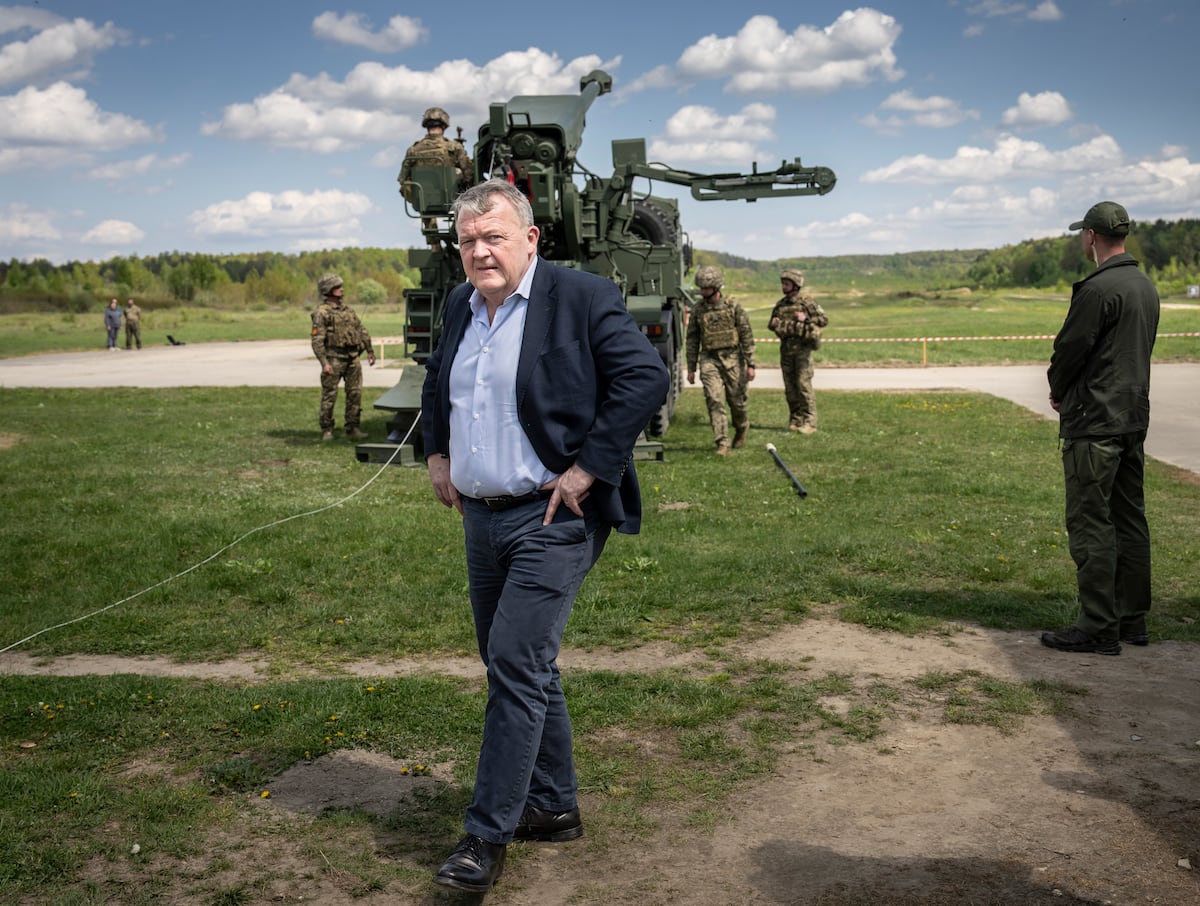
Whatever the Nordic nation’s martial prowess, the Danes have made a difference in Ukraine by leading an initiative to spend Western military aid on locally produced weapons rather than foreign equipment. That’s helping Ukraine rebuild and grow its battered defense industry by paying for “Made in Ukraine” howitzers, missiles, and long-range strike drones.
For countries such as Denmark that want to help Ukraine fight off Russia’s invasion but lack a major defense industry or weapon supplies, financing Ukrainian production makes sense, analysts say. Buying local gets weapons to the front faster and at lower cost, and facilitates training and maintenance. It also sets up Ukraine as a potential major European defense exporter.
“It’s not a coincidence that it was the Danes who started it, because Denmark has very limited domestic military industry, but they have a lot of money,” said Jacob Funk Kirkegaard, a senior fellow at Brussels-based economic think tank Bruegel, who has testified to the European Parliament about Ukraine’s economic recovery.
Ukraine has placed “great hopes” on scaling up the Danish model, and expects to raise at least $1 billion via the initiative in 2025, Prime Minister Denys Shmyhal told parliament on Jan. 10. Getting more allies to join was high on President Volodymyr Zelenskyy’s agenda in meetings with NATO Secretary General Mark Rutte and German Defense Minister Boris Pistorius in recent weeks.
“This Danish model is ideal, supportive to the Ukrainian defense industry and armed forces at the same time,” said Mykhailo Samus, director of Kyiv-based think tank New Geopolitics Research Network. “We have huge room for growth and for development of this project.”
Ukraine’s defense industrial capacity could reach €34 billion (US$35.4 billion) in 2025, but the country needs help to get there, being able to secure €16 billion in funding independently, Defense Minister Rustem Umerov said at a European Defence Agency conference this month. To compare, the entire European defense industry reported revenues of €158.8 billion for 2023.
More than two years into Russia’s invasion, Denmark was the first NATO country to directly buy weapons in Ukraine, ordering 18 locally-made Bohdana howitzers in July last year. Three Nordic countries, the EU and Canada have since joined in, and Zelenskyy has repeatedly praised the initiative, singling out Denmark as one of his country’s most reliable defense partners.
The Danish model delivered around €590 million of locally manufactured weapons to Ukraine in 2024, the Danish Ministry of Defence says. The Danes are among the top military aid donors to Ukraine in absolute terms, behind the U.S., Germany and the U.K., according to the Kiel Institute for the World Economy’s Ukraine Support Tracker .
Buying in Ukraine gets around the full order books and tight supply for Western defense firms, which have seen a surge in demand as European countries rearm. The first Bohdana order was fully delivered by mid-September, when buying that many artillery systems in Europe would have taken years, according to Danish Minister of Defence Troels Lund Poulsen.
Speed of delivery is probably the biggest immediate advantage of the Danish model, said Pavel Verkhniatskyi, managing partner and director of Kyiv-based business-intelligence firm COSA. Direct investment in production by foreign firms is a “much longer and sophisticated process,” he said. “And in the end, someone still needs to fund the procurement of the produced goods.”
Allocating aid to buy from local arms makers allows them to focus on producing weapons for the frontline, rather than on exports or business survival, according to Verkhniatskyi, who said the funding mechanisms in place before the Danish model mostly helped foreign industries.
Ukraine had stepped up Bohdana production to between 15 and 20 guns a month by October, from starting with several units a month in 2023 and ten units in April. By comparison, KNDS France had increased monthly production of the comparable Caesar howitzer to six in April, from two per month before Russia’s invasion of Ukraine, and a target for as many of 12 of the cannons per month.
The French and German defense industries still haven’t achieved the pace of production required for high-intensity war, said Samus, the Kyiv-based think tank director.
“Ukraine, including its defense industry, is in war conditions, so we’re thinking differently. We have a motivation that’s not only financial, like profit for a normal business, we have the main task of giving everything we can to our armed forces, to stop Russians.”
Ukraine has built up what Zelenskyy calls a de-facto new defense industry , after Russian bombing left much of the pre-war industrial base in tatters. Ukraine churned out 25 times more artillery and mortar rounds in the first half of 2024 than in all of 2022, while drone production capacity rose to 4 million units in 2024 from around 300,000 a year earlier, according to government numbers.
The country now produces about a third of the weapons it uses, from less than 10% at the start of the war, the president says. Domestically produced unmanned aerial vehicles accounted for 96% of those used by Ukrainian forces last year, according to Umerov.
“In the longer run, it’s clear that Ukraine wants to become more self-sufficient in arms so that in the future, they will not be as dependent on Western military support and goodwill,” Kirkegaard said. “And of course, if they have a huge, very competitive, battle-tested war-weapons industry, they will have the ability to export.”
Zelenskyy says his country is set to become a “ very strong player ” in global arms and defense technology. The country’s defense firms employ around 300,000 people, nearly half as many as the workforce of the entire European defense industry.
The potential hasn’t gone unnoticed in France, the world’s second-biggest arms exporter. Ukraine is “building up an extremely important defense industry, which it openly states is destined to become a major defense exporter,” Bruno Berthet, head of the international committee at French aerospace-industry lobby Gifas, told lawmakers in a Jan. 15 hearing on weapon exports.
France and Ukraine in October discussed a French model for cooperation, which Zelenskyy said was different from the Danish one, with the inclusion of technology and construction of production facilities. The French model would be an opportunity to attract investment specifically in new manufacturing capacity, the president said.
“I would not expect France to be a major player in the Danish model,” Kirkegaard said. “But if you ask the major French military producers, they will have an interest in having a presence in Ukraine – which we are seeing.”
Norway discussed yet another cooperation mechanism dubbed the Norwegian model in January, after already pledging funds for the Danish initiative in November. The Norwegian Ministry of Defence said it didn’t have any comment on the talks.
Lower production costs give Ukrainian equipment an edge over comparable kit from France or Germany. A Bohdana self-propelled howitzer costs around $2.5 million, according to Ukrainian media reports, whereas France last year financed 12 new Caesar howitzers destined for Ukraine at a cost of about €4.2 million each. Meanwhile, drones are more profitabl e to make in Ukraine than anywhere else in Europe, according to Zelenskyy.
“You get much more bang, literally, for your buck”, Kirkegaard said. “If budgets overall are limited, it should be in everybody’s interest, both the donor and of course Ukraine as the recipient, to have it produced in a more cost-efficient manner.”
Industry wages in Ukraine averaged 22,186 hryvnia ($529) a month in the first nine months of 2024, around one-third of average wages in neighboring Poland and Romania and one-eighth of average pay in Germany, according to data from the Ukrainian and EU statistics offices.
Low costs, industrial capacity and experience from the conflict with Russia will make Ukraine’s defense industry extremely competitive and very efficient in the longer term, provided the country survives as an independent state, Kirkegaard said. Should Ukraine join the EU, the country would be the premier military production location in the bloc, he said.
“I like to think of Ukraine as kind of the arsenal of the EU,” the Bruegel researcher said.
The Danish model doesn’t exclude joint ventures, and that might actually be the best way to invest, as some allies might prefer to fund equipment manufactured by companies linked to one of their national firms, according to Verkhniatskyi at COSA.
“Allied states and their businesses can benefit from cooperating with Ukrainian enterprises in R&D and co-production,” Verkhniatskyi said. “After the war, these jointly made products would find their way into global markets much easier. ‘Designed in Ukraine’ should be a competitive advantage.”
Beyond the political driver of countries wanting to help Ukraine, there will be a corporate logic for European defense producers to expand in Ukraine, said Kirkegaard, citing Rheinmetall, KNDS and others investing in the country with the intent of actually manufacturing there.
Rheinmetall has been one of the more proactive European defense companies in Ukraine, setting up a joint venture company with state-owned Ukrainian Defense Industry in October 2023, with the Germany company holding a 51% stake. KNDS created a unit in Kyiv a year later which it said would support cooperation with the Ukrainian government and the local arms industry.
“In the short run, it’s an advantage for Ukraine to have money invested in their existing capacity, because then you can scale it up faster,” Kirkegaard said. “In the longer run, I would expect there to be very close collaboration between Ukrainian defense producers and other European ones. There will be mergers, there will be acquisitions, there will be joint ventures.”
Rudy Ruitenberg is a Europe correspondent for Defense News. He started his career at Bloomberg News and has experience reporting on technology, commodity markets and politics.
巴黎——丹麦以乐高积木和风能领域的领先地位而闻名,而不是以军事实力闻名——这或许可以解释为什么美国总统唐纳德·特朗普认为他可以要求丹麦交出格陵兰岛领土,否则后果自负。
无论这个北欧国家的军事实力如何,丹麦人通过牵头一项倡议,将西方军事援助用于购买乌克兰本土生产的武器而非外国装备,从而对乌克兰产生了积极影响。这项倡议通过购买“乌克兰制造”的榴弹炮、导弹和远程攻击无人机,帮助乌克兰重建和发展其遭受重创的国防工业。
分析人士指出,对于像丹麦这样希望帮助乌克兰抵御俄罗斯入侵但自身缺乏大型国防工业或武器供应的国家而言,资助乌克兰的武器生产是明智之举。从本地采购武器可以更快、更经济地将武器送达前线,并有助于训练和维护。此外,这也有助于乌克兰成为欧洲潜在的主要国防出口国。
“丹麦人率先发起这项行动并非巧合,因为丹麦的国内军工产业非常有限,但他们却有很多钱,”总部位于布鲁塞尔的经济智库布鲁盖尔研究所的高级研究员雅各布·芬克·柯克加德说道,他曾就乌克兰的经济复苏问题向欧洲议会作证。
乌克兰首相丹尼斯·什米加尔1月10日在议会表示,乌克兰对扩大丹麦模式寄予厚望,并预计到2025年通过该倡议至少筹集10亿美元。在最近几周与北约秘书长马克·吕特和德国国防部长鲍里斯·皮斯托里乌斯的会晤中,争取更多盟友加入是弗拉基米尔·泽连斯基总统的重要议程之一。
“丹麦模式非常理想,既能支持乌克兰国防工业,又能支持武装部队,”基辅智库“新地缘政治研究网络”主任米哈伊洛·萨穆斯表示,“这个项目还有巨大的发展空间。”
乌克兰国防部长鲁斯捷姆·乌梅罗夫本月在欧洲防务局会议上表示,乌克兰的国防工业产能到2025年可能达到340亿欧元(354亿美元),但该国需要援助才能实现这一目标,需要独立筹集160亿欧元的资金。相比之下,整个欧洲国防工业2023年的收入为1588亿欧元。
在俄罗斯入侵乌克兰两年多之后,丹麦成为第一个直接从乌克兰购买武器的北约国家,于去年7月订购了18门乌克兰本土制造的博赫达纳榴弹炮。此后,三个北欧国家、欧盟和加拿大也相继加入,泽连斯基多次赞扬这一举措,并特别指出丹麦是乌克兰最可靠的防务伙伴之一。
丹麦国防部表示,丹麦模式在2024年向乌克兰提供了价值约5.9亿欧元的本地制造武器。根据基尔世界经济研究所的乌克兰援助追踪报告,丹麦是乌克兰最大的军事援助国之一,仅次于美国、德国和英国。
在乌克兰采购可以绕过西方国防公司订单爆满和供应紧张的困境,而随着欧洲各国重新武装,西方国防公司的需求激增。丹麦国防大臣特罗尔斯·伦德·波尔森表示,博赫达纳的首批订单已于9月中旬全部交付,而如果在欧洲采购如此大量的火炮系统,则需要数年时间。
基辅商业情报公司COSA的管理合伙人兼董事帕维尔·韦尔赫尼亚茨基表示,丹麦模式最大的直接优势可能是交付速度。他指出,外国公司直接投资生产是一个“漫长而复杂的过程”,“而且最终,仍然需要有人为采购生产出来的产品提供资金。”
Verkhniatskyi 表示,将援助资金用于从当地武器制造商那里购买武器,可以让他们专注于为前线生产武器,而不是出口或企业生存。他还说,丹麦模式之前的融资机制主要帮助的是外国企业。
乌克兰已将博赫达纳火炮的产量从2023年起步时的每月几门,到10月份提高到每月15至20门。相比之下,法国KNDS公司在俄罗斯入侵乌克兰之前,其同类型凯撒榴弹炮的月产量为每月两门,到4月份提高到六门,并计划最终达到每月12门。
基辅智库主任萨穆斯表示,法国和德国的国防工业仍未达到高强度战争所需的生产速度。
“乌克兰,包括其国防工业,都处于战争状态,所以我们的思路不同。我们的动机不仅仅是像普通企业那样追求利润,我们的主要任务是竭尽所能为我们的武装部队提供一切所需,以阻止俄罗斯人。”
在俄罗斯的轰炸摧毁了乌克兰战前的大部分工业基础之后,泽连斯基称乌克兰实际上已经建立起了一个新的国防工业。据政府数据显示,乌克兰在2024年上半年生产的炮弹和迫击炮弹是2022年全年的25倍,而无人机产能也从前一年的约30万架增至2024年的400万架。
总统表示,该国目前自主生产约三分之一的武器,而战争初期这一比例不足10%。乌梅罗夫称,去年乌克兰军队使用的无人机中,96%为国产无人机。
“从长远来看,乌克兰显然希望在武器方面提高自给自足能力,这样未来他们就不会那么依赖西方的军事支持和善意,”柯克加德说。“当然,如果他们拥有一个规模庞大、极具竞争力且久经沙场的武器工业,他们就具备出口能力。”
泽连斯基表示,他的国家将成为全球武器和国防技术领域的“非常强大的参与者”。该国的国防企业雇佣了约30万人,几乎是整个欧洲国防工业员工总数的一半。
这一潜力并没有逃过世界第二大武器出口国法国的眼睛。法国航空航天工业游说团体GIFAS国际委员会主席布鲁诺·贝尔泰在1月15日举行的武器出口听证会上告诉议员们,乌克兰“正在建立一个极其重要的国防工业,并公开表示其注定要成为一个主要的国防出口国”。
10月份,法国和乌克兰讨论了法国模式的合作方案。泽连斯基表示,该模式不同于丹麦模式,它涵盖了技术和生产设施建设。总统指出,法国模式将有助于吸引投资,尤其是在新建制造业产能方面。
“我不认为法国会成为丹麦模式的主要参与者,”柯克加德说。“但如果你问问法国主要的军工生产商,他们会有兴趣在乌克兰建立业务——我们现在就看到了这一点。”
挪威在1月份讨论了另一项被称为“挪威模式”的合作机制,此前挪威已于去年11月承诺为丹麦的合作机制提供资金。挪威国防部表示,对此次会谈不予置评。
较低的生产成本使乌克兰装备比法国或德国的同类装备更具优势。据乌克兰媒体报道,一门博赫达纳自行榴弹炮的造价约为250万美元,而法国去年资助向乌克兰交付了12门新型凯撒榴弹炮,每门造价约为420万欧元。与此同时,泽连斯基表示,在乌克兰生产无人机比在欧洲其他任何地方都更有利可图。
“这样一来,你花同样的钱,就能获得更多回报,”柯克加德说。“如果整体预算有限,那么无论对捐助方还是作为受援国的乌克兰来说,以更具成本效益的方式进行生产都符合所有人的利益。”
根据乌克兰和欧盟统计局的数据,2024 年前九个月,乌克兰工业工资平均每月为 22,186 格里夫纳(529 美元),约为邻国波兰和罗马尼亚平均工资的三分之一,德国平均工资的八分之一。
基尔凯加德表示,低成本、工业产能以及从与俄罗斯的冲突中积累的经验,将使乌克兰的国防工业在长期内极具竞争力且效率极高,前提是乌克兰能够作为一个独立国家生存下去。他还说,如果乌克兰加入欧盟,该国将成为欧盟首屈一指的军事生产基地。
“我喜欢把乌克兰看作是欧盟的武器库,”布鲁盖尔研究所的研究员说。
丹麦模式并不排除合资企业,而且这实际上可能是最好的投资方式,因为一些盟友可能更愿意为与本国公司有关联的公司生产的设备提供资金,COSA 的 Verkhniatskyi 表示。
“盟国及其企业可以从与乌克兰企业开展研发和联合生产合作中获益,”韦尔赫尼亚茨基说。“战后,这些联合生产的产品将更容易打入全球市场。‘乌克兰设计’应该成为一种竞争优势。”
基尔凯加德表示,除了各国希望帮助乌克兰的政治驱动因素外,欧洲国防生产商在乌克兰扩张还有商业逻辑,他列举了莱茵金属、KNDS 等公司在该国投资并打算在那里实际生产的例子。
莱茵金属公司是欧洲在乌克兰较为积极的国防企业之一,于2023年10月与乌克兰国有国防工业公司(KNDS)成立了一家合资企业,莱茵金属持有51%的股份。一年后,KNDS在基辅设立了一个分支机构,旨在支持与乌克兰政府和当地军工企业的合作。
“短期来看,对乌克兰而言,投资现有产能是有利的,因为这样可以更快地扩大规模,”柯克加德说。“从长远来看,我预计乌克兰国防生产商与其他欧洲生产商之间将开展非常密切的合作。届时将会出现合并、收购和合资企业。”
鲁迪·鲁伊滕贝格是《防务新闻》的欧洲记者。他的职业生涯始于彭博新闻社,拥有报道科技、大宗商品市场和政治方面的经验。