Severed undersea cables raise legal challenges for NATO海底电缆断裂给北约带来法律挑战
The majority of critical undersea infrastructure is located in international waters, which means would-be saboteurs can take advantage of oversight gaps.
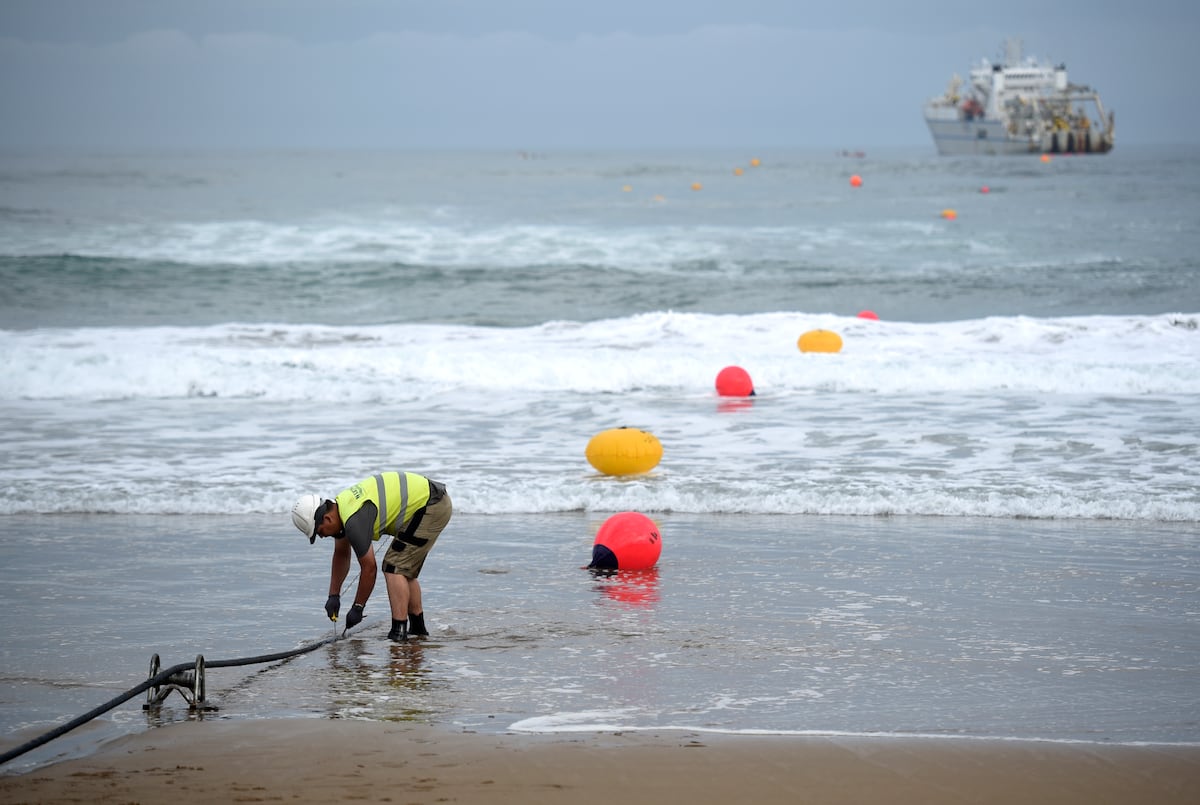
MILAN — The increased frequency of underwater infrastructure damage across Europe has raised legal challenges related to the jurisdiction and ownership of undersea cables, which may limit NATO’s ability to respond.
The majority of critical undersea infrastructure is located in international waters, which means would-be saboteurs can take advantage of oversight gaps.
“If you go outside territorial waters, in principle there’s not much regulation – this makes the area attractive for those who want to operate outside the jurisdiction,” Capt. Niels Markussen, director at NATO’s Maritime Centre for Security of Critical Underwater Infrastructure, said at the recent Arctic Frontiers conference in Norway, as reported by Arctic Today.
Matters become even more complex in having to determine and prove whether damage is accidental or deliberate. In addition, unlike when a crime is committed above the surface, where authorities can rely on fingerprints and DNA as evidence, attributing responsibility under water is tricky.
A recent report by the Atlantic Council highlighted that different laws are applicable to assess who is responsible for sabotage depending on where the severed cables are laid.
For example, it noted that coastal states like Norway or Sweden possess sovereign rights in their territorial waters, according to Article 21 of the United Nations Convention on the Law of the Sea, and may further exercise that authority to repair and maintain submarine cables in their exclusive economic zones.
Things get murky, however, in cases of undersea infrastructure damaged in international waters.
“If cables are willfully or accidentally damaged by a ship or person, the jurisdiction to determine appropriate punishment for the perpetrator lies with the state under whose flag the ship operates or that of a person’s citizenship,” the document said.
Another element to consider is that much of the underwater communication infrastructure is now owned by private firms, including big telecommunication carriers or content-delivery providers, that often band together to operate cables.
According to the network monitoring platform Kentik, companies like Google, Meta and Amazon have increasingly invested in the development and installation of new cables, leaving only about only 1% of submarine cables fully or partly owned by governments.
At a joint press conference in January, Adm. Pierre Vandier, NATO’s Norfolk, Virginia-based commander for concepts and transformation, outlined his plan for the alliance’s unmanned surface vessel initiative – in essence, having drones keep tabs on undersea infrastructure in hard-to-reach places.
The idea will entail deploying a fleet of naval drones as part of NATO’s maritime patrol mission in the Baltic Sea for the constant surveillance of the strategic area. These systems, as noted by the official, will operate alongside other drones to be provided by member states.
“We will bring some new vehicles at the speed of light in less than a few weeks, as well as the eight Baltic Sea states will give to NATO their own drones, and we will federate into a single network all the pictures and videos to spread [information] out to all stakeholders,” Vandier said on Jan 20.
Elisabeth Gosselin-Malo was a Europe correspondent for Defense News. She covers a wide range of topics related to military procurement and international security, and specializes in reporting on the aviation sector. She is based in Milan, Italy.
米兰——欧洲各地水下基础设施损坏事件的频繁发生引发了与海底电缆的管辖权和所有权相关的法律挑战,这可能会限制北约的应对能力。
大多数重要的海底基础设施都位于国际水域,这意味着潜在的破坏者可以利用监管漏洞。
据《北极今日》报道,北约关键水下基础设施安全海事中心主任尼尔斯·马库森上尉在最近于挪威举行的北极前沿会议上表示:“如果你进入领海以外,原则上就没有太多监管——这使得该地区对那些想要在管辖范围外开展活动的人很有吸引力。”
在确定和证明损害是意外还是故意方面,情况变得更加复杂。此外,与水面上的犯罪不同,在水面上,当局可以依靠指纹和DNA作为证据,但在水下确定责任却十分棘手。
大西洋理事会最近的一份报告强调,根据被切断电缆的铺设地点不同,适用不同的法律来评估谁应对破坏行为负责。
例如,它指出,根据《联合国海洋法公约》第 21 条,挪威或瑞典等沿海国家在其领海内拥有主权权利,并可进一步行使该权利,在其专属经济区内修理和维护海底电缆。
然而,如果海底基础设施在国际水域遭到破坏,情况就会变得复杂。
“如果船舶或个人故意或意外损坏电缆,确定对肇事者适当处罚的管辖权在于船舶运营所悬挂国旗的国家或个人的国籍所在国,”该文件称。
另一个需要考虑的因素是,目前大部分水下通信基础设施都归私人公司所有,包括大型电信运营商或内容分发提供商,这些公司经常联合起来运营海底电缆。
根据网络监控平台 Kentik 的数据,谷歌、Meta 和亚马逊等公司不断加大对新电缆的开发和安装的投资,导致只有大约 1% 的海底电缆全部或部分由政府所有。
今年一月,北约驻弗吉尼亚州诺福克市的概念与转型司令皮埃尔·范迪耶海军上将在一次联合新闻发布会上概述了北约无人水面舰艇计划——本质上是利用无人机监视难以到达地点的海底基础设施。
该计划包括在波罗的海部署一支海军无人机舰队,作为北约海上巡逻任务的一部分,用于对该战略区域进行持续监视。正如这位官员所指出的,这些系统将与成员国提供的其他无人机协同作战。
“我们将在几周之内以光速交付一些新车辆,同时波罗的海八国也将向北约提供他们自己的无人机,我们将把所有图片和视频整合到一个统一的网络中,以便向所有利益相关者传播信息,”范迪尔在1月20日表示。
伊丽莎白·戈斯林-马洛曾任《防务新闻》欧洲通讯员。她的报道涵盖军事采购和国际安全等广泛领域,尤其擅长航空领域的报道。她常驻意大利米兰。