US Army envisions a common launcher to fit allies’ weapons美国陆军设想一种通用发射器,以适配盟军的武器。
The Army is prioritizing the pursuit of a common launcher as a cornerstone capability for deterrence in key theaters.
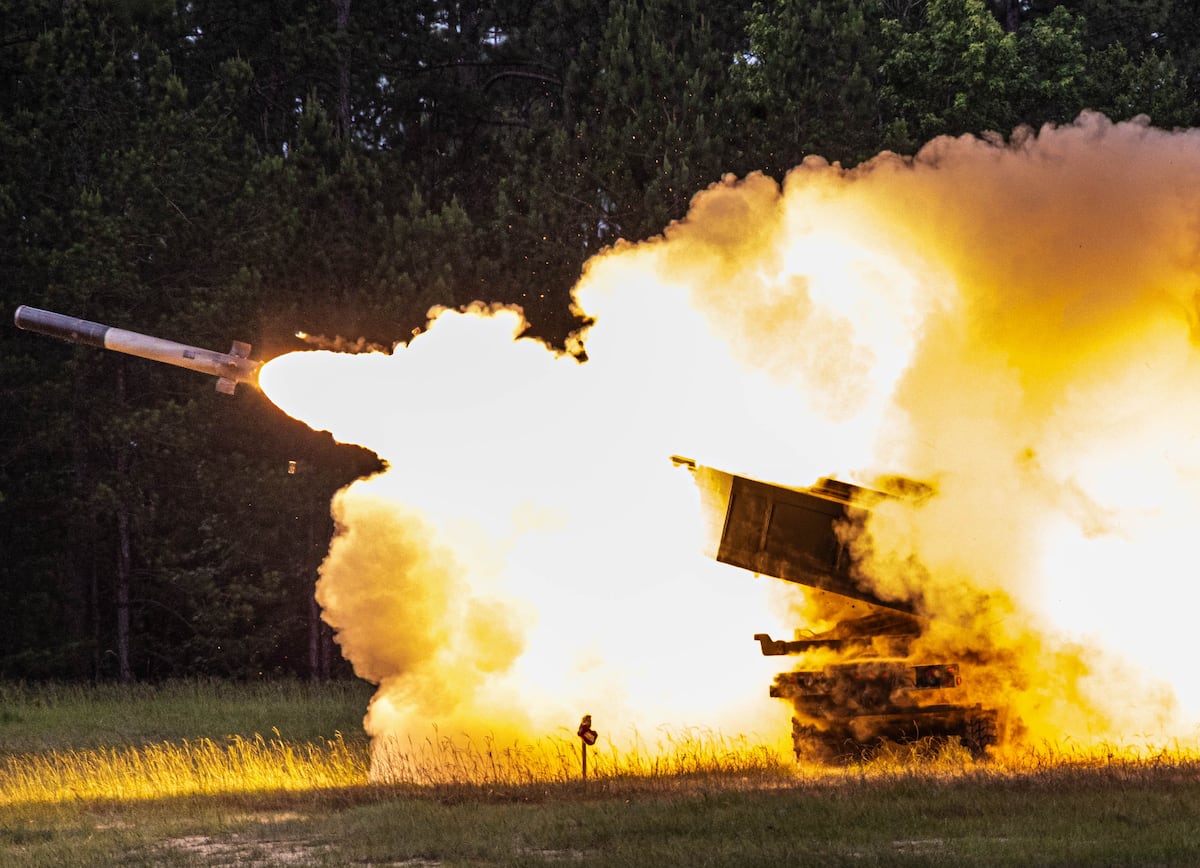
WIESBADEN, Germany − The U.S. Army is prioritizing a common launcher that could be used across the European alliance from which a wide variety of weapons could be fired, the service’s chief in charge of the European and African theaters, said last week.
As part of a newly announced Eastern Flank Deterrence Line , a regional plan focused on the Baltic states, the U.S. Army and its allies and partners plan to pursue key ground-based capabilities.
“Everyone loves to talk about long-range fires and air defense,” Gen. Christopher Donahue, U.S. Army Europe and Africa’s commander, said at the Association of the U.S. Army’s inaugural LandEuro conference in Wiesbaden, Germany.
“So specifically, what we want to develop is a common launcher … that is both offensive and defensive capable. We want a common fire control system so that any nation can use that fire control system,” he said. “Then obviously, we want everything to be optionally manned. If we look out for an air defense system or a long-range fire system, we want it to be one system, optionally manned, where we’ll be able to take munitions from any country and shoot through them.”
Donahue acknowledged the existence of the bureaucracy that has bogged down previous weapons development and the foreign military sales process.
Even so, he said, “The United States has taken on reform of foreign military sales, and you’re already seeing the changes that are coming. We already know that we’re now having actual things that will be allowed to move at a higher rate of speed and getting them to move faster.”
In the past, the Army has struggled to develop a multi-mission launcher that can take on a wide variety of missiles; particularly ones that focused on something that could fire interceptors that can defeat anything from drones, cruise missiles and rockets, artillery and mortars.
The service canceled a MML program in 2019 and has yet to select and qualify a second interceptor for its Indirect Fires Protection Capability system designed to provide fixed or semi-fixed site protection against RAM, drone and cruise missile threats. The first IFPC prototypes are headed to South Korea this summer.
Donahue said the operational environment in Ukraine and the Middle East has accelerated the development of capabilities that can rapidly configure systems to fire different munitions.
“You look at where technology is, we are at the point where we can actually do it now in all of these conflicts,” Donahue stated. “We look at what’s at play out there and what we’re learning from it and then, because we are watching in Ukraine, you know, with the Middle East, this is forcing technology to mature to the point where we can do that.”
Donahue described the common launcher as something like a High Mobility Artillery Rocket System, or HIMARS — that is used in Ukraine and either owned or on tap to be purchased by nearly 20 countries worldwide — but could be adapted by countries to suit their own industrial investment and operational needs.
“HIMARS is a great long-range system,” Donahue said, “so I’m confident most nations would want that, but they may want to put it on something common with their military.
“You would be able to take that common launcher and if Norway wants to put it onto a wheeled vehicle, they can put that common launcher on the wheeled vehicle,” he continued. We want to make sure that no matter who buys what type of variant of HIMARS rockets or missiles, just using that example, it can be fired through any fire system. Right now, there is not that interoperability so we have to make sure that happens.”
To address the dire need to deepen the magazine depth for global deterrence, Donahue added, “we want to get to the point where you can fire other people’s rockets through these common platforms.”
The Army released a “request for solutions” to industry late last month through its Rapid Capabilities and Critical Technologies Office, or RCCTO, for a Common Autonomous Multi-Domain Launcher (CAML).
“CAML is an autonomous/optionally crewed, highly mobile, air transportable, cross-domain fires launcher with the potential to augment or replace existing Army launchers. CAML will be capable of worldwide deployment and operations,” Sam.gov states.
The solicitation, which limits responses to U.S. companies capable of processing and storing secret information and hardware, asks for two separate solutions: A CAML Heavy on an M1075 Palletized Loading System tactical vehicle or similar 15-ton chassis tactical vehicle and a CAML Medium that could fit on Family of Medium Tactical Vehicles.
For CAML-H, the Army is looking for something that could integrate a Tomahawk Land Attack Missile (TLAM) used in the recently fielded ground-launched Typhon Mid-Range capability missile system or the Patriot Advanced Capability-3 Missile Segment Enhancement interceptors used in Patriot air and missile defense systems.
The CAML-M would be able to fire Multiple Launch Rocket Systems (MRLS) family of munitions used in HIMARS or AIM-9X interceptors used in the IFPC system.
Both systems would be supported by an Autonomous Resupply Vehicle “capable of autonomously reloading pods/canisters of missiles,” the request states, “with minimal to no human intervention.”
RCCTO plans to rapidly prototype 1 CAML-M with MLRS family of munitions within 18 months and another with IFPC-capable missiles within 24 months and an ARV within 36 months from date of the contract award, the solicitation lays out.
Within 24 months, the Army will produce four TLAM-capable CAML-H prototypes within 18 months and one MSE-capable prototype within 24 months.
Lockheed has ownership over a variety of systems that could be involved in the CAML effort — from MLRS to Typhon to PAC-3 MSE.
HIMARS would be tuned to fire not just offensive weapons but defensive ones as well, Jason Reynolds, Lockheed Martin’s vice president for integrated air and missile defense in its missiles and fire control sector, told Defense News in an interview at LandEuro. The systems would also all be mobile as opposed to the current configuration of defensive systems, which are typically trailer-based like Patriots are today.
“What we’re learning in the real world is, if you’re mobile, you’re more survivable,” Reynolds stated.
Technologically, the prototypes could be done relatively quickly if investment from the government puts the program in the HOV lane, he noted.
“I don’t think there’s anything technically that would prohibit that because these are existing systems today,” Reynolds said. “You might have to combine some of the electronics, you might have to redesign some of the circuit cards, you might have to repackage some of these items to put it onto that vehicle, whatever the new vehicle is, but it’s not like you’re inventing something, you’re just repackaging.”
For Lockheed, its ship-based Mark 41 launcher, which was adapted for the ground-launched Typhon system for the U.S. Army, already has missile load-out flexibility.
“It really provides the ability to bring and load out any mix of defensive- and strike-based capability missiles that anybody that’s a Mark 41 user wants to employ,” Edward Dobeck, company program director for launching systems within its rotary and mission systems division, told Defense News in an interview this week.
Typhon successfully sank a ship off the coast of Australia last week during U.S.-Australia-led exercise Talisman Sabre.
HIMARS have also demonstrated autonomous capability during the most recent capstone event as part of the Army’s experimentation campaign known as Project Convergence.
“Those are some of the technologies we’ve demonstrated that we think are the sorts of things that could be leveraged on CAML,” Paula Hartley, Lockheed’s vice president of tactical missile within the MFC business, told Defense News in the same interview.
“It’s not a new missile system or munitions, it’s just putting it all together and the government moved pretty briskly in this and I think that we have responded extremely well in helping them do that,” she said.
Jen Judson is an award-winning journalist covering land warfare for Defense News. She has also worked for Politico and Inside Defense. She holds a Master of Science degree in journalism from Boston University and a Bachelor of Arts degree from Kenyon College.
德国威斯巴登——美国陆军负责欧洲和非洲战区的司令上周表示,美国陆军正在优先研发一种可在整个欧洲联盟使用的通用发射器,该发射器可以发射各种各样的武器。
作为新近宣布的东翼威慑线的一部分,一项以波罗的海国家为重点的区域计划,美国陆军及其盟友和伙伴计划追求关键的地面作战能力。
“每个人都喜欢谈论远程火力和防空,”美国陆军欧洲和非洲司令克里斯托弗·多纳休将军在德国威斯巴登举行的美国陆军协会首届 LandEuro 会议上说。
“所以具体来说,我们想要研发的是一种通用发射器……它既能用于进攻也能用于防御。我们希望有一种通用的火控系统,任何国家都能使用它,”他说道。“显然,我们希望所有设备都可选择性地配备人员。无论是防空系统还是远程火力系统,我们都希望它是一个可选择性配备人员的系统,能够使用任何国家的弹药进行射击。”
多纳休承认,官僚主义阻碍了之前的武器研发和对外军售进程。
尽管如此,他表示,“美国已经开始改革对外军售,你们也已经看到了即将到来的变化。我们已经知道,现在一些实际的事情将被允许以更快的速度进行,并且要让它们更快地推进。”
过去,陆军一直努力研发一种能够应对各种导弹的多用途发射器;特别是那种能够发射拦截弹的发射器,这种拦截弹可以击败从无人机、巡航导弹和火箭弹到火炮和迫击炮等各种武器。
该军种于2019年取消了多用途导弹(MML)项目,并且尚未为其间接火力防护能力(IFPC)系统选定并完成第二款拦截弹的认证。该系统旨在为固定或半固定目标提供防护,抵御反潜导弹、无人机和巡航导弹的威胁。首批IFPC原型机将于今年夏季运往韩国。
多纳休表示,乌克兰和中东的作战环境加速了能够快速配置系统以发射不同弹药的能力的发展。
“看看现在的技术发展水平,我们已经能够将技术运用到所有这些冲突中,”多纳休说道。“我们观察当前局势,从中吸取经验教训,然后,因为我们关注着乌克兰以及中东的局势,这些都迫使技术发展成熟到我们能够做到这一点的程度。”
Donahue 将这种通用发射器描述为类似高机动性火箭炮系统(HIMARS)的东西——乌克兰正在使用这种系统,全球近 20 个国家已经拥有或准备购买这种系统——但各国可以根据自己的工业投资和运营需求进行调整。
“HIMARS 是一款优秀的远程系统,”多纳休说,“所以我相信大多数国家都会想要它,但他们可能希望把它安装在与本国军队通用的装备上。”
“你可以使用这种通用发射器,如果挪威想把它安装在轮式车辆上,他们也可以这样做,”他继续说道。“我们希望确保无论谁购买哪种型号的HIMARS火箭或导弹,就拿这个例子来说,它都能通过任何火控系统发射。目前,这种互操作性还不存在,所以我们必须确保这一点。”
为了满足全球威慑领域加深弹药库深度的迫切需求,多纳休补充道:“我们希望达到这样的程度:可以通过这些通用平台发射其他国家的火箭。”
上个月底,陆军通过其快速能力和关键技术办公室(RCCTO)向业界发布了“解决方案请求”,寻求通用自主多域发射器(CAML)。
Sam.gov网站称:“CAML是一款自主/可选有人操作、高机动性、可空运、跨域火力发射器,有潜力增强或取代现有的陆军发射器。CAML将具备全球部署和作战能力。”
该招标书将回复范围限制在能够处理和存储秘密信息和硬件的美国公司,要求提供两种不同的解决方案:一种是安装在 M1075 托盘装载系统战术车辆或类似 15 吨底盘战术车辆上的 CAML 重型系统,另一种是可以安装在中型战术车辆系列上的 CAML 中型系统。
对于 CAML-H,陆军正在寻找一种能够集成最近部署的陆基发射型台风中程导弹系统中使用的战斧陆攻导弹 (TLAM) 或爱国者防空导弹系统中使用的爱国者先进能力-3 导弹段增强拦截器的方案。
CAML-M 可以发射 HIMARS 系统使用的多管火箭炮系统 (MRLS) 系列弹药或 IFPC 系统使用的 AIM-9X 拦截弹。
申请书中指出,这两个系统都将由自主补给车提供支持,“该车能够自主地重新装载导弹吊舱/罐”,“几乎不需要人为干预”。
招标书中指出,RCCTO计划在18个月内快速制造1辆配备MLRS系列弹药的CAML-M原型车,在24个月内制造另一辆配备IFPC导弹的原型车,并在合同授予之日起36个月内制造一辆ARV原型车。
陆军将在 24 个月内生产出 4 架具备 TLAM 能力的 CAML-H 原型机(18 个月内生产),1 架具备 MSE 能力的原型机(24 个月内生产)。
洛克希德公司拥有多种可能参与 CAML 项目的系统——从 MLRS 到 Typhon 再到 PAC-3 MSE。
洛克希德·马丁公司导弹与火控部门负责综合防空与导弹防御的副总裁杰森·雷诺兹在LandEuro防务展上接受《防务新闻》采访时表示,HIMARS系统不仅能够发射进攻性武器,还能发射防御性武器。此外,该系统将全部采用机动部署,这与目前常见的防御系统(例如现在的“爱国者”导弹系统)的拖车式配置截然不同。
雷诺兹表示:“我们在现实世界中学到的是,如果你行动灵活,你的生存能力就会更强。”
他指出,从技术角度来看,如果政府投资将该项目纳入高乘载车辆专用道(HOV通道),原型机的制作速度可以相对较快。
雷诺兹说:“我认为从技术上讲,没有什么会阻止这样做,因为这些都是现有的系统。你可能需要整合一些电子元件,可能需要重新设计一些电路板,可能需要重新封装一些部件才能将其安装到那辆车上,无论是什么新车,但这并不是在发明什么,你只是在重新封装而已。”
对于洛克希德公司来说,其舰载 Mark 41 发射器(已改装为美国陆军的陆基 Typhon 系统)已经具备导弹装载灵活性。
“它确实能够携带和装载任何Mark 41用户想要使用的各种防御性和打击性导弹组合,”该公司旋转和任务系统部门发射系统项目主管爱德华·多贝克本周在接受《防务新闻》采访时表示。
上周,在美澳联合领导的“护身军刀”演习中,“台风”战机在澳大利亚海岸附近成功击沉了一艘船只。
在最近一次作为陆军“融合计划”实验活动一部分的总结性活动中,HIMARS 也展示了自主能力。
“这些是我们已经展示过的一些技术,我们认为这些技术可以应用于CAML,”洛克希德公司MFC业务部战术导弹副总裁保拉·哈特利在同一次采访中告诉《防务新闻》。
“这不是新的导弹系统或弹药,只是把所有东西组装起来而已。政府在这方面行动非常迅速,我认为我们在帮助他们完成这项工作方面也做得非常好,”她说。
珍·贾德森是一位屡获殊荣的记者,为《防务新闻》报道陆地战争。她也曾为《政治报》和《内幕防务》工作。她拥有波士顿大学新闻学硕士学位和凯尼恩学院文学学士学位。