Berlin launches laxer laws in bid to hasten defense acquisitions柏林推出更宽松的法律,旨在加快国防采购
The "Bundeswehrbeschaffungsbeschleunigungsgesetz" law would remove the stop-work period that typically follows legal challenges against contract awards.
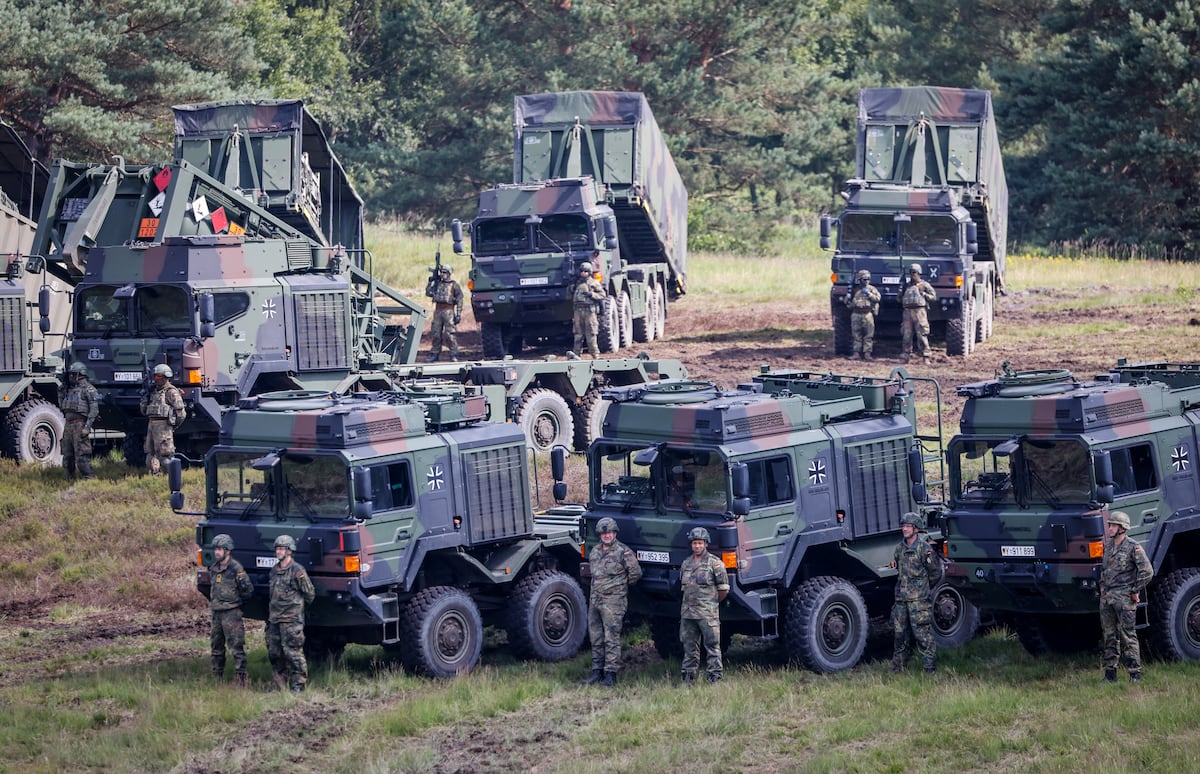
THE HAGUE, Netherlands — Germany’s coalition government has approved legislation meant to streamline defense-procurement procedures, as officials face the task of translating vast military budget increases of coming years into new capabilities.
The Bundeswehr Procurement Acceleration Act (Bundeswehrbeschaffungsbeschleunigungsgesetz, in German), agreed upon by the ruling coalition on July 23, represents the most significant overhaul of German military procurement since the Cold War. The law extends until 2035 and goes far beyond the temporary measures introduced in 2022 following Russia’s invasion of Ukraine.
German minister of defense Boris Pistorius called the draft law a “quantum leap” for the country.
One provision removes the stop-work period that typically follows legal challenges against contract awards. Unsuccessful bidders currently have the power to delay procurement for years through court appeals, a mechanism that defense officials blame for chronic capability gaps.
The reform also allows procurement authorities to initiate contracts without secured financing if it’s in the interest of national defense. A disclosure to that effect would be required in tender documents to industry, according to the draft law.
Unlike its 2022 predecessor package, which focused on military equipment and was due to expire in 2026, the new law covers all Bundeswehr needs, including civilian goods and services. Certain urgent contracts will be able to bypass European Union tendering requirements entirely, limiting competition to national or European suppliers.
Three years ago, the law that the new legislation will build on was criticized for weakening institutional guardrails. At the time, Transparency International said in a report that “in its current form, the [law] primarily increases the risk of corruption in military procurements, which are already particularly prone to corruption.”
The new legislation permits authorities to restrict tenders to EU and European Economic Area bidders and mandate that procurement originate from European sources.
“Which country we buy from depends on who can quickly offer the required material,” Annette Lehnigk-Emden, director-general of the Bundeswehr’s procurement agency, told Reuters in a written interview.
Some observers have argued that the new rules will inevitably favor large defense companies, several of which are based in Europe, at the expense of startups trying to break into the military market.
“The temporary suspension of lot splitting and the privileged treatment in case of interoperability favor suppliers that are already firmly anchored in NATO and EU structures,” wrote Holger Hofmann of the Cologne-based Oppenhoff legal advisory firm. “In addition, financing risks hit small bidders much harder.”
Notably absent from the reforms is any change to the parliamentary approval requirement for defense purchases exceeding €25 million ($29 million), a threshold that requires the budget committee’s green light.
The legislation comes as Germany prepares to nearly double defense spending to meet NATO’s new spending goals and domestic ambitions, with military expenditure rising from €90 billion ($105.5 billion) in 2024 to €162 billion ($190 billion) by 2029.
Although the Cabinet has agreed on the draft law, it still needs to pass through Germany’s parliament before it enters into law. The governing coalition holds a sufficient majority in parliament.
Linus Höller is Defense News' Europe correspondent and OSINT investigator. He reports on the arms deals, sanctions, and geopolitics shaping Europe and the world. He holds master’s degrees in WMD nonproliferation, terrorism studies, and international relations, and works in four languages: English, German, Russian, and Spanish.
荷兰海牙——德国联合政府已批准一项旨在简化国防采购程序的立法,官员们正面临着将未来几年大幅增长的军费预算转化为新能力的挑战。
执政联盟于7月23日通过的《联邦国防军采购加速法》(德语:Bundeswehrbeschaffungsbeschleunigungsgesetz)是冷战以来德国军事采购领域最重大的改革。该法有效期至2035年,其力度远远超过了2022年俄罗斯入侵乌克兰后出台的临时措施。
德国国防部长鲍里斯·皮斯托里乌斯称该法律草案对德国来说是一次“质的飞跃”。
其中一项条款取消了通常在合同授予受到法律挑战后出现的停工期。目前,中标者可以通过上诉将采购进程拖延数年,国防官员认为这种机制是造成长期能力缺口的原因。
改革还允许采购部门在符合国防利益的情况下,无需提供担保融资即可启动合同。根据法律草案,招标文件中需向相关企业披露这一信息。
与2022年侧重于军事装备且将于2026年到期的前一揽子计划不同,新法涵盖了德国联邦国防军的所有需求,包括民用商品和服务。某些紧急合同将能够完全绕过欧盟的招标要求,从而将竞争限制在德国国内或欧洲供应商之间。
三年前,这项新立法将以此为基础的法律曾因削弱制度保障机制而受到批评。当时,透明国际在一份报告中指出,“该法律目前的版本主要增加了军事采购领域的腐败风险,而军事采购本身就特别容易滋生腐败。”
新法规允许当局将招标范围限制在欧盟和欧洲经济区投标者,并强制要求采购必须来自欧洲。
德国联邦国防军采购局局长安妮特·莱尼克-埃姆登在接受路透社书面采访时表示:“我们从哪个国家购买取决于谁能迅速提供所需的材料。”
一些观察人士认为,新规势必会偏袒大型国防公司(其中一些总部位于欧洲),而损害那些试图打入军工市场的初创企业的利益。
科隆奥本霍夫法律咨询公司的霍尔格·霍夫曼写道:“暂时中止拆分采购以及在互操作性方面给予的优惠待遇,有利于那些已经牢固融入北约和欧盟体系的供应商。此外,融资风险对小型投标者的打击也更大。”
值得注意的是,此次改革并未改变国防采购超过 2500 万欧元(2900 万美元)需要议会批准的要求,而这一门槛需要预算委员会的批准。
这项立法出台之际,德国正准备将国防开支增加近一倍,以满足北约新的开支目标和国内雄心,军费开支将从 2024 年的 900 亿欧元(1055 亿美元)增加到 2029 年的 1620 亿欧元(1900 亿美元)。
尽管内阁已就该法案草案达成一致,但它仍需经德国议会通过才能生效。执政联盟在议会中拥有足够的多数席位。
林努斯·霍勒是《防务新闻》的欧洲记者和开源情报调查员。他报道影响欧洲乃至全球的军火交易、制裁和地缘政治。他拥有大规模杀伤性武器不扩散、恐怖主义研究和国际关系三个硕士学位,并精通英语、德语、俄语和西班牙语四种语言。