The Extraordinary Story Of The Last Fighter Mission Over Afghanistan阿富汗上空最后一次战斗机任务的非凡故事
With chaos on the ground and in the sky, and nowhere to divert to in an emergency, F-15Es watched over the tumultuous withdrawal from Afghanistan.
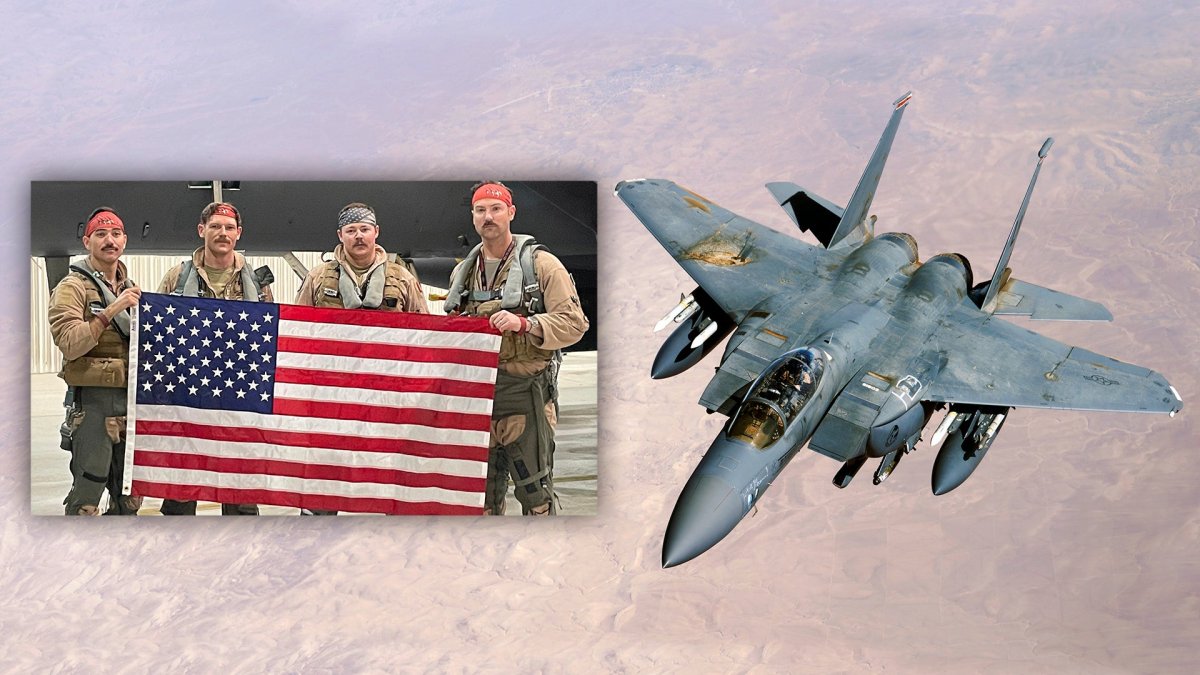
Updated Feb 17, 2022 6:54 PM EST
In the dead of night, high over Kabul, with no diversion airfield available in the event of an emergency, U.S. Air Force F-15E Strike Eagles watched over the final American withdrawal from Afghanistan last August. Working independently, with what can only be described as chaos in the air and support just from eyes on the ground as thousands of people fled the clutches of the Taliban, it was a mission full of extreme risk with the highest of stakes.
“We ran a hectic 24/7 operations schedule to provide a two-ship of Strike Eagles over Hamid Karzai International Airport [HKIA] in the morning and another pair at night during the final days of the Afghanistan evacuation mission,” F-15E Weapons Systems Officer Capt. “Rage” told The War Zone in an exclusive interview. “Our Combat Air Patrols [CAPs] overhead were 3-4 hours-long, and with the long transit to Northern Afghanistan from our operating base in the United Arab Emirates, these were exhausting 10-hour flights.”
An F-15E of the 494th FS at Al Dhafra in the UAE., USAF
For the 494th Fighter Squadron (FS) “Black Panthers,” their missions to provide combat air support for the final U.S. withdrawal from Afghanistan, leading up to and on the historic final day of August 30, 2021, were unexpected, but the bread-and-butter for a squadron that is on a constant combat footing — “on the hook” to deploy at very short notice — with F-15E Strike Eagles that are versatile to tackle a range of roles, and making them the ideal assets to be drafted in.
“In October 2019, I became the 494th FS Director of Operations at RAF Lakenheath and that very day the squadron was notified of an IRF [Immediate Response Force] deployment to the Middle East,” says Lt. Col. Jonathan “Crash” Hutto, the current commander of the squadron, as he explains the pace of action at the U.K.-based 48th Fighter Wing. By January 2020, the squadron was flying missions from Prince Sultan Air Base in Saudi Arabia as part of a rapid upscaling of the Pentagon’s footprint in the country in response to the escalation in Iranian-linked militant activity directed against the Kingdom .
A “Panthers” F-15E at Prince Sultan Air Base, Saudi Arabia, on January 8, 2020., USAF/TSgt Michael Charles
“We returned to Lakenheath in March 2020 just as our sister squadron, the ‘Bolars,’ went out the door on ops. The wing was briefly back together in late 2020, and I took over as the squadron commander in January 2021. Then we deployed for our scheduled Air Expeditionary Force [AEF] rotation in March 2021. If you come to Lakenheath you have to be ready to go — we are forward-deployed in a combatant command, so if you’re a mission qualified young wingman, you’d better be ready.”
Moving forward to support Afghanistan
Having embarked on its AEF rotation to an undisclosed location in the Middle East, widely acknowledged as Muwaffaq Salti Air Base in Jordan, the “Panthers” were soon notified that a further move was afoot, with six jets earmarked to move further east to Al Dhafra Air Base [ADAB] in the United Arab Emirates [UAE]. “We got told that CENTCOM wanted six F-15Es to go to ADAB to cover the Operation Resolute Support Afghanistan withdrawal mission, initially for 30 days,” says Rage.
The six jets from the 494th FS would be assigned to the 332nd Air Expeditionary Wing to contribute air power to help protect U.S. and coalition forces as they drew down operations and bases in Afghanistan. Due to a lack of available munitions at Al Dhafra, the “Panthers” ferried the six jets to the UAE on April 25, 2021, with a full load of weapons in the first-ever combat tactical ferry as part of this Agile Combat Employment (ACE) operation. The move was designed to sustain combat missions from their new base with an initial influx of supporting weaponry without relying on transport aircraft to move it. Clearly, this was advantageous considering the massive stress put on U.S. airlift capabilities at the time. “That large tactical ferry saw us bring 96 weapons to Al Dhafra,” commented “Rage.”
Weapons loaded on an F-15E for the combat tactical ferry to Al Dhafra., USAF
“They were closing down the operation at Bagram as part of the initial retrograde, with a lot of troops on the move and a lot of contacts with the Taliban, so there was a heightened state of tension. There was real concern that there would be attacks on the bases, so we were tasked with flying long-range, over-the-horizon missions from Al Dhafra deep into Afghanistan.”
At the request of the Combined Forces Air Component Commander (CFACC), the “Panthers” covered vulnerability periods in concert with KC-10s from Al Dhafra’s resident 908th Expeditionary Air Refueling Squadron, who dragged the fighters into Afghanistan and then remained on station with them as dedicated tanker support for the long-endurance missions.
During a visit to Kabul on July 25, Gen Frank McKenzie, Commander, U.S. Central Command detailed the U.S. military’s assistance to the Afghan Government and the Afghan National Defense and Security Forces (ANDSF) at that time. “The United States has increased airstrikes in the support of Afghan forces over the last several days, and we’re prepared to continue this heightened level of support in the coming weeks if the Taliban continue their attacks,” said McKenzie. “I reassured the government that we are continuing to provide airstrikes in defense of ANDSF forces under attack by the Taliban, contract logistics support both here in Kabul and over-the-horizon in the region, funding for them, intelligence sharing, and advising and assisting through security consultations at the strategic level.”
A 494th FS crew depart Al Dhafra in July 2021 at the culmination of their first period support the Afghanistan withdrawal. , USAF/MSgt Wolfram M. Stumpf
The “Panthers” spent 66 days supporting this CENTCOM Air Tasking Order in Afghanistan before tensions eased to a level where they could be allowed back to rejoin their main squadron deployment.
Just five weeks later on August 15 at 4:00 PM, the “Panthers” were again notified that their presence was needed back at Al Dhafra. This time it was the big one — supporting the final withdrawal from Afghanistan and watching over the end of a 20-year campaign in this war-torn country as the last Americans left Kabul airport.
By 7:00 AM the next morning the first C-130 Hercules was airborne to ferry personnel to Al Dhafra, ready to “catch” the six Strike Eagles as they arrived. Less than 24 hours from receiving the call, the 494th FS had re-established forward operations in the UAE to help support the final chapter in the complex and controversial story of America’s war in Afghanistan.
“This time we did another ‘tac-ferry’ with weapons suitable for the Kabul NEO [Noncombatant Evacuation Operations],” explains “Rage”. “We had 500 lb GBU-38 and 54 Joint Direct Attack Munitions, GBU-39 Small Diameter Bombs, and LOCO [low collateral] bombs — a variant of the GBU-38 where the bomb body is designed for lower fragmentation , plus air-to-air missiles. We went back to Al Dhafra with guys who were the most experienced — those who knew how to fly missions into Afghanistan — and essentially picked up on the job we did just a few weeks prior.”
A fully-loaded “Panthers” F-15E ready to move forward to Al Dhafra., USAF
Again, the 494th FS was plunged into long 10-11-hour combat air support missions, flying 3-4-hour Combat Air Patrols over Afghanistan, but this time it was the capital Kabul, with the eyes of the world watching America’s, and the Taliban’s, every move.
“Most of the mission preparation and route planning was well versed in terms of where to go, the tanker support available, things like that, so having experienced aircrews really paid dividends,” explains Rage. “We would talk to the Ground Liaison Officer before we stepped [manned their aircraft] and essentially then show-up on task over Kabul and check in with the Joint Terminal Attack Controller [JTAC] .”
Calling in the “Panthers” and other supporting air assets came as the hoped-for uneventful retrograde was overshadowed by the Taliban’s unexpectedly rapid re-taking of territory, pushing swiftly towards the capital city and its important air bridge at HKIA and potentially threatening the safety of American civilians, Afghan allies, and military personnel as they made a final exit from the country.
U.S. Navy aircraft from the aircraft carrier USS Ronald Reagan in the Northern Arabian Gulf, USAF F-16s from Prince Sultan Air Base in Saudi Arabia, along with B-52Hs, were swiftly called upon to contribute to a 24-hour overwatch of Kabul alongside the F-15Es of the “Panthers.”
“Having fighter aircraft overhead is something of a mental game. We could instill some fear and deterrence into the Taliban fighters,” said F-15E pilot “Spear,” who flew a number of these missions. Rage added: “On the first sortie we showed up overhead HKIA and the ground forces immediately told us they were going outside the airport’s south gate, with another 50 or so troops going outside the Abbey Gate . As they did so they called a threat of an inbound vehicle-borne improvised explosive device [VBIED] towards their location and they asked us to do an immediate show of force. We dipped down from 20,000 ft to 300 ft so we could be as loud and as fast as we could to try and deter that threat.” The event passed without incident.
A fully-armed F-15E gets airborne for the long mission to Afghanistan., USAF
“Our first two sorties included show of force and show of presence low passes — 300 ft and 500 knots over Kabul airfield and nearby buildings to help deter any actors with VBIEDs that might come towards the base. My main task as a WSO was looking with the targeting pod along ridge lines around Hamid Karzai airport to see if anyone popped-up with any type of weapons or Man-Portable Air Defense Systems , or try to shoot a grenade at a C-17,” explained Rage.
“A lot of work monitoring the situation was accomplished by drones, but they are typically just looking with one sensor,” added Spear. “Having the big canopy of the F-15E and two pairs of eyes, means we can provide a bigger picture for situational awareness for the guys on the ground, reporting the trends and patterns of life that we are seeing. Some aircrews carried binoculars, and also with the Sniper targeting pod, we were monitoring known weapons systems in the city such as anti-aircraft artillery pieces, large guns, and some old tanks, some of which the Taliban had seized. It was a dynamic mission and we had to think on the fly.”
“Ultimately, we were there to provide deterrence, but if anything went haywire we could ultimately employ weapons,” says Rage. “Thank God we didn’t have to, because it was an extremely high collateral damage area with so many people gathered around the airport.”
A soldier from the 82nd Airborne Division keeps watch on the security situation at Hamid Karzai International Airport in Kabul, on August 29, 2021., U.S. Army/MSgt Alexander Burnett
While the F-15Es were not overhead on August 26 when a lone suicide bomber killed 170 Afghans and 13 U.S military personnel outside the Abbey Gate, there’s little that air power could have done to prevent this horrendous incident. “Even if we’d been overhead in that attack with what happened there’s not much we could have done in such an extremely high collateral scenario with hundreds of thousands of people at the gates. We are looking to see if there’s something nefarious, but in reality you can’t really see everything that’s going on, you are still reliant on the guys on the ground,” explains Rage.
“It was a real wild west kind of control up there,” Rage explains. “We’d talk to the Combined Air Operations Center [CAOC] and they’d give us altitudes that other aircraft in the area were at, but there was no real air traffic control. The CAOC would give us updates of who’s in the stack over Kabul, but that wasn’t totally up to date, so we’d use our own radar and build our own situational awareness. But as far as control wise in the country, we’d clear our own flight path, maneuver the tankers around, change their track if we saw a contact, that kind of thing. Sometimes some airliners would just fly through the airspace — it was very dynamic.”
What the “Panthers” didn’t know when they initially moved to Al Dhafra, was that the CFACC specifically wanted Strike Eagles to be the last assets out of Afghanistan on the final night of the NEO on August 30. Both Rage and Spear flew in that historic mission to see the last C-17 transport aircraft out of Kabul, with the two Strike Eagles being assigned the radio callsigns of “Abide 07 and 08.”
A 494th FS F-15E photographed from a supporting KC-10 during an Afghanistan mission., USAF/TSgt Michelle Alvarez
“I was the WSO in the lead jet for the final mission. As usual we carried two AIM-120 AMRAAMs and two AIM-9M Sidewinders, SDBs on the centerline, GBU-38s and 54s including the low collaterals as requested by the JTACs to minimize collateral damage concerns if we had to employ.” As a Weapons School graduate , Rage says the biggest thing for him was running the complex planning and coordination with the CAOC — he says “the pressure and stress on us was immense, and Weapons School helps you deal with that. The “patch wearer” is the person who gets the squadron ready to go, both tactically and briefing-wise.”
One of the biggest stresses for the aircrews overseeing the Kabul withdrawal was the lack of diversion options in the area in the event of an emergency. Indeed, once the final C-17s had left Kabul, the Strike Eagles were under strict instructions that even in the event of a critical emergency, they could not land anywhere in Afghanistan. “That was a big stresser,” explains Rage.
“If we had a serious emergency such as an engine fire or hydraulic failure before the C-17s left, we could have landed at HKIA and hung out with the “snake eaters” [special ops] guys and destroyed the jet, and we could have exited on the C-17s. Once the transports left we literally had nowhere to go if we had an issue. Afghanistan was out, and across the border in Pakistan was a total no-go, and clearly Iran wasn’t an option.”
Evacuees prepare to board a United Arab Emirates C-17 at Hamid Karzai International Airport, Kabul., USMC/Sgt Samuel Ruiz
Spear takes up the story: “If we’d been in that situation, our game plan was to get as high and as far south and as close to the UAE as possible. There was a point on that night where we had literally no recovery options, so we’d have had to dump our bombs in the desert and get as high as we could, then look for a place to put the jet into the dirt if the situation was bad enough. Other options were to get as close as possible to the USS Ronald Reagan and bail out near the carrier. In fact we flew with all the carrier’s radio frequencies — there was an extreme risk of not being able to land anywhere!”
It didn’t help that with so many transport aircraft assigned to the Kabul withdrawal, the logistics chain got backed up, so the Strike Eagle maintainers had to work a host of maintenance issues to keep the jets serviceable.
Safely overhead HKIA, the aircrews of “Abide 07 and 08” watched as the stream of C-17s landed sequentially and loaded up for the last time. “It was relatively quiet down there but there were a few incidents such as civilians running onto the airfield,” recalls Rage. “They scrambled the special ops AH-6 Little Birds and threw out flash grenades to keep the civilians away from the runway as the C-17s rolled in. It was incredible to see the AH-6s pop smoke and fly low over the people, then land, they folded them up and threw them in the back of a C-17. That was true American air power right there: F-15Es and B-52s overhead, C-17s rolling in, and all the SOF guys.”
Major General Chris Donahue, commander of the U.S. Army 82nd Airborne Division boards a C-17 at Hamid Karzai International Airport in Kabul as he became final American service member to depart Afghanistan., U.S. Army/MSgt Alex Burnett
“The C-17s had a timeline to get back out, and there was a short delay, but they all stayed pretty much on time. We watched them take off, and then tracked them on the data link. The last JTAC on the ground came on the radio and said “Abide 07 and 08 you are going to escort us out of Afghanistan.”
“We spun around to get some gas, then we cleared the tanker out to the south, as well as the E-3 AWACS, the Navy E-2D Hawkeye and the E-8 Joint STARS, all of whom were ahead of us and clearing out of the area,” recounts Spear. “Major General Donahue, the commander of the U.S. Army’s 82nd Airborne Division and the last American soldier to leave Afghanistan, came on radio and thanked us for our services in ending a 20-year war. We got some text messages in the jet saying “good job Abide flight,” and then we flew out south, and back to Al Dhafra, without incident. Soon we were back to our rooms, and that was it.”
That night the crews of the two “Panthers” Strike Eagles flew a nine-hour mission without major incident.
The aircrews of “Abide 07/08” after the final mission over Kabul., USAF
“Over the years, locations like Camp Dwyer and Camp Bastion became household names. Having the opportunity to be airborne and overhead to support the C-130s and C-17s as they exfilled the last people and equipment and closed those locations for the last time was extremely unique,” reflected “Panthers” F-15E pilot “Crow,” who’s actual name also cannot be provided due to operational security reasons. “Additionally, being part of the team to go back a second time to provide armed overwatch of HKIA in Kabul for the final days was exciting and humbling. We train hard to know what to do in combat when things happen very fast to best support our forces and allies on the ground. For me, getting the opportunity to lead formations flying sorties over 10 hours long to do exactly what we train to do, in a time when the stakes and pressure was the highest, was an honor to be a part of.”
Despite the horrors of the situation at Abbey Gate, and the countless stories of people desperately trying to get out of Afghanistan and away from the grip of the Taliban, the air bridge operation was a remarkable feat of air power.
In the background, the “Panthers” watched over their comrades on the ground, using all of their skills and technology to mitigate the very real exposure to risk. Despite all the confusion and dangers in and around Kabul, the transport aircraft got in and out safely, packed with people as they made a final exit from America’s longest war.
Contact the editor: Tyler@thedrive.com
Comments couldn’t be loaded. Please refresh the page.
更新于美国东部时间2022年2月17日下午6:54
去年八月,在喀布尔上空漆黑的夜晚,没有备用机场,美国空军的F-15E“攻击鹰”战斗机在空中巡逻,掩护美军最终撤离阿富汗。当时空中一片混乱,只能依靠地面人员的目视支援,成千上万的民众正逃离塔利班的魔爪。这是一次风险极高、至关重要的任务。
“在阿富汗撤军任务的最后几天,我们实行了全天候24小时不间断的紧张行动计划,每天早上在哈米德·卡尔扎伊国际机场(HKIA)上空部署两架F-15E攻击鹰战斗机,晚上再部署两架,”F-15E武器系统官“狂怒”上尉在接受《战区》独家采访时表示。“我们的空中巡逻任务(CAP)每次持续3-4个小时,加上从我们在阿联酋的作战基地到阿富汗北部的长途飞行,这些飞行任务加起来长达10个小时,非常消耗体力。”
一架隶属于美国空军第494战斗机中队、驻扎在阿联酋阿布扎比阿兹特克空军基地的F-15E战斗机。
对于第 494 战斗机中队(FS)“黑豹”来说,在 2021 年 8 月 30 日这一历史性的最后一天之前和当天,他们被赋予了为美国最终从阿富汗撤军提供战斗空中支援的任务,这虽然出乎意料,但对于一个始终处于战斗状态——随时准备在很短时间内部署——的中队来说,却是家常便饭。该中队装备的 F-15E 攻击鹰战斗机用途广泛,能够胜任各种任务,是理想的增援力量。
“2019年10月,我成为驻扎在莱肯希思皇家空军基地的第494战斗机中队作战主任,就在同一天,中队接到通知,要向中东地区部署一支快速反应部队(IRF)。”现任中队指挥官乔纳森·“克拉什”·胡托中校解释驻扎在英国的第48战斗机联队行动节奏时说道。到2020年1月,该中队已从沙特阿拉伯的苏丹王子空军基地执行任务,这是五角大楼为应对伊朗支持的武装分子针对沙特阿拉伯王国的袭击活动升级而迅速扩大在该国军事存在的一部分。
2020年1月8日,一架“黑豹”F-15E战斗机停放在沙特阿拉伯苏丹王子空军基地。(美国空军技术军士迈克尔·查尔斯摄)
“2020年3月,我们返回莱肯希思空军基地,而我们的姊妹中队‘博拉尔’(Bolars)则出动执行作战任务。联队在2020年底短暂集结,我于2021年1月接任中队长一职。随后,我们于2021年3月按计划部署到远征空军(AEF)轮换部队。如果你来到莱肯希思,就必须做好随时出发的准备——我们隶属于作战司令部前沿部署,所以如果你是一名合格的年轻僚机飞行员,最好做好准备。”
继续支持阿富汗
在执行远征部队轮换任务前往中东某处未公开地点(普遍认为是约旦的穆瓦法克·萨尔蒂空军基地)后,“黑豹”中队很快接到通知,即将进行进一步调动,六架战机将被派往更东边的阿联酋达夫拉空军基地(ADAB)。“我们被告知,中央司令部希望派出六架F-15E战机前往达夫拉空军基地,以支援‘坚定支持行动’在阿富汗的撤军任务,最初为期30天,”雷吉说道。
来自第494战斗机中队的六架战机将被分配至第332远征航空联队,以提供空中力量,协助保护美军及其盟军在阿富汗撤离行动和基地。由于阿布扎比的达夫拉基地弹药短缺,“黑豹”中队于2021年4月25日将这六架战机满载武器,进行了史上首次战术空投,作为敏捷作战部署(ACE)行动的一部分。此举旨在确保新基地能够持续执行作战任务,并迅速获得支援武器,而无需依赖运输机进行运输。考虑到当时美国空运能力面临的巨大压力,这显然是一项优势。“那次大规模战术空投,我们向达夫拉基地运送了96件武器,” “愤怒”中队成员评论道。
一架装载武器的F-15E战斗机将执行前往阿布扎比达夫拉的战术作战任务。(美国空军)
“作为最初撤退行动的一部分,他们正在关闭巴格拉姆空军基地,大量部队正在调动,并且与塔利班保持着密切联系,因此局势高度紧张。人们非常担心基地会遭到袭击,所以我们的任务是从达夫拉空军基地执行远程超视距飞行任务,深入阿富汗腹地。”
应联合部队空中作战司令部 (CFACC) 的要求,“黑豹”战斗机与驻扎在阿布扎比的阿布扎比空军基地第 908 远征空中加油中队的 KC-10 加油机协同作战,在脆弱时期提供空中支援。这些 KC-10 加油机将战斗机拖入阿富汗,然后作为专门的加油机为战斗机提供长期任务支持。
7月25日,美国中央司令部司令弗兰克·麦肯齐将军访问喀布尔期间,详细介绍了当时美军对阿富汗政府和阿富汗国家国防与安全部队(ANDSF)的援助。麦肯齐表示:“过去几天,美国加大了对阿富汗部队的空袭力度,如果塔利班继续发动袭击,我们准备在未来几周内继续加强援助。”他还说:“我向阿富汗政府保证,我们将继续提供空袭,以保护遭受塔利班袭击的阿富汗国家国防与安全部队;我们将继续在喀布尔及周边地区提供合同后勤支持;我们将继续为他们提供资金;我们将与他们共享情报;我们还将在战略层面通过安全磋商提供建议和协助。”
2021年7月,第494战斗机中队的一个机组人员结束了在阿富汗撤军行动的第一阶段支援任务,离开阿布扎比的达夫拉空军基地。(美国空军/中士沃尔夫拉姆·M·斯图姆夫摄)
“黑豹”中队在阿富汗执行中央司令部空中任务命令 66 天后,局势缓和到允许他们返回并重新加入其主要中队部署的程度。
仅仅五周后的8月15日下午4点,“黑豹”部队再次接到通知,需要他们返回阿布扎比的达夫拉基地。这一次的任务意义重大——支援美军从阿富汗的最终撤军,并见证这场持续20年的战争在这个饱受战争蹂躏的国家画上句号,最后一批美国人将离开喀布尔机场。
第二天早上7点,第一架C-130大力神运输机升空,将人员运送至阿布扎比的达夫拉空军基地,准备迎接即将到来的六架F-15“攻击鹰”战斗机。接到命令不到24小时,第494战斗机中队就在阿联酋重新建立了前沿作战基地,为美国在阿富汗这场复杂而充满争议的战争的最后阶段提供支持。
“这次我们又进行了一次‘战术转场’,携带了适合喀布尔非战斗人员撤离行动(NEO)的武器,” “Rage”解释说。“我们携带了500磅的GBU-38炸弹、54枚联合直接攻击弹药(JDA)、GBU-39小直径炸弹和LOCO(低附带伤害)炸弹——LOCO是GBU-38的一种改进型,其弹体设计旨在减少碎片,此外还有空空导弹。我们带着经验最丰富的飞行员——那些知道如何执行阿富汗境内飞行任务的飞行员——回到了达夫拉,基本上是接手了几周前的工作。”
一架满载装备的“黑豹”F-15E战斗机已准备好前往阿布扎比的达夫拉空军基地。
第 494 战斗机中队再次投入到长达 10-11 小时的战斗空中支援任务中,在阿富汗上空进行 3-4 小时的战斗空中巡逻,但这一次是在首都喀布尔,全世界的目光都注视着美国和塔利班的一举一动。
“大部分任务准备和航线规划,包括目的地、可用的加油机支援等等,都经过了充分的了解,所以拥有经验丰富的机组人员确实发挥了重要作用,”雷吉解释说。“我们会在登机前与地面联络官沟通,然后抵达喀布尔上空执行任务,并与联合终端攻击控制员(JTAC)进行报到。”
由于塔利班出人意料地迅速夺回领土,原本希望平静的撤退行动被打破,塔利班迅速向首都及其在香港国际机场的重要空中桥梁推进,并可能威胁到美国平民、阿富汗盟友和军事人员在最终撤离该国时的安全,因此调来了“黑豹”和其他支援空中力量。
美国海军从位于阿拉伯湾北部的“罗纳德·里根”号航空母舰上起飞的飞机、美国空军从沙特阿拉伯苏丹王子空军基地起飞的F-16战斗机以及B-52H轰炸机迅速被调派,与“黑豹”中队的F-15E战斗机一起,对喀布尔进行24小时不间断的监视。
“战斗机在头顶盘旋是一种心理战。我们可以给塔利班武装分子制造一些恐惧和威慑,”曾多次执行此类任务的F-15E飞行员“矛”(Spear)说道。雷吉补充道:“第一次出击时,我们出现在香港国际机场上空,地面部队立即告知我们他们正准备从机场南门撤离,另有大约50名士兵将从修道院门撤离。与此同时,他们报告说有一架载有简易爆炸装置的车辆正朝他们方向驶来,并要求我们立即进行武力展示。我们从20000英尺的高度下降到300英尺,以便尽可能地发出最大声响并快速移动,从而威慑这一威胁。” 事件最终平安无事地过去了。
一架全副武装的F-15E战斗机升空,准备执行前往阿富汗的长期任务。(美国空军)
“我们前两次出动包括低空飞行展示武力和威慑——在喀布尔机场和附近建筑物上空以300英尺的高度和500节的速度飞行,以震慑任何可能携带简易爆炸装置接近基地的歹徒。我作为武器系统操作员的主要任务是使用瞄准吊舱沿着哈米德·卡尔扎伊机场周围的山脊线进行搜索,看看是否有人携带任何类型的武器或便携式防空系统出现,或者试图向C-17运输机投掷手榴弹,”雷吉解释道。
斯皮尔补充道:“无人机完成了大量的态势监测工作,但它们通常只使用一个传感器。F-15E 的大型座舱盖和两双‘眼睛’意味着我们可以为地面人员提供更全面的态势感知信息,并汇报我们观察到的趋势和动态。一些机组人员携带了双筒望远镜,我们还利用狙击手瞄准吊舱监测城市中已知的武器系统,例如防空炮、大炮和一些老旧坦克,其中一些已被塔利班缴获。这是一项动态的任务,我们必须随机应变。”
“归根结底,我们在那里是为了起到威慑作用,但如果情况失控,我们最终可以使用武器,”雷吉说。“谢天谢地我们没用上,因为当时机场周围聚集了很多人,附带损害非常严重。”
2021年8月29日,一名来自美国陆军第82空降师的士兵在喀布尔哈米德·卡尔扎伊国际机场监视安全局势。(美国陆军/中士亚历山大·伯内特摄)
尽管8月26日,当一名自杀式炸弹袭击者在修道院大门外炸死170名阿富汗人和13名美军人员时,F-15E战斗机并不在空中,但空中力量几乎无法阻止这场惨剧的发生。“即使我们当时在空中,面对如此大规模的附带伤害,尤其是在数十万人聚集在大门外的情况下,我们也无能为力。我们正在调查是否存在阴谋,但实际上你不可能掌握所有情况,你仍然需要依靠地面人员,”雷奇解释道。
“那里的空域管制就像狂野西部一样混乱,”雷吉解释说。“我们会和联合空中作战中心(CAOC)通话,他们会告诉我们附近其他飞机的飞行高度,但实际上并没有真正的空中交通管制。CAOC会告诉我们喀布尔上空有哪些飞机,但这些信息并不完全及时,所以我们会使用自己的雷达,自行掌握态势。至于国内的空域管制,我们会自行规划飞行路线,指挥加油机绕行,如果发现目标就改变航向,诸如此类。有时候一些客机也会直接飞越我们的空域——情况非常复杂多变。”
“黑豹”部队最初进驻达夫拉时并不知道,CFACC(空军作战司令部)特意要求攻击鹰战机成为8月30日NEO(新英格兰行动)最后一晚撤离阿富汗的最后几支部队。“狂怒”和“长矛”两架攻击鹰战机都执行了这项历史性任务,目送最后一架C-17运输机离开喀布尔,这两架战机的无线电呼号分别为“Abide 07”和“Abide 08”。
一架隶属于第494战斗机中队的F-15E战斗机,在阿富汗执行任务期间,由一架KC-10加油机提供支援拍摄。(美国空军/技术军士米歇尔·阿尔瓦雷斯摄)
“在最后一次任务中,我是领头机的武器系统操作员(WSO)。和往常一样,我们携带了两枚AIM-120先进中程空空导弹(AMRAAM)和两枚AIM-9M响尾蛇导弹,机腹挂载了小型散布炸弹(SDB),以及GBU-38和GBU-54炸弹,包括联合终端攻击控制员(JTAC)要求的低附带损伤版本,以便在必要时最大限度地减少附带损伤。”作为一名武器学校的毕业生,雷吉表示,对他来说最重要的是与联合空中作战中心(CAOC)进行复杂的计划和协调——他说:“我们面临的压力和紧张感非常巨大,而武器学校帮助我们应对这些挑战。‘佩戴臂章的人’负责让中队做好战术和简报方面的准备。”
负责指挥喀布尔撤离行动的机组人员面临的最大压力之一是,一旦发生紧急情况,该地区缺乏备降机场。事实上,最后一批C-17运输机离开喀布尔后,攻击鹰战斗机飞行员被严格指示,即使发生危急情况,也不能在阿富汗境内任何地方降落。“这真是个巨大的压力,”拉格解释道。
“如果在C-17运输机离开之前,我们遇到严重的紧急情况,比如发动机起火或液压系统故障,我们可以降落在香港国际机场,和‘食蛇者’(特种部队)待在一起,摧毁那架飞机,然后乘坐C-17运输机撤离。一旦运输机离开,如果我们遇到问题,就真的无处可去了。阿富汗不行,巴基斯坦边境也完全行不通,伊朗显然也不在考虑范围内。”
在喀布尔哈米德·卡尔扎伊国际机场,撤离人员准备登上阿联酋的C-17运输机。(美国海军陆战队/中士塞缪尔·鲁伊斯摄)
斯皮尔接着说道:“如果我们当时处于那种境地,我们的作战计划是尽可能飞高,尽可能往南,尽可能靠近阿联酋。那天晚上,我们一度完全没有其他办法,所以我们只能把炸弹投到沙漠里,尽可能飞高,然后如果情况非常糟糕,就找个地方把飞机降落。其他方案是尽可能靠近‘罗纳德·里根’号航空母舰,然后在航母附近跳伞。事实上,我们当时使用了航母的所有无线电频率——我们面临着根本无法降落的极端风险!”
由于大量运输机被分配到喀布尔撤离行动中,后勤链出现了堵塞,这无疑加剧了后勤的困难,因此“攻击鹰”战斗机的维护人员不得不处理一系列维护问题,以保持这些战机的正常运转。
“Abide 07 和 08”号机组人员安全地飞越香港国际机场上空,目睹了一队队 C-17 运输机依次降落,并进行最后的装载。“那里相对平静,但也发生了一些小插曲,比如有平民跑进了跑道,”雷吉回忆道。“他们紧急出动了特种作战部队的 AH-6‘小鸟’直升机,投掷闪光弹驱散平民,让他们远离跑道,同时 C-17 运输机缓缓降落。看到 AH-6 直升机喷洒烟雾弹,低空飞过人群,然后降落,折叠起来扔进 C-17 的后舱,真是令人难以置信。那才是真正的美国空中力量:F-15E 和 B-52 战斗机在头顶盘旋,C-17 运输机缓缓降落,还有所有特种作战部队的人员。”
美国陆军第82空降师师长克里斯·多纳休少将在喀布尔哈米德·卡尔扎伊国际机场登上C-17运输机,成为最后一位离开阿富汗的美军军人。(美国陆军/军士长亚历克斯·伯内特摄)
“C-17运输机有返回的预定时间表,虽然稍有延误,但总体上都按时完成了任务。我们看着它们起飞,然后通过数据链跟踪它们。最后一位地面联合终端攻击控制员(JTAC)通过无线电说道:‘Abide 07和08,你们将护送我们撤出阿富汗。’”
“我们掉头加油,然后把油箱从南边移开,同时移开了E-3预警机、海军E-2D鹰眼预警机和E-8联合监视目标攻击雷达系统飞机,它们都在我们前面,正准备撤离该区域,”斯皮尔回忆道。“美国陆军第82空降师师长唐纳休少将,也是最后一位离开阿富汗的美军士兵,通过无线电向我们表示感谢,感谢我们为结束这场持续20年的战争所做出的贡献。我们在飞机上收到了一些短信,上面写着‘干得好,阿比德飞行队’,然后我们向南飞去,平安地返回了达夫拉。很快我们就回到了房间,一切就此结束。”
当晚,两架“黑豹”攻击鹰战斗机的机组人员执行了九个小时的任务,没有发生重大事故。
美国空军“Abide 07/08”号飞机机组人员在完成对喀布尔的最后一次任务后合影。
“多年来,像德怀尔营地和巴斯蒂安营地这样的地方早已家喻户晓。能够有机会从空中支援C-130和C-17运输机撤离最后一批人员和装备,并最终关闭这些营地,这真是一次极其独特的经历,” “黑豹”中队的F-15E战斗机飞行员“克劳”(出于行动安全原因,他的真实姓名也无法透露)回忆道。“此外,能够再次作为团队成员返回喀布尔,在最后几天为HKIA提供武装掩护,既令人兴奋又令人感到荣幸。我们刻苦训练,就是为了在瞬息万变的战斗中知道如何最好地支援地面部队和盟友。对我而言,能够在如此危急的时刻,带领编队执行超过10小时的飞行任务,执行我们训练的内容,这是一种莫大的荣幸。”
尽管阿比门的情况十分可怕,无数人拼命想要逃离阿富汗,摆脱塔利班的控制,但空中桥梁行动仍然是空中力量的一项非凡壮举。
在后方,“黑豹”部队密切关注着地面上的战友,运用一切技能和技术来降低他们面临的切实风险。尽管喀布尔及其周边地区一片混乱,危机四伏,但满载着人员的运输机还是安全起降,他们最终从美国这场持续时间最长的战争中撤离。
联系编辑:Tyler@thedrive.com
评论加载失败,请刷新页面。