Germany, Austria complete ‘Alpine triangle’ for airspace surveillance德国和奥地利组成“阿尔卑斯三角”空域监视系统
Under a new law, both countries will be allowed to quickly pursue “non-military” airspace violations or unknown threats across their shared border.
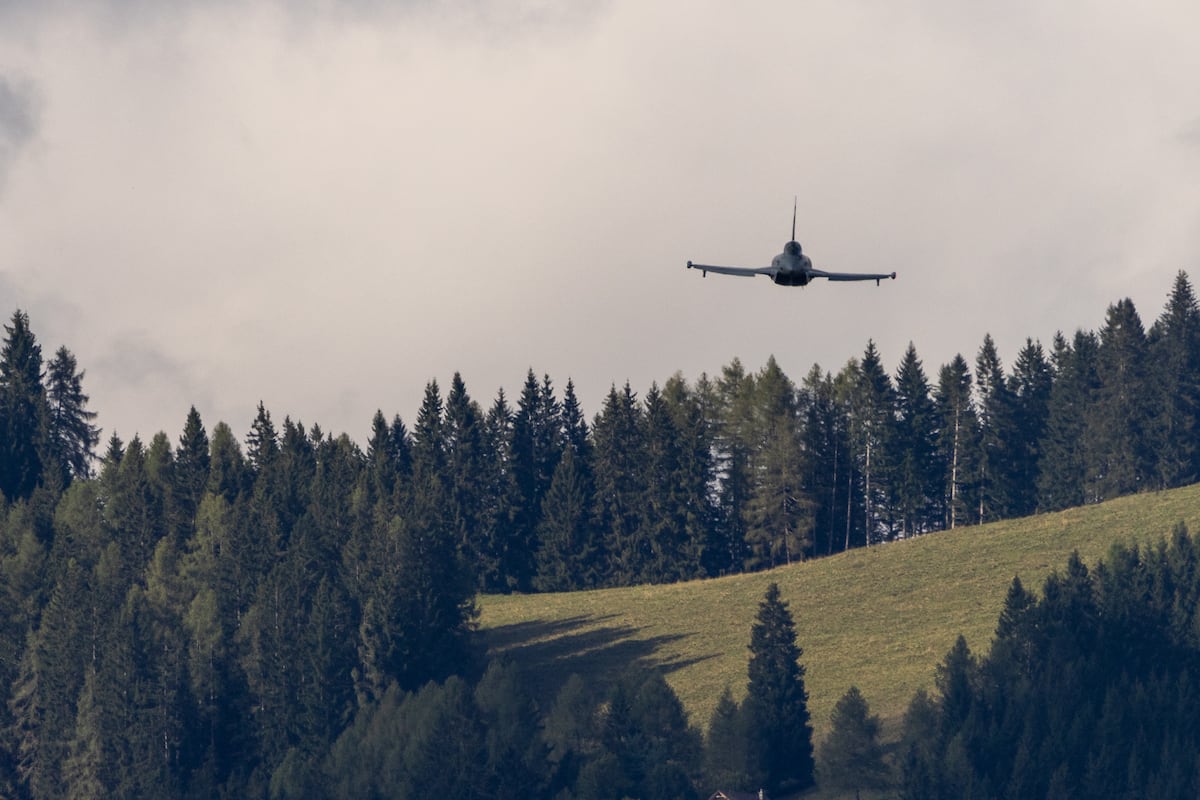
BERLIN — Germany and Austria have agreed on a mutual aerial security treaty, completing a triangle of similar pacts among the three German-speaking nations bordering the Alps.
Under a new law, both countries will be allowed to pursue “non-military” airspace violations or unknown threats across their shared border without requiring prior approval from the other capital. This includes all manned or unmanned aircraft suspected of acting illegally and of having breached either Austrian or German airspace without prior authorization.
Additionally, Berlin and Vienna agreed to share day-to-day air surveillance reports.
The Bundestag, Germany’s lower chamber of parliament, ratified the treaty in Berlin late on Feb. 26. Negotiations for it had started in 2018, but its implementation was stalled by the Covid pandemic, shifting priorities and changes of power.
Austria’s equivalent to the Bundestag, the Nationalrat, had already ratified the treaty text in 2024 after German and Austrian officials had signed it in the border town of Berchtesgaden two years earlier.
Per the treaty text, the use of weapons and most forms of threat and coercion are explicitly prohibited in the partner country’s airspace.
The language mirrors existing treaties between Germany and Switzerland from 2007, as well as between Austria and Switzerland, agreed in 2017.
The German-Austrian agreement completes the so-called “Alpine triangle” and addresses the risk of unidentified aircraft being unaccompanied when overflying complicated border regions between the three countries.
The Alpine republics to Germany’s south have longstanding traditions of military neutrality, which limit their ability to enter into military treaties. This likely played a role in the treaty texts singling out non-military threats. Unlike Germany, neither Austria nor Switzerland are NATO members.
However, both of Germany’s southern neighbors joined the Berlin-led European Sky Shield air defense initiative, formally announcing their intent to do so at a joint ceremony in 2023.
The air security treaty between Berlin and Austria will enter into force three months after mutual notification of ratification, likely in May or June.
Linus Höller is Defense News' Europe correspondent and OSINT investigator. He reports on the arms deals, sanctions, and geopolitics shaping Europe and the world. He holds master’s degrees in WMD nonproliferation, terrorism studies, and international relations, and works in four languages: English, German, Russian, and Spanish.
柏林——德国和奥地利已达成一项相互空中安全条约,至此,与阿尔卑斯山接壤的三个德语国家之间就形成了类似的三角条约。
根据一项新法律,两国将被允许在无需事先获得对方首都批准的情况下,对跨越其共同边界的“非军事”空域侵犯或不明威胁进行调查。这包括所有涉嫌非法行动且未经授权侵犯奥地利或德国领空的有人或无人驾驶飞机。
此外,柏林和维也纳同意共享每日空中监视报告。
德国联邦议院(德国议会下院)于 2 月 26 日晚在柏林批准了该条约。该条约的谈判始于 2018 年,但由于新冠疫情、优先事项的改变和权力更迭,其实施陷入停滞。
奥地利的联邦议院(相当于德国的联邦议院)在德国和奥地利官员两年前于边境小镇贝希特斯加登签署该条约后,于 2024 年批准了该条约文本。
根据条约文本,在伙伴国领空内明确禁止使用武器以及大多数形式的威胁和胁迫。
该语言与德国和瑞士于 2007 年签订的现有条约以及奥地利和瑞士于 2017 年签订的条约相一致。
德国和奥地利的协议完善了所谓的“阿尔卑斯三角”,解决了不明飞行物在飞越三国之间复杂的边界地区时无人陪同的风险。
德国南部阿尔卑斯山脉沿线的共和国长期以来奉行军事中立传统,这限制了它们缔结军事条约的能力。这很可能是条约文本中特别强调非军事威胁的原因之一。与德国不同,奥地利和瑞士都不是北约成员国。
然而,德国的两个南部邻国都加入了柏林主导的欧洲天空之盾防空倡议,并在 2023 年的联合仪式上正式宣布了加入该倡议的意图。
柏林和奥地利之间的航空安全条约将在相互通知批准后三个月生效,很可能在五月或六月。
林努斯·霍勒是《防务新闻》的欧洲记者和开源情报调查员。他报道影响欧洲乃至全球的军火交易、制裁和地缘政治。他拥有大规模杀伤性武器不扩散、恐怖主义研究和国际关系三个硕士学位,并精通英语、德语、俄语和西班牙语四种语言。