Europeans rush drone-based radar jammers in effort to supplant US tech欧洲人竞相研发无人机雷达干扰器,试图取代美国的技术。
Europe largely depends on the U.S. for airborne electromagnetic warfare, a gap some countries are looking to address.
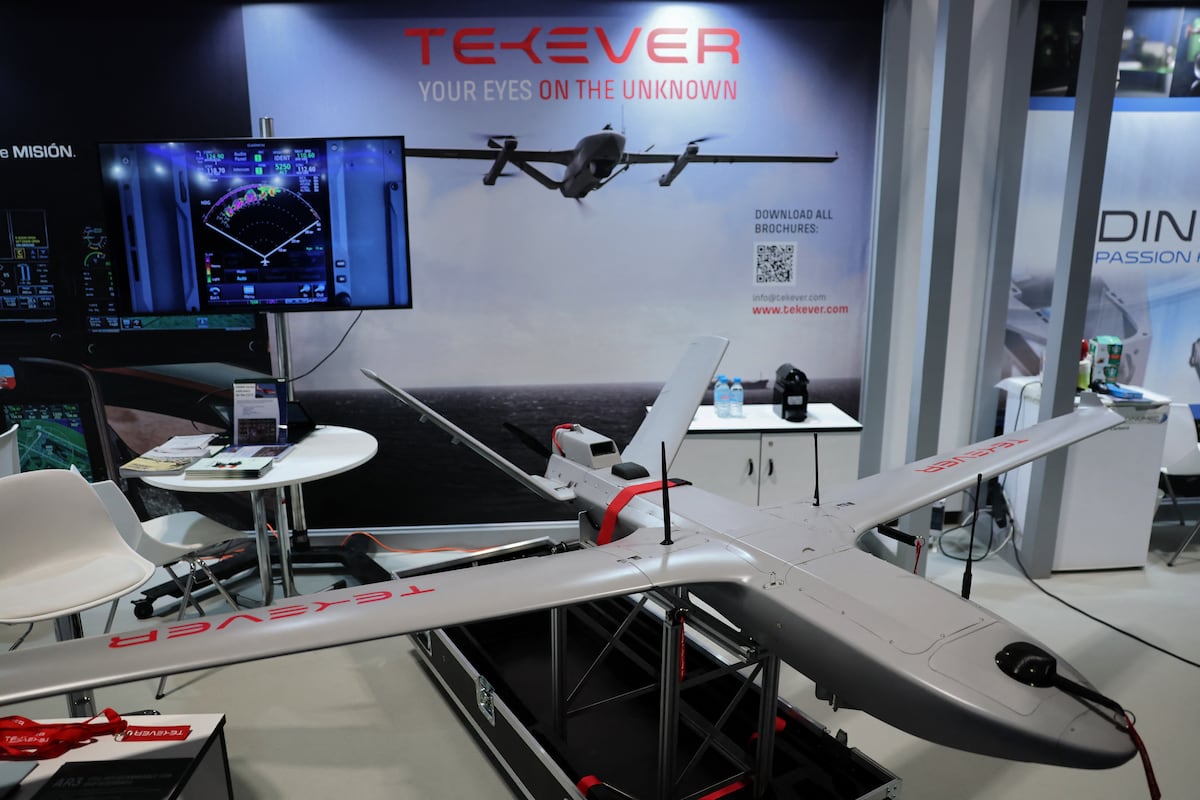
PARIS — European NATO countries are eyeing drones for airborne electromagnetic-warfare operations including radar jamming, a skill many of the continent’s air forces are currently lacking.
Italy’s Leonardo says between 10 and 20 NATO countries have expressed interest in a capability similar to the StormShroud radar-jammer drone it provided to the U.K.
Leonardo has taken a lead in radar-jamming drones with StormShroud, built around the company’s BriteStorm jammer on an unmanned aerial system from Portugal’s Tekever. U.S., European and Israeli rivals presented some of their airborne electronic warfare offerings at the Paris Air Show in June.
Europe largely depends on the U.S. for airborne electromagnetic warfare, a gap some countries are looking to address amid uncertainty about American commitment to the continent. Meanwhile, an aggressive Russia has been expanding capabilities based on its experience in Ukraine, where drones are omni-present, including in the electronic-warfare role.
Ukraine “has become a drone war with drone and counter-drones, and electronic jamming is part of that,” said Dick Zandee, senior research fellow at Dutch think tank Clingendael Institute and former head of planning at the European Defence Agency. “You see a ‘dronization’ taking place in a lot of areas now, including in electronic warfare.”
European NATO countries face a “critical” capability gap in airborne electromagnetic warfare, a potential risk in case of Russian aggression, analyst Justin Bronk at the U.K.’s Royal United Services Institute said in a report in March.
Bronk called for European countries to lift funding to develop stand-in airborne electromagnetic attack capabilities, based on “relatively cheap” uncrewed autonomous systems that can loiter over hostile territory and would be a quick way to expand their capabilities.
Leonardo has received “significant interest” in BriteStorm from NATO countries as well as defense primes, according to Michael Lea, the company’s vice president of sales for electronic warfare. Lea added he doesn’t expect any public announcement before the fourth quarter of 2025.
There is “clearly the desire from some European nations to not be as dependent on the U.S. as they have been previously,” Lea said.
The executive declined to name possible drone partners, but noted Leonardo has ties with drone makers including General Atomics, the maker of the MQ-9 Reaper, and Turkish Aerospace Industries. While Leonardo did not showcase StormShroud in Paris, it did hold a signing ceremony for a joint venture with Turkish drone maker Baykar Technologies.
Stand-in radar jamming is typically in close proximity to hostile air-defense systems, as opposed to long-range stand-off jamming outside of weapons-engagement zone. Escort jamming is typically used to protect the own forces from enemy air defenses.
Countries in Eastern Europe including Poland face threats with a “very extended range, so you are into stand-in jamming the moment you get airborne,” Lea said. “They can’t do stand-off jamming because they’re inside the threat envelope of adversary systems.”
Drone-based stand-in jammers are cheaper, attritable, and potentially more effective by operating closer to the threat, which means that in the European theater of operations they may be a better solution than stand-off jamming, according to Lea. Still, the two approaches are complimentary and will continue to exist together, the executive said.
One thing Ukraine has shown is that uncrewed capabilities planned to accompany sixth-generation fighter aircraft need to become available “far earlier,” with systems such as StormShroud allowing fourth and fifth-generation fighters to be more effective and operate more freely.
“If you can have a larger number of electronic-warfare, decoy and deception platforms, that has a value in itself, and that has absolutely been demonstrated in Ukraine,” Lea said. “I can absolutely see how you can solve a mass challenge with uncrewed platforms that allows the four-generation platform to operate as it was intended at the start of its design case.”
The trend is to move the anti-radar mission to drones because the size and recognizability of aircraft makes them easier to detect and therefore take down, as well as “terribly expensive,” Zandee said. “So, you do that kind of thing with drones.”
Leonardo has an advantage in being able to declare an operational capability in radar-jamming drones with the Royal Air Force, though Lea expects announcements from competitors within the next 12 months.
“As a result of the very urgent requirement to operate in a contested electronic warfare environment, a lot of companies are trying to tackle this challenge,” Lea said. “We would be complacent to think that other competitors aren’t developing their products in the market.”
Raytheon makes the MALD-J, a jamming variant of its expendable decoy missile which the company says is the first-ever stand-in jammer to enter production. Leonardo meanwhile is working with pan-European missile maker MBDA to develop the Spear-EW stand-in jammer missile for the U.K.
At the Paris Air Show, Raytheon presented its Next Generation Jammer, a long-range jammer for the U.S. Navy’s E/A-18 Growler electronic-warfare aircraft. The Navy declared initial operational capability for the mid-range band version of the system in December.
Modern Western radar-jamming systems including BriteStorm and MALD use Digital Radio Frequency Memory, which allows a jammer to record incoming radar signal and retransmit them with modifications, creating false targets and signals or just overwhelming the enemy system with noise.
The work on StormShroud is based on the BriteCloud digital decoy ordered by the U.S. for the F-35, also used by the U.K. on the Eurofighter and available as an option on the Saab Gripen.
Due to the situation in Ukraine, the Middle East and farther East, “our potential adversaries are learning very quickly,” Lea said. “StormShroud’s development is the U.K.’s clear aspiration to demonstrate it has a capability that can seek to challenge those threats.”
Germany’s Hensoldt has been developing the Kalaetron Attack radar jammer for airborne electronic attack, focused on stand-off jamming or as an escort jammer onboard the Eurofighter, and also available in a stand-in jamming configuration. The company, which was present in Paris, flight tested the DRFM-based system in 2023.
A consortium led by Indra Sistemas that also includes Hensoldt, Elettronica and Saab has been working on a project called Responsive Electronic Attack for Cooperative Tasks, or REACT , aimed at developing a multi-jamming capability that can be integrated inside unmanned aerial combat vehicles for stand-in jamming or in pods for escort jamming.
The project’s second phase will last through 2028 and received €40 million in European Union funding in 2023, on a total budget of €69.7 million, following a first three-year phase of feasibility studies and design. REACT is part of the Airborne Electronic Attack project established in 2019 within the EU’s Permanent Structured Cooperation framework.
The Danish armed forces in May tested drone-based electronic warfare with a UAS from Ukraine’s Skyeton equipped with a radio-frequency payload from Denmark’s Quadsat, which the Danes said can locate and attack an adversary from hundreds of kilometers away. Skyeton and Quadsat followed up with an agreement later that month to jointly offer drone-based electromagnetic-spectrum surveillance.
Electronic warfare until recent years has mostly been platform centric, so focused around the aircraft performing that mission, from specialists such as the U.S. Navy’s Growler to electronic-warfare suites such as Thales’s Spectra on the French Rafale.
Thales unveiled a miniaturized electronic-warfare payload for small drones at the Paris Air Show, designed to detect and locate radio communications and which the company says will be a breakthrough in electromagnetic intelligence and provide forces in combat with “unprecedented operational intelligence capabilities.”
Elbit Systems will have a dedicated electromagnetic warfare section at its Paris Air Show, but said it won’t be displaying any drone-based EW systems.
For now, BriteStorm doesn’t incorporate artificial-intelligence enabled “genuine cognitive EW capability,” also due to the power requirements of AI, according to Lea.
“It’s clearly on our roadmap for the future, but we will have to understand how we incorporate some of the exceptionally rapid developments in machine learning and artificial intelligence onto a quite small payload that may have to operate autonomously,” Lea said, adding he doesn’t expect much in the way of public announcements there. “People will tend to be quite coy about that.”
Rudy Ruitenberg is a Europe correspondent for Defense News. He started his career at Bloomberg News and has experience reporting on technology, commodity markets and politics.
巴黎——欧洲北约国家正考虑使用无人机进行空中电磁战行动,包括雷达干扰,这是欧洲大陆许多空军目前所缺乏的技能。
意大利莱昂纳多公司表示,有10到20个北约国家对类似于该公司向英国提供的“风暴护罩”(StormShroud)雷达干扰无人机的能力表示出了兴趣。
莱昂纳多公司凭借StormShroud雷达干扰无人机在雷达干扰领域占据领先地位。该无人机采用莱昂纳多公司自主研发的BriteStorm干扰器,并搭载于葡萄牙Tekever公司的无人机系统上。美国、欧洲和以色列的竞争对手在6月份的巴黎航展上展示了各自的一些机载电子战产品。
欧洲在空中电磁战方面很大程度上依赖美国,但由于美国对欧洲大陆的承诺存在不确定性,一些国家正寻求弥补这一缺口。与此同时,咄咄逼人的俄罗斯正基于其在乌克兰的经验不断提升自身能力,在乌克兰,无人机无处不在,包括用于电子战。
荷兰智库克林根达尔研究所高级研究员、欧洲防务局前规划主管迪克·赞迪表示:“乌克兰已经演变成一场无人机战争,无人机与反无人机交锋,电子干扰也是其中的一部分。现在很多领域都在经历‘无人机化’,包括电子战领域。”
英国皇家联合军种研究所分析师贾斯汀·布朗克在3月份的一份报告中表示,欧洲北约国家在空中电磁战方面面临“严重”的能力差距,这在俄罗斯侵略的情况下可能构成潜在风险。
布朗克呼吁欧洲各国加大资金投入,开发基于“相对廉价”的无人自主系统的替代性空中电磁攻击能力,这些系统可以在敌对领土上空盘旋,这将是快速扩展其能力的一种方式。
据莱昂纳多公司电子战销售副总裁迈克尔·利亚透露,北约国家和国防主要承包商已对“BriteStorm”系统表现出“浓厚的兴趣”。利亚补充说,预计在2025年第四季度之前不会发布任何公开声明。
莉亚说:“显然,一些欧洲国家希望不再像以前那样依赖美国。”
该高管拒绝透露可能的无人机合作伙伴,但指出莱昂纳多与包括MQ-9“死神”无人机制造商通用原子公司和土耳其航空航天工业公司在内的多家无人机制造商有合作关系。虽然莱昂纳多在巴黎航展上并未展示其“风暴裹尸布”无人机,但该公司确实与土耳其无人机制造商Baykar Technologies举行了合资企业签约仪式。
近距离雷达干扰通常发生在敌方防空系统附近,而非武器交战区外的远程防区外干扰。护航干扰通常用于保护己方部队免受敌方防空系统的攻击。
利亚说,包括波兰在内的东欧国家面临着“射程非常远”的威胁,因此一旦升空,就只能进行近距离干扰。“他们无法进行远程干扰,因为他们已经处于敌方系统的威胁范围内。”
据Lea称,无人机辅助干扰器成本更低、消耗性更强,而且由于其作战位置更靠近威胁点,因此可能更有效。这意味着在欧洲战区,无人机辅助干扰器或许比远程干扰更胜一筹。不过,这位高管表示,这两种方法是互补的,并将继续并存。
乌克兰的行动表明,计划与第六代战斗机配套的无人作战能力需要“更早”投入使用,而像“风暴之罩”(StormShroud)这样的系统可以让第四代和第五代战斗机更加高效、更加自由地作战。
“如果能拥有更多电子战、诱饵和欺骗平台,这本身就很有价值,这一点在乌克兰已经得到了充分证明,”利亚说。“我完全可以理解如何利用无人平台解决大规模挑战,从而使第四代平台能够按照其设计之初的设想运行。”
赞迪说,目前的趋势是将反雷达任务转移到无人机上,因为飞机的体积和辨识度使其更容易被发现并击落,而且“成本极其高昂”。“所以,这类任务就用无人机来完成。”
莱昂纳多公司在向英国皇家空军宣布其雷达干扰无人机的作战能力方面具有优势,不过Lea预计在未来12个月内,竞争对手也会发布相关公告。
“由于在对抗激烈的电子战环境中作战的需求非常迫切,许多公司都在努力应对这一挑战,”Lea说道。“如果我们自满地认为其他竞争对手没有在市场上开发相关产品,那就太天真了。”
雷神公司生产的MALD-J是其一次性诱饵导弹的干扰型,该公司称这是首款投入生产的替代干扰导弹。与此同时,莱昂纳多公司正与泛欧导弹制造商MBDA合作,为英国开发Spear-EW替代干扰导弹。
在巴黎航展上,雷神公司展示了其下一代干扰器,这是一款为美国海军E/A-18“咆哮者”电子战飞机设计的远程干扰器。海军于去年12月宣布该系统的中程频段版本已具备初始作战能力。
包括 BriteStorm 和 MALD 在内的现代西方雷达干扰系统使用数字射频存储器,该存储器允许干扰机记录传入的雷达信号并对其进行修改后重新发送,从而制造虚假目标和信号,或者用噪声淹没敌方系统。
StormShroud 的设计基于美国为 F-35 订购的 BriteCloud 数字诱饵,英国也将其用于欧洲战斗机,并且萨博鹰狮战斗机也可将其作为选配装备。
利亚表示,鉴于乌克兰、中东及更东方的局势,“我们的潜在对手正在迅速了解情况”。“‘风暴裹尸布’的研发,清晰地表明了英国的雄心壮志,即展现其有能力应对这些威胁。”
德国亨索尔特公司一直在研发用于机载电子攻击的卡拉特隆攻击型雷达干扰器,主要用于远程干扰或作为欧洲战斗机的护航干扰器,也提供近距离干扰配置。该公司参加了巴黎航展,并于2023年对基于DRFM的该系统进行了飞行测试。
由 Indra Sistemas 牵头,Hensoldt、Elettronica 和 Saab 等公司组成的联盟一直在开展一个名为“协同任务响应式电子攻击”(REACT)的项目,旨在开发一种多重干扰能力,该能力可以集成到无人机作战车辆内部进行替代干扰,或集成到吊舱中进行护航干扰。
该项目的第二阶段将持续到2028年,在经历了为期三年的可行性研究和设计阶段后,于2023年获得了欧盟4000万欧元的资助,总预算为6970万欧元。REACT是2019年在欧盟永久结构性合作框架下设立的“机载电子攻击”项目的一部分。
今年5月,丹麦武装部队使用乌克兰Skyeton公司的无人机系统测试了基于无人机的电子战能力。该系统搭载了丹麦Quadsat公司提供的射频有效载荷,丹麦方面称其能够定位并攻击数百公里外的敌方目标。当月晚些时候,Skyeton和Quadsat达成协议,共同提供基于无人机的电磁频谱监视服务。
直到最近几年,电子战主要以平台为中心,因此主要围绕执行该任务的飞机展开,从美国海军的“咆哮者”等专业电子战系统到法国“阵风”战斗机上的泰雷兹“光谱”等电子战套件。
泰雷兹公司在巴黎航展上推出了一款用于小型无人机的微型电子战有效载荷,该载荷旨在探测和定位无线电通信。该公司表示,这将是电磁情报领域的一项突破,并为作战部队提供“前所未有的作战情报能力”。
埃尔比特系统公司将在巴黎航展上设立一个专门的电磁战展区,但表示不会展示任何基于无人机的电磁战系统。
据 Lea 称,目前 BriteStorm 还没有整合人工智能实现的“真正的认知电子战能力”,这也是因为人工智能需要消耗大量电力。
“这显然在我们未来的发展规划中,但我们必须了解如何将机器学习和人工智能领域一些发展迅猛的技术整合到一个可能需要自主运行的小型有效载荷上,”Lea说道,并补充说他预计不会在这方面发布太多公开声明。“人们往往会对此讳莫如深。”
鲁迪·鲁伊滕贝格是《防务新闻》的欧洲记者。他的职业生涯始于彭博新闻社,拥有报道科技、大宗商品市场和政治方面的经验。