Taiwan leaders face pushback on massive defense budget mechanics台湾领导人在巨额国防预算机制上面临阻力
Without approval of a special budget, analysts said, Taiwan’s government must shift money from other departments at the risk of upsetting constituents.
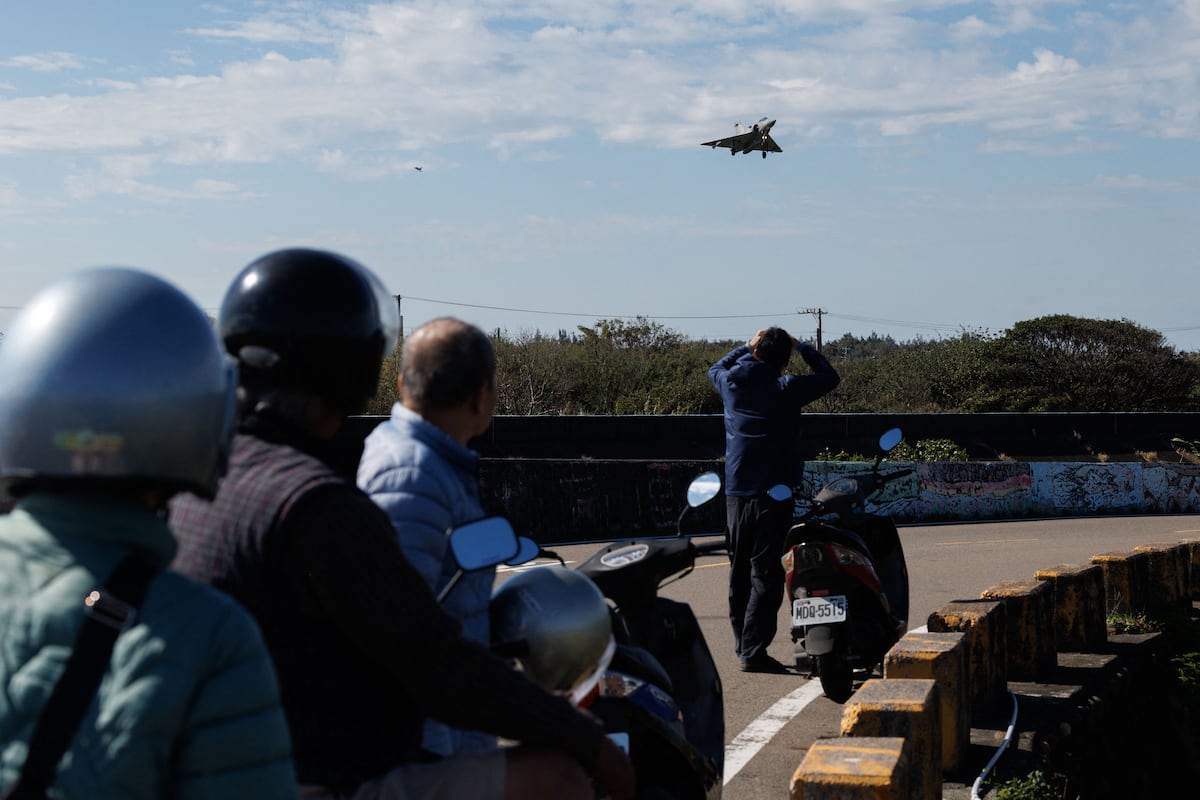
NEW TAIPEI CITY, Taiwan – Taiwan’s government may be facing a fight to find the funding to pay for planned military spending, including announced arms purchases from the United States.
Taipei said last month it would buy a large $11.1 billion arms package from the United States including HIMARS rocket systems. A month earlier Taiwanese President William Lai announced a roughly NT$1.25 trillion ($39.5 billion) special defense budget to start now and last through 2033 on top of routine annual military expenditures.
Taiwan’s government, though, may need to fight to find funding because of the sheer size of the expense and bottlenecks in the legislature, the opposition-controlled Legislative Yuan.
Opposition parties blocked a special defense budget during a Jan. 9 session, calling it inconsistent with the law, with some opponents preferring raising only military pay and pensions via special appropriations.
“The money is technically raiseable because Taiwan has the fiscal capacity, but the real constraints are political patience and interparty bargaining,” said Hu Jin-li, a professor with the Institute of Business and Management at National Yang Ming Chiao Tung University in Taipei.
Taiwanese Premier Cho Jung-tai said in a Jan. 8 statement that an earlier legislative blockade of the special budget had affected the release of NT$75.2 billion ($2.38 billion) earmarked for deterrence and asymmetric warfare capabilities, among other items. The full special budget is also designed to cover precision fires, long-range strike and missile defense.
On Jan. 15, Deputy Defense Minister Hsu Szu-chien – responding to one lawmaker’s concern – said the special budget sum reserved for buying U.S. arms would equal about NT$900 billion, with NT$300 billion for domestic military spending.
Few countries apart from the U.S. sell arms to Taiwan for fear of a backlash from China, which protests almost every sale of weaponry announced by Washington. China’s military budget was set at $246 billion last year compared to Taiwan’s $31.2 billion.
About 54% of Taiwanese citizens take a dim view of lawmakers slow-walking the special defense fund, while 30.2% view the process more positively, according to a Dec. 22 poll by the Taiwan Public Opinion Foundation.
Without approval of the special budget, analysts said, Taiwan’s government must shift money from other departments at the risk of upsetting their beneficiaries or sell bonds to raise money.
Taiwan has previously paid for weapons, from at home and abroad, by supplementing its regular defense spending.
“If the [Taiwanese] legislature does not approve a defense budget increase, the government can shift already-approved defense funds from one priority to another, but this obviously creates tradeoffs that can quickly become unsustainable,” said Denny Roy, a senior fellow at the East-West Center think tank in Hawaii.
Lai’s government may eventually reallocate funds from education or social welfare, said Chen Yi-fan, assistant professor in the Diplomacy and International Relations Department at Taiwan’s Tamkang University.
“Big, visible cuts to social programs are politically toxic, especially with demographic pressures and cost of living concerns,” Hu said. “Therefore, soft budget reallocation – slower growth, delayed projects, tighter capital spending – should be more likely rather than headlines like ‘We cut X to fund weapons.’”
Meanwhile. borrowing is the “most probable way” in funding more defense, Chen said. “Taiwan has good financial discipline, so there’s room for the government’s borrowing.”
Fitch Ratings said in August that Taiwan had a “substantial net external creditor position, [a] record of prudent fiscal management and a favorable business environment,” earning the island an AA rating with a “stable” outlook. Taiwan also ran a tax surplus in 2024.
台湾新台北市——台湾政府可能面临筹集资金以支付计划中的军事开支的困境,其中包括已宣布从美国购买武器。
台北方面上个月宣布将从美国购买价值111亿美元的大型军售计划,其中包括HIMARS火箭系统。一个月前,台湾总统赖清德宣布了一项约1.25万亿新台币(约合395亿美元)的特别国防预算,该预算将从现在开始持续到2033年,此外还包括常规的年度军费开支。
不过,由于开支巨大,加上立法院(由反对派控制)的瓶颈,台湾政府可能需要努力寻找资金。
反对党在 1 月 9 日的会议上阻止了一项特别国防预算,称其与法律不符,一些反对者更倾向于只通过特别拨款来提高军人工资和养老金。
“从技术上讲,这笔钱是可以筹集的,因为台湾有财政能力,但真正的制约因素是政治耐心和政党间的讨价还价,”台北国立阳明交通大学工商管理学院教授胡锦利说。
台湾行政院长卓荣台1月8日发表声明称,此前立法机关阻挠特别预算拨款,导致用于威慑和非对称作战能力等项目的752亿新台币(约合23.8亿美元)未能拨付。该特别预算还涵盖精确打击、远程打击和导弹防御等项目。
1月15日,国防部副部长许思坚回应一位立法委员的关切时表示,预留用于购买美国武器的特别预算金额约为9000亿新台币,其中3000亿新台币用于国内军事开支。
除了美国之外,很少有国家向台湾出售武器,因为担心遭到中国的强烈反对。中国几乎会对华盛顿宣布的每一笔武器销售都提出抗议。去年中国的军费预算为2460亿美元,而台湾的军费预算为312亿美元。
根据台湾民意基金会12月22日的民调显示,约54%的台湾民众对立法者拖延设立国防专项基金持负面看法,而30.2%的民众则对此持更积极的态度。
分析人士表示,如果特别预算未获批准,台湾政府要么必须从其他部门挪用资金,冒着得罪受益人的风险,要么必须发行债券筹集资金。
台湾过去曾通过补充常规国防开支来支付国内外武器费用。
“如果(台湾)立法机关不批准增加国防预算,政府可以将已批准的国防资金从一个优先事项转移到另一个优先事项,但这显然会造成权衡取舍,而且这种权衡取舍很快就会变得不可持续,”夏威夷东西方中心智库的高级研究员丹尼·罗伊说。
台湾淡江大学外交与国际关系系助理教授陈宜凡表示,赖政府最终可能会将资金从教育或社会福利领域重新分配。
胡表示:“大幅削减社会福利项目在政治上是极其敏感的,尤其是在人口压力和生活成本高企的背景下。因此,更应该采取的是温和的预算调整——例如放缓经济增长、推迟项目、收紧资本支出——而不是像‘我们削减X项目以资助武器’这样的耸人听闻的新闻标题。”
与此同时,陈先生表示,借贷是增加国防开支“最可能的方式”。“台湾财政纪律良好,所以政府有借贷的空间。”
惠誉评级8月份表示,台湾拥有“可观的净外部债权人头寸、审慎的财政管理记录和良好的营商环境”,因此给予台湾AA评级,展望为“稳定”。此外,台湾预计2024年将实现税收盈余。