Philippines tests new battle plan for fending off invaders alone菲律宾测试独自抵御入侵者的新作战计划
In the event of a war, officials believe local forces must hold out for at least a month before reinforcements from allies arrive.
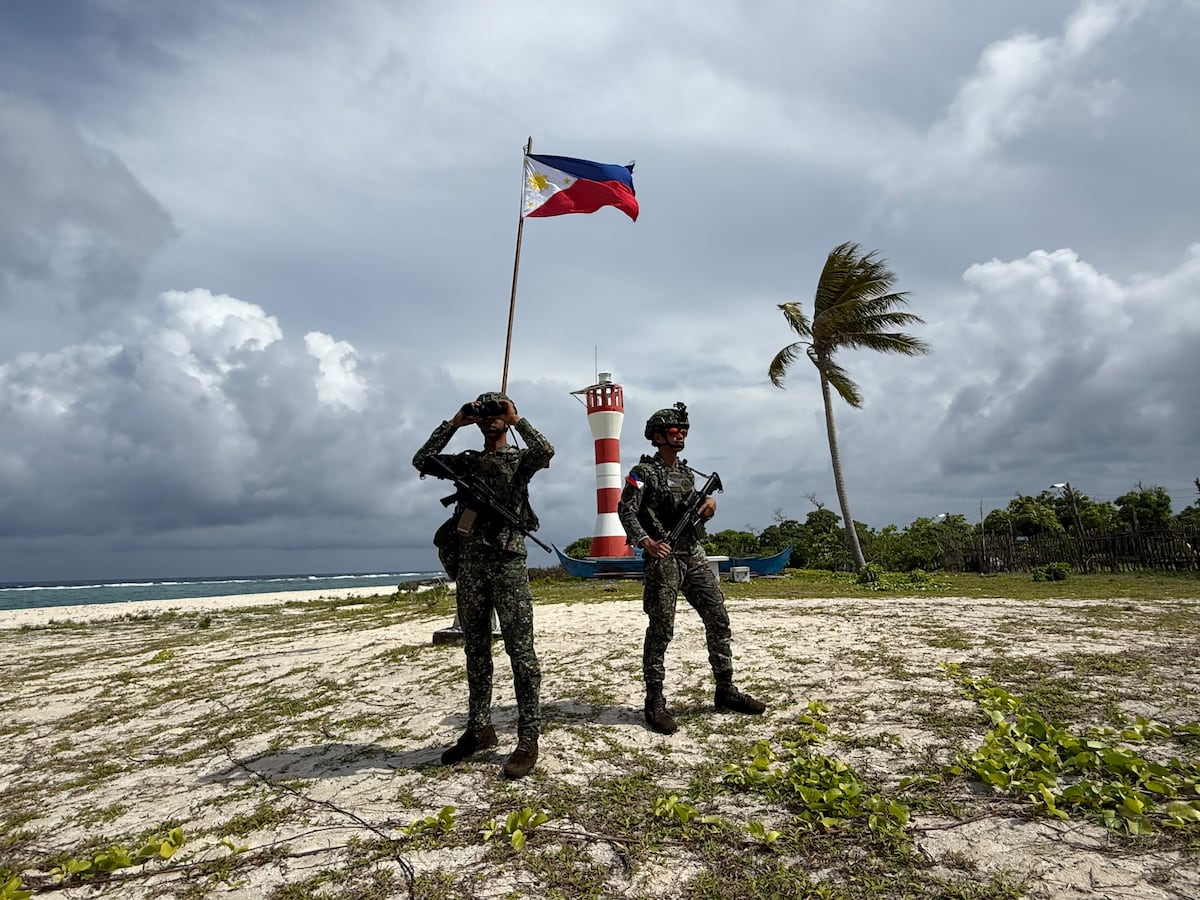
MANILA, Philippines — The Philippine military will test a new defense plan to be spearheaded by a new command, as officials here game out what it would take to repel invaders without immediate help from allies.
The exercises take place amid heightened security concerns over China’s aggressive actions in the West Philippine Sea and regional developments involving Taiwan.
“We are looking at all possible scenarios and we are incorporating those into the exercises, so we are prepared for any eventuality,” Philippine military Chief of Staff Gen. Romeo Brawner Jr. told reporters during the launch of the exercise on Nov. 4.
The annual military drill, known as the Armed Forces of the Philippines Joint Exercise Dagat-Langit-Lupa (AJEX DAGIT-PA), will include training on integrated air and missile defense operations, defending gas and oil platforms, land defense, and amphibious exercises aimed at retaking islands, airfields and seaports.
Officials told Defense News that planners and strategists have studied hundreds of conflict scenarios, including potential missile attacks, and crafted the training program to assess troop response and spot defense gaps.
Like previous editions, the exercises will be conducted in the country’s northern and western borders.
A segment will be held in Thitu Island or Pag-asa Island, a Philippine-controlled territory in the South China Sea that is home to around 400 Filipinos. Experts and military officials have identified Thitu as a likely initial target in an invasion.
The country’s armed forces, dubbed AFP, have conducted special operations and civilian defense training there. The agenda for this year includes naval surface fire support drills, but the military declined to confirm if these will accompany amphibious landing exercises.
Unlike previous iterations, this year’s edition will engage fewer troops with only 2,000 compared to last year’s 3,000. Instead, the military reserve forces, the Philippine Coast Guard, and the Philippine National Police will participate to complement end strength, Brawner said.
The agenda will also include training on cyber, electronic, and space-related warfare.
“These are not just simulations,” Brawner said. “The exercises are strategic rehearsals for real-world contingencies, validating our concepts of operations … we will also test out the new unilateral defense plan,” he added.
Since 2023, the Philippine military has officially shifted to external defense and last year released a Comprehensive Archipelagic Defense Concept (CADC) to guide its defense doctrine.
Details of the strategy remain sparse, however, and it’s uncertain how the military would operationalize this concept given its limited resources and capabilities.
The AFP revealed a shift toward a new “unilateral defense plan” called Bantay Kalayaan late last year to implement the defensive concept, which was tested under the previous AJEX DAGIT-PA training program.
The current module builds on lessons learned from last year, officials said, as it includes a more streamlined command-and-control unit solely for territorial defense – a significant move to reflect the expanding defense focus.
The AFP established its Strategic Command in late October, the lead participating unit in the ongoing exercise. The unit will be responsible for areas outside the purview of joint command units. This includes exclusive economic zones, occupied territories in the South China Sea, and the aerial domain.
Gen. Brawner suggested the AFP Strategic Command may become the principal commanding unit of the fighting forces in wartime.
“The battle staff in the GHQ (General Headquarters) cannot transform into a full-blown battle staff to fight the war,” Brawner said. “That is why I was convinced that we have to organize an AFP Strategic Command … and we rushed toward establishing it so they could be the main participant in this exercise,” he said.
While the Philippines has joined hundreds of joint military drills with allies, the internal military exercise is crucial in beefing up the country’s defense, as Filipino troops will be “fighting the war by ourselves in the first part,” Brawner said.
Brawner explained that, should war break out, the armed forces must hold out for at least a month before possible reinforcements from allies.
“This exercise is crucial so we can see the limit of our defense architecture. If war breaks out, we will be the first to defend ourselves,” Brawner said, adding that despite the scenario, the Philippines is “also expecting help from our ally under our mutual defense treaty.”
Leilani Chavez is an Asia correspondent for Defense News. Her reporting expertise is in East Asian politics, development projects, environmental issues and security.
菲律宾马尼拉——菲律宾军方将测试一项由新指挥部牵头的新防御计划,官员们正在研究在没有盟友立即援助的情况下,如何才能击退入侵者。
此次演习是在人们对中国在西菲律宾海的咄咄逼人行动以及涉及台湾的地区局势发展日益担忧的背景下进行的。
“我们正在考虑所有可能的情况,并将这些情况纳入演习中,以便我们能够应对任何突发事件,”菲律宾军方参谋长罗密欧·布劳纳将军在11月4日演习启动仪式上告诉记者。
这项名为“菲律宾武装部队联合演习 Dagat-Langit-Lupa (AJEX DAGIT-PA)”的年度军事演习将包括综合防空和导弹防御行动训练、天然气和石油平台防御、陆地防御以及旨在夺回岛屿、机场和海港的两栖演习。
官员们告诉《防务新闻》,规划人员和战略家们研究了数百种冲突场景,包括潜在的导弹袭击,并制定了训练计划,以评估部队的反应并发现防御漏洞。
与往届一样,此次演习将在该国北部和西部边境地区举行。
其中一部分将在蒂图岛(又称帕加萨岛)举行,该岛是菲律宾在南海控制的领土,约有400名菲律宾人居住。专家和军方官员已将蒂图岛列为入侵行动的首个可能目标。
该国武装部队(简称AFP)已在该地区开展特种作战和民防训练。今年的训练计划包括海军水面火力支援演习,但军方拒绝证实这些演习是否会与两栖登陆演习同时进行。
与往届不同,今年的参战部队规模将有所缩减,只有2000人参加,而去年为3000人。布劳纳表示,取而代之的是,军事预备役部队、菲律宾海岸警卫队和菲律宾国家警察将参与其中,以补充最终兵力。
议程还将包括网络战、电子战和太空战方面的训练。
布劳纳说:“这些不仅仅是模拟演练。这些演习是针对现实世界突发事件的战略预演,旨在验证我们的作战概念……我们还将测试新的单边防御计划。”
自 2023 年以来,菲律宾军方已正式转向外部防御,并于去年发布了《综合群岛防御概念》(CADC),以指导其国防理论。
然而,该战略的细节仍然很少,而且鉴于军方资源和能力有限,尚不确定军方将如何实施这一概念。
菲律宾武装部队去年底透露,为了落实此前在 AJEX DAGIT-PA 训练计划下测试过的防御理念,他们正转向一项名为 Bantay Kalayaan 的新的“单边防御计划”。
官员们表示,目前的模块是在去年吸取经验教训的基础上建立起来的,因为它包括一个更加精简的指挥控制单元,专门用于领土防御——这是一项重大举措,反映了不断扩大的国防重点。
菲律宾武装部队于10月下旬成立了战略司令部,该司令部是此次演习的主要参与单位。该司令部将负责联合指挥单位管辖范围之外的区域,包括专属经济区、南海被占领土和空中领域。
布劳纳将军认为,在战时,菲律宾武装部队战略司令部可能会成为作战部队的主要指挥单位。
布劳纳说:“总司令部的作战参谋部无法转型为一支完整的作战参谋部来打仗。正因如此,我坚信我们必须组建一个武装部队战略司令部……我们加快了组建进程,以便他们能够成为此次演习的主要参与者。”
布劳纳表示,虽然菲律宾已经与盟友进行了数百次联合军事演习,但内部军事演习对于加强国家防御至关重要,因为菲律宾军队将“在第一阶段独自作战”。
布劳纳解释说,如果战争爆发,武装部队必须至少坚持一个月,才能得到盟军可能的增援。
布劳纳表示:“这次演习至关重要,它可以帮助我们看到自身防御体系的极限。如果战争爆发,我们将率先进行自卫。”他还补充说,尽管面临这样的情景,菲律宾“也期待根据我们的共同防御条约获得盟友的援助”。
莱拉尼·查韦斯是《防务新闻》的亚洲记者。她的报道专长是东亚政治、发展项目、环境问题和安全。