Experts: Full nuclear weapons tests would backfire on US专家:全面核武器试验将对美国产生反作用
Experts agreed if the U.S. resumed full nuclear weapons tests, other nations would do the same — giving them a chance to catch up on nuclear knowledge.
Resuming full testing of nuclear weapons — as President Donald Trump called for last week — would be unnecessary, costly, undermine nonproliferation efforts, and empower the nation’s adversaries to use their own tests as intimidation, experts told Defense News.
Trump’s unexpected announcement, which came in the form of an Oct. 29 social media post, surprised many nuclear specialists — and sparked concerns that the United States may end its 33-year moratorium on nuclear weapons testing.
“Because of other countries testing programs, I have instructed the Department of War to start testing our Nuclear Weapons on an equal basis,” Trump posted on TruthSocial.
“That process will begin immediately,” he wrote.
When asked for comment about nuclear testing plans, the Pentagon’s public affairs office pointed to an Oct. 31 video of Defense Secretary Pete Hegseth in Malaysia, in which he said testing nuclear weapons is a responsible way to ensure the country has “the strongest, most capable nuclear arsenal so that we maintain peace through strength.”
“The president was clear: We need to have a credible nuclear deterrent,” Hegseth said, “That is the baseline of our deterrence.
“Having understanding and resuming testing is a pretty responsible — very responsible — way to do that. I think it makes nuclear conflict less likely, if you know what you have and make sure it operates properly,” he said.
Hegseth also said the military would work with the Energy Department on this testing.
Energy Secretary Chris Wright said on Fox News Nov. 2 that tests focusing on the subsystems of new nuclear weapons are already in the works, but he said the tests would not result in a full nuclear detonation.
The 72nd Test and Evaluation Squadron test loads an unarmed B61-12 bomb, which can be outfitted with a nuclear warhead, on a B-2 Spirit bomber on June 13, 2022, at Whiteman Air Force Base, Missouri. (Airman 1st Class Devan Halstead/Air Force)
“The tests we’re talking about right now are system tests,” Wright said. “These are not nuclear explosions. These are what we call non-critical explosions. So you’re testing all the other parts of a nuclear weapon to make sure they deliver the appropriate geometry and they set up the nuclear explosion.”
Fox News host Peter Doocy said it sounded like “this is not something where people who live in the Nevada desert should expect to see a mushroom cloud at some point.”
“No, no worries about that,” Wright said.
From ‘Trinity’ to ‘Divider’
The United States carried out 1,054 nuclear tests over nearly half a century. The first such explosion took place at the Trinity site in New Mexico in 1945 and is widely viewed as one of the pivotal moments of the 20th century. The final U.S. test — an underground detonation dubbed Divider — took place in September 1992 at the Nevada Test Site west of Las Vegas.
Then-President George H.W. Bush issued a temporary moratorium on nuclear testing following that detonation, which his successor, President Bill Clinton, extended indefinitely.
At the time, said John Erath, the senior policy director for the Washington-based Center for Arms Control and Non-Proliferation, a global movement against nuclear testing was on the rise. The United States joined that effort in part because it did not want other nations causing that kind of ecological damage, he said, but also because the U.S. was far ahead of the rest of the world.
“The U.S. had conducted over 1,000 nuclear tests,” Erath said Monday in an interview with Defense News. “We had all the data necessary to know how nuclear weapons work, to verify that U.S. nuclear weapons would work, and other people didn’t. So by stopping testing when we did, we sort of locked in an advantage in knowledge that persists to this day.”
Airmen from the 90th Missile Maintenance Squadron prepare an intercontinental ballistic missile reentry system for removal from a launch facility, Feb. 2, 2018, in the F. E. Warren Air Force Base missile complex. (Airman 1st Class Braydon Williams/Air Force)
Since then, U.S. nuclear testing has relied on computer simulations designed to predict how a weapon would respond if triggered.
Wright said on Fox News that the United States’ advanced laboratories and computing power devoted to nuclear weapons provide a major advantage over other nations.
“We can simulate incredibly accurately exactly what will happen in a nuclear explosion,” Wright said. “And we can do that because in the ’60s, ‘70s and ‘80s, we did nuclear test explosions. We had them detailedly instrumented, and we measured exactly what happened. Now we simulate what were the conditions that delivered that, and as we change bomb designs, what will they deliver?”
Hans Kristensen, director of the nuclear information project at the Federation of American Scientists, speaking Monday to Defense News, pointed to the Lawrence Livermore National Laboratory’s National Ignition Facility in California as an example of the kind of state-of-the-art facilities that the U.S. developed for safe nuclear testing purposes.
According to its website, the National Ignition Facility uses the largest and highest-energy laser system in the world to create controlled thermonuclear reactions and study them to ensure the U.S. nuclear stockpile will function as intended.
Its laser focuses more than 2 million joules of ultraviolet energy and up to 500 trillion watts of power onto a target the size of a pencil eraser, creating temperatures multiple times hotter than the sun, and massive pressures.
“These extreme conditions cause hydrogen atoms in the target to fuse and release energy in a controlled thermonuclear reaction,” the website reads.
As the government modernizes and extends the life of aging weapons in its nuclear stockpile, through efforts such as the W80-4 life extension program, it uses experiments at places such as the NIF to determine whether the weapons will still react properly if used.
Those simulation capabilities obviate the need for any testing of existing, upgraded, or new weapons, Kristensen said.
“It’s just a fundamentally different situation for the United States,” he said.
The U.S. now is modernizing its nuclear forces by creating a new gravity bomb, the B61-13, and new warheads to go on the upcoming LGM-35A Sentinel intercontinental ballistic missile and the Trident II D5 missile.
Part of that work will involve tests of the warheads’ critical subsystems, Erath said.
He said, though, that is it not necessary to go through the entire process and trigger the nuclear reactions that create devastating blasts to know whether the weapon will work.
“What happens after the plutonium goes critical is well known,” Erath said, “So you don’t need to do an explosive mushroom cloud-and-crater kind of nuclear test.
“You can do the smaller-scale subcritical testing, and that has been happening.”
Rattling a house of dynamite?
If the United States shatters the taboo against nuclear tests it helped create, other nations are sure to follow with their own tests, Erath said. Once that happens and they start to gather more detailed information on their own nuclear devices, he said, they will start to catch up to America.
It was not immediately clear what Trump was referring to when he referred to other nations’ testing programs.
In an interview with 60 Minutes that aired Sunday, Trump claimed without evidence that China and Russia have conducted clandestine nuclear weapons tests deep underground.
90th Missile Maintenance Squadron Missile Maintenance Team members connect the forward shroud to the aft shroud of the reentry system for the Minuteman III weapon system at a launch facility in Colorado, Feb. 12, 2024. (Senior Airman Sarah Post/Air Force)
“Russia’s testing nuclear weapons and China’s testing them too,” Trump said. “You just don’t know about it. … You make nuclear weapons, and then you don’t test. How are you going to do that? How are you going to know if they work?”
China, which conducted its last known nuclear explosion in 1996, denied Trump’s claim. CBS reported that a Chinese Foreign Affairs Ministry spokeswoman told reporters Monday that China has “abided by its commitment to suspend nuclear testing,” and called on the United States to do the same.
In response to Trump’s comments, the AP reported Russian President Vladimir Putin on Wednesday ordered his nation’s defense and foreign ministries to analyze the United States’ intentions on nuclear testing and submit proposals for a resumption of Russia’s nuclear tests.
The only nation known to have conducted nuclear tests in the 21st century is North Korea, which detonated six devices underground between 2006 and 2017.
Russia announced Oct. 26 that it had successfully tested a cruise missile, called Burevestnik, that uses a nuclear-powered propulsion system and could carry a nuclear payload. Experts have played down Russia’s launch of the missile, saying Burevestnik’s technologies are not new and mainly geared toward intimidation and deterrence.
“Nuclear-powered cruise missiles are not innovative — the U.S. looked into this technology in the 1940s and 1950s, but ultimately decided that ballistic missiles were better at guaranteeing penetration of enemy defenses,” said William Alberque, who previously led a NATO analysis center devoted to arms control and nonproliferation.
Lukas Kulesa, director of proliferation and nuclear policy at the London-based Royal United Services Institute, said the Russian missile would not be effective for potential first or retaliatory strikes, primarily because it is slower than intercontinental ballistic missiles.
Meanwhile, Erath said it is possible the nuance of the difference between a nuclear-powered missile test and a nuclear weapon test was lost as word traveled through the White House.
“It’s not the actual nuclear weapon, it’s a delivery system – assuming it works, and that’s a big ‘if,’” Erath said.
The United States regularly conducts tests of its own nuclear-capable ICBMs, the Cold War-era Minuteman III, without nuclear warheads.
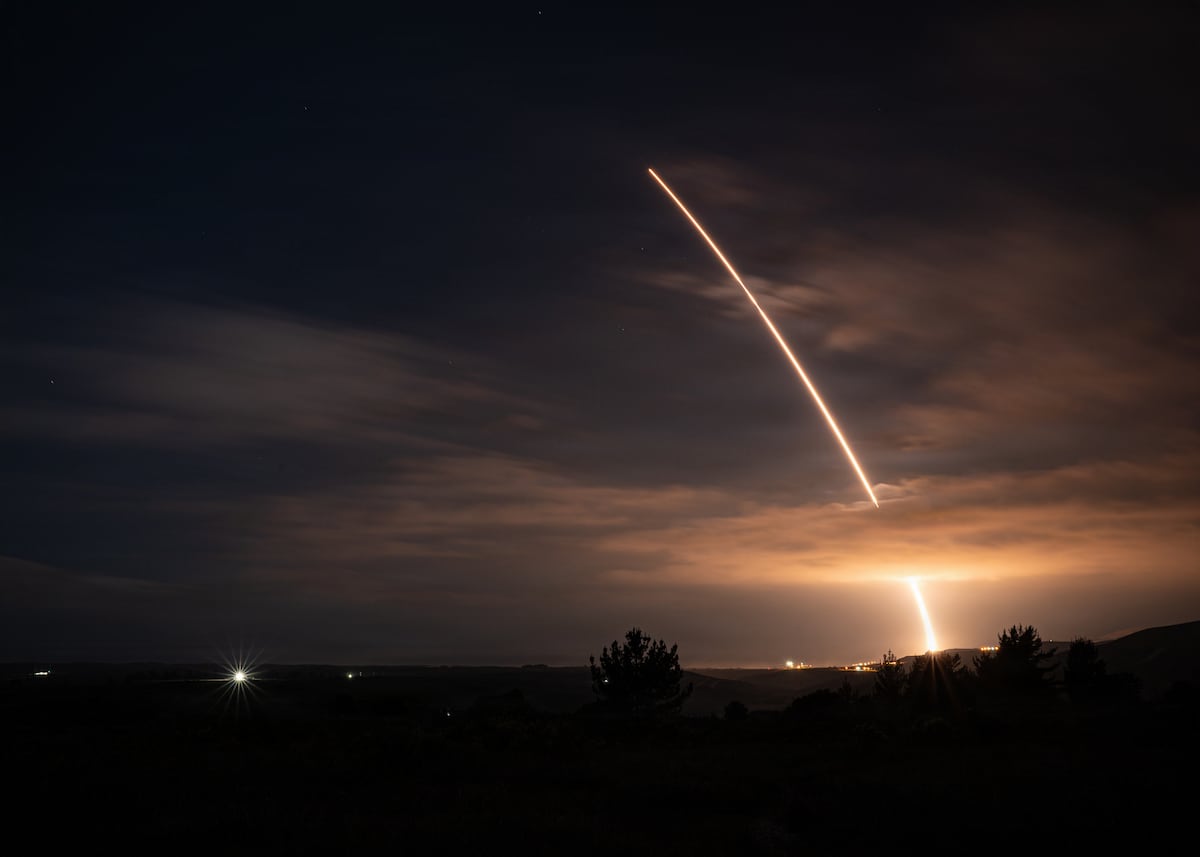
The latest test occurred early Tuesday morning, when an unarmed Minuteman III launched from Vandenberg Space Force Base in California and flew about 4,200 miles to a military test site in the Marshall Islands. An array of advanced sensors collected data throughout the missile’s terminal phase to determine if it performed correctly.
However, there is a significant difference between the two nations’ tests, Erath said.
The U.S. tests its ICBMs to maintain an effective nuclear deterrent and test its equipment, he said. Russia’s recent test, he said, was timed to ramp up pressure on the West over the Ukraine war.
“Russia was sending a message that they have nuclear capabilities and they’re not afraid to use them, in order to put more pressure [on allies] to resolve the Ukraine war, which is not going very well for Russia at present, … in such a way that will lock in Russian gains,” Erath said.
If the U.S. government were to proceed with full tests that explode nuclear weapons, Erath said, it would likely happen underground. That would minimize the environmental impact, he said, but not eliminate it entirely, because leaks can happen.
The diplomatic consequences and harm to nonproliferation efforts would be far more severe, Erath said. The United States would likely receive a storm of condemnation from other nations, he said.
With the global moratorium on nuclear weapons testing broken, Erath said, nations such as Russia, China, North Korea, India and Pakistan would likely follow Washington’s example.
“The dominoes would fall,” Erath said. “It would not be advantageous to U.S. foreign policy in any way.”
“They have comparatively more to gain from this than the United States,” Kristensen said.
“For countries like China, India and Pakistan, they have real interest in conducting more nuclear tests, because it would enable them to develop more advanced capabilities or check things they didn’t quite get to check the way they wanted to do when they did their nuclear test series.”
Kristensen said India and Pakistan, which are not believed to have perfected the two-stage thermonuclear bomb, would particularly benefit from a resumption of testing.
“They would absolutely start testing weapons,” Kristensen said.
Erath said he doubts a resumption of nuclear tests would simultaneously erode the taboo against using them against an enemy in war.
He said, though, that nuclear weapons are a tool of intimidation and that Moscow has repeatedly rattled its nuclear saber in recent years to discourage Western nations from providing more arms or other support to Ukraine. Russia in particular could use resumed nuclear tests to amplify its nuclear threats, he said.
Kristensen said the worldwide reaction to Trump’s social media post showed how volatile the issue is, and how care is needed when discussing it.
“This one ran around the world like a firestorm,” Kristensen said. “That helps indicate the severity of raising this issue. … If the United States were to go back on [its nuclear testing moratorium], that would have significant consequences around the world.”
Kristensen also noted that it took days after Trump’s post for Energy Secretary Wright to clarify what the nuclear testing would entail, and said Trump’s comments seem to have been made without advance coordination with government officials and agencies who could quickly address what the president meant.
“This kind of confusion and uncertainty undermines U.S. credibility with its allies,” Kristensen said. “They need to know if they can trust U.S. policies. … If the U.S. president now begins to signal that he’s interested in [nuclear testing] in some shape or form … it’s going to add to the pool of uncertainties [allies] have about what kind of partner the United States is now, and will be in the future.”
Carrying out these tests would also be difficult, Erath said, largely because the facilities designed to carry out such tests haven’t been used in more than three decades.
“They would need a lot of work and a lot of money to be made ready to test again,” Erath said. “That’s got to come from somewhere.”
Using money from preexisting nuclear modernization programs, Erath said, could, ironically, diminish U.S. military nuclear forces readiness.
He said it is hard to say how much getting nuclear test sites and equipment ready might cost but that it “would not surprise me if it topped a billion” dollars.
“Nuclear facilities don’t come cheap,” Erath said. “There’s a lot of specialized equipment involved that isn’t made anymore, so you’re going to have to reengineer some of that.”
Kristensen said he visited the former Nevada Test Site west of Las Vegas — now called the Nevada National Security Site — a few years ago and saw equipment used for tests decades ago, exposed to the elements out in the open and “rusty.”
“Behind a fence was equipment that used to be used in these instrumented tests,” Kristensen said. “Trailers where you would have the equipment and personnel, long, long, thick cables that were used to lower in [the warheads]. All this stuff would have to be replaced and geared toward this particular test.”
Replacing outdated or nonfunctioning measurement equipment would likely be expensive, he said.
Digging a hole deep enough for a nuclear bomb test would take months, Kristensen said — and finding the right digging equipment would be another challenge, since not many organizations have needed to dig such holes in the desert for a long time. Once the nuclear device is in there, it has to be sealed properly with materials such as gravel and concrete to keep radioactive materials from venting.
“They would have to build a whole tower over the hole in which they have this instrument package that would be lowered in there,” Kristensen said. “Those instruments would have to be designed by the nuclear laboratories to be able to do what it is that they want to record. There’s so many levels of this that have to fall into place.”
Elisabeth Gosselin-Malo in Milan contributed to this story.
Stephen Losey is the air warfare reporter for Defense News. He previously covered leadership and personnel issues at Air Force Times, and the Pentagon, special operations and air warfare at Military.com. He has traveled to the Middle East to cover U.S. Air Force operations.
专家告诉《防务新闻》,恢复全面核武器试验——正如唐纳德·特朗普总统上周呼吁的那样——是没有必要的,代价高昂的,会破坏防扩散努力,并赋予美国的对手利用他们自己的试验进行恐吓的权力。
特朗普于 10 月 29 日在社交媒体上发布了这一出人意料的声明,令许多核专家感到惊讶,并引发了人们对美国可能结束其 33 年核武器试验暂停期的担忧。
“由于其他国家的核试验计划,我已经指示战争部开始在平等的基础上进行核武器试验,”特朗普在TruthSocial网站上发帖说。
他写道:“这个过程将立即开始。”
当被问及对核试验计划的评论时,五角大楼公共事务办公室指出,国防部长皮特·赫格塞斯 (Pete Hegseth) 于 10 月 31 日在马来西亚发表了一段视频,他在视频中表示,进行核武器试验是确保美国拥有“最强大、最有能力的核武库,从而以实力维护和平”的负责任的方式。
“总统的立场很明确:我们需要一个可信的核威慑力量,”赫格塞斯说,“这是我们威慑的基础。
他说:“了解情况并恢复测试是一种相当负责任——非常负责任——的做法。我认为,如果你了解你拥有什么,并确保它能正常运作,就能降低核冲突的可能性。”
赫格塞斯还表示,军方将与能源部合作进行这项测试。
能源部长克里斯·赖特 11 月 2 日在福克斯新闻上表示,针对新型核武器子系统的测试已经在进行中,但他表示,这些测试不会导致完整的核爆炸。
2022年6月13日,在密苏里州怀特曼空军基地,第72测试评估中队在一架B-2“幽灵”隐形轰炸机上测试装载了一枚未装填核弹头的B61-12型炸弹。(空军一等兵德文·哈尔斯特德/美国空军)
赖特说:“我们现在讨论的测试是系统测试。这些不是核爆炸,而是我们所说的非临界爆炸。所以,我们测试的是核武器的所有其他部件,以确保它们能够达到正确的几何形状,并能引发核爆炸。”
福克斯新闻主持人彼得·杜西表示,这听起来像是“居住在内华达沙漠的人们不应该期待在某个时候看到蘑菇云”。
“不,不用担心,”赖特说。
从“三位一体”到“分割者”
在近半个世纪的时间里,美国进行了1054次核试验。第一次核试验于1945年在新墨西哥州的三位一体核试验场进行,被广泛认为是20世纪的关键事件之一。美国最后一次核试验——代号为“分割者”的地下核试验——于1992年9月在拉斯维加斯以西的内华达试验场进行。
在那次爆炸之后,时任总统乔治·H·W·布什发布了暂停核试验的临时命令,他的继任者比尔·克林顿总统无限期地延长了这一命令。
当时,总部位于华盛顿的军备控制与不扩散中心高级政策主任约翰·埃拉斯表示,一场反对核试验的全球运动正在兴起。他说,美国加入这场运动,部分原因是它不希望其他国家造成此类生态破坏,但也因为美国在这方面远远领先于世界其他国家。
“美国已经进行了超过1000次核试验,”埃拉斯周一在接受《防务新闻》采访时表示。“我们掌握了所有必要的数据,了解核武器的工作原理,并能验证美国核武器的有效性,而其他国家却没有。因此,我们及时停止了核试验,从而锁定了至今仍然有效的知识优势。”
2018年2月2日,在沃伦空军基地导弹综合设施内,第90导弹维护中队的空军人员正在准备将洲际弹道导弹再入系统从发射场拆卸下来。(空军一等兵布雷登·威廉姆斯/美国空军)
从那时起,美国的核试验就依赖于计算机模拟,旨在预测武器被触发后的反应。
赖特在福克斯新闻上表示,美国拥有先进的实验室和强大的计算能力,专门用于核武器研发,这使美国比其他国家拥有重大优势。
“我们可以极其精确地模拟核爆炸的整个过程,”赖特说。“我们之所以能做到这一点,是因为在上世纪六七十年代,我们进行了核试验爆炸。我们为试验装置配备了详细的仪器,并精确测量了爆炸过程中发生的一切。现在,我们模拟了引发核爆炸的条件,随着炸弹设计的改变,它们又会带来怎样的后果呢?”
美国科学家联盟核信息项目主任汉斯·克里斯滕森周一在接受《防务新闻》采访时指出,加利福尼亚州劳伦斯·利弗莫尔国家实验室的国家点火设施就是美国为安全核试验目的而开发的尖端设施的一个例子。
据其网站介绍,国家点火装置使用世界上规模最大、能量最高的激光系统来产生可控的热核反应并对其进行研究,以确保美国的核武库能够按预期发挥作用。
它的激光将超过 200 万焦耳的紫外线能量和高达 500 万亿瓦的功率聚焦到铅笔橡皮擦大小的目标上,产生比太阳温度高数倍的温度和巨大的压力。
网站上写道:“这些极端条件会导致靶材中的氢原子发生聚变,并在受控的热核反应中释放能量。”
随着政府通过 W80-4 延寿计划等举措,对其核武库中老旧武器进行现代化改造并延长其使用寿命,政府利用国家核试验场 (NIF) 等地的实验来确定这些武器在使用时是否仍能正常反应。
克里斯滕森表示,这些模拟能力使得对现有武器、升级武器或新型武器进行任何测试都变得没有必要。
他说:“对美国来说,情况从根本上来说就不同了。”
美国现在正在对其核力量进行现代化改造,制造新型重力炸弹 B61-13,以及为即将推出的 LGM-35A 哨兵洲际弹道导弹和三叉戟 II D5 导弹配备新型弹头。
埃拉斯表示,这项工作的一部分将涉及对弹头关键子系统的测试。
不过他表示,并不需要经历整个过程并引发产生毁灭性爆炸的核反应才能知道这种武器是否有效。
“钚达到临界状态后会发生什么,大家都很清楚,”埃拉斯说,“所以你不需要进行那种会产生爆炸性蘑菇云和弹坑的核试验。”
“你可以进行小规模的亚临界测试,而且这种测试也一直在进行。”
撼动一座装满炸药的房子?
埃拉斯说,如果美国打破了它一手缔造的核试验禁忌,其他国家肯定也会效仿进行自己的核试验。一旦这种情况发生,他们开始收集关于自身核装置的更详细信息,他们就会开始赶上美国。
特朗普提及其他国家的检测项目时,他究竟指的是什么,这一点尚不清楚。
在周日播出的《60分钟》节目采访中,特朗普毫无证据地声称中国和俄罗斯已经进行了秘密的地下核武器试验。
2024年2月12日,在科罗拉多州的一个发射场,第90导弹维护中队导弹维护小组的成员正在将“民兵III”型武器系统的再入系统的前整流罩与后整流罩连接起来。(空军高级飞行员莎拉·波斯特/空军)
特朗普说:“俄罗斯在进行核武器试验,中国也在进行核武器试验。你们只是不知道而已……你们制造了核武器,却不进行试验。你们怎么知道它们是否有效?”
中国否认了特朗普的说法。中国最后一次进行已知的核试验是在1996年。哥伦比亚广播公司报道称,中国外交部发言人周一告诉记者,中国“遵守了暂停核试验的承诺”,并呼吁美国也这样做。
针对特朗普的言论,美联社报道称,俄罗斯总统弗拉基米尔·普京周三下令俄罗斯国防部和外交部分析美国在核试验方面的意图,并提交恢复俄罗斯核试验的提案。
已知在 21 世纪进行过核试验的国家只有朝鲜,朝鲜在 2006 年至 2017 年间进行了六次地下核试验。
俄罗斯于10月26日宣布成功试射了一枚名为“海燕”(Burevestnik)的巡航导弹,该导弹采用核动力推进系统,并可携带核弹头。专家们淡化了俄罗斯此次导弹试射的意义,称“海燕”导弹的技术并非新技术,其主要目的在于威慑和威慑。
“核动力巡航导弹并不是什么创新技术——美国在 20 世纪 40 年代和 50 年代就研究过这项技术,但最终认为弹道导弹在保证突破敌方防御方面更胜一筹,”威廉·阿尔伯克说道,他此前曾领导一个致力于军备控制和防扩散的北约分析中心。
总部位于伦敦的皇家联合军种研究所扩散和核政策主任卢卡斯·库列萨表示,俄罗斯导弹对于潜在的先发制人打击或报复性打击来说并不有效,主要是因为它比洲际弹道导弹速度慢。
与此同时,埃拉斯表示,消息在白宫内部传递的过程中,核动力导弹试验和核武器试验之间的细微差别可能被忽略了。
“这不是真正的核武器,而是一个运载系统——假设它能正常工作,而这还是个很大的‘如果’,”埃拉斯说。
美国经常对其自身具备核能力的洲际弹道导弹(冷战时期的民兵III型导弹)进行试验,但这些试验不携带核弹头。
最新一次测试于周二清晨进行,一枚未携带弹头的“民兵III”型导弹从加利福尼亚州范登堡太空部队基地发射升空,飞行约4200英里抵达马绍尔群岛的一处军事试验场。一系列先进传感器在导弹的末段飞行过程中收集数据,以确定其性能是否正常。
埃拉斯表示,然而,两国的检测方法存在显著差异。
他说,美国进行洲际弹道导弹试验是为了维持有效的核威慑力量并检验其装备。他还说,俄罗斯最近的试验是为了加大对西方在乌克兰战争问题上的施压力度。
“俄罗斯此举意在向盟友发出信号,表明他们拥有核能力,并且不惧使用核能力,以此向盟友施加更大压力,迫使其解决目前对俄罗斯不利的乌克兰战争……从而巩固俄罗斯的既得利益,”埃拉特说道。
埃拉斯表示,如果美国政府要进行全面核试验,也就是引爆核武器,那很可能会选择地下试验。他说,这样可以最大限度地减少对环境的影响,但并不能完全消除影响,因为泄漏仍然可能发生。
埃拉斯表示,外交后果和对防扩散努力的损害将更加严重。他说,美国很可能会遭到其他国家的强烈谴责。
埃拉斯表示,随着全球暂停核武器试验的协议被打破,俄罗斯、中国、朝鲜、印度和巴基斯坦等国很可能会效仿华盛顿的做法。
“多米诺骨牌会接踵而至,”埃拉斯说。“这对美国的外交政策没有任何好处。”
克里斯滕森说:“相比美国,他们从中获益更多。”
“对于中国、印度和巴基斯坦这样的国家来说,它们对进行更多核试验有着真正的兴趣,因为这将使它们能够发展更先进的能力,或者检验它们在之前的核试验系列中未能完全按照预期方式检验的事情。”
克里斯滕森表示,印度和巴基斯坦据信尚未完善两级热核炸弹,因此恢复核试验将使两国尤其受益。
克里斯滕森说:“他们肯定会开始测试武器。”
埃拉斯表示,他怀疑恢复核试验是否会同时削弱禁止在战争中使用核弹对付敌人的禁忌。
但他表示,核武器是一种恐吓工具,近年来莫斯科屡次挥舞核武库,试图阻止西方国家向乌克兰提供更多武器或其他支持。他特别指出,俄罗斯可能会利用恢复核试验来强化其核威胁。
克里斯滕森表示,全世界对特朗普社交媒体帖子的反应表明,这个问题有多么敏感,以及在讨论这个问题时需要多么谨慎。
克里斯滕森说:“这件事像一场风暴一样席卷全球。这表明提出这个问题有多么重要……如果美国恢复(核试验暂停令),那将对全世界产生重大影响。”
克里斯滕森还指出,在特朗普发表声明几天后,能源部长赖特才澄清核试验的具体内容。他还表示,特朗普的言论似乎是在没有事先与政府官员和机构协调的情况下发表的,而这些官员和机构本可以迅速回应总统的言论。
克里斯滕森表示:“这种混乱和不确定性会削弱美国在盟友中的信誉。他们需要知道是否可以信任美国的政策……如果美国总统现在开始释放出他对某种形式的核试验感兴趣的信号……这将加剧盟友对美国现在和未来作为合作伙伴的疑虑。”
埃拉斯表示,进行这些测试也很困难,主要是因为用于进行此类测试的设施已经超过三十年没有使用过了。
“他们需要投入大量精力和资金才能做好再次测试的准备,”埃拉斯说。“这些钱总得从某个地方来。”
埃拉斯表示,利用现有的核现代化项目资金,具有讽刺意味的是,可能会降低美国军事核力量的战备能力。
他说,很难说准备核试验场和设备需要花费多少钱,但如果超过十亿美元,他也不会感到惊讶。
“核设施造价不菲,”埃拉斯说。“其中涉及许多已经停产的专用设备,所以你必须对其中一些进行重新设计。”
克里斯滕森说,几年前他参观了位于拉斯维加斯西部的内华达州前试验场(现称为内华达州国家安全基地),看到几十年前用于试验的设备暴露在外,锈迹斑斑。
克里斯滕森说:“围栏后面是以前用于这些仪器测试的设备。拖车里装着设备和人员,还有用来投放弹头的又长又粗的电缆。所有这些东西都必须更换,并针对这次特定的测试进行调整。”
他表示,更换过时或无法正常工作的测量设备可能会很昂贵。
克里斯滕森说,挖一个足够深的坑来进行核弹试验需要几个月的时间——而且找到合适的挖掘设备也是一大挑战,因为很久以来很少有机构需要在沙漠里挖这样的坑。核装置放入坑内后,必须用砾石和混凝土等材料将其密封,以防止放射性物质泄漏。
克里斯滕森说:“他们必须在放置仪器的洞口上方建造一座完整的塔,然后把仪器组件吊进去。这些仪器必须由核实验室设计,才能完成他们想要记录的数据。这其中涉及诸多环节,必须各就各位。”
米兰的伊丽莎白·戈斯林-马洛对本文亦有贡献。
斯蒂芬·洛西是《防务新闻》的空战记者。他此前曾在《空军时报》报道领导层和人事问题,并在Military.com网站报道五角大楼、特种作战和空战。他曾前往中东报道美国空军的行动。