France Sending Forces To Help Defend Saudi Arabia’s Red Sea Oil Facilities法国将派兵协助保卫沙特阿拉伯红海石油设施
The French deployment marks the latest attempt by a European nation to help stabilize the supply of oil via military assistance.
Published Sep 24, 2026 7:34 PM EDT
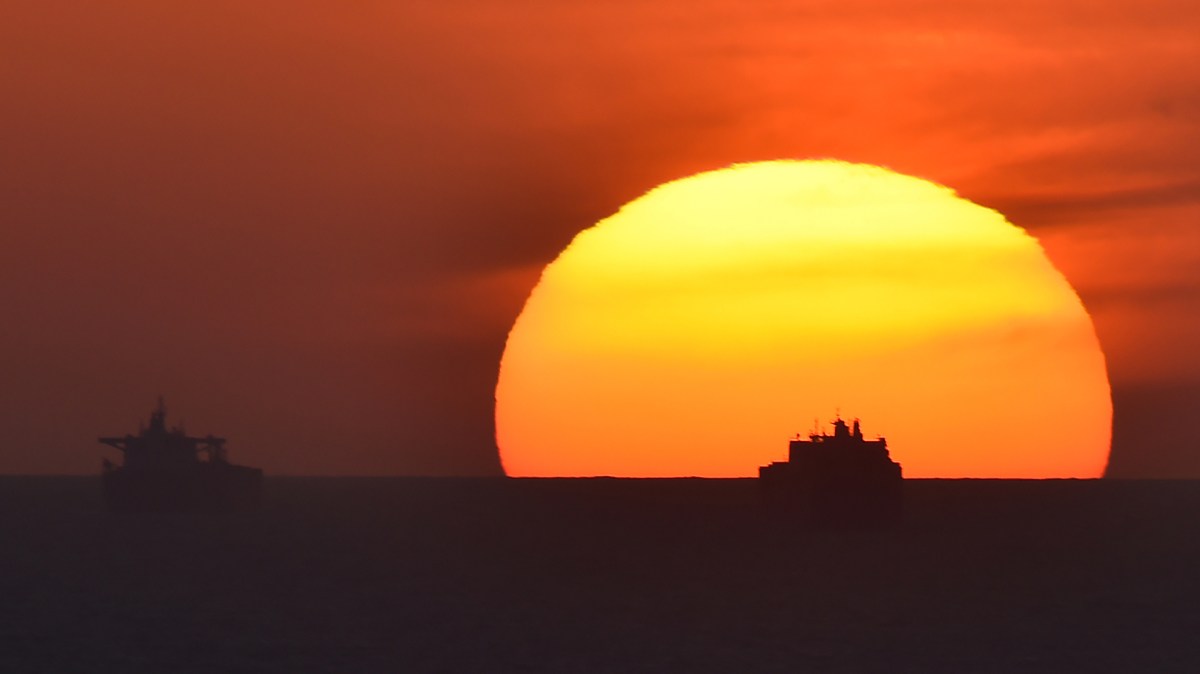
(JEAN-FRANCOIS MONIER/AFP via Getty Images)
France is sending military assistance to Saudi Arabia to protect the Yanbu oil facilities as the Kingdom battles the Iran-backed Houthi rebels of Yemen. The move comes amid growing concerns about the remaining flow of oil from the region, which France, as well as the rest of Europe, relies upon heavily.
In a live television interview Thursday night Paris time, French President Emmanuel Macron said he was sending an unspecified number of troops and equipment to the Saudi Arabia to protect the Yanbu energy hub, located on the Red Sea.
“This is the agreement we have finalized with the Saudis,” Macron explained. “We are going to send military resources, that is to say, soldiers, radar systems and defense systems, to protect this site — not to get us involved in any conflicts, but to protect this site.”
The French leader did not elaborate on the exact equipment he would send, how many troops, or when they would arrive. Nor did he address what would happen if French personnel were killed or injured or equipment damaged or destroyed. We have reached out to the French Embassy for further details. Based on his mention of radars and seeing that the threat to Saudi oil infrastructure is almost entirely from aerial attacks from drones and missiles, these will likely be air defense forces.
Nous agissons pour protéger nos compatriotes des conséquences de la crise au Moyen-Orient. Objectifs : sécuriser les approvisionnements et faire baisser les prix à la pompe. pic.twitter.com/kvrgHcV4E4 — Emmanuel Macron (@EmmanuelMacron) September 24, 2026
Nous agissons pour protéger nos compatriotes des conséquences de la crise au Moyen-Orient. Objectifs : sécuriser les approvisionnements et faire baisser les prix à la pompe. pic.twitter.com/kvrgHcV4E4
The decision was prompted by repeated Houthi missile and drone attacks as well as suspected strikes from Iranian-backed militias in Iraq on Saudi Arabia’s oil infrastructure. Yanbu in particular is a key installation. As we have explained in the past , Saudi Arabia has diverted millions of barrels of oil per day through pipelines to its Yanbu port on the Red Sea in an effort to minimize the energy shortages due to the hostilities around the Persian Gulf.
An infographic illustrating how Saudi Arabia has diverted oil from the Persian Gulf to the Red Sea. (Photo by Murat Usubali/Anadolu via Getty Images) Anadolu
Before Macron’s announcement on Thursday, the Houthis claimed they had carried out two more waves of attacks on Saudi targets, including one on the Saudi Aramco facility in Yanbu , “using a number of ballistic and cruise missiles, as well as drones.”
In addition, the Houthis claimed they struck Riyadh.
There was no immediate Saudi confirmation of an attack on the Saudi capital. Saudi civil defense did not issue an emergency alert for Riyadh on Thursday.
Earlier in the day, the Houthis said they struck “enemy command and control centers, operations rooms, weapon depots, missile launch platforms, and military sites belonging to Saudi-led enemy formations in Jizan,” a Red Sea port city.
“The Saudi-led military coalition in Yemen said on Thursday that it had shot down six ballistic missiles fired by the Iran-backed Houthi militia, in what appeared to be one of the largest cross-border attacks by the group since its conflict with Saudi Arabia [flared back up],” The New York Times reported .
The missiles were aimed at the Saudi cities of Taif and Yanbu, Maj. Gen. Turki al-Maliki, a spokesman for the Saudi-led coalition, claimed on X. “Escalations and violations by the terrorist Houthi militia will be dealt with firmly,” he stated, without specifying where the missiles were intercepted.
TWZ cannot independently verify any of these claims.
Today’s attacks are the latest in the escalating conflict between the Houthis and Saudi Arabia. Earlier this year, the Houthis imposed a blockade on the Bab al-Mandab Strait (BAM) and began striking Saudi ships in the southern part of the Red Sea as well as critical energy terminals on that body of water and Saudi refineries. Iranian proxies have also struck the vital East-West pipeline that carries oil to the Red Sea to bypass the Strait of Hormuz, where Iran vastly curtailed shipping after the launch of Operation Epic Fury. The East-West pipeline reportedly reopened after being shut down following a long-range drone attack.
The Saudi Arabian East-West pipeline after it was damaged by an attack. Satellite image ©2026 Vantor
The stark reality facing Macron is that if Saudi oil infrastructure and transport nodes near the Red Sea are destroyed or the pipeline that feeds it is shut down for months the last major oil lifeline from the region — and especially to Europe — will be closed off, sparking a deeper energy crisis.
Iran has already severely curtailed the flow of oil through the Strait of Hormuz since the U.S. and Israel attacked it on Feb. 28 . The movement of oil has been further impeded by a U.S. blockade on Iranian ports. However, transits have been increasing as of late, thanks in large measure to U.S. military escorts that U.S. Central Command claims have allowed more than a billion barrels of crude to pass through the Strait of Hormuz. Still, the traffic is far below what it was before the war broke out.
Update from CENTCOM Commander: pic.twitter.com/PTX6n9fn56 — U.S. Central Command (@CENTCOM) September 19, 2026
Update from CENTCOM Commander: pic.twitter.com/PTX6n9fn56
Having both the Strait of Hormuz largely closed and energy exports out of the Red Sea shut down simultaneously is a nightmare scenario. By Thursday evening Eastern time, the per-barrel price of Brent crude oil shot up to nearly $107, according to OilPrice.com . It had fallen below $100 per barrel just two days earlier.
Given all this, the French president sought to offer reassurance about oil supplies, according to France 24 .
“He said he had carried out ‘intense diplomatic activity,’ meeting in recent weeks with the leaders of Saudi Arabia, Iraq and Nigeria, all hydrocarbon suppliers, to ensure France keeps receiving the same volumes,” the publication noted.
“We have replenished gas stocks and also oil stocks” for the months ahead, the French president also said.
Macron’s decision follows one by the U.K.’s Royal Air Force (RAF) on Tuesday to deploy one of its Voyager aerial refueling jets to help Saudi Arabia defend against Houthi attacks. As with the French move, it is a response to concerns about the flow of oil.
“Escalating tensions in the Gulf could have negative consequences here in the UK—such as rising prices, disruptions to energy supplies, and increased costs for British businesses,” the U.K. Defense Ministry (MoD) explained in announcing the deployment . “The Houthis pose a threat to stability in the Middle East; therefore, it is in the UK’s national interest—economically and in terms of security—that they do not succeed in their aims.”
“We unequivocally condemn Houthi attacks on Saudi Arabia, and our position is clear: both Saudi Arabia and the Yemeni government have the right to self-defense,” the ministry added.
The jet will operate from a U.K. air base in Cyprus and will begin air-to-air refueling operations in the coming days, the BBC reported.
A Royal Saudi Air Force Voyager aerial refueling jet. (Air Tanker)
The French and British deployments contrast decisions by the U.S. and other nations not to get involved with the Saudi-Houthi fight.
Last week, Trump turned down a direct plea from Saudi Crown Prince Mohammed bin Salman, the Kingdom’s de facto leader, to attack the Houthis. Meanwhile, Pakistan and Turkey, which signed the Mecca Joint Defense Agreement with Saudi Arabia, have yet to provide any direct military aid. The pact holds that an attack on one is considered an attack on all; however, it doesn’t stipulate exactly what actions should be taken.
The security situation in Yemen has drastically deteriorated since the launch of Epic Fury after the Houthis joined the U.S.-Iran conflict on the side of their major supporter.
The Houthis have been directly attacking Saudi Arabia over claims that the kingdom has imposed a blockade on them. Beyond that, the mostly dormant civil war between the Houthis and internationally recognized Yemeni government forces, backed by Saudi Arabia, reignited in the wake of operation Epic Fury. The Houthis have made large territorial gains in the renewed conflict, including capturing the port city of Mokha and two key islands in the Red Sea. This has strengthened the Houthi hold on the BAM. You can read more about that in our story here .
3. The Houthis have reportedly attempted to seize ROYG-controlled islands in the Red Sea from which Houthi fighters could launch attacks on international shipping. Houthi forces reportedly landed on the Hanish Islands in the southern Red Sea on the morning of September 10 after… pic.twitter.com/tiFPgNDOHZ — Institute for the Study of War (@TheStudyofWar) September 11, 2026
3. The Houthis have reportedly attempted to seize ROYG-controlled islands in the Red Sea from which Houthi fighters could launch attacks on international shipping. Houthi forces reportedly landed on the Hanish Islands in the southern Red Sea on the morning of September 10 after… pic.twitter.com/tiFPgNDOHZ
The civil war in Yemen erupted in 2014 and expanded a year later when a Saudi-led coalition joined forces with the government ousted by the Houthis. The fighting between Saudi-led forces and the Houthis largely abated after a tenuous ceasefire took hold in 2022. The Saudis held off on getting involved in the recent Red Sea conflict, which saw the U.S. and coalition warships duking it out with the Houthis and eventually led to a U.S.-led air campaign over Yemen. The United Kingdom was another significant player in that air campaign.
Meanwhile, exacerbating concerns about the flow of oil from the Red Sea, “a senior adviser to Iran’s supreme leader warned Thursday that Iranian forces and their Houthi allies in Yemen could respond to any new U.S. attacks by opening ‘a new front’ in its war with the U.S. by targeting energy supplies in the Red Sea,” CBS News reported .
The statements came after U.S. President Donald Trump on Wednesday once again threatened Iran.
“Will a deal be made with Iran that lets them rebuild and create a far greater country than it ever was before?” Trump asked rhetorically. “Or do I annihilate the Islamic Republic and do it quickly, never giving them a chance to kill and destroy people and countries again?”
Trump added that he believed he would make a peace deal with Iran after the upcoming U.S. midterm elections, which will decide the control of Congress.
Trump to the UN: "Do I annihilate the Islamic Republic, and do it quickly? Do I drive them into hell?" pic.twitter.com/cIYBO1Mp3w — Aaron Rupar (@atrupar) September 22, 2026
Trump to the UN: "Do I annihilate the Islamic Republic, and do it quickly? Do I drive them into hell?" pic.twitter.com/cIYBO1Mp3w
As we noted yesterday, with gasoline and diesel price increases damaging the economy, the war and Trump’s handling of it have been unpopular with voters .
The fact that France is sending forces to Saudi Arabia is an ominous development and another indication that the current spate of unrest that began with Epic Fury does not appear to show any signs of ending anytime soon.
Contact the author: howard@twz.com
Comments couldn’t be loaded. Please refresh the page.
发布于美国东部时间2026年9月24日晚上7:34
(让-弗朗索瓦·莫尼尔/法新社,盖蒂图片社)
法国正向沙特阿拉伯提供军事援助,以保护延布石油设施,沙特正与伊朗支持的也门胡塞武装作战。此举正值人们日益担忧该地区剩余石油供应之际,法国以及欧洲其他国家都严重依赖该地区的石油供应。
法国总统埃马纽埃尔·马克龙在巴黎时间周四晚间的电视直播采访中表示,他将向沙特阿拉伯派遣数量不详的部队和装备,以保护位于红海沿岸的延布能源中心。
马克龙解释说:“这是我们与沙特阿拉伯最终达成的协议。我们将派遣军事资源,也就是士兵、雷达系统和防御系统,来保护这个地点——不是为了让我们卷入任何冲突,而是为了保护这个地点。”
法国领导人并未详细说明将派遣的具体装备、兵力规模或抵达时间。他也未提及如果法方人员伤亡或装备损坏或被毁将如何处理。我们已联系法国大使馆以获取更多详情。鉴于他提到了雷达,并且考虑到沙特石油基础设施面临的威胁几乎完全来自无人机和导弹的空中袭击,这些很可能是防空部队。
我们是中东方危机后果的保护者。目标:确保批准和公平地获得庞贝奖。 pic.twitter.com/kvrgHcV4E4 — 伊曼纽尔·马克龙 (@EmmanuelMacron) 2026 年 9 月 24 日
我们是中东方危机后果的保护者。目标:确保批准和公平地获得庞贝奖。 pic.twitter.com/kvrgHcV4E4
促使沙特阿拉伯做出这一决定的原因是胡塞武装多次发动导弹和无人机袭击,以及疑似伊朗支持的伊拉克民兵组织对沙特阿拉伯石油基础设施的袭击。延布港尤其重要。正如我们之前解释过的,沙特阿拉伯每天通过管道将数百万桶石油输送到位于红海沿岸的延布港,以尽量减少波斯湾周边冲突造成的能源短缺。
一张信息图展示了沙特阿拉伯如何将石油从波斯湾转移到红海。(图片来源:Murat Usubali/Anadolu via Getty Images)
在马克龙周四宣布这一消息之前,胡塞武装声称他们又对沙特目标发动了两波袭击,其中包括对位于延布的沙特阿美设施的袭击,“使用了多枚弹道导弹、巡航导弹以及无人机”。
此外,胡塞武装声称他们袭击了利雅得。
沙特阿拉伯方面尚未立即证实首都利雅得遭到袭击。沙特民防部门周四也没有对利雅得发布紧急警报。
当天早些时候,胡塞武装表示,他们袭击了位于红海港口城市吉赞的“敌方指挥控制中心、作战室、武器库、导弹发射平台以及属于沙特领导的敌方武装的军事设施”。
《纽约时报》报道:“沙特领导的也门军事联盟周四表示,他们击落了伊朗支持的胡塞武装发射的六枚弹道导弹,这似乎是该组织自与沙特阿拉伯的冲突再次爆发以来发动的最大规模的跨境袭击之一。”
沙特领导的联军发言人图尔基·马利基少将声称,这些导弹的目标是沙特城市塔伊夫和延布。他表示:“我们将坚决打击胡塞武装的升级行动和违规行为”,但他没有具体说明导弹是在哪里被拦截的。
TWZ无法独立核实这些说法。
今天的袭击是胡塞武装与沙特阿拉伯之间不断升级的冲突的最新进展。今年早些时候,胡塞武装封锁了曼德海峡,并开始袭击红海南部海域的沙特船只、该海域的关键能源码头以及沙特炼油厂。伊朗的代理人还袭击了至关重要的东西输油管道,该管道将石油输送到红海,绕过霍尔木兹海峡。在伊朗发起“史诗狂怒行动”后,霍尔木兹海峡的航运受到极大限制。据报道,东西输油管道在一次远程无人机袭击后关闭,目前已重新开放。
沙特阿拉伯东西输油管道遭袭击后受损。卫星图像 ©2026 Vantor
马克龙面临的严峻现实是,如果沙特阿拉伯红海附近的石油基础设施和运输节点遭到破坏,或者为其供油的管道关闭数月,那么该地区(尤其是欧洲)最后一条主要的石油生命线将被切断,从而引发更严重的能源危机。
自2月28日美国和以色列袭击霍尔木兹海峡以来,伊朗已大幅削减了经由该海峡的石油运输。美国对伊朗港口的封锁进一步阻碍了石油运输。然而,近来石油过境量有所增加,这主要得益于美国军方的护航。美国中央司令部声称,护航已使超过10亿桶原油得以通过霍尔木兹海峡。尽管如此,目前的石油运输量仍远低于战争爆发前的水平。
美国中央司令部司令最新消息:pic.twitter.com/PTX6n9fn56 — 美国中央司令部 (@CENTCOM) 2026年9月19日
来自中央司令部的最新消息:pic.twitter.com/PTX6n9fn56
霍尔木兹海峡基本封闭,红海能源出口同时停摆,这无疑是一场噩梦。据OilPrice.com网站报道,截至美国东部时间周四晚间,布伦特原油价格飙升至每桶近107美元。而就在两天前,其价格还跌破每桶100美元。
据法国24电视台报道,鉴于此,法国总统试图就石油供应问题作出保证。
该出版物指出,“他表示,他开展了‘密集的外交活动’,在最近几周会见了沙特阿拉伯、伊拉克和尼日利亚(均为碳氢化合物供应国)的领导人,以确保法国继续获得相同数量的碳氢化合物。”
法国总统还表示,“我们已经补充了未来几个月所需的天然气和石油库存”。
马克龙的决定紧随英国皇家空军周二部署一架“旅行者”空中加油机帮助沙特阿拉伯抵御胡塞武装袭击之后。与法国的举措一样,这都是出于对石油供应安全的担忧。
英国国防部在宣布部署行动时解释说:“海湾地区紧张局势升级可能会对英国造成负面影响,例如物价上涨、能源供应中断以及英国企业成本增加。胡塞武装对中东稳定构成威胁;因此,无论从经济还是安全角度来看,阻止他们得逞都符合英国的国家利益。”
“我们毫不含糊地谴责胡塞武装对沙特阿拉伯的袭击,我们的立场很明确:沙特阿拉伯和也门政府都有权进行自卫,”该部补充道。
据英国广播公司报道,这架喷气式飞机将从英国在塞浦路斯的空军基地起飞,并将在未来几天内开始进行空中加油作业。
一架沙特皇家空军的“旅行者”空中加油机。(空中加油机)
法国和英国的部署与美国和其他国家决定不介入沙特阿拉伯和胡塞武装之间的冲突形成了鲜明对比。
上周,特朗普拒绝了沙特王储穆罕默德·本·萨勒曼(沙特实际领导人)要求其直接攻击胡塞武装的请求。与此同时,与沙特阿拉伯签署了《麦加联合防御协议》的巴基斯坦和土耳其尚未提供任何直接军事援助。该协议规定,对其中一方的攻击将被视为对所有一方的攻击;然而,协议并未明确规定应采取哪些具体行动。
自“史诗狂怒”行动启动以来,也门的安全局势急剧恶化,因为胡塞武装加入了美国与其主要支持者之间的美伊冲突。
胡塞武装直接攻击沙特阿拉伯,声称沙特王国对其实施了封锁。此外,胡塞武装与国际社会承认的也门政府军(由沙特阿拉伯支持)之间一度沉寂的内战,在“史诗狂怒”行动后再次爆发。胡塞武装在冲突中取得了重大进展,包括占领了港口城市摩卡和红海中的两座重要岛屿。这巩固了胡塞武装对也门北部和中部地区的控制。您可以在我们的报道中了解更多详情(点击此处)。
3. 据报道,胡塞武装试图夺取红海中由叙利亚民主力量控制的岛屿,以便从这些岛屿对国际航运发动袭击。据报道,胡塞武装于9月10日上午在红海南部的哈尼什群岛登陆…… pic.twitter.com/tiFPgNDOHZ — 战争研究所 (@TheStudyofWar) 2026年9月11日
3. 据报道,胡塞武装试图夺取红海中由叙利亚民主力量控制的岛屿,以便从这些岛屿对国际航运发动袭击。据报道,胡塞武装于9月10日上午在红海南部的哈尼什群岛登陆…… pic.twitter.com/tiFPgNDOHZ
也门内战于2014年爆发,一年后,沙特领导的联军与被胡塞武装推翻的也门政府结盟,战火进一步蔓延。2022年,双方达成脆弱的停火协议,沙特领导的联军与胡塞武装之间的战斗基本平息。沙特并未介入近期发生在红海的冲突,这场冲突中,美国及其盟军的军舰与胡塞武装交战,最终导致美国领导的对也门的空袭行动。英国也是此次空袭行动的重要参与者。
与此同时,加剧人们对红海石油供应的担忧的是,据哥伦比亚广播公司新闻报道,“伊朗最高领袖的一位高级顾问周四警告说,伊朗军队及其在也门的胡塞武装盟友可能会通过袭击红海的能源供应,在与美国的战争中开辟‘新战线’,以此回应美国的任何新的袭击。”
这些声明是在美国总统唐纳德·特朗普周三再次威胁伊朗之后发表的。
“我会和伊朗达成协议,让他们重建家园,建立一个比以往任何时候都更加强大的国家吗?”特朗普反问道,“还是我会迅速消灭伊斯兰共和国,让他们再也没有机会杀戮和摧毁人民和国家?”
特朗普还表示,他相信在即将到来的美国中期选举之后,他将与伊朗达成和平协议,此次选举将决定国会的控制权。
特朗普在联合国:“我是否应该彻底消灭伊斯兰共和国,而且要迅速行动?我是否应该把他们送入地狱?” pic.twitter.com/cIYBO1Mp3w — Aaron Rupar (@atrupar) September 22, 2026
特朗普在联合国:“我是否应该彻底消灭伊斯兰共和国,而且要迅速行动?我是否应该把他们送入地狱?” pic.twitter.com/cIYBO1Mp3w
正如我们昨天指出的那样,由于汽油和柴油价格上涨损害了经济,战争和特朗普对战争的处理方式在选民中不受欢迎。
法国向沙特阿拉伯派兵是一个不祥之兆,也再次表明,始于“史诗狂怒”事件的当前这一系列动乱似乎没有很快结束的迹象。
联系作者:howard@twz.com
评论加载失败,请刷新页面。