EU told to hire defense industry commissioner to compete with US欧盟被要求聘请国防工业专员以与美国竞争。
The European Union must find new ways of jolting its collective defense industry, a new report in Brussels urges.
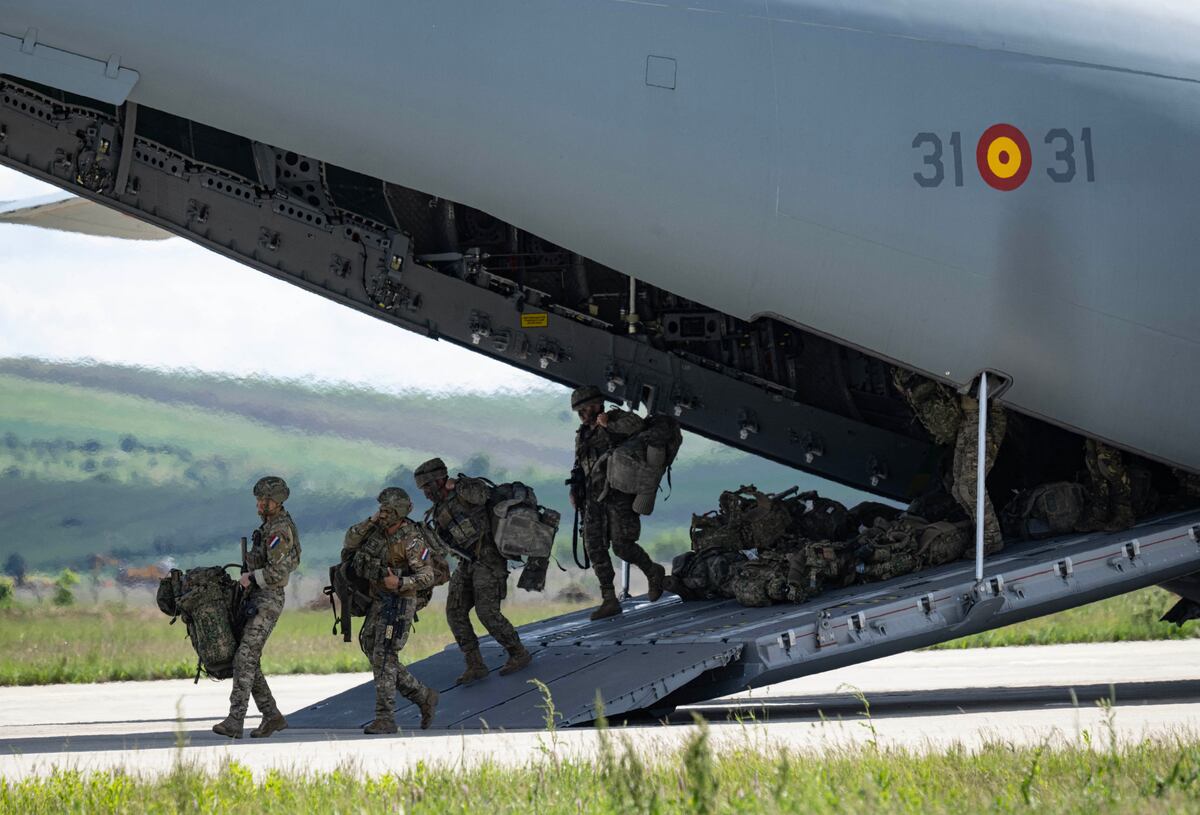
If the European Union wants to compete with the United States in the global defense market it must appoint a dedicated defense industry commissioner, push joint procurement by member states and curb anti-trust rulings to promote industry consolidation, a new report has claimed.
The recommendations were part of a long to-do list included in the report on boosting EU competitiveness issued by former European Central Bank governor Mario Draghi which will be closely read by officials in Brussels.
The section on Europe’s defense sector urges member states to jointly procure weapons, thus encouraging the continent’s firms to team up to build them, creating essential integration on both the supply and demand side.
For years, the opposite has been true, as member states hand orders to their local industries, thus ensuring the continent has 12 main battle tank programs compared to one in the United States.
“Insufficient aggregation and coordination of public spending in Europe compounds industrial fragmentation,” the report states.
Noting that European states have supplied ten different howitzer types to Ukraine, the report claims the land sector is the least integrated, followed by the naval industry.
Relative integration in the aircraft industry in Europe has produced success stories like the A-330 Multi-Role Tanker Transport aircraft, the report said.
With a turnover of €135 billion in 2022 and a workforce of half a million, the defense industry has its strong points, the report adds, claiming it beats the U.S. in sectors including main battle tanks, conventional submarines, naval shipyard technology, helicopters and transport aircraft.
But Europe’s defense spending, at $313 billion, is around a third of the $916 billion spent by the U.S. in 2023, it added.
“If all EU member states who are members of NATO who have not yet reached the 2% target would do so in 2024, this would translate into approximately an additional €60 billion ($66 billion) in defense spending,” the report stated.
As nations looked to their own procurement needs, only 18% of total EU spending was on collaborative programs in 2022, well below the bloc’s target of 35%, the report said.
At the same time, insufficient integration was occurring between cross-border firms, compared to the U.S., where the number of “main players” has shrunk from 51 in 1990 to five.
One reason firms were not merging in Europe was tough anti-trust legislation, the report said, claiming, “EU competition enforcement may prevent or discourage businesses from merging and scaling up, particularly those creating market power.”
In a list of recommendations to member states, the report urged them to “scale back existing industrial capacities, where needed,” in order to avoid “full mirroring and duplication of capabilities.”
It also urged a “commonly agreed specialization strategy among companies from participating member states reallocating capacities and reinforcing respective domains of excellence.”
To achieve that, the EU needed a new ”Defence Industry Commissioner, with the appropriate structure and funding to define, coordinate and implement an EU defense industrial policy fit for today’s new geopolitical context,” the report said.
Another task for a commissioner would be boosting research-and-development spending in the sector. Europe now spends just €10.7 billion a year, around 4.5% of total defense spending, compared to the United States, which spends a mammoth $140 billion, around 16% of all spending.
“The bulk of investment takes place at the member state level,” the report stated. “But several new or technically complex segments – such as drones, hypersonic missiles, directed-energy weapons, defense artificial intelligence and seabed and space warfare – call for pan-European coordination. No member state can effectively finance, develop, produce and sustain all the necessary capabilities and infrastructure that are required to maintain leadership in these technologies.”
One consequence of limited European investment in new technology was a continued preference by local buyers for U.S. kit. “Of a total of €75 billion spent by member states between June 2022 and June 2023, 78% of procurement spending was diverted to purchases from suppliers located outside the EU, out of which 63% based in the U.S.,” the report said, adding that U.S. Foreign Military Sales in Europe increased by 89% between 2021 and 2022.
“At the same time, the U.S. market remains closed for European companies,” it added.
European states liked the “administrative simplicity and better visibility of what is available,” thanks to the Foreign Military Sales program, and had “poor knowledge … of what is the actual offer from the European defense industry.”
To rectify this, the report pushes for “a political commitment” or “reformed public-procurement legislation, which would indicate that EU solutions would need to be considered as first options,” by European buyers.
If U.S. products were purchased by multiple EU states, they should cooperate to “achieve better terms and, where needed, European specifications of U.S. defense products, including local production and support, freedom of action rights, customization” and intellectual property rights, the report said.
Tom Kington is the Italy correspondent for Defense News.
一份新报告称,如果欧盟想在全球防务市场与美国竞争,就必须任命一位专门负责国防工业的专员,推动成员国联合采购,并限制反垄断裁决以促进行业整合。
这些建议是前欧洲中央银行行长马里奥·德拉吉发布的关于提升欧盟竞争力的报告中一长串待办事项清单的一部分,布鲁塞尔的官员们将仔细研读这份报告。
欧洲国防领域的章节敦促成员国联合采购武器,从而鼓励欧洲大陆的企业携手制造武器,在供需两端实现必要的融合。
多年来,情况恰恰相反,成员国将订单下达给本国企业,从而确保了非洲大陆拥有 12 个主战坦克项目,而美国只有一个。
报告指出:“欧洲公共支出的整合与协调不足加剧了产业碎片化。”
报告指出,欧洲国家已向乌克兰提供了十种不同类型的榴弹炮,并声称陆军部门一体化程度最低,其次是海军工业。
报告称,欧洲航空工业的相对一体化造就了像A-330多用途加油运输机这样的成功案例。
报告补充说,国防工业在 2022 年的营业额为 1350 亿欧元,拥有 50 万名员工,是其优势所在,并声称其在主战坦克、常规潜艇、海军造船技术、直升机和运输机等领域都胜过美国。
但报告补充说,欧洲2023年的国防开支为3130亿美元,约为美国2023年9160亿美元国防开支的三分之一。
报告指出:“如果所有尚未达到2%国防开支目标的欧盟成员国(同时也是北约成员国)在2024年达到这一目标,这将意味着国防开支将增加约600亿欧元(660亿美元)。”
报告称,由于各国都着眼于自身的采购需求,2022 年欧盟总支出中只有 18% 用于合作项目,远低于欧盟 35% 的目标。
与此同时,与美国相比,跨境企业之间的一体化程度不足,美国的“主要参与者”数量已从 1990 年的 51 家减少到 5 家。
报告称,欧洲企业不进行合并的原因之一是严格的反垄断立法,并声称“欧盟的竞争执法可能会阻止或阻碍企业合并和扩大规模,特别是那些能够形成市场力量的企业”。
该报告向成员国提出了一系列建议,敦促它们“在必要时缩减现有工业产能”,以避免“能力的完全镜像和重复”。
它还敦促“参与成员国的公司之间达成共识的专业化战略,重新分配产能,加强各自的优势领域”。
报告称,为了实现这一目标,欧盟需要一位新的“国防工业专员,并配备适当的架构和资金,以制定、协调和实施适合当今新地缘政治环境的欧盟国防工业政策”。
专员的另一项任务是提高该领域的研发投入。欧洲目前每年仅投入107亿欧元,约占国防总支出的4.5%,而美国每年投入高达1400亿美元,约占国防总支出的16%。
报告指出:“大部分投资发生在成员国层面。但无人机、高超音速导弹、定向能武器、国防人工智能以及海底和太空作战等几个新兴或技术复杂的领域需要泛欧协调。任何一个成员国都无法有效地资助、开发、生产和维护所有必要的能力和基础设施,从而保持在这些技术领域的领先地位。”
欧洲对新技术投资不足的一个后果是,当地买家仍然偏爱美国产品。报告指出:“在2022年6月至2023年6月期间,成员国总共支出750亿欧元,其中78%的采购支出流向了欧盟以外的供应商,而这其中63%的供应商位于美国。”报告还补充说,2021年至2022年间,美国对欧洲的对外军售增长了89%。
“与此同时,美国市场仍然对欧洲公司关闭,”报告补充道。
由于对外军售计划,欧洲各国喜欢“行政上的简便性和对可用产品的更清晰的了解”,但“对欧洲国防工业的实际产品供应情况却知之甚少”。
为了纠正这种情况,该报告呼吁“做出政治承诺”或“改革公共采购立法,这将表明欧洲买家需要将欧盟解决方案作为首选方案”。
报告称,如果多个欧盟国家购买美国产品,它们应该合作“以争取更好的条款,并在必要时制定美国国防产品的欧洲规格,包括本地生产和支持、行动自由权、定制权”以及知识产权。
汤姆·金顿是《防务新闻》驻意大利记者。